

Nursing Knowledge
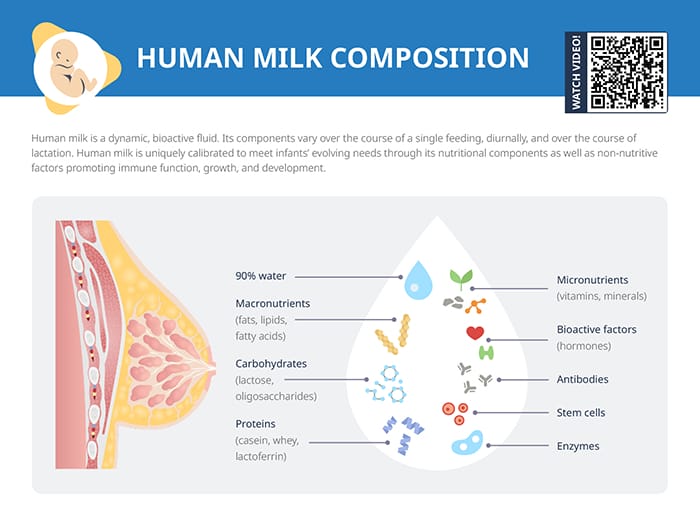
Human milk is a dynamic, bioactive fluid. Human milk is uniquely calibrated to meet infants’ evolving needs through its nutritional components, as well as non-nutritive factors promoting immune function, growth and development.
Breast milk consists of 90% water. It contains a variety of nutrients and bioactive factors:
Breast milk changes during a feeding, throughout the day, and as the baby grows. At the beginning of a feeding, the milk is thinner, lower in fat, and higher in lactose.
Toward the end of a feeding, the mild becomes creamier, richer, and higher in fat, focusing more on nutrition than hydration. Ideally, babies don’t stop feeding too soon and get the benefits of both types (gradual change).
Breast milk contains about 20 calories per ounce on average. Formula mimics this caloric content, unless it is specifically adjusting this to account for babies’ needs.
In the first few days after birth, breast milk is yellow and different from later milk in content. It is called colostrum and is:
Following the first days of colostrum, the volume of breast milk increases with the infant’s stomach size and demand. The protein composition shifts to support brain, eye, and organ development. The baby also gets more energy from the higher levels of fat, lactose, and natural sugars in the milk.
In mature milk, the foremilk is thinner to provide hydration, while the hindmilk contains higher levels of fat to keep the baby full until the next feeding. The milk contains a complex balance of proteins, sugars, and micronutrients. The immune factors constantly adjust to the environment and the infant’s health status.
A variety of reasons may lead to parents choosing to formula-feed their baby instead of breastfeeding. Medical conditions (e.g., HIV on the parent’s side or lactose intolerance on the baby’s side), medications that would be unsafe for the baby, or insufficient milk supply can be typical reasons.
Personal preference or convenience may also be significant factors. Each family’s situation is unique, and the decision between breast milk and formula should be made based on the baby’s needs and family circumstances.
Tip: While breastfeeding is what is best for babies unless there are opposing medical factors, it is important to communicate with clients in a nonjudgmental way without pressuring them. The goal is to find the best possible solution for both parent and baby that will be safe and sustainable.
Infant formula tries to mimic breast milk as closely as possible, containing proteins from animal milk or soy, lactose or corn syrup as carbohydrates, fats from vegetable oils, vitamins and minerals, and special additives for organ development and gut health. Some formulas also have specialized ingredients for babies with allergies, reflux, or other specific health needs.
Generally, formula can be more filling, since it takes longer to digest. This especially applies if the baby is not consuming the fatty hindmilk that would keep them satiated for longer.
If supplementing with formula reduces the frequency of breastfeeding and therefore a decreased supply of breast milk, the baby does not get the same level of benefits. Exclusive breastfeeding offers unique benefits like enhanced immune support and bonding, which aren’t as pronounced with formula feeding.
RELATED TOPIC:
Free Download
Master the topic with a unique study combination of a concise summary paired with video lectures.
Your free account gives you access to:
or