

Nursing Knowledge
Fetal circulation is characterized by unique adaptations tailored to meet the physiologic demands of the developing fetus within the intrauterine environment.
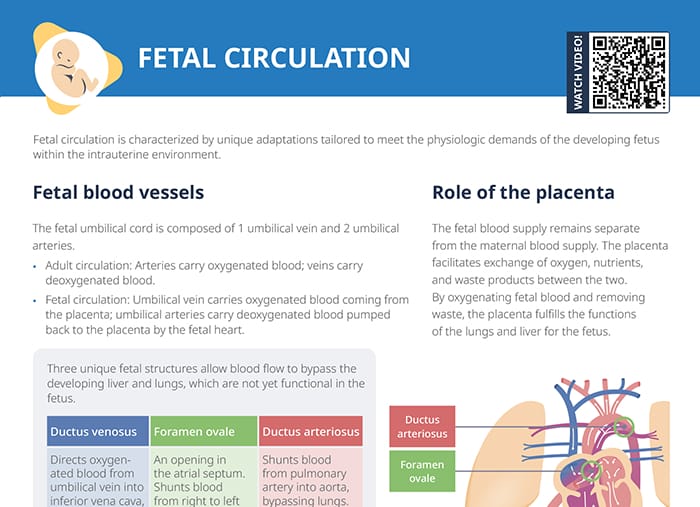
The fetal umbilical cord is composed of 1 umbilical vein and 2 umbilical arteries. In adult circulation, arteries carry oxygenated blood and veins carry deoxygenated blood. In contrast, the umbilical vein of the fetus carries oxygenated blood coming from the placenta. The umbilical arteries carry deoxygenated blood pumped back to the placenta by the fetal heart.
Three unique fetal structures allow blood flow to bypass the developing liver and lungs, which are not yet in the fetus:
The ductus venosus directs oxygenated blood from the umbilical vein into the inferior vena cava, bypassing the liver.
The foramen ovale is an opening in the atrial septum that shunts blood from the right to the left atrium, bypassing the lungs.
The ductus arteriosus shunts blood from the pulmonary artery into the aorta, bypassing the lungs.
The fetal blood supply remains separate from the maternal blood supply while the placenta facilitates exchange of oxygen, nutrients, and waste products between the two. By oxygenating fetal blood and removing waste, the placenta fulfills the functions of the lungs and liver for the fetus.
A series of rapid circulatory changes occur in the transition to extrauterine life:
Persistent fetal circulation, also known as persistent pulmonary hypertension of the newborn (PPHN), is a condition where a newborn’s circulation fails to adapt correctly to extrauterine life and continues to bypass the lungs as it did in utero.
This means the blood flow doesn’t adapt to breathing outside the womb, resulting in insufficient oxygenation of the blood. The foramen ovale and ductus arteriosus, which normally close after birth, remain open, leading to the mixing of oxygenated and deoxygenated blood. This condition requires prompt medical intervention to ensure adequate oxygen supply to the baby’s organs.
RELATED TOPIC:
Free Download
Master the topic with a unique study combination of a concise summary paired with video lectures.
Your free account gives you access to:
or