

Nursing Knowledge
The endocrine system consists of the glands and organs in the body that produce hormones that are released directly into the blood, which travel to tissues and organs all over the body and control the functions. (National Cancer Institute)
The endocrine system regulates various functions of the body by releasing hormones into the bloodstream. These functions include metabolism, growth and development, tissue function, reproduction, sleep, and mood, among others.
The endocrine system is important because it regulates key functions in the body, helping to maintain overall health and well-being. It maintains body temperature, controls the body’s reactions to stress, and regulates growth, development, and metabolism. It also plays a significant role in maintaining the body’s fluid and electrolyte balance.
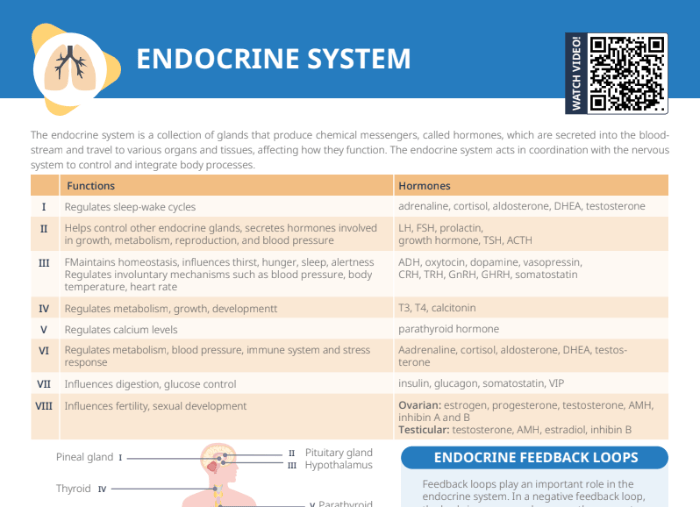
| Hormones | Secreted by | Functions |
| Adrenaline, cortisol, aldosterone, DHEA, testosterone | Adrenal glands | Regulates metabolism, blood pressure, immune system, and stress response |
| T3, T4, calcitonin | Thyroid | Regulates metabolism, growth, development |
| Melatonin | Pineal gland | Regulates sleep-wake cycles |
| LH, FSH, prolactin, growth hormone, TSH, ACTH | Pituitary gland | Helps control other endocrineglands, secretes hormonesinvolved in growth, metabolism,reproduction, and blood pressure |
| Insulin, glucagon,somatostatin, VIP | Pancreas | Influences digestion,glucose control |
| Ovarian hormones: estrogen,progesterone, testosterone,AMH, inhibin A and BTesticular hormones:testosterone, AMH, estradiol,inhibin B | Ovaries/testes | Influences fertility,sexual development |
| ADH, oxytocin,dopamine, vasopressin, CRH,TRH, GnRH, GHRH, somatostatin | Hypothalamus | Maintains homeostasis,influences thirst, hunger,sleep, alertness, and regulates involuntarymechanisms such as bloodpressure, body temperature,heart rate |
| Parathyroid hormone | Parathyroid | Regulates calcium levels |
The endocrine system maintains homeostasis by using hormones as signals. For instance, if blood sugar levels rise, the pancreas releases insulin to help cells absorb glucose and bring blood sugar levels back to normal. Conversely, if blood sugar levels are too low, the pancreas releases glucagon to stimulate the release of stored glucose.
In a negative feedback loop, the body increases or decreases the amount of hormones to maintain homeostasis.
Example: blood glucose regulation
Stimulus: rising blood glucose level → High blood glucose level is detected by insulin-secreting cells of pancreas → Pancreas secretes insulin causing liver cells to take up glucose and store it as glycogen → Most body cells also take up more glucose → As body cells take up blood glucose, glucose levels in the blood decline, and insulin release stops (negative feedback) → Return to homeostatic blood glucose level
Positive feedback loops are less common in the body. In a positive feedback loop, hormones cause further hormone release, leading to increasing hormone levels, rather than maintaining levels within a homeostatic range.
Example: milk production during breastfeeding
Stimulus: baby suckles at nipple → Suckling sends impulses to hypothalamus → Hypothalamus signals posterior pituitary to release oxytocin → Oxytocin released into bloodstream stimulates milk ejection from mammary gland → Milk is released and the baby continues to feed → Baby feeds and continues suckling (positive feedback)
The master gland of the endocrine system is the pituitary gland, being responsible for controlling most of the other hormone-secreting glands in the body.
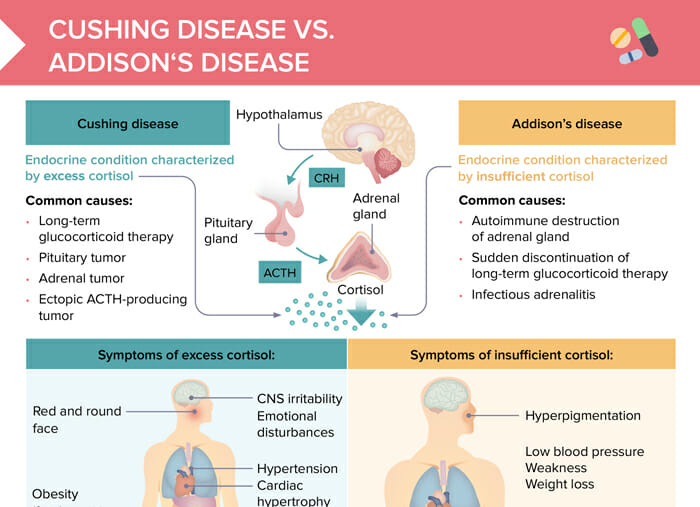
Stress triggers the release of several hormones from the pituitary and adrenal glands, including cortisol and adrenaline. These hormones increase heart rate, blood pressure, and glucose levels, providing the body with a burst of energy for a ‘fight or flight’ response. Chronic stress can disrupt this balance, leading to potential health issues such as hypertension, diabetes, anxiety, and depression.
The endocrine system works in coordination with the nervous system to control and integrate body processes. While the nervous system uses electrical impulses to send messages quickly between cells or organs in response to stimuli from both internal and external environments, the endocrine system uses chemical messengers called hormones that are secreted into the bloodstream to travel to various organs and tissues where they affect how they function.
RELATED TOPIC:
Free Download
Master the topic with a unique study combination of a concise summary paired with video lectures.
Your free account gives you access to:
or