Eating disorders are a serious and complex group of mental health conditions that can have significant physical and psychological consequences. They are characterized by abnormal eating behaviors and a preoccupation with body weight and shape. Nurses play a crucial role in the identification, assessment, and treatment of eating disorders, as they are often the first healthcare professionals to encounter patients with these conditions.
Eating disorders are serious mental health conditions characterized by abnormal or disturbed eating behaviors and related thoughts and emotions.
How many people have eating disorders?
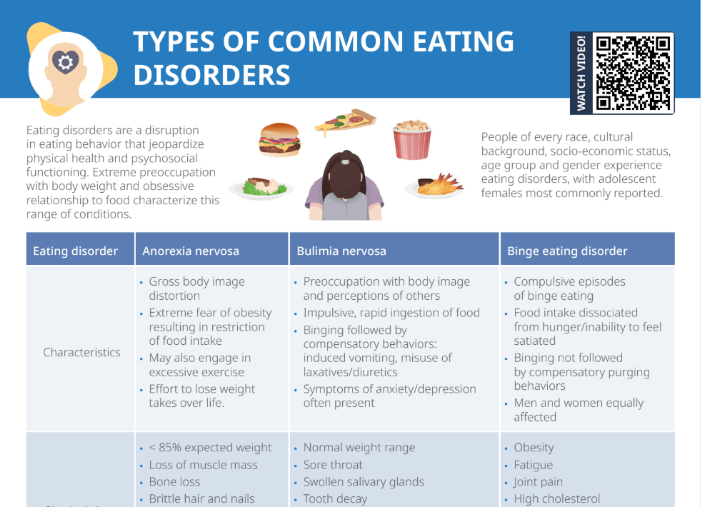
Eating disorders are relatively common, some estimate around 9% of the population being affected within their lifetime. People of every race, cultural background, socio-economic status, age group and gender can experience eating disorders, with adolescent females most commonly reported.
What causes eating disorders?
Eating disorders are complex and usually result from a combination of factors. These can include genetic predisposition, psychological factors like low self-esteem or perfectionism, societal pressure around body image, and stressful life events or changes. It’s important to understand that eating disorders are not a choice; they are serious illnesses that require treatment.
What is body dysmorphia?
Body dysmorphic disorder (BDD), or body dysmorphia, is a mental health condition where a person spends a lot of time worrying about flaws in their appearance. These flaws are often unnoticeable to others. (Definition by NHS.uk)
Types of eating disorders
Common types of eating disorders include:
Anorexia nervosa (extreme food restriction and fear of gaining weight)
Bulimia nervosa (binge eating followed by purging)
Binge eating disorder (frequent episodes of uncontrollable eating)
Characteristics of common eating disorders
Anorexia nervosa
Gross body image distortion
Extreme fear of obesity resulting in restriction of food intake
May also engage in excessive exercise
Effort to lose weight takes over life.
Bulimia nervosa
Preoccupation with body image and perceptions of othersImpulsive, rapid ingestion of food
Binging followed by compensatory behaviors: induced vomiting, misuse of laxatives/diuretics
Symptoms of anxiety/depression often present
Binge eating disorder
Compulsive episodes of binge eatingFood intake dissociated from hunger/inability to feel satiated
Binging not followed by compensatory purging behaviors