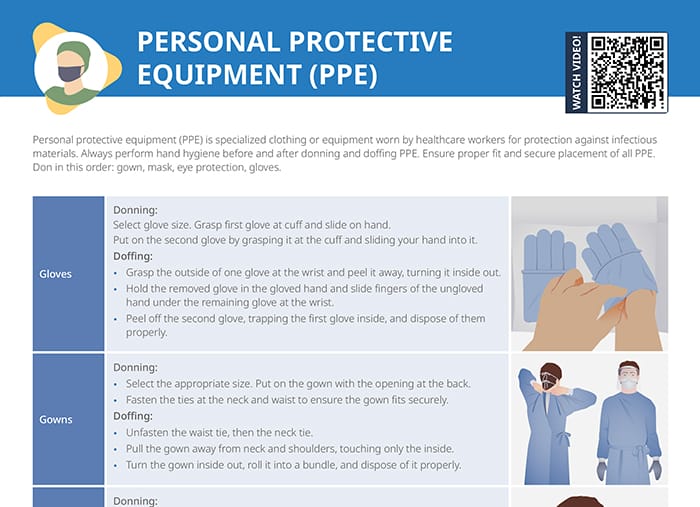


PPE stands for “personal protective equipment.”
It is specialized clothing or equipment with the goal of protecting healthcare workers by creating a barrier between the healthcare personnel and infectious germs. Additionally, it prevents the spread of infections between clients.
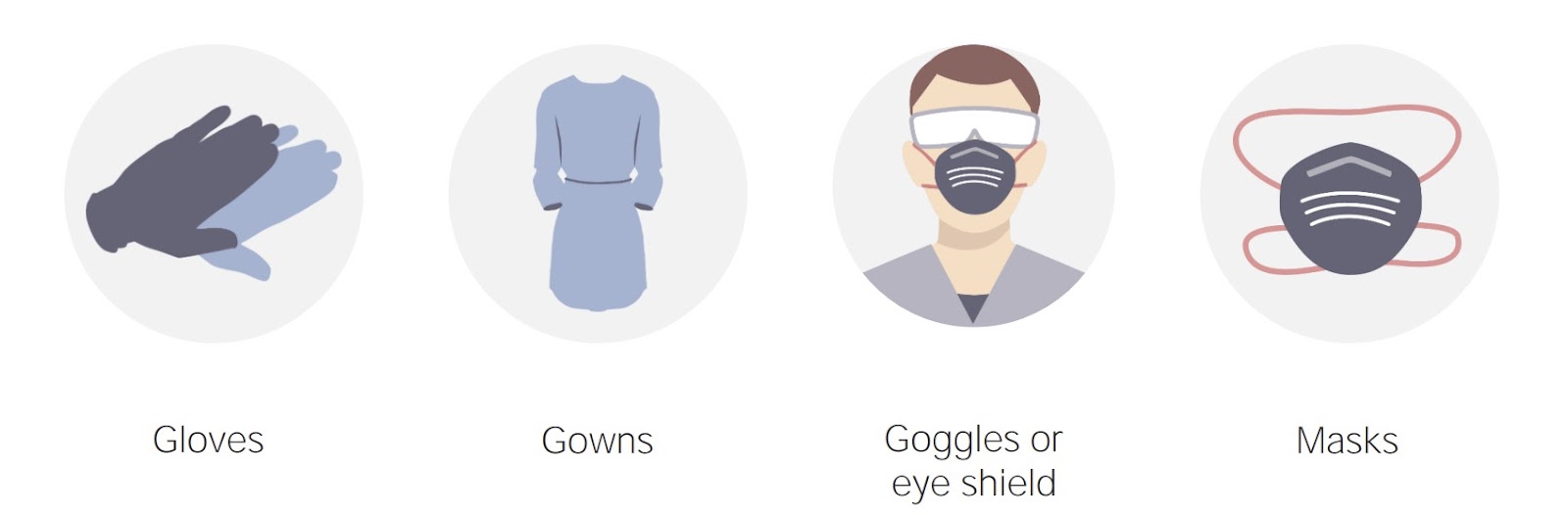
Examples of PPE are gloves, gowns, goggles, face shields, and masks.
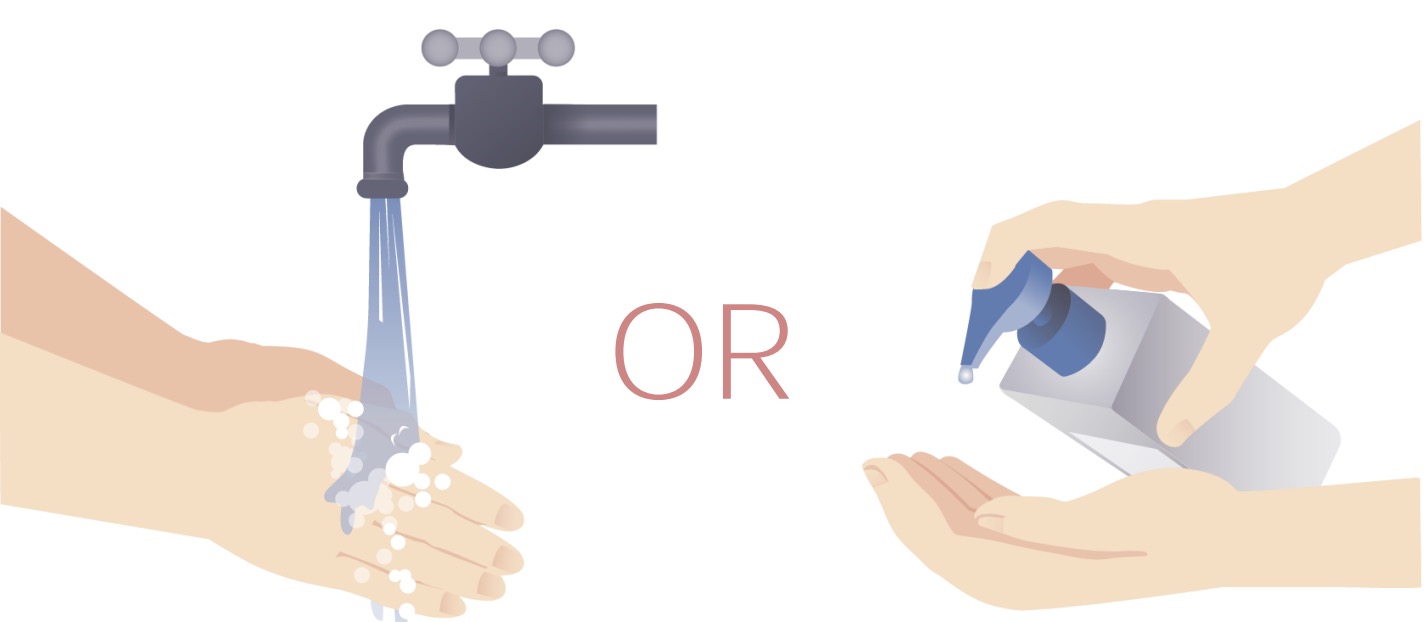
Always perform hand hygiene before and after donning and doffing PPE.
While there are variations, there is a typical order in which PPE is put on to minimize the chances for contamination:
When taking off the PPE, the order can vary a little. In any case, the gloves should be the first to go since they’re likely the most contaminated. The mask and respirator are always taken off last (outside of the room with the door closed).
The goggles or face shield can be the step after removing the gloves, followed by the gown and the mask/respirator being removed last.
Another option is to remove the gown directly after the gloves, then goggles or face shield, and the mask/respirator last.
Since your hands may be contaminated while removing PPE, immediately wash them after doffing personal protective equipment.
Contact precautions may be, for example, for clients with MRSA, VRW or C. diff. Gowns and gloves are the most common equipment used for contact precautions, but precautions may include other measures like a hairnet.
Gowns are for one client use only, and you would switch to a new one for the next client. The gown should cover the torso and at least down to the knees.
Donning the gown:
You may see nurses skip the step of fastening the ties, especially when they’re in a hurry. Remember ideally to do this step to keep your PPE from falling forward while you’re doing client care.
Doffing the gown:
Remember that the outside of the gown is always considered contaminated, even if you can’t visibly see any stains. Don’t pull it away by grabbing the part covering your chest.
Donning gloves:
Always make sure the gloves go over the cover of the gown.
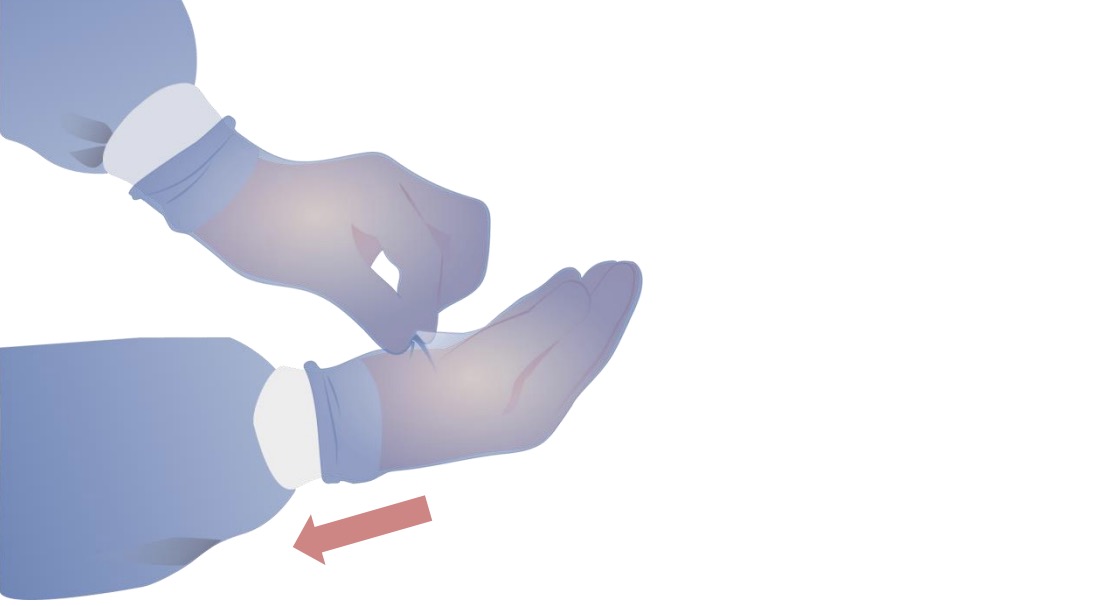
Doffing gloves:
Droplet precautions are, for example, put in place for clients with the flu or RSV. Airborne precautions are needed for clients with, for example, tuberculosis or COVID.
To prevent droplet transmission to the mucus membranes, the most common PPE measure is wearing a surgical mask when within 3 ft (91 cm) of a client.
For airborne precaution, a particulate N95 respirator is needed instead of only a surgical mask. Negative pressure isolation rooms help trap infectious particles.
Donning mask or respirator:
Note: Proper fit testing is important and should be done when you start as a new nurse at a new facility during orientation. During the test, the evaluator sprays an aerosol (e.g. saccharin that would taste sweet) near the employee (who may be wearing a hood covering over the head/neck) who then determines if they can perceive (taste) it despite the respirator. This positive taste would indicate an imperfect seal and a problem with the fit.
Doffing mask or respirator:
Donning eye protection:
Doffing eye protection:
Providing adequate personal protective equipment is the responsibility of the employer, who will typically have processes set up for buying all necessary equipment.
Employers are always responsible for training around PPE, including when and how to use which equipment, and proper maintenance and disposal.
Employers must make sure that every employee has access to PPE that fits them properly. That responsibility does not exclude cases where the employee provides the PPE themselves.