

Nursing Knowledge
Adverse drug reactions are unwanted or harmful effects experienced following the administration of a drug or combination of drugs under normal usage conditions. They can occur with any medication and range from mild (e.g., headache, rash) to severe (e.g., anaphylaxis).
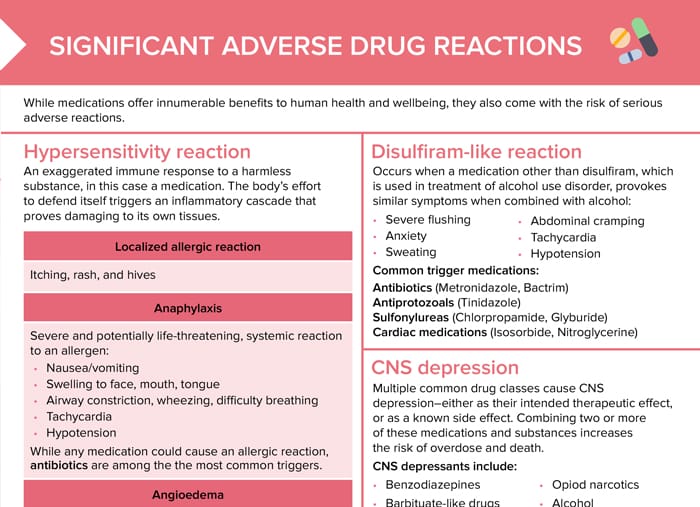
Adverse reactions can be allergic reactions, side effects, overdoses, and interactions with other drugs, food, or diseases. Identifying, managing, and reporting adverse drug reactions are essential nursing responsibilities. Significant types of severe adverse reactions include hypersensitivity reactions, disulfiram-like reactions, and CNS depression.
A hypersensitivity reaction is an exaggerated immune response to a harmless substance, in this case a medication. The body’s effort to defend itself triggers an inflammatory cascade that proves damaging to its own tissues.
Localized allergic reactions present with itching, rash, and hives.
Anaphylaxis is a severe and potentially life-threatening systemic reaction to an allergen. Symptoms include:
While any medication could cause an allergic reaction, antibiotics are among the most common triggers.
Angioedema is an allergic reaction causing swelling in deep layers of skin and other tissues. It often affects lips, mouth, tongue and may compromise the airway.
Common trigger medications include ACE inhibitor and angiotensin receptor blocker blood pressure medications.
Red man syndrome is a severe reaction to the antibiotic vancomycin.
Symptoms:
Preventive measures include infusing slowly and pre-medicating with antihistamine.
A disulfiram-like reaction occurs when a medication other than disulfiram, which is used in treatment of alcohol use disorder, provokes similar symptoms when combined with alcohol.
Symptoms:
Common trigger medications include:
Multiple common drug classes cause CNS depression, either as the intended therapeutic effect, or as a known adverse effect. Combining two or more of these medications and substances increases the risk of overdose and death.
Known CNS depressants:
Symptoms of CNS depression/overdose:
RELATED TOPIC:
FREE CHEAT SHEET
Free Download
Master the topic with a unique study combination of a concise summary paired with video lectures.
Your free account gives you access to:
or