

Nursing Knowledge
Depression (or Major Depressive Disorder) is a mental health disorder characterized by persistent low mood and loss of interest in association with somatic symptoms.
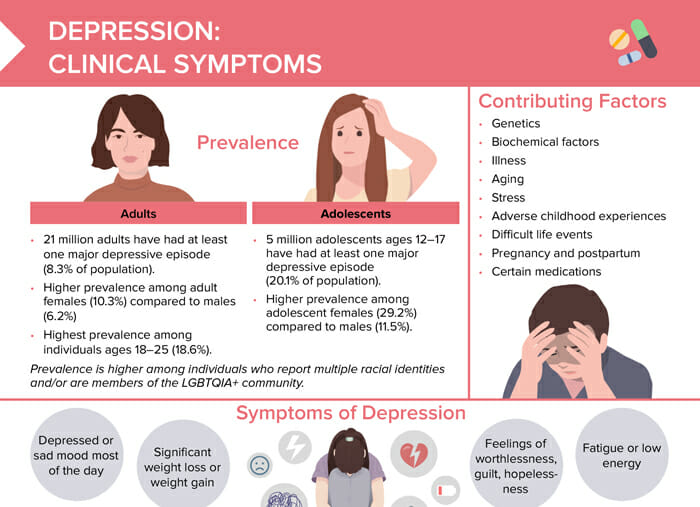
21 million adults have had at least one major depressive episode (8.3% of population). Depression is more prevalent among adult females (10.3%) compared to males (6.2%). The highest number of people affected by depression can be found among individuals ages 18–25 (18.6%).
5 million adolescents ages 12–17 have had at least one major depressive episode (20.1% of population). Adolescent females are more commonly affected (29.2%) than males (11.5%).
Contributing factors include:
Symptoms of depression must be present most of the day, more days than not, for at least 2 weeks.
Depression may manifest differently in clients of different ages, so it is important to look out for the specific signs.
Children may refuse to go to school, have tantrums, pretend to be sick, and may not want to leave their parents.
Teenagers may have low self-esteem, act out, or abuse substances.
Middle-aged adults may have decreased libido, difficulty sleeping, or may be suffering from GI symptoms.
Older adults may report a lack of emotions, memory issues, and are at a higher risk of illness and medications that may contribute.
Note: There can be stigma surrounding a mental health diagnosis. Clients may not openly share their feelings. Ask about symptoms and be prepared with resources.
RELATED TOPIC:
Free Download
Master the topic with a unique study combination of a concise summary paired with video lectures.
Your free account gives you access to:
or