

Nursing Knowledge
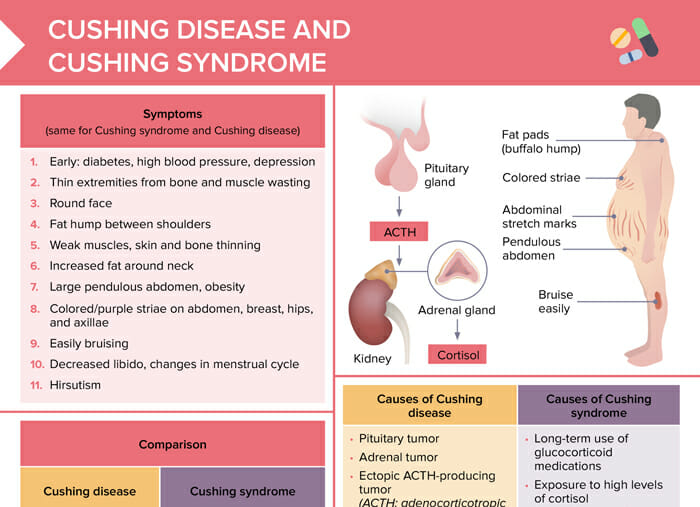
Cushing syndrome (also called hypercortisolism) is a disorder caused by high levels of the stress hormone cortisol in the blood. It has a variety of physical and mental symptoms.
It can be caused by exogenous (outside the body) or endogenous (inside the body) factors.
Cushing disease occurs when Cushing syndrome is caused by an ACTH-producing pituitary tumor, meaning it has a specific endogenous cause.
Cushing disease is a rare condition that affects 10–15 people per million a year, most often between the ages of 20 and 50. It is more common in women than men.
Table: Comparison of causes of Cushing disease and Cushing syndrome
| Cushing disease | Cushing syndrome | |
| Causes | Tumor (pituitary, adrenal, ectopic ACTH-producing tumor) | Long-term use of glucocorticoid medications; exposure to high levels of cortisol |
Cushing syndrome and Cushing disease present with the same set of symptoms:
Diagnosis of Cushing syndrome and Cushing disease includes a thorough medical history, an in-depth physical exam, and the following laboratory tests:
Normal levels for a blood cortisol test are usually 6–23 mcg/dL, but the reference range can slightly vary depending on the lab and the time of day when the test was done as cortisol levels naturally fluctuate throughout the day.
Treatment of high cortisol levels in Cushing syndrome and Cushing disease includes:
RELATED TOPIC:
Free Download
Master the topic with a unique study combination of a concise summary paired with video lectures.
Your free account gives you access to:
or
One Platform. Everything You Need to Succeed. 📚 Get 30% off all plans and certificates!