

Nursing Knowledge
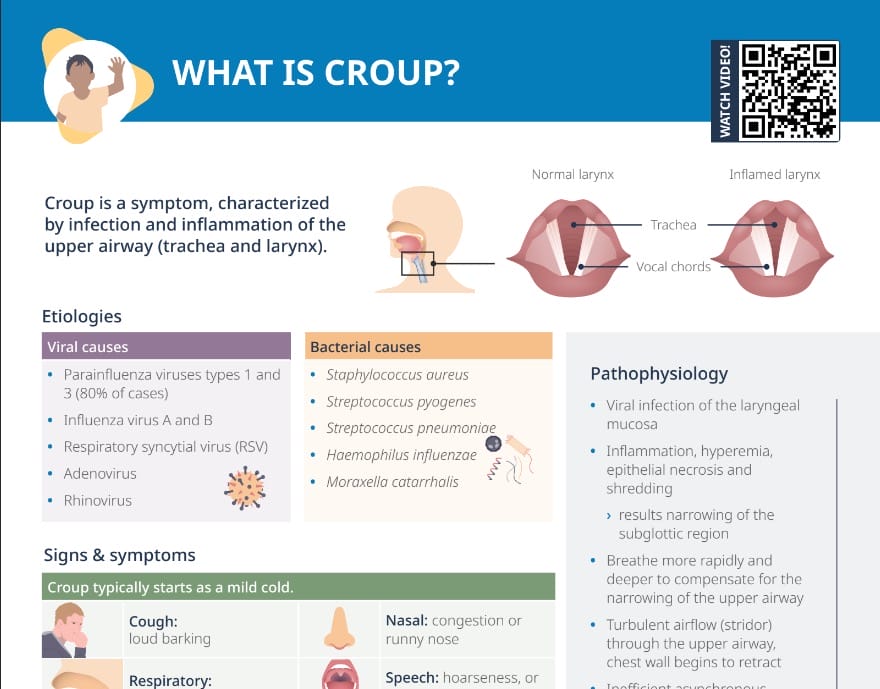
Croup is characterized by infection and inflammation of the upper airway (trachea and larynx).
An infection of the laryngeal mucosa causes inflammation, hyperemia, epithelial necrosis and shredding and therefore a narrowing of the subglottic region, which speeds up and intensifies breathing to compensate.
Through the turbulent airflow (stridor) through the upper airway, the chest wall begins to retract. Inefficient asynchronous chest and abdominal movements lead to fatigue. Hyperoxia and hypercapnia can progress to respiratory failure and arrest.
Croup can be caused by viruses or bacteria.
Viral causes:
Bacterial causes:
Typically, croup starts as a mild cold.
It is characterized by:
For most children, croup is a mild illness that can be managed at home.
A croup cough sounds particularly loud and barking.
Potential (but rare) complications of croup include secondary bacterial infections, dehydration, and respiratory distress. They can be addressed with oxygen support, fluids, and racemic epinephrine.
Croup is contagious, especially in the early stages. Transmission occurs through respiratory droplets from coughing or sneezing, or by touching contaminated surfaces. Measures that can help avoid transmission include washing hands frequently, covering mouth and nose when coughing/sneezing and isolation of infected individuals.
Treatment options for croup include:
Worsening symptoms at night time are typical for croup. This is due to multiple factors, including:
Yes, adults can get croup, although it is much less common than in children. The symptoms in adults are generally milder due to larger airways, but complications can still occur, especially in those with pre-existing respiratory conditions. If an adult exhibits symptoms like a “barking” cough, stridor, and difficulty breathing, consult a healthcare provider for appropriate diagnosis and treatment.
Whooping cough (also called pertussis), is a highly contagious bacterial infection of the respiratory tract caused by Bordetella pertussis. It is characterized by paroxysms of intense coughing followed by an inspiratory “whooping” sound and can be potentially life-threatening.
When trying to differentiate between croup and whooping cough, pay attention to the following:
Final diagnosis will be made by the healthcare provider.
When trying to differentiate between croup and Covid-19, pay attention to the following:
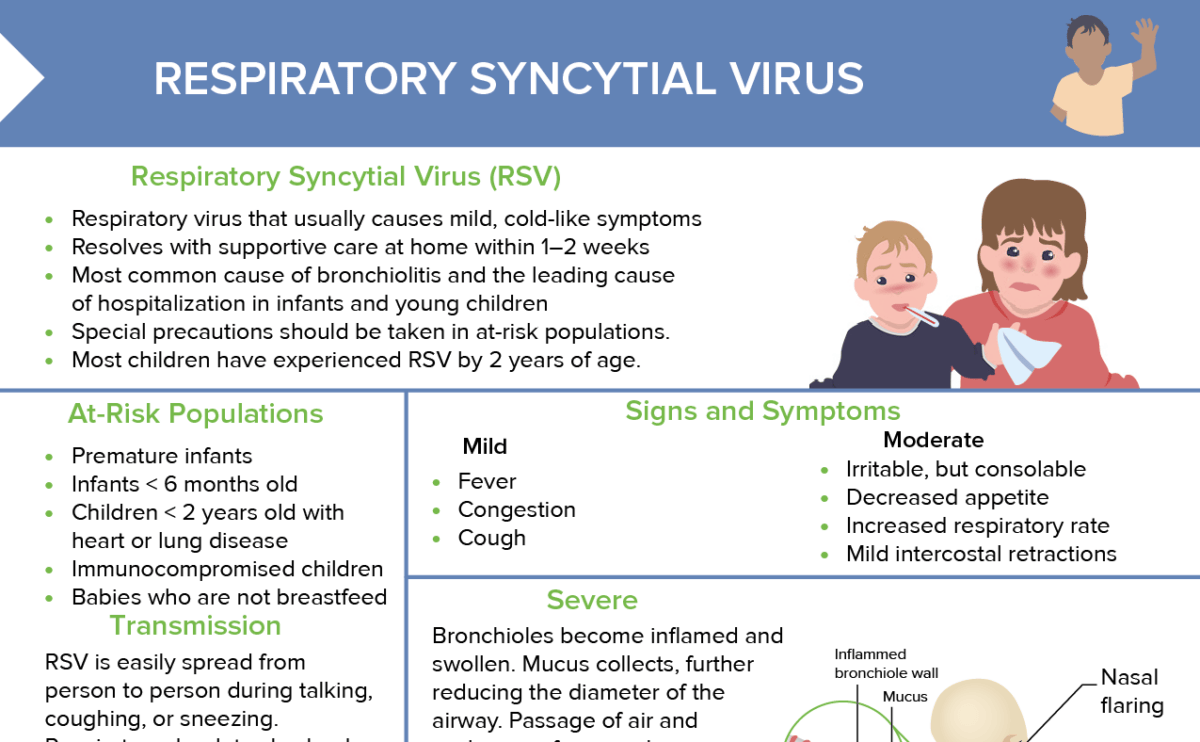
When trying to differentiate between croup and RSV, pay attention to the following:
When trying to differentiate between croup and epiglottitis, pay attention to the following:
RELATED TOPIC:
Free Download
Master the topic with a unique study combination of a concise summary paired with video lectures.
Your free account gives you access to:
or