
Nursing Knowledge
Arachidonic acid is a polyunsaturated omega-6 fatty acid found in the phospholipids of cell membranes, especially in the brain and muscles. Its main function involves cellular signaling.
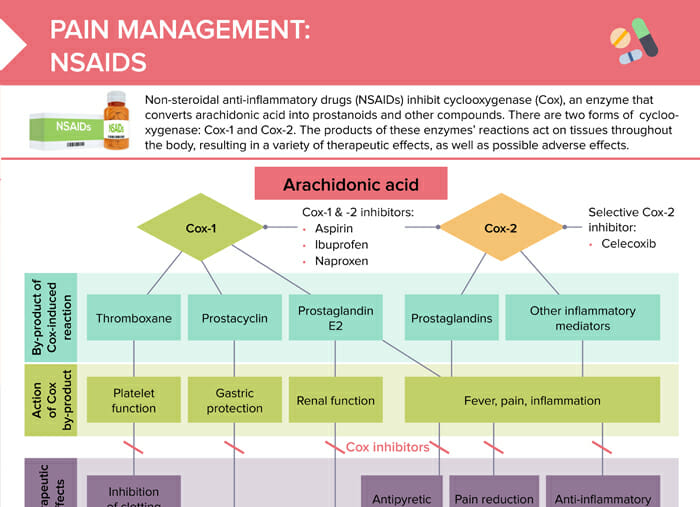
When a cell membrane is stimulated or damaged, phospholipase A2 releases arachidonic acid from membrane phospholipids. It can then be metabolized by three primary enzyme pathways, one of them being the cyclooxygenase (Cox) pathway:
Cox 1 and Cox 2 are enzymes that play key roles in the production of prostaglandins, which are involved in inflammation, pain, and other physiological processes. Cox 1 produces prostaglandins involved in protective actions, like maintaining the stomach lining and supporting kidney function. It’s considered a “housekeeping” enzyme because it’s always active and performing essential roles. Cox 2 produces prostaglandins that cause inflammation, pain, and fever. Its activity increases during inflammatory responses.
NSAIDs (non-steroidal anti-inflammatory drugs) work by blocking the enzymes Cox 1 and Cox 2 in the body. This reduces the production of prostaglandins in the body, which promote inflammation, pain, and fever. NSAIDs therefore have anti-inflammatory, analgesic, and antipyretic effects.
Examples of Cox 1 inhibitors include aspirin, ibuprofen, and naproxen.
Even though most inhibit both enzymes, Cox 1 inhibitors typically have a stronger effect on Cox 1. Because COX-1 helps protect the stomach lining and support platelet function, its inhibition can lead to stomach ulcers and increased bleeding risk.
Cox 2 inhibitors specifically target and inhibit the Cox 2 enzyme. While this reduces the risk of the stomach-related side effects associated with Cox 1 inhibitors, some Cox 2 inhibitors have been associated with an increased risk of cardiovascular events.
A well-known example of a Cox 2 inhibitor is celecoxib.
Cox-1-inhibitors impact the actions of Cox 1:
Free Download
Master the topic with a unique study combination of a concise summary paired with video lectures.
Your free account gives you access to:
or