

Nursing Knowledge
Common drug classes of antibiotics and examples include:
Glycopeptides are antibiotics that target the cell walls of gram-positive bacteria, primarily used against MRSA and other resistant strains. Common drugs include vancomycin and telavancin.
Tetracyclines are broad-spectrum antibiotics that inhibit protein synthesis by binding to bacterial ribosomes. Common drugs include doxycycline and minocycline.
Indications for tetracyclines include acne, chlamydia, and Lyme disease.
Beta-lactams are a class of antibiotics that disrupt bacterial cell wall synthesis. Common drugs include penicillin, ceftriaxone, and amoxicillin-clavulanate.
Indications for beta lactams are broad for many kinds of respiratory or other infections.
Nitroimidazoles are antibiotics that are effective against anaerobic bacteria and certain parasites. A common drug of this class is metronidazole.
Macrolides are antibiotics that inhibit bacterial protein synthesis by acting on their ribosomes. Common drugs include erythromycin, azithromycin, and clarithromycin.
Indications for macrolides include respiratory tract infections, atypical pneumonias, some STIs, and skin infections. Macrolides are often used for clients that are allergic to penicillin.
Quinolones are broad-spectrum antibiotics that inhibit bacterial DNA synthesis. Common drugs include ciprofloxacin, levofloxacin, and moxifloxacin.
Indications for quinolones include UTIs, bone and joint infections.
These antibiotics inhibit bacterial folate synthesis, thus preventing bacterial DNA replication. A common drug of this class is trimethoprim-sulfamethoxazole.
Indications for folate synthesis inhibitors include UTIs, certain types of pneumonia, MRSA skin infections.
Aminoglycosides are antibiotics that inhibit bacterial protein synthesis by binding to ribosomes. Common drugs include gentamicin, tobramycin, and neomycin.
Indications for aminoglycosides include serious gram-negative bacterial infections.
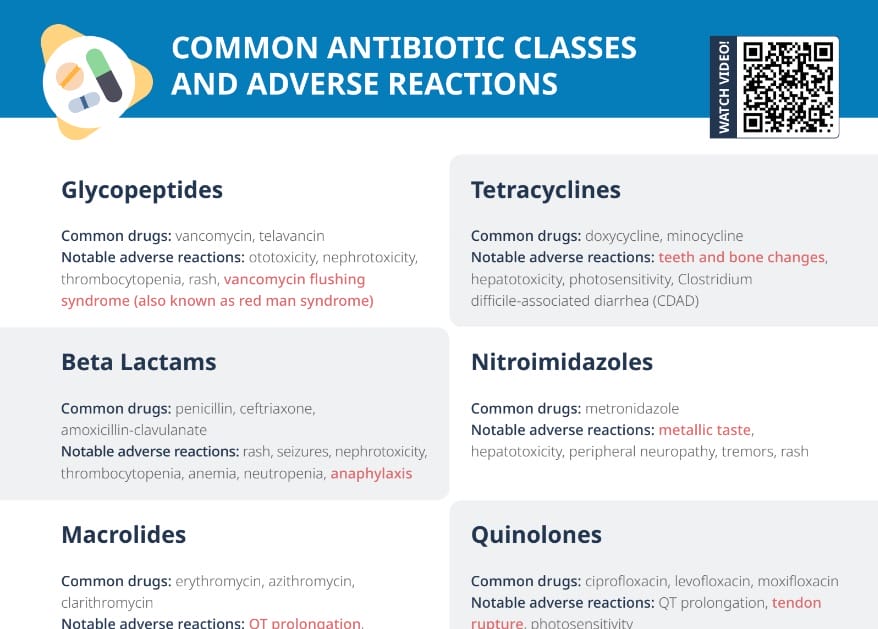
Table: Adverse reactions of common antibiotic classes
| Drug class | Notable adverse reactions |
| Glycopeptides | Ototoxicity, nephrotoxicity, thrombocytopenia, rash, vancomycin flushing syndrome (also known as red man syndrome) |
| Tetracyclines | Teeth and bone changes, hepatotoxicity, photosensitivity, Clostridioides difficile-associated diarrhea (CDAD) |
| Beta lactams | Rash, seizures, nephrotoxicity, thrombocytopenia, anemia, neutropenia, anaphylaxis |
| Nitroimidazoles | Metallic taste, hepatotoxicity, peripheral neuropathy, tremors, rash |
| Macrolides | QT prolongation, hepatotoxicity, ototoxicity |
| Quinolones | QT prolongation, tendon rupture, photosensitivity |
| Folate synthesis inhibitors | Rash, hyperkalemia, thrombocytopenia, nephrotoxicity, phototoxicity, Stevens-Johnson syndrome, hepatotoxicity |
| Aminoglycosides | Nephrotoxicity, ototoxicity, neuromuscular blockade exacerbation |
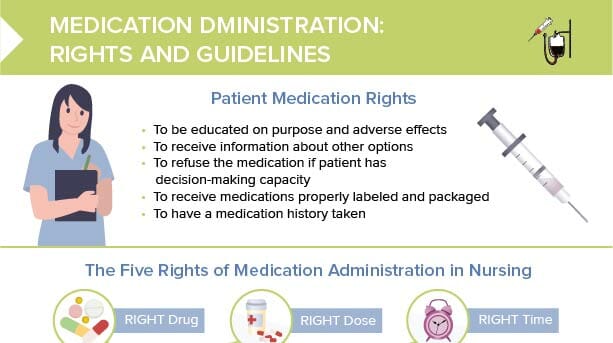
In nursing practice, it’s essential to ensure that antibiotics are administered correctly, that patients are educated about potential side effects, and that any side effects or adverse reactions are promptly recognized and addressed.
Outside of the common side effects antibiotics can have, there are some more considerations when using antibiotics:
In the US, systemic antibiotics (oral or IV) are not available OTC. However, there are some antibiotic products available OTC for topical use for minor cuts, scrapes, or burns:
RELATED TOPIC:
Free Download
Master the topic with a unique study combination of a concise summary paired with video lectures.
Your free account gives you access to:
or