

Nursing Knowledge
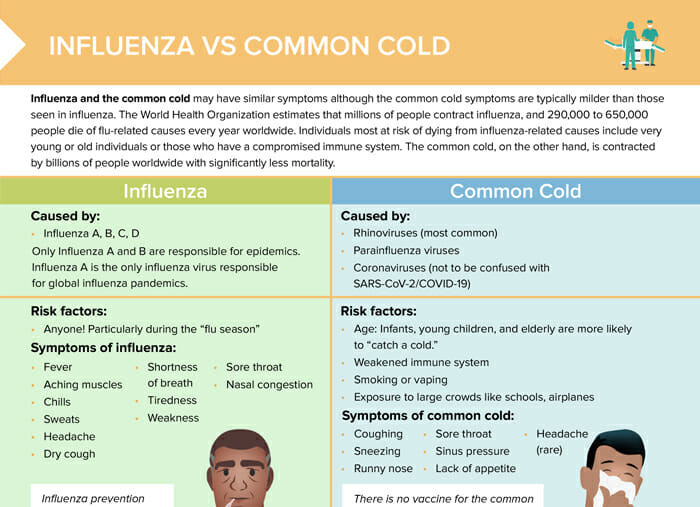
Influenza is a contagious respiratory illness caused by influenza viruses. The World Health Organization estimates that millions of people contract influenza, and 290,000 to 650,000 people die of flu-related causes every year worldwide. Individuals most at risk of dying from influenza-related causes include very young or old individuals or those who have a compromised immune system.
The common cold is a common viral infectious respiratory disease. Influenza and the common cold may have similar symptoms, although the common cold symptoms are typically milder than those seen in influenza. The common cold is contracted by billions of people worldwide with significantly less mortality than influenza cases.
Influenza is caused by the influenza virus A, B, C, and D. Only Influenza A and B are responsible for epidemics. Influenza A is the only influenza virus responsible for global influenza pandemics. The virus is primarily spread through tiny droplets made when people with the flu cough, sneeze, or talk. It can also be contracted by touching a surface or object that has the flu virus on it and then touching one’s mouth, eyes, or nose.
The common cold is most commonly caused by rhinoviruses. Parainfluenza viruses and coronaviruses (not to be confused with SARS-CoV2/Covid-19) can also be the cause. Transmission is through airborne droplets (infected person coughing or sneezing), or by touching contaminated surfaces.
Risk factors for the common cold include:
For influenza, anyone is at risk of getting a flu – especially during the “flu season.”
Symptoms of influenza include:
Symptoms of the common cold include:
Influenza symptoms are more severe and occur more abruptly compared to the common cold.
Laboratory testing by nasal swabs can confirm influenza infection and type. Antiviral medication may be prescribed to shorten the duration of illness but must be started early in the course of disease.
There are no laboratory tests available to diagnose a common cold. Treatment is directed to specific symptoms (fever, nasal discharge, sore throat, cough). There are no specific antiviral medications and antibiotics are to be avoided unless there is confirmation of a secondary bacterial infection.
Influenza prevention includes getting the seasonal flu vaccine. There is no vaccine or cure for the common cold. Standard general viral illness prevention methods may reduce the risk:
RELATED TOPIC:
Free Download
Master the topic with a unique study combination of a concise summary paired with video lectures.
Your free account gives you access to:
or