Angina pectoris, a condition characterized by acute chest pain or discomfort, plays an important role in the clinical practice of nurses. Understanding the different types and causes of angina pectoris is essential for providing effective care to clients. This quick guide offers insights into the causes, treatment, and symptoms experienced by both men and women, highlighting the importance of recognizing subtle signs in female clients.
Angina pectoris ( “angina”, acute chest pain or discomfort) occurs when the heart doesn’t receive enough blood.
ICD-10 code for angina pectoris
The ICD-10 code for angina pectoris is I20.
I20.0: Unstable angina
I20.1: Angina pectoris with documented spasm
I20.8: Other forms of angina pectoris
I20.9: Angina pectoris, unspecified
What causes chest pain?
Decreased blood flow leads to decreased oxygen to the myocardium, causing pain. The cause of decreased blood flow varies in each type of angina pectoris.
Types of angina pectoris and their causes
Type
Cause
Characteristics
Stable
Fixed stenosis (demand ischemia)
Triggered by exertion, stress, cold exposure, coronary artery disease Relieved by rest or medication Predictable and consistent
Unstable
Thrombus (supply ischemia)
May occur at rest or with exertion Worsens over time May not be relieved by rest or medication Lasts longer than 20 minutes, may go away and come back
Variant Prinzmetal
Vasospasm (supply ischemia)
Occurs most commonly at night, during rest/sleep Relieved by medication
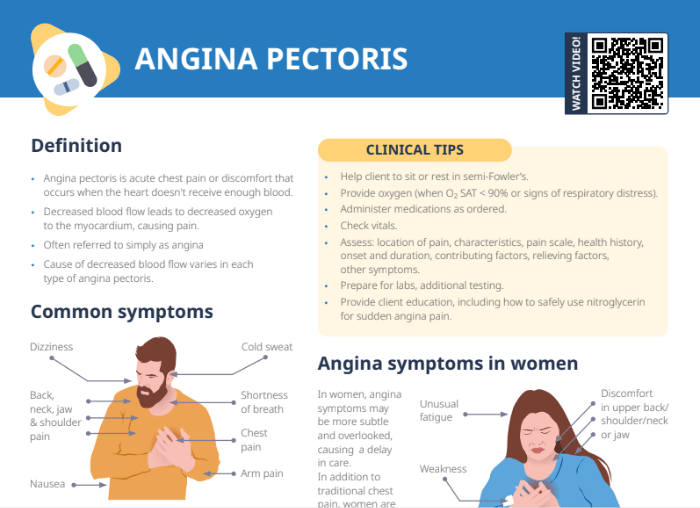
In women, angina symptoms may be more subtle and overlooked, causing a delay in care. In addition to traditional chest pain, women are more likely to experience these symptoms:
Unusual fatigue
Discomfort in upper back/shoulder/neck or jaw
Abdominal pain and nausea
Weakness
What are the ECG changes associated with angina pectoris?
Understanding ECG changes associated with angina pectoris is essential for nurses to recognize, such as:
Detect heart-related conditions early on
Effectively monitor clients to be able to act quickly
Communicate effectively with clients and health care team about significance of ECG changes
Note: EKG may be normal in clients with angina pectoris, especially when currently no symptoms are experienced.
Nursing diagnoses for chest pain
Acute pain: assess pain, administer prescribed pain medication, teach client about importance of rest
Ineffective tissue perfusion: related to compromised coronary blood flow; monitor and provide medications (nitrates or beta blockers may be prescribed)
Anxiety or death anxiety: provide reassurance
Activity intolerance: assess, encourage gradual increase in activity, teach energy conservation techniques
Knowledge deficit: client education about disease, medications, lifestyle modifications
Angina pectoris nursing interventions
Help client to sit or rest in semi-Fowler’s
Provide oxygen (when O₂ SAT < 90% or signs of respiratory distress)
Administer medications as ordered
Check vitals
Assess: location of pain, characteristics, pain scale, health history, onset and duration, contributing factors, relieving factors, other symptoms
Prepare for labs, additional testing
Provide client education, including how to safely use nitroglycerin for sudden angina pain
Emergency management steps for chest pain
If O2 SAT < 90% or in respiratory distress:
M: Morphine
O: Oxygen
N: Nitrates
A: Aspirin
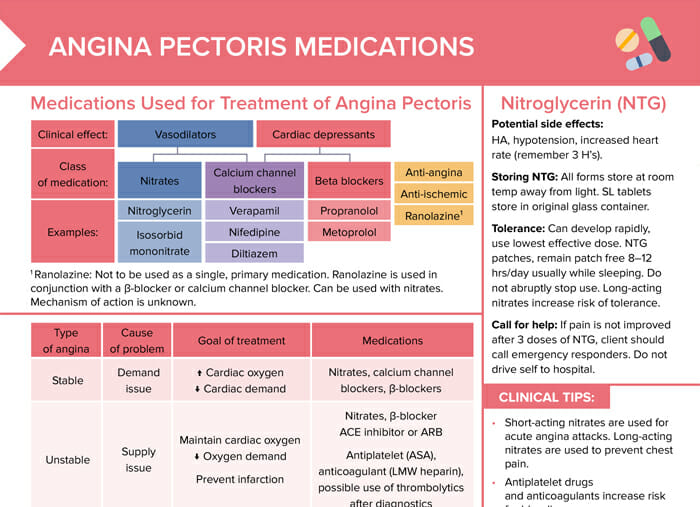
Angina pectoris medications
Clinical tips
Short-acting nitrates are used for acute angina attacks. Long-acting nitrates are used to prevent chest pain.
Antiplatelet drugs and anticoagulants increase risk for bleeding.
β-blockers are not used in variant angina. They can increase risk of coronary artery spasm.