

Nursing Knowledge
Auscultation is the process of listening to sounds produced by the body using a stethoscope.
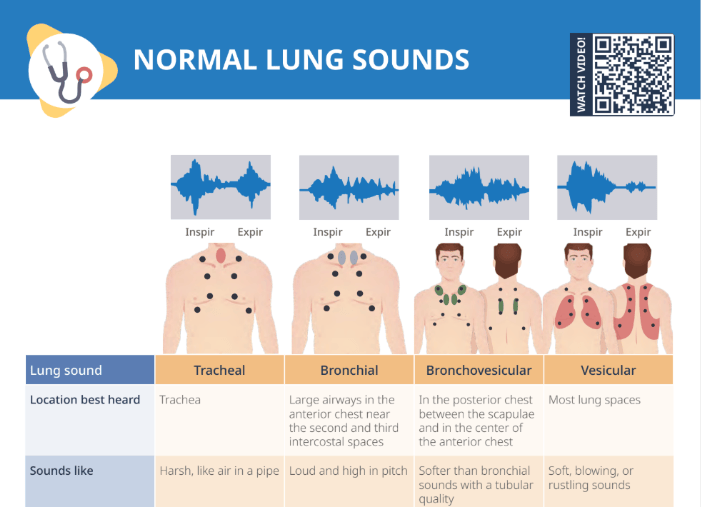
Normal lung sounds are the sounds produced by the lungs and airways during normal breathing. They are soft, blowing, or rustling sounds that can be heard in most lung spaces.
The different types of normal lung sounds are:
The different types of lung sounds can be heard best in the following locations:
When charting normal lung sounds, it’s important to be concise, clear, and descriptive. If lung sounds are normal, they’re often described as “clear to auscultation bilaterally” or “CTAB” (an abbreviation of the same phrase). This means that you heard the expected breath sounds and there were no abnormal or extra sounds.
A more detailed description could be:
“Normal vesicular breath sounds heard over the majority of the lung fields. No adventitious sounds noted. No wheezing, crackles, rhonchi, or stridor.”
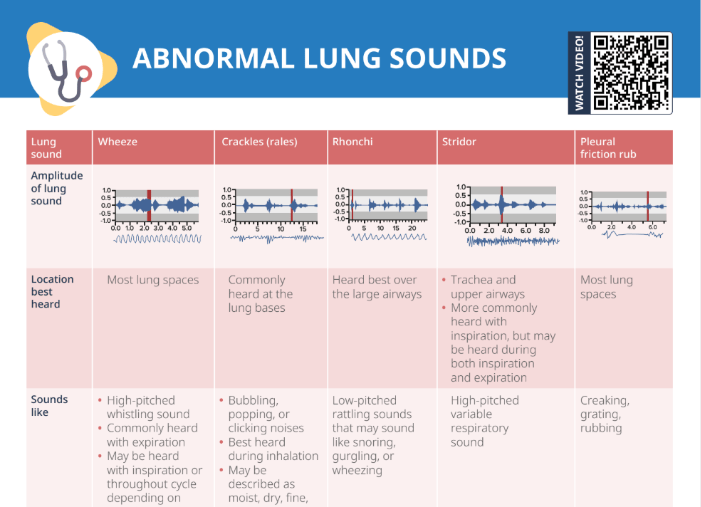
This documentation indicates that the expected sound (vesicular) was heard, specifies where it was heard (majority of the lung fields), notes the absence of any additional (adventitious) sounds, and explicitly mentions some of the specific sounds you listened for but did not hear (wheezing, crackles, rhonchi, stridor).
Free Download
Master the topic with a unique study combination of a concise summary paired with video lectures.
Your free account gives you access to:
or