Autism spectrum disorder (ASD) is a neurodevelopmental disorder characterized by a range of restricted, repetitive behaviors, and communication impairments. As a nurse, being familiar with the behavioral signs and symptoms of ASD can help you provide appropriate care and communication strategies for affected clients. The overview below also helps you gain knowledge about how nurses can assist families in accessing local support and resources, and explore various treatment modalities that can improve the lives of individuals with ASD.
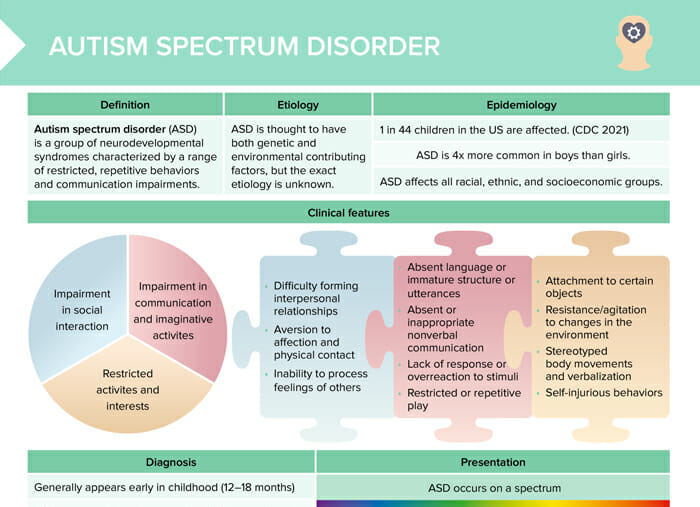
Autism spectrum disorder (ASD) is a group of neurodevelopmental syndromes characterized by a range of restricted, repetitive behaviors and communication impairments.
ASD is thought to have both genetic and environmental contributing factors, but the exact etiology is unknown.
How many people have ASD?
ASD affects 1 in 44 children in the US (CDC 2021).
ASD is diagnosed 4 times more often in boys than girls.
ASD affects all racial, ethnic, and socioeconomic groups.
What are the signs and symptoms of autism spectrum disorder?
Note: ASD occurs on a spectrum. Symptoms vary from person to person and can change over time.
The symptoms of ASD can be grouped into the following areas:
Impairment in social interaction
Difficulty forming interpersonal relationships
Aversion to affection and physical contact
Inability to process feelings of others
Impairment in communication
Absent language or immature structure or utterances
Absent or inappropriate nonverbal communication
Lack of response or overreaction to stimuli
Restricted or repetitive play
Restricted activities and interests
Attachment to certain objects
Resistance/agitation to changes in the environment
Stereotyped body movements and verbalization
Self-injurious behaviors
How is ASD diagnosed?
Generally appears early in childhood (12–18 months)
Can usually be diagnosed by 2–3 years of age by professional
Diagnosis is based on presence of developmental delays and behavioral symptoms.
Nursing tips and interventions for ASD
An ASD diagnosis can affect the entire family. Nurses can help link families to local support and resources.
Clients with ASD can be at higher risk for injuries → important to teach family members how to keep clients safe
Early intervention leads to positive long-term effects and skill development.
While there is no cure for ASD, there are multiple treatment modalities that can help improve the lives of clients with ASD and their families.
Helpful resources to connect clients with
Behavioral therapy
Speech and language therapy
Occupational therapy
Physical therapy
School-based therapy
Social-skill training
Pharmacologic treatment
Tips for caring for clients with ASD
Maintain a calm environment: Individuals with ASD may be sensitive to sensory stimuli like light or sound.
Use clear and straightforward communication: Persons with ASD may not make eye contact or have difficulty expressing their needs. Explain procedures step-by-step and avoid figures of speech or sarcasm. Check for understanding frequently.
Involve people who know your client well: People with ASD may have trouble with their routine, schedule and environment being changed. Involving caregivers and family members can provide more security and aid communication.
Common ASD comorbidities
Many individuals with ASD have one or more co-occurring conditions. These can include:
Intellectual disability
ADHD
Anxiety disorders
Depression
Epilepsy
Sleep disorders
Gastrointestinal problems
Potential nursing diagnoses for ASD
Nursing diagnoses for ASD need to be individualized for each client, taking into account the individual’s unique strengths, weaknesses, and needs. The development of a nursing care plan should be done collaboratively with the individual (when possible), the caregivers, and the rest of the healthcare team.
Impaired social interaction
Impaired verbal communication
Deficient knowledge (in parents or caregivers)
Risk for self-mutilation (due to self-injurious behavior)
Risk for caregiver role strain (parents or caregivers may be overwhelmed by the demands of caring for an individual with ASD)