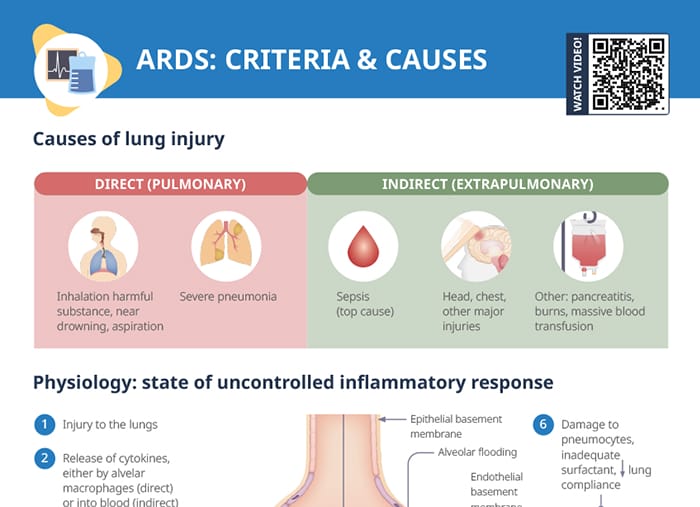


ARDS stands for Acute Respiratory Distress Syndrome.
It is a severe lung condition where a rapid-onset, widespread inflammation leads to the accumulation of fluid in the alveoli, preventing the bloodstream from receiving adequate oxygen supply. ARDS is associated with high mortality and long-term complications are possible.
Affected clients become hypoxic and experience severe shortness of breath.
Causes of acute respiratory distress syndrome can be direct (pulmonary) or indirect (extrapulmonary):
Pulmonary causes:
Extrapulmonary causes:
The stages, or phases of ARDS, can be broadly categorized into three parts:
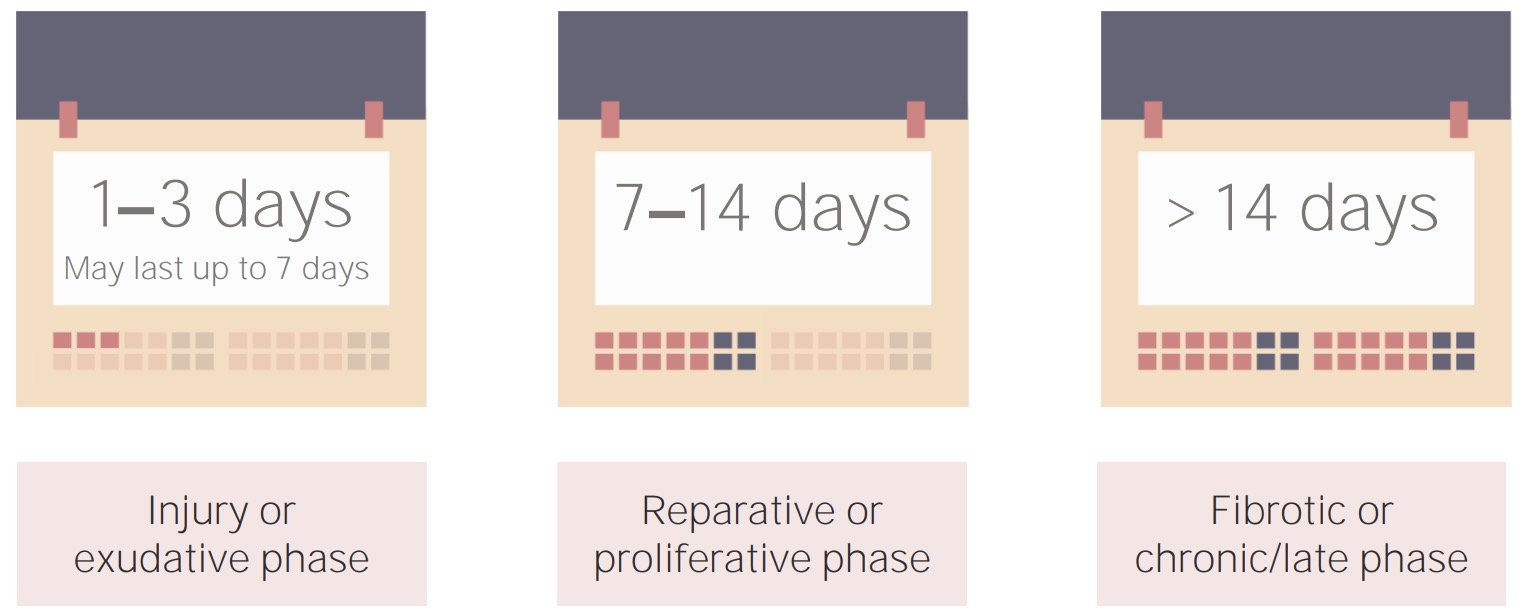
An initial injury to the pneumocytes and pulmonary endothelium leads to a rapidly progressing inflammation in the lungs. Fluid accumulates in the alveoli, affecting oxygen exchange and leading to the patient having difficulty breathing and becoming hypoxic.
In this phase, the body starts repairing the damaged lung tissue and clearing out the fluid. In this process, some patients may start to develop scarring in the lungs, which can further inhibit oxygen exchange.
Extensive scarring and fibrosis may lead to long-term or permanent loss of lung function. Some patients gradually recover, but chronic lung disease or breathing difficulties are a possibility.
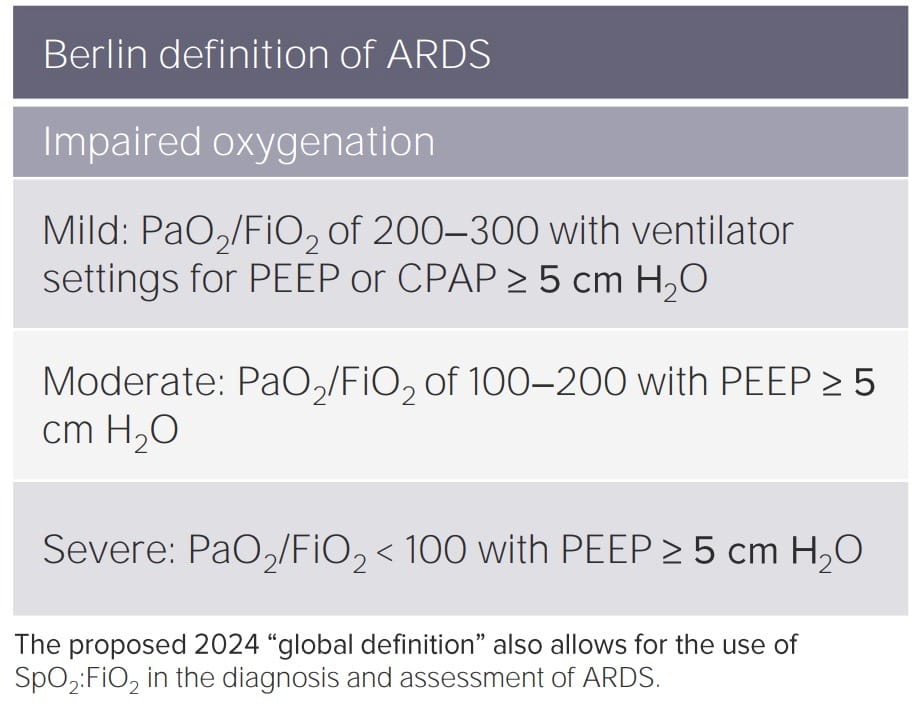
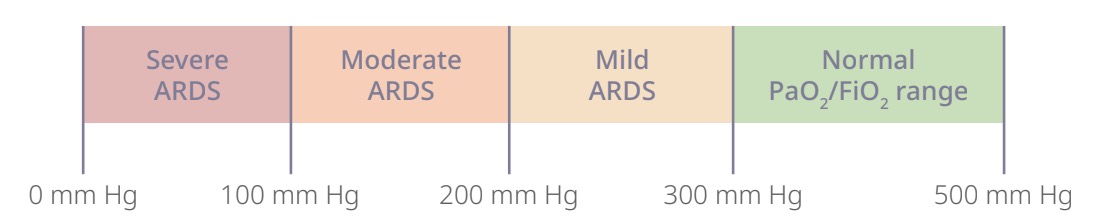
Outside of the client experiencing acute dyspnea, PaO2/FiO2 can be used to determine level of impairment to move O2 into arteries. A partial pressure of O2/fraction of inspired O2 ratio < 300 mm Hg indicates hypoxic respiratory failure.
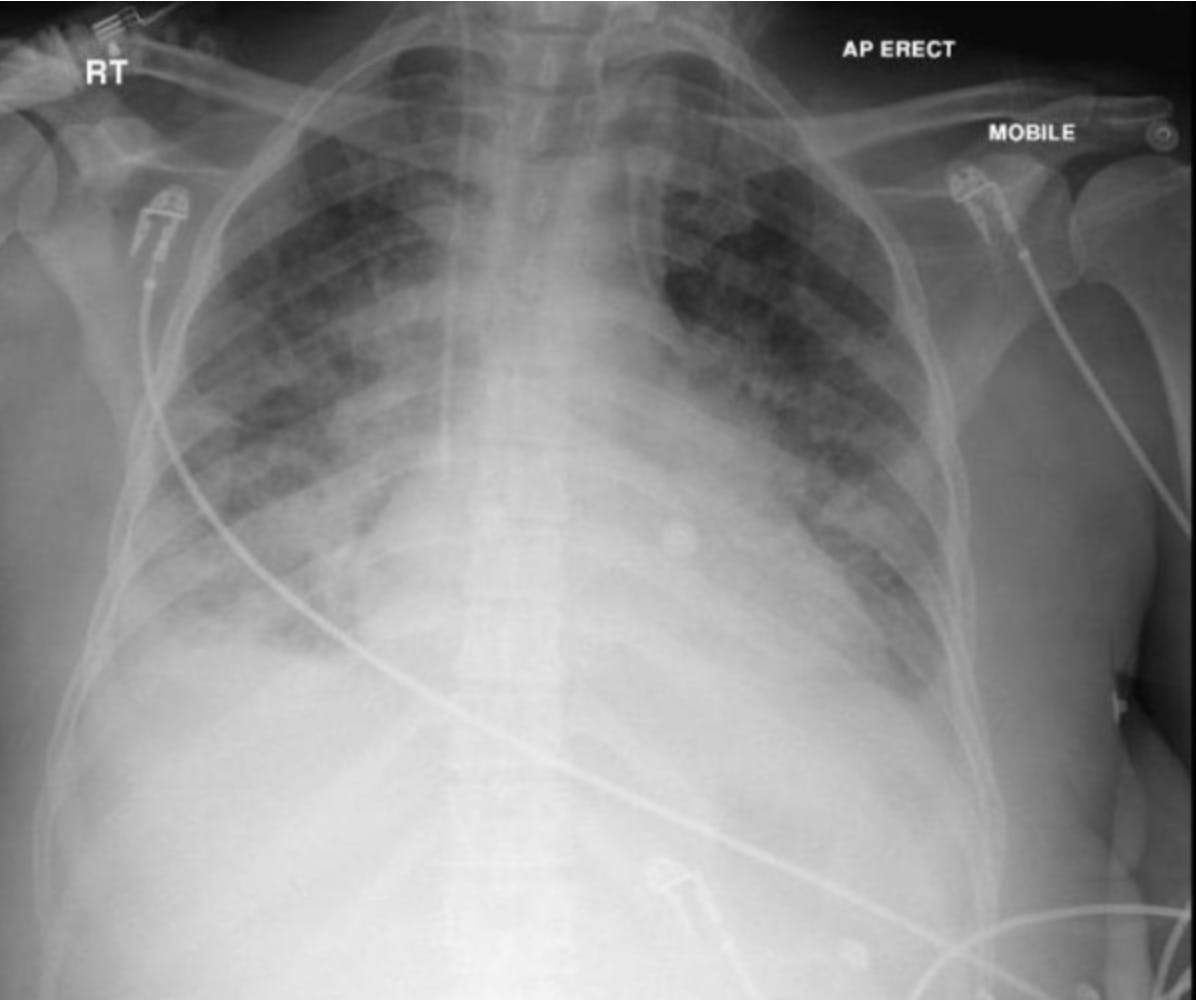
On a chest X-ray, ARDS can be recognized by bilateral alveolar opacity.
Providers will attempt to investigate and treat the underlying cause. The goals of immediate interventions are to
Most clients require intubation/mechanical ventilation. Monitor vital signs, oxygen saturation, and ABGs. Further interventions include prone positioning, sedation, paralysis, nutritional support and monitoring for complications like infections or multi-organ failure.
Pulmonary edema is defined as the accumulation of fluid in the lungs. Often, it is due to heart-related conditions such as decompensated heart failure or acute coronary syndrome. In ARDS, pulmonary edema is caused by increased permeability of the alveolar-capillary membrane due to inflammation and injury, rather than by heart failure or fluid overload.
Pneumonia is the inflammation of the lungs due to an infection. It presents with fever, chills, and productive cough, and can be recognized by lung sounds and consolidations on chest X-rays.
Pneumonia is primarily treated with antibiotics and supportive care, with usually less need for invasive respiratory support. An incentive spirometer can help clients breathe better.
Severe pneumonia can progress to ARDS.
Watch the recording of Lecturio’s online student event about respiratory emergencies with Prof. Lawes. She explained some common pathophysiology behind respiratory emergencies you should know for nursing school and beyond, and answered questions from the attendees!