

Nursing Knowledge
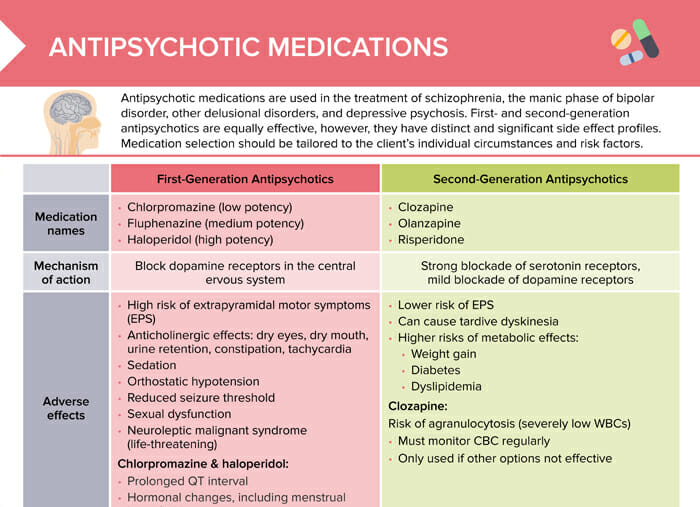
Antipsychotic medications are used in the treatment of schizophrenia, the manic phase of bipolar disorder, other delusional disorders, and depressive psychosis. First- and second-generation antipsychotics are equally effective, however, they have distinct and significant side effect profiles. Medication selection should be tailored to the client’s individual circumstances and risk factors.
Typical, or first-generation, antipsychotics work by blocking the dopamine receptors in the CNS.
Atypical, or second-generation, antipsychotics work by strongly blocking serotonin receptors and mildly blocking the dopamine receptors.
Antipsychotics therefore follow the dopamine hypothesis (belief that psychosis is related to overactivity of dopamine in certain brain pathways), blocking dopamine receptors and helping to restore a neurotransmitter activity balance, reducing psychotic symptoms.
Chlorpromazine and haloperidol especially can have the adverse effects of a prolonged QT interval and hormonal changes (including menstrual irregularities).
Antipsychotics can cause weight gain due to several mechanisms that different types of them have to different degrees:
Antipsychotics, especially when used in elderly clients with dementia, have been associated with an increased risk of mortality. The exact reasons aren’t entirely clear, but several factors are thought to contribute:
“Typical” and “atypical” are different ways of referring to first- and second-generation antipsychotics, respectively.
Because mental health conditions can be hard to pin down, some clients who get a prescription for antipsychotics might be worried about what antipsychotics do to a “normal person” who actually does not have an indication for them.
All the known adverse effects of the medications can affect everyone who takes them.
The main mechanism of action of antipsychotics, blocking dopamine receptors, may lead to symptoms similar to Parkinson disease or tardive dyskinesia due to the reduced dopamine activity, in people with previously normal dopamine levels.
Furthermore, the person might experience cognitive dulling or decreased motivation, as well as potentially becoming dependent on the drug.
While the strategies for weight loss are the same for weight gain caused by antipsychotic medications, if the client is still taking them, there are additional considerations:
Strategies that can support the brain in recovering from prolonged treatment with antipsychotics include:
Antipsychotics block the dopamine receptors in the brain, reducing this neurotransmitter’s activity.
RELATED TOPIC:
Free Download
Master the topic with a unique study combination of a concise summary paired with video lectures.
Your free account gives you access to:
or