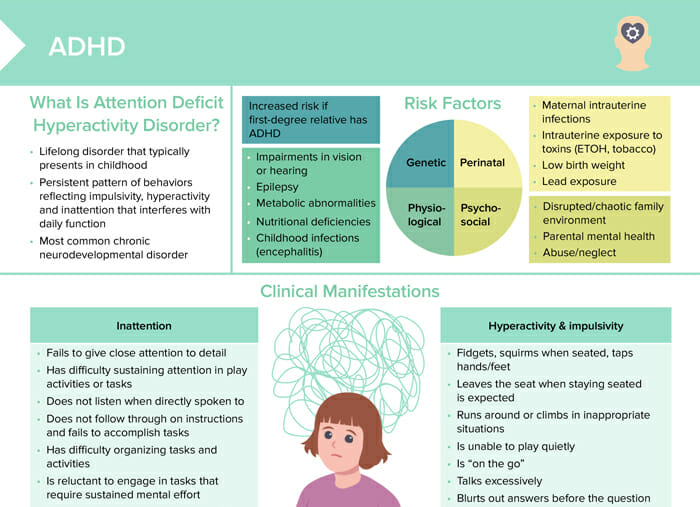
ADHD drugs play a crucial role in the clinical practice of nurses, particularly in the management of Attention-Deficit/Hyperactivity Disorder (ADHD) in individuals of all ages. These medications, including stimulants, alpha agonists, and norepinephrine reuptake inhibitors, work by targeting specific neurotransmitters in the brain to improve concentration, reduce impulsivity, and enhance overall functioning.
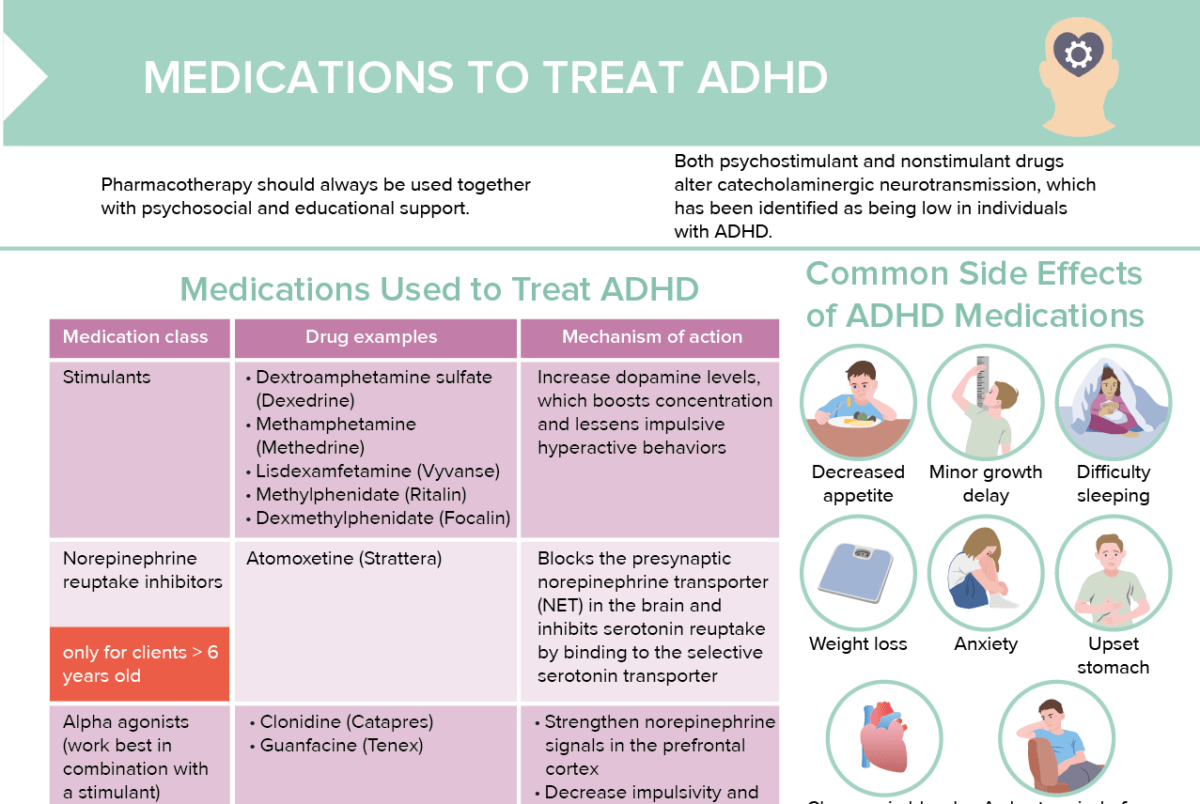
In treatment of attention deficit/hyperactivity disorder (ADHD), pharmacotherapy should always be used together with psychosocial and educational support.
Medications used include stimulants (e.g., methylphenidate, amphetamines), and nonstimulants, (e.g., atomoxetine, guanfacine).
How do psychostimulant and nonstimulant drugs work in the brain?
Both psychostimulant and nonstimulant drugs alter catecholaminergic neurotransmission, which has been identified as being low in individuals with ADHD.
Stimulants increase dopamine levels, which boosts concentration and lessens impulsive hyperactive behaviors. Nonstimulant drugs work by blocking the presynaptic norepinephrine transporter (NET) in the brain and inhibiting serotonin reuptake by binding to the selective serotonin transporter.
Overview of ADHD medications
Medication class
Examples
Mechanism of action
Stimulants
Dextroamphetamine sulfate (Dexedrine)
Methamphetamine (Methedrine)
Lisdexamfetamine
(Vyvanse)
Methylphenidate (Ritalin)
Dexmethylphenidate (Focalin)
Increase dopamine levels, which boosts concentration and lessens impulsive hyperactive behaviors
Norepinephrine reuptake inhibitors
Atomoxetine (Strattera)
Block the presynaptic norepinephrine transporter in the brain and inhibit serotonin reuptake
Alpha agonists
Clonidine (Catapres)
Guanfacine (Tenex)
Strengthen norepinephrine signals in the prefrontal cortexDecrease impulsivity and insomnia, increase emotional regulation
Common side effects of ADHD medications
Common side effects of ADHD medications include:
Decreased appetite, weight loss
Minor growth delay
Difficulty sleeping
Anxiety
Upset stomach
Changes in blood pressure and heart rate
Short periods of fatigue, increased activity, or bad mood
Side effects are typically mild and resolve after the first few weeks of use.
Client education: How to instruct clients and/or family about ADHD drugs
Signs the dosage or medication needs adjustment:
Little improvement in ADHD symptoms or diminishing symptom control over time
Feeling “revved up” or “slowed down”
Experiencing side effects
Signs the medication is working well:
Sustained focus
Improved mood
Greater attention to detail
Improved memory
Better sleep
Reduced impulsivity
Clients should take medications consistently. Only treating children while they are at school sets them up for social difficulties outside of school.
Nursing care tips about ADHD medication and treatment
Stimulant class of medication works for 70–80% of children with ADHD.
Children with untreated ADHD are more likely to have difficulty in school, become depressed, or have accidents.
Dosage is not based on gender, age, or severity of impairment, but on the rate at which the medication is metabolized and how efficiently it is absorbed by the body.
ADHD medications should not be stopped abruptly or without guidance of a healthcare provider.
Mind drug interactions of ADHD medications with other drugs (e.g., antidepressants, antacids, blood pressure medications, seizure drugs).