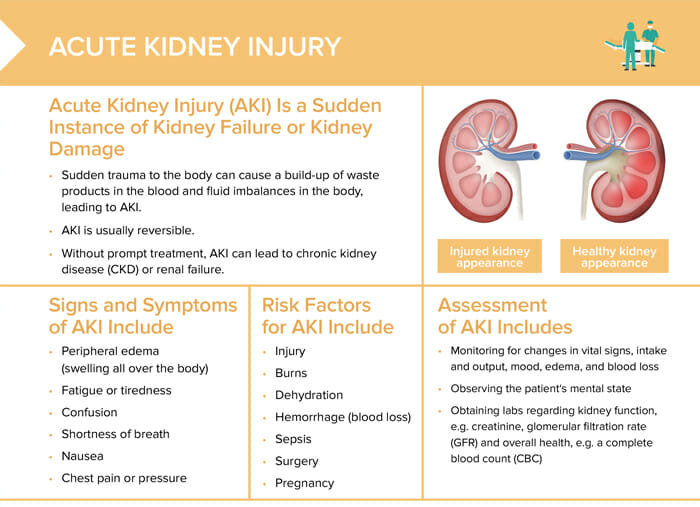
Acute kidney injury (AKI) is a common and serious condition that affects many clients in clinical practice. It is characterized by a sudden loss of kidney function or damage to the kidneys, which can lead to a buildup of waste products in the blood and fluid imbalances in the body. Nurses play a critical role in the prevention, early detection, and management of acute kidney injury, so should be familiar with the causes, symptoms, and nursing interventions.
Acute kidney injury is a sudden instance of kidney failure or kidney damage. While being usually reversible, without prompt treatment, acute kidney damage can lead to chronic kidney disease or renal failure.
Criteria for acute kidney injury
Rise in serum creatinine (> 0.3 mg/dL or > 50%)
Reduction in urine output (< 0.5 mL/kg for > 6 hours)
Note: The expected range for creatinine is 0.7–1.4 mg/dL (62–124 mmol/L).
What is the most common cause of acute kidney injury?
One of the most common causes of acute kidney injury is decreased blood flow to the kidneys, for example due to dehydration, blood loss, burns, or sepsis.
Other causes include:
Damage to the kidney tissue (e.g. acute tubular necrosis, glomerulonephritis, vasculitis, or acute intestinal nephritis)
Obstruction of urine outflow (e.g. kidney stones or tumors)