

NCLEX QUESTION TYPE TUTORIAL
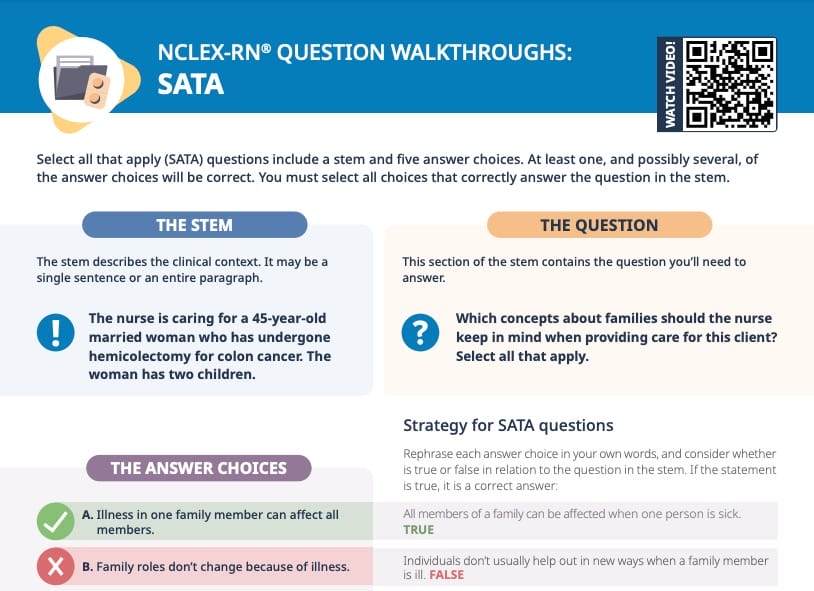
The nurse cares for an older adult client diagnosed with a history of emphysema. The client reports fatigue, confusion, and a headache. Respirations are 26 breaths/min. Respiratory acidosis is suspected. Which arterial blood gas values would be present for this condition? Select all that apply.
Tip: All the cues that are given in the question stem are confirmations of the suspected diagnosis of respiratory acidosis. Therefore, when you move on to the answer choices, only focus on the diagnosis of respiratory acidosis. This is what the question asks you to do: Match the correct answer choices to this condition.
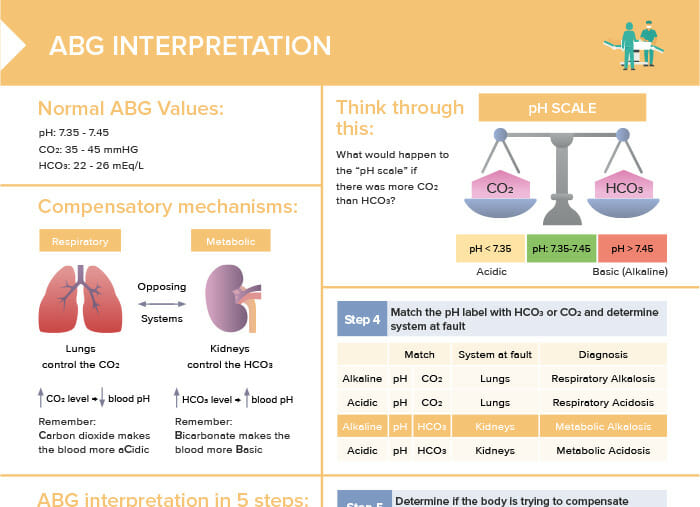
An ABG looks at three values:
Imbalances in these values can lead to four forms of acid–base imbalance that can be diagnosed based on characteristic patterns of too-high and too-low ABG values:
Before you look at each answer individually, sum up again what kind of answers you are presented with here:
Normal PaO2 is 75 or 80–100, so this value is considered low.
Emphysema means air is trapped in the alveoli, leading to poor gas exchange and decreased PaO2. A low PaO2 would be expected for a client with respiratory acidosis, so this answer would be correct.
Normal PaCO2 is 35–45, so this value is high. The trapped air in the alveoli due to emphysema decreases the removal of CO2. Not getting rid of enough CO2, having too much of this acid in the blood, would increase PaCO2 and push the client toward acidosis – so, this answer fits the client and is correct.
A normal pH is 7.25 to 7.45, so this number is lower => more acidic. Since in respiratory acidosis, a lower pH is to be expected (due to the high PaCO2), this answer fits as well and is correct.
Tip: Don’t let yourself get thrown off by what feels like “too many” or “too few” correct or incorrect answers in a row. Our need for balance does not work in our favor in select-all-that-apply questions! Look at each answer choice separately and decide confidently based on this only, ignoring the number of answer choices you may have already marked correct or incorrect. Remember: Only one may be correct, or all of them!
A normal bicarb is roughly 22 to 26, so 20 is not extremely low, but definitely on the low end. If a client is in respiratory acidosis, the body should be compensating with more base (bicarb is a base), so an at least normal, or elevated value would be expected. Therefore, this value does not fit respiratory acidosis and the answer is incorrect.
A pH of 7.46 is higher than the normal range of 7.35–7.45, which would result in alkalosis, not acidosis. Acidosis decreases the pH. This answer choice is incorrect.
Double-check your reasoning on all the answers and take care none of them are contradicting each other. Again, don’t be fooled by thinking “I should probably choose one more/less.” Trust your judgment!
RELATED TOPIC:
Free Download
Benefit from a unique study combination of a concise summary paired with video lectures.
Your free account gives you access to:
or