Domina Conceptos Médicos

Estudia para la escuela de medicina y tus examenes con Lecturio.

Vacunación

La vacunación es la administración de una sustancia para inducir al AL Amyloidosis sistema inmunitario a desarrollar protección contra una enfermedad. A diferencia de la inmunización pasiva, que implica la administración de anticuerpos preformados, la inmunización activa constituye la administración de una vacuna para estimular al AL Amyloidosis organismo a producir sus propios anticuerpos. Una vacuna suele ser una forma antigénica y no virulenta de un microorganismo normalmente virulento. Las vacunas son una forma de prevención primaria y son la forma más efectiva debido a su seguridad, eficacia, bajo costo y fácil acceso. Aunque la mayoría de las vacunas se administran a pacientes jóvenes, algunas vacunas están dirigidas a enfermedades que se producen en EN Erythema nodosum is an immune-mediated panniculitis (inflammation of the subcutaneous fat) caused by a type IV (delayed-type) hypersensitivity reaction. It commonly manifests in young women as tender, erythematous nodules on the shins. Erythema Nodosum la mediana y la tercera edad, por lo que se administran a pacientes mayores.

Last updated: Dec 15, 2025
Editorial responsibility: Stanley Oiseth, Lindsay Jones, Evelin Maza

Descripción General

  • Una vacuna crea inmunidad contra una o varias enfermedades en EN Erythema nodosum is an immune-mediated panniculitis (inflammation of the subcutaneous fat) caused by a type IV (delayed-type) hypersensitivity reaction. It commonly manifests in young women as tender, erythematous nodules on the shins. Erythema Nodosum forma de anticuerpos.
  • Las vacunas inducen la protección mediante:
    • Utilización de componentes preexistentes de la respuesta inmune
    • Inducción de la generación de células de memoria específicas de antígeno
    • Utilización de la inmunidad innata y adaptativa
  • Usos de las vacunas:
    • Evitar que una enfermedad infecte a un paciente: poliomielitis (vacuna antipoliomielítica oral (OPV por sus siglas en EN Erythema nodosum is an immune-mediated panniculitis (inflammation of the subcutaneous fat) caused by a type IV (delayed-type) hypersensitivity reaction. It commonly manifests in young women as tender, erythematous nodules on the shins. Erythema Nodosum inglés))
    • Prevenir la reaparición de una infección existente: herpes zóster (culebrilla)
    • Prevenir el desarrollo de una enfermedad después de la exposición: rabia
    • Prevenir la infección fetal prenatal: rubéola
    • Prevenir el cáncer: VPH ( virus Virus Viruses are infectious, obligate intracellular parasites composed of a nucleic acid core surrounded by a protein capsid. Viruses can be either naked (non-enveloped) or enveloped. The classification of viruses is complex and based on many factors, including type and structure of the nucleoid and capsid, the presence of an envelope, the replication cycle, and the host range. Virology del papiloma humano)/ HBV HBV Hepatitis B virus (HBV) is a partially double-stranded DNA virus, which belongs to the Orthohepadnavirus genus and the Hepadnaviridae family. Hepatitis B virus is transmitted by exposure to infectious blood or body fluids. Examples of types of exposure include sexual intercourse, IV drug use, and childbirth. Hepatitis B Virus ( hepatitis B Hepatitis B Hepatitis B virus (HBV) is a partially double-stranded DNA virus, which belongs to the Orthohepadnavirus genus and the Hepadnaviridae family. Most individuals with acute HBV infection are asymptomatic or have mild, self-limiting symptoms. Chronic infection can be asymptomatic or create hepatic inflammation, leading to liver cirrhosis and hepatocellular carcinoma (HCC). Hepatitis B Virus)
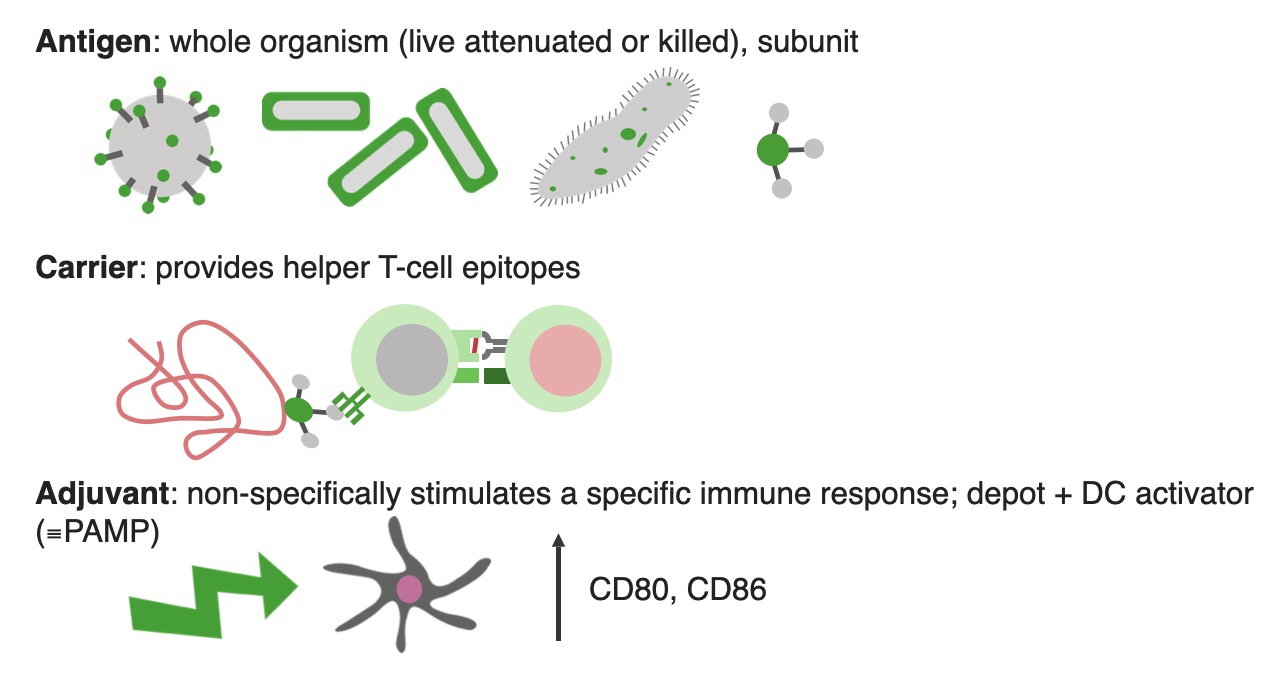
  • Componentes de la vacuna:
    • Antígeno: organismo entero (vivo atenuado o muerto) o subunidad
    • Líquido de suspensión: Proporciona epítopos a los LOS Neisseria linfocitos T colaboradores, la parte de una molécula de antígeno a la que se une un anticuerpo.
    • Adyuvante: moléculas inmunomoduladoras que potencian la respuesta inmune cuando se administran junto con el antígeno (el adyuvante más utilizado en EN Erythema nodosum is an immune-mediated panniculitis (inflammation of the subcutaneous fat) caused by a type IV (delayed-type) hypersensitivity reaction. It commonly manifests in young women as tender, erythematous nodules on the shins. Erythema Nodosum las vacunas humanas son las sales de aluminio)
Componentes de las vacunas

Componentes de una vacuna

DC activator: activador de células dendríticas
PAMP: patrón molecular asociado a patógenos
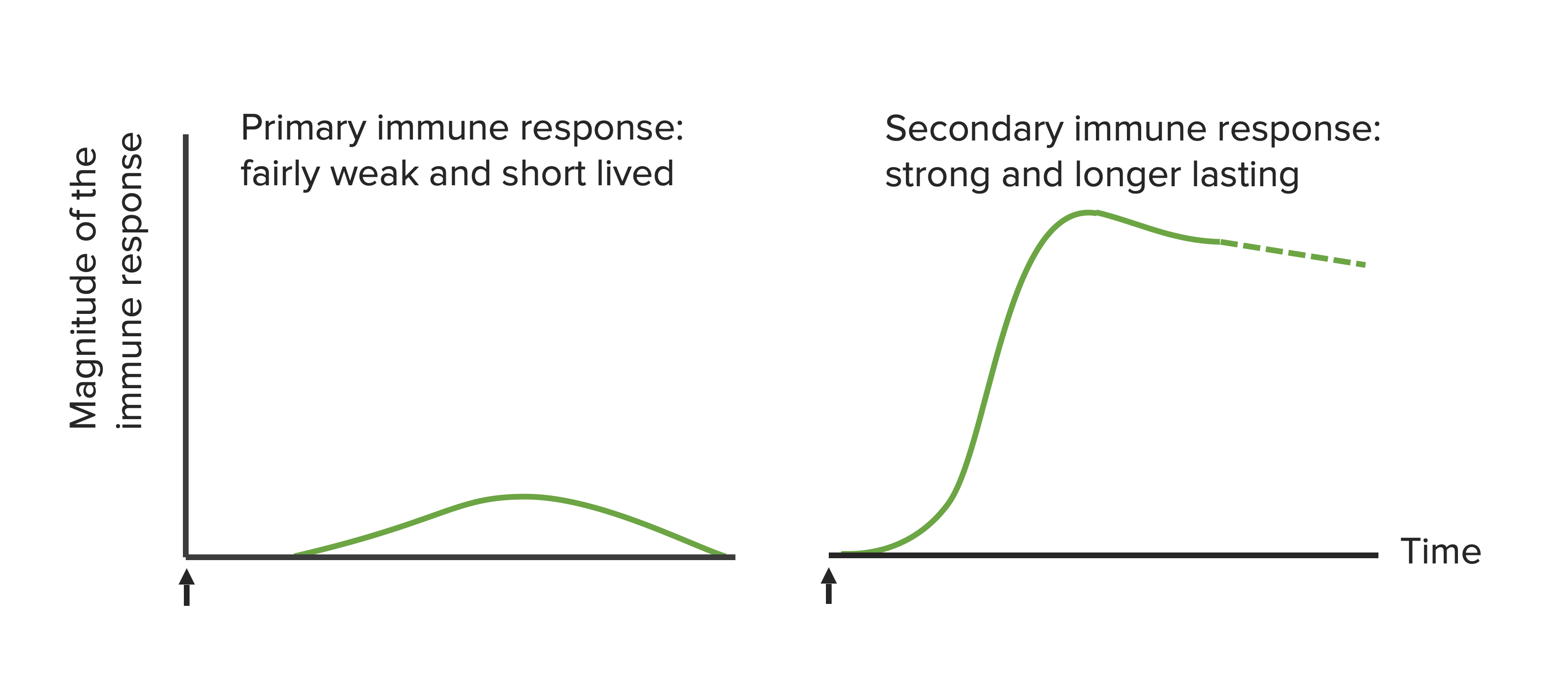
Imagen por Lecturio. Licencia: CC BY-NC-SA 4.0

Inmunización Activa y Pasiva

Inmunización activa

  • Mecanismo de inmunidad
    • Se inyectan patógenos vivos atenuados o inactivados en EN Erythema nodosum is an immune-mediated panniculitis (inflammation of the subcutaneous fat) caused by a type IV (delayed-type) hypersensitivity reaction. It commonly manifests in young women as tender, erythematous nodules on the shins. Erythema Nodosum el organismo.
      • Vacunas vivas atenuadas: patógenos atenuados en EN Erythema nodosum is an immune-mediated panniculitis (inflammation of the subcutaneous fat) caused by a type IV (delayed-type) hypersensitivity reaction. It commonly manifests in young women as tender, erythematous nodules on the shins. Erythema Nodosum sus efectos patógenos (virulencia), pero que siguen siendo proliferativos
      • Vacunas inactivadas: patógenos inactivados o sus componentes purificados
    • El sistema inmunitario responde creando inmunidad.
      • La respuesta humoral crea anticuerpos contra los LOS Neisseria agentes patógenos inyectados, proporcionando una inmunidad inmediata.
      • La respuesta celular, a través de los linfocitos T colaboradores, construye una “memoria” inmunológica.
      • Los LOS Neisseria encuentros posteriores con el agente patógeno real provocan una respuesta inmune más robusta porque las células de memoria ya están presentes.
  • Inicio y duración de la inmunidad
    • La inmunidad tarda de unos días a semanas en EN Erythema nodosum is an immune-mediated panniculitis (inflammation of the subcutaneous fat) caused by a type IV (delayed-type) hypersensitivity reaction. It commonly manifests in young women as tender, erythematous nodules on the shins. Erythema Nodosum desarrollarse.
    • Se puede obtener inmunidad de por vida.
    • Algunas vacunas requieren refuerzos, ya que la respuesta humoral puede disminuir con el tiempo.
  • Limitaciones
    • Solo puede crear inmunidad contra formas conocidas del patógeno.
    • La presencia de anticuerpos pasivos (por ejemplo, la inmunoglobulina intravenosa (IGIV por sus siglas en EN Erythema nodosum is an immune-mediated panniculitis (inflammation of the subcutaneous fat) caused by a type IV (delayed-type) hypersensitivity reaction. It commonly manifests in young women as tender, erythematous nodules on the shins. Erythema Nodosum inglés) o los LOS Neisseria anticuerpos transplacentarios en EN Erythema nodosum is an immune-mediated panniculitis (inflammation of the subcutaneous fat) caused by a type IV (delayed-type) hypersensitivity reaction. It commonly manifests in young women as tender, erythematous nodules on the shins. Erythema Nodosum un recién nacido) reduce la formación de la inmunidad.
    • La memoria inmunológica puede no ser permanente; puede requerir refuerzos.
  • Ejemplos
    • Vivas atenuadas:
      • Sarampión
      • Paperas
      • Rubeola Rubeola Measles (also known as rubeola) is caused by a single-stranded, linear, negative-sense RNA virus of the family Paramyxoviridae. It is highly contagious and spreads by respiratory droplets or direct-contact transmission from an infected person. Typically a disease of childhood, measles classically starts with cough, coryza, and conjunctivitis, followed by a maculopapular rash. Measles Virus
      • Varicela
    • Inactivadas:
      • Neumococo
      • Meningococo
Magnitud de la respuesta inmune

Bases inmunológicas de la vacunación activa. Las flechas marcan el momento de la administración de la vacuna.

Imagen por Lecturio. Licencia: CC BY-NC-SA 4.0

Inmunización pasiva

  • Mecanismo de inmunidad
    • Las inmunoglobulinas prefabricadas se infunden para proporcionar inmunidad.
    • No hay reacción inmunológica.
  • Inicio y duración de la inmunidad
    • La aparición de la inmunidad proporcionada es inmediata.
    • No existe una inmunidad autoperpetuada o continua.
    • Los LOS Neisseria preparados de inmunoglobulina homóloga (humana) contienen principalmente inmunoglobulina G ( IgG IgG The major immunoglobulin isotype class in normal human serum. There are several isotype subclasses of igg, for example, igg1, igg2a, and igg2b. Hypersensitivity Pneumonitis). Su vida media es de 21 días.
  • Limitaciones
    • Pueden producirse reacciones alérgicas y anafilaxia.
    • La producción de anticuerpos preformados requiere mucho tiempo y es costosa.
  • Ejemplos
    • Antisueros equinos contra el veneno de serpiente, la toxina botulínica y la toxina diftérica
    • Mezcla de Ig Ig X-linked Agammaglobulinemia humana contra la hepatitis A Hepatitis A Hepatitis A is caused by the hepatitis A virus (HAV), a nonenveloped virus of the Picornaviridae family with single-stranded RNA. HAV causes an acute, highly contagious hepatitis with unspecific prodromal symptoms such as fever and malaise followed by jaundice and elevated liver transaminases. Hepatitis A Virus o B, el sarampión, la rabia, el tétanos y la varicela zóster
    • Anticuerpos monoclonales humanizados contra el virus Virus Viruses are infectious, obligate intracellular parasites composed of a nucleic acid core surrounded by a protein capsid. Viruses can be either naked (non-enveloped) or enveloped. The classification of viruses is complex and based on many factors, including type and structure of the nucleoid and capsid, the presence of an envelope, the replication cycle, and the host range. Virology respiratorio sincitial

Tipos de Vacunas Activas

Tabla: Tipos de vacunas activas
Tipo de vacuna Descripción Pros Contras Ejemplos
Viva atenuada
  • El microorganismo pierde su patogenicidad, pero conserva la capacidad de crecimiento transitorio dentro de los LOS Neisseria huéspedes inoculados.
  • Induce respuestas celulares y humorales.
Induce una fuerte inmunidad, a menudo de por vida.
  • Podría revertirse a la forma virulenta.
  • A menudo está contraindicada en EN Erythema nodosum is an immune-mediated panniculitis (inflammation of the subcutaneous fat) caused by a type IV (delayed-type) hypersensitivity reaction. It commonly manifests in young women as tender, erythematous nodules on the shins. Erythema Nodosum embarazo e inmunodeficiencia.
  • Triple viral o SPR (sarampión, paperas y rubéola)
  • OPV
  • Rotavirus Rotavirus A genus of Reoviridae, causing acute gastroenteritis in birds and mammals, including humans. Transmission is horizontal and by environmental contamination. Seven species (rotaviruses A through G) are recognized. Rotavirus
  • Virus Virus Viruses are infectious, obligate intracellular parasites composed of a nucleic acid core surrounded by a protein capsid. Viruses can be either naked (non-enveloped) or enveloped. The classification of viruses is complex and based on many factors, including type and structure of the nucleoid and capsid, the presence of an envelope, the replication cycle, and the host range. Virology de varicela zóster
  • Fiebre amarilla
  • BCG BCG An active immunizing agent and a viable avirulent attenuated strain of Mycobacterium bovis, which confers immunity to mycobacterial infections. It is used also in immunotherapy of neoplasms due to its stimulation of antibodies and non-specific immunity. Cancer Immunotherapy (Bacilo de Calmette-Guérin)
Inactivada
  • El patógeno se inactiva mediante calor Calor Inflammation o productos químicos, manteniendo la estructura del epítopo en EN Erythema nodosum is an immune-mediated panniculitis (inflammation of the subcutaneous fat) caused by a type IV (delayed-type) hypersensitivity reaction. It commonly manifests in young women as tender, erythematous nodules on the shins. Erythema Nodosum los LOS Neisseria antígenos de superficie.
  • Induce principalmente una respuesta humoral.
Más seguras que las vacunas vivas, fáciles de fabricar
  • Respuesta inmune más débil
  • Por lo general, se requieren vacunas de refuerzo.
  • Hepatitis A Hepatitis A Hepatitis A is caused by the hepatitis A virus (HAV), a nonenveloped virus of the Picornaviridae family with single-stranded RNA. HAV causes an acute, highly contagious hepatitis with unspecific prodromal symptoms such as fever and malaise followed by jaundice and elevated liver transaminases. Hepatitis A Virus
  • Influenza Influenza Influenza viruses are members of the Orthomyxoviridae family and the causative organisms of influenza, a highly contagious febrile respiratory disease. There are 3 primary influenza viruses (A, B, and C) and various subtypes, which are classified based on their virulent surface antigens, hemagglutinin (HA) and neuraminidase (NA). Influenza typically presents with a fever, myalgia, headache, and symptoms of an upper respiratory infection. Influenza Viruses/Influenza
  • Encefalitis japonesa
  • Vacuna antipoliomielítica inactivada (IPV, por sus siglas en EN Erythema nodosum is an immune-mediated panniculitis (inflammation of the subcutaneous fat) caused by a type IV (delayed-type) hypersensitivity reaction. It commonly manifests in young women as tender, erythematous nodules on the shins. Erythema Nodosum inglés)
  • Rabia
Subunidad Incluye solo los LOS Neisseria antígenos que mejor estimulan el sistema inmunitario. Menor probabilidad de reacciones adversas
  • Costosa
  • Respuestas inmunes más débiles
  • Hib
  • HBV HBV Hepatitis B virus (HBV) is a partially double-stranded DNA virus, which belongs to the Orthohepadnavirus genus and the Hepadnaviridae family. Hepatitis B virus is transmitted by exposure to infectious blood or body fluids. Examples of types of exposure include sexual intercourse, IV drug use, and childbirth. Hepatitis B Virus
  • VPH
  • Tos TOS Thoracic outlet syndrome (TOS) is a broad term used for a spectrum of syndromes related to the general region of the thoracic outlet, which involves the compression or irritation of elements of the brachial plexus, subclavian artery, or subclavian vein. Thoracic Outlet Syndrome ferina
  • Neumococo
  • Meningococo
  • Herpes
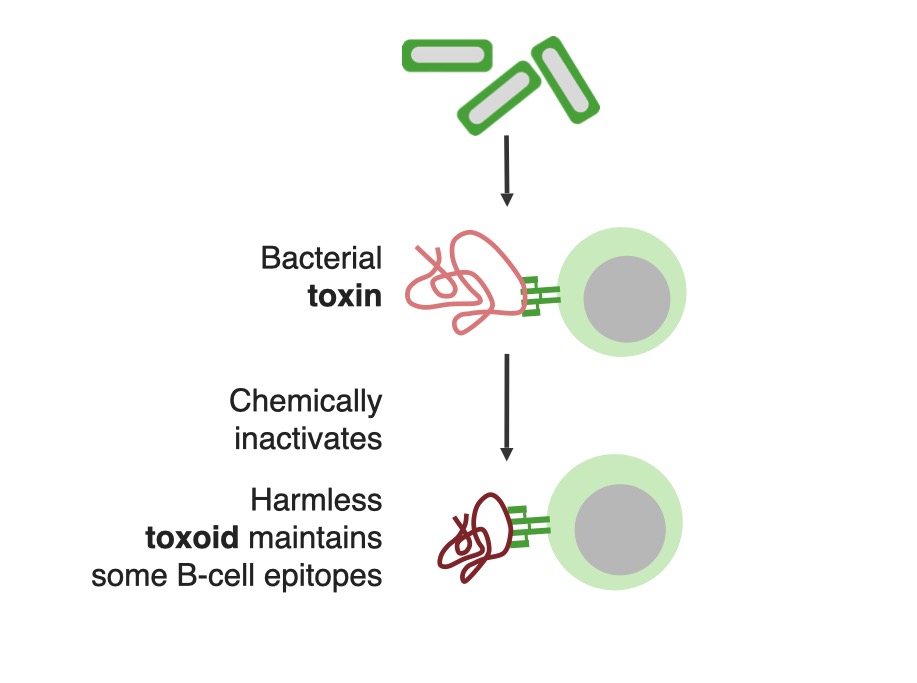
Toxoide
  • Toxina bacteriana desnaturalizada con un sitio de unión al AL Amyloidosis receptor Receptor Receptors are proteins located either on the surface of or within a cell that can bind to signaling molecules known as ligands (e.g., hormones) and cause some type of response within the cell. Receptors intacto
  • Estimula el sistema inmunitario para que produzca anticuerpos sin que pueda causar enfermedades
Protege contra las toxinas bacterianas. Los LOS Neisseria niveles de antitoxina disminuyen con el tiempo, pueden requerir un refuerzo.
  • Difteria
  • Tétanos
Vacunas contra los toxoides

Los toxoides son toxinas bacterianas, convertidas en inofensivas e inmunógenas por inactivación química.

Imagen por Lecturio. Licencia: CC BY-NC-SA 4.0
Efectos Secundarios y Complicaciones

Reacciones comunes

  • Por lo general, no es una amenaza para la vida.
  • Pueden ocurrir dentro de los LOS Neisseria primeros 3 días después de la vacunación.
  • Reacciones inflamatorias locales (enrojecimiento, hinchazón, dolor Dolor Inflammation) en EN Erythema nodosum is an immune-mediated panniculitis (inflammation of the subcutaneous fat) caused by a type IV (delayed-type) hypersensitivity reaction. It commonly manifests in young women as tender, erythematous nodules on the shins. Erythema Nodosum la zona de la inyección
  • Fiebre, dolor Dolor Inflammation muscular y articular, fatiga y/o síntomas gripales
  • Una forma más leve de la enfermedad puede ser causada por la administración de vacunas vivas (por ejemplo, sarampión de vacunación, artralgia en EN Erythema nodosum is an immune-mediated panniculitis (inflammation of the subcutaneous fat) caused by a type IV (delayed-type) hypersensitivity reaction. It commonly manifests in young women as tender, erythematous nodules on the shins. Erythema Nodosum la vacunación contra la rubéola).

Complicaciones específicas

  • Potencialmente mortales
  • Reacciones anafilácticas a los LOS Neisseria ingredientes de las vacunas (por ejemplo, los LOS Neisseria pacientes con alergia severa al AL Amyloidosis huevo no pueden recibir la vacuna contra la gripe o la fiebre amarilla)
  • Neuritis, neuropatía (difteria y tétanos)
  • Convulsiones (triple viral o SPR)
  • Síndrome de Guillain-Barré (Hib, tétanos)
  • Encefalitis (sarampión)
  • Meningitis Meningitis Meningitis is inflammation of the meninges, the protective membranes of the brain, and spinal cord. The causes of meningitis are varied, with the most common being bacterial or viral infection. The classic presentation of meningitis is a triad of fever, altered mental status, and nuchal rigidity. Meningitis (paperas)
  • Artritis (vacuna triple viral o SPR)
  • Trombocitopenia (neumocócica, triple viral o SPR, influenza Influenza Influenza viruses are members of the Orthomyxoviridae family and the causative organisms of influenza, a highly contagious febrile respiratory disease. There are 3 primary influenza viruses (A, B, and C) and various subtypes, which are classified based on their virulent surface antigens, hemagglutinin (HA) and neuraminidase (NA). Influenza typically presents with a fever, myalgia, headache, and symptoms of an upper respiratory infection. Influenza Viruses/Influenza, DTaP DTaP Combined vaccines consisting of diphtheria toxoid; tetanus toxoid; and an acellular form of pertussis vaccine. At least five different purified antigens of b. Pertussis have been used in various combinations in these vaccines. Bordetella (difteria, tétanos, tos TOS Thoracic outlet syndrome (TOS) is a broad term used for a spectrum of syndromes related to the general region of the thoracic outlet, which involves the compression or irritation of elements of the brachial plexus, subclavian artery, or subclavian vein. Thoracic Outlet Syndrome ferina))

Vacunación en Estados Unidos

Calendarios de inmunización

  • Revisado anualmente por los LOS Neisseria Centros para el Control y la Prevención de Enfermedades (CDC por sus siglas en EN Erythema nodosum is an immune-mediated panniculitis (inflammation of the subcutaneous fat) caused by a type IV (delayed-type) hypersensitivity reaction. It commonly manifests in young women as tender, erythematous nodules on the shins. Erythema Nodosum inglés) en EN Erythema nodosum is an immune-mediated panniculitis (inflammation of the subcutaneous fat) caused by a type IV (delayed-type) hypersensitivity reaction. It commonly manifests in young women as tender, erythematous nodules on the shins. Erythema Nodosum colaboración con otros organismos reguladores
  • El momento de la inoculación está diseñado para coincidir con las visitas rutinarias de los LOS Neisseria niños sanos y proporcionar una protección adecuada a la edad contra los LOS Neisseria patógenos.
  • En el caso de los niños que se retrasen en la inmunización, un calendario de “puesta al día” ofrece un calendario óptimo de inmunizaciones.
  • Los LOS Neisseria niños prematuros deben recibir las vacunas de acuerdo con su edad cronológica, sin ninguna corrección. Una excepción: la de HBV HBV Hepatitis B virus (HBV) is a partially double-stranded DNA virus, which belongs to the Orthohepadnavirus genus and the Hepadnaviridae family. Hepatitis B virus is transmitted by exposure to infectious blood or body fluids. Examples of types of exposure include sexual intercourse, IV drug use, and childbirth. Hepatitis B Virus se administra cuando el peso supera los LOS Neisseria 2 kg.
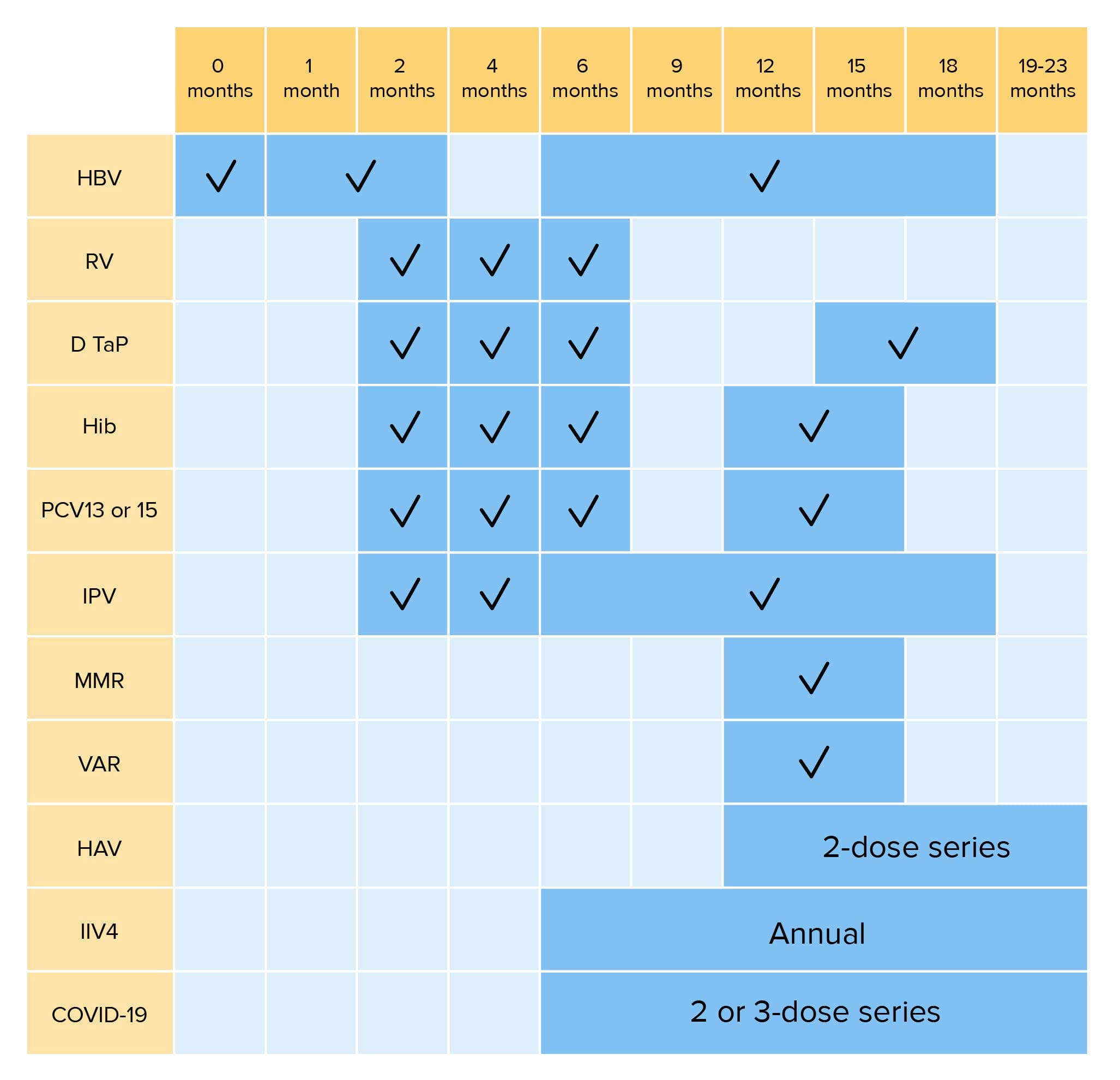
Vaccination

Vacunación de rutina en niños hasta 23 meses:
HBV: vacunación contra hepatitis B
RV: vacunación contra rotavirus
DTaP: vacunación contra difteria, tétanos, tos ferina
Hib: vacunación contra Haemophilus influenzae tipo b
PCV: vacunación contra neumococo conjugada
IPV: vacunación contra polio inactivada
MMR: vacunación contra sarampión, rubeola y paperas
VAR: vacunación contra varicela
HAV: vacunación contra el virus de la hepatitis A
IIV4: vacunación tetravalente inactivada contra influenza
COVID-19: vacunación contra enfermedad por coronavirus 2019 (bivalente) *RV1 es una serie de 2 dosis; RV5 es una serie de 3 dosis
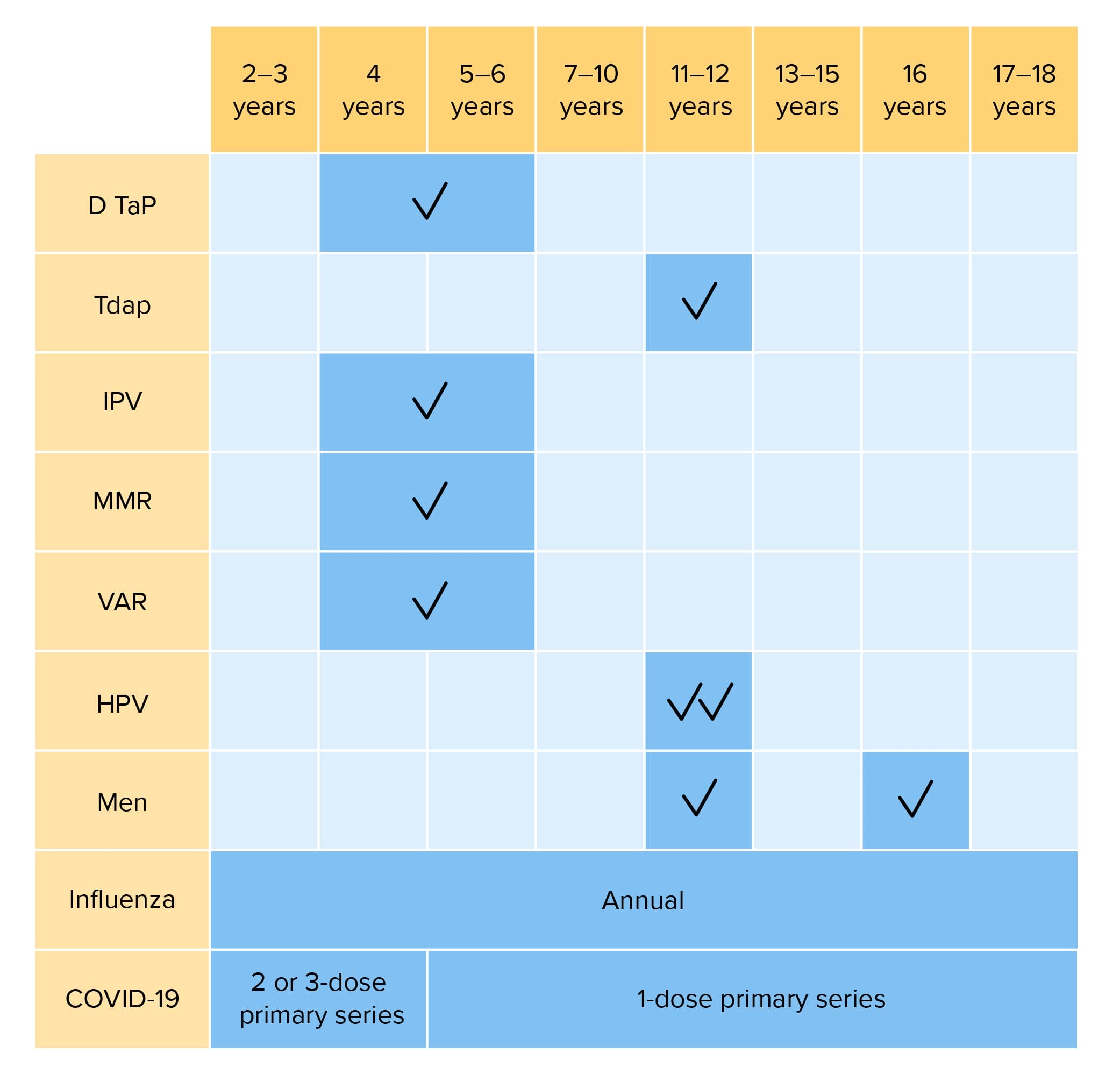
Imagen por Lecturio.
Vaccination

Vacunación de rutina para niños entre 2- 18 años de edad:
DTaP: vacunación contra difteria, tétanos, tos ferina
Tdap: vacunación contra tétano, difteria y contra tos ferina acelular
Hib: vacunación contra Haemophilus influenzae tipo b
IPV: vacunación contra polio inactivada
MMR: vacunación contra sarampión, rubeola y paperas
VAR: vacunación contra varicela
HPV: vacunación contra el virus del papiloma humano
Men: vacunación contra el meningococo
COVID-19: vacunación contra enfermedad por coronavirus 2019 (bivalente)
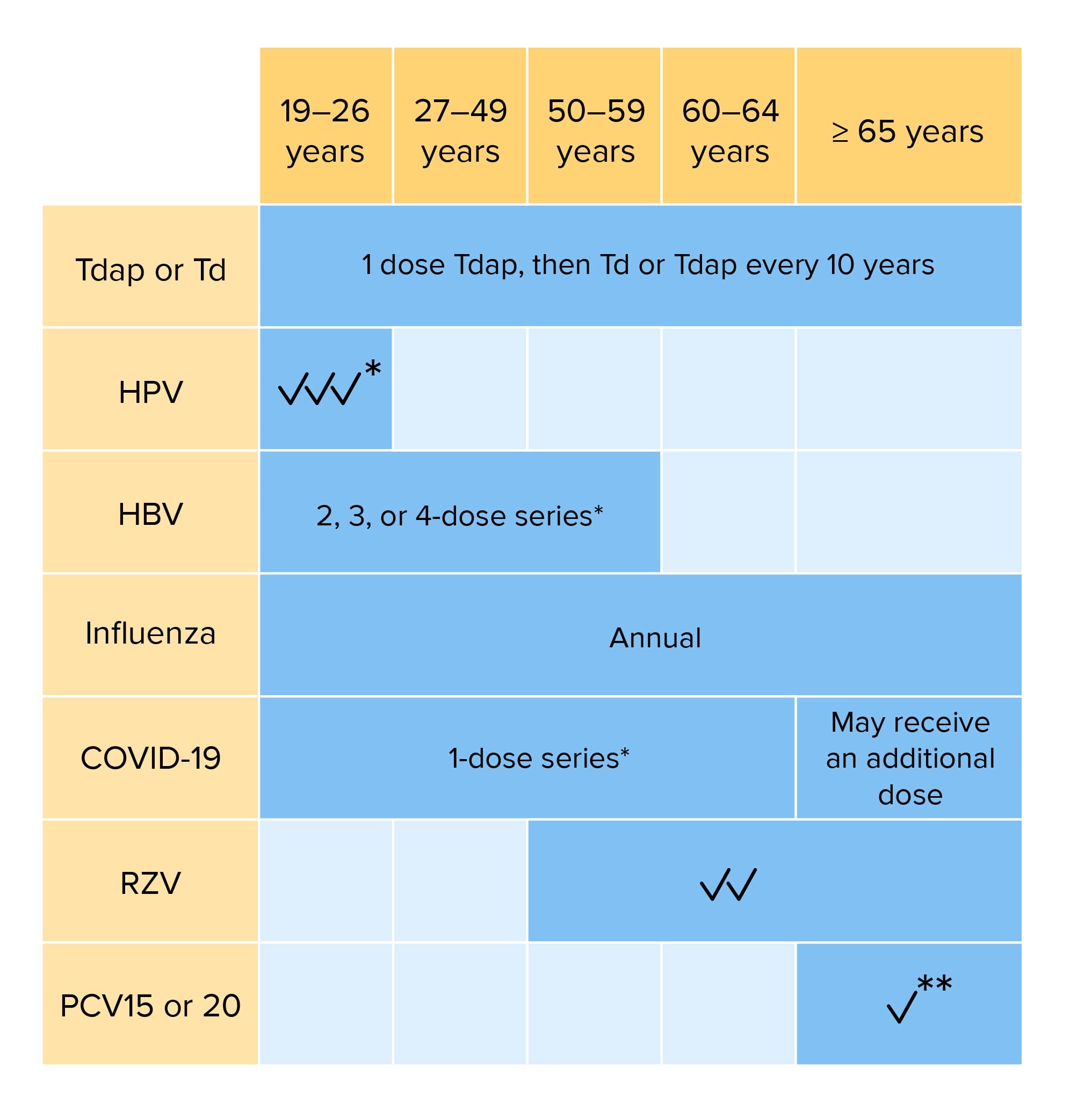
Imagen por Lecturio.
Vaccination

Vacunación de rutina para adultos:
Individuos con factores de riesgo podrían requerir vacunas adicionales o cambios en el calendario de dosificación
Tdap: vacunación contra tétano, difteria y contra tos ferina acelular
Td: vacunación contra tétano y difteria
HPV: vacunación contra el virus del papiloma humano
HBV: vacunación contra el virus de la hepatitis B
COVID-19: enfermedad por coronavirus 2019 (bivalente)
RZV: vacunación contra el zoster recombinante
PCV: vacunación contra neumococo conjugada
*Si no ha sido vacunado previamente
**Si se administra PCV15, debe seguirse por PPSV23 (vacunación contra neumococo polisacárida)

Imagen por Lecturio.

Rechazo a las vacunas

  • Todos los LOS Neisseria estados de Estados Unidos exigen la vacunación para ser admitidos en EN Erythema nodosum is an immune-mediated panniculitis (inflammation of the subcutaneous fat) caused by a type IV (delayed-type) hypersensitivity reaction. It commonly manifests in young women as tender, erythematous nodules on the shins. Erythema Nodosum la escuela pública.
  • El rechazo a las vacunas es un tema muy debatido y las leyes estatales varían en EN Erythema nodosum is an immune-mediated panniculitis (inflammation of the subcutaneous fat) caused by a type IV (delayed-type) hypersensitivity reaction. It commonly manifests in young women as tender, erythematous nodules on the shins. Erythema Nodosum cuanto a si está permitido y por qué razones.
    • Exenciones médicas: todos los LOS Neisseria estados
    • Exenciones religiosas y filosóficas: permitidas en EN Erythema nodosum is an immune-mediated panniculitis (inflammation of the subcutaneous fat) caused by a type IV (delayed-type) hypersensitivity reaction. It commonly manifests in young women as tender, erythematous nodules on the shins. Erythema Nodosum muchos estados, aunque algunos estados las han eliminado en EN Erythema nodosum is an immune-mediated panniculitis (inflammation of the subcutaneous fat) caused by a type IV (delayed-type) hypersensitivity reaction. It commonly manifests in young women as tender, erythematous nodules on the shins. Erythema Nodosum los LOS Neisseria últimos años

Circunstancias especiales

  • Niños que viven en EN Erythema nodosum is an immune-mediated panniculitis (inflammation of the subcutaneous fat) caused by a type IV (delayed-type) hypersensitivity reaction. It commonly manifests in young women as tender, erythematous nodules on the shins. Erythema Nodosum estrecho contacto con personas embarazadas e inmunodeprimidas:
    • Deben seguir recibiendo todas las inmunizaciones rutinarias.
    • No deben recibir la vacuna contra la viruela.
  • Los LOS Neisseria pacientes que no tienen bazos funcionales corren el riesgo de contraer infecciones por organismos encapsulados y deben ser vacunados:
    • Neumococo
    • Meningococo
    • HiB
Tabla: Vacunas comunes por tipo
Vivas Virales Adenovirus Adenovirus Adenovirus (member of the family Adenoviridae) is a nonenveloped, double-stranded DNA virus. Adenovirus is transmitted in a variety of ways, and it can have various presentations based on the site of entry. Presentation can include febrile pharyngitis, conjunctivitis, acute respiratory disease, atypical pneumonia, and gastroenteritis. Adenovirus, polio sabin Sabin A live vaccine containing attenuated poliovirus, types I, II, and III, grown in monkey kidney cell tissue culture, used for routine immunization of children against polio. This vaccine induces long-lasting intestinal and humoral immunity. Killed vaccine induces only humoral immunity. Oral poliovirus vaccine should not be administered to immunocompromised individuals or their household contacts. Poliovirus/Poliomyelitis, varicela, fiebre amarilla, viruela, influenza Influenza Influenza viruses are members of the Orthomyxoviridae family and the causative organisms of influenza, a highly contagious febrile respiratory disease. There are 3 primary influenza viruses (A, B, and C) and various subtypes, which are classified based on their virulent surface antigens, hemagglutinin (HA) and neuraminidase (NA). Influenza typically presents with a fever, myalgia, headache, and symptoms of an upper respiratory infection. Influenza Viruses/Influenza (intranasal), SPR, rotavirus Rotavirus A genus of Reoviridae, causing acute gastroenteritis in birds and mammals, including humans. Transmission is horizontal and by environmental contamination. Seven species (rotaviruses A through G) are recognized. Rotavirus oral
Bacterianas BCG BCG An active immunizing agent and a viable avirulent attenuated strain of Mycobacterium bovis, which confers immunity to mycobacterial infections. It is used also in immunotherapy of neoplasms due to its stimulation of antibodies and non-specific immunity. Cancer Immunotherapy, tifoidea oral
Muertas Completas Virus Virus Viruses are infectious, obligate intracellular parasites composed of a nucleic acid core surrounded by a protein capsid. Viruses can be either naked (non-enveloped) or enveloped. The classification of viruses is complex and based on many factors, including type and structure of the nucleoid and capsid, the presence of an envelope, the replication cycle, and the host range. Virology Salk Salk A suspension of formalin-inactivated poliovirus grown in monkey kidney cell tissue culture and used to prevent poliomyelitis. Poliovirus/Poliomyelitis contra la polio (IPV), rabia, hepatitis A Hepatitis A Hepatitis A is caused by the hepatitis A virus (HAV), a nonenveloped virus of the Picornaviridae family with single-stranded RNA. HAV causes an acute, highly contagious hepatitis with unspecific prodromal symptoms such as fever and malaise followed by jaundice and elevated liver transaminases. Hepatitis A Virus, influenza Influenza Influenza viruses are members of the Orthomyxoviridae family and the causative organisms of influenza, a highly contagious febrile respiratory disease. There are 3 primary influenza viruses (A, B, and C) and various subtypes, which are classified based on their virulent surface antigens, hemagglutinin (HA) and neuraminidase (NA). Influenza typically presents with a fever, myalgia, headache, and symptoms of an upper respiratory infection. Influenza Viruses/Influenza (inyectable)
Subunidad A base de proteínas Subunidad: hepatitis B Hepatitis B Hepatitis B virus (HBV) is a partially double-stranded DNA virus, which belongs to the Orthohepadnavirus genus and the Hepadnaviridae family. Most individuals with acute HBV infection are asymptomatic or have mild, self-limiting symptoms. Chronic infection can be asymptomatic or create hepatic inflammation, leading to liver cirrhosis and hepatocellular carcinoma (HCC). Hepatitis B Virus (HBsAg), VPH (tipos 6, 11, 16 y 18), tos TOS Thoracic outlet syndrome (TOS) is a broad term used for a spectrum of syndromes related to the general region of the thoracic outlet, which involves the compression or irritation of elements of the brachial plexus, subclavian artery, or subclavian vein. Thoracic Outlet Syndrome ferina acelular (aP)
A base de polisacáridos
  • Toxoide: difteria, tétanos (DT)
  • Pura: Hib, neumococo (PPSV23), meningococo (MPSV4)
  • Conjugado (puro + proteína toxoide): Hib, neumococo (PCV13), meningococo (MCV4)
SPR: sarampión, paperas y rubéola
BCG: Bacille Calmette-Guérin (vacuna contra la tuberculosis, que ya no se utiliza en Estados Unidos)
HBsAg: antígeno de superficie de la hepatitis B
VPH: virus del papiloma humano
Hib: Haemophilus influenzae tipo b
PPSV23: Vacuna neumocócica polisacárida contra 23 antígenos
MPSV4: Vacuna meningocócica polisacárida contra 4 antígenos
PCV13: Vacuna neumocócica conjugada contra 13 antígenos
MCV 4: Vacuna meningocócica conjugada contra 4 antígenos

Mnemotecnia

La siguiente mnemotecnia puede ayudarlo a recordar los LOS Neisseria tipos de vacunas vivas virales y bacterinas: Attention Teachers! Please Vaccinate Small, Beautiful Young Infants with MMR MMR A DNA repair pathway involved in correction of errors introduced during DNA replication when an incorrect base, which cannot form hydrogen bonds with the corresponding base in the parent strand, is incorporated into the daughter strand. Excinucleases recognize the base pair mismatch and cause a segment of polynucleotide chain to be excised from the daughter strand, thereby removing the mismatched base. Lynch syndrome Regularly! (¡Atención, profesores! ¡Por favor, vacunen a pequeños, hermosos y jóvenes lactantes con SPR regularmente!)

Attention (atención): Adenovirus

Teachers (profesores): Tifoidea

Please (por favor): Sabin Sabin A live vaccine containing attenuated poliovirus, types I, II, and III, grown in monkey kidney cell tissue culture, used for routine immunization of children against polio. This vaccine induces long-lasting intestinal and humoral immunity. Killed vaccine induces only humoral immunity. Oral poliovirus vaccine should not be administered to immunocompromised individuals or their household contacts. Poliovirus/Poliomyelitis Polio

Vaccinate (vacunen): Varicela

Small (pequeños): Smallpox (viruela)

Beautiful (hermosos): BCG

Young (jóvenes): Yellow fever Fever Fever is defined as a measured body temperature of at least 38°C (100.4°F). Fever is caused by circulating endogenous and/or exogenous pyrogens that increase levels of prostaglandin E2 in the hypothalamus. Fever is commonly associated with chills, rigors, sweating, and flushing of the skin. Fever (fiebre amarilla)

Infants (lactantes): Influenza (intranasal)

MMR MMR A DNA repair pathway involved in correction of errors introduced during DNA replication when an incorrect base, which cannot form hydrogen bonds with the corresponding base in the parent strand, is incorporated into the daughter strand. Excinucleases recognize the base pair mismatch and cause a segment of polynucleotide chain to be excised from the daughter strand, thereby removing the mismatched base. Lynch syndrome (SPR)

Regularly (regularmente): Rotavirus

Patógenos Comunes que Se Previenen con la Vacunación

Virus Virus Viruses are infectious, obligate intracellular parasites composed of a nucleic acid core surrounded by a protein capsid. Viruses can be either naked (non-enveloped) or enveloped. The classification of viruses is complex and based on many factors, including type and structure of the nucleoid and capsid, the presence of an envelope, the replication cycle, and the host range. Virology contra los LOS Neisseria que la vacunación es protectora

  • Sarampión: Se caracteriza por fiebre, malestar, tos TOS Thoracic outlet syndrome (TOS) is a broad term used for a spectrum of syndromes related to the general region of the thoracic outlet, which involves the compression or irritation of elements of the brachial plexus, subclavian artery, or subclavian vein. Thoracic Outlet Syndrome, coriza y conjuntivitis, seguidos de un exantema; está causado por el virus Virus Viruses are infectious, obligate intracellular parasites composed of a nucleic acid core surrounded by a protein capsid. Viruses can be either naked (non-enveloped) or enveloped. The classification of viruses is complex and based on many factors, including type and structure of the nucleoid and capsid, the presence of an envelope, the replication cycle, and the host range. Virology del sarampión.
  • Rubéola: Se caracteriza por una enfermedad leve con síntomas que pueden incluir fiebre baja y dolor Dolor Inflammation de garganta, seguidos de un exantema; causada por el virus Virus Viruses are infectious, obligate intracellular parasites composed of a nucleic acid core surrounded by a protein capsid. Viruses can be either naked (non-enveloped) or enveloped. The classification of viruses is complex and based on many factors, including type and structure of the nucleoid and capsid, the presence of an envelope, the replication cycle, and the host range. Virology de la rubéola.
  • Paperas: Se manifiesta inicialmente como fiebre, dolor Dolor Inflammation muscular, cefalea y falta de apetito, seguidos por la inflamación de varios órganos corporales, más comúnmente las glándulas parótidas.
  • Influenza Influenza Influenza viruses are members of the Orthomyxoviridae family and the causative organisms of influenza, a highly contagious febrile respiratory disease. There are 3 primary influenza viruses (A, B, and C) and various subtypes, which are classified based on their virulent surface antigens, hemagglutinin (HA) and neuraminidase (NA). Influenza typically presents with a fever, myalgia, headache, and symptoms of an upper respiratory infection. Influenza Viruses/Influenza: Las posibles complicaciones incluyen infecciones de oído, así como neumonía viral y bacteriana secundaria.
  • Rabia: Una de las infecciones humanas más antiguas y temidas, con la mayor tasa de mortalidad de todas las enfermedades infecciosas; suele provocar encefalopatía progresiva y muerte.
  • Poliomielitis: Se extiende desde el tracto gastrointestinal (GI por sus siglas en EN Erythema nodosum is an immune-mediated panniculitis (inflammation of the subcutaneous fat) caused by a type IV (delayed-type) hypersensitivity reaction. It commonly manifests in young women as tender, erythematous nodules on the shins. Erythema Nodosum inglés) hasta el asta anterior de las neuronas motoras inferiores, causando parálisis flácida aguda asimétrica.
  • Rotavirus Rotavirus A genus of Reoviridae, causing acute gastroenteritis in birds and mammals, including humans. Transmission is horizontal and by environmental contamination. Seven species (rotaviruses A through G) are recognized. Rotavirus: causa más común de diarrea en EN Erythema nodosum is an immune-mediated panniculitis (inflammation of the subcutaneous fat) caused by a type IV (delayed-type) hypersensitivity reaction. It commonly manifests in young women as tender, erythematous nodules on the shins. Erythema Nodosum bebés y niños pequeños en EN Erythema nodosum is an immune-mediated panniculitis (inflammation of the subcutaneous fat) caused by a type IV (delayed-type) hypersensitivity reaction. It commonly manifests in young women as tender, erythematous nodules on the shins. Erythema Nodosum a nivel mundial
  • Hepatitis A Hepatitis A Hepatitis A is caused by the hepatitis A virus (HAV), a nonenveloped virus of the Picornaviridae family with single-stranded RNA. HAV causes an acute, highly contagious hepatitis with unspecific prodromal symptoms such as fever and malaise followed by jaundice and elevated liver transaminases. Hepatitis A Virus: causa más común de hepatitis aguda, caracterizada por síntomas prodrómicos de fiebre, malestar y dolor Dolor Inflammation abdominal, seguidos de ictericia
  • Hepatitis B Hepatitis B Hepatitis B virus (HBV) is a partially double-stranded DNA virus, which belongs to the Orthohepadnavirus genus and the Hepadnaviridae family. Most individuals with acute HBV infection are asymptomatic or have mild, self-limiting symptoms. Chronic infection can be asymptomatic or create hepatic inflammation, leading to liver cirrhosis and hepatocellular carcinoma (HCC). Hepatitis B Virus: 2.da causa más común de hepatitis aguda y causa más común de hepatitis crónica

Bacterias contra las que la vacunación es protectora

  • Corynebacterium diphtheriae Corynebacterium diphtheriae Diphtheria is an infectious disease caused by corynebacterium diphtheriae that most often results in respiratory disease with membranous inflammation of the pharynx, sore throat, fever, swollen glands, and weakness. The hallmark sign is a sheet of thick, gray material covering the back of the throat. Diphtheria: causa la difteria, que se manifiesta con dolor Dolor Inflammation de garganta, fiebre, inflamación de ganglios y debilidad. En EN Erythema nodosum is an immune-mediated panniculitis (inflammation of the subcutaneous fat) caused by a type IV (delayed-type) hypersensitivity reaction. It commonly manifests in young women as tender, erythematous nodules on the shins. Erythema Nodosum fases avanzadas, la difteria puede dañar el corazón, los LOS Neisseria riñones y el sistema nervioso.
  • Clostridium tetani Clostridium tetani The cause of tetanus in humans and domestic animals. It is a common inhabitant of human and horse intestines as well as soil. Two components make up its potent exotoxin activity, a neurotoxin and a hemolytic toxin. Tetanus: causa el tétanos, un trastorno del sistema nervioso caracterizado por espasmos musculares dolorosos
  • Bordetella pertussis Bordetella pertussis A species of gram-negative, aerobic bacteria that is the causative agent of whooping cough. Its cells are minute coccobacilli that are surrounded by a slime sheath. Bordetella: causa la tos TOS Thoracic outlet syndrome (TOS) is a broad term used for a spectrum of syndromes related to the general region of the thoracic outlet, which involves the compression or irritation of elements of the brachial plexus, subclavian artery, or subclavian vein. Thoracic Outlet Syndrome ferina, que se manifiesta con una tos TOS Thoracic outlet syndrome (TOS) is a broad term used for a spectrum of syndromes related to the general region of the thoracic outlet, which involves the compression or irritation of elements of the brachial plexus, subclavian artery, or subclavian vein. Thoracic Outlet Syndrome ferina paroxística que persiste durante semanas y puede ser mortal
  • Streptococcus Streptococcus Streptococcus is one of the two medically important genera of gram-positive cocci, the other being Staphylococcus. Streptococci are identified as different species on blood agar on the basis of their hemolytic pattern and sensitivity to optochin and bacitracin. There are many pathogenic species of streptococci, including S. pyogenes, S. agalactiae, S. pneumoniae, and the viridans streptococci. Streptococcus pneumoniae: la principal causa bacteriana de neumonía a nivel mundial y una causa común de meningitis Meningitis Meningitis is inflammation of the meninges, the protective membranes of the brain, and spinal cord. The causes of meningitis are varied, with the most common being bacterial or viral infection. The classic presentation of meningitis is a triad of fever, altered mental status, and nuchal rigidity. Meningitis, bacteriemia de causa indeterminada y otitis media
  • Haemophilus influenzae Haemophilus Influenzae A species of Haemophilus found on the mucous membranes of humans and a variety of animals. The species is further divided into biotypes I through viii. Haemophilus tipo b: Antes del uso generalizado de las vacunas conjugadas contra el Hib, esta era la causa más común de meningitis Meningitis Meningitis is inflammation of the meninges, the protective membranes of the brain, and spinal cord. The causes of meningitis are varied, with the most common being bacterial or viral infection. The classic presentation of meningitis is a triad of fever, altered mental status, and nuchal rigidity. Meningitis bacteriana y una causa frecuente de otras enfermedades invasivas (por ejemplo, epiglotitis, neumonía, artritis séptica, bacteriemia), especialmente en EN Erythema nodosum is an immune-mediated panniculitis (inflammation of the subcutaneous fat) caused by a type IV (delayed-type) hypersensitivity reaction. It commonly manifests in young women as tender, erythematous nodules on the shins. Erythema Nodosum la primera infancia.

Referencias

  1. David W. Kimberlin et al. (2018). Red Book® 2018 Committee on Infectious Diseases; American Academy of Pediatrics. https://redbook.solutions.aap.org/chapter.aspx?sectionid=189639953&bookid=2205#:~:text=Active%20immunization%20involves%20administration%20of,natural%20infection%20but%20usually%20presents 
  2. Spencer JP et al. (2017). Vaccine Adverse Events: Separating Myth from Reality. Am Fam Physician.
  3. Robinson CL, Bernstein H, Poehling K, Romero JR, Szilagyi P. Advisory Committee on Immunization Practices Recommended Immunization Schedule for Children and Adolescents Aged 18 Years or Younger — United States, 2020. MMWR Morb Mortal Wkly Rep 2020;69:130–132. DOI: http://dx.doi.org/10.15585/mmwr.mm6905a3
  4. U.S. Department of Health and Services. Vaccine Types. Vaccines.gov. Retrieved June 20, 2025, from https://www.vaccines.gov/basics/types
  5. Woodcreek Pediatrics. (2024). Immunizations & vaccinations. https://www.woodcreekpediatrics.com/immunizations.html

¡Crea tu cuenta gratis o inicia una sesión para seguir leyendo!

Regístrate ahora y obtén acceso gratuito a Lecturio con páginas de concepto, videos médicos y cuestionarios para tu educación médica.

User Reviews

Que tengas una sesión de estudio alegre y navideña 🎁 Ahorra 50% en todos los planes >>

Details