

Nursing Knowledge
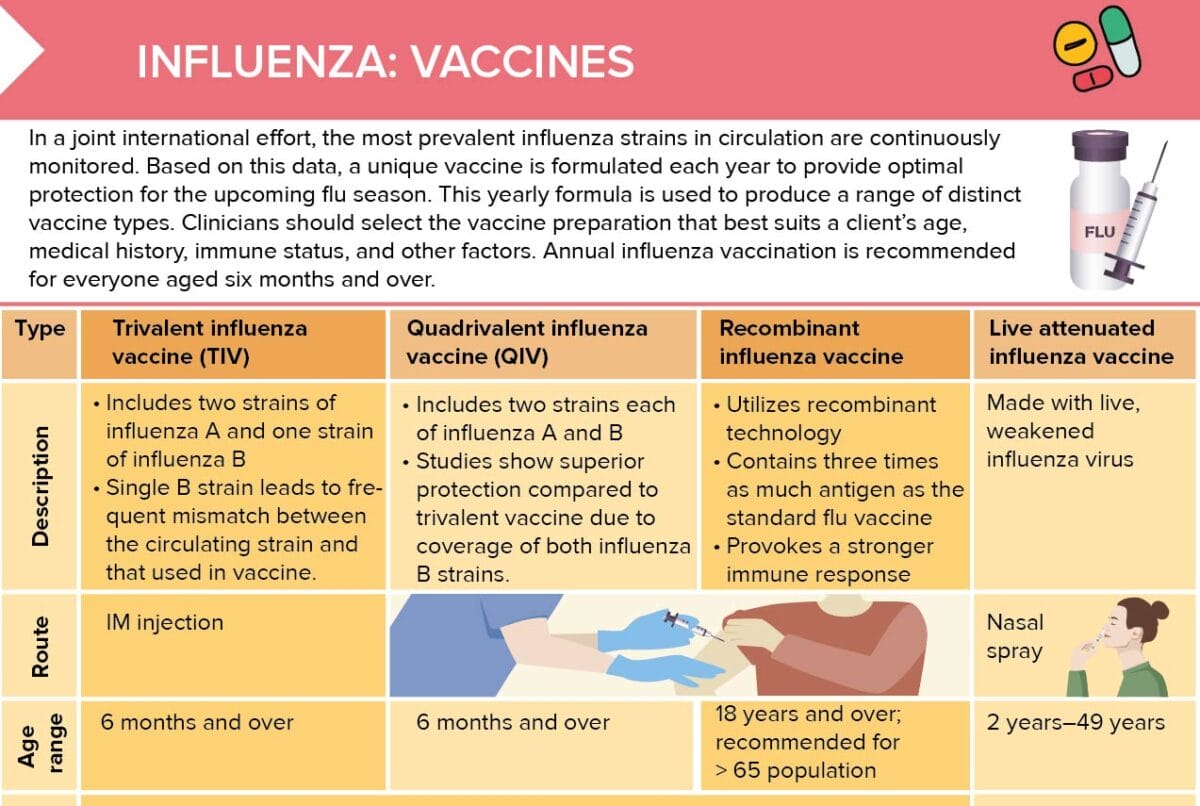
Trivalent influenza vaccines include two strains of influenza A and one strain of influenza B. The single B strain leads to frequent mismatch between the circulating strain and that used in the vaccine.
The vaccine can be given to clients 6 months and older.
Precautions and contraindications:
Quadrivalent influenza vaccines include two strains of influenza A and two strains of influenza B. Studies show superior protection compared to trivalent vaccines due to coverage of both influenza B strains.
The vaccine can be given to clients 6 months and older.
For precautions and contraindications, see trivalent influenza vaccine.
The recombinant influenza vaccine utilizes recombinant technology. It contains three times as much antigen as the standard influenza vaccine and provokes a stronger immune response. It can be given to clients 18 years or older and is recommended for the > 65 years population.
For precautions and contraindications, see trivalent influenza vaccine.
Live attenuated vaccines are made with live, weakened influenza virus. Other than the other types of influenza vaccines, live attenuated influenza vaccines are not injected IM, but come as a nasal spray. They can be given to clients in the age range of 2 years to 49 years. Live attenuated vaccines are not recommended for clients who are pregnant, immunocompromised, or those with certain medical conditions.
The effectiveness of the flu vaccine can vary significantly from one year to the next, because it depends on how well this year’s vaccine is matched with the virus strain circulating in that season. The recipient’s age and health, and the type of vaccine chosen can also affect the vaccine’s effectiveness.
Generally, it can be said the flu vaccine tends to reduce the risk of influenza illness by 40–60% among the overall population when the vaccine viruses are well-matched with the circulating virus strains.
The most common side effects of flu vaccines are mild and resolve within one or two days without intervention. They include soreness and swelling at the injection site, low-grade fever, fatigue, head- and muscle aches. Moderate side effects that may occur include higher fever, nausea, or mild allergic reactions like rashes.
Severe side effects are sporadic. Immediate medical attention should be sought if the following occur: difficulty breathing, hives, severe dizziness or disorientation, seizures, rapid heartbeat, swelling around eyes or lips.
The protection provided by a flu vaccine only lasts for the duration of the one flu season for which it was developed (typically about six months).
The exact time can vary based on several factors, including the recipient’s immune system health and the match between the viruses used to prepare the vaccine and the common circulating strains of that season.
As flu viruses are continually evolving with different strains circulating every year, annual vaccination is recommended.
Always provide the Vaccine Information Statement (VIS) for client review before vaccine administration.
The annual flu vaccine should be administered before the annual influenza season begins in the area, which can vary in its onset and duration. The Centers for Disease Control and Prevention (CDC) advise getting a flu vaccine by the end of October. However, vaccinations can still be beneficial throughout the flu season, even into January or later.
Patients should contact their healthcare providers if they notice signs of a severe allergic reaction or experience seizures.
After receiving a flu shot, it is best for clients to avoid strenuous activity and rest, especially with the arm of the injection, to not exacerbate arm soreness. The band aid should be kept on for a few hours. Clients should avoid alcohol and not apply heat to the injection side to not worsen swelling. Side effects should be monitored and more severe reactions should prompt contacting the provider. It is advised to not immediately travel after receiving a flu vaccine, in case more severe side effects do develop and treatment is needed.
RELATED TOPIC:
Free Download
Master the topic with a unique study combination of a concise summary paired with video lectures.
Your free account gives you access to:
or