
Domina Conceptos Médicos

Estudia para la escuela de medicina y tus examenes con Lecturio.

VIPoma

Un VIPoma VIPoma A VIPoma is a rare neuroendocrine tumor arising primarily in the pancreas that releases large amounts of vasoactive intestinal polypeptide (VIP). This process leads to chronic watery diarrhea with concomitant hypokalemia and dehydration, as well as wheezing and flushing (known as Verner-Morrison or WDHA syndrome). VIPoma es un tumor Tumor Inflammation neuroendocrino poco frecuente que surge principalmente en EN Erythema nodosum is an immune-mediated panniculitis (inflammation of the subcutaneous fat) caused by a type IV (delayed-type) hypersensitivity reaction. It commonly manifests in young women as tender, erythematous nodules on the shins. Erythema Nodosum el páncreas y que libera grandes cantidades de polipéptido intestinal vasoactivo. Este proceso da lugar a diarrea acuosa crónica con hipopotasemia y deshidratación concomitante, así como a sibilancias y sofocos, lo que se conoce como síndrome de Verner-Morrison o diarrea acuosa crónica con hipopotasemia y aclorhidria (Watery (acuosa), Diarrhea (diarrea), Hypokalemia (hipopotasemia), Achlorhydria (aclorhidria); WDHA, por sus siglas en EN Erythema nodosum is an immune-mediated panniculitis (inflammation of the subcutaneous fat) caused by a type IV (delayed-type) hypersensitivity reaction. It commonly manifests in young women as tender, erythematous nodules on the shins. Erythema Nodosum inglés). La mayoría de los LOS Neisseria tumores surgen de forma esporádica, pero algunos se asocian a neoplasia endocrina múltiple 1. El diagnóstico se establece midiendo los LOS Neisseria niveles séricos de polipéptido intestinal vasoactivo. El tratamiento consiste en EN Erythema nodosum is an immune-mediated panniculitis (inflammation of the subcutaneous fat) caused by a type IV (delayed-type) hypersensitivity reaction. It commonly manifests in young women as tender, erythematous nodules on the shins. Erythema Nodosum el tratamiento médico de los LOS Neisseria síntomas y la extirpación quirúrgica completa del tumor Tumor Inflammation cuando es posible.

Last updated: Dec 15, 2025

Editorial responsibility: Stanley Oiseth, Lindsay Jones, Evelin Maza

Descripción General

Definición

Un VIPoma VIPoma A VIPoma is a rare neuroendocrine tumor arising primarily in the pancreas that releases large amounts of vasoactive intestinal polypeptide (VIP). This process leads to chronic watery diarrhea with concomitant hypokalemia and dehydration, as well as wheezing and flushing (known as Verner-Morrison or WDHA syndrome). VIPoma es un tumor Tumor Inflammation neuroendocrino poco frecuente que segrega polipéptido intestinal vasoactivo.
Epidemiología

  • Incidencia: 0.05-0.2 casos de cada 1 000 000 de personas al AL Amyloidosis año
  • El 95% surgen en EN Erythema nodosum is an immune-mediated panniculitis (inflammation of the subcutaneous fat) caused by a type IV (delayed-type) hypersensitivity reaction. It commonly manifests in young women as tender, erythematous nodules on the shins. Erythema Nodosum el páncreas, y el 75% de los LOS Neisseria casos sintomáticos surgen en EN Erythema nodosum is an immune-mediated panniculitis (inflammation of the subcutaneous fat) caused by a type IV (delayed-type) hypersensitivity reaction. It commonly manifests in young women as tender, erythematous nodules on the shins. Erythema Nodosum la cola del páncreas.
  • El 3er tumor Tumor Inflammation neuroendocrino pancreático más frecuente (después del insulinoma Insulinoma A benign tumor of the pancreatic beta cells. Insulinoma secretes excess insulin resulting in hypoglycemia. Pancreatic Neuroendocrine Tumors (PanNETs) y el gastrinoma Gastrinoma A gastrinoma is a tumor that secretes excessive levels of the hormone gastrin and is responsible for Zollinger-Ellison syndrome (ZES). Gastrinomas are frequently associated with multiple endocrine neoplasia 1 (MEN 1) and can arise from the pancreas, stomach, duodenum, jejunum, and/or even from the lymph nodes. Gastrinoma)
  • Edad de aparición: 30–50 en EN Erythema nodosum is an immune-mediated panniculitis (inflammation of the subcutaneous fat) caused by a type IV (delayed-type) hypersensitivity reaction. It commonly manifests in young women as tender, erythematous nodules on the shins. Erythema Nodosum adultos y 2–4 en EN Erythema nodosum is an immune-mediated panniculitis (inflammation of the subcutaneous fat) caused by a type IV (delayed-type) hypersensitivity reaction. It commonly manifests in young women as tender, erythematous nodules on the shins. Erythema Nodosum niños

Etiología

  • Surgen de las células neuroendocrinas, sobre todo de las células de los LOS Neisseria islotes del páncreas
  • La mayoría son aislados y esporádicos, pero el 5% se asocian a neoplasia endocrina múltiple 1.

Fisiopatología y Presentación Clínica

Anatomía

  • El 95% surgen dentro del páncreas, y el 75% dentro de la cola del páncreas.
  • Generalmente, es solitario y mide > 3 cm
  • Otras localizaciones comunes en EN Erythema nodosum is an immune-mediated panniculitis (inflammation of the subcutaneous fat) caused by a type IV (delayed-type) hypersensitivity reaction. It commonly manifests in young women as tender, erythematous nodules on the shins. Erythema Nodosum los LOS Neisseria niños:
    • Glándulas suprarrenales
    • Ganglios simpáticos
  • Localizaciones menos comunes:
    • Pulmón
    • Cólon/recto
    • Hígado
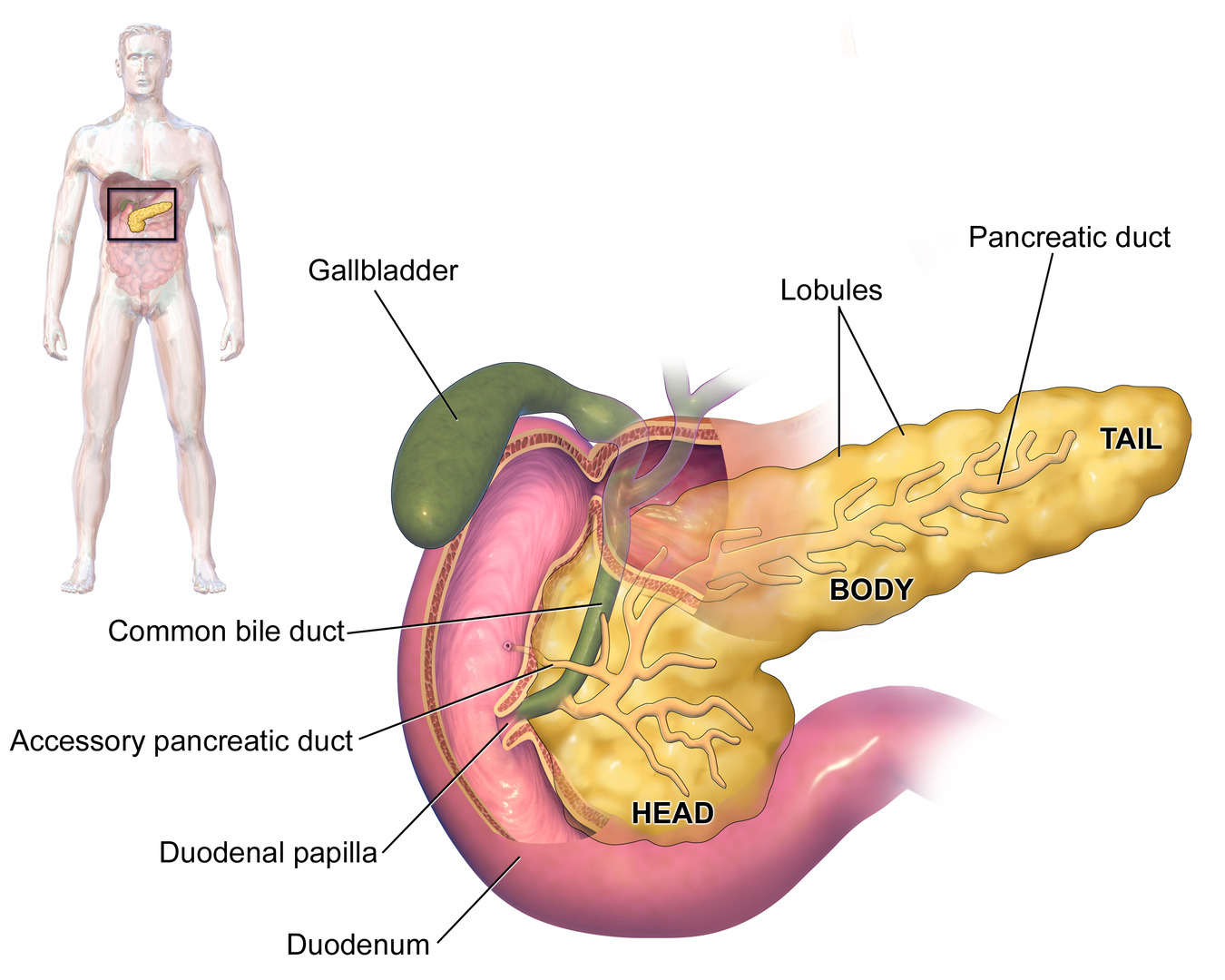
Anatomía del páncreas

Anatomía del páncreas

Imagen: “Blausen 0699 PancreasAnatomy2” por Blausen. Licencia: CC BY 3.0
Síndrome del VIPoma VIPoma A VIPoma is a rare neuroendocrine tumor arising primarily in the pancreas that releases large amounts of vasoactive intestinal polypeptide (VIP). This process leads to chronic watery diarrhea with concomitant hypokalemia and dehydration, as well as wheezing and flushing (known as Verner-Morrison or WDHA syndrome). VIPoma

  • También conocido como síndrome de Verner-Morrison o síndrome WDHA:
    • W Watery Diarrhea (diarrea acuosa crónica)
    • H Hypokalemia Hypokalemia Hypokalemia is defined as plasma potassium (K+) concentration < 3.5 mEq/L. Homeostatic mechanisms maintain plasma concentration between 3.5-5.2 mEq/L despite marked variation in dietary intake. Hypokalemia can be due to renal losses, GI losses, transcellular shifts, or poor dietary intake. Hypokalemia (hipopotasemia (provoca calambres musculares, debilidad y arritmias)
    • A Achlorhydria Achlorhydria A lack of hydrochloric acid in gastric juice despite stimulation of gastric secretion. Gastritis (aclorhidria)
  • Causada por una secreción excesiva y desordenada de polipéptido intestinal vasoactivo:
    • El polipéptido intestinal vasoactivo se une a los LOS Neisseria receptores de las células epiteliales intestinales.
    • La activación de la adenilato ciclasa celular y la producción de AMPc dan lugar a la secreción de líquidos y electrolitos hacia el lumen.
    • Otros efectos:
      • Vasodilatación
      • Inhibición de la secreción de ácido gástrico
      • Resorción ósea
      • Aumento de la glucogenólisis

Presentación clínica

  • Diarrea acuosa:
  • Episodios de enrojecimiento ( en EN Erythema nodosum is an immune-mediated panniculitis (inflammation of the subcutaneous fat) caused by a type IV (delayed-type) hypersensitivity reaction. It commonly manifests in young women as tender, erythematous nodules on the shins. Erythema Nodosum el 20% de los LOS Neisseria pacientes)
  • Síntomas relacionados con la hipopotasemia y la deshidratación:
    • Letargo
    • Náuseas/vómitos
    • Debilidad muscular/calambres

Diagnóstico

Antecedentes clínicos

  • Diarrea inexplicable de gran volumen (a menudo intermitente)
  • Episodios de enrojecimiento
  • Antecedentes familiares o personales de neoplasia endocrina múltiple 1

Estudios de laboratorio

  • Polipéptido intestinal vasoactivo sérico elevado > 75 pg/mL (debe confirmarse con pruebas seriadas)
  • Niveles anormales de electrolitos:
    • Hipopotasemia
    • Alcalosis metabólica
    • Hipercalcemia: puede ser intermitente y corresponder a los LOS Neisseria episodios diarreicos
    • Hiperglucemia
    • Hipoclorhidria
    • Deficiencia de hierro y B12

Imagenología

  • TC con contraste: La sensibilidad es cerca del 100%.
  • RM: más sensible que la TC para detectar metástasis en EN Erythema nodosum is an immune-mediated panniculitis (inflammation of the subcutaneous fat) caused by a type IV (delayed-type) hypersensitivity reaction. It commonly manifests in young women as tender, erythematous nodules on the shins. Erythema Nodosum el hígado
  • Gammagrafía de receptores de somatostatina: gammagrafía de cuerpo entero con octreotida marcada radioactivamente
  • Ultrasonido endoscópico: rara vez se utiliza
  • Tomografía por emisión de positrones ( PET PET An imaging technique that combines a positron-emission tomography (PET) scanner and a ct X ray scanner. This establishes a precise anatomic localization in the same session. Nuclear Imaging, por sus siglas en EN Erythema nodosum is an immune-mediated panniculitis (inflammation of the subcutaneous fat) caused by a type IV (delayed-type) hypersensitivity reaction. It commonly manifests in young women as tender, erythematous nodules on the shins. Erythema Nodosum inglés): buena para la localización y la estadificación
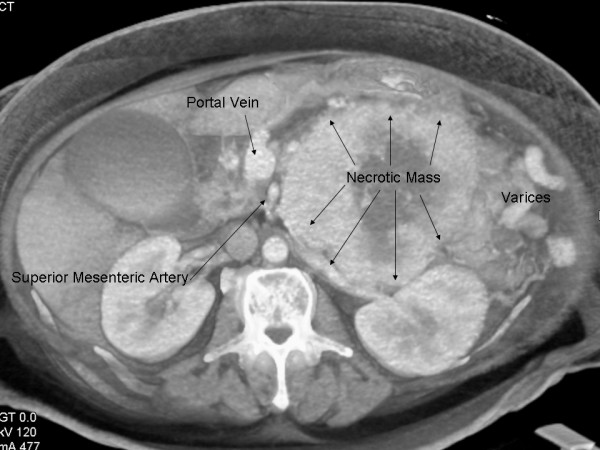
TC que muestra un gran VIPoma pancreático necrótico

Tomografía computarizada que muestra un gran VIPoma pancreático necrótico

Imagen: “Multi-visceral resection of pancreatic VIPoma in a patient with sinistral portal hypertension” por Joyce DL, Hong K, Fishman EK, Wisell J, Pawlik TM. Licencia: CC BY 2.0

Tratamiento

Masa primaria

  • Tratamiento médico:
    • Reposición de líquidos y electrolitos
    • Análogos de la somatostatina (octreotida, lanreotida)
      • Se unen a los LOS Neisseria receptores de somatostatina
      • Inhiben la liberación de serotonina
    • Tratamientos de 2da línea para la diarrea refractaria a los LOS Neisseria análogos de la somatostatina:
      • Glucocorticoides
      • Clonidina
      • Loperamida
  • Tratamiento quirúrgico: pancreatectomía distal para los LOS Neisseria tumores primarios

Enfermedad metastásica

  • Resección del hígado
  • Embolización de la arteria hepática
  • Ablación (radiofrecuencia y crioablación)
  • Medicamentos:
    • Análogos de la somatostatina
    • Estreptozocina
    • Sunitinib
    • Everolimus Everolimus A derivative of sirolimus and an inhibitor of tor serine-threonine kinases. It is used to prevent graft rejection in heart and kidney transplant patients by blocking cell proliferation signals. It is also an antineoplastic agent. Immunosuppressants

Pronóstico

  • 60%–80% son metastásicos en EN Erythema nodosum is an immune-mediated panniculitis (inflammation of the subcutaneous fat) caused by a type IV (delayed-type) hypersensitivity reaction. It commonly manifests in young women as tender, erythematous nodules on the shins. Erythema Nodosum el momento del diagnóstico.
  • El pronóstico depende del grado, el estadio y la resecabilidad quirúrgica.
  • La media de supervivencia de los LOS Neisseria pacientes con VIPoma VIPoma A VIPoma is a rare neuroendocrine tumor arising primarily in the pancreas that releases large amounts of vasoactive intestinal polypeptide (VIP). This process leads to chronic watery diarrhea with concomitant hypokalemia and dehydration, as well as wheezing and flushing (known as Verner-Morrison or WDHA syndrome). VIPoma es de 96 meses.

Diagnóstico Diferencial

  • Diarrea infecciosa: diarrea causada por una variedad de bacterias y virus Virus Viruses are infectious, obligate intracellular parasites composed of a nucleic acid core surrounded by a protein capsid. Viruses can be either naked (non-enveloped) or enveloped. The classification of viruses is complex and based on many factors, including type and structure of the nucleoid and capsid, the presence of an envelope, the replication cycle, and the host range. Virology (por ejemplo, Vibrio cholerae Vibrio cholerae The etiologic agent of cholera. Vibrio, Escherichia coli). Suele ser de inicio agudo y frecuentemente autolimitado. El diagnóstico es establecido por los LOS Neisseria antecedentes clínicos y los LOS Neisseria cultivos de las heces. El tratamiento consiste en EN Erythema nodosum is an immune-mediated panniculitis (inflammation of the subcutaneous fat) caused by a type IV (delayed-type) hypersensitivity reaction. It commonly manifests in young women as tender, erythematous nodules on the shins. Erythema Nodosum un tratamiento de soporte y en EN Erythema nodosum is an immune-mediated panniculitis (inflammation of the subcutaneous fat) caused by a type IV (delayed-type) hypersensitivity reaction. It commonly manifests in young women as tender, erythematous nodules on the shins. Erythema Nodosum antibióticos en EN Erythema nodosum is an immune-mediated panniculitis (inflammation of the subcutaneous fat) caused by a type IV (delayed-type) hypersensitivity reaction. It commonly manifests in young women as tender, erythematous nodules on the shins. Erythema Nodosum algunos casos.
  • Malabsorción: mal funcionamiento de la pared intestinal que provoca una absorción insuficiente de los LOS Neisseria productos de descomposición. Puede presentarse como diarrea, esteatorrea, distensión abdominal, flatulencia, pérdida de peso, anemia Anemia Anemia is a condition in which individuals have low Hb levels, which can arise from various causes. Anemia is accompanied by a reduced number of RBCs and may manifest with fatigue, shortness of breath, pallor, and weakness. Subtypes are classified by the size of RBCs, chronicity, and etiology. Anemia: Overview and Types, deficiencias vitamínicas y/o retraso en EN Erythema nodosum is an immune-mediated panniculitis (inflammation of the subcutaneous fat) caused by a type IV (delayed-type) hypersensitivity reaction. It commonly manifests in young women as tender, erythematous nodules on the shins. Erythema Nodosum el desarrollo. El diagnóstico se establece mediante una combinación de estudios de heces, análisis de sangre y, a veces, endoscopia e imagenología. El tratamiento suele ser de soporte.
  • Síndrome carcinoide: conjunto de síntomas asociados a la producción de serotonina y otras sustancias por parte de los LOS Neisseria tumores carcinoides. Suele presentarse con diarrea, enrojecimiento y sibilancias. El diagnóstico se establece mediante la medición de los LOS Neisseria metabolitos de la serotonina y la obtención de imagenología para confirmar la presencia del tumor Tumor Inflammation. El tratamiento incluye la resección quirúrgica y el tratamiento sintomático.
  • Gastrinoma Gastrinoma A gastrinoma is a tumor that secretes excessive levels of the hormone gastrin and is responsible for Zollinger-Ellison syndrome (ZES). Gastrinomas are frequently associated with multiple endocrine neoplasia 1 (MEN 1) and can arise from the pancreas, stomach, duodenum, jejunum, and/or even from the lymph nodes. Gastrinoma: tumor Tumor Inflammation que segrega gastrina y que provoca el síndrome de Zollinger-Ellison. Se origina en EN Erythema nodosum is an immune-mediated panniculitis (inflammation of the subcutaneous fat) caused by a type IV (delayed-type) hypersensitivity reaction. It commonly manifests in young women as tender, erythematous nodules on the shins. Erythema Nodosum el páncreas, el estómago, el duodeno, el yeyuno e incluso en EN Erythema nodosum is an immune-mediated panniculitis (inflammation of the subcutaneous fat) caused by a type IV (delayed-type) hypersensitivity reaction. It commonly manifests in young women as tender, erythematous nodules on the shins. Erythema Nodosum los LOS Neisseria ganglios linfáticos. Los LOS Neisseria síntomas incluyen úlceras pépticas refractarias y diarrea. Diagnóstico establecido por los LOS Neisseria niveles de gastrina en EN Erythema nodosum is an immune-mediated panniculitis (inflammation of the subcutaneous fat) caused by a type IV (delayed-type) hypersensitivity reaction. It commonly manifests in young women as tender, erythematous nodules on the shins. Erythema Nodosum ayunas. El tratamiento incluye la resección quirúrgica y el tratamiento sintomático.

Referencias

  1. Bergsland, E. (2025). Clinical presentation, diagnosis, and management of VIPoma. UpToDate. Retrieved July 14, 2025, from https://www.uptodate.com/contents/clinical-presentation-diagnosis-and-management-of-vipoma
  2. de Herder, W. W., & Hofland, J. (2023). Vasoactive Intestinal Peptide-Secreting Tumor (VIPoma). In L. J. De Groot & G. Chrousos (Eds.), Endotext. MDText.com, Inc. https://www.ncbi.nlm.nih.gov/books/NBK278960/
  3. Helbing A, Menon G, Sandhu S, et al. VIPoma. [Updated 2025 Feb 23]. In: StatPearls [Internet]. Treasure Island (FL): StatPearls Publishing; 2025 Jan-. Available from: https://www.ncbi.nlm.nih.gov/books/NBK507698/

¡Crea tu cuenta gratis o inicia una sesión para seguir leyendo!

Regístrate ahora y obtén acceso gratuito a Lecturio con páginas de concepto, videos médicos y cuestionarios para tu educación médica.

User Reviews

Que tengas una sesión de estudio alegre y navideña 🎁 Ahorra 50% en todos los planes >>

Details