Domina Conceptos Médicos

Estudia para la escuela de medicina y tus examenes con Lecturio.

Trombocitopenia

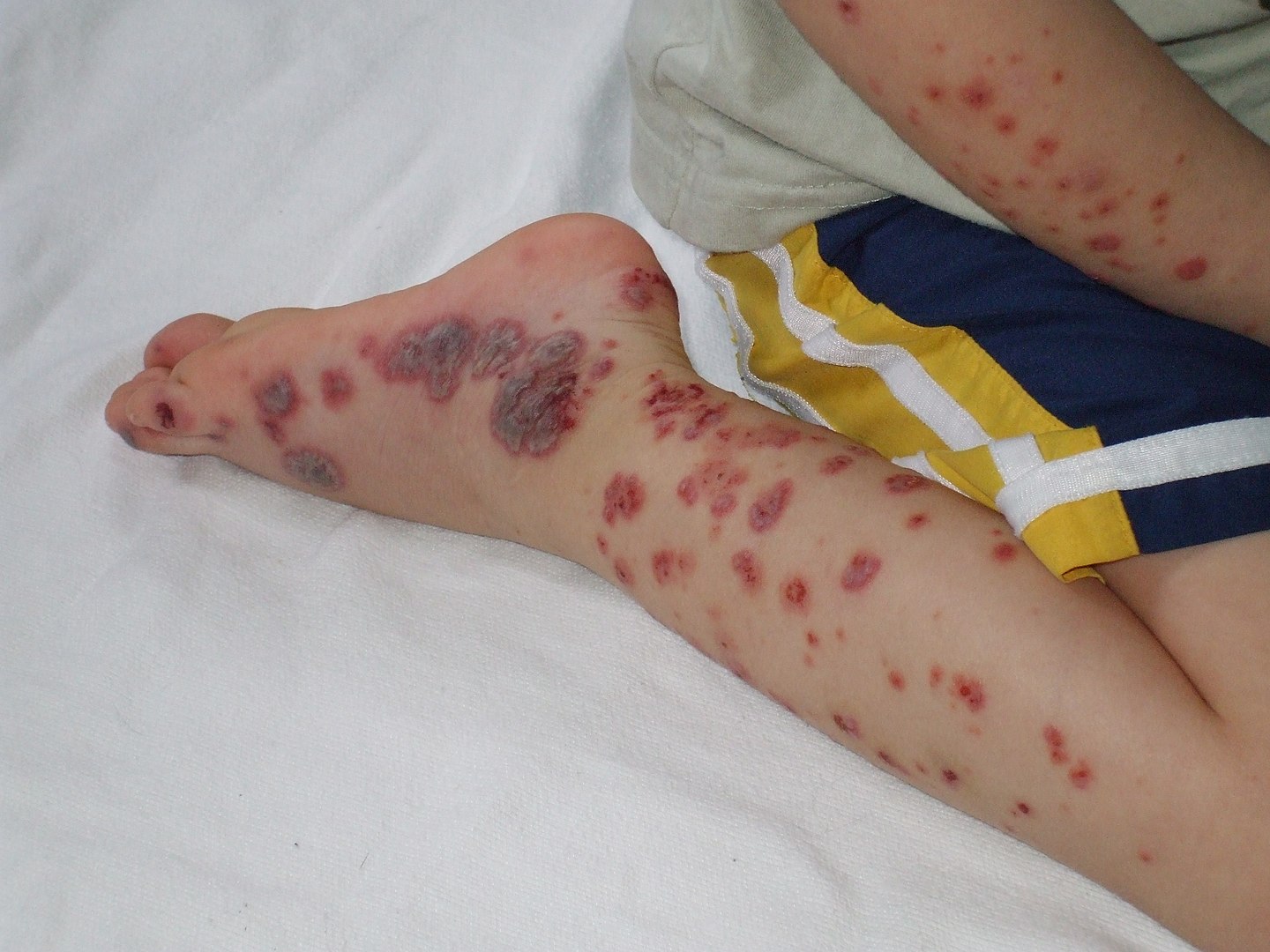
La trombocitopenia se presenta cuando el recuento de plaquetas es < 150 000 por microlitro. El rango normal de las plaquetas suele ser entre 150 000–450 000/µl de sangre total. La trombocitopenia puede ser el resultado de una disminución de la producción, un aumento de la destrucción o un secuestro esplénico de las plaquetas. Los LOS Neisseria pacientes suelen ser asintomáticos hasta que el recuento de plaquetas es < 50 000/µL. Las manifestaciones clínicas de la trombocitopenia incluyen la facilidad de aparición de hematomas o hemorragias, petequias, púrpura y, cuando son graves, hemorragias espontáneas de las mucosas y/o internas. El diagnóstico se realiza con un hemograma y un frotis de sangre; pueden ser necesarias pruebas adicionales para determinar la etiología subyacente si no es evidente en EN Erythema nodosum is an immune-mediated panniculitis (inflammation of the subcutaneous fat) caused by a type IV (delayed-type) hypersensitivity reaction. It commonly manifests in young women as tender, erythematous nodules on the shins. Erythema Nodosum el escenario clínico. El tratamiento implica tratar la etiología subyacente y las transfusiones de plaquetas.

Last updated: Dec 15, 2025

Editorial responsibility: Stanley Oiseth, Lindsay Jones, Evelin Maza

Descripción General

Definición

La trombocitopenia es una deficiencia de plaquetas, típicamente definida como < 150 000 plaquetas por microlitro de sangre total.

Epidemiología

  • Los LOS Neisseria recuentos de plaquetas son, naturalmente y ligeramente más altos en EN Erythema nodosum is an immune-mediated panniculitis (inflammation of the subcutaneous fat) caused by a type IV (delayed-type) hypersensitivity reaction. It commonly manifests in young women as tender, erythematous nodules on the shins. Erythema Nodosum:
    • Mujeres
    • Personas más jóvenes
    • Personas negras no hispanas ( en EN Erythema nodosum is an immune-mediated panniculitis (inflammation of the subcutaneous fat) caused by a type IV (delayed-type) hypersensitivity reaction. It commonly manifests in young women as tender, erythematous nodules on the shins. Erythema Nodosum comparación con las personas blancas)
  • Causa más común: trombocitopenia inmuno-mediada
  • Segunda causa más común: trombocitopenia inducida por infección
  • Las estadísticas epidemiológicas están relacionadas con la etiología subyacente.

Clasificación

La trombocitopenia puede clasificarse como leve, moderada o grave en EN Erythema nodosum is an immune-mediated panniculitis (inflammation of the subcutaneous fat) caused by a type IV (delayed-type) hypersensitivity reaction. It commonly manifests in young women as tender, erythematous nodules on the shins. Erythema Nodosum función del recuento de plaquetas:

  • Leve: 100 000–150 000/μL
  • Moderada: 50 000–99 000/μL
  • Severa: < 50 000/μL

Etiología

La trombocitopenia puede estar causada por la disminución de la producción, el aumento de la destrucción o el secuestro de las plaquetas.

Causas de trombocitopenia

Tabla: Causas de trombocitopenia
Mecanismo Ejemplos
Disminución de la producción Fallo de la médula ósea:
  • Quimioterapia
  • Radioterapia
  • Anemia Anemia Anemia is a condition in which individuals have low Hb levels, which can arise from various causes. Anemia is accompanied by a reduced number of RBCs and may manifest with fatigue, shortness of breath, pallor, and weakness. Subtypes are classified by the size of RBCs, chronicity, and etiology. Anemia: Overview and Types aplásica
  • Mielodisplasia
  • Infiltración maligna de la médula ósea
Disminución de la trombopoyetina:
  • Enfermedades hepáticas
Nutricional:
  • Deficiencia de vitamina B12
  • Deficiencia de folato
Congénito:
  • Síndrome de Wiskott–Aldrich
  • Anemia Anemia Anemia is a condition in which individuals have low Hb levels, which can arise from various causes. Anemia is accompanied by a reduced number of RBCs and may manifest with fatigue, shortness of breath, pallor, and weakness. Subtypes are classified by the size of RBCs, chronicity, and etiology. Anemia: Overview and Types de Fanconi (pancitopenia hereditaria)
  • Trombocitopenia amegacariocítica congénita
Aumento de la destrucción Inmuno-mediado:
  • Púrpura trombocitopénica inmune (PTI)
  • Lupus eritematoso sistémico (LES)
  • Inducida por medicamentos, más comúnmente:
    • Trombocitopenia inducida por heparina (TIH)
    • Quinina
    • Sulfonamidas
Consumo en EN Erythema nodosum is an immune-mediated panniculitis (inflammation of the subcutaneous fat) caused by a type IV (delayed-type) hypersensitivity reaction. It commonly manifests in young women as tender, erythematous nodules on the shins. Erythema Nodosum trombos
  • Púrpura trombocitopénica trombótica (PTT)
  • Síndrome urémico hemolítico (SUH)
  • Coagulación intravascular diseminada (CID)
Secuestro en EN Erythema nodosum is an immune-mediated panniculitis (inflammation of the subcutaneous fat) caused by a type IV (delayed-type) hypersensitivity reaction. It commonly manifests in young women as tender, erythematous nodules on the shins. Erythema Nodosum bazo
  • Hipertensión portal (e.g., cirrosis)
  • Esplenomegalia
  • Mononucleosis Mononucleosis Infectious mononucleosis (IM), also known as “the kissing disease,” is a highly contagious viral infection caused by the Epstein-Barr virus. Its common name is derived from its main method of transmission: the spread of infected saliva via kissing. Clinical manifestations of IM include fever, tonsillar pharyngitis, and lymphadenopathy. Mononucleosis
Mecanismos mixtos o poco claros Trombocitopenia inducida por infección:
  • Infecciones víricas:
    • VIH
    • EBV EBV Epstein-barr virus (EBV) is a linear, double-stranded DNA virus belonging to the herpesviridae family. This highly prevalent virus is mostly transmitted through contact with oropharyngeal secretions from an infected individual. The virus can infect epithelial cells and B lymphocytes, where it can undergo lytic replication or latency. Epstein-Barr Virus
    • CMV
    • Rubeola Rubeola Measles (also known as rubeola) is caused by a single-stranded, linear, negative-sense RNA virus of the family Paramyxoviridae. It is highly contagious and spreads by respiratory droplets or direct-contact transmission from an infected person. Typically a disease of childhood, measles classically starts with cough, coryza, and conjunctivitis, followed by a maculopapular rash. Measles Virus
    • Varicela
    • Paperas
    • Parvovirus
    • Hepatitis C Hepatitis C Hepatitis C is an infection of the liver caused by the hepatitis C virus (HCV). The infection can be transmitted through infectious blood or body fluids and may be transmitted during childbirth or through IV drug use or sexual intercourse. Hepatitis C virus can cause both acute and chronic hepatitis, ranging from a mild to a serious, lifelong illness including liver cirrhosis and hepatocellular carcinoma (HCC). Hepatitis C Virus
  • Infecciones bacterianas:
    • Sepsis Sepsis Systemic inflammatory response syndrome with a proven or suspected infectious etiology. When sepsis is associated with organ dysfunction distant from the site of infection, it is called severe sepsis. When sepsis is accompanied by hypotension despite adequate fluid infusion, it is called septic shock. Sepsis and Septic Shock
    • Bacterias Gram-negativas
    • Helicobacter pylori Helicobacter pylori A spiral bacterium active as a human gastric pathogen. It is a gram-negative, urease-positive, curved or slightly spiral organism initially isolated in 1982 from patients with lesions of gastritis or peptic ulcers in Western Australia. Helicobacter pylori was originally classified in the genus campylobacter, but RNA sequencing, cellular fatty acid profiles, growth patterns, and other taxonomic characteristics indicate that the micro-organism should be included in the genus Helicobacter. It has been officially transferred to Helicobacter gen. Helicobacter
    • Infecciones transmitidas por garrapatas
  • Parásitos: malaria Malaria Malaria is an infectious parasitic disease affecting humans and other animals. Most commonly transmitted via the bite of a female Anopheles mosquito infected with microorganisms of the Plasmodium genus. Patients present with fever, chills, myalgia, headache, and diaphoresis. Plasmodium/Malaria
Causas obstétricas de trombocitopenia:
  • Trombocitopenia gestacional
  • Síndrome HELLP (por sus siglas en EN Erythema nodosum is an immune-mediated panniculitis (inflammation of the subcutaneous fat) caused by a type IV (delayed-type) hypersensitivity reaction. It commonly manifests in young women as tender, erythematous nodules on the shins. Erythema Nodosum inglés) (mecanismo incierto)
Dilución
  • Reanimación masiva de fluidos
  • Transfusiones masivas de eritrocitos sin transfusión proporcional de plaquetas
Pseudotrombocitopenia (un recuento de plaquetas falsamente bajo debido a la aglutinación)
  • Ácido etilen-diamino-tetraacético (EDTA) en EN Erythema nodosum is an immune-mediated panniculitis (inflammation of the subcutaneous fat) caused by a type IV (delayed-type) hypersensitivity reaction. It commonly manifests in young women as tender, erythematous nodules on the shins. Erythema Nodosum los LOS Neisseria tubos de recogida de sangre
  • Muestras incompletamente mezcladas o inadecuadamente anticoaguladas

Medicamentos definitivamente asociados a la trombocitopenia aislada

  • Abciximab
  • Paracetamol paracetamol Acetaminophen is an over-the-counter nonopioid analgesic and antipyretic medication and the most commonly used analgesic worldwide. Despite the widespread use of acetaminophen, its mechanism of action is not entirely understood. Acetaminophen
  • Aciclovir
  • Ácido aminosalicílico
  • Amiodarona
  • Anfotericina B
  • Ampicilina
  • Carbamazepina
  • Clorpropamida
  • Danazol Danazol A synthetic steroid with antigonadotropic and anti-estrogenic activities that acts as an anterior pituitary suppressant by inhibiting the pituitary output of gonadotropins. It possesses some androgenic properties. Danazol has been used in the treatment of endometriosis and some benign breast disorders. Antiestrogens
  • Diclofenaco
  • Digoxina
  • Eptifibatida
  • Hidroclorotiazida
  • Ibuprofeno
  • Levamisol
  • Octreotida
  • Fenitoína
  • Quinina
  • Rifampicina
  • Tamoxifeno
  • Tirofiban Tirofiban Tyrosine analog and platelet glycoprotein gpiib-iiia complex antagonist that inhibits platelet aggregation and is used in the treatment of acute coronary syndrome. Antiplatelet Drugs
  • Trimetoprim-sulfametoxazol
  • Vancomicina

Revisión de la Fisiología Normal

Producción de plaquetas

En EN Erythema nodosum is an immune-mediated panniculitis (inflammation of the subcutaneous fat) caused by a type IV (delayed-type) hypersensitivity reaction. It commonly manifests in young women as tender, erythematous nodules on the shins. Erythema Nodosum condiciones fisiológicas normales, las plaquetas se producen a partir de la fragmentación de los LOS Neisseria megacariocitos en EN Erythema nodosum is an immune-mediated panniculitis (inflammation of the subcutaneous fat) caused by a type IV (delayed-type) hypersensitivity reaction. It commonly manifests in young women as tender, erythematous nodules on the shins. Erythema Nodosum la médula ósea.

  • Al AL Amyloidosis salir de la médula ósea:
    • Dos-tercios de las plaquetas circularán en EN Erythema nodosum is an immune-mediated panniculitis (inflammation of the subcutaneous fat) caused by a type IV (delayed-type) hypersensitivity reaction. It commonly manifests in young women as tender, erythematous nodules on the shins. Erythema Nodosum la sangre durante 8–10 días.
    • Un-tercio restante se secuestra en EN Erythema nodosum is an immune-mediated panniculitis (inflammation of the subcutaneous fat) caused by a type IV (delayed-type) hypersensitivity reaction. It commonly manifests in young women as tender, erythematous nodules on the shins. Erythema Nodosum el bazo.
    • Las plaquetas senescentes son eliminadas por las células fagocíticas del bazo (monocitos, macrófagos).
    • No se almacenan plaquetas en EN Erythema nodosum is an immune-mediated panniculitis (inflammation of the subcutaneous fat) caused by a type IV (delayed-type) hypersensitivity reaction. It commonly manifests in young women as tender, erythematous nodules on the shins. Erythema Nodosum la médula ósea.
  • La disminución del número de plaquetas estimula a los LOS Neisseria megacariocitos a liberar plaquetas.
  • Trombopoyetina (TPO):
    • Regula los LOS Neisseria niveles de plaquetas
    • Estimula las células madre hematopoyéticas multipotentes
    • Producida en EN Erythema nodosum is an immune-mediated panniculitis (inflammation of the subcutaneous fat) caused by a type IV (delayed-type) hypersensitivity reaction. It commonly manifests in young women as tender, erythematous nodules on the shins. Erythema Nodosum el hígado y los LOS Neisseria riñones
    • Se une a los LOS Neisseria megacariocitos:
      • Previene la apoptosis Apoptosis A regulated cell death mechanism characterized by distinctive morphologic changes in the nucleus and cytoplasm, including the endonucleolytic cleavage of genomic DNA, at regularly spaced, internucleosomal sites, I.e., DNA fragmentation. It is genetically-programmed and serves as a balance to mitosis in regulating the size of animal tissues and in mediating pathologic processes associated with tumor growth. Ischemic Cell Damage
      • Estimula su número, tamaño, ploidía y maduración
    • Se une a las plaquetas: reduce su umbral de activación
  • Citoquinas:
    • Estimula la producción de megacariocitos y plaquetas independientemente de la TPO
    • Las plaquetas ↑ durante una infección o inflamación aguda.
    • Se desconoce el mecanismo exacto, pero se cree que incluye la IL-6 y la IL-11.

Función plaquetaria

Las plaquetas son las principales células implicadas en EN Erythema nodosum is an immune-mediated panniculitis (inflammation of the subcutaneous fat) caused by a type IV (delayed-type) hypersensitivity reaction. It commonly manifests in young women as tender, erythematous nodules on the shins. Erythema Nodosum la formación del tapón plaquetario inicial (i.e., la hemostasia primaria).
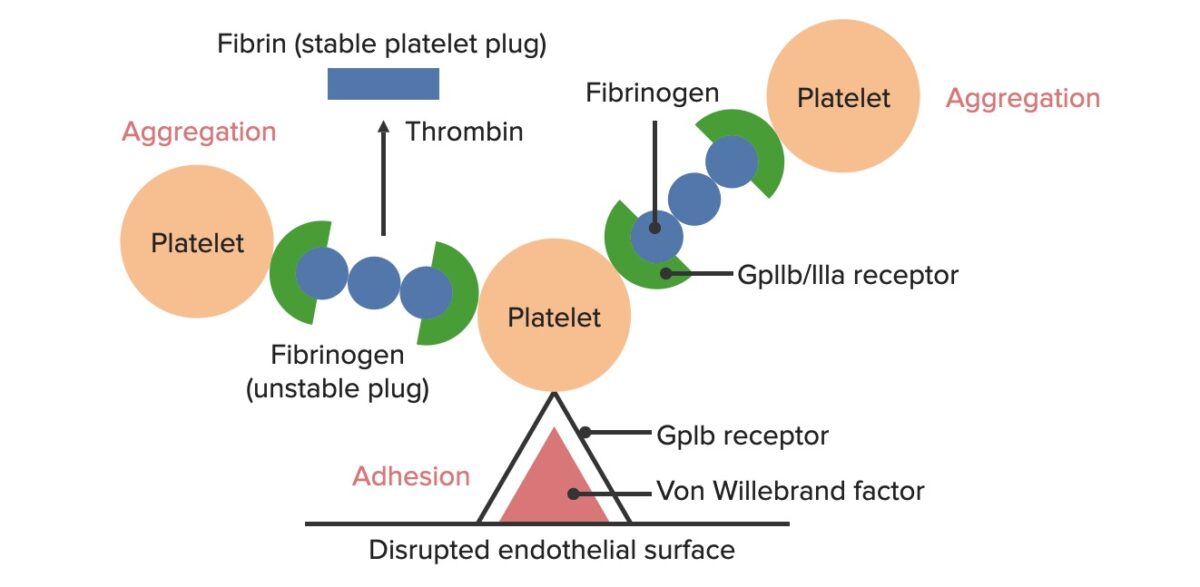
  • La superficie endotelial alterada expone el factor Von Willebrand (FVW) al AL Amyloidosis paso de la sangre.
  • Las plaquetas se unen al AL Amyloidosis FVW a través de sus receptores de glicoproteína (Gp) Ib y se activan.
  • La activación de las plaquetas las lleva a secretar adenosín difosfato (ADP), que estimula la expresión de los LOS Neisseria receptores GpIIb/IIIa en EN Erythema nodosum is an immune-mediated panniculitis (inflammation of the subcutaneous fat) caused by a type IV (delayed-type) hypersensitivity reaction. It commonly manifests in young women as tender, erythematous nodules on the shins. Erythema Nodosum las plaquetas.
  • Los LOS Neisseria receptores GpIIb/IIIa se unen al AL Amyloidosis fibrinógeno, que es capaz de unir una plaqueta en EN Erythema nodosum is an immune-mediated panniculitis (inflammation of the subcutaneous fat) caused by a type IV (delayed-type) hypersensitivity reaction. It commonly manifests in young women as tender, erythematous nodules on the shins. Erythema Nodosum cada extremo, provocando la agregación de las plaquetas.
  • A medida que se unen más plaquetas entre sí, se genera el tapón plaquetario.
  • Al AL Amyloidosis activarse la cascada de la coagulación, la trombina convierte el fibrinógeno más débil en EN Erythema nodosum is an immune-mediated panniculitis (inflammation of the subcutaneous fat) caused by a type IV (delayed-type) hypersensitivity reaction. It commonly manifests in young women as tender, erythematous nodules on the shins. Erythema Nodosum fibrina más fuerte, creando un coágulo mucho más estable.
Formación del tapón hemostático temporal

Formación del tapón hemostático temporal:
La superficie endotelial alterada expone el FVW al paso de la sangre. Las plaquetas se unen al FVW a través de sus receptores GpIb y se activan. La activación de las plaquetas las lleva a secretar ADP, que estimula la expresión de los receptores GpIIb/IIIa en las plaquetas. Los receptores GpIIb/IIIa se unen al fibrinógeno, que es capaz de unir una plaqueta en cada extremo, provocando la agregación de las plaquetas. A medida que se unen más plaquetas entre sí, se genera el tapón plaquetario. Al activarse la cascada de la coagulación, la trombina convierte el fibrinógeno más débil en fibrina más fuerte, creando un coágulo mucho más estable.

Imagen por Lecturio.

Fisiopatología

Fisiopatología del déficit de plaquetas

En EN Erythema nodosum is an immune-mediated panniculitis (inflammation of the subcutaneous fat) caused by a type IV (delayed-type) hypersensitivity reaction. It commonly manifests in young women as tender, erythematous nodules on the shins. Erythema Nodosum la trombocitopenia, la deficiencia de plaquetas resulta en EN Erythema nodosum is an immune-mediated panniculitis (inflammation of the subcutaneous fat) caused by a type IV (delayed-type) hypersensitivity reaction. It commonly manifests in young women as tender, erythematous nodules on the shins. Erythema Nodosum:

  • Disminución de la capacidad de producir el tapón plaquetario tras una lesión en EN Erythema nodosum is an immune-mediated panniculitis (inflammation of the subcutaneous fat) caused by a type IV (delayed-type) hypersensitivity reaction. It commonly manifests in young women as tender, erythematous nodules on the shins. Erythema Nodosum la pared del vaso
  • Necesidad de la cascada de coagulación para formar un coágulo
  • Resultados finales:
    • Tiempo de sangrado prolongado (> 7 minutos)
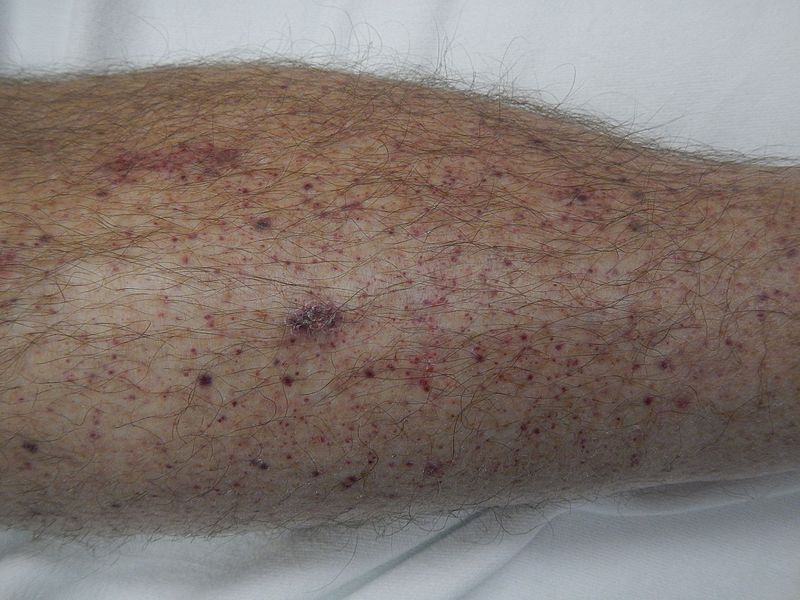
    • Petequias y púrpura
    • Hemorragia espontánea o grave

Trombocitopenia inducida por medicamentos

La trombocitopenia inducida por medicamentos puede deberse a efectos tóxicos directos sobre la médula ósea (e.g., la quimioterapia) o a anticuerpos dependientes del medicamento. Anticuerpos medicamento-dependientes:

  • Reaccionan con antígenos específicos de la superficie de las plaquetas
  • Provocan trombocitopenia solo cuando el medicamento está presente
  • Más común con quinina y sulfonamidas
  • La trombocitopenia suele producirse tras una exposición inicial.
  • Normalmente, se resuelve entre 7–10 días después de suspender el medicamento

Trombocitopenia inducida por heparina

A diferencia de la mayoría de las trombocitopenias inducidas por medicamentos, la TIH se asocia a un riesgo notablemente mayor de trombosis que de hemorragia.
  • Se forman anticuerpos contra el complejo de factor 4 plaquetario + heparina
  • Estos anticuerpos activan las plaquetas y las células endoteliales → trombosis
  • Más frecuente con la heparina no fraccionada (HNF) que con la heparina de bajo peso molecular (HBPM)
  • Comienza entre 5–10 días después de la exposición a la heparina

Trombocitopenia asociada al AL Amyloidosis VIH

  • Al AL Amyloidosis principio de una infección por el VIH: los LOS Neisseria anticuerpos contra el antígeno Gp120 Gp120 External envelope protein of the human immunodeficiency virus which is encoded by the HIV env gene. It has a molecular weight of 120 kda and contains numerous glycosylation sites. Gp120 binds to cells expressing CD4 cell-surface antigens, most notably t4-lymphocytes and monocytes/macrophages. Gp120 has been shown to interfere with the normal function of CD4 and is at least partly responsible for the cytopathic effect of HIV. HIV Infection and AIDS del VIH pueden presentar una reacción cruzada con los LOS Neisseria antígenos GpIIb/IIIa de las plaquetas (mimetismo molecular) → ↑ destrucción
  • Más adelante en EN Erythema nodosum is an immune-mediated panniculitis (inflammation of the subcutaneous fat) caused by a type IV (delayed-type) hypersensitivity reaction. It commonly manifests in young women as tender, erythematous nodules on the shins. Erythema Nodosum la infección por el VIH: ↓ de producción (a menudo asociada a la pancitopenia)

Presentación Clínica

  • Síntomas de hemorragia:
    • Petequias: hemorragias puntiformes (< 2 mm)
    • Púrpura: petequias coalescentes
    • Equimosis (hematomas): sangrado en EN Erythema nodosum is an immune-mediated panniculitis (inflammation of the subcutaneous fat) caused by a type IV (delayed-type) hypersensitivity reaction. It commonly manifests in young women as tender, erythematous nodules on the shins. Erythema Nodosum la piel
    • Sangrado clínico:
  • Hemorragia esperada según el recuento de plaquetas:
    • > 50 000/μL: a menudo asintomático
    • 20 000–50 000/μL: hemorragia excesiva con traumatismo
    • < 20 000/μL: ↑ riesgo de hemorragia espontánea (e.g., mucosa, intracraneal, gastrointestinal, genitourinaria).
    • < 5 000/μL: emergencia hematológica
  • Otros posibles hallazgos en EN Erythema nodosum is an immune-mediated panniculitis (inflammation of the subcutaneous fat) caused by a type IV (delayed-type) hypersensitivity reaction. It commonly manifests in young women as tender, erythematous nodules on the shins. Erythema Nodosum el examen: útiles para determinar la etiología subyacente
    • Hepatomegalia → enfermedad hepática
    • Esplenomegalia → enfermedad hepática, enfermedad infecciosa
    • Linfadenopatía → infección reciente, VIH, neoplasia, afecciones autoinmunes/inflamatorias.
  • Trombocitopenia inducida por heparina:
    • Trombocitopenia a partir de 5–10 días después de comenzar la heparina
    • Necrosis Necrosis The death of cells in an organ or tissue due to disease, injury or failure of the blood supply. Ischemic Cell Damage de la piel alrededor del lugar de la inyección (debido a una trombosis local)

Diagnóstico

El diagnóstico de la trombocitopenia en EN Erythema nodosum is an immune-mediated panniculitis (inflammation of the subcutaneous fat) caused by a type IV (delayed-type) hypersensitivity reaction. It commonly manifests in young women as tender, erythematous nodules on the shins. Erythema Nodosum sí se realiza con evaluaciones de laboratorio. A partir de los LOS Neisseria antecedentes y el examen se pueden obtener pistas sobre la etiología subyacente, y las pruebas de laboratorio adicionales pueden ayudar al AL Amyloidosis diagnóstico.

Pruebas de rutina

Las siguientes pruebas deben solicitarse para todos los LOS Neisseria pacientes con trombocitopenia:
  • Hemograma:
    • Evaluar el recuento de plaquetas: establece el diagnóstico de trombocitopenia
    • Determinar si hay otras citopenias: la presencia sugiere un problema de médula ósea
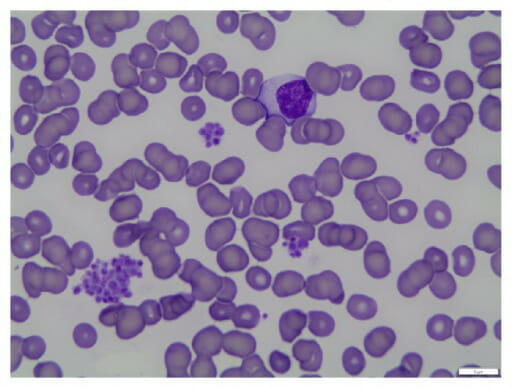
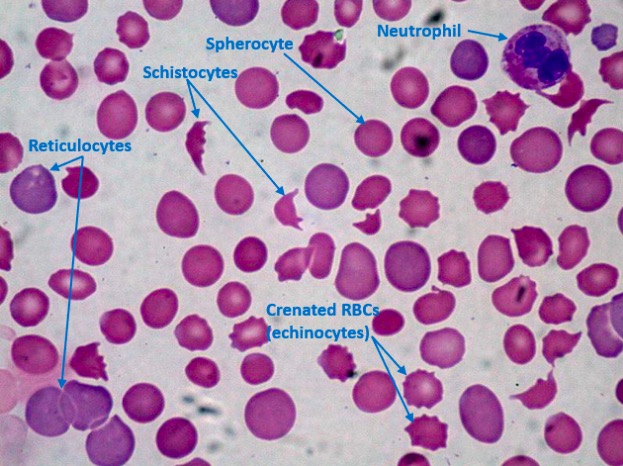
  • Frotis de sangre periférica:
    • Evaluación microscópica del número y aspecto de las células sanguíneas, incluidas las plaquetas
    • Excluye las pseudotrombocitopenias (recuentos de plaquetas falsamente bajos)
    • Esquistocitos: sugieren un proceso microangiopático (e.g., CID, PTT, SUH)
    • Células en EN Erythema nodosum is an immune-mediated panniculitis (inflammation of the subcutaneous fat) caused by a type IV (delayed-type) hypersensitivity reaction. It commonly manifests in young women as tender, erythematous nodules on the shins. Erythema Nodosum forma de lágrima y eritrocitos nucleados: sugieren un proceso infiltrativo en EN Erythema nodosum is an immune-mediated panniculitis (inflammation of the subcutaneous fat) caused by a type IV (delayed-type) hypersensitivity reaction. It commonly manifests in young women as tender, erythematous nodules on the shins. Erythema Nodosum la médula ósea
    • Leucocitos inmaduros o displásicos: sugieren leucemia o mielodisplasia
    • Neutrófilos multilobulados/hipersegmentados: sugieren deficiencia de vitamina B12 o folato
  • Prueba del VIH
  • Hepatitis C Hepatitis C Hepatitis C is an infection of the liver caused by the hepatitis C virus (HCV). The infection can be transmitted through infectious blood or body fluids and may be transmitted during childbirth or through IV drug use or sexual intercourse. Hepatitis C virus can cause both acute and chronic hepatitis, ranging from a mild to a serious, lifelong illness including liver cirrhosis and hepatocellular carcinoma (HCC). Hepatitis C Virus

Pruebas adicionales

Las siguientes pruebas deben solicitarse solo cuando estén clínicamente indicadas para ayudar a identificar la etiología subyacente.
  • Estudios de coagulación:
    • Evaluar la función de la cascada de coagulación
    • Pruebas clave: tiempo de protrombina, tiempo parcial de tromboplastina
  • Tiempo de sangrado:
    • Mide el tiempo que tarda en EN Erythema nodosum is an immune-mediated panniculitis (inflammation of the subcutaneous fat) caused by a type IV (delayed-type) hypersensitivity reaction. It commonly manifests in young women as tender, erythematous nodules on the shins. Erythema Nodosum cesar la hemorragia tras una incisión con lanceta
    • Una medida indirecta de la función plaquetaria
  • Panel metabólico completo:
    • Evalúa la salud metabólica y la función de los LOS Neisseria órganos
    • ↑ Pruebas de la función hepática: sugiere enfermedad hepática.
    • ↑ Creatinina y nitrógeno ureico en EN Erythema nodosum is an immune-mediated panniculitis (inflammation of the subcutaneous fat) caused by a type IV (delayed-type) hypersensitivity reaction. It commonly manifests in young women as tender, erythematous nodules on the shins. Erythema Nodosum sangre: sugiere enfermedad renal.
  • Aspiración y/o biopsia de médula ósea:
    • Megacariocitos normales o ↑: la trombocitopenia se debe a la destrucción ↑ (e.g., PTI o inducida por medicamentos).
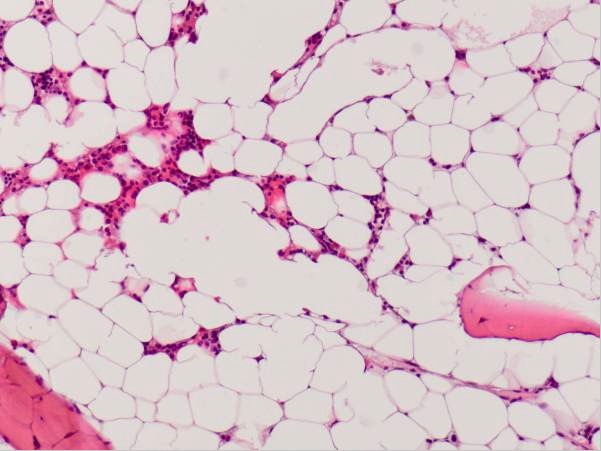
    • ↓ Megacariocitos + ↓ celularidad en EN Erythema nodosum is an immune-mediated panniculitis (inflammation of the subcutaneous fat) caused by a type IV (delayed-type) hypersensitivity reaction. It commonly manifests in young women as tender, erythematous nodules on the shins. Erythema Nodosum general: ↓ producción (e.g., anemia Anemia Anemia is a condition in which individuals have low Hb levels, which can arise from various causes. Anemia is accompanied by a reduced number of RBCs and may manifest with fatigue, shortness of breath, pallor, and weakness. Subtypes are classified by the size of RBCs, chronicity, and etiology. Anemia: Overview and Types aplásica)
    • ↓ Megacariocitos con celularidad por lo demás normal: se observa con mayor frecuencia en EN Erythema nodosum is an immune-mediated panniculitis (inflammation of the subcutaneous fat) caused by a type IV (delayed-type) hypersensitivity reaction. It commonly manifests in young women as tender, erythematous nodules on the shins. Erythema Nodosum el LES
    • Displasia: trastorno mielodisplásico
  • Ensayos de anticuerpos del factor 4 plaquetario (anticuerpo TIH)
  • Anticuerpos antinucleares (ANA)
  • Niveles de vitamina B12 y folato
  • Hemocultivos
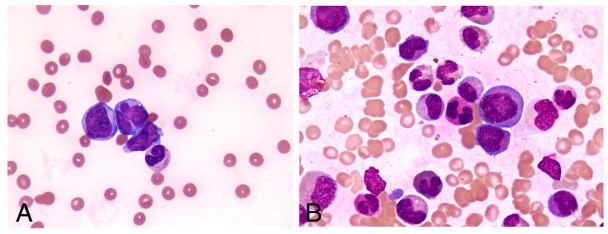
Médula ósea hipocelular con poca hematopoyesis

Médula ósea hipocelular en un paciente con anemia aplásica

Imagen: “Hypocellular bone marrow showing only little hematopoiesis” por Department of Obstetrics of Gynaecology, Erasmus University Medical Center, PO Box 2040, 3000 CA Rotterdam, The Netherlands. Licencia: CC BY 2.0

Tratamiento

El tratamiento de la trombocitopenia depende principalmente del manejo de la causa subyacente, del control del recuento de plaquetas y de la prevención/control de cualquier complicación hemorrágica.

  • Monitorización rutinaria del recuento de plaquetas en EN Erythema nodosum is an immune-mediated panniculitis (inflammation of the subcutaneous fat) caused by a type IV (delayed-type) hypersensitivity reaction. It commonly manifests in young women as tender, erythematous nodules on the shins. Erythema Nodosum pacientes estables
  • Considerar la posibilidad de restringir la actividad (generalmente solo para la trombocitopenia grave).
  • Tratamiento de la causa subyacente:
    • Suspender los LOS Neisseria medicamentos que se sabe que inducen la destrucción de las plaquetas por vía inmune.
    • Suspender los LOS Neisseria medicamentos citotóxicos.
    • Antibióticos para tratar infecciones bacterianas/ sepsis Sepsis Systemic inflammatory response syndrome with a proven or suspected infectious etiology. When sepsis is associated with organ dysfunction distant from the site of infection, it is called severe sepsis. When sepsis is accompanied by hypotension despite adequate fluid infusion, it is called septic shock. Sepsis and Septic Shock
    • Antirretrovirales para controlar el VIH
    • La administración de glucocorticoides y/o inmunoglobulina intravenosa (IGIV) está indicada para la PTI sintomática.
    • Tratamiento de enfermedades neoplásicas, autoinmunes o inflamatorias
  • Transfusiones de plaquetas:
    • Indicaciones:
      • Hemorragia potencialmente mortal: hemorragia intracraneal o hemorragia gastrointestinal masiva
      • Prevención profiláctica de hemorragias si las plaquetas son < 10 000/μL (afebril) o < 20 000/μL (febril)
      • Tratamiento profiláctico en EN Erythema nodosum is an immune-mediated panniculitis (inflammation of the subcutaneous fat) caused by a type IV (delayed-type) hypersensitivity reaction. It commonly manifests in young women as tender, erythematous nodules on the shins. Erythema Nodosum la trombocitopenia grave antes de procedimientos invasivos
    • Los LOS Neisseria recuentos de plaquetas objetivo para las transfusiones profilácticas dependen del procedimiento que se vaya a realizar; algunos ejemplos son:
      • Neurocirugía: 100 000/μL
      • La mayoría de las otras cirugías mayores: 50 000/μL
      • Colocación de línea central: 20 000/μL
  • Considerar la esplenectomía por secuestro.

Relevancia Clínica

  • Púrpura trombocitopénica inmunitaria: afección que se desarrolla como consecuencia de la destrucción inmunitaria de las plaquetas: Los LOS Neisseria anticuerpos de inmunoglobulina G ( IgG IgG The major immunoglobulin isotype class in normal human serum. There are several isotype subclasses of igg, for example, igg1, igg2a, and igg2b. Hypersensitivity Pneumonitis) se dirigen a las plaquetas, que son eliminadas por el bazo. La púrpura trombocitopénica inmune puede ser primaria o secundaria y suele ser un diagnóstico de exclusión. La gravedad de la trombocitopenia en EN Erythema nodosum is an immune-mediated panniculitis (inflammation of the subcutaneous fat) caused by a type IV (delayed-type) hypersensitivity reaction. It commonly manifests in young women as tender, erythematous nodules on the shins. Erythema Nodosum pacientes con PTI es variable Variable Variables represent information about something that can change. The design of the measurement scales, or of the methods for obtaining information, will determine the data gathered and the characteristics of that data. As a result, a variable can be qualitative or quantitative, and may be further classified into subgroups. Types of Variables. El tratamiento incluye transfusiones de plaquetas, esteroides, IGIV y, en EN Erythema nodosum is an immune-mediated panniculitis (inflammation of the subcutaneous fat) caused by a type IV (delayed-type) hypersensitivity reaction. It commonly manifests in young women as tender, erythematous nodules on the shins. Erythema Nodosum ocasiones, esplenectomía.
  • Púrpura trombocitopénica trombótica: afección potencialmente mortal debida a una deficiencia congénita o adquirida de ADAMTS-13, una metaloproteinasa que escinde los LOS Neisseria multímeros del FVW: estos grandes multímeros agregan entonces un exceso de plaquetas, lo que provoca una trombosis microvascular y un aumento del consumo de plaquetas. La presentación clínica puede consistir en EN Erythema nodosum is an immune-mediated panniculitis (inflammation of the subcutaneous fat) caused by a type IV (delayed-type) hypersensitivity reaction. It commonly manifests in young women as tender, erythematous nodules on the shins. Erythema Nodosum trombocitopenia, anemia Anemia Anemia is a condition in which individuals have low Hb levels, which can arise from various causes. Anemia is accompanied by a reduced number of RBCs and may manifest with fatigue, shortness of breath, pallor, and weakness. Subtypes are classified by the size of RBCs, chronicity, and etiology. Anemia: Overview and Types hemolítica, hematuria Hematuria Presence of blood in the urine. Renal Cell Carcinoma, síntomas gastrointestinales, síntomas neurológicos y afectación renal.
  • Coagulación intravascular diseminada: condición caracterizada por la activación sistémica de la cascada de coagulación en EN Erythema nodosum is an immune-mediated panniculitis (inflammation of the subcutaneous fat) caused by a type IV (delayed-type) hypersensitivity reaction. It commonly manifests in young women as tender, erythematous nodules on the shins. Erythema Nodosum todo el cuerpo. Esta activación da lugar tanto a trombos microvasculares generalizados que contribuyen a disfunción de múltiples órganos como al AL Amyloidosis consumo de factores de coagulación y plaquetas, lo que provoca hemorragia. La CID siempre está desencadenada por otra afección (a menudo grave), como sepsis Sepsis Systemic inflammatory response syndrome with a proven or suspected infectious etiology. When sepsis is associated with organ dysfunction distant from the site of infection, it is called severe sepsis. When sepsis is accompanied by hypotension despite adequate fluid infusion, it is called septic shock. Sepsis and Septic Shock grave, traumatismo, enfermedad maligna o complicaciones obstétricas.
  • Síndrome urémico hemolítico: fenómeno clínico más frecuente en EN Erythema nodosum is an immune-mediated panniculitis (inflammation of the subcutaneous fat) caused by a type IV (delayed-type) hypersensitivity reaction. It commonly manifests in young women as tender, erythematous nodules on the shins. Erythema Nodosum los LOS Neisseria niños: El síndrome urémico hemolítico consiste en EN Erythema nodosum is an immune-mediated panniculitis (inflammation of the subcutaneous fat) caused by a type IV (delayed-type) hypersensitivity reaction. It commonly manifests in young women as tender, erythematous nodules on the shins. Erythema Nodosum la tríada clásica de anemia Anemia Anemia is a condition in which individuals have low Hb levels, which can arise from various causes. Anemia is accompanied by a reduced number of RBCs and may manifest with fatigue, shortness of breath, pallor, and weakness. Subtypes are classified by the size of RBCs, chronicity, and etiology. Anemia: Overview and Types hemolítica microangiopática, trombocitopenia e insuficiencia renal aguda (IRA), y se asocia con mayor frecuencia a un pródromo de enfermedad diarreica causada por bacterias productoras de toxinas tipo Shiga.
  • Anemia Anemia Anemia is a condition in which individuals have low Hb levels, which can arise from various causes. Anemia is accompanied by a reduced number of RBCs and may manifest with fatigue, shortness of breath, pallor, and weakness. Subtypes are classified by the size of RBCs, chronicity, and etiology. Anemia: Overview and Types aplásica: enfermedad rara que pone en EN Erythema nodosum is an immune-mediated panniculitis (inflammation of the subcutaneous fat) caused by a type IV (delayed-type) hypersensitivity reaction. It commonly manifests in young women as tender, erythematous nodules on the shins. Erythema Nodosum peligro la vida y que se caracteriza por pancitopenia e hipocelularidad de la médula ósea: La anemia Anemia Anemia is a condition in which individuals have low Hb levels, which can arise from various causes. Anemia is accompanied by a reduced number of RBCs and may manifest with fatigue, shortness of breath, pallor, and weakness. Subtypes are classified by the size of RBCs, chronicity, and etiology. Anemia: Overview and Types aplásica se debe a daño en EN Erythema nodosum is an immune-mediated panniculitis (inflammation of the subcutaneous fat) caused by a type IV (delayed-type) hypersensitivity reaction. It commonly manifests in young women as tender, erythematous nodules on the shins. Erythema Nodosum las células madre hematopoyéticas (CMHs). Puede ser adquirida o heredada. La mayoría de los LOS Neisseria casos son adquiridos y causados por un daño autoinmune a las CMHs. Otras causas son los LOS Neisseria medicamentos y las sustancias químicas, las dosis elevadas de radiación en EN Erythema nodosum is an immune-mediated panniculitis (inflammation of the subcutaneous fat) caused by a type IV (delayed-type) hypersensitivity reaction. It commonly manifests in young women as tender, erythematous nodules on the shins. Erythema Nodosum todo el cuerpo, las infecciones víricas, las enfermedades inmunitarias, el embarazo, la anemia Anemia Anemia is a condition in which individuals have low Hb levels, which can arise from various causes. Anemia is accompanied by a reduced number of RBCs and may manifest with fatigue, shortness of breath, pallor, and weakness. Subtypes are classified by the size of RBCs, chronicity, and etiology. Anemia: Overview and Types de Fanconi y el síndrome de Down.

Referencias

  1. Gauer, R. (2012). Thrombocytopenia. American Family Physician 85(6):612–622.
  2. Arnold, D. (2021). Diagnostic approach to the adult with unexplained thrombocytopenia. Retrieved April 10, 2021, from https://www.uptodate.com/contents/diagnostic-approach-to-the-adult-with-unexplained-thrombocytopenia
  3. Tuan, S. (2021). Clinical and laboratory aspects of platelet transfusion therapy. Retrieved April 10, 2021, fromhttps://www.uptodate.com/contents/clinical-and-laboratory-aspects-of-platelet-transfusion-therapy
  4. Longo, D., Fauci, A., Kasper, D., Hauser, S., Jameson, J., Loscalzo, J. (2012). Harrison’s Manual of Medicine, 18th ed. McGraw-Hill Professional, pp. 673–675.
  5. Konkle, B. A. (2008). Disorders of platelets and vessel wall. In Fauci, A. S., Braunwald, E., Kasper, D. L., et al. (Eds.), Harrison’s Internal Medicine, 17th ed., McGraw-Hill, pp. 718–723.
  6. Kuter, D. J. (2021) Megakaryocyte biology and the production of platelets. In Tirnauer, J.S. (Ed.), UpToDate. Retrieved April 14, 2021, from https://www.uptodate.com/contents/megakaryocyte-biology-and-the-production-of-platelets 

¡Crea tu cuenta gratis o inicia una sesión para seguir leyendo!

Regístrate ahora y obtén acceso gratuito a Lecturio con páginas de concepto, videos médicos y cuestionarios para tu educación médica.

User Reviews

Que tengas una sesión de estudio alegre y navideña 🎁 Ahorra 50% en todos los planes >>

Details