Domina Conceptos Médicos

Estudia para la escuela de medicina y tus examenes con Lecturio.

Tejido Adiposo: Histología

El tejido adiposo es un tipo especializado de tejido conectivo que tiene funciones estructurales y metabólicas muy complejas, como el almacenamiento de energía, la homeostasis Homeostasis The processes whereby the internal environment of an organism tends to remain balanced and stable. Cell Injury and Death de la glucosa y una multitud de capacidades endocrinas. Los LOS Neisseria adipocitos y sus células estromales y macrófagos asociados expresan múltiples hormonas, factores de crecimiento y citoquinas. Existen tres tipos de tejido adiposo: el tejido adiposo blanco, el tejido adiposo pardo y el tejido adiposo beige o “brite”, que es una forma transitoria. El tejido adiposo pardo está presente sobre todo en EN Erythema nodosum is an immune-mediated panniculitis (inflammation of the subcutaneous fat) caused by a type IV (delayed-type) hypersensitivity reaction. It commonly manifests in young women as tender, erythematous nodules on the shins. Erythema Nodosum el feto y en EN Erythema nodosum is an immune-mediated panniculitis (inflammation of the subcutaneous fat) caused by a type IV (delayed-type) hypersensitivity reaction. It commonly manifests in young women as tender, erythematous nodules on the shins. Erythema Nodosum los LOS Neisseria niños pequeños, y su principal objetivo es la termogénesis. Los LOS Neisseria pequeños depósitos de tejido adiposo pardo persisten en EN Erythema nodosum is an immune-mediated panniculitis (inflammation of the subcutaneous fat) caused by a type IV (delayed-type) hypersensitivity reaction. It commonly manifests in young women as tender, erythematous nodules on the shins. Erythema Nodosum la vida adulta. El tejido adiposo blanco es el principal tejido adiposo en EN Erythema nodosum is an immune-mediated panniculitis (inflammation of the subcutaneous fat) caused by a type IV (delayed-type) hypersensitivity reaction. It commonly manifests in young women as tender, erythematous nodules on the shins. Erythema Nodosum los LOS Neisseria adultos, y desempeña un papel en EN Erythema nodosum is an immune-mediated panniculitis (inflammation of the subcutaneous fat) caused by a type IV (delayed-type) hypersensitivity reaction. It commonly manifests in young women as tender, erythematous nodules on the shins. Erythema Nodosum varios estados de enfermedad, sobre todo en EN Erythema nodosum is an immune-mediated panniculitis (inflammation of the subcutaneous fat) caused by a type IV (delayed-type) hypersensitivity reaction. It commonly manifests in young women as tender, erythematous nodules on the shins. Erythema Nodosum la obesidad, síndrome metabólico y diabetes Diabetes Diabetes mellitus (DM) is a metabolic disease characterized by hyperglycemia and dysfunction of the regulation of glucose metabolism by insulin. Type 1 DM is diagnosed mostly in children and young adults as the result of autoimmune destruction of β cells in the pancreas and the resulting lack of insulin. Type 2 DM has a significant association with obesity and is characterized by insulin resistance. Diabetes Mellitus de tipo 2.

Last updated: Dec 15, 2025

Editorial responsibility: Stanley Oiseth, Lindsay Jones, Evelin Maza

Descripción General

Definición

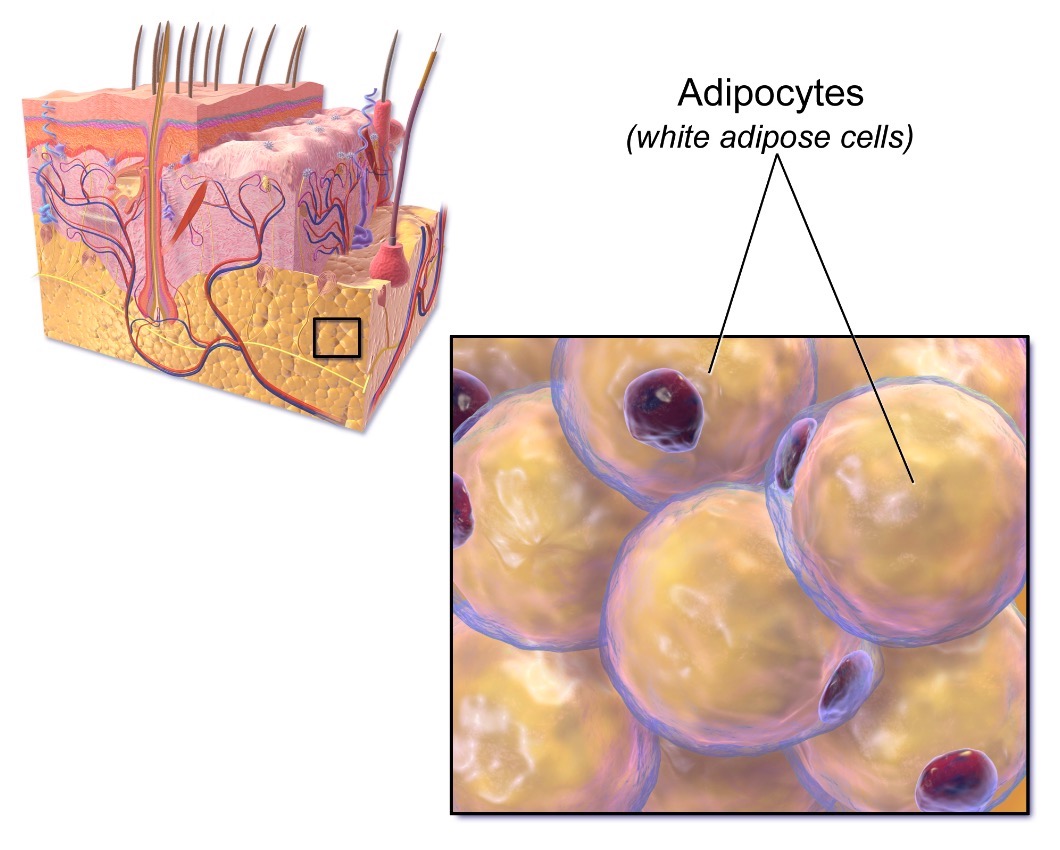
El tejido adiposo es un tipo de tejido conectivo laxo compuesto principalmente por células denominadas adipocitos.

Composición

  • Adipocitos
  • Fracción vascular estromal:
    • Preadipocitos
    • Fibroblastos
    • Células endoteliales vasculares
    • Células inmunitarias (macrófagos del tejido adiposo mayor)

Tipos de tejido adiposo

Dos tipos clásicos:

  • Tejido adiposo blanco:
    • Tipo predominante en EN Erythema nodosum is an immune-mediated panniculitis (inflammation of the subcutaneous fat) caused by a type IV (delayed-type) hypersensitivity reaction. It commonly manifests in young women as tender, erythematous nodules on the shins. Erythema Nodosum adultos
    • Principal fuente de energía, almacenada en EN Erythema nodosum is an immune-mediated panniculitis (inflammation of the subcutaneous fat) caused by a type IV (delayed-type) hypersensitivity reaction. It commonly manifests in young women as tender, erythematous nodules on the shins. Erythema Nodosum forma de triglicéridos
    • Contienen una sola gota grande de lípidos (unilocular)
  • Tejido adiposo pardo o marrón:
    • Color marrón debido a una mayor vascularidad y más mitocondrias
    • Presente en EN Erythema nodosum is an immune-mediated panniculitis (inflammation of the subcutaneous fat) caused by a type IV (delayed-type) hypersensitivity reaction. It commonly manifests in young women as tender, erythematous nodules on the shins. Erythema Nodosum grandes cantidades durante la vida fetal (~ 5% de la masa corporal del recién nacido)
    • Persiste en EN Erythema nodosum is an immune-mediated panniculitis (inflammation of the subcutaneous fat) caused by a type IV (delayed-type) hypersensitivity reaction. It commonly manifests in young women as tender, erythematous nodules on the shins. Erythema Nodosum la vida adulta en EN Erythema nodosum is an immune-mediated panniculitis (inflammation of the subcutaneous fat) caused by a type IV (delayed-type) hypersensitivity reaction. It commonly manifests in young women as tender, erythematous nodules on the shins. Erythema Nodosum cantidades mucho menores
    • Contiene una gran cantidad de pequeñas gotas de lípidos (multilocular)
    • Genera calor Calor Inflammation corporal

3er tipo transitorio, recientemente descrito:
  • Tejido adiposo beige, “inducible” o “brite” (= “marrón en EN Erythema nodosum is an immune-mediated panniculitis (inflammation of the subcutaneous fat) caused by a type IV (delayed-type) hypersensitivity reaction. It commonly manifests in young women as tender, erythematous nodules on the shins. Erythema Nodosum blanco”)
  • Fase de transición/transformación, en EN Erythema nodosum is an immune-mediated panniculitis (inflammation of the subcutaneous fat) caused by a type IV (delayed-type) hypersensitivity reaction. It commonly manifests in young women as tender, erythematous nodules on the shins. Erythema Nodosum la que el tejido adiposo blanco se convierte en EN Erythema nodosum is an immune-mediated panniculitis (inflammation of the subcutaneous fat) caused by a type IV (delayed-type) hypersensitivity reaction. It commonly manifests in young women as tender, erythematous nodules on the shins. Erythema Nodosum tejido adiposo marrón (pardeamiento del tejido adiposo blanco) o viceversa por expresión genética diferencial, en EN Erythema nodosum is an immune-mediated panniculitis (inflammation of the subcutaneous fat) caused by a type IV (delayed-type) hypersensitivity reaction. It commonly manifests in young women as tender, erythematous nodules on the shins. Erythema Nodosum respuesta a las necesidades termogénicas

Distribución anatómica

  • Grasa subcutánea: debajo de la piel
  • Grasa visceral: alrededor de los LOS Neisseria órganos internos
  • Médula ósea amarilla
  • Intermuscular
  • Tejido mamario
  • Distribución del tejido adiposo pardo:
    • Feto: prominente en EN Erythema nodosum is an immune-mediated panniculitis (inflammation of the subcutaneous fat) caused by a type IV (delayed-type) hypersensitivity reaction. It commonly manifests in young women as tender, erythematous nodules on the shins. Erythema Nodosum las regiones cervical posterior, axilar, suprailíaca y perirrenal; también en EN Erythema nodosum is an immune-mediated panniculitis (inflammation of the subcutaneous fat) caused by a type IV (delayed-type) hypersensitivity reaction. It commonly manifests in young women as tender, erythematous nodules on the shins. Erythema Nodosum las regiones interescapular y deltoidea
    • Adultos: persiste alrededor de los LOS Neisseria riñones, las suprarrenales, la aorta Aorta The main trunk of the systemic arteries. Mediastinum and Great Vessels: Anatomy, el mediastino y el cuello
Tejido adiposo

Tejido adiposo subcutáneo

Imagen: “Adipose Tissue” por Bruce Blaus. Licencia: Dominio Público, editado por Lecturio.

Desarrollo

Desarrollo embrionario

Tejido adiposo blanco:

  • De 14 a 24 semanas de gestación:
    • Los LOS Neisseria adipocitos se diferencian de las células mesenquimales indiferenciadas perivasculares o de las células madre y progenitoras, y expresan los LOS Neisseria factores de transcripción del receptor Receptor Receptors are proteins located either on the surface of or within a cell that can bind to signaling molecules known as ligands (e.g., hormones) and cause some type of response within the cell. Receptors gamma/ receptor Receptor Receptors are proteins located either on the surface of or within a cell that can bind to signaling molecules known as ligands (e.g., hormones) and cause some type of response within the cell. Receptors X de los LOS Neisseria proliferadores de peroxisomas (PPARɣ/RXR, por sus siglas en EN Erythema nodosum is an immune-mediated panniculitis (inflammation of the subcutaneous fat) caused by a type IV (delayed-type) hypersensitivity reaction. It commonly manifests in young women as tender, erythematous nodules on the shins. Erythema Nodosum inglés).
    • Los LOS Neisseria adipocitos que surgen en EN Erythema nodosum is an immune-mediated panniculitis (inflammation of the subcutaneous fat) caused by a type IV (delayed-type) hypersensitivity reaction. It commonly manifests in young women as tender, erythematous nodules on the shins. Erythema Nodosum las zonas subcutáneas son distintos molecularmente y funcionalmente, en EN Erythema nodosum is an immune-mediated panniculitis (inflammation of the subcutaneous fat) caused by a type IV (delayed-type) hypersensitivity reaction. It commonly manifests in young women as tender, erythematous nodules on the shins. Erythema Nodosum comparación a los LOS Neisseria que surgen en EN Erythema nodosum is an immune-mediated panniculitis (inflammation of the subcutaneous fat) caused by a type IV (delayed-type) hypersensitivity reaction. It commonly manifests in young women as tender, erythematous nodules on the shins. Erythema Nodosum las zonas viscerales.
    • El PPARɣ se considera el regulador principal de la adipogénesis.
  • Los LOS Neisseria lipoblastos precursores acumulan pequeñas vacuolas de lípidos en EN Erythema nodosum is an immune-mediated panniculitis (inflammation of the subcutaneous fat) caused by a type IV (delayed-type) hypersensitivity reaction. It commonly manifests in young women as tender, erythematous nodules on the shins. Erythema Nodosum su citoplasma, que se fusionan para convertirse en EN Erythema nodosum is an immune-mediated panniculitis (inflammation of the subcutaneous fat) caused by a type IV (delayed-type) hypersensitivity reaction. It commonly manifests in young women as tender, erythematous nodules on the shins. Erythema Nodosum adipocitos uniloculares más grandes típicos del tejido adiposo blanco.

Tejido adiposo pardo o marrón:

  • Surge de las células progenitoras miogénicas del esqueleto, con una estrecha relación similar con la angiogénesis, y expresa los LOS Neisseria factores de transcripción PR domain–containing 16 (PRDM16, por sus siglas en EN Erythema nodosum is an immune-mediated panniculitis (inflammation of the subcutaneous fat) caused by a type IV (delayed-type) hypersensitivity reaction. It commonly manifests in young women as tender, erythematous nodules on the shins. Erythema Nodosum inglés) y PPARɣ coactivador 1 (PGC-1, por sus siglas en EN Erythema nodosum is an immune-mediated panniculitis (inflammation of the subcutaneous fat) caused by a type IV (delayed-type) hypersensitivity reaction. It commonly manifests in young women as tender, erythematous nodules on the shins. Erythema Nodosum inglés)
  • Los LOS Neisseria lipoblastos acumulan pequeñas vacuolas de lípidos, que permanecen separadas para convertirse en EN Erythema nodosum is an immune-mediated panniculitis (inflammation of the subcutaneous fat) caused by a type IV (delayed-type) hypersensitivity reaction. It commonly manifests in young women as tender, erythematous nodules on the shins. Erythema Nodosum los LOS Neisseria típicos adipocitos multiloculados del tejido adiposo pardo.

Desarrollo postembrionario

  • El crecimiento en EN Erythema nodosum is an immune-mediated panniculitis (inflammation of the subcutaneous fat) caused by a type IV (delayed-type) hypersensitivity reaction. It commonly manifests in young women as tender, erythematous nodules on the shins. Erythema Nodosum número y tamaño de los LOS Neisseria adipocitos continúa durante la pubertad.
  • Pueden seguir formándose nuevos adipocitos a lo largo de la vida, especialmente si se produce una sobrealimentación (hiperalimentación).
  • Las células madre y los LOS Neisseria preadipocitos pueden dividirse; las células adiposas maduras no.
  • Depósitos de grasa sanos y no sanos:
    • El tejido adiposo blanco subcutáneo, especialmente el de la región glúteo–femoral, se considera metabólicamente sano.
    • El tejido adiposo blanco visceral está asociado a la inflamación y al AL Amyloidosis aumento del riesgo de enfermedades metabólicas.

Diferencias sexuales

  • Comienzo en EN Erythema nodosum is an immune-mediated panniculitis (inflammation of the subcutaneous fat) caused by a type IV (delayed-type) hypersensitivity reaction. It commonly manifests in young women as tender, erythematous nodules on the shins. Erythema Nodosum la infancia temprana
  • Las chicas jóvenes tienen más tejido adiposo que los LOS Neisseria chicos jóvenes
  • Después de la pubertad, la distribución y la fisiología difieren.
  • Relacionado con la secreción de hormonas esteroides

Mujeres:

  • Los LOS Neisseria estrógenos y la progesterona favorecen la localización de más grasa en EN Erythema nodosum is an immune-mediated panniculitis (inflammation of the subcutaneous fat) caused by a type IV (delayed-type) hypersensitivity reaction. It commonly manifests in young women as tender, erythematous nodules on the shins. Erythema Nodosum la parte inferior del cuerpo.
    • Resultados en EN Erythema nodosum is an immune-mediated panniculitis (inflammation of the subcutaneous fat) caused by a type IV (delayed-type) hypersensitivity reaction. It commonly manifests in young women as tender, erythematous nodules on the shins. Erythema Nodosum el hábito ginecoide de las mujeres (grasa alrededor de las caderas, los LOS Neisseria muslos y las nalgas)
    • Estos depósitos de grasa son subcutáneos.
  • Después de la menopausia, las mujeres pueden almacenar más grasa alrededor de la cintura y más grasa visceral.
  • Las mujeres siguen acumulando grasa en EN Erythema nodosum is an immune-mediated panniculitis (inflammation of the subcutaneous fat) caused by a type IV (delayed-type) hypersensitivity reaction. It commonly manifests in young women as tender, erythematous nodules on the shins. Erythema Nodosum relación con su peso corporal durante la adolescencia.
  • En EN Erythema nodosum is an immune-mediated panniculitis (inflammation of the subcutaneous fat) caused by a type IV (delayed-type) hypersensitivity reaction. It commonly manifests in young women as tender, erythematous nodules on the shins. Erythema Nodosum las mujeres premenopáusicas, los LOS Neisseria adipocitos en EN Erythema nodosum is an immune-mediated panniculitis (inflammation of the subcutaneous fat) caused by a type IV (delayed-type) hypersensitivity reaction. It commonly manifests in young women as tender, erythematous nodules on the shins. Erythema Nodosum los LOS Neisseria glúteos son diferentes porque:
    • Sufren menos lipólisis a pesar de la pérdida de peso porque las células tienen más receptores α2 sensibles a la catecolamina, que inhiben la lipólisis
    • Tienen niveles más altos de lipoproteína lipasa, por lo que captan más triglicéridos circulantes
    • Son más grandes

Hombres:

  • La grasa en EN Erythema nodosum is an immune-mediated panniculitis (inflammation of the subcutaneous fat) caused by a type IV (delayed-type) hypersensitivity reaction. It commonly manifests in young women as tender, erythematous nodules on the shins. Erythema Nodosum la parte inferior del cuerpo se reduce por los LOS Neisseria andrógenos, produciendo una distribución androide de la grasa.
  • Almacenan más grasa abdominal (visceral)
  • Más propensos a la obesidad “central” (visceral)
  • Alcanzan un pico de contenido de grasa corporal durante la adolescencia temprana

Morfología e Histología

Morfología

Tejido adiposo blanco:

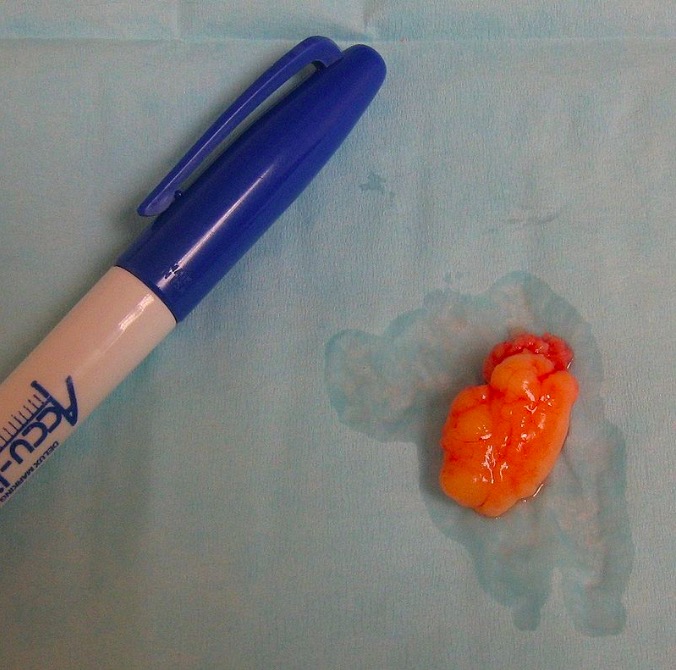
  • Amarillo cadmio brillante, reluciente y de superficie grasienta:
    • El color amarillo lo aportan los LOS Neisseria carotenoides que se encuentran en EN Erythema nodosum is an immune-mediated panniculitis (inflammation of the subcutaneous fat) caused by a type IV (delayed-type) hypersensitivity reaction. It commonly manifests in young women as tender, erythematous nodules on the shins. Erythema Nodosum muchas verduras y frutas
    • Refleja el metabolismo activo de la grasa en EN Erythema nodosum is an immune-mediated panniculitis (inflammation of the subcutaneous fat) caused by a type IV (delayed-type) hypersensitivity reaction. It commonly manifests in young women as tender, erythematous nodules on the shins. Erythema Nodosum el tejido adiposo blanco
  • Aspecto difuso homogéneo en EN Erythema nodosum is an immune-mediated panniculitis (inflammation of the subcutaneous fat) caused by a type IV (delayed-type) hypersensitivity reaction. It commonly manifests in young women as tender, erythematous nodules on the shins. Erythema Nodosum la sección de corte
  • Septos finos que dividen lóbulos poco definidos
  • Septos más gruesos en EN Erythema nodosum is an immune-mediated panniculitis (inflammation of the subcutaneous fat) caused by a type IV (delayed-type) hypersensitivity reaction. It commonly manifests in young women as tender, erythematous nodules on the shins. Erythema Nodosum zonas de presión mecánica (región glútea)
  • La variación de color indica un proceso patológico:
    • Blanco o amarillo blanquecino: necrosis Necrosis The death of cells in an organ or tissue due to disease, injury or failure of the blood supply. Ischemic Cell Damage grasa
    • Amarillo pálido: lipoma Lipoma A lipoma is a benign neoplasm of fat cells (adipocytes) and the most common soft tissue tumor in adults. The etiology is unknown, but obesity is a predisposing factor; genetics also play a role, with multiple lipomas occurring in various inherited disorders. Lipoma
    • De color rojizo a amarillo anaranjado: angiolipoma Angiolipoma A benign neoplasm composed of a mixture of adipose tissue and blood vessels. Cowden Syndrome
    • Nódulos más firmes de color amarillo blanquecino a blanco: liposarcoma

Tejido adiposo pardo:

  • Marrón rojizo debido a la abundante vascularidad y a las numerosas mitocondrias dentro de las células
  • Aspecto lobulado glandular

Beige: tejido adiposo de color marrón más claro que el marrón

Aspecto microscópico

Tejido adiposo blanco:

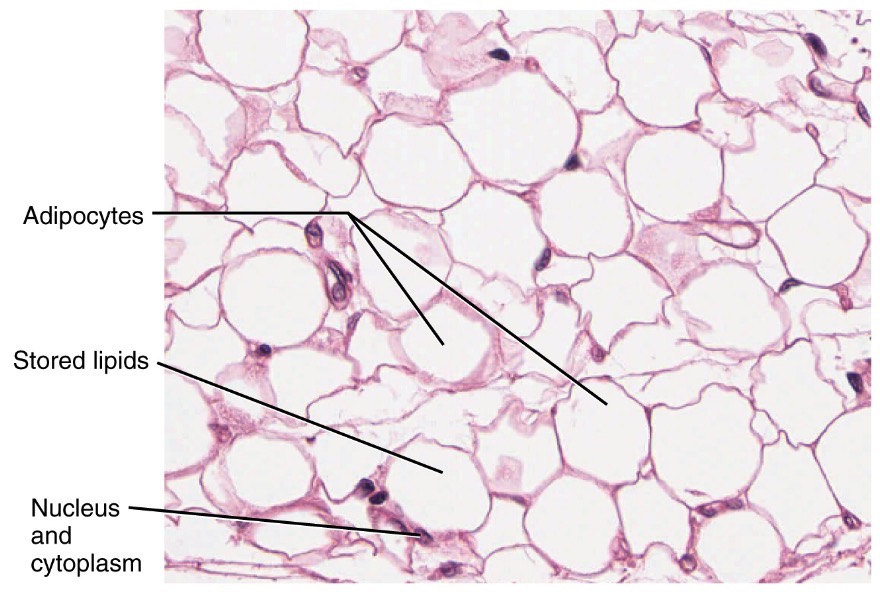
  • Una célula adiposa blanca madura es esférica; tamaño: hasta 120 μm de diámetro (comparado con el eritrocito = 7 μm, el linfocito = 12–16 μm, el hepatocito = 20–30 μm)
  • Citoplasma: desplazado y comprimido hacia el perímetro por una única vacuola lipídica; compuesto por un 99% de triglicéridos
  • El núcleo:
    • Desplazado periféricamente por una vacuola lipídica
    • Ovalada, delgada y pequeña, con una diminuta vacuola central transparente
  • Membrana basal de los LOS Neisseria adipocitos: resaltada por las tinciones de reticulina y ácido periódico de Schiff
  • Los LOS Neisseria lobulillos mal definidos están separados por finas bandas de colágeno que son más gruesas en EN Erythema nodosum is an immune-mediated panniculitis (inflammation of the subcutaneous fat) caused by a type IV (delayed-type) hypersensitivity reaction. It commonly manifests in young women as tender, erythematous nodules on the shins. Erythema Nodosum la región glútea.
  • Estroma: capilares (tienen una relación íntima con cada adipocito, similar a otros órganos endocrinos), fibroblastos, macrófagos, preadipocitos, células madre
Tejido adiposo blanco

Tejido adiposo blanco: células con núcleos aplanados que se localizan en la periferia

Imagen: “White adipose tissue” por OpenStax College, Anatomy and Physiology. OpenStax CNX. Licencia: CC BY 4.0

Tejido adiposo pardo o marrón:

  • Organizado en EN Erythema nodosum is an immune-mediated panniculitis (inflammation of the subcutaneous fat) caused by a type IV (delayed-type) hypersensitivity reaction. It commonly manifests in young women as tender, erythematous nodules on the shins. Erythema Nodosum lóbulos prominentes de células
  • Los LOS Neisseria lobulillos están divididos por septos que contienen vasos sanguíneos y nervios.
  • Adipocitos del tejido adiposo marrón:
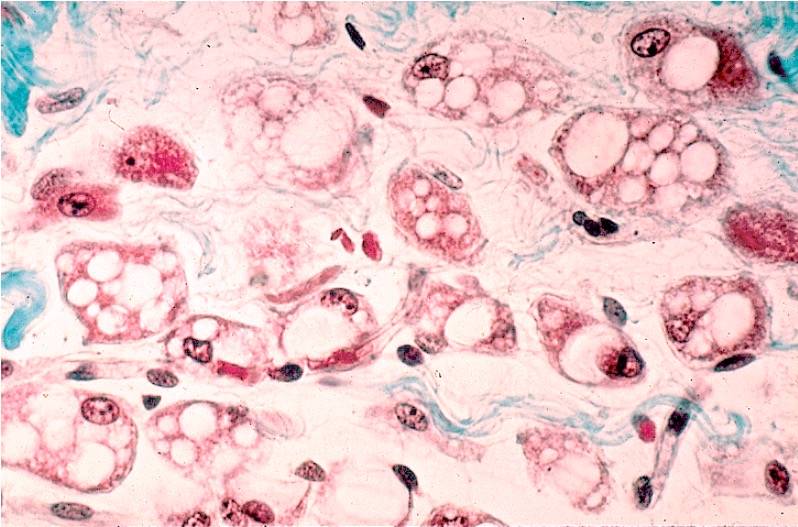
    • Hay células multivacuoladas y algunas univacuoladas.
    • Tamaño: 25–40 μm (el tamaño varía, dependiendo del estado nutricional)
    • Muchas mitocondrias grandes y redondas (dando un aspecto granular al AL Amyloidosis citoplasma)
    • Núcleo: esférico, excéntrico o paracentral en EN Erythema nodosum is an immune-mediated panniculitis (inflammation of the subcutaneous fat) caused by a type IV (delayed-type) hypersensitivity reaction. It commonly manifests in young women as tender, erythematous nodules on the shins. Erythema Nodosum las células multiloculares
Tejido adiposo pardo

Tejido adiposo pardo o marrón:
El tejido adiposo pardo contiene adipocitos multivacuolados y tiene un color marrón característico debido a una marcada vascularización (4–5 veces más que el tejido adiposo blanco) y numerosas mitocondrias. Los adipocitos son más pequeños que los del tejido adiposo blanco y el núcleo está situado en el centro; los adipocitos blancos también están dispersos dentro del tejido adiposo marrón normal.

Imagen: “Tecido adiposo multilocular brown adipose tissue” por Lucasmcorso. Licencia: Dominio Público

Grasa beige:

  • Aspecto microscópico intermedio entre el tejido adiposo blanco y el tejido adiposo pardo
  • Varía en EN Erythema nodosum is an immune-mediated panniculitis (inflammation of the subcutaneous fat) caused by a type IV (delayed-type) hypersensitivity reaction. It commonly manifests in young women as tender, erythematous nodules on the shins. Erythema Nodosum función de la fase de inducción

Fisiología

Almacenamiento de lípidos

  • El tejido adiposo blanco es el mayor y más eficiente almacén de energía ( en EN Erythema nodosum is an immune-mediated panniculitis (inflammation of the subcutaneous fat) caused by a type IV (delayed-type) hypersensitivity reaction. It commonly manifests in young women as tender, erythematous nodules on the shins. Erythema Nodosum forma de triglicéridos).
  • La lipoproteina lipasa es sintetizada por los LOS Neisseria adipocitos y transferida a las células endoteliales adyacentes.
  • La lipoproteina lipasa en EN Erythema nodosum is an immune-mediated panniculitis (inflammation of the subcutaneous fat) caused by a type IV (delayed-type) hypersensitivity reaction. It commonly manifests in young women as tender, erythematous nodules on the shins. Erythema Nodosum la superficie luminal de las células endoteliales hidroliza los LOS Neisseria triglicéridos de los LOS Neisseria quilomicrones (del intestino) y de las lipoproteínas de muy baja densidad (del hígado).
  • La mayoría de los LOS Neisseria ácidos grasos libres liberados son captados por las células grasas y reesterificados con fosfato de glicerol dentro del adipocito para formar triacilglicerol.
  • Los LOS Neisseria triacilgliceroles se almacenan dentro de la gota lipídica del adipocito.
  • Los LOS Neisseria triacilgliceroles almacenados son movilizados por la lipasa, que hidroliza los LOS Neisseria triglicéridos almacenados.
  • La movilización de los LOS Neisseria triacilgliceroles está controlada por factores neuronales y hormonales:
    • Norepinefrina:
      • Activa la lipasa
      • La grasa denervada seguirá depositándose incluso en EN Erythema nodosum is an immune-mediated panniculitis (inflammation of the subcutaneous fat) caused by a type IV (delayed-type) hypersensitivity reaction. It commonly manifests in young women as tender, erythematous nodules on the shins. Erythema Nodosum un estado de inanición.
    • Insulina: estimula la síntesis de lípidos e inhibe la lipasa
    • Glucagón y hormona de crecimiento: activan la lipasa
    • Hormonas tiroideas:
      • Primero aumenta la lipogénesis
      • Entonces causa la lipólisis
    • Los LOS Neisseria efectos del cortisol Cortisol Glucocorticoids dependen del contexto fisiológico.
    • Los LOS Neisseria andrógenos son antiadipogénicos y los LOS Neisseria estrógenos son proadipogénicos.
  • Los LOS Neisseria ácidos grasos libres liberados pueden ser reesterificados o liberados a la circulación y unidos a la albúmina para ser transferidos a otras células.

Función endocrina

El tejido adiposo produce una serie de hormonas y citoquinas.
  • Leptina:
    • Producto proteico del gen ob
    • Actúa sobre el hipotálamo para aumentar el gasto energético y disminuir el apetito
  • Adiponectina:
    • Disminuye la gluconeogénesis y estimula la captación de glucosa
    • Modula el catabolismo de los LOS Neisseria lípidos
    • La obesidad se asocia con niveles reducidos de adiponectina.
  • Resistina:
    • Aumenta los LOS Neisseria niveles de lipoproteínas de baja densidad (LDL, por sus siglas en EN Erythema nodosum is an immune-mediated panniculitis (inflammation of the subcutaneous fat) caused by a type IV (delayed-type) hypersensitivity reaction. It commonly manifests in young women as tender, erythematous nodules on the shins. Erythema Nodosum inglés)
    • Asociado a la resistencia a la insulina
    • Efectos proinflamatorios
  • Aromatasa:
    • Convierte la androstenediona en EN Erythema nodosum is an immune-mediated panniculitis (inflammation of the subcutaneous fat) caused by a type IV (delayed-type) hypersensitivity reaction. It commonly manifests in young women as tender, erythematous nodules on the shins. Erythema Nodosum estrona, la principal fuente de estrógenos en EN Erythema nodosum is an immune-mediated panniculitis (inflammation of the subcutaneous fat) caused by a type IV (delayed-type) hypersensitivity reaction. It commonly manifests in young women as tender, erythematous nodules on the shins. Erythema Nodosum los LOS Neisseria hombres y las mujeres posmenopáusicas
    • Expresado por la fracción de células estromales del tejido adiposo y no por los LOS Neisseria adipocitos
  • Interleucina-6 (IL-6): (el 30% de la IL-6 procede de los LOS Neisseria adipocitos, las células estromales y los LOS Neisseria macrófagos residentes):
    • Estimula la secreción hepática de triglicéridos y los LOS Neisseria reactantes de fase aguda
    • Aumenta el número y la actividad de las plaquetas
    • Aumenta la expresión de las moléculas de adhesión endotelial
    • La liberación es inducida por el factor de necrosis Necrosis The death of cells in an organ or tissue due to disease, injury or failure of the blood supply. Ischemic Cell Damage tumoral α (TNF-α) (implicado en EN Erythema nodosum is an immune-mediated panniculitis (inflammation of the subcutaneous fat) caused by a type IV (delayed-type) hypersensitivity reaction. It commonly manifests in young women as tender, erythematous nodules on the shins. Erythema Nodosum la anorexia Anorexia The lack or loss of appetite accompanied by an aversion to food and the inability to eat. It is the defining characteristic of the disorder anorexia nervosa. Anorexia Nervosa del cáncer).
  • Otras citoquinas:
    • TNF-α:
      • Se expresa en EN Erythema nodosum is an immune-mediated panniculitis (inflammation of the subcutaneous fat) caused by a type IV (delayed-type) hypersensitivity reaction. It commonly manifests in young women as tender, erythematous nodules on the shins. Erythema Nodosum los LOS Neisseria preadipocitos
      • Bloquea la diferenciación a adipocitos maduros
    • Factor de crecimiento de fibroblastos 1:
      • De las células endoteliales microvasculares del tejido adiposo blanco
      • Estimula la diferenciación preadipocitaria y la acumulación de triglicéridos
    • C3 y adipsina: proteínas de la vía alternativa del complemento
    • Inhibidor del activador del plasminógeno 1 ( PAI-1 PAI-1 A member of the serpin family of proteins. It inhibits both the tissue-type and urokinase-type plasminogen activators. Metabolic Syndrome, por sus siglas en EN Erythema nodosum is an immune-mediated panniculitis (inflammation of the subcutaneous fat) caused by a type IV (delayed-type) hypersensitivity reaction. It commonly manifests in young women as tender, erythematous nodules on the shins. Erythema Nodosum inglés):
      • Potente inhibidor del sistema fibrinolítico (aumento de las tromboembolias)
      • La insulina induce la expresión de PAI-1 PAI-1 A member of the serpin family of proteins. It inhibits both the tissue-type and urokinase-type plasminogen activators. Metabolic Syndrome en EN Erythema nodosum is an immune-mediated panniculitis (inflammation of the subcutaneous fat) caused by a type IV (delayed-type) hypersensitivity reaction. It commonly manifests in young women as tender, erythematous nodules on the shins. Erythema Nodosum los LOS Neisseria adipocitos.
      • La obesidad está asociada a niveles elevados.

Producción de calor Calor Inflammation

  • Función principal del tejido adiposo pardo: termogénesis sin escalofríos; importante para los LOS Neisseria recién nacidos
  • El tejido adiposo pardo es muy vascular y está regulado por la estimulación simpática.
  • Los LOS Neisseria receptores β3-adrenérgicos regulan la lipólisis y la termogénesis (junto con los LOS Neisseria receptores β1 y β2).
  • El tejido adiposo marrón tiene más mitocondrias y de mayor tamaño que el tejido adiposo blanco, y estas poseen una proteína de desacoplamiento única llamada “termogenina” (el producto proteico del gen UCP-1).
  • La termogenina desacopla la oxidación de los LOS Neisseria ácidos grasos de la generación de ATP.
  • La energía resultante se disipa en EN Erythema nodosum is an immune-mediated panniculitis (inflammation of the subcutaneous fat) caused by a type IV (delayed-type) hypersensitivity reaction. It commonly manifests in young women as tender, erythematous nodules on the shins. Erythema Nodosum forma de calor Calor Inflammation.

Otras funciones del tejido adiposo

  • Aislamiento del calor Calor Inflammation y del frío por la capa subcutánea
  • Relleno protector y soporte estructural de órganos viscerales, tejido mamario, tejido periorbitario, médula ósea y en EN Erythema nodosum is an immune-mediated panniculitis (inflammation of the subcutaneous fat) caused by a type IV (delayed-type) hypersensitivity reaction. It commonly manifests in young women as tender, erythematous nodules on the shins. Erythema Nodosum zonas de estrés mecánico (palmas y plantas de los LOS Neisseria pies)

Relevancia Clínica

  • Obesidad: enfermedad de acumulación excesiva de grasa tanto por hipertrofia como por hiperplasia del tejido adiposo blanco: “Sobrepeso” se define como un IMC (el peso en kilogramos dividido por el cuadrado de la altura en metros) de 25–29,9 y “obesidad” como un IMC ≥ 30. En EN Erythema nodosum is an immune-mediated panniculitis (inflammation of the subcutaneous fat) caused by a type IV (delayed-type) hypersensitivity reaction. It commonly manifests in young women as tender, erythematous nodules on the shins. Erythema Nodosum Estados Unidos, la prevalencia de la obesidad es de aproximadamente el 40%, y esa tasa va VA Ventilation: Mechanics of Breathing en EN Erythema nodosum is an immune-mediated panniculitis (inflammation of the subcutaneous fat) caused by a type IV (delayed-type) hypersensitivity reaction. It commonly manifests in young women as tender, erythematous nodules on the shins. Erythema Nodosum aumento. La obesidad suele deberse a un estilo de vida sedentario y a un aumento de la ingesta calórica, pero también existen causas secundarias poco comunes. La obesidad está asociada a una serie de discapacidades, entre ellas:
    • Hipertensión, hipercolesterolemia, diabetes Diabetes Diabetes mellitus (DM) is a metabolic disease characterized by hyperglycemia and dysfunction of the regulation of glucose metabolism by insulin. Type 1 DM is diagnosed mostly in children and young adults as the result of autoimmune destruction of β cells in the pancreas and the resulting lack of insulin. Type 2 DM has a significant association with obesity and is characterized by insulin resistance. Diabetes Mellitus mellitus tipo 2
    • Enfermedad cardíaca y dislipidemia
    • Cáncer
    • Osteoartritis, gota
    • Enfermedad del hígado graso no alcohólico, enfermedad de la vesícula biliar, ERGE
    • Enfermedad renal
    • Apnea del sueño, demencia, depresión
    • Aumento de la susceptibilidad a las infecciones, incluida la enfermedad por coronavirus Coronavirus Coronaviruses are a group of related viruses that contain positive-sense, single-stranded RNA. Coronavirus derives its name from “κορώνη korṓnē” in Greek, which translates as “crown,” after the small club-shaped proteins visible as a ring around the viral envelope in electron micrographs. Coronavirus 2019 ( COVID-19 COVID-19 Coronavirus disease 2019 (COVID-19) is an infectious disease caused by the severe acute respiratory syndrome coronavirus 2 (SARS-CoV-2) that mainly affects the respiratory system but can also cause damage to other body systems (cardiovascular, gastrointestinal, renal, and central nervous systems). ), la gripe y las infecciones bacterianas y fúngicas
    • Cambios en EN Erythema nodosum is an immune-mediated panniculitis (inflammation of the subcutaneous fat) caused by a type IV (delayed-type) hypersensitivity reaction. It commonly manifests in young women as tender, erythematous nodules on the shins. Erythema Nodosum la piel, incluyendo estrías, acantosis nigricans (probablemente debido a una hiperinsulinemia sostenida), hirsutismo en EN Erythema nodosum is an immune-mediated panniculitis (inflammation of the subcutaneous fat) caused by a type IV (delayed-type) hypersensitivity reaction. It commonly manifests in young women as tender, erythematous nodules on the shins. Erythema Nodosum las mujeres
    • Síndrome metabólico diagnosticado si se cumplen tres de las cinco condiciones siguientes:
      • Hipertensión
      • Niveles bajos de lipoproteínas de alta densidad (HDL, por sus siglas en EN Erythema nodosum is an immune-mediated panniculitis (inflammation of the subcutaneous fat) caused by a type IV (delayed-type) hypersensitivity reaction. It commonly manifests in young women as tender, erythematous nodules on the shins. Erythema Nodosum inglés)
      • Obesidad abdominal
      • Aumento de los LOS Neisseria niveles de triglicéridos
      • Aumento de los LOS Neisseria niveles de glucosa
      • Mnemotecnia PHATS ( en EN Erythema nodosum is an immune-mediated panniculitis (inflammation of the subcutaneous fat) caused by a type IV (delayed-type) hypersensitivity reaction. It commonly manifests in young women as tender, erythematous nodules on the shins. Erythema Nodosum inglés) 3/5: Pressure up (presión alta), HDL low (HDL bajo), Abdominal obesity Abdominal obesity A condition of having excess fat in the abdomen. Abdominal obesity is typically defined as waist circumferences of 40 inches or more in men and 35 inches or more in women. Abdominal obesity raises the risk of developing disorders, such as diabetes; hypertension; and metabolic syndrome. Obesity (obesidad abdominal), Triglycerides Triglycerides Fatty Acids and Lipids up (triglicéridos altos), Sugars up (azúcares altos)
  • Celulitis: problema estético que se refiere a las estrías lineales deprimidas (fenómeno del colchón) o a los LOS Neisseria hoyuelos en EN Erythema nodosum is an immune-mediated panniculitis (inflammation of the subcutaneous fat) caused by a type IV (delayed-type) hypersensitivity reaction. It commonly manifests in young women as tender, erythematous nodules on the shins. Erythema Nodosum la piel: la celulitis aparece sobre todo en EN Erythema nodosum is an immune-mediated panniculitis (inflammation of the subcutaneous fat) caused by a type IV (delayed-type) hypersensitivity reaction. It commonly manifests in young women as tender, erythematous nodules on the shins. Erythema Nodosum los LOS Neisseria muslos y la región glútea, es más frecuente en EN Erythema nodosum is an immune-mediated panniculitis (inflammation of the subcutaneous fat) caused by a type IV (delayed-type) hypersensitivity reaction. It commonly manifests in young women as tender, erythematous nodules on the shins. Erythema Nodosum las mujeres y es el resultado de una interfaz dérmico-hipodérmica desigual, con un tejido fibroso que rodea las papilas adiposas que sobresalen. La celulitis es menos frecuente en EN Erythema nodosum is an immune-mediated panniculitis (inflammation of the subcutaneous fat) caused by a type IV (delayed-type) hypersensitivity reaction. It commonly manifests in young women as tender, erythematous nodules on the shins. Erythema Nodosum los LOS Neisseria hombres porque tienen una interfaz dérmica más suave y sin hilos en EN Erythema nodosum is an immune-mediated panniculitis (inflammation of the subcutaneous fat) caused by a type IV (delayed-type) hypersensitivity reaction. It commonly manifests in young women as tender, erythematous nodules on the shins. Erythema Nodosum las zonas de los LOS Neisseria muslos y región glútea.
  • Lipodistrofias: síndromes raros, congénitos o adquiridos, asociados a una pérdida de tejido adiposo sano: La lipodistrofia generalizada puede estar asociada a la diabetes Diabetes Diabetes mellitus (DM) is a metabolic disease characterized by hyperglycemia and dysfunction of the regulation of glucose metabolism by insulin. Type 1 DM is diagnosed mostly in children and young adults as the result of autoimmune destruction of β cells in the pancreas and the resulting lack of insulin. Type 2 DM has a significant association with obesity and is characterized by insulin resistance. Diabetes Mellitus, la esteatosis hepática, la pancreatitis Pancreatitis Inflammation of the pancreas. Pancreatitis is classified as acute unless there are computed tomographic or endoscopic retrograde cholangiopancreatographic findings of chronic pancreatitis. The two most common forms of acute pancreatitis are alcoholic pancreatitis and gallstone pancreatitis. Acute Pancreatitis y el síndrome metabólico.
  • Necrosis Necrosis The death of cells in an organ or tissue due to disease, injury or failure of the blood supply. Ischemic Cell Damage grasa: afección asociada a un traumatismo mecánico (e.g., necrosis Necrosis The death of cells in an organ or tissue due to disease, injury or failure of the blood supply. Ischemic Cell Damage grasa de la mama), a una inflamación (e.g., asociada a una pancreatitis Pancreatitis Inflammation of the pancreas. Pancreatitis is classified as acute unless there are computed tomographic or endoscopic retrograde cholangiopancreatographic findings of chronic pancreatitis. The two most common forms of acute pancreatitis are alcoholic pancreatitis and gallstone pancreatitis. Acute Pancreatitis aguda) o a una isquemia (e.g., infarto del omental).
  • Embolia grasa: émbolo compuesto por un cúmulo de adipocitos que entra en EN Erythema nodosum is an immune-mediated panniculitis (inflammation of the subcutaneous fat) caused by a type IV (delayed-type) hypersensitivity reaction. It commonly manifests in young women as tender, erythematous nodules on the shins. Erythema Nodosum el torrente sanguíneo y provoca la obstrucción del flujo sanguíneo: Los LOS Neisseria émbolos grasos pueden presentarse como émbolos pulmonares tras fracturas de los LOS Neisseria huesos largos debido a la liberación de grasa de la médula ósea.
  • Calcifilaxis: necrosis Necrosis The death of cells in an organ or tissue due to disease, injury or failure of the blood supply. Ischemic Cell Damage de la piel y de la grasa subcutánea, con necrosis Necrosis The death of cells in an organ or tissue due to disease, injury or failure of the blood supply. Ischemic Cell Damage de pequeños vasos sanguíneos, precipitación de calcio y trombosis: La calcifilaxis es una complicación de la diálisis y de la insuficiencia renal y también se observa en EN Erythema nodosum is an immune-mediated panniculitis (inflammation of the subcutaneous fat) caused by a type IV (delayed-type) hypersensitivity reaction. It commonly manifests in young women as tender, erythematous nodules on the shins. Erythema Nodosum el hiperparatiroidismo primario.
  • Paniculitis: infiltrados inflamatorios en EN Erythema nodosum is an immune-mediated panniculitis (inflammation of the subcutaneous fat) caused by a type IV (delayed-type) hypersensitivity reaction. It commonly manifests in young women as tender, erythematous nodules on the shins. Erythema Nodosum el tejido adiposo subcutáneo: las causas de la paniculitis son múltiples, como la abstinencia de esteroides, la diabetes Diabetes Diabetes mellitus (DM) is a metabolic disease characterized by hyperglycemia and dysfunction of the regulation of glucose metabolism by insulin. Type 1 DM is diagnosed mostly in children and young adults as the result of autoimmune destruction of β cells in the pancreas and the resulting lack of insulin. Type 2 DM has a significant association with obesity and is characterized by insulin resistance. Diabetes Mellitus mellitus, la tuberculosis Tuberculosis Tuberculosis (TB) is an infectious disease caused by Mycobacterium tuberculosis complex bacteria. The bacteria usually attack the lungs but can also damage other parts of the body. Approximately 30% of people around the world are infected with this pathogen, with the majority harboring a latent infection. Tuberculosis spreads through the air when a person with active pulmonary infection coughs or sneezes. Tuberculosis, las enfermedades pancreáticas, la deficiencia de α1-antitripsina y las enfermedades autoinmunes. La inflamación puede incluir eosinófilos, neutrófilos, granulomas Granulomas A relatively small nodular inflammatory lesion containing grouped mononuclear phagocytes, caused by infectious and noninfectious agents. Sarcoidosis e histiocitos con linfofagocitosis, entre otros. En EN Erythema nodosum is an immune-mediated panniculitis (inflammation of the subcutaneous fat) caused by a type IV (delayed-type) hypersensitivity reaction. It commonly manifests in young women as tender, erythematous nodules on the shins. Erythema Nodosum ocasiones, la paniculitis puede resolverse sin tratamiento, pero suele tratarse con antibióticos y antiinflamatorios.
  • Paniculitis mesentérica (mesenteritis esclerosante): afección generalmente benigna que se presenta como una lesión que ocupa espacio y que consiste en EN Erythema nodosum is an immune-mediated panniculitis (inflammation of the subcutaneous fat) caused by a type IV (delayed-type) hypersensitivity reaction. It commonly manifests in young women as tender, erythematous nodules on the shins. Erythema Nodosum una inflamación crónica con necrosis Necrosis The death of cells in an organ or tissue due to disease, injury or failure of the blood supply. Ischemic Cell Damage de la grasa y proliferación de miofibroblastos que afecta a zonas únicas o múltiples del mesenterio: La inflamación de la mesenteritis suele presentarse con fiebre, pero también puede ser asintomática. Esta enfermedad afecta sobre todo a los LOS Neisseria hombres entre la quinta y sexta década de la vida. El pronóstico es excelente, ya que la mayoría de las lesiones retroceden en EN Erythema nodosum is an immune-mediated panniculitis (inflammation of the subcutaneous fat) caused by a type IV (delayed-type) hypersensitivity reaction. It commonly manifests in young women as tender, erythematous nodules on the shins. Erythema Nodosum dos años.
  • Tumores:
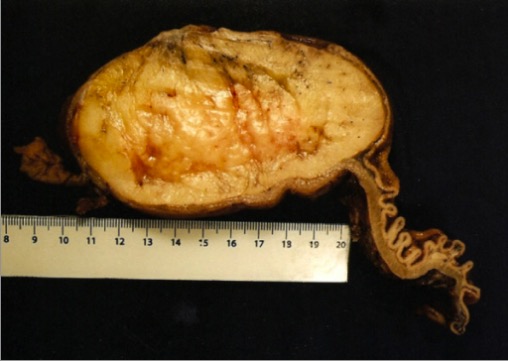
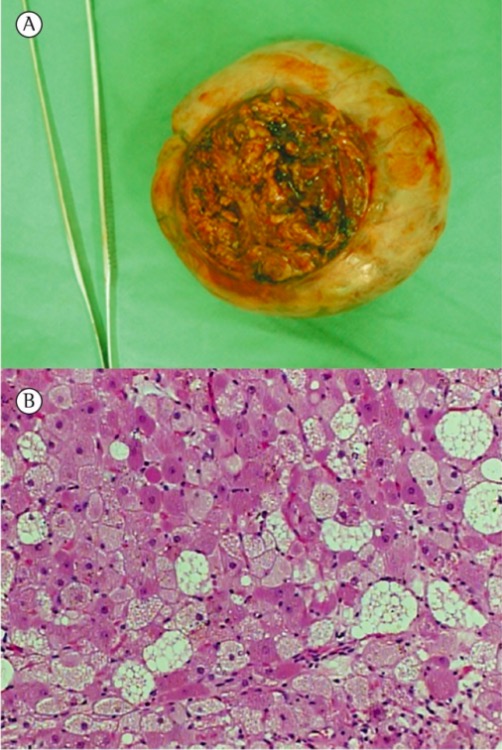
    • Hibernoma: neoplasia benigna del tejido adiposo marrón: El hibernoma es la única lesión patológica del tejido adiposo marrón. Los LOS Neisseria tumores se presentan sobre todo en EN Erythema nodosum is an immune-mediated panniculitis (inflammation of the subcutaneous fat) caused by a type IV (delayed-type) hypersensitivity reaction. It commonly manifests in young women as tender, erythematous nodules on the shins. Erythema Nodosum lugares que corresponden a la distribución del tejido adiposo marrón: la zona interescapular, el cuello, el mediastino y la axila. El hibernoma se presenta como una masa subcutánea indolora de crecimiento lento, y puede alcanzar un tamaño de hasta 23 cm. El tratamiento es la escisión quirúrgica.
    • Lipoma Lipoma A lipoma is a benign neoplasm of fat cells (adipocytes) and the most common soft tissue tumor in adults. The etiology is unknown, but obesity is a predisposing factor; genetics also play a role, with multiple lipomas occurring in various inherited disorders. Lipoma: neoplasia benigna de adipocitos (tejido adiposo blanco): el lipoma Lipoma A lipoma is a benign neoplasm of fat cells (adipocytes) and the most common soft tissue tumor in adults. The etiology is unknown, but obesity is a predisposing factor; genetics also play a role, with multiple lipomas occurring in various inherited disorders. Lipoma es el tumor Tumor Inflammation de tejidos blandos más frecuente en EN Erythema nodosum is an immune-mediated panniculitis (inflammation of the subcutaneous fat) caused by a type IV (delayed-type) hypersensitivity reaction. It commonly manifests in young women as tender, erythematous nodules on the shins. Erythema Nodosum los LOS Neisseria adultos. Existen muchas variantes de lipoma Lipoma A lipoma is a benign neoplasm of fat cells (adipocytes) and the most common soft tissue tumor in adults. The etiology is unknown, but obesity is a predisposing factor; genetics also play a role, with multiple lipomas occurring in various inherited disorders. Lipoma, como el angiolipoma Angiolipoma A benign neoplasm composed of a mixture of adipose tissue and blood vessels. Cowden Syndrome, el lipoma Lipoma A lipoma is a benign neoplasm of fat cells (adipocytes) and the most common soft tissue tumor in adults. The etiology is unknown, but obesity is a predisposing factor; genetics also play a role, with multiple lipomas occurring in various inherited disorders. Lipoma atípico, el mixolipoma y el lipoma Lipoma A lipoma is a benign neoplasm of fat cells (adipocytes) and the most common soft tissue tumor in adults. The etiology is unknown, but obesity is a predisposing factor; genetics also play a role, with multiple lipomas occurring in various inherited disorders. Lipoma de células fusiformes. El lipoma Lipoma A lipoma is a benign neoplasm of fat cells (adipocytes) and the most common soft tissue tumor in adults. The etiology is unknown, but obesity is a predisposing factor; genetics also play a role, with multiple lipomas occurring in various inherited disorders. Lipoma suele presentarse como un nódulo de tejido blando indoloro. El diagnóstico suele establecerse clínicamente y apoyarse en EN Erythema nodosum is an immune-mediated panniculitis (inflammation of the subcutaneous fat) caused by a type IV (delayed-type) hypersensitivity reaction. It commonly manifests in young women as tender, erythematous nodules on the shins. Erythema Nodosum una biopsia de tejido. El tratamiento habitual es la escisión quirúrgica, pero las lesiones asintomáticas más pequeñas pueden no requerir ningún tratamiento.
    • Liposarcoma: un tumor Tumor Inflammation maligno poco frecuente que se origina en EN Erythema nodosum is an immune-mediated panniculitis (inflammation of the subcutaneous fat) caused by a type IV (delayed-type) hypersensitivity reaction. It commonly manifests in young women as tender, erythematous nodules on the shins. Erythema Nodosum los LOS Neisseria adipocitos. Este tumor Tumor Inflammation es un tipo de sarcoma de tejidos blandos. Los LOS Neisseria síntomas dependen del lugar de origen. Clínicamente, el liposarcoma puede ser difícil de distinguir de un lipoma Lipoma A lipoma is a benign neoplasm of fat cells (adipocytes) and the most common soft tissue tumor in adults. The etiology is unknown, but obesity is a predisposing factor; genetics also play a role, with multiple lipomas occurring in various inherited disorders. Lipoma. El diagnóstico se establece con una biopsia y la base del tratamiento es la escisión quirúrgica completa.

Referencias

  1. Brooks, J. S. J. (2020). Adipose Tissue. In Mills, S. E. (Ed.), Histology for Pathologists (5th ed., Chap. 6). 
  2. Harvey, I., Boudreau, A., & Stephens, J. M. (2020). Adipose tissue in health and disease. Open Biology, 10(12), 200291. https://doi.org/10.1098/rsob.200291
  3. Pawlina, W., Ross, M.H. (2020). Adipose Tissue. In Histology: A Text and Atlas with Correlated Cell and Molecular Biology (8th ed., Chap. 9)
  4. Akalestou, E., Genser, L., Rutter, G. A. (2020). Glucocorticoid Metabolism in Obesity and Following Weight Loss. Frontiers in Endocrinology, 11. https://doi.org/10.3389/fendo.2020.00059
  5. Stimson, R. H., Anderson, A. J., Ramage, L. E., et al. (2017). Acute physiological effects of glucocorticoids on fuel metabolism in humans are permissive but not direct. Diabetes, Obesity and Metabolism, 19(6), 883–891. https://doi.org/https://doi.org/10.1111/dom.12899
  6. Toward a consensus view of mammalian adipocyte stem and progenitor cell heterogeneity. (2020). Trends in Cell Biology, 30(12), 937–950. https://doi.org/10.1016/j.tcb.2020.09.\
  7. Perreault, L., Laferrère, B. (2025). Overweight and obesity in adults: Health consequences. UpToDate. Retrieved November 26, 2025, from https://www.uptodate.com/contents/overweight-and-obesity-in-adults-health-consequences
  8. Divoux, A., Moutel, S., Poitou, C., Lacasa, D., Veyrie, N., Aissat, A., Arock, M., Guerre-Millo, M., Clément, K. (2012). Mast cells in human adipose tissue: Link with morbid obesity, inflammatory status, and diabetes. Journal of Clinical Endocrinology and Metabolism, 97(9), E1677–E1685. https://doi.org/10.1210/jc.2012-1532

¡Crea tu cuenta gratis o inicia una sesión para seguir leyendo!

Regístrate ahora y obtén acceso gratuito a Lecturio con páginas de concepto, videos médicos y cuestionarios para tu educación médica.

User Reviews

Que tengas una sesión de estudio alegre y navideña 🎁 Ahorra 50% en todos los planes >>

Details