Domina Conceptos Médicos

Estudia para la escuela de medicina y tus examenes con Lecturio.

Paracoccidioides/Paracoccidioidomicosis

La paracoccidioidomicosis es una infección fúngica endémica causada por el complejo de Paracoccidioides Paracoccidioides Paracoccidioidomycosis (PCM) is an endemic fungal infection caused by Paracoccidioides brasiliensis and P. lutzii. The fungus is geographically distributed across Mexico and South and Central America. Transmission is by inhalation, and most infections are asymptomatic. Paracoccidioides/Paracoccidioidomycosis brasiliensis y P. lutzii P. lutzii Paracoccidioides/Paracoccidioidomycosis. El hongo se distribuye geográficamente en EN Erythema nodosum is an immune-mediated panniculitis (inflammation of the subcutaneous fat) caused by a type IV (delayed-type) hypersensitivity reaction. It commonly manifests in young women as tender, erythematous nodules on the shins. Erythema Nodosum México y América del Sur y Central. La transmisión es por inhalación y la mayoría de las infecciones son asintomáticas. El hongo infecta los LOS Neisseria pulmones y luego se propaga a la piel, las membranas mucosas y otras partes del cuerpo. La infección primaria suele ser autolimitada. Sin embargo, si el huésped no contiene la infección y/o el paciente no recibe tratamiento, pueden producirse complicaciones potencialmente mortales. Las infecciones agudas suelen afectar a poblaciones más jóvenes, con hallazgos de linfadenopatía, hepatoesplenomegalia, lesiones cutáneas y signos de disfunción de la médula ósea. Más comúnmente, se observa paracoccidioidomicosis crónica, especialmente en EN Erythema nodosum is an immune-mediated panniculitis (inflammation of the subcutaneous fat) caused by a type IV (delayed-type) hypersensitivity reaction. It commonly manifests in young women as tender, erythematous nodules on the shins. Erythema Nodosum hombres. La paracoccidioidomicosis crónica representa la reactivación de la infección, presentándose como enfermedad pulmonar o infección diseminada. El diagnóstico se realiza por microscopía, histopatología, cultivo y serología. El itraconazol se usa típicamente para la enfermedad leve a moderada y la anfotericina B para la enfermedad grave y/o del sistema nervioso central (SNC).

Last updated: Dec 15, 2025

Editorial responsibility: Stanley Oiseth, Lindsay Jones, Evelin Maza

Características Generales de Paracoccidioides

Características

Morfología:

  • Hongo térmicamente dimórfico
    • El moho se forma a 22°C–26°C
    • La levadura se forma a 37°C
  • Forma del moho: hifas delgadas y septadas
  • Forma de la levadura:
    • Levadura en EN Erythema nodosum is an immune-mediated panniculitis (inflammation of the subcutaneous fat) caused by a type IV (delayed-type) hypersensitivity reaction. It commonly manifests in young women as tender, erythematous nodules on the shins. Erythema Nodosum brotes ovalada/redonda
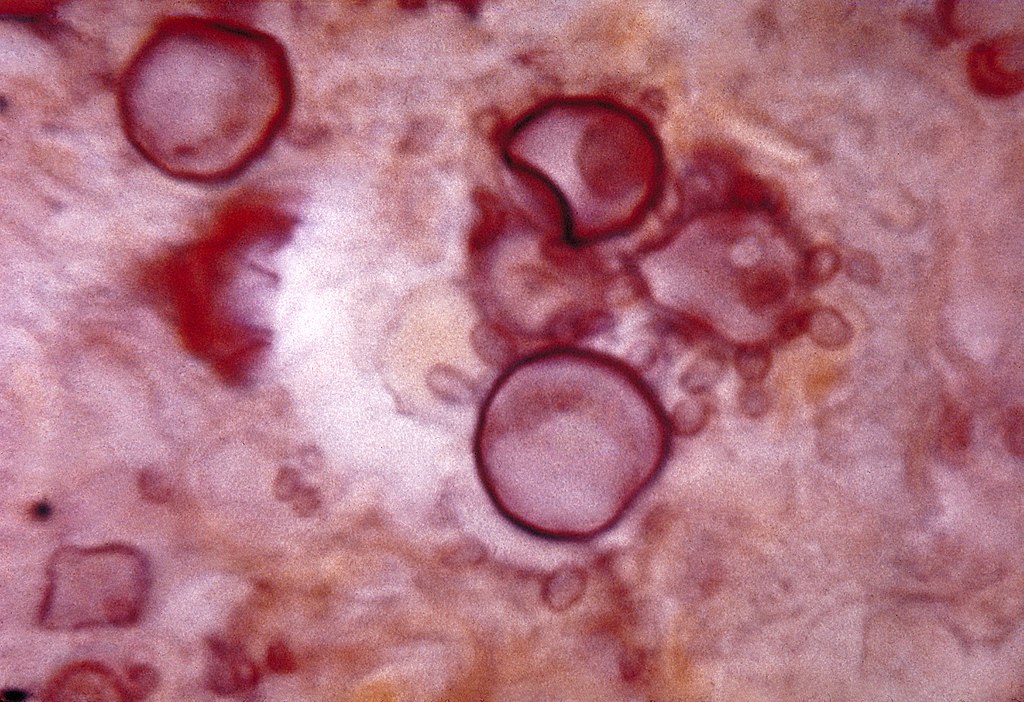
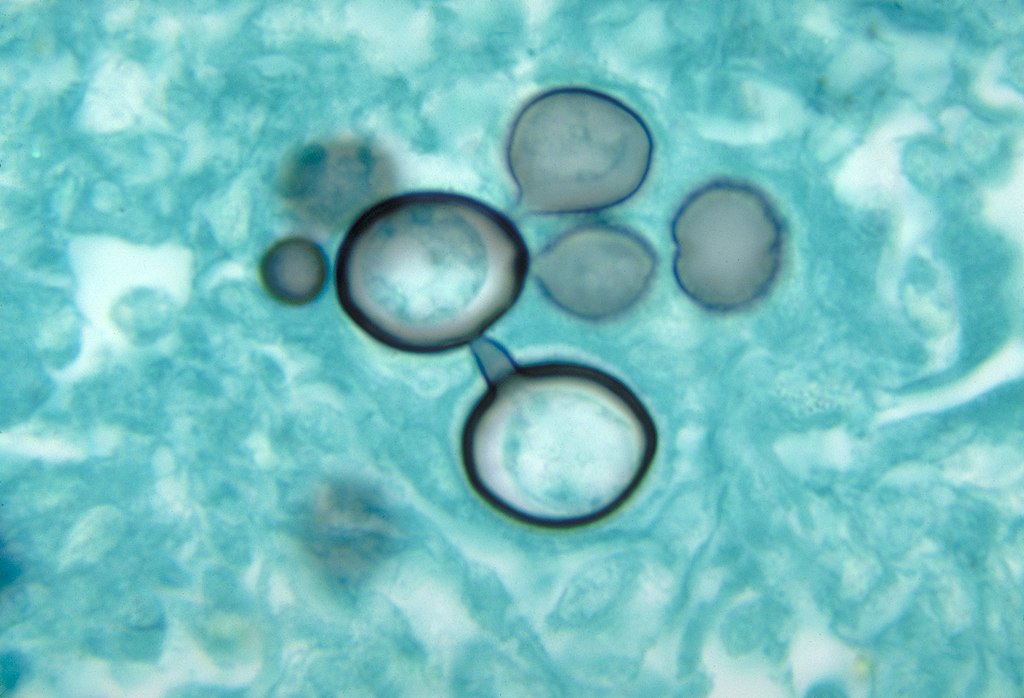
    • Aspecto de “volante de piloto” o “timón de capitán”: célula grande rodeada de células en EN Erythema nodosum is an immune-mediated panniculitis (inflammation of the subcutaneous fat) caused by a type IV (delayed-type) hypersensitivity reaction. It commonly manifests in young women as tender, erythematous nodules on the shins. Erythema Nodosum brotes
Paracoccidioidomicosis

Histopatología del Paracoccidioides:
Células con células hijas en brotes (blastoconidios) que se ven en el tejido, como el timón de un barco (el timón del capitán o del piloto)
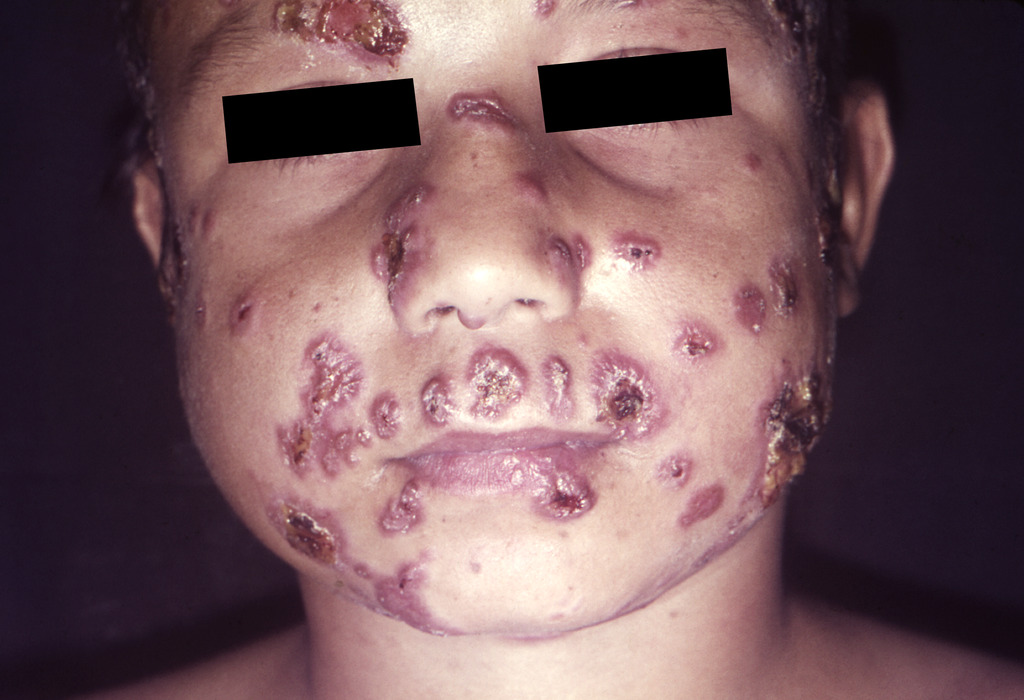
Imagen:Histopathology of paracoccidiodomycoisis” por CDC/Dr. Lucille K. Georg. Licencia: Dominio Público

Especies clínicamente relevantes

Formas de la enfermedad

  • Infección pulmonar asintomática
  • Aguda/subaguda
  • Crónica

Epidemiología

  • Endémica en EN Erythema nodosum is an immune-mediated panniculitis (inflammation of the subcutaneous fat) caused by a type IV (delayed-type) hypersensitivity reaction. It commonly manifests in young women as tender, erythematous nodules on the shins. Erythema Nodosum áreas rurales desde el sur de México hasta Argentina:
    • Distribución de casos: ~80% en EN Erythema nodosum is an immune-mediated panniculitis (inflammation of the subcutaneous fat) caused by a type IV (delayed-type) hypersensitivity reaction. It commonly manifests in young women as tender, erythematous nodules on the shins. Erythema Nodosum Brasil
    • Otros en EN Erythema nodosum is an immune-mediated panniculitis (inflammation of the subcutaneous fat) caused by a type IV (delayed-type) hypersensitivity reaction. It commonly manifests in young women as tender, erythematous nodules on the shins. Erythema Nodosum Colombia, Venezuela, Ecuador y Paraguay
  • Prevalencia en EN Erythema nodosum is an immune-mediated panniculitis (inflammation of the subcutaneous fat) caused by a type IV (delayed-type) hypersensitivity reaction. It commonly manifests in young women as tender, erythematous nodules on the shins. Erythema Nodosum áreas endémicas:
    • Hasta el 75% entre los LOS Neisseria adultos
    • Se estima que solo el 2% de las personas desarrollan una infección activa
  • Forma crónica:
    • Más frecuente entre los LOS Neisseria hombres de 30 a 60 años
    • El estradiol Estradiol The 17-beta-isomer of estradiol, an aromatized C18 steroid with hydroxyl group at 3-beta- and 17-beta-position. Estradiol-17-beta is the most potent form of mammalian estrogenic steroids. Noncontraceptive Estrogen and Progestins puede tener un efecto protector para las mujeres.
  • La morbilidad y la mortalidad dependen del entorno socioeconómico.

Fisiopatología

Transmisión y proceso infeccioso

  • Vía de entrada: inhalación
  • Hábitat: desconocido, pero probablemente en EN Erythema nodosum is an immune-mediated panniculitis (inflammation of the subcutaneous fat) caused by a type IV (delayed-type) hypersensitivity reaction. It commonly manifests in young women as tender, erythematous nodules on the shins. Erythema Nodosum el suelo
  • Reservorio animal: armadillos
  • El aumento de casos está relacionado con los LOS Neisseria siguientes factores:
    • Deforestación (visto en EN Erythema nodosum is an immune-mediated panniculitis (inflammation of the subcutaneous fat) caused by a type IV (delayed-type) hypersensitivity reaction. It commonly manifests in young women as tender, erythematous nodules on the shins. Erythema Nodosum Brasil)
    • Urbanización en EN Erythema nodosum is an immune-mediated panniculitis (inflammation of the subcutaneous fat) caused by a type IV (delayed-type) hypersensitivity reaction. It commonly manifests in young women as tender, erythematous nodules on the shins. Erythema Nodosum áreas periféricas de la ciudad con mala infraestructura
    • Aumento de la humedad del aire y del suelo

Patogénesis

  • Conidios inhalados a través del tracto respiratorio → fagocitados por macrófagos alveolares
  • La conversión a forma de levadura ocurre dentro de los LOS Neisseria macrófagos → multiplicación fúngica rápida
  • Generalmente, la infección está limitada por una respuesta inflamatoria inespecífica.
  • La mayoría de los LOS Neisseria pacientes infectados tienen una respuesta inmunitaria mediada por células T colaboradoras tipo 1 ( Th1 Th1 A subset of helper-inducer T-lymphocytes which synthesize and secrete interleukin-2; interferon-gamma; and interleukin-12. Due to their ability to kill antigen-presenting cells and their lymphokine-mediated effector activity, th1 cells are associated with vigorous delayed-type hypersensitivity reactions. T cells: Types and Functions):
    • Alveolitis
    • Formación de granulomas Granulomas A relatively small nodular inflammatory lesion containing grouped mononuclear phagocytes, caused by infectious and noninfectious agents. Sarcoidosis compactos
    • Infección latente o asintomática
  • Una respuesta Th1 Th1 A subset of helper-inducer T-lymphocytes which synthesize and secrete interleukin-2; interferon-gamma; and interleukin-12. Due to their ability to kill antigen-presenting cells and their lymphokine-mediated effector activity, th1 cells are associated with vigorous delayed-type hypersensitivity reactions. T cells: Types and Functions deficiente da como resultado una enfermedad grave:
    • No se forman granulomas Granulomas A relatively small nodular inflammatory lesion containing grouped mononuclear phagocytes, caused by infectious and noninfectious agents. Sarcoidosis.
    • Desarrollo de respuestas Th2 Th2 A subset of helper-inducer T-lymphocytes which synthesize and secrete the interleukins il-4; il-5; il-6; and il-10. These cytokines influence b-cell development and antibody production as well as augmenting humoral responses. T cells: Types and Functions y Th9, que conducen a lo siguiente:
      • Activación de linfocitos B
      • Altos niveles de anticuerpos circulantes
      • Eosinofilia
      • Hipergammaglobulinemia
  • Si no se resuelve → el hongo puede diseminarse a través del sistema venoso y linfático

Factores de riesgo del huésped

  • Trabajo agrícola (especialmente cafetaleros en EN Erythema nodosum is an immune-mediated panniculitis (inflammation of the subcutaneous fat) caused by a type IV (delayed-type) hypersensitivity reaction. It commonly manifests in young women as tender, erythematous nodules on the shins. Erythema Nodosum regiones endémicas)
  • Tabaquismo
  • Consumo de alcohol
  • Virus Virus Viruses are infectious, obligate intracellular parasites composed of a nucleic acid core surrounded by a protein capsid. Viruses can be either naked (non-enveloped) or enveloped. The classification of viruses is complex and based on many factors, including type and structure of the nucleoid and capsid, the presence of an envelope, the replication cycle, and the host range. Virology de inmunodeficiencia humana (VIH) y síndrome de inmunodeficiencia adquirida (SIDA)
  • Inmunosupresión

Presentación Clínica

Hallazgos generales

  • La infección pulmonar asintomática es común.
  • < 5% de los LOS Neisseria pacientes desarrollan enfermedad clínica.
  • 2 patrones de la enfermedad clínica:
    • Forma aguda/subaguda (también conocida como forma juvenil): se presenta ≥ 45 días después de la infección
    • Forma crónica: se presenta tras la reactivación de la infección primaria

Paracoccidioidomicosis aguda/subaguda (juvenil)

  • Típicamente observada en EN Erythema nodosum is an immune-mediated panniculitis (inflammation of the subcutaneous fat) caused by a type IV (delayed-type) hypersensitivity reaction. It commonly manifests in young women as tender, erythematous nodules on the shins. Erythema Nodosum:
    • Niños
    • Adolescentes
    • Adultos < 30 años de edad
  • Representa < 10% del total de casos
  • Signos y síntomas:
    • Constitucionales:
      • Fiebre
      • Pérdida de peso
      • Fatiga
    • Linfadenopatía
    • Hepatoesplenomegalia
    • Manifestaciones de insuficiencia de la médula ósea (e.g., anemia Anemia Anemia is a condition in which individuals have low Hb levels, which can arise from various causes. Anemia is accompanied by a reduced number of RBCs and may manifest with fatigue, shortness of breath, pallor, and weakness. Subtypes are classified by the size of RBCs, chronicity, and etiology. Anemia: Overview and Types aplásica)
    • Lesiones de piel y mucosas
    • Compromiso óseo (menos común)
Lesiones de paracoccidioidomicosis

Lesiones faciales causadas por paracoccidioidomicosis en un niño brasileño.

Imagen: “Paracoccidioidomycosis lesions” por CDC/Dr. Martín Castro. Licencia: Dominio Público
Paracoccidioidomicosis crónica

  • Representa > 90% de los LOS Neisseria casos
  • Se presenta meses o años después de la infección inicial
  • Infección pulmonar primaria:
    • Tos TOS Thoracic outlet syndrome (TOS) is a broad term used for a spectrum of syndromes related to the general region of the thoracic outlet, which involves the compression or irritation of elements of the brachial plexus, subclavian artery, or subclavian vein. Thoracic Outlet Syndrome (+/– productiva)
    • Hemoptisis (menos común)
    • Disnea
    • Fiebre
    • Malestar
    • Pérdida de peso
  • Lesiones de mucosas orofaríngeas y laríngeas:
    • Úlceras dolorosas
    • Odinofagia
    • Disfagia
    • Disfonía
    • Estridor
    • Sialorrea
  • Enfermedad diseminada:
    • Puede afectar a cualquier sitio del cuerpo
    • Piel (25% de los LOS Neisseria pacientes):
      • Pápulas costrosas
      • Úlceras
      • Nódulos
      • Placas
      • Lesiones verrugosas
    • Ganglios linfáticos: la linfadenopatía cervical es la más frecuente
    • Glándulas suprarrenales: comúnmente involucradas pero típicamente asintomáticas
    • SNC:
      • Síntoma más común: cefalea (10%–25% de los LOS Neisseria pacientes)
      • Meningitis Meningitis Meningitis is inflammation of the meninges, the protective membranes of the brain, and spinal cord. The causes of meningitis are varied, with the most common being bacterial or viral infection. The classic presentation of meningitis is a triad of fever, altered mental status, and nuchal rigidity. Meningitis
      • Lesión(es) de la médula espinal
    • Menos común:
      • Huesos
      • Articulaciones
      • Genitales
      • Ojos

Diagnóstico

Pruebas de laboratorio

  • Para el diagnóstico se requiere la visualización microscópica del crecimiento del cultivo.
  • Examen histológico directo del tejido:
    • Volante del piloto: célula de levadura grande con paredes celulares translúcidas y múltiples brotes
    • Fuentes:
      • Esputo
      • Líquido de lavado bronquial
      • Exudados, lesiones cutáneas
      • Biopsias de otros tejidos
    • Preparación:
      • Hidróxido de potasio (KOH)
      • Tinción de metenamina plata de Gomori
      • Tinción hematoxilina y eosina
    • Se puede encontrar reacción granulomatosa: células gigantes y epitelioides
  • Cultivo:
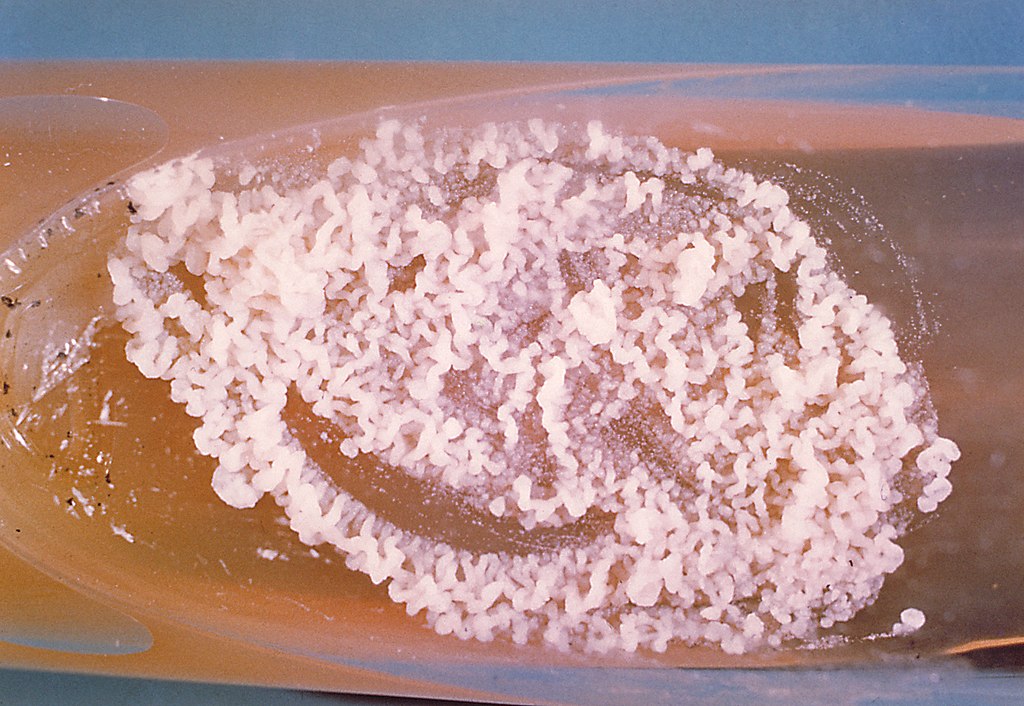
    • Agar Sabouraud dextrosa o agar extracto de levadura
    • Puede requerir hasta 4 semanas para crecer
  • Serología:
    • Inmunodifusión cuantitativa (preferida)
    • Títulos de anticuerpos monitoreados para verificar la respuesta al AL Amyloidosis tratamiento
    • Limitaciones:
      • Reactividad cruzada con otros hongos
      • La sensibilidad puede ser menor en EN Erythema nodosum is an immune-mediated panniculitis (inflammation of the subcutaneous fat) caused by a type IV (delayed-type) hypersensitivity reaction. It commonly manifests in young women as tender, erythematous nodules on the shins. Erythema Nodosum pacientes inmunocomprometidos.
  • Evaluación adicional:
    • Pruebas de función hepática:
      • Elevación leve de la función hepática
      • Albúmina baja (correlacionada con mal pronóstico)
    • Hemograma: anemia Anemia Anemia is a condition in which individuals have low Hb levels, which can arise from various causes. Anemia is accompanied by a reduced number of RBCs and may manifest with fatigue, shortness of breath, pallor, and weakness. Subtypes are classified by the size of RBCs, chronicity, and etiology. Anemia: Overview and Types
    • Disfunción suprarrenal:
      • Cortisol Cortisol Glucocorticoids matutino
      • Prueba de estimulación con hormona adrenocorticotrópica (ACTH, por sus siglas en EN Erythema nodosum is an immune-mediated panniculitis (inflammation of the subcutaneous fat) caused by a type IV (delayed-type) hypersensitivity reaction. It commonly manifests in young women as tender, erythematous nodules on the shins. Erythema Nodosum inglés)

Hallazgos radiológicos

  • Radiografía de tórax: infiltrados intersticiales y alveolares mixtos:
    • Generalmente perihiliares, bilaterales y simétricos
    • Afecta predominantemente a los LOS Neisseria pulmones inferiores
  • Tomografía computarizada (TC) de tórax:
    • Atenuaciones de vidrio esmerilado
    • Consolidaciones
    • Nódulos
    • Masas
    • Cavidades
    • Engrosamiento septal o interlobulillar
    • Enfermedad crónica:
      • Fibrosis Fibrosis Any pathological condition where fibrous connective tissue invades any organ, usually as a consequence of inflammation or other injury. Bronchiolitis Obliterans
      • Bullas
      • Enfisema
  • Neuroimagenología:
    • Lesiones con realce en EN Erythema nodosum is an immune-mediated panniculitis (inflammation of the subcutaneous fat) caused by a type IV (delayed-type) hypersensitivity reaction. It commonly manifests in young women as tender, erythematous nodules on the shins. Erythema Nodosum anillo en EN Erythema nodosum is an immune-mediated panniculitis (inflammation of the subcutaneous fat) caused by a type IV (delayed-type) hypersensitivity reaction. It commonly manifests in young women as tender, erythematous nodules on the shins. Erythema Nodosum el cerebro y/o médula espinal
    • Los LOS Neisseria hallazgos pueden ser inespecíficos (i.e., lesiones parenquimatosas solitarias o multifocales).

Tratamiento

  • Sensible a los LOS Neisseria agentes antifúngicos
  • Itraconazol:
    • Agente preferido para la enfermedad leve a moderada
    • Duración de 6–12 meses
  • Anfotericina B:
    • Se utiliza para enfermedad grave y afectación del SNC
    • Duración de 3–6 semanas luego → agente oral para curso prolongado (> 2 años)
  • Trimetoprim–sulfametoxazol (TMP-SMX):
    • Puede usarse alternativamente para enfermedades graves y/o del SNC
    • Requiere un curso más largo que el itraconazol en EN Erythema nodosum is an immune-mediated panniculitis (inflammation of the subcutaneous fat) caused by a type IV (delayed-type) hypersensitivity reaction. It commonly manifests in young women as tender, erythematous nodules on the shins. Erythema Nodosum promedio (≥ 2 años)

Diagnóstico Diferencial

  • Blastomicosis: enfermedad pulmonar causada por la inhalación de las esporas de Blastomyces Blastomyces Blastomycosis is an infection caused by inhalation of the spores of the fungus, Blastomyces. Blastomyces species thrive in moist soil and decaying material and are common in the Ohio and Mississippi River valleys and the Great Lakes regions of the United States and Canada. Although most patients are asymptomatic, some can develop pneumonia. Blastomyces/Blastomycosis. Aunque tanto la blastomicosis como la paracoccidioidomicosis son endémicas de América Central y del Sur, Paracoccidioides Paracoccidioides Paracoccidioidomycosis (PCM) is an endemic fungal infection caused by Paracoccidioides brasiliensis and P. lutzii. The fungus is geographically distributed across Mexico and South and Central America. Transmission is by inhalation, and most infections are asymptomatic. Paracoccidioides/Paracoccidioidomycosis no es endémica de los LOS Neisseria Grandes Lagos ni de los LOS Neisseria valles de los LOS Neisseria ríos Ohio y Mississippi. El diagnóstico se realiza mediante cultivos e imagenología. La levadura de Paracoccidioides Paracoccidioides Paracoccidioidomycosis (PCM) is an endemic fungal infection caused by Paracoccidioides brasiliensis and P. lutzii. The fungus is geographically distributed across Mexico and South and Central America. Transmission is by inhalation, and most infections are asymptomatic. Paracoccidioides/Paracoccidioidomycosis es típicamente más pequeña, con paredes celulares más delgadas.
  • Tuberculosis Tuberculosis Tuberculosis (TB) is an infectious disease caused by Mycobacterium tuberculosis complex bacteria. The bacteria usually attack the lungs but can also damage other parts of the body. Approximately 30% of people around the world are infected with this pathogen, with the majority harboring a latent infection. Tuberculosis spreads through the air when a person with active pulmonary infection coughs or sneezes. Tuberculosis: enfermedad infecciosa causada por bacterias del complejo Mycobacterium Mycobacterium Mycobacterium is a genus of the family Mycobacteriaceae in the phylum Actinobacteria. Mycobacteria comprise more than 150 species of facultative intracellular bacilli that are mostly obligate aerobes. Mycobacteria are responsible for multiple human infections including serious diseases, such as tuberculosis (M. tuberculosis), leprosy (M. leprae), and M. avium complex infections. Mycobacterium tuberculosis Tuberculosis Tuberculosis (TB) is an infectious disease caused by Mycobacterium tuberculosis complex bacteria. The bacteria usually attack the lungs but can also damage other parts of the body. Approximately 30% of people around the world are infected with this pathogen, with the majority harboring a latent infection. Tuberculosis spreads through the air when a person with active pulmonary infection coughs or sneezes. Tuberculosis. Al AL Amyloidosis igual que Paracoccidioides Paracoccidioides Paracoccidioidomycosis (PCM) is an endemic fungal infection caused by Paracoccidioides brasiliensis and P. lutzii. The fungus is geographically distributed across Mexico and South and Central America. Transmission is by inhalation, and most infections are asymptomatic. Paracoccidioides/Paracoccidioidomycosis, la bacteria Bacteria Bacteria are prokaryotic single-celled microorganisms that are metabolically active and divide by binary fission. Some of these organisms play a significant role in the pathogenesis of diseases. Bacteriology generalmente infecta los LOS Neisseria pulmones, pero también puede propagarse a otras partes del cuerpo. Ambos también están asociados con un período de latencia y pueden presentarse con signos y síntomas similares. Buscar antecedentes de exposición a un entorno con prevalencia de tuberculosis Tuberculosis Tuberculosis (TB) is an infectious disease caused by Mycobacterium tuberculosis complex bacteria. The bacteria usually attack the lungs but can also damage other parts of the body. Approximately 30% of people around the world are infected with this pathogen, with the majority harboring a latent infection. Tuberculosis spreads through the air when a person with active pulmonary infection coughs or sneezes. Tuberculosis (establecimiento de atención médica, refugio para personas sin hogar, etc ETC The electron transport chain (ETC) sends electrons through a series of proteins, which generate an electrochemical proton gradient that produces energy in the form of adenosine triphosphate (ATP). Electron Transport Chain (ETC).). Recuento de CD4 < 300/μL se asocia típicamente con tuberculosis Tuberculosis Tuberculosis (TB) is an infectious disease caused by Mycobacterium tuberculosis complex bacteria. The bacteria usually attack the lungs but can also damage other parts of the body. Approximately 30% of people around the world are infected with this pathogen, with the majority harboring a latent infection. Tuberculosis spreads through the air when a person with active pulmonary infection coughs or sneezes. Tuberculosis. El diagnóstico se establece con la prueba cutánea de la tuberculina, análisis de sangre, cultivo de esputo e imagenología pulmonar.
  • Infecciones fúngicas oportunistas (aspergilosis, candidiasis Candidiasis Candida is a genus of dimorphic, opportunistic fungi. Candida albicans is part of the normal human flora and is the most common cause of candidiasis. The clinical presentation varies and can include localized mucocutaneous infections (e.g., oropharyngeal, esophageal, intertriginous, and vulvovaginal candidiasis) and invasive disease (e.g., candidemia, intraabdominal abscess, pericarditis, and meningitis). Candida/Candidiasis, neumonía por pneumocystis, mucormicosis): grupo de infecciones que ocurren en EN Erythema nodosum is an immune-mediated panniculitis (inflammation of the subcutaneous fat) caused by a type IV (delayed-type) hypersensitivity reaction. It commonly manifests in young women as tender, erythematous nodules on the shins. Erythema Nodosum pacientes con sistemas inmunitarios debilitados (especialmente aquellos con recuentos de CD4 < 200/μL) y, generalmente, no causan enfermedades en EN Erythema nodosum is an immune-mediated panniculitis (inflammation of the subcutaneous fat) caused by a type IV (delayed-type) hypersensitivity reaction. It commonly manifests in young women as tender, erythematous nodules on the shins. Erythema Nodosum pacientes sanos con una función normal del sistema inmunitario. Los LOS Neisseria signos y síntomas generales pueden ser similares a los LOS Neisseria de la paracoccidioidomicosis. La microscopía y el cultivo de esputo o lavado broncoalveolar con identificación del organismo específico pueden ayudar a diferenciar.
  • Leishmaniasis Leishmaniasis Leishmania species are obligate intracellular parasites that are transmitted by an infected sandfly. The mildest form is cutaneous leishmaniasis (CL), characterized by painless skin ulcers. The mucocutaneous type involves more tissue destruction, causing deformities. Visceral leishmaniasis (VL), the most severe form, presents with hepatosplenomegaly, anemia, thrombocytopenia, and fever. Leishmania/Leishmaniasis: enfermedad parasitaria que se encuentra en EN Erythema nodosum is an immune-mediated panniculitis (inflammation of the subcutaneous fat) caused by a type IV (delayed-type) hypersensitivity reaction. It commonly manifests in young women as tender, erythematous nodules on the shins. Erythema Nodosum las regiones tropicales, subtropicales y del sur de Europa. Los LOS Neisseria hallazgos más comunes en EN Erythema nodosum is an immune-mediated panniculitis (inflammation of the subcutaneous fat) caused by a type IV (delayed-type) hypersensitivity reaction. It commonly manifests in young women as tender, erythematous nodules on the shins. Erythema Nodosum la leishmaniasis Leishmaniasis Leishmania species are obligate intracellular parasites that are transmitted by an infected sandfly. The mildest form is cutaneous leishmaniasis (CL), characterized by painless skin ulcers. The mucocutaneous type involves more tissue destruction, causing deformities. Visceral leishmaniasis (VL), the most severe form, presents with hepatosplenomegaly, anemia, thrombocytopenia, and fever. Leishmania/Leishmaniasis son lesiones cutáneas que causan llagas en EN Erythema nodosum is an immune-mediated panniculitis (inflammation of the subcutaneous fat) caused by a type IV (delayed-type) hypersensitivity reaction. It commonly manifests in young women as tender, erythematous nodules on the shins. Erythema Nodosum la piel; sin embargo, la enfermedad también puede afectar órganos viscerales (a menudo, el bazo, el hígado y la médula ósea).
  • Carcinomas múltiples (linfoma, leucemia, piel, tumores malignos maxilofaciales): tienen signos y síntomas superpuestos con paracoccidioidomicosis (e.g., linfadenopatía, hepatoesplenomegalia, lesiones cutáneas, lesiones orofaríngeas). El diagnóstico se realiza por histopatología.

Referencias

  1. Centers for Disease Control and Prevention. (2024). Clinical Testing and Diagnosis for Leishmaniasis. U.S. Department of Health & Human Services. Retrieved March 19, 2025, from https://www.cdc.gov/leishmaniasis/hcp/diagnosis/
  2. Nucci, M., Colombo, A. L. (2025). Clinical manifestations and diagnosis of acute/subacute paracoccidioidomycosis. UpToDate. Retrieved March 19, 2025, from https://www.uptodate.com/contents/clinical-manifestations-and-diagnosis-of-acute-subacute-paracoccidioidomycosis
  3. Nucci, M., Colombo, A. L. (2025). Clinical manifestations and diagnosis of chronic paracoccidioidomycosis. UpToDate. Retrieved March 19, 2025, from https://www.uptodate.com/contents/clinical-manifestations-and-diagnosis-of-chronic-paracoccidioidomycosis
  4. Nucci, M., Colombo, A. L. (2025). Mycology and epidemiology of paracoccidioidomycosis. UpToDate. Retrieved March 19, 2025, from https://www.uptodate.com/contents/mycology-and-epidemiology-of-paracoccidioidomycosis
  5. Nucci, M., Colombo, A. L. (2025). Treatment of paracoccidioidomycosis. UpToDate. Retrieved March 19, 2025, from https://www.uptodate.com/contents/treatment-of-paracoccidioidomycosis
  6. Cordova, L. A., & Torres, J. (2022). Paracoccidioidomycosis. StatPearls [Internet]. National Center for Biotechnology Information (NCBI). Retrieved March 12, 2025, from https://ncbi.nlm.nih.gov/books/NBK563188/

¡Crea tu cuenta gratis o inicia una sesión para seguir leyendo!

Regístrate ahora y obtén acceso gratuito a Lecturio con páginas de concepto, videos médicos y cuestionarios para tu educación médica.

User Reviews

Que tengas una sesión de estudio alegre y navideña 🎁 Ahorra 50% en todos los planes >>

Details