Domina Conceptos Médicos

Estudia para la escuela de medicina y tus examenes con Lecturio.

Neuroblastoma

El neuroblastoma Neuroblastoma Neuroblastoma is a malignancy that arises from the neural crest cell derivatives along the sympathetic chain (neuroblasts) and is most commonly located in the adrenal medulla. The tumor often presents in childhood with a flank mass that crosses the midline. Neuroblastoma es una neoplasia que surge de las células de la cresta neural que se deriva a lo largo de la cadena simpática (neuroblastos) y se localiza con mayor frecuencia en EN Erythema nodosum is an immune-mediated panniculitis (inflammation of the subcutaneous fat) caused by a type IV (delayed-type) hypersensitivity reaction. It commonly manifests in young women as tender, erythematous nodules on the shins. Erythema Nodosum la médula suprarrenal. El tumor Tumor Inflammation suele presentarse en EN Erythema nodosum is an immune-mediated panniculitis (inflammation of the subcutaneous fat) caused by a type IV (delayed-type) hypersensitivity reaction. It commonly manifests in young women as tender, erythematous nodules on the shins. Erythema Nodosum la infancia con una masa en EN Erythema nodosum is an immune-mediated panniculitis (inflammation of the subcutaneous fat) caused by a type IV (delayed-type) hypersensitivity reaction. It commonly manifests in young women as tender, erythematous nodules on the shins. Erythema Nodosum el flanco que cruza la línea media. El neuroblastoma Neuroblastoma Neuroblastoma is a malignancy that arises from the neural crest cell derivatives along the sympathetic chain (neuroblasts) and is most commonly located in the adrenal medulla. The tumor often presents in childhood with a flank mass that crosses the midline. Neuroblastoma también puede manifestarse como un síndrome paraneoplásico opsoclono-mioclono. El tumor Tumor Inflammation se diagnostica mediante biopsia y los LOS Neisseria datos de soporte incluyen la medición de los LOS Neisseria productos de descomposición de las catecolaminas, como el ácido vanilmandélico y el ácido homovanílico en EN Erythema nodosum is an immune-mediated panniculitis (inflammation of the subcutaneous fat) caused by a type IV (delayed-type) hypersensitivity reaction. It commonly manifests in young women as tender, erythematous nodules on the shins. Erythema Nodosum la orina. Los LOS Neisseria estudios de imagenología son necesarios para localizar el tumor Tumor Inflammation. El tratamiento depende de varios factores, como el estadio de la malignidad y la edad del paciente en EN Erythema nodosum is an immune-mediated panniculitis (inflammation of the subcutaneous fat) caused by a type IV (delayed-type) hypersensitivity reaction. It commonly manifests in young women as tender, erythematous nodules on the shins. Erythema Nodosum el momento del diagnóstico. El pronóstico es favorable en EN Erythema nodosum is an immune-mediated panniculitis (inflammation of the subcutaneous fat) caused by a type IV (delayed-type) hypersensitivity reaction. It commonly manifests in young women as tender, erythematous nodules on the shins. Erythema Nodosum las primeras fases del neuroblastoma Neuroblastoma Neuroblastoma is a malignancy that arises from the neural crest cell derivatives along the sympathetic chain (neuroblasts) and is most commonly located in the adrenal medulla. The tumor often presents in childhood with a flank mass that crosses the midline. Neuroblastoma.

Last updated: Dec 15, 2025

Editorial responsibility: Stanley Oiseth, Lindsay Jones, Evelin Maza

Descripción General

Definición

El neuroblastoma Neuroblastoma Neuroblastoma is a malignancy that arises from the neural crest cell derivatives along the sympathetic chain (neuroblasts) and is most commonly located in the adrenal medulla. The tumor often presents in childhood with a flank mass that crosses the midline. Neuroblastoma, un tumor Tumor Inflammation sólido maligno extracraneal, es una neoplasia neuroendocrina que se origina en EN Erythema nodosum is an immune-mediated panniculitis (inflammation of the subcutaneous fat) caused by a type IV (delayed-type) hypersensitivity reaction. It commonly manifests in young women as tender, erythematous nodules on the shins. Erythema Nodosum las células madre del sistema nervioso simpático (neuroblastos).

Clasificación de los LOS Neisseria tumores del sistema nervioso

Tabla: Clasificación de los LOS Neisseria tumores del sistema nervioso
Categorías Tumores específicos
Tumores neuroepiteliales en EN Erythema nodosum is an immune-mediated panniculitis (inflammation of the subcutaneous fat) caused by a type IV (delayed-type) hypersensitivity reaction. It commonly manifests in young women as tender, erythematous nodules on the shins. Erythema Nodosum el sistema nervioso central (SNC)
  • Astrocitomas, incluido el glioblastoma multiforme Glioblastoma multiforme Glioblastoma multiforme is a high-grade astrocytoma, an aggressive brain tumor arising from astrocytes, with an unknown cause and a poorly understood link to risk factors. There are two main types: primary, a more aggressive form seen more commonly in older patients, and secondary, developing from lower-grade astrocytomas and seen more commonly in younger patients. Glioblastoma Multiforme
  • Oligodendroglioma Oligodendroglioma Oligodendrogliomas are malignant CNS tumors arising from neural glial cell precursors. Oligodendrogliomas often arise in the frontal lobes of the brain and have a generally favorable prognosis when compared to other gliomas. Oligodendrogliomas are the 3rd most common CNS tumor. The most frequent presenting symptom is a seizure. Oligodendroglioma
  • Ependimoma y tumores del plexo coroideo
  • Meduloblastomas (tumores embrionarios)
Tumores meníngeos
  • Meningiomas
  • Hemangioblastomas Hemangioblastomas A benign tumor of the nervous system that may occur sporadically or in association with von Hippel-Lindau disease. It accounts for approximately 2% of intracranial tumors, arising most frequently in the cerebellar hemispheres and vermis. Histologically, the tumors are composed of multiple capillary and sinusoidal channels lined with endothelial cells and clusters of lipid-laden pseudoxanthoma cells. Usually solitary, these tumors can be multiple and may also occur in the brain stem, spinal cord, retina, and supratentorial compartment. Cerebellar hemangioblastomas usually present in the third decade with intracranial hypertension, and ataxia. Von Hippel-Lindau Disease
Tumores de la región selar
  • Craneofaringioma
  • Adenoma hipofisario
  • Pinealoma/pinealoblastoma
Linfoma primario del SNC Linfoma primario del SNC
Metástasis al AL Amyloidosis cerebro (5 veces más común que los LOS Neisseria tumores cerebrales primarios) Más comúnmente surgen de:
  • Carcinomas de pulmón, mama y células renales
  • Melanoma Melanoma Melanoma is a malignant tumor arising from melanocytes, the melanin-producing cells of the epidermis. These tumors are most common in fair-skinned individuals with a history of excessive sun exposure and sunburns. Melanoma
Tumores periféricos
  • Schwannomas, incluido el neurinoma del acústico
  • Neuroblastoma Neuroblastoma Neuroblastoma is a malignancy that arises from the neural crest cell derivatives along the sympathetic chain (neuroblasts) and is most commonly located in the adrenal medulla. The tumor often presents in childhood with a flank mass that crosses the midline. Neuroblastoma

Epidemiología

  • Prevalencia: 1 de cada 8-10 000 niños
  • Malignidad más común en EN Erythema nodosum is an immune-mediated panniculitis (inflammation of the subcutaneous fat) caused by a type IV (delayed-type) hypersensitivity reaction. It commonly manifests in young women as tender, erythematous nodules on the shins. Erythema Nodosum la infancia
  • La mayoría de los LOS Neisseria pacientes tienen enfermedad metastásica en EN Erythema nodosum is an immune-mediated panniculitis (inflammation of the subcutaneous fat) caused by a type IV (delayed-type) hypersensitivity reaction. It commonly manifests in young women as tender, erythematous nodules on the shins. Erythema Nodosum el momento del diagnóstico.
  • Edad media en EN Erythema nodosum is an immune-mediated panniculitis (inflammation of the subcutaneous fat) caused by a type IV (delayed-type) hypersensitivity reaction. It commonly manifests in young women as tender, erythematous nodules on the shins. Erythema Nodosum el momento del diagnóstico: 1–3 años
  • Más común en EN Erythema nodosum is an immune-mediated panniculitis (inflammation of the subcutaneous fat) caused by a type IV (delayed-type) hypersensitivity reaction. It commonly manifests in young women as tender, erythematous nodules on the shins. Erythema Nodosum los LOS Neisseria niños que en EN Erythema nodosum is an immune-mediated panniculitis (inflammation of the subcutaneous fat) caused by a type IV (delayed-type) hypersensitivity reaction. It commonly manifests in young women as tender, erythematous nodules on the shins. Erythema Nodosum las niñas

Etiología y patogénesis

Los LOS Neisseria neuroblastomas surgen de mutaciones en EN Erythema nodosum is an immune-mediated panniculitis (inflammation of the subcutaneous fat) caused by a type IV (delayed-type) hypersensitivity reaction. It commonly manifests in young women as tender, erythematous nodules on the shins. Erythema Nodosum las células primitivas del ganglio simpático (que incluye la médula suprarrenal). Las células se conocen como neuroblastos y derivan de las células de la cresta neural.

  • Condiciones genéticas asociadas con neuroblastoma Neuroblastoma Neuroblastoma is a malignancy that arises from the neural crest cell derivatives along the sympathetic chain (neuroblasts) and is most commonly located in the adrenal medulla. The tumor often presents in childhood with a flank mass that crosses the midline. Neuroblastoma:
    • Síndrome de Beckwith-Wiedemann
    • Neurofibromatosis tipo 1
    • Enfermedad de Hirschsprung
    • Síndrome de Turner
  • Factores de riesgo materno:
    • Uso de opioides
    • Deficiencia de folato
    • Diabetes Diabetes Diabetes mellitus (DM) is a metabolic disease characterized by hyperglycemia and dysfunction of the regulation of glucose metabolism by insulin. Type 1 DM is diagnosed mostly in children and young adults as the result of autoimmune destruction of β cells in the pancreas and the resulting lack of insulin. Type 2 DM has a significant association with obesity and is characterized by insulin resistance. Diabetes Mellitus mellitus gestacional
  • Genética:
    • Amplificación del protooncogén N-Myc: factor de transcripción promotor del crecimiento, cuya sobreexpresión provoca una proliferación celular no regulada
    • Deleción de la región cromosómica 1p: El gen supresor de tumores KIF1B KIF1B Neuroblastoma está presente en EN Erythema nodosum is an immune-mediated panniculitis (inflammation of the subcutaneous fat) caused by a type IV (delayed-type) hypersensitivity reaction. It commonly manifests in young women as tender, erythematous nodules on the shins. Erythema Nodosum esta región cromosómica.
    • Se sospecha que las mutaciones en EN Erythema nodosum is an immune-mediated panniculitis (inflammation of the subcutaneous fat) caused by a type IV (delayed-type) hypersensitivity reaction. It commonly manifests in young women as tender, erythematous nodules on the shins. Erythema Nodosum el gen de la quinasa del linfoma anaplásico (ALK) desempeñan un papel importante en EN Erythema nodosum is an immune-mediated panniculitis (inflammation of the subcutaneous fat) caused by a type IV (delayed-type) hypersensitivity reaction. It commonly manifests in young women as tender, erythematous nodules on the shins. Erythema Nodosum algunos casos.
  • Metástasis:
    • Por vía linfática y hematógena
    • A menudo a hueso, médula ósea, hígado y piel

Presentación Clínica

  • Síntomas inespecíficos:
    • Fiebre de bajo grado
    • Anorexia Anorexia The lack or loss of appetite accompanied by an aversion to food and the inability to eat. It is the defining characteristic of the disorder anorexia nervosa. Anorexia Nervosa y pérdida de peso
    • Hipertensión:
      • La causa más común es la compresión de la arteria renal por el neuroblastoma Neuroblastoma Neuroblastoma is a malignancy that arises from the neural crest cell derivatives along the sympathetic chain (neuroblasts) and is most commonly located in the adrenal medulla. The tumor often presents in childhood with a flank mass that crosses the midline. Neuroblastoma
      • La compresión de la arterial renal activa el sistema renina angiotensina aldosterona (SRAA).
      • La activación del SRAA provoca vasoconstricción y retención de sodio.
      • Menos comúnmente causada por la secreción de catecolaminas del neuroblastoma Neuroblastoma Neuroblastoma is a malignancy that arises from the neural crest cell derivatives along the sympathetic chain (neuroblasts) and is most commonly located in the adrenal medulla. The tumor often presents in childhood with a flank mass that crosses the midline. Neuroblastoma
  • Síntomas específicos según la localización del tumor Tumor Inflammation primario:
    • Abdomen (65% de todos los LOS Neisseria neuroblastomas):
      • Masa irregular en EN Erythema nodosum is an immune-mediated panniculitis (inflammation of the subcutaneous fat) caused by a type IV (delayed-type) hypersensitivity reaction. It commonly manifests in young women as tender, erythematous nodules on the shins. Erythema Nodosum el flanco que cruza la línea media (a diferencia del tumor Tumor Inflammation de Wilms, que no cruza la línea media)
      • Dolor Dolor Inflammation abdominal
      • ⅔ de los LOS Neisseria tumores abdominales se encuentran en EN Erythema nodosum is an immune-mediated panniculitis (inflammation of the subcutaneous fat) caused by a type IV (delayed-type) hypersensitivity reaction. It commonly manifests in young women as tender, erythematous nodules on the shins. Erythema Nodosum las glándulas suprarrenales
    • Tórax (15% de los LOS Neisseria neuroblastomas):
      • El tumor Tumor Inflammation surge de los LOS Neisseria ganglios paravertebrales.
      • Dolor Dolor Inflammation de espalda, debilidad y pérdida sensorial debido a la compresión de la médula espinal
      • Disnea y estridor inspiratorio debido a la compresión traqueal
    • Cuello (5% de los LOS Neisseria neuroblastomas):
      • Síndrome de Horner ( ptosis Ptosis Cranial Nerve Palsies, miosis Miosis Pupil: Physiology and Abnormalities, anhidrosis) por compresión del plexo simpático
      • Heterocromía: diferentes colores en EN Erythema nodosum is an immune-mediated panniculitis (inflammation of the subcutaneous fat) caused by a type IV (delayed-type) hypersensitivity reaction. It commonly manifests in young women as tender, erythematous nodules on the shins. Erythema Nodosum el iris
      • Nódulos bajo la piel
  • Síntomas de enfermedad metastásica:
    • Órbita: equimosis periorbitaria (“ojos de mapache”) debido una hemorragia en EN Erythema nodosum is an immune-mediated panniculitis (inflammation of the subcutaneous fat) caused by a type IV (delayed-type) hypersensitivity reaction. It commonly manifests in young women as tender, erythematous nodules on the shins. Erythema Nodosum el tejido blando periorbital Periorbital Orbital and Preseptal Cellulitis
    • Dolor Dolor Inflammation óseo
    • Sangrado o moretones fáciles
    • Hepatomegalia
  • Síndromes paraneoplásicos:
    • Síndrome opsoclono-mioclono (síndrome de los LOS Neisseria ojos–pies danzantes): se caracteriza por movimientos oculares irregulares, ataxia Ataxia Impairment of the ability to perform smoothly coordinated voluntary movements. This condition may affect the limbs, trunk, eyes, pharynx, larynx, and other structures. Ataxia may result from impaired sensory or motor function. Sensory ataxia may result from posterior column injury or peripheral nerve diseases. Motor ataxia may be associated with cerebellar diseases; cerebral cortex diseases; thalamic diseases; basal ganglia diseases; injury to the red nucleus; and other conditions. Ataxia-telangiectasia y movimientos rítmicos de las extremidades
    • Hipertensión: debido a la secreción de catecolaminas
    • Diarrea: debido a la producción de péptidos intestinales vasoactivos

Diagnóstico

Estudios de laboratorio

El diagnóstico se sospecha sobre la base de los LOS Neisseria antecedentes y los LOS Neisseria hallazgos del examen físico. Las pruebas de laboratorio clave para los LOS Neisseria neuroblastomas muestran evidencia de catecolaminas elevadas. Los LOS Neisseria estudios de imagen se utiliza para identificar el tumor Tumor Inflammation, y se requiere una biopsia para el diagnóstico definitivo.
  • Orina: aumento de los LOS Neisseria productos de descomposición de las catecolaminas en EN Erythema nodosum is an immune-mediated panniculitis (inflammation of the subcutaneous fat) caused by a type IV (delayed-type) hypersensitivity reaction. It commonly manifests in young women as tender, erythematous nodules on the shins. Erythema Nodosum orina de 24 horas:
    • Ácido homovanílico
    • Ácido vanililmandélico
  • Sangre:
    • Aumento de la enolasa específica neuronal
    • Aumento de la ferritina y lactato deshidrogenasa ( LDH LDH Osteosarcoma)
    • Hemograma: ↓ recuentos celulares (e.g., anemia Anemia Anemia is a condition in which individuals have low Hb levels, which can arise from various causes. Anemia is accompanied by a reduced number of RBCs and may manifest with fatigue, shortness of breath, pallor, and weakness. Subtypes are classified by the size of RBCs, chronicity, and etiology. Anemia: Overview and Types, trombocitopenia) sugieren metástasis en EN Erythema nodosum is an immune-mediated panniculitis (inflammation of the subcutaneous fat) caused by a type IV (delayed-type) hypersensitivity reaction. It commonly manifests in young women as tender, erythematous nodules on the shins. Erythema Nodosum la médula ósea
  • Pruebas de función renal pueden ser anormales si hay metástasis renales.
  • Pruebas de función hepática pueden ser anormales si hay metástasis hepáticas.

Estudios de imagen

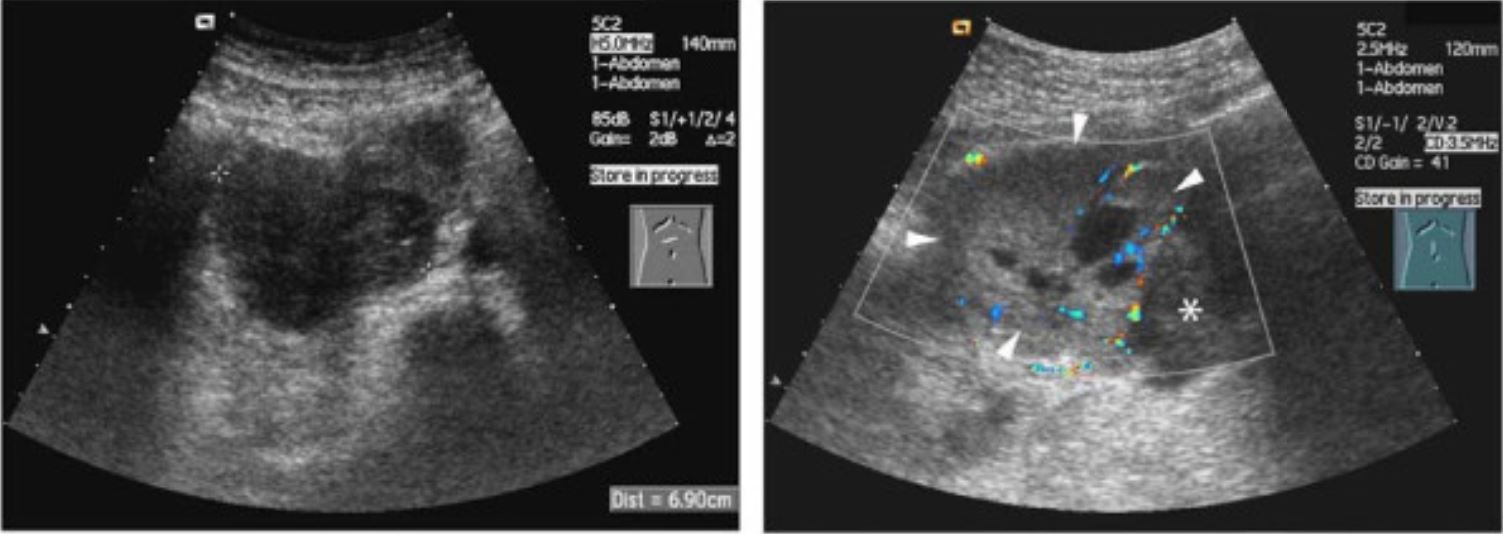
  1. Ultrasonido abdominal para identificar el neuroblastoma Neuroblastoma Neuroblastoma is a malignancy that arises from the neural crest cell derivatives along the sympathetic chain (neuroblasts) and is most commonly located in the adrenal medulla. The tumor often presents in childhood with a flank mass that crosses the midline. Neuroblastoma en EN Erythema nodosum is an immune-mediated panniculitis (inflammation of the subcutaneous fat) caused by a type IV (delayed-type) hypersensitivity reaction. It commonly manifests in young women as tender, erythematous nodules on the shins. Erythema Nodosum la médula suprarrenal; hallazgos comunes incluyen:
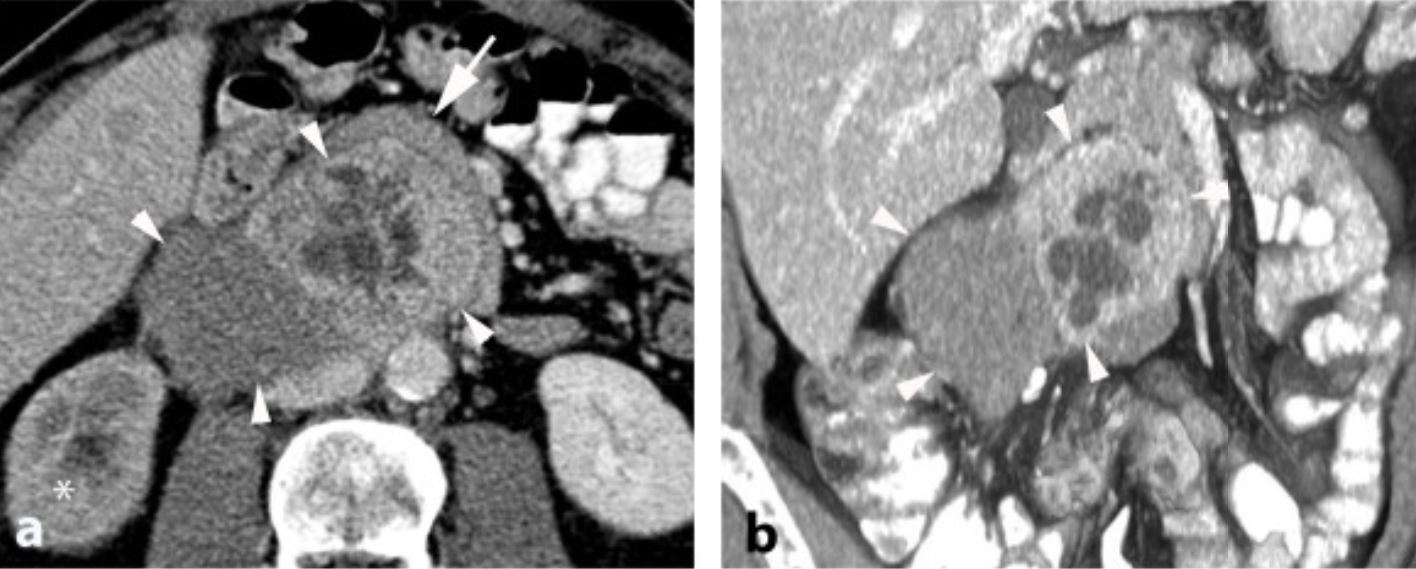
    • Masa heterogénea
    • Vascularización interna
    • Calcificaciones
  2. La resonancia magnética (RM) o la tomografía computarizada (TC):
    • Son estudios de imagenología alternativos al AL Amyloidosis ultrasonido abdominal para determinar el tumor Tumor Inflammation primario
    • Utilizados para evaluar la extensión de las metástasis
    • Útiles para la planeación quirúrgica
  3. Gammagrafía con metayodobencilguanidina:
    • La metayodobencilguanidina es químicamente similar a la norepinefrina.
    • La metayodobencilguanidina es captada por las células del neuroblastoma Neuroblastoma Neuroblastoma is a malignancy that arises from the neural crest cell derivatives along the sympathetic chain (neuroblasts) and is most commonly located in the adrenal medulla. The tumor often presents in childhood with a flank mass that crosses the midline. Neuroblastoma o del feocromocitoma.
    • Utilizado para determinar enfermedad metastásica (primariamente en EN Erythema nodosum is an immune-mediated panniculitis (inflammation of the subcutaneous fat) caused by a type IV (delayed-type) hypersensitivity reaction. It commonly manifests in young women as tender, erythematous nodules on the shins. Erythema Nodosum los LOS Neisseria huesos)

Biopsia

  • La biopsia del tumor Tumor Inflammation primario confirma el diagnóstico.
  • La muestra se evalúa para:
    • Amplificación del protooncogén NMYC.
    • Positividad de enolasa específica neuronal y bombesina.
    • Pseudorosetas de Homer Wright:
      • Células tumorales que rodean el neuropilo
      • Se observan en EN Erythema nodosum is an immune-mediated panniculitis (inflammation of the subcutaneous fat) caused by a type IV (delayed-type) hypersensitivity reaction. It commonly manifests in young women as tender, erythematous nodules on the shins. Erythema Nodosum el neuroblastoma Neuroblastoma Neuroblastoma is a malignancy that arises from the neural crest cell derivatives along the sympathetic chain (neuroblasts) and is most commonly located in the adrenal medulla. The tumor often presents in childhood with a flank mass that crosses the midline. Neuroblastoma, meduloblastoma y los LOS Neisseria tumores neuroectodérmicos primitivos
  • La biopsia de médula ósea también está indicada como parte del estadiaje.
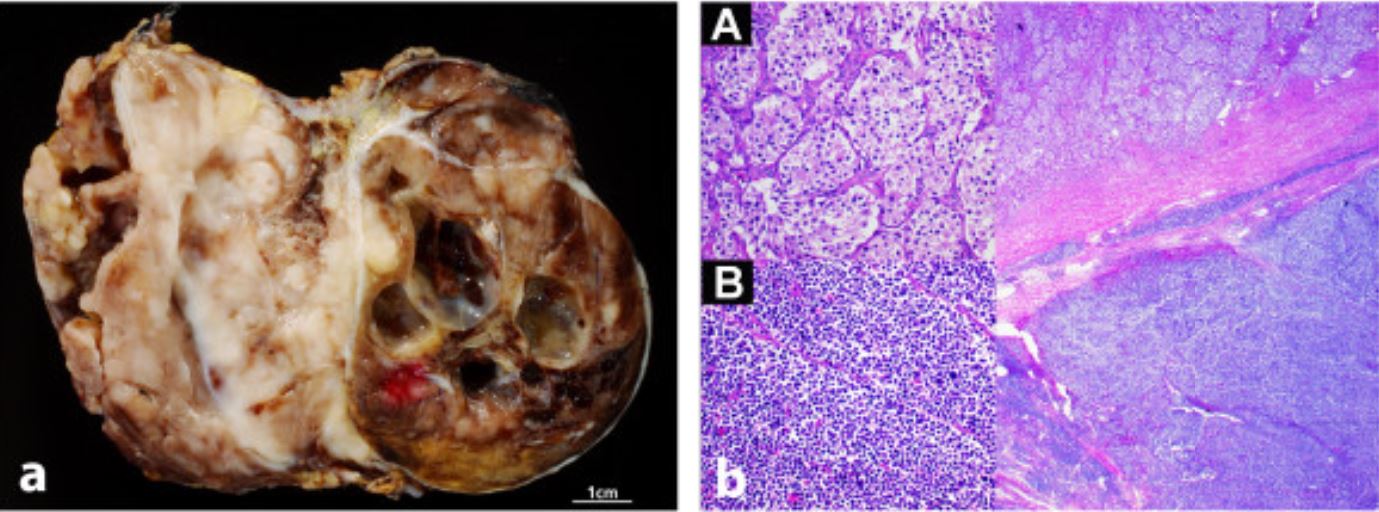
Aspecto completo e histológico del neuroblastoma

Neuroblastoma en aspecto completo e histológico: Imágenes macroscópicas (izquierda) y microscópicas (derecha) del neuroblastoma

Imagen: “Radiological and pathological findings of a metastatic composite paraganglioma with neuroblastoma in a man: a case report” por Fritzsche FR, Bode PK, Koch S, Frauenfelder T. Licencia: CC BY 2.0

Estadiaje International Neuroblastoma Staging System International Neuroblastoma Staging System Neuroblastoma (INSS, por sus siglas en EN Erythema nodosum is an immune-mediated panniculitis (inflammation of the subcutaneous fat) caused by a type IV (delayed-type) hypersensitivity reaction. It commonly manifests in young women as tender, erythematous nodules on the shins. Erythema Nodosum inglés)

Existen múltiples sistemas de estadificación, pero el INSS es uno de los LOS Neisseria más comunes. Se requieren imágenes corporales, una biopsia del tumor Tumor Inflammation primario, una biopsia de médula ósea y una gammagrafía ósea:

  • Estadio 1:
    • Malignidad localizada
    • No hay metástasis en EN Erythema nodosum is an immune-mediated panniculitis (inflammation of the subcutaneous fat) caused by a type IV (delayed-type) hypersensitivity reaction. It commonly manifests in young women as tender, erythematous nodules on the shins. Erythema Nodosum los LOS Neisseria ganglios linfáticos ipsilaterales
  • Estadio 2A:
    • Malignidad localizada con una resección incompleta
    • No hay metástasis en EN Erythema nodosum is an immune-mediated panniculitis (inflammation of the subcutaneous fat) caused by a type IV (delayed-type) hypersensitivity reaction. It commonly manifests in young women as tender, erythematous nodules on the shins. Erythema Nodosum los LOS Neisseria ganglios linfáticos ipsilaterales
  • Estadio 2B:
    • Malignidad localizada
    • Metástasis en EN Erythema nodosum is an immune-mediated panniculitis (inflammation of the subcutaneous fat) caused by a type IV (delayed-type) hypersensitivity reaction. It commonly manifests in young women as tender, erythematous nodules on the shins. Erythema Nodosum los LOS Neisseria ganglios linfáticos ipsilaterales
  • Estadio 3: neoplasia con metástasis en EN Erythema nodosum is an immune-mediated panniculitis (inflammation of the subcutaneous fat) caused by a type IV (delayed-type) hypersensitivity reaction. It commonly manifests in young women as tender, erythematous nodules on the shins. Erythema Nodosum los LOS Neisseria ganglios linfáticos contralaterales o tumor Tumor Inflammation que cruza la línea media o tumor Tumor Inflammation con afectación bilateral de los LOS Neisseria ganglios linfáticos
  • Estadio 4:
    • Malignidad con metástasis a distancia (e.g., piel, hígado)
    • Metástasis distintas de las definidas en EN Erythema nodosum is an immune-mediated panniculitis (inflammation of the subcutaneous fat) caused by a type IV (delayed-type) hypersensitivity reaction. It commonly manifests in young women as tender, erythematous nodules on the shins. Erythema Nodosum el estadio 4S
  • Estadio 4S: neoplasia en EN Erythema nodosum is an immune-mediated panniculitis (inflammation of the subcutaneous fat) caused by a type IV (delayed-type) hypersensitivity reaction. It commonly manifests in young women as tender, erythematous nodules on the shins. Erythema Nodosum lactantes < 12 meses con metástasis limitadas a la piel, hígado o médula ósea

Tratamiento y Pronóstico

El tratamiento del neuroblastoma Neuroblastoma Neuroblastoma is a malignancy that arises from the neural crest cell derivatives along the sympathetic chain (neuroblasts) and is most commonly located in the adrenal medulla. The tumor often presents in childhood with a flank mass that crosses the midline. Neuroblastoma depende de si se considera que el paciente tiene un neuroblastoma Neuroblastoma Neuroblastoma is a malignancy that arises from the neural crest cell derivatives along the sympathetic chain (neuroblasts) and is most commonly located in the adrenal medulla. The tumor often presents in childhood with a flank mass that crosses the midline. Neuroblastoma de bajo, intermedio o alto riesgo. La enfermedad localizada suele ser curable.

La estratificación del riesgo depende del estadio de la neoplasia en EN Erythema nodosum is an immune-mediated panniculitis (inflammation of the subcutaneous fat) caused by a type IV (delayed-type) hypersensitivity reaction. It commonly manifests in young women as tender, erythematous nodules on the shins. Erythema Nodosum el momento del diagnóstico, de la amplificación de NMYC, de la deleción del cromosoma 1p y de la edad en EN Erythema nodosum is an immune-mediated panniculitis (inflammation of the subcutaneous fat) caused by a type IV (delayed-type) hypersensitivity reaction. It commonly manifests in young women as tender, erythematous nodules on the shins. Erythema Nodosum el momento del diagnóstico (edad más tardía del diagnóstico = peor pronóstico).

Neuroblastoma Neuroblastoma Neuroblastoma is a malignancy that arises from the neural crest cell derivatives along the sympathetic chain (neuroblasts) and is most commonly located in the adrenal medulla. The tumor often presents in childhood with a flank mass that crosses the midline. Neuroblastoma de bajo riesgo

  • Incluye:
    • Estadio 1
    • Estadío 2A y 2B sin amplificación de MYCN
    • Algunos estadios 4S sin amplificación de MYCN
  • Tratamiento:
    • Escisión quirúrgica para la mayoría de los LOS Neisseria individuos
    • La observación puede ser apropiada en EN Erythema nodosum is an immune-mediated panniculitis (inflammation of the subcutaneous fat) caused by a type IV (delayed-type) hypersensitivity reaction. It commonly manifests in young women as tender, erythematous nodules on the shins. Erythema Nodosum algunos casos, especialmente en EN Erythema nodosum is an immune-mediated panniculitis (inflammation of the subcutaneous fat) caused by a type IV (delayed-type) hypersensitivity reaction. It commonly manifests in young women as tender, erythematous nodules on the shins. Erythema Nodosum niños con enfermedad localizada → altas tasas de regresión espontánea en EN Erythema nodosum is an immune-mediated panniculitis (inflammation of the subcutaneous fat) caused by a type IV (delayed-type) hypersensitivity reaction. It commonly manifests in young women as tender, erythematous nodules on the shins. Erythema Nodosum la población infantil
  • Pronóstico: > 90% de supervivencia

Neuroblastoma Neuroblastoma Neuroblastoma is a malignancy that arises from the neural crest cell derivatives along the sympathetic chain (neuroblasts) and is most commonly located in the adrenal medulla. The tumor often presents in childhood with a flank mass that crosses the midline. Neuroblastoma de riesgo intermedio

  • Incluye:
    • Estadio 3 sin amplificación de MYCN y con histología favorable
    • Estadio 4 en EN Erythema nodosum is an immune-mediated panniculitis (inflammation of the subcutaneous fat) caused by a type IV (delayed-type) hypersensitivity reaction. It commonly manifests in young women as tender, erythematous nodules on the shins. Erythema Nodosum niños < 12 meses sin amplificación de MYCN
    • Algunos estadios 4S sin amplificación de MYCN
  • Quimioterapia
  • +/- Resección quirúrgica
  • Considerar la radioterapia si el neuroblastoma Neuroblastoma Neuroblastoma is a malignancy that arises from the neural crest cell derivatives along the sympathetic chain (neuroblasts) and is most commonly located in the adrenal medulla. The tumor often presents in childhood with a flank mass that crosses the midline. Neuroblastoma progresa después de la cirugía y la quimioterapia.
  • Pronóstico: > 90% de supervivencia (con tratamiento)

Neuroblastoma Neuroblastoma Neuroblastoma is a malignancy that arises from the neural crest cell derivatives along the sympathetic chain (neuroblasts) and is most commonly located in the adrenal medulla. The tumor often presents in childhood with a flank mass that crosses the midline. Neuroblastoma de alto riesgo

  • Incluye:
    • Estadios 2A, 2B, 3, 4 y 4S con amplificación de MYCN
    • Estadio 4 en EN Erythema nodosum is an immune-mediated panniculitis (inflammation of the subcutaneous fat) caused by a type IV (delayed-type) hypersensitivity reaction. It commonly manifests in young women as tender, erythematous nodules on the shins. Erythema Nodosum niños > 12-18 meses
  • Quimioterapia: La quimioterapia preoperatoria para ↓ primario y extensión de tumor Tumor Inflammation metastásico.
  • Excisión quirúrgica
  • Radioterapia
  • Trasplante de médula ósea/células madre hematopoyéticas
  • Terapia adicional:
    • Dinutuximab: anticuerpo monoclonal contra el gangliósido GD2 expresado en EN Erythema nodosum is an immune-mediated panniculitis (inflammation of the subcutaneous fat) caused by a type IV (delayed-type) hypersensitivity reaction. It commonly manifests in young women as tender, erythematous nodules on the shins. Erythema Nodosum las células de neuroblastoma Neuroblastoma Neuroblastoma is a malignancy that arises from the neural crest cell derivatives along the sympathetic chain (neuroblasts) and is most commonly located in the adrenal medulla. The tumor often presents in childhood with a flank mass that crosses the midline. Neuroblastoma
    • Factor estimulante de colonias de granulocitos y macrófagos ( GM-CSF GM-CSF An acidic glycoprotein of mw 23 kda with internal disulfide bonds. The protein is produced in response to a number of inflammatory mediators by mesenchymal cells present in the hemopoietic environment and at peripheral sites of inflammation. GM-CSF is able to stimulate the production of neutrophilic granulocytes, macrophages, and mixed granulocyte-macrophage colonies from bone marrow cells and can stimulate the formation of eosinophil colonies from fetal liver progenitor cells. GM-CSF can also stimulate some functional activities in mature granulocytes and macrophages. White Myeloid Cells: Histology, por sus siglas en EN Erythema nodosum is an immune-mediated panniculitis (inflammation of the subcutaneous fat) caused by a type IV (delayed-type) hypersensitivity reaction. It commonly manifests in young women as tender, erythematous nodules on the shins. Erythema Nodosum inglés)
    • Ácido cis-retinoico
  • Pronóstico: 40%- 50% de supervivencia

Diagnóstico Diferencial

  • Tumor Tumor Inflammation de Wilms: neoplasia, también conocida como nefroblastoma, causada por la proliferación del blastema metanéfrico en EN Erythema nodosum is an immune-mediated panniculitis (inflammation of the subcutaneous fat) caused by a type IV (delayed-type) hypersensitivity reaction. It commonly manifests in young women as tender, erythematous nodules on the shins. Erythema Nodosum los LOS Neisseria riñones y la neoplasia maligna renal más común en EN Erythema nodosum is an immune-mediated panniculitis (inflammation of the subcutaneous fat) caused by a type IV (delayed-type) hypersensitivity reaction. It commonly manifests in young women as tender, erythematous nodules on the shins. Erythema Nodosum los LOS Neisseria niños. El tumor Tumor Inflammation de Wilms se presenta comúnmente como una masa abdominal no dolorosa y lisa, que no cruza la línea media. El tumor Tumor Inflammation se diagnostica mediante ultrasonido abdominal y estudios histopatológicos (a partir de una biopsia o una resección). El tumor Tumor Inflammation de Wilms se trata frecuentemente con nefrectomía y quimioterapia. A diferencia del neuroblastoma Neuroblastoma Neuroblastoma is a malignancy that arises from the neural crest cell derivatives along the sympathetic chain (neuroblasts) and is most commonly located in the adrenal medulla. The tumor often presents in childhood with a flank mass that crosses the midline. Neuroblastoma, el tumor Tumor Inflammation de WIlms rara vez causa calcificación y se observa en EN Erythema nodosum is an immune-mediated panniculitis (inflammation of the subcutaneous fat) caused by a type IV (delayed-type) hypersensitivity reaction. It commonly manifests in young women as tender, erythematous nodules on the shins. Erythema Nodosum niños de mayor edad (la edad media de diagnóstico está entre los LOS Neisseria 3 y los LOS Neisseria 5 años).
  • Feocromocitoma: tumor Tumor Inflammation secretor de catecolaminas derivado de las células cromafines. La mayoría de estos tumores se originan en EN Erythema nodosum is an immune-mediated panniculitis (inflammation of the subcutaneous fat) caused by a type IV (delayed-type) hypersensitivity reaction. It commonly manifests in young women as tender, erythematous nodules on the shins. Erythema Nodosum la médula suprarrenal, pero también pueden surgir de los LOS Neisseria ganglios simpáticos. Los LOS Neisseria síntomas incluyen hipertensión episódica, taquicardia, cefalea y sudoración. La tríada clásica de síntomas es cefalea, diaforesis y taquicardia. El feocromocitoma se diagnostica midiendo los LOS Neisseria productos de descomposición de las catecolaminas (e.g., ácido homovanílico, ácido vanililmandélico, metanefrina) en EN Erythema nodosum is an immune-mediated panniculitis (inflammation of the subcutaneous fat) caused by a type IV (delayed-type) hypersensitivity reaction. It commonly manifests in young women as tender, erythematous nodules on the shins. Erythema Nodosum la sangre o en EN Erythema nodosum is an immune-mediated panniculitis (inflammation of the subcutaneous fat) caused by a type IV (delayed-type) hypersensitivity reaction. It commonly manifests in young women as tender, erythematous nodules on the shins. Erythema Nodosum la orina de 24 horas, y se diferencia del neuroblastoma Neuroblastoma Neuroblastoma is a malignancy that arises from the neural crest cell derivatives along the sympathetic chain (neuroblasts) and is most commonly located in the adrenal medulla. The tumor often presents in childhood with a flank mass that crosses the midline. Neuroblastoma en EN Erythema nodosum is an immune-mediated panniculitis (inflammation of the subcutaneous fat) caused by a type IV (delayed-type) hypersensitivity reaction. It commonly manifests in young women as tender, erythematous nodules on the shins. Erythema Nodosum la histología. El tratamiento es la escisión quirúrgica. Los LOS Neisseria pacientes con una resección completa tienen un buen pronóstico. A diferencia del neuroblastoma Neuroblastoma Neuroblastoma is a malignancy that arises from the neural crest cell derivatives along the sympathetic chain (neuroblasts) and is most commonly located in the adrenal medulla. The tumor often presents in childhood with a flank mass that crosses the midline. Neuroblastoma, el feocromocitoma provoca síntomas simpáticos importantes.
  • Linfoma de Burkitt: un linfoma de células B no Hodgkin que se presenta en EN Erythema nodosum is an immune-mediated panniculitis (inflammation of the subcutaneous fat) caused by a type IV (delayed-type) hypersensitivity reaction. It commonly manifests in young women as tender, erythematous nodules on the shins. Erythema Nodosum adolescentes y adultos jóvenes. Esta malignidad está causada por la desregulación del gen c-Myc c-MYC Basic helix-loop-helix transcription factors encoded by the c-myc genes. They are normally involved in nucleic acid metabolism and in mediating the cellular response to growth factors. Elevated and deregulated (constitutive) expression of c-myc proteins can cause tumorigenesis. Non-Hodgkin Lymphomas. El linfoma de Burkitt se presenta como una lesión mandibular en EN Erythema nodosum is an immune-mediated panniculitis (inflammation of the subcutaneous fat) caused by a type IV (delayed-type) hypersensitivity reaction. It commonly manifests in young women as tender, erythematous nodules on the shins. Erythema Nodosum la forma endémica o como una lesión pélvica o abdominal en EN Erythema nodosum is an immune-mediated panniculitis (inflammation of the subcutaneous fat) caused by a type IV (delayed-type) hypersensitivity reaction. It commonly manifests in young women as tender, erythematous nodules on the shins. Erythema Nodosum la forma esporádica. El linfoma de Burkitt también puede estar asociado al AL Amyloidosis virus Virus Viruses are infectious, obligate intracellular parasites composed of a nucleic acid core surrounded by a protein capsid. Viruses can be either naked (non-enveloped) or enveloped. The classification of viruses is complex and based on many factors, including type and structure of the nucleoid and capsid, the presence of an envelope, the replication cycle, and the host range. Virology de inmunodeficiencia humana (VIH) y al AL Amyloidosis virus Virus Viruses are infectious, obligate intracellular parasites composed of a nucleic acid core surrounded by a protein capsid. Viruses can be either naked (non-enveloped) or enveloped. The classification of viruses is complex and based on many factors, including type and structure of the nucleoid and capsid, the presence of an envelope, the replication cycle, and the host range. Virology de Epstein-Barr ( EBV EBV Epstein-barr virus (EBV) is a linear, double-stranded DNA virus belonging to the herpesviridae family. This highly prevalent virus is mostly transmitted through contact with oropharyngeal secretions from an infected individual. The virus can infect epithelial cells and B lymphocytes, where it can undergo lytic replication or latency. Epstein-Barr Virus, por sus siglas en EN Erythema nodosum is an immune-mediated panniculitis (inflammation of the subcutaneous fat) caused by a type IV (delayed-type) hypersensitivity reaction. It commonly manifests in young women as tender, erythematous nodules on the shins. Erythema Nodosum inglés). La enfermedad se diagnostica con una biopsia de los LOS Neisseria ganglios linfáticos, que suele mostrar un patrón de “cielo estrellado” de macrófagos grandes, pálidos y de cuerpo pintado. El tratamiento es principalmente quimioterapia. La tasa de curación es excelente con un tratamiento adecuado. A diferencia del neuroblastoma Neuroblastoma Neuroblastoma is a malignancy that arises from the neural crest cell derivatives along the sympathetic chain (neuroblasts) and is most commonly located in the adrenal medulla. The tumor often presents in childhood with a flank mass that crosses the midline. Neuroblastoma, los LOS Neisseria pacientes con linfoma de Burkitt suelen estar inmunocomprometidos (e.g., por VIH) y se presentan en EN Erythema nodosum is an immune-mediated panniculitis (inflammation of the subcutaneous fat) caused by a type IV (delayed-type) hypersensitivity reaction. It commonly manifests in young women as tender, erythematous nodules on the shins. Erythema Nodosum la adolescencia o en EN Erythema nodosum is an immune-mediated panniculitis (inflammation of the subcutaneous fat) caused by a type IV (delayed-type) hypersensitivity reaction. It commonly manifests in young women as tender, erythematous nodules on the shins. Erythema Nodosum la juventud.

Referencias

  1. Shohet, J.M., Nuchtern, J.G. (2020). Clinical presentation, diagnosis, and staging evaluation of neuroblastoma. UpToDate. Retrieved May 24, 2021, from https://www.uptodate.com/contents/clinical-presentation-diagnosis-and-staging-evaluation-of-neuroblastoma
  2. Shohet, J.M., Lowas, S.R. (2020). Treatment and prognosis of neuroblastoma. UpToDate. Retrieved May 24, 2021, from https://www.uptodate.com/contents/treatment-and-prognosis-of-neuroblastoma?search=neuroblastoma
  3. Joyner, B.D. (2021). Neuroblastoma: Practice essentials, background, history of the procedure. Medscape. Retrieved May 24, 2021, from https://emedicine.medscape.com/article/439263-overview
  4. Mahapatra, S. (2021). Neuroblastoma. StatPearls. Retrieved Mar 4, 2022 from https://www.statpearls.com/articlelibrary/viewarticle/25777

¡Crea tu cuenta gratis o inicia una sesión para seguir leyendo!

Regístrate ahora y obtén acceso gratuito a Lecturio con páginas de concepto, videos médicos y cuestionarios para tu educación médica.

User Reviews

Que tengas una sesión de estudio alegre y navideña 🎁 Ahorra 50% en todos los planes >>

Details