Domina Conceptos Médicos

Estudia para la escuela de medicina y tus examenes con Lecturio.

Megacolon

El megacolon Megacolon Megacolon is a severe, abnormal dilatation of the colon, and is classified as acute or chronic. There are many etiologies of megacolon, including neuropathic and dysmotility conditions, severe infections, ischemia, and inflammatory bowel disease. Megacolon es una dilatación grave y anormal del colon Colon The large intestines constitute the last portion of the digestive system. The large intestine consists of the cecum, appendix, colon (with ascending, transverse, descending, and sigmoid segments), rectum, and anal canal. The primary function of the colon is to remove water and compact the stool prior to expulsion from the body via the rectum and anal canal. Colon, Cecum, and Appendix: Anatomy, y se clasifica como agudo o crónico. Hay muchas etiologías de megacolon Megacolon Megacolon is a severe, abnormal dilatation of the colon, and is classified as acute or chronic. There are many etiologies of megacolon, including neuropathic and dysmotility conditions, severe infections, ischemia, and inflammatory bowel disease. Megacolon, incluyendo condiciones neuropáticas y de dismotilidad, infecciones severas, isquemia y enfermedad inflamatoria intestinal. El megacolon Megacolon Megacolon is a severe, abnormal dilatation of the colon, and is classified as acute or chronic. There are many etiologies of megacolon, including neuropathic and dysmotility conditions, severe infections, ischemia, and inflammatory bowel disease. Megacolon tóxico es una forma aguda de megacolon Megacolon Megacolon is a severe, abnormal dilatation of the colon, and is classified as acute or chronic. There are many etiologies of megacolon, including neuropathic and dysmotility conditions, severe infections, ischemia, and inflammatory bowel disease. Megacolon con toxicidad sistémica, y conlleva la mayor morbilidad y mortalidad. Los LOS Neisseria síntomas más comunes son la distensión abdominal, dolor Dolor Inflammation, diarrea sanguinolenta y obstipación. El diagnóstico depende de la causa subyacente y suele establecerse con una combinación de los LOS Neisseria antecedentes del paciente, hallazgos de laboratorio e  imagenología. Los LOS Neisseria pacientes con megacolon Megacolon Megacolon is a severe, abnormal dilatation of the colon, and is classified as acute or chronic. There are many etiologies of megacolon, including neuropathic and dysmotility conditions, severe infections, ischemia, and inflammatory bowel disease. Megacolon crónico pueden necesitar laxantes, enemas y entrenamiento intestinal. El tratamiento del megacolon Megacolon Megacolon is a severe, abnormal dilatation of the colon, and is classified as acute or chronic. There are many etiologies of megacolon, including neuropathic and dysmotility conditions, severe infections, ischemia, and inflammatory bowel disease. Megacolon agudo incluye cuidados de soporte, descompresión y posible cirugía.

Last updated: Dec 15, 2025

Editorial responsibility: Stanley Oiseth, Lindsay Jones, Evelin Maza

Descripción General

Definición y Clasificación

El megacolon Megacolon Megacolon is a severe, abnormal dilatation of the colon, and is classified as acute or chronic. There are many etiologies of megacolon, including neuropathic and dysmotility conditions, severe infections, ischemia, and inflammatory bowel disease. Megacolon es una dilatación severa del colon Colon The large intestines constitute the last portion of the digestive system. The large intestine consists of the cecum, appendix, colon (with ascending, transverse, descending, and sigmoid segments), rectum, and anal canal. The primary function of the colon is to remove water and compact the stool prior to expulsion from the body via the rectum and anal canal. Colon, Cecum, and Appendix: Anatomy secundaria a una alteración de la motilidad o a un proceso inflamatorio. La condición se clasifica en EN Erythema nodosum is an immune-mediated panniculitis (inflammation of the subcutaneous fat) caused by a type IV (delayed-type) hypersensitivity reaction. It commonly manifests in young women as tender, erythematous nodules on the shins. Erythema Nodosum función del tiempo de evolución y la duración:

  • Megacolon Megacolon Megacolon is a severe, abnormal dilatation of the colon, and is classified as acute or chronic. There are many etiologies of megacolon, including neuropathic and dysmotility conditions, severe infections, ischemia, and inflammatory bowel disease. Megacolon agudo
  • Megacolon Megacolon Megacolon is a severe, abnormal dilatation of the colon, and is classified as acute or chronic. There are many etiologies of megacolon, including neuropathic and dysmotility conditions, severe infections, ischemia, and inflammatory bowel disease. Megacolon crónico

Epidemiología

  • Se desconoce la incidencia exacta.
  • Todas las edades pueden verse afectadas.
  • La incidencia depende de la enfermedad subyacente:
    • Megacolon Megacolon Megacolon is a severe, abnormal dilatation of the colon, and is classified as acute or chronic. There are many etiologies of megacolon, including neuropathic and dysmotility conditions, severe infections, ischemia, and inflammatory bowel disease. Megacolon agangliónico congénito:
      • 1 de cada 5 000 nacidos vivos
      • Hombres > mujeres
    • Megacolon Megacolon Megacolon is a severe, abnormal dilatation of the colon, and is classified as acute or chronic. There are many etiologies of megacolon, including neuropathic and dysmotility conditions, severe infections, ischemia, and inflammatory bowel disease. Megacolon tóxico:
      • 4,3% en EN Erythema nodosum is an immune-mediated panniculitis (inflammation of the subcutaneous fat) caused by a type IV (delayed-type) hypersensitivity reaction. It commonly manifests in young women as tender, erythematous nodules on the shins. Erythema Nodosum pacientes con Clostridioides difficile, antes conocido como Clostridium difficile Clostridium difficile A common inhabitant of the colon flora in human infants and sometimes in adults. The type species clostridioides difficile is formerly known as Clostridium difficile. It is a causative agent for clostridioides infections and is associated with pseudomembranous enterocolitis in patients receiving antibiotic therapy. Clostridia, colitis Colitis Inflammation of the colon section of the large intestine, usually with symptoms such as diarrhea (often with blood and mucus), abdominal pain, and fever. Pseudomembranous Colitis
      • 1%–10% en EN Erythema nodosum is an immune-mediated panniculitis (inflammation of the subcutaneous fat) caused by a type IV (delayed-type) hypersensitivity reaction. It commonly manifests in young women as tender, erythematous nodules on the shins. Erythema Nodosum la enfermedad inflamatoria intestinal

Etiología del megacolon Megacolon Megacolon is a severe, abnormal dilatation of the colon, and is classified as acute or chronic. There are many etiologies of megacolon, including neuropathic and dysmotility conditions, severe infections, ischemia, and inflammatory bowel disease. Megacolon agudo

  • Megacolon Megacolon Megacolon is a severe, abnormal dilatation of the colon, and is classified as acute or chronic. There are many etiologies of megacolon, including neuropathic and dysmotility conditions, severe infections, ischemia, and inflammatory bowel disease. Megacolon tóxico (dilatación colónica no obstructiva con toxicidad sistémica)
    • Enfermedad inflamatoria intestinal
      • Colitis Colitis Inflammation of the colon section of the large intestine, usually with symptoms such as diarrhea (often with blood and mucus), abdominal pain, and fever. Pseudomembranous Colitis ulcerosa
      • Enfermedad de Crohn
    • Colitis Colitis Inflammation of the colon section of the large intestine, usually with symptoms such as diarrhea (often with blood and mucus), abdominal pain, and fever. Pseudomembranous Colitis isquémica
    • Colitis Colitis Inflammation of the colon section of the large intestine, usually with symptoms such as diarrhea (often with blood and mucus), abdominal pain, and fever. Pseudomembranous Colitis infecciosa
      • Colitis Colitis Inflammation of the colon section of the large intestine, usually with symptoms such as diarrhea (often with blood and mucus), abdominal pain, and fever. Pseudomembranous Colitis por C. difficile (más común)
      • Salmonella Salmonella Salmonellae are gram-negative bacilli of the family Enterobacteriaceae. Salmonellae are flagellated, non-lactose-fermenting, and hydrogen sulfide-producing microbes. Salmonella enterica, the most common disease-causing species in humans, is further classified based on serotype as typhoidal (S. typhi and paratyphi) and nontyphoidal (S. enteritidis and typhimurium). Salmonella
      • Shigella Shigella Shigella is a genus of gram-negative, non-lactose-fermenting facultative intracellular bacilli. Infection spreads most commonly via person-to-person contact or through contaminated food and water. Humans are the only known reservoir. Shigella
      • Campylobacter Campylobacter Campylobacter (“curved bacteria”) is a genus of thermophilic, S-shaped, gram-negative bacilli. There are many species of Campylobacter, with C. jejuni and C. coli most commonly implicated in human disease. Campylobacter
      • Escherichia coli O157 Escherichia coli O157 A verocytotoxin-producing serogroup belonging to the o subfamily of Escherichia coli which has been shown to cause severe food-borne disease. A strain from this serogroup, serotype h7, which produces shiga toxins, has been linked to human disease outbreaks resulting from contamination of foods by E. coli o157 from bovine origin. Diarrheagenic E. coli
      • Colitis Colitis Inflammation of the colon section of the large intestine, usually with symptoms such as diarrhea (often with blood and mucus), abdominal pain, and fever. Pseudomembranous Colitis por citomegalovirus (CMV, por sus siglas en EN Erythema nodosum is an immune-mediated panniculitis (inflammation of the subcutaneous fat) caused by a type IV (delayed-type) hypersensitivity reaction. It commonly manifests in young women as tender, erythematous nodules on the shins. Erythema Nodosum inglés) (generalmente en EN Erythema nodosum is an immune-mediated panniculitis (inflammation of the subcutaneous fat) caused by a type IV (delayed-type) hypersensitivity reaction. It commonly manifests in young women as tender, erythematous nodules on the shins. Erythema Nodosum pacientes inmunocomprometidos)
      • Entamoeba histolytica Entamoeba Histolytica A species of parasitic protozoa causing entamoebiasis and amebic dysentery (dysentery, amebic). Characteristics include a single nucleus containing a small central karyosome and peripheral chromatin that is finely and regularly beaded. Amebicides
  • Pseudoobstrucción colónica aguda (síndrome de Ogilvie)
    • Enfermedad sistémica grave
    • Cirugía (más comúnmente por cesárea o cirugía de cadera)
    • Trauma
    • Anestesia espinal
    • Medicamentos
      • Opiáceos
      • Anticolinérgicos
      • Bloqueadores de los LOS Neisseria canales de calcio

Etiología del megacolon Megacolon Megacolon is a severe, abnormal dilatation of the colon, and is classified as acute or chronic. There are many etiologies of megacolon, including neuropathic and dysmotility conditions, severe infections, ischemia, and inflammatory bowel disease. Megacolon crónico

  • Megacolon Megacolon Megacolon is a severe, abnormal dilatation of the colon, and is classified as acute or chronic. There are many etiologies of megacolon, including neuropathic and dysmotility conditions, severe infections, ischemia, and inflammatory bowel disease. Megacolon agangliónico congénito (enfermedad de Hirschsprung)
    • La mayoría de los LOS Neisseria casos se asocian a mutaciones en EN Erythema nodosum is an immune-mediated panniculitis (inflammation of the subcutaneous fat) caused by a type IV (delayed-type) hypersensitivity reaction. It commonly manifests in young women as tender, erythematous nodules on the shins. Erythema Nodosum el protooncogen RET
    • A veces se asocia a otros síndromes genéticos:
      • Síndrome de Down
      • Neoplasia endocrina múltiple tipo 2A o 2B
      • Síndrome de Waardenburg
  • Adquirido
    • Estreñimiento crónico idiopático (más común)
    • Neuropatías
      • Diabéticos
      • Lesión medular
      • Enfermedad de Parkinson
      • Enfermedad de Chagas (por destrucción de las neuronas entéricas)
    • Miopatías: Distrofia muscular de Duchenne
    • Trastornos reumatológicos:
      • Esclerodermia
      • Lupus eritematoso sistémico
      • Dermatomiositis y polimiositis

Fisiopatología

Megacolon Megacolon Megacolon is a severe, abnormal dilatation of the colon, and is classified as acute or chronic. There are many etiologies of megacolon, including neuropathic and dysmotility conditions, severe infections, ischemia, and inflammatory bowel disease. Megacolon tóxico

  • Inflamación de la mucosa:
    • Provoca la liberación de mediadores inflamatorios → inducción de la óxido nítrico sintasa → generación de óxido nítrico por los LOS Neisseria macrófagos y las células musculares lisas → relajación del músculo liso → dilatación del colon Colon The large intestines constitute the last portion of the digestive system. The large intestine consists of the cecum, appendix, colon (with ascending, transverse, descending, and sigmoid segments), rectum, and anal canal. The primary function of the colon is to remove water and compact the stool prior to expulsion from the body via the rectum and anal canal. Colon, Cecum, and Appendix: Anatomy.
    • Se extiende a la capa muscular lisa → parálisis del músculo liso → dilatación del colon Colon The large intestines constitute the last portion of the digestive system. The large intestine consists of the cecum, appendix, colon (with ascending, transverse, descending, and sigmoid segments), rectum, and anal canal. The primary function of the colon is to remove water and compact the stool prior to expulsion from the body via the rectum and anal canal. Colon, Cecum, and Appendix: Anatomy
  • Posibles factores precipitantes:
    • Hipopotasemia
    • Medicamentos:
      • Opiáceos
      • Anticolinérgicos
      • Antidepresivos
      • Soluciones de preparación intestinal o bario
    • Interrupción brusca de los LOS Neisseria esteroides o de la mesalamina en EN Erythema nodosum is an immune-mediated panniculitis (inflammation of the subcutaneous fat) caused by a type IV (delayed-type) hypersensitivity reaction. It commonly manifests in young women as tender, erythematous nodules on the shins. Erythema Nodosum la enfermedad inflamatoria intestinal

Pseudoobstrucción colónica aguda

  • Se desconoce el mecanismo exacto.
  • Se ha HA Hemolytic anemia (HA) is the term given to a large group of anemias that are caused by the premature destruction/hemolysis of circulating red blood cells (RBCs). Hemolysis can occur within (intravascular hemolysis) or outside the blood vessels (extravascular hemolysis). Hemolytic Anemia implicado el deterioro de las fibras parasimpáticas S2 S2 Heart Sounds S4 S4 Heart Sounds.
  • Distensión progresiva y ↑ tensión en EN Erythema nodosum is an immune-mediated panniculitis (inflammation of the subcutaneous fat) caused by a type IV (delayed-type) hypersensitivity reaction. It commonly manifests in young women as tender, erythematous nodules on the shins. Erythema Nodosum la pared del colon Colon The large intestines constitute the last portion of the digestive system. The large intestine consists of the cecum, appendix, colon (with ascending, transverse, descending, and sigmoid segments), rectum, and anal canal. The primary function of the colon is to remove water and compact the stool prior to expulsion from the body via the rectum and anal canal. Colon, Cecum, and Appendix: Anatomy

Megacolon Megacolon Megacolon is a severe, abnormal dilatation of the colon, and is classified as acute or chronic. There are many etiologies of megacolon, including neuropathic and dysmotility conditions, severe infections, ischemia, and inflammatory bowel disease. Megacolon agangliónico congénito

  • Fallo en EN Erythema nodosum is an immune-mediated panniculitis (inflammation of the subcutaneous fat) caused by a type IV (delayed-type) hypersensitivity reaction. It commonly manifests in young women as tender, erythematous nodules on the shins. Erythema Nodosum la migración de las células de la cresta neural durante el desarrollo intestinal embrionario → el colon Colon The large intestines constitute the last portion of the digestive system. The large intestine consists of the cecum, appendix, colon (with ascending, transverse, descending, and sigmoid segments), rectum, and anal canal. The primary function of the colon is to remove water and compact the stool prior to expulsion from the body via the rectum and anal canal. Colon, Cecum, and Appendix: Anatomy distal es agangliónico y no funciona → distensión del colon Colon The large intestines constitute the last portion of the digestive system. The large intestine consists of the cecum, appendix, colon (with ascending, transverse, descending, and sigmoid segments), rectum, and anal canal. The primary function of the colon is to remove water and compact the stool prior to expulsion from the body via the rectum and anal canal. Colon, Cecum, and Appendix: Anatomy proximal al AL Amyloidosis segmento agangliónico
  • Plexos nerviosos afectados:
    • Meissner (plexo submucoso)
    • Auerbach (plexo mientérico)
  • La cantidad de colon Colon The large intestines constitute the last portion of the digestive system. The large intestine consists of the cecum, appendix, colon (with ascending, transverse, descending, and sigmoid segments), rectum, and anal canal. The primary function of the colon is to remove water and compact the stool prior to expulsion from the body via the rectum and anal canal. Colon, Cecum, and Appendix: Anatomy afectada varía.

Megacolon Megacolon Megacolon is a severe, abnormal dilatation of the colon, and is classified as acute or chronic. There are many etiologies of megacolon, including neuropathic and dysmotility conditions, severe infections, ischemia, and inflammatory bowel disease. Megacolon crónico adquirido

  • No se comprende del todo
  • Disfunción neurológica o muscular → alteración del peristaltismo normal → dilatación progresiva del colon Colon The large intestines constitute the last portion of the digestive system. The large intestine consists of the cecum, appendix, colon (with ascending, transverse, descending, and sigmoid segments), rectum, and anal canal. The primary function of the colon is to remove water and compact the stool prior to expulsion from the body via the rectum and anal canal. Colon, Cecum, and Appendix: Anatomy
  • El megacolon Megacolon Megacolon is a severe, abnormal dilatation of the colon, and is classified as acute or chronic. There are many etiologies of megacolon, including neuropathic and dysmotility conditions, severe infections, ischemia, and inflammatory bowel disease. Megacolon y el megarecto por estreñimiento crónico se asocian a:
    • ↑ distensibilidad y elasticidad rectal
    • Sensación rectal embotada
    • ↑ umbral de relajación del esfínter anal

Presentación Clínica

Síntomas

  • Síntomas más comunes:
    • Distensión abdominal
    • Obstipación
  • Megacolon Megacolon Megacolon is a severe, abnormal dilatation of the colon, and is classified as acute or chronic. There are many etiologies of megacolon, including neuropathic and dysmotility conditions, severe infections, ischemia, and inflammatory bowel disease. Megacolon tóxico:
    • Diarrea sanguinolenta (más común)
    • El cese repentino de la diarrea también debe ser preocupante.
    • Dolor Dolor Inflammation abdominal
    • Malestar
  • Megacolon Megacolon Megacolon is a severe, abnormal dilatation of the colon, and is classified as acute or chronic. There are many etiologies of megacolon, including neuropathic and dysmotility conditions, severe infections, ischemia, and inflammatory bowel disease. Megacolon agangliónico congénito:
    • La mayoría se presentará en EN Erythema nodosum is an immune-mediated panniculitis (inflammation of the subcutaneous fat) caused by a type IV (delayed-type) hypersensitivity reaction. It commonly manifests in young women as tender, erythematous nodules on the shins. Erythema Nodosum el período neonatal.
    • Emesis biliosa
    • Falta de expulsión de meconio o heces
    • Intolerancia a la alimentación y retraso en EN Erythema nodosum is an immune-mediated panniculitis (inflammation of the subcutaneous fat) caused by a type IV (delayed-type) hypersensitivity reaction. It commonly manifests in young women as tender, erythematous nodules on the shins. Erythema Nodosum el desarrollo

Examen físico

  • Hallazgos comunes:
    • Distensión abdominal
    • Abdomen timpánico
  • Megacolon Megacolon Megacolon is a severe, abnormal dilatation of the colon, and is classified as acute or chronic. There are many etiologies of megacolon, including neuropathic and dysmotility conditions, severe infections, ischemia, and inflammatory bowel disease. Megacolon tóxico:
    • Taquicardia
    • Fiebre
    • Hipotensión
    • Alteración del estado mental
    • Distensión abdominal
    • Sensibilidad abdominal baja
    • Posible evidencia de peritonitis Peritonitis Inflammation of the peritoneum lining the abdominal cavity as the result of infectious, autoimmune, or chemical processes. Primary peritonitis is due to infection of the peritoneal cavity via hematogenous or lymphatic spread and without intra-abdominal source. Secondary peritonitis arises from the abdominal cavity itself through rupture or abscess of intra-abdominal organs. Penetrating Abdominal Injury
      • Sensibilidad abdominal difusa
      • Sensibilidad de rebote
      • Rigidez
  • Megacolon Megacolon Megacolon is a severe, abnormal dilatation of the colon, and is classified as acute or chronic. There are many etiologies of megacolon, including neuropathic and dysmotility conditions, severe infections, ischemia, and inflammatory bowel disease. Megacolon agangliónico congénito:
    • Aumento del tono del esfínter anal
    • Liberación de heces y gases con el tacto rectal

Diagnóstico

Exámenes de laboratorio

Estos estudios ayudan a evaluar la gravedad de la enfermedad, las complicaciones y las posibles causas.
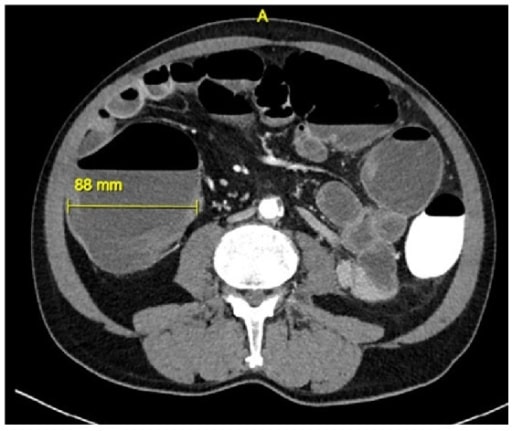
  • Resultados generales:
    • Hipopotasemia (pérdida gastrointestinal)
    • Alcalosis metabólica (deshidratación)
    • La acidosis Acidosis A pathologic condition of acid accumulation or depletion of base in the body. The two main types are respiratory acidosis and metabolic acidosis, due to metabolic acid build up. Respiratory Acidosis metabólica y el ácido láctico ↑ aumentan sospecha de isquemia colónica.
    • ↑ relación nitrógeno de urea Urea A compound formed in the liver from ammonia produced by the deamination of amino acids. It is the principal end product of protein catabolism and constitutes about one half of the total urinary solids. Urea Cycle en EN Erythema nodosum is an immune-mediated panniculitis (inflammation of the subcutaneous fat) caused by a type IV (delayed-type) hypersensitivity reaction. It commonly manifests in young women as tender, erythematous nodules on the shins. Erythema Nodosum sangre (BUN):creatinina (deshidratación)
  • Hallazgos en EN Erythema nodosum is an immune-mediated panniculitis (inflammation of the subcutaneous fat) caused by a type IV (delayed-type) hypersensitivity reaction. It commonly manifests in young women as tender, erythematous nodules on the shins. Erythema Nodosum el megacolon Megacolon Megacolon is a severe, abnormal dilatation of the colon, and is classified as acute or chronic. There are many etiologies of megacolon, including neuropathic and dysmotility conditions, severe infections, ischemia, and inflammatory bowel disease. Megacolon tóxico:
    • Hemograma:
      • Leucocitosis con desplazamiento a la izquierda
      • Anemia Anemia Anemia is a condition in which individuals have low Hb levels, which can arise from various causes. Anemia is accompanied by a reduced number of RBCs and may manifest with fatigue, shortness of breath, pallor, and weakness. Subtypes are classified by the size of RBCs, chronicity, and etiology. Anemia: Overview and Types (debido a la pérdida de sangre gastrointestinal)
    • ↑ velocidad de eritrosedimentación (VES) y proteína C reactiva ( PCR PCR Polymerase chain reaction (PCR) is a technique that amplifies DNA fragments exponentially for analysis. The process is highly specific, allowing for the targeting of specific genomic sequences, even with minuscule sample amounts. The PCR cycles multiple times through 3 phases: denaturation of the template DNA, annealing of a specific primer to the individual DNA strands, and synthesis/elongation of new DNA molecules. Polymerase Chain Reaction (PCR))
    • Estudios de heces:
      • Cultivo de bacterias y parásitos
      • Toxina de C. difficile

Imagenologia

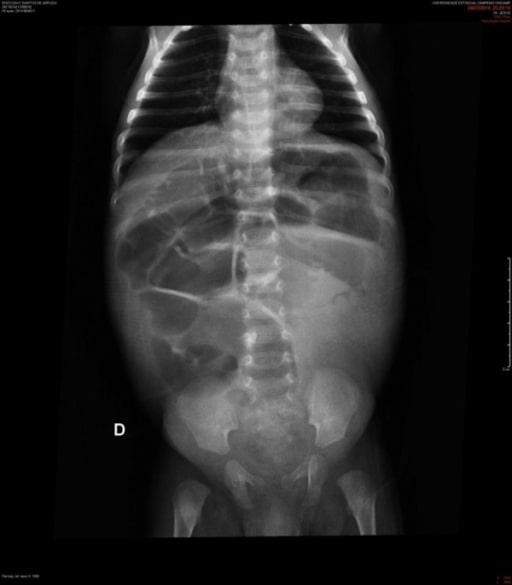
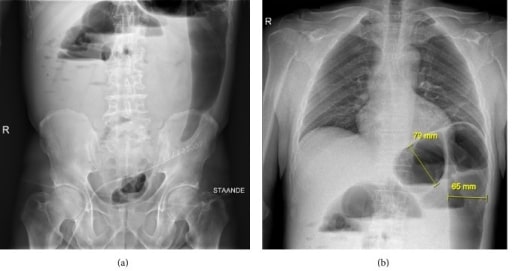
  • Radiografía de abdomen
    • Dilatación del colon Colon The large intestines constitute the last portion of the digestive system. The large intestine consists of the cecum, appendix, colon (with ascending, transverse, descending, and sigmoid segments), rectum, and anal canal. The primary function of the colon is to remove water and compact the stool prior to expulsion from the body via the rectum and anal canal. Colon, Cecum, and Appendix: Anatomy (> 6 cm)
    • Puede observarse una importante retención de heces.
    • Puede mostrar la zona de transición entre el colon Colon The large intestines constitute the last portion of the digestive system. The large intestine consists of the cecum, appendix, colon (with ascending, transverse, descending, and sigmoid segments), rectum, and anal canal. The primary function of the colon is to remove water and compact the stool prior to expulsion from the body via the rectum and anal canal. Colon, Cecum, and Appendix: Anatomy dilatado y el recto estrecho en EN Erythema nodosum is an immune-mediated panniculitis (inflammation of the subcutaneous fat) caused by a type IV (delayed-type) hypersensitivity reaction. It commonly manifests in young women as tender, erythematous nodules on the shins. Erythema Nodosum la enfermedad de Hirschsprung
    • Puede haber niveles de aire-fluido.
    • Hallazgos de megacolon Megacolon Megacolon is a severe, abnormal dilatation of the colon, and is classified as acute or chronic. There are many etiologies of megacolon, including neuropathic and dysmotility conditions, severe infections, ischemia, and inflammatory bowel disease. Megacolon tóxico:
      • La dilatación del colon Colon The large intestines constitute the last portion of the digestive system. The large intestine consists of the cecum, appendix, colon (with ascending, transverse, descending, and sigmoid segments), rectum, and anal canal. The primary function of the colon is to remove water and compact the stool prior to expulsion from the body via the rectum and anal canal. Colon, Cecum, and Appendix: Anatomy derecho y del transverso son las más destacadas.
      • Pérdida del patrón normal de las haustras
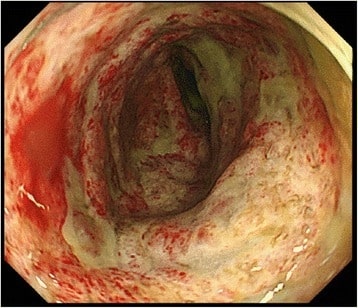
      • Ulceraciones de la mucosa
  • Tomografía computarizada (TC) con contraste oral e intravenoso
    • Dilatación del colon Colon The large intestines constitute the last portion of the digestive system. The large intestine consists of the cecum, appendix, colon (with ascending, transverse, descending, and sigmoid segments), rectum, and anal canal. The primary function of the colon is to remove water and compact the stool prior to expulsion from the body via the rectum and anal canal. Colon, Cecum, and Appendix: Anatomy (> 6 cm)
    • El aire libre indica una perforación.
    • Puede mostrar impactación fecal o carga fecal en EN Erythema nodosum is an immune-mediated panniculitis (inflammation of the subcutaneous fat) caused by a type IV (delayed-type) hypersensitivity reaction. It commonly manifests in young women as tender, erythematous nodules on the shins. Erythema Nodosum casos asociados a estreñimiento crónico
    • Megacolon Megacolon Megacolon is a severe, abnormal dilatation of the colon, and is classified as acute or chronic. There are many etiologies of megacolon, including neuropathic and dysmotility conditions, severe infections, ischemia, and inflammatory bowel disease. Megacolon tóxico:
      • Pérdida del patrón de las haustras
      • Adelgazamiento segmentario de la pared del colon Colon The large intestines constitute the last portion of the digestive system. The large intestine consists of the cecum, appendix, colon (with ascending, transverse, descending, and sigmoid segments), rectum, and anal canal. The primary function of the colon is to remove water and compact the stool prior to expulsion from the body via the rectum and anal canal. Colon, Cecum, and Appendix: Anatomy
      • Pseudopólipos nodulares (ulceraciones profundas de la mucosa)
      • Isquemia (si está presente)
  • Estudios de tránsito colónico
    • Evalúa la motilidad colónica en EN Erythema nodosum is an immune-mediated panniculitis (inflammation of the subcutaneous fat) caused by a type IV (delayed-type) hypersensitivity reaction. It commonly manifests in young women as tender, erythematous nodules on the shins. Erythema Nodosum el megacolon Megacolon Megacolon is a severe, abnormal dilatation of the colon, and is classified as acute or chronic. There are many etiologies of megacolon, including neuropathic and dysmotility conditions, severe infections, ischemia, and inflammatory bowel disease. Megacolon crónico
    • Opciones:
      • Estudio de marcadores radiopacos
      • Cápsula de motilidad inalámbrica

Otros estudios

  • Endoscopia
    • Para el megacolon Megacolon Megacolon is a severe, abnormal dilatation of the colon, and is classified as acute or chronic. There are many etiologies of megacolon, including neuropathic and dysmotility conditions, severe infections, ischemia, and inflammatory bowel disease. Megacolon tóxico:
      • Se evita la colonoscopia completa debido al AL Amyloidosis alto riesgo de perforación
      • La sigmoidoscopia limitada puede ayudar a establecer una etiología subyacente (C. difficile, citomegalovirus (CMV), enfermedad inflamatoria intestinal)
    • Para el megacolon Megacolon Megacolon is a severe, abnormal dilatation of the colon, and is classified as acute or chronic. There are many etiologies of megacolon, including neuropathic and dysmotility conditions, severe infections, ischemia, and inflammatory bowel disease. Megacolon crónico:
      • La colonoscopia puede descartar una obstrucción.
      • Se puede realizar una biopsia si se desconoce la etiología.
  • Estudios para la enfermedad de Hirschsprung:
    • Biopsia rectal
      • Estándar de oro
      • Ausencia de células ganglionares
    • Manometría anorrectal
      • Falta de relajación del esfínter anal interno con la dilatación rectal con balón
      • Menos preciso en EN Erythema nodosum is an immune-mediated panniculitis (inflammation of the subcutaneous fat) caused by a type IV (delayed-type) hypersensitivity reaction. It commonly manifests in young women as tender, erythematous nodules on the shins. Erythema Nodosum neonatos y personas con estreñimiento crónico
    • Enema de contraste: zona de transición entre el recto estrecho y el colon Colon The large intestines constitute the last portion of the digestive system. The large intestine consists of the cecum, appendix, colon (with ascending, transverse, descending, and sigmoid segments), rectum, and anal canal. The primary function of the colon is to remove water and compact the stool prior to expulsion from the body via the rectum and anal canal. Colon, Cecum, and Appendix: Anatomy dilatado proximal

Criterios de diagnóstico del megacolon Megacolon Megacolon is a severe, abnormal dilatation of the colon, and is classified as acute or chronic. There are many etiologies of megacolon, including neuropathic and dysmotility conditions, severe infections, ischemia, and inflammatory bowel disease. Megacolon tóxico

  • Evidencia radiográfica de distensión del colon Colon The large intestines constitute the last portion of the digestive system. The large intestine consists of the cecum, appendix, colon (with ascending, transverse, descending, and sigmoid segments), rectum, and anal canal. The primary function of the colon is to remove water and compact the stool prior to expulsion from the body via the rectum and anal canal. Colon, Cecum, and Appendix: Anatomy
  • Y ≥ 3 de los LOS Neisseria siguientes:
    • Fiebre
    • Taquicardia
    • Leucocitosis
    • Anemia Anemia Anemia is a condition in which individuals have low Hb levels, which can arise from various causes. Anemia is accompanied by a reduced number of RBCs and may manifest with fatigue, shortness of breath, pallor, and weakness. Subtypes are classified by the size of RBCs, chronicity, and etiology. Anemia: Overview and Types
  • Y ≥ 1 de los LOS Neisseria siguientes:
    • Deshidratación
    • Alteración del estado mental
    • Anomalías electrolíticas
    • Hipotensión

Tratamiento

Megacolon Megacolon Megacolon is a severe, abnormal dilatation of the colon, and is classified as acute or chronic. There are many etiologies of megacolon, including neuropathic and dysmotility conditions, severe infections, ischemia, and inflammatory bowel disease. Megacolon tóxico

  • Medidas generales:
    • Los LOS Neisseria pacientes deben ser monitorizados en EN Erythema nodosum is an immune-mediated panniculitis (inflammation of the subcutaneous fat) caused by a type IV (delayed-type) hypersensitivity reaction. It commonly manifests in young women as tender, erythematous nodules on the shins. Erythema Nodosum una unidad de cuidados intensivos (UCI).
    • Exámenes abdominales seriados
    • Estudios de laboratorio y radiografías abdominales cada 12 horas
    • Nada por via oral
    • Hidratación intravenosa y reposición de electrolitos
    • Descompresión con sonda nasogástrica, si hay vómitos o dilatación del intestino delgado
    • Suspenda cualquier medicamento antimotilidad, opiáceo o anticolinérgico.
    • Antibióticos de amplio espectro por vía intravenosa
      • Reduce las complicaciones sépticas
      • Cubrir la posible peritonitis Peritonitis Inflammation of the peritoneum lining the abdominal cavity as the result of infectious, autoimmune, or chemical processes. Primary peritonitis is due to infection of the peritoneal cavity via hematogenous or lymphatic spread and without intra-abdominal source. Secondary peritonitis arises from the abdominal cavity itself through rupture or abscess of intra-abdominal organs. Penetrating Abdominal Injury por perforación
  • Tratar la causa específica:
    • Colitis Colitis Inflammation of the colon section of the large intestine, usually with symptoms such as diarrhea (often with blood and mucus), abdominal pain, and fever. Pseudomembranous Colitis por C. difficile:
      • Vancomicina oral + metronidazol (oral o intravenoso)
      • Enemas de vancomicina (pueden causar perforación)
      • Transplante fecal
    • Enfermedad inflamatoria intestinal:
      • Glucocorticoides intravenosos
      • Infliximab Infliximab A chimeric monoclonal antibody to tnf-alpha that is used in the treatment of rheumatoid arthritis; ankylosing spondylitis; psoriatic arthritis and Crohn’s disease. Disease-Modifying Antirheumatic Drugs (DMARDs) o ciclosporina (2da línea)
  • Tratamiento quirúrgico:
    • Indicaciones:
      • Si no se produce una mejora clínica en EN Erythema nodosum is an immune-mediated panniculitis (inflammation of the subcutaneous fat) caused by a type IV (delayed-type) hypersensitivity reaction. It commonly manifests in young women as tender, erythematous nodules on the shins. Erythema Nodosum 48–72 horas
      • Perforación
      • Peritonitis Peritonitis Inflammation of the peritoneum lining the abdominal cavity as the result of infectious, autoimmune, or chemical processes. Primary peritonitis is due to infection of the peritoneal cavity via hematogenous or lymphatic spread and without intra-abdominal source. Secondary peritonitis arises from the abdominal cavity itself through rupture or abscess of intra-abdominal organs. Penetrating Abdominal Injury o empeoramiento del examen abdominal
      • Empeoramiento de la distensión colónica
      • Isquemia o necrosis Necrosis The death of cells in an organ or tissue due to disease, injury or failure of the blood supply. Ischemic Cell Damage
      • Hemorragia colónica masiva
      • Empeoramiento de la toxicidad sistémica (fiebre, hemodinámica o estado mental)
      • Síndrome compartimental abdominal o hipertensión abdominal
    • Procedimientos:
      • Preferido en EN Erythema nodosum is an immune-mediated panniculitis (inflammation of the subcutaneous fat) caused by a type IV (delayed-type) hypersensitivity reaction. It commonly manifests in young women as tender, erythematous nodules on the shins. Erythema Nodosum la enfermedad inflamatoria intestinal: colectomía subtotal con ileostomía terminal
      • Preferido en EN Erythema nodosum is an immune-mediated panniculitis (inflammation of the subcutaneous fat) caused by a type IV (delayed-type) hypersensitivity reaction. It commonly manifests in young women as tender, erythematous nodules on the shins. Erythema Nodosum C. difficile:
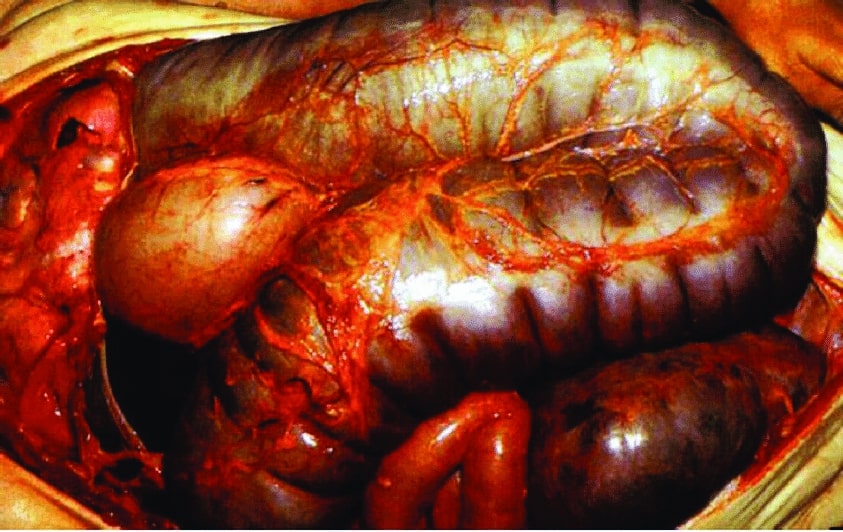
Megacolon tóxico vista intraoperatoria

Hallazgos quirúrgicos en el megacolon tóxico relacionado con la colitis por C. difficile

Imagen: “Toxic megacolon” por University of Pittsburgh Department of Pathology. Licencia: CC BY 3.0

Pseudoobstrucción colónica aguda

  • Tratamiento inicial (para pacientes estables sin peritonitis Peritonitis Inflammation of the peritoneum lining the abdominal cavity as the result of infectious, autoimmune, or chemical processes. Primary peritonitis is due to infection of the peritoneal cavity via hematogenous or lymphatic spread and without intra-abdominal source. Secondary peritonitis arises from the abdominal cavity itself through rupture or abscess of intra-abdominal organs. Penetrating Abdominal Injury en EN Erythema nodosum is an immune-mediated panniculitis (inflammation of the subcutaneous fat) caused by a type IV (delayed-type) hypersensitivity reaction. It commonly manifests in young women as tender, erythematous nodules on the shins. Erythema Nodosum las primeras 48–72 horas y un diámetro cecal < 12 cm):
    • Sonda rectal para la descompresión
    • Suspender los LOS Neisseria medicamentos que pueden provocarla (opiáceos, anticolinérgicos, bloqueadores de los LOS Neisseria canales calcio).
    • Tratar la enfermedad subyacente.
    • Siga con exámenes físicos y radiografías seriadas cada 12–24 horas.
  • Intervenciones farmacológicas:
    • Indicaciones:
      • No hay mejora en EN Erythema nodosum is an immune-mediated panniculitis (inflammation of the subcutaneous fat) caused by a type IV (delayed-type) hypersensitivity reaction. It commonly manifests in young women as tender, erythematous nodules on the shins. Erythema Nodosum 72 horas
      • Diámetro cecal > 12 cm
    • Neostigmina intravenosa (inhibidor de la acetilcolinesterasa):
      • Dosificación en EN Erythema nodosum is an immune-mediated panniculitis (inflammation of the subcutaneous fat) caused by a type IV (delayed-type) hypersensitivity reaction. It commonly manifests in young women as tender, erythematous nodules on the shins. Erythema Nodosum bolo o infusión continua
      • El 89% responde a una sola dosis.
      • Los LOS Neisseria pacientes deben estar en EN Erythema nodosum is an immune-mediated panniculitis (inflammation of the subcutaneous fat) caused by a type IV (delayed-type) hypersensitivity reaction. It commonly manifests in young women as tender, erythematous nodules on the shins. Erythema Nodosum un entorno monitorizado.
    • Metilnaltrexona: si la obstrucción se relaciona a opiáceos
  • Descompresión colonoscópica:
    • Indicaciones:
      • No hay respuesta a la neostigmina
      • Contraindicaciones de la neostigmina
    • Tiene una tasa de perforación del 3%.
  • Cirugía:
    • Indicaciones:
      • Fracaso del tratamiento no quirúrgico
      • Peritonitis Peritonitis Inflammation of the peritoneum lining the abdominal cavity as the result of infectious, autoimmune, or chemical processes. Primary peritonitis is due to infection of the peritoneal cavity via hematogenous or lymphatic spread and without intra-abdominal source. Secondary peritonitis arises from the abdominal cavity itself through rupture or abscess of intra-abdominal organs. Penetrating Abdominal Injury (isquemia o perforación)
    • Procedimientos:
      • Anastomosis primaria (pacientes estables)
      • Colectomía abdominal total con ileostomía terminal (isquemia o perforación)

Megacolon Megacolon Megacolon is a severe, abnormal dilatation of the colon, and is classified as acute or chronic. There are many etiologies of megacolon, including neuropathic and dysmotility conditions, severe infections, ischemia, and inflammatory bowel disease. Megacolon crónico

  • Medidas generales:
    • Tratamiento de soporte según sea necesario (hidratación, corrección de electrolitos)
    • Suspender el medicamento que la provoca (opiáceos, anticolinérgicos).
    • Descompresión con sonda nasogástrica o rectal, si requiere hospitalización
    • Vaciar el intestino.
      • La desimpactación manual puede ser necesaria para la impactación fecal.
      • Laxantes osmóticos
      • Supositorios
      • Enemas
    • Programa estricto de reeducación intestinal
      • Horarios de defecación programados
      • Aumentar la actividad física.
      • Consumir agentes de volumen (alto contenido en EN Erythema nodosum is an immune-mediated panniculitis (inflammation of the subcutaneous fat) caused by a type IV (delayed-type) hypersensitivity reaction. It commonly manifests in young women as tender, erythematous nodules on the shins. Erythema Nodosum fibra).
  • Tratamiento quirúrgico:
    • Para los LOS Neisseria casos graves que no responden al AL Amyloidosis tratamiento médico
    • Enfermedad de Hirschsprung:
      • Terapia definitiva
      • Resección del segmento agangliónico con anastomosis primaria

Diagnóstico Diferencial

  • Obstrucción mecánica del intestino grueso: interrupción del flujo del contenido intraluminal causada por la compresión intrínseca o extrínseca de la luz del colon Colon The large intestines constitute the last portion of the digestive system. The large intestine consists of the cecum, appendix, colon (with ascending, transverse, descending, and sigmoid segments), rectum, and anal canal. The primary function of the colon is to remove water and compact the stool prior to expulsion from the body via the rectum and anal canal. Colon, Cecum, and Appendix: Anatomy. Las etiologías comunes incluyen el cáncer colorrectal y el vólvulo. Los LOS Neisseria pacientes se presentan con distensión abdominal, obstipación, náuseas y vómitos. El diagnóstico se establece con imagenología. El tratamiento incluye reposo intestinal, descompresión y cirugía.
  • Obstrucción del intestino delgado: interrupción del contenido intraluminal a través del intestino delgado debido a un problema mecánico o funcional. Los LOS Neisseria pacientes presentan dolor Dolor Inflammation abdominal, distensión, náuseas y vómitos. La imagenología mostrará la afectación del intestino delgado, aunque el colon Colon The large intestines constitute the last portion of the digestive system. The large intestine consists of the cecum, appendix, colon (with ascending, transverse, descending, and sigmoid segments), rectum, and anal canal. The primary function of the colon is to remove water and compact the stool prior to expulsion from the body via the rectum and anal canal. Colon, Cecum, and Appendix: Anatomy también puede estar distendido en EN Erythema nodosum is an immune-mediated panniculitis (inflammation of the subcutaneous fat) caused by a type IV (delayed-type) hypersensitivity reaction. It commonly manifests in young women as tender, erythematous nodules on the shins. Erythema Nodosum la obstrucción funcional. La mayoría de los LOS Neisseria casos se resuelven con cuidados de soporte.
  • Apendicitis: inflamación del apéndice. La apendicitis temprana puede presentarse con un dolor Dolor Inflammation cólico difuso, pero el dolor Dolor Inflammation y la sensibilidad acaban localizándose en EN Erythema nodosum is an immune-mediated panniculitis (inflammation of the subcutaneous fat) caused by a type IV (delayed-type) hypersensitivity reaction. It commonly manifests in young women as tender, erythematous nodules on the shins. Erythema Nodosum el cuadrante inferior derecho. El diagnóstico se establece mediante una TC. El tratamiento incluye antibióticos y cirugía.
  • Diverticulitis Diverticulitis Inflammation of a diverticulum or diverticula. Diverticular Disease: inflamación de los LOS Neisseria divertículos colónicos. Los LOS Neisseria pacientes presentan dolor Dolor Inflammation abdominal bajo con cólicos y pueden tener estreñimiento. La diverticulitis Diverticulitis Inflammation of a diverticulum or diverticula. Diverticular Disease se asocia frecuentemente con fiebre y leucocitosis. Una TC muestra los LOS Neisseria hallazgos inflamatorios característicos. El tratamiento incluye reposo intestinal, antibióticos y, en EN Erythema nodosum is an immune-mediated panniculitis (inflammation of the subcutaneous fat) caused by a type IV (delayed-type) hypersensitivity reaction. It commonly manifests in young women as tender, erythematous nodules on the shins. Erythema Nodosum ocasiones, cirugía.

Referencias

  1. Sheth S.G., Lamont T. (2025). Toxic megacolon. Retrieved June 17, 2025, from https://www.uptodate.com/contents/toxic-megacolon
  2. Wald A. (2025). Etiology and evaluation of chronic constipation in adults. Retrieved June 17, 2025, from https://www.uptodate.com/contents/etiology-and-evaluation-of-chronic-constipation-in-adults
  3. Wesson D.E., Esperanza Lopez M. (2025). Congenital aganglionic megacolon (Hirschsprung disease). Retrieved June 17, 2025, from https://www.uptodate.com/contents/congenital-aganglionic-megacolon-hirschsprung-disease
  4. Belkind‑Gerson, J. (2023). Hirschsprung disease (congenital megacolon). In MSD Manual Professional Version. Merck & Co., Inc. Retrieved June 17, 2025, from https://www.msdmanuals.com/professional/pediatrics/congenital-gastrointestinal-anomalies/hirschsprung-disease
  5. Manuel, D. and Piper, M.H. (2019). Chronic megacolon. In Anand, B.S. (Ed.), Medscape. Retrieved June 17, 2025, from https://emedicine.medscape.com/article/180955-overview
  6. Alali, F. (2021). Toxic megacolon. In Medscape. Retrieved June 17, 2025, from https://emedicine.medscape.com/article/181054-overview

¡Crea tu cuenta gratis o inicia una sesión para seguir leyendo!

Regístrate ahora y obtén acceso gratuito a Lecturio con páginas de concepto, videos médicos y cuestionarios para tu educación médica.

User Reviews

Que tengas una sesión de estudio alegre y navideña 🎁 Ahorra 50% en todos los planes >>

Details