Domina Conceptos Médicos

Estudia para la escuela de medicina y tus examenes con Lecturio.

Liquen Plano

El liquen plano es una enfermedad cutánea inflamatoria idiopática mediada por células. Se caracteriza por lesiones cutáneas pruriginosas, planas, papulares y de color púrpura, que suelen aparecer en EN Erythema nodosum is an immune-mediated panniculitis (inflammation of the subcutaneous fat) caused by a type IV (delayed-type) hypersensitivity reaction. It commonly manifests in young women as tender, erythematous nodules on the shins. Erythema Nodosum las superficies flexoras de las extremidades. Otras zonas afectadas son los LOS Neisseria genitales, las uñas, el cuero cabelludo y las mucosas. Se desconoce la etiología exacta, pero se ha HA Hemolytic anemia (HA) is the term given to a large group of anemias that are caused by the premature destruction/hemolysis of circulating red blood cells (RBCs). Hemolysis can occur within (intravascular hemolysis) or outside the blood vessels (extravascular hemolysis). Hemolytic Anemia descubierto que está asociada a la infección por hepatitis C Hepatitis C Hepatitis C is an infection of the liver caused by the hepatitis C virus (HCV). The infection can be transmitted through infectious blood or body fluids and may be transmitted during childbirth or through IV drug use or sexual intercourse. Hepatitis C virus can cause both acute and chronic hepatitis, ranging from a mild to a serious, lifelong illness including liver cirrhosis and hepatocellular carcinoma (HCC). Hepatitis C Virus, a otras enfermedades y a múltiples medicamentos. Para confirmar el diagnóstico se utiliza una biopsia de la lesión más prominente. El liquen plano cutáneo suele resolverse en EN Erythema nodosum is an immune-mediated panniculitis (inflammation of the subcutaneous fat) caused by a type IV (delayed-type) hypersensitivity reaction. It commonly manifests in young women as tender, erythematous nodules on the shins. Erythema Nodosum 12 años. Otras formas, sin embargo, son crónicas y persistentes. Los LOS Neisseria corticoides tópicos son el tratamiento de elección.

Last updated: Dec 15, 2025
Editorial responsibility: Stanley Oiseth, Lindsay Jones, Evelin Maza

Epidemiología y Etiología

Epidemiología

  • El liquen plano afecta a menos del 1% de la población en EN Erythema nodosum is an immune-mediated panniculitis (inflammation of the subcutaneous fat) caused by a type IV (delayed-type) hypersensitivity reaction. It commonly manifests in young women as tender, erythematous nodules on the shins. Erythema Nodosum los LOS Neisseria Estados Unidos.
  • Puede ocurrir a cualquier edad, pero es más frecuente en EN Erythema nodosum is an immune-mediated panniculitis (inflammation of the subcutaneous fat) caused by a type IV (delayed-type) hypersensitivity reaction. It commonly manifests in young women as tender, erythematous nodules on the shins. Erythema Nodosum pacientes de 3060 años de edad
  • Raro en EN Erythema nodosum is an immune-mediated panniculitis (inflammation of the subcutaneous fat) caused by a type IV (delayed-type) hypersensitivity reaction. It commonly manifests in young women as tender, erythematous nodules on the shins. Erythema Nodosum niños

Etiología

  • Desconocida
  • Factores de riesgo asociados:
    • Predisposición genética: ↑ frecuencia del antígeno leucocitario humano B7 (HLA-B7), HLA-DR1 y HLA-DR10 en EN Erythema nodosum is an immune-mediated panniculitis (inflammation of the subcutaneous fat) caused by a type IV (delayed-type) hypersensitivity reaction. It commonly manifests in young women as tender, erythematous nodules on the shins. Erythema Nodosum los LOS Neisseria afectados.
    • Infección por el virus Virus Viruses are infectious, obligate intracellular parasites composed of a nucleic acid core surrounded by a protein capsid. Viruses can be either naked (non-enveloped) or enveloped. The classification of viruses is complex and based on many factors, including type and structure of the nucleoid and capsid, the presence of an envelope, the replication cycle, and the host range. Virology de la hepatitis C Hepatitis C Hepatitis C is an infection of the liver caused by the hepatitis C virus (HCV). The infection can be transmitted through infectious blood or body fluids and may be transmitted during childbirth or through IV drug use or sexual intercourse. Hepatitis C virus can cause both acute and chronic hepatitis, ranging from a mild to a serious, lifelong illness including liver cirrhosis and hepatocellular carcinoma (HCC). Hepatitis C Virus
    • Exposición a medicamentos:
      • Inhibidores de la enzima convertidora de angiotensina (IECA)
      • Betabloqueadores
      • Metildopa
      • Quinidina
      • Cloroquina
      • Hidroxicloroquina
      • Diuréticos tiazídicos
      • Sales de oro
    • Colangitis biliar primaria
    • Virus Virus Viruses are infectious, obligate intracellular parasites composed of a nucleic acid core surrounded by a protein capsid. Viruses can be either naked (non-enveloped) or enveloped. The classification of viruses is complex and based on many factors, including type and structure of the nucleoid and capsid, the presence of an envelope, the replication cycle, and the host range. Virology del herpes humano tipo 7
    • Mercurio ( en EN Erythema nodosum is an immune-mediated panniculitis (inflammation of the subcutaneous fat) caused by a type IV (delayed-type) hypersensitivity reaction. It commonly manifests in young women as tender, erythematous nodules on the shins. Erythema Nodosum amalgamas dentales)
    • Radioterapia
  • Factores psicógenos, como ansiedad, depresión y estrés

Fisiopatología

  • El mecanismo propuesto implica la inmunidad mediada por células.
  • La exposición a un agente exógeno (medicamento, virus Virus Viruses are infectious, obligate intracellular parasites composed of a nucleic acid core surrounded by a protein capsid. Viruses can be either naked (non-enveloped) or enveloped. The classification of viruses is complex and based on many factors, including type and structure of the nucleoid and capsid, the presence of an envelope, the replication cycle, and the host range. Virology, otros factores de riesgo) → altera los LOS Neisseria autoantígenos epidérmicos
  • Linfocitos CD4+ y CD8+ (más predominantes) son reclutados a la unión dérmico-epidérmica → dirigen un ataque mediado por células T → apoptosis Apoptosis A regulated cell death mechanism characterized by distinctive morphologic changes in the nucleus and cytoplasm, including the endonucleolytic cleavage of genomic DNA, at regularly spaced, internucleosomal sites, I.e., DNA fragmentation. It is genetically-programmed and serves as a balance to mitosis in regulating the size of animal tissues and in mediating pathologic processes associated with tumor growth. Ischemic Cell Damage de los LOS Neisseria queratinocitos
  • La capa basal se lesiona → libera melanina en EN Erythema nodosum is an immune-mediated panniculitis (inflammation of the subcutaneous fat) caused by a type IV (delayed-type) hypersensitivity reaction. It commonly manifests in young women as tender, erythematous nodules on the shins. Erythema Nodosum la dermis Dermis A layer of vascularized connective tissue underneath the epidermis. The surface of the dermis contains innervated papillae. Embedded in or beneath the dermis are sweat glands; hair follicles; and sebaceous glands. Skin: Structure and Functions → hiperpigmentación
  • Interacción de linfocitos T y queratinocitos basales potenciada por:
    • Regulación de la molécula de adhesión intercelular-1 (ICAM-1) por los LOS Neisseria queratinocitos basales
    • Otras citoquinas: interferón ( IFN IFN Interferon (IFN) is a cytokine with antiviral properties (it interferes with viral infections) and various roles in immunoregulation. The different types are type I IFN (IFN-ɑ and IFN-β), type II IFN (IFN-ɣ), and type III IFN (IFN-ƛ). Interferons)-gama, factor de necrosis Necrosis The death of cells in an organ or tissue due to disease, injury or failure of the blood supply. Ischemic Cell Damage tumoral ( TNF TNF Tumor necrosis factor (TNF) is a major cytokine, released primarily by macrophages in response to stimuli. The presence of microbial products and dead cells and injury are among the stimulating factors. This protein belongs to the TNF superfamily, a group of ligands and receptors performing functions in inflammatory response, morphogenesis, and cell proliferation. Tumor Necrosis Factor (TNF))-alfa, interleucina (IL)-1 alfa, IL-6 e IL-8

Related videos

Presentación Clínica

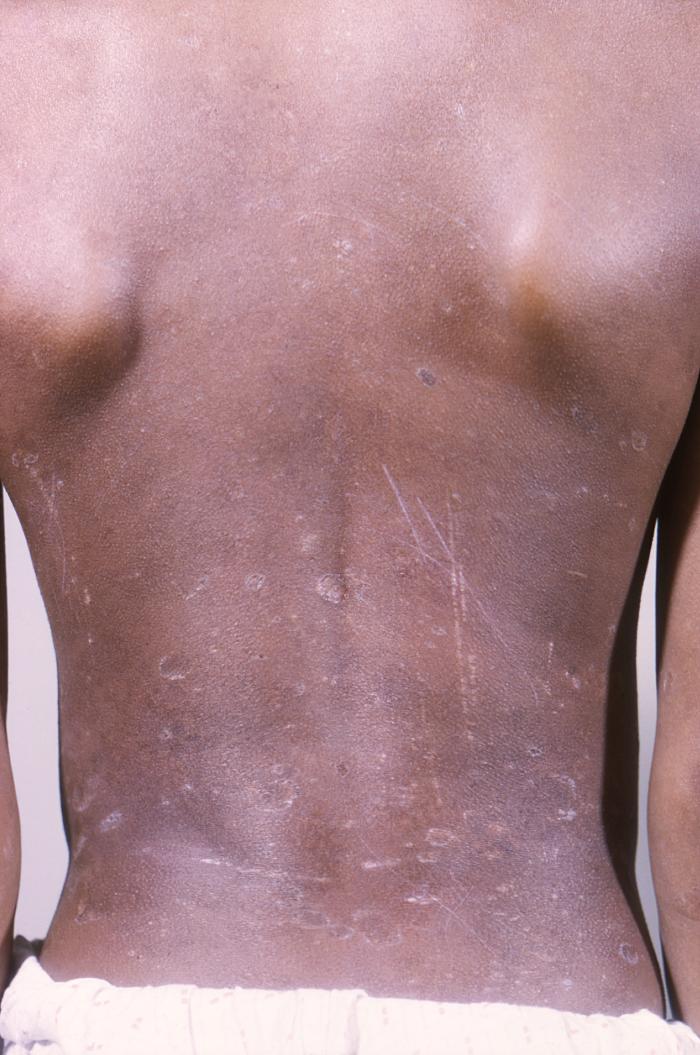
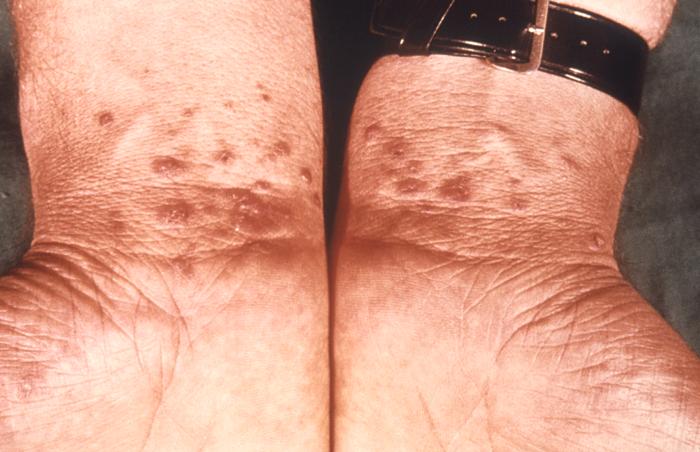
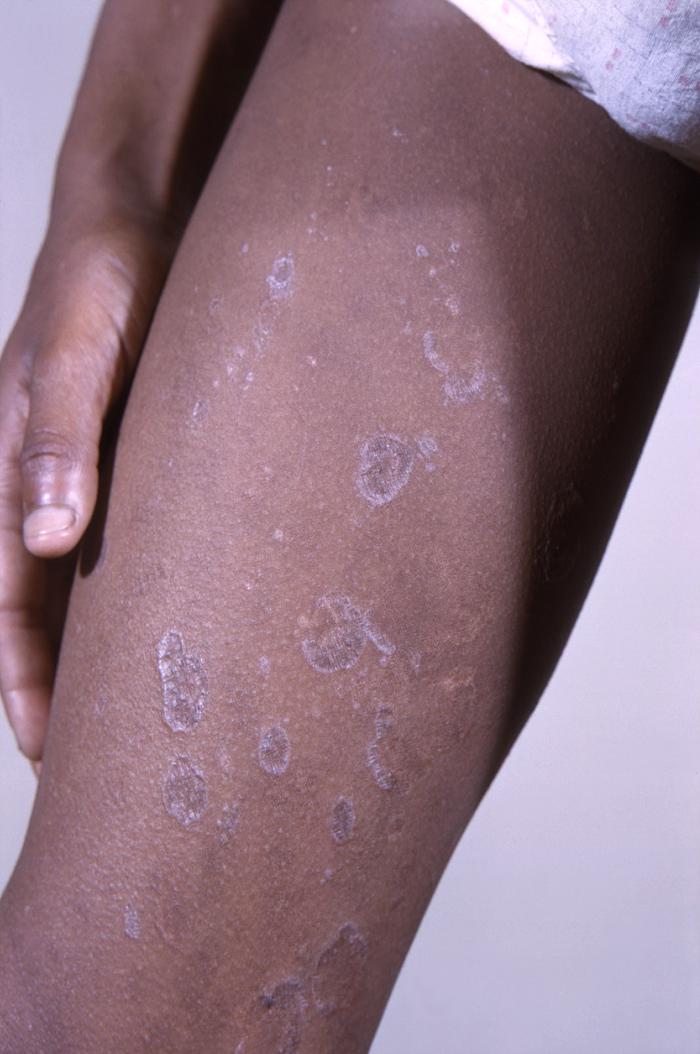
Liquen plano cutáneo

  • Características clínicas:
    • Las lesiones primarias se caracterizan por las 6 Ps PS Invasive Mechanical Ventilation ( en EN Erythema nodosum is an immune-mediated panniculitis (inflammation of the subcutaneous fat) caused by a type IV (delayed-type) hypersensitivity reaction. It commonly manifests in young women as tender, erythematous nodules on the shins. Erythema Nodosum inglés):
      • Poligonal (Poligonales)
      • Purple (Púrpuras (violáceas))
      • Pruritic (Pruriginosas (a menudo severo))
      • Planar Papules (Papulas planas (de superficie plana))
      • Pueden fusionarse en EN Erythema nodosum is an immune-mediated panniculitis (inflammation of the subcutaneous fat) caused by a type IV (delayed-type) hypersensitivity reaction. It commonly manifests in young women as tender, erythematous nodules on the shins. Erythema Nodosum larger Plaques (placas más grandes)
    • Estrías de Wickham: líneas/puntos blancos en EN Erythema nodosum is an immune-mediated panniculitis (inflammation of the subcutaneous fat) caused by a type IV (delayed-type) hypersensitivity reaction. It commonly manifests in young women as tender, erythematous nodules on the shins. Erythema Nodosum forma de lazo, pueden verse en EN Erythema nodosum is an immune-mediated panniculitis (inflammation of the subcutaneous fat) caused by a type IV (delayed-type) hypersensitivity reaction. It commonly manifests in young women as tender, erythematous nodules on the shins. Erythema Nodosum la superficie de las lesiones
    • Fenómeno de Koebner:
      • Desarrollo de lesiones en EN Erythema nodosum is an immune-mediated panniculitis (inflammation of the subcutaneous fat) caused by a type IV (delayed-type) hypersensitivity reaction. It commonly manifests in young women as tender, erythematous nodules on the shins. Erythema Nodosum lugares previamente sanos
      • Debido a traumatismo por rascarse
    • Se produce hiperpigmentación en EN Erythema nodosum is an immune-mediated panniculitis (inflammation of the subcutaneous fat) caused by a type IV (delayed-type) hypersensitivity reaction. It commonly manifests in young women as tender, erythematous nodules on the shins. Erythema Nodosum lesiones curadas.
    • Puede ser doloroso dependiendo de la ubicación
  • Distribución y localización:
    • Simétrico y bilateral
    • Más comúnmente encontrado en EN Erythema nodosum is an immune-mediated panniculitis (inflammation of the subcutaneous fat) caused by a type IV (delayed-type) hypersensitivity reaction. It commonly manifests in young women as tender, erythematous nodules on the shins. Erythema Nodosum las superficies flexoras de las extremidades (tobillos y muñecas)
  • Evolución clínica:
    • La mayoría se resuelve en EN Erythema nodosum is an immune-mediated panniculitis (inflammation of the subcutaneous fat) caused by a type IV (delayed-type) hypersensitivity reaction. It commonly manifests in young women as tender, erythematous nodules on the shins. Erythema Nodosum 12 años
    • Puede dejar máculas hiperpigmentadas permanentes tras la desaparición de la enfermedad activa

Variantes cutáneas por morfología

  • Hipertrófico:
    • Liquen plano verrucoso
    • Forma más pruriginosa; asociada a cicatrices residuales
    • Afecta la superficie anterior distal de las extremidades inferiores
  • Anular:
    • Placas con aclaramiento central
  • Bulloso:
    • Se desarrollan vesículas o bullas dentro de las lesiones existentes.
    • Las piernas suelen estar afectadas
  • Actínico:
    • Las placas se desarrollan en EN Erythema nodosum is an immune-mediated panniculitis (inflammation of the subcutaneous fat) caused by a type IV (delayed-type) hypersensitivity reaction. It commonly manifests in young women as tender, erythematous nodules on the shins. Erythema Nodosum zonas expuestas al AL Amyloidosis sol.
    • Se observa en EN Erythema nodosum is an immune-mediated panniculitis (inflammation of the subcutaneous fat) caused by a type IV (delayed-type) hypersensitivity reaction. It commonly manifests in young women as tender, erythematous nodules on the shins. Erythema Nodosum pacientes de ascendencia del Medio Oriente
  • Pigmentoso:
    • Manchas de color gris-marrón o marrón oscuro
    • Situadas en EN Erythema nodosum is an immune-mediated panniculitis (inflammation of the subcutaneous fat) caused by a type IV (delayed-type) hypersensitivity reaction. It commonly manifests in young women as tender, erythematous nodules on the shins. Erythema Nodosum zonas expuestas al AL Amyloidosis sol
  • Invertido:
    • Las placas se desarrollan en EN Erythema nodosum is an immune-mediated panniculitis (inflammation of the subcutaneous fat) caused by a type IV (delayed-type) hypersensitivity reaction. It commonly manifests in young women as tender, erythematous nodules on the shins. Erythema Nodosum lugares poco comunes (axilas, pliegues inguinales, pliegues inframamarios, flexuras de las extremidades).
  • Atrófico:
    • Las placas son pápulas pálidas o violáceas bien delimitadas con atrofia superficial.

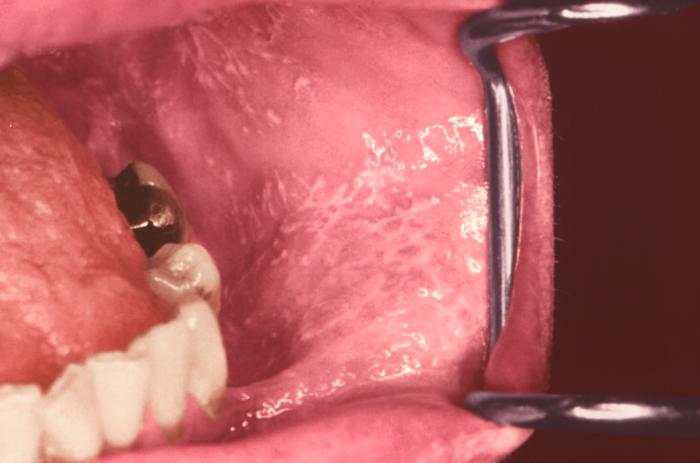
Liquen plano oral

  • Características clínicas:
    • Puede ocurrir de forma independiente o con liquen plano cutáneo
    • Puede presentarse como:
      • Estrías de Wickham o forma reticular (hilos blancos en EN Erythema nodosum is an immune-mediated panniculitis (inflammation of the subcutaneous fat) caused by a type IV (delayed-type) hypersensitivity reaction. It commonly manifests in young women as tender, erythematous nodules on the shins. Erythema Nodosum forma de telaraña o encaje)
      • Lesiones atróficas
      • Lesiones bullosas
      • Erosiones o úlceras dolorosas (liquen plano erosivo de la mucosa) que pueden provocar una infección secundaria por cándida y/o pérdida de apetito debido al AL Amyloidosis dolor Dolor Inflammation
  • Localización:
    • Más común en EN Erythema nodosum is an immune-mediated panniculitis (inflammation of the subcutaneous fat) caused by a type IV (delayed-type) hypersensitivity reaction. It commonly manifests in young women as tender, erythematous nodules on the shins. Erythema Nodosum la mucosa bucal
    • También afecta a la mucosa alveolar y a la lengua
  • Evolución clínica: una forma crónica de liquen plano
  • Las lesiones mucosas y paramucosas, especialmente en EN Erythema nodosum is an immune-mediated panniculitis (inflammation of the subcutaneous fat) caused by a type IV (delayed-type) hypersensitivity reaction. It commonly manifests in young women as tender, erythematous nodules on the shins. Erythema Nodosum las zonas orales y vulvares (pero no las lesiones cutáneas) tienen un mayor riesgo de carcinoma de células escamosas.

Liquen plano genital

  • Más común en EN Erythema nodosum is an immune-mediated panniculitis (inflammation of the subcutaneous fat) caused by a type IV (delayed-type) hypersensitivity reaction. It commonly manifests in young women as tender, erythematous nodules on the shins. Erythema Nodosum los LOS Neisseria hombres; las lesiones suelen estar en EN Erythema nodosum is an immune-mediated panniculitis (inflammation of the subcutaneous fat) caused by a type IV (delayed-type) hypersensitivity reaction. It commonly manifests in young women as tender, erythematous nodules on the shins. Erythema Nodosum el glande del pene.
  • En EN Erythema nodosum is an immune-mediated panniculitis (inflammation of the subcutaneous fat) caused by a type IV (delayed-type) hypersensitivity reaction. It commonly manifests in young women as tender, erythematous nodules on the shins. Erythema Nodosum las mujeres, la vulva Vulva The vulva is the external genitalia of the female and includes the mons pubis, labia majora, labia minora, clitoris, vestibule, vestibular bulb, and greater vestibular glands. Vagina, Vulva, and Pelvic Floor: Anatomy y la vagina Vagina The vagina is the female genital canal, extending from the vulva externally to the cervix uteri internally. The structures have sexual, reproductive, and urinary functions and a rich blood supply, mainly arising from the internal iliac artery. Vagina, Vulva, and Pelvic Floor: Anatomy se ven afectadas.
    • Asociado a prurito y dispareunia
    • Las lesiones erosivas pueden complicarse con estenosis uretral.
    • Mayor riesgo de carcinoma de células escamosas
  • Evolución clínica: crónica o persistente

Otras formas de liquen plano

  • En EN Erythema nodosum is an immune-mediated panniculitis (inflammation of the subcutaneous fat) caused by a type IV (delayed-type) hypersensitivity reaction. It commonly manifests in young women as tender, erythematous nodules on the shins. Erythema Nodosum uñas:
    • Puede ser desde una distrofia menor hasta la pérdida total de la uña
    • Pterigión dorsal (deformación elevada en EN Erythema nodosum is an immune-mediated panniculitis (inflammation of the subcutaneous fat) caused by a type IV (delayed-type) hypersensitivity reaction. It commonly manifests in young women as tender, erythematous nodules on the shins. Erythema Nodosum forma de cuña del lecho ungueal): anomalía ungueal más específica del liquen plano
  • Liquen plano pilar:
    • Liquen plano del cuero cabelludo que da lugar a pápulas foliculares queratósicas
    • Afecta más a las mujeres que a los LOS Neisseria hombres
    • Puede evolucionar a una alopecia Alopecia Alopecia is the loss of hair in areas anywhere on the body where hair normally grows. Alopecia may be defined as scarring or non-scarring, localized or diffuse, congenital or acquired, reversible or permanent, or confined to the scalp or universal; however, alopecia is usually classified using the 1st 3 factors. Alopecia cicatricial si no se trata
  • Esofágico:
    • Puede ser asintomático o presentarse con disfagia u odinofagia
    • Hallazgos endoscópicos: pseudomembranas, mucosa friable e inflamada, pápulas submucosas, placas blancas, erosiones
    • Puede provocar estenosis esofágica
  • Ótico:
    • Afecta a los LOS Neisseria canales auditivos externos y las membranas timpánicas
    • Se presenta con eritema, prurito e induración. pero puede causar otorrea persistente y pérdida de audición

Diagnóstico

Antecedentes y hallazgos clínicos

  • Revisión de los LOS Neisseria antecedentes médicos, medicamentos y factores de riesgo ( hepatitis C Hepatitis C Hepatitis C is an infection of the liver caused by the hepatitis C virus (HCV). The infection can be transmitted through infectious blood or body fluids and may be transmitted during childbirth or through IV drug use or sexual intercourse. Hepatitis C virus can cause both acute and chronic hepatitis, ranging from a mild to a serious, lifelong illness including liver cirrhosis and hepatocellular carcinoma (HCC). Hepatitis C Virus)
  • Examen físico de toda la superficie cutánea (incluyendo el cuero cabelludo, la cavidad oral y los LOS Neisseria genitales externos)

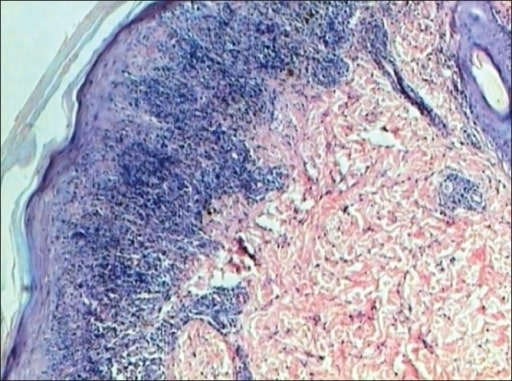
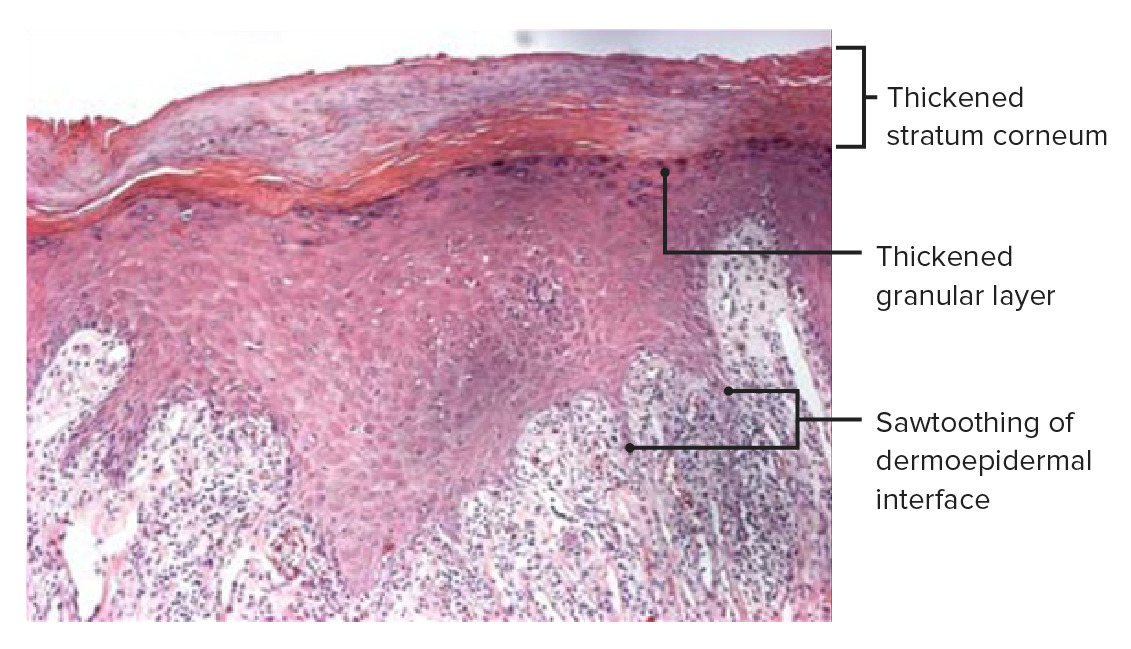
Biopsia mucocutánea

  • Biopsia por raspado profundo o en EN Erythema nodosum is an immune-mediated panniculitis (inflammation of the subcutaneous fat) caused by a type IV (delayed-type) hypersensitivity reaction. It commonly manifests in young women as tender, erythematous nodules on the shins. Erythema Nodosum sacabocados de la lesión más prominente
  • Los LOS Neisseria hallazgos histopatológicos incluyen:
    • Hiperqueratosis (hiperplasia del estrato córneo)
    • Cuerpos de Civatte (queratinocitos hipereosinófilos anucleados y necróticos) en EN Erythema nodosum is an immune-mediated panniculitis (inflammation of the subcutaneous fat) caused by a type IV (delayed-type) hypersensitivity reaction. It commonly manifests in young women as tender, erythematous nodules on the shins. Erythema Nodosum la epidermis Epidermis The external, nonvascular layer of the skin. It is made up, from within outward, of five layers of epithelium: (1) basal layer (stratum basale epidermidis); (2) spinous layer (stratum spinosum epidermidis); (3) granular layer (stratum granulosum epidermidis); (4) clear layer (stratum lucidum epidermidis); and (5) horny layer (stratum corneum epidermidis). Skin: Structure and Functions inferior
    • Hipergranulosis en EN Erythema nodosum is an immune-mediated panniculitis (inflammation of the subcutaneous fat) caused by a type IV (delayed-type) hypersensitivity reaction. It commonly manifests in young women as tender, erythematous nodules on the shins. Erythema Nodosum forma de cuña (hiperplasia del estrato granuloso)
    • Crestas de Rete en “diente de sierra”
    • Alteración vacuolar de la capa basal de la epidermis Epidermis The external, nonvascular layer of the skin. It is made up, from within outward, of five layers of epithelium: (1) basal layer (stratum basale epidermidis); (2) spinous layer (stratum spinosum epidermidis); (3) granular layer (stratum granulosum epidermidis); (4) clear layer (stratum lucidum epidermidis); and (5) horny layer (stratum corneum epidermidis). Skin: Structure and Functions
    • Infiltrado linfocítico en EN Erythema nodosum is an immune-mediated panniculitis (inflammation of the subcutaneous fat) caused by a type IV (delayed-type) hypersensitivity reaction. It commonly manifests in young women as tender, erythematous nodules on the shins. Erythema Nodosum banda en EN Erythema nodosum is an immune-mediated panniculitis (inflammation of the subcutaneous fat) caused by a type IV (delayed-type) hypersensitivity reaction. It commonly manifests in young women as tender, erythematous nodules on the shins. Erythema Nodosum la unión dérmico-epidérmica

Otras pruebas

  • Dermatoscopia: ayuda a visualizar las estrías de Wickham en EN Erythema nodosum is an immune-mediated panniculitis (inflammation of the subcutaneous fat) caused by a type IV (delayed-type) hypersensitivity reaction. It commonly manifests in young women as tender, erythematous nodules on the shins. Erythema Nodosum las lesiones cutáneas
  • Prueba(s) de laboratorio: comprobación de la hepatitis C Hepatitis C Hepatitis C is an infection of the liver caused by the hepatitis C virus (HCV). The infection can be transmitted through infectious blood or body fluids and may be transmitted during childbirth or through IV drug use or sexual intercourse. Hepatitis C virus can cause both acute and chronic hepatitis, ranging from a mild to a serious, lifelong illness including liver cirrhosis and hepatocellular carcinoma (HCC). Hepatitis C Virus en EN Erythema nodosum is an immune-mediated panniculitis (inflammation of the subcutaneous fat) caused by a type IV (delayed-type) hypersensitivity reaction. It commonly manifests in young women as tender, erythematous nodules on the shins. Erythema Nodosum pacientes con factores de riesgo

Tratamiento

Terapia de soporte

  • Reducir el prurito con antihistamínicos (hidroxizina)
  • Evitar la resequedad de la piel con el uso de emolientes

Tratamiento con medicamentos de 1ra línea

  • Corticoides tópicos de alta potencia:
    • Para lesiones localizadas, incluidas las orales
    • Riesgos: atrofia cutánea, estrías, cambios en EN Erythema nodosum is an immune-mediated panniculitis (inflammation of the subcutaneous fat) caused by a type IV (delayed-type) hypersensitivity reaction. It commonly manifests in young women as tender, erythematous nodules on the shins. Erythema Nodosum la pigmentación
    • Crema/ungüento de betametasona o clobetasol Clobetasol A derivative of prednisolone with high glucocorticoid activity and low mineralocorticoid activity. Absorbed through the skin faster than fluocinonide, it is used topically in treatment of psoriasis but may cause marked adrenocortical suppression. Glucocorticoids dos veces al AL Amyloidosis día
    • Volver a evaluar la respuesta en EN Erythema nodosum is an immune-mediated panniculitis (inflammation of the subcutaneous fat) caused by a type IV (delayed-type) hypersensitivity reaction. It commonly manifests in young women as tender, erythematous nodules on the shins. Erythema Nodosum 23 semanas.
  • Corticosteroides intralesionales:
    • Para lesiones hipertróficas
    • Riesgos: atrofia cutánea, cambios en EN Erythema nodosum is an immune-mediated panniculitis (inflammation of the subcutaneous fat) caused by a type IV (delayed-type) hypersensitivity reaction. It commonly manifests in young women as tender, erythematous nodules on the shins. Erythema Nodosum la pigmentación
    • Inyección de triamcinolona

Tratamiento con medicamentos de 2da línea

  • Corticoides sistémicos
    • En EN Erythema nodosum is an immune-mediated panniculitis (inflammation of the subcutaneous fat) caused by a type IV (delayed-type) hypersensitivity reaction. It commonly manifests in young women as tender, erythematous nodules on the shins. Erythema Nodosum caso de enfermedad extensa
    • Prednisona 3060 mg/día durante 46 semanas, seguido de una disminución
  • Inhibidores tópicos de la calcineurina
    • Opción de tratamiento para liquen plano genital, liquen plano oral resistente
    • Pimecrolimus Pimecrolimus Immunosuppressants, tacrolimus Tacrolimus A macrolide isolated from the culture broth of a strain of streptomyces tsukubaensis that has strong immunosuppressive activity in vivo and prevents the activation of T-lymphocytes in response to antigenic or mitogenic stimulation in vitro. Immunosuppressants
  • Fototerapia
    • Terapia ultravioleta B (UVB) de banda estrecha: preferible
    • Psoraleno más ultravioleta A (PUVA)
  • Retinoides orales
    • Acitretina 30 mg/día durante 8 semanas
    • Efectos secundarios: hipertrigliceridemia, cambios visuales, pérdida de cabello
    • Teratogénico (evitar el embarazo hasta 3 años después de la interrupción)

Diagnóstico Diferencial

  • Dermatitis Dermatitis Any inflammation of the skin. Atopic Dermatitis (Eczema) de contacto irritante: afección de la piel que resulta de la exposición a un irritante físico o químico. Los LOS Neisseria pacientes presentan eritema, edema Edema Edema is a condition in which excess serous fluid accumulates in the body cavity or interstitial space of connective tissues. Edema is a symptom observed in several medical conditions. It can be categorized into 2 types, namely, peripheral (in the extremities) and internal (in an organ or body cavity). Edema, vesículas y supuración que se limitan a las zonas en EN Erythema nodosum is an immune-mediated panniculitis (inflammation of the subcutaneous fat) caused by a type IV (delayed-type) hypersensitivity reaction. It commonly manifests in young women as tender, erythematous nodules on the shins. Erythema Nodosum las que estaba presente la sustancia agresora.
  • Lupus eritematoso discoide: afección cutánea autoinmune crónica caracterizada por placas eritematosas escamosas que suelen provocar inflamación, cicatrices y atrofia en EN Erythema nodosum is an immune-mediated panniculitis (inflammation of the subcutaneous fat) caused by a type IV (delayed-type) hypersensitivity reaction. It commonly manifests in young women as tender, erythematous nodules on the shins. Erythema Nodosum la cara, el cuello, las orejas y el cuero cabelludo. La afección puede ocurrir con o sin lupus eritematoso sistémico concurrente.
  • Erupción medicamentosa liquenoide: es la erupción cutánea simétrica que aparece en EN Erythema nodosum is an immune-mediated panniculitis (inflammation of the subcutaneous fat) caused by a type IV (delayed-type) hypersensitivity reaction. It commonly manifests in young women as tender, erythematous nodules on the shins. Erythema Nodosum forma de pápulas eritematosas en EN Erythema nodosum is an immune-mediated panniculitis (inflammation of the subcutaneous fat) caused by a type IV (delayed-type) hypersensitivity reaction. It commonly manifests in young women as tender, erythematous nodules on the shins. Erythema Nodosum el tronco y las extremidades tras la toma de un medicamento. Las estrías de Wickham no suelen estar presentes. En EN Erythema nodosum is an immune-mediated panniculitis (inflammation of the subcutaneous fat) caused by a type IV (delayed-type) hypersensitivity reaction. It commonly manifests in young women as tender, erythematous nodules on the shins. Erythema Nodosum la mayoría de los LOS Neisseria casos, la condición se resolverá espontáneamente con la interrupción del medicamento injuriante.
  • Eczema Eczema Atopic dermatitis, also known as eczema, is a chronic, relapsing, pruritic, inflammatory skin disease that occurs more frequently in children, although adults can also be affected. The condition is often associated with elevated serum levels of IgE and a personal or family history of atopy. Skin dryness, erythema, oozing, crusting, and lichenification are present. Atopic Dermatitis (Eczema) (observado en EN Erythema nodosum is an immune-mediated panniculitis (inflammation of the subcutaneous fat) caused by a type IV (delayed-type) hypersensitivity reaction. It commonly manifests in young women as tender, erythematous nodules on the shins. Erythema Nodosum la dermatitis Dermatitis Any inflammation of the skin. Atopic Dermatitis (Eczema) atópica): una afección cutánea crónica y pruriginosa que suele darse en EN Erythema nodosum is an immune-mediated panniculitis (inflammation of the subcutaneous fat) caused by a type IV (delayed-type) hypersensitivity reaction. It commonly manifests in young women as tender, erythematous nodules on the shins. Erythema Nodosum los LOS Neisseria niños. El eczema Eczema Atopic dermatitis, also known as eczema, is a chronic, relapsing, pruritic, inflammatory skin disease that occurs more frequently in children, although adults can also be affected. The condition is often associated with elevated serum levels of IgE and a personal or family history of atopy. Skin dryness, erythema, oozing, crusting, and lichenification are present. Atopic Dermatitis (Eczema) está asociado al AL Amyloidosis asma ASMA Autoimmune Hepatitis. Las lesiones son pápulas rojas, secas y pruriginosas, localizadas principalmente en EN Erythema nodosum is an immune-mediated panniculitis (inflammation of the subcutaneous fat) caused by a type IV (delayed-type) hypersensitivity reaction. It commonly manifests in young women as tender, erythematous nodules on the shins. Erythema Nodosum las mejillas o el cuero cabelludo ( en EN Erythema nodosum is an immune-mediated panniculitis (inflammation of the subcutaneous fat) caused by a type IV (delayed-type) hypersensitivity reaction. It commonly manifests in young women as tender, erythematous nodules on the shins. Erythema Nodosum los LOS Neisseria bebés) y en EN Erythema nodosum is an immune-mediated panniculitis (inflammation of the subcutaneous fat) caused by a type IV (delayed-type) hypersensitivity reaction. It commonly manifests in young women as tender, erythematous nodules on the shins. Erythema Nodosum las zonas de flexión de las extremidades (niños mayores).
  • Dermatitis Dermatitis Any inflammation of the skin. Atopic Dermatitis (Eczema) seborreica: dermatosis inflamatoria crónica que se caracteriza por la presencia de lesiones cutáneas grasientas y rojas (inflamadas) que afectan al AL Amyloidosis cuero cabelludo (como la caspa), a la cara posterior del cuello y a la frente. La afección está relacionada con el aumento de la producción de sebo y la posible colonización de la piel por hongos del género Malassezia Malassezia Malassezia is a lipophilic yeast commonly found on the skin surfaces of many animals, including humans. In the presence of certain environments or triggers, this fungus can cause pathologic diseases ranging from superficial skin conditions (tinea versicolor and dermatitis) to invasive disease (e.g., Malassezia folliculitis, catheter-associated fungemia, meningitis, and urinary tract infections). Malassezia Fungi.
  • Pitiriasis rosada: enfermedad de la piel que afecta sobre todo a niños mayores y adultos jóvenes. La pitiriasis rosada comienza con una única mancha “heráldica” en el pecho, el cuello o la espalda. A esto le siguen placas ovaladas pruriginosas de color salmón más pequeñas con descamación localizadas en el tronco y las extremidades. La morfología característica es un patrón de “árbol de Navidad” en EN Erythema nodosum is an immune-mediated panniculitis (inflammation of the subcutaneous fat) caused by a type IV (delayed-type) hypersensitivity reaction. It commonly manifests in young women as tender, erythematous nodules on the shins. Erythema Nodosum la espalda.
  • Psoriasis Psoriasis Psoriasis is a common T-cell-mediated inflammatory skin condition. The etiology is unknown, but is thought to be due to genetic inheritance and environmental triggers. There are 4 major subtypes, with the most common form being chronic plaque psoriasis. Psoriasis en EN Erythema nodosum is an immune-mediated panniculitis (inflammation of the subcutaneous fat) caused by a type IV (delayed-type) hypersensitivity reaction. It commonly manifests in young women as tender, erythematous nodules on the shins. Erythema Nodosum placas: las lesiones se caracterizan por placas bien delimitadas, eritematosas y de distribución simétrica con escamas plateadas superpuestas que afectan al AL Amyloidosis cuero cabelludo y a las superficies extensoras (codos y rodillas).
  • Liquen simple crónico: forma de neurodermatitis causada por el ciclo picor-rascado, que da lugar a placas y engrosamiento de la piel. Los LOS Neisseria lugares afectados son zonas accesibles al AL Amyloidosis rascado. El tratamiento incluye esteroides tópicos potentes.

Referencias

  1. Arnold, D., Krishnamurthy, K. (2024). Lichen Planus. Retrieved July 19, 2025, from https://www.ncbi.nlm.nih.gov/books/NBK526126/
  2. Chuang, T., James, W. (2025). Lichen planus. Medscape. Retrieved July 19, 2025, from https://emedicine.medscape.com/article/1123213-overview.
  3. Goldstein, B., Goldstein, A., Mostow, E., Dellavalle, R. Callen, J., Ofori, A. (2024). UpToDate. Retrieved July 19, 2025, from https://www.uptodate.com/contents/lichen-planus
  4. Lazar, A. (2020). The Skin in Kumar, V., Abbas, A., Aster, J. (Eds.), Robbins and Cotran Pathologic Basis of Disease (10th ed., pp. 1133-1170). Elsevier, Inc
  5. Lehman, J., Tollefson, M.,Gibson, L. (2009). Lichen Planus. International Journal of Dermatology. https://doi.org/10.1111/j.1365-4632.2009.04062.x
  6. Usatine, R., Tinitigan, M. (2011). Diagnosis and treatment of Lichen Planus. Am Fam Physician. 1;84(1):53-60. https://www.aafp.org/afp/2011/0701/p53.html
  7. Dinulos, J.G.H. (2020). In Habif’s Clinical Dermatology (7th ed. pp. 313-322).

¡Crea tu cuenta gratis o inicia una sesión para seguir leyendo!

Regístrate ahora y obtén acceso gratuito a Lecturio con páginas de concepto, videos médicos y cuestionarios para tu educación médica.

User Reviews

Que tengas una sesión de estudio alegre y navideña 🎁 Ahorra 50% en todos los planes >>

Details