
Domina Conceptos Médicos

Estudia para la escuela de medicina y tus examenes con Lecturio.

Linfoma MALT

El linfoma extraganglionar de la zona marginal del tejido linfoide asociado a las mucosas (también llamado MALToma MALToma Extranodal marginal zone lymphoma (EMZL) of mucosa-associated lymphoid tissue (also called MALToma, MALT lymphoma, and pseudolymphoma) is a group of non-Hodgkin's lymphomas that have historically been grouped together because they appear to arise from postgerminal center marginal zone B cells and share a similar immunophenotype. MALT Lymphoma, linfoma MALT MALT Colon, Cecum, and Appendix: Anatomy y pseudolinfoma) es un grupo de linfomas no Hodgkin que históricamente se han agrupado porque parecen surgir de las células B de la zona marginal del centro postgerminal y comparten un inmunofenotipo similar. Se cree que el linfoma MALT MALT Colon, Cecum, and Appendix: Anatomy surge en EN Erythema nodosum is an immune-mediated panniculitis (inflammation of the subcutaneous fat) caused by a type IV (delayed-type) hypersensitivity reaction. It commonly manifests in young women as tender, erythematous nodules on the shins. Erythema Nodosum el marco de una estimulación inmunitaria crónica, que suele deberse a estímulos bacterianos, víricos o autoinmunes. Los LOS Neisseria linfomas MALT MALT Colon, Cecum, and Appendix: Anatomy se presentan con síntomas debido a la afectación localizada de los LOS Neisseria tejidos epiteliales glandulares en EN Erythema nodosum is an immune-mediated panniculitis (inflammation of the subcutaneous fat) caused by a type IV (delayed-type) hypersensitivity reaction. It commonly manifests in young women as tender, erythematous nodules on the shins. Erythema Nodosum el lugar específico donde se desarrollan. El diagnóstico del linfoma MALT MALT Colon, Cecum, and Appendix: Anatomy se realiza mediante el análisis morfológico, inmunofenotípico y genético de las muestras de biopsia. El linfoma MALT MALT Colon, Cecum, and Appendix: Anatomy gástrico positivo para Helicobacter pylori Helicobacter pylori A spiral bacterium active as a human gastric pathogen. It is a gram-negative, urease-positive, curved or slightly spiral organism initially isolated in 1982 from patients with lesions of gastritis or peptic ulcers in Western Australia. Helicobacter pylori was originally classified in the genus campylobacter, but RNA sequencing, cellular fatty acid profiles, growth patterns, and other taxonomic characteristics indicate that the micro-organism should be included in the genus Helicobacter. It has been officially transferred to Helicobacter gen. Helicobacter se trata con terapia de erradicación de H. pylori H. pylori A spiral bacterium active as a human gastric pathogen. It is a gram-negative, urease-positive, curved or slightly spiral organism initially isolated in 1982 from patients with lesions of gastritis or peptic ulcers in Western Australia. Helicobacter pylori was originally classified in the genus campylobacter, but RNA sequencing, cellular fatty acid profiles, growth patterns, and other taxonomic characteristics indicate that the micro-organism should be included in the genus Helicobacter. It has been officially transferred to Helicobacter gen. Helicobacter, y el linfoma MALT MALT Colon, Cecum, and Appendix: Anatomy gástrico negativo para H. pylori H. pylori A spiral bacterium active as a human gastric pathogen. It is a gram-negative, urease-positive, curved or slightly spiral organism initially isolated in 1982 from patients with lesions of gastritis or peptic ulcers in Western Australia. Helicobacter pylori was originally classified in the genus campylobacter, but RNA sequencing, cellular fatty acid profiles, growth patterns, and other taxonomic characteristics indicate that the micro-organism should be included in the genus Helicobacter. It has been officially transferred to Helicobacter gen. Helicobacter se trata con radioterapia. El linfoma MALT MALT Colon, Cecum, and Appendix: Anatomy no gástrico se trata en EN Erythema nodosum is an immune-mediated panniculitis (inflammation of the subcutaneous fat) caused by a type IV (delayed-type) hypersensitivity reaction. It commonly manifests in young women as tender, erythematous nodules on the shins. Erythema Nodosum función de la zona afectada y la extensión de la enfermedad. Los LOS Neisseria pacientes con linfoma MALT MALT Colon, Cecum, and Appendix: Anatomy tienen un buen pronóstico, con una supervivencia media de > 10 años.

Last updated: Dec 15, 2025

Editorial responsibility: Stanley Oiseth, Lindsay Jones, Evelin Maza

Descripción General

Definición

El linfoma del tejido linfoide asociado a mucosas ( MALT MALT Colon, Cecum, and Appendix: Anatomy, por sus siglas en EN Erythema nodosum is an immune-mediated panniculitis (inflammation of the subcutaneous fat) caused by a type IV (delayed-type) hypersensitivity reaction. It commonly manifests in young women as tender, erythematous nodules on the shins. Erythema Nodosum inglés) es un linfoma no Hodgkin clínicamente indolente que se postula que surge de las células B de memoria del centro postgerminal con capacidad para diferenciarse en EN Erythema nodosum is an immune-mediated panniculitis (inflammation of the subcutaneous fat) caused by a type IV (delayed-type) hypersensitivity reaction. It commonly manifests in young women as tender, erythematous nodules on the shins. Erythema Nodosum células de la zona marginal y células plasmáticas.

Epidemiología

  • Subtipo relativamente infrecuente de linfoma no Hodgkin:
    • 5%–10% de todos los LOS Neisseria linfomas no Hodgkin
    • Aproximadamente la mitad de los LOS Neisseria linfomas no Hodgkin en EN Erythema nodosum is an immune-mediated panniculitis (inflammation of the subcutaneous fat) caused by a type IV (delayed-type) hypersensitivity reaction. It commonly manifests in young women as tender, erythematous nodules on the shins. Erythema Nodosum el estómago, los LOS Neisseria anexos oculares y el pulmón
  • Incidencia en EN Erythema nodosum is an immune-mediated panniculitis (inflammation of the subcutaneous fat) caused by a type IV (delayed-type) hypersensitivity reaction. It commonly manifests in young women as tender, erythematous nodules on the shins. Erythema Nodosum Estados Unidos: 18,3 casos por cada millón de personas-año
  • Se observa principalmente en EN Erythema nodosum is an immune-mediated panniculitis (inflammation of the subcutaneous fat) caused by a type IV (delayed-type) hypersensitivity reaction. It commonly manifests in young women as tender, erythematous nodules on the shins. Erythema Nodosum adultos (edad media en EN Erythema nodosum is an immune-mediated panniculitis (inflammation of the subcutaneous fat) caused by a type IV (delayed-type) hypersensitivity reaction. It commonly manifests in young women as tender, erythematous nodules on the shins. Erythema Nodosum el momento del diagnóstico: 66 años)
  • Mayor incidencia en EN Erythema nodosum is an immune-mediated panniculitis (inflammation of the subcutaneous fat) caused by a type IV (delayed-type) hypersensitivity reaction. It commonly manifests in young women as tender, erythematous nodules on the shins. Erythema Nodosum blancos no hispanos
  • Incidencia más baja en EN Erythema nodosum is an immune-mediated panniculitis (inflammation of the subcutaneous fat) caused by a type IV (delayed-type) hypersensitivity reaction. It commonly manifests in young women as tender, erythematous nodules on the shins. Erythema Nodosum afroamericanos
  • En EN Erythema nodosum is an immune-mediated panniculitis (inflammation of the subcutaneous fat) caused by a type IV (delayed-type) hypersensitivity reaction. It commonly manifests in young women as tender, erythematous nodules on the shins. Erythema Nodosum los LOS Neisseria varones, es más común la afectación en EN Erythema nodosum is an immune-mediated panniculitis (inflammation of the subcutaneous fat) caused by a type IV (delayed-type) hypersensitivity reaction. It commonly manifests in young women as tender, erythematous nodules on the shins. Erythema Nodosum:
    • Estómago
    • Intestino delgado
    • Piel
    • Riñón
  • En EN Erythema nodosum is an immune-mediated panniculitis (inflammation of the subcutaneous fat) caused by a type IV (delayed-type) hypersensitivity reaction. It commonly manifests in young women as tender, erythematous nodules on the shins. Erythema Nodosum las mujeres, la afectación más común en EN Erythema nodosum is an immune-mediated panniculitis (inflammation of the subcutaneous fat) caused by a type IV (delayed-type) hypersensitivity reaction. It commonly manifests in young women as tender, erythematous nodules on the shins. Erythema Nodosum:
    • Glándulas salivales
    • Tejido blando
    • Tiroides

Etiología

  • Generalmente se presenta en EN Erythema nodosum is an immune-mediated panniculitis (inflammation of the subcutaneous fat) caused by a type IV (delayed-type) hypersensitivity reaction. It commonly manifests in young women as tender, erythematous nodules on the shins. Erythema Nodosum el marco de una estimulación inmunitaria crónica debida a estímulos bacterianos, víricos o autoinmunes:
    • Condiciones autoinmunes implicadas:
      • Síndrome de Sjögren (linfoma extranodal de la zona marginal de la parótida)
      • Lupus eritematoso sistémico
      • Policondritis recidivante
      • Tiroiditis de Hashimoto (linfoma extranodal de la zona marginal tiroidea)
    • Bacterias implicadas:
      • Gastritis Gastritis Gastritis refers to inflammation of the gastric mucosa. Gastritis may occur suddenly (acute gastritis) or slowly over time (chronic gastritis). Gastritis may be asymptomatic or with symptoms, including burning abdominal pain (which either worsens or improves with eating), dyspepsia, nausea, and vomiting. Gastritis por Helicobacter pylori Helicobacter pylori A spiral bacterium active as a human gastric pathogen. It is a gram-negative, urease-positive, curved or slightly spiral organism initially isolated in 1982 from patients with lesions of gastritis or peptic ulcers in Western Australia. Helicobacter pylori was originally classified in the genus campylobacter, but RNA sequencing, cellular fatty acid profiles, growth patterns, and other taxonomic characteristics indicate that the micro-organism should be included in the genus Helicobacter. It has been officially transferred to Helicobacter gen. Helicobacter: relación mejor establecida
      • Chlamydia psittaci Chlamydia psittaci A genus of chlamydophila infecting primarily birds. It contains eight known serovars, some of which infect more than one type of host, including humans. Chlamydia (anexos oculares)
      • Campylobacter jejuni Campylobacter jejuni A species of bacteria that resemble small tightly coiled spirals. Its organisms are known to cause abortion in sheep and fever and enteritis in man and may be associated with enteric diseases of calves, lambs, and other animals. Campylobacter (intestino delgado)
      • Borrelia afzelii Borrelia afzelii Borrelia (piel)
      • Achromobacter xylosoxidans Achromobacter xylosoxidans MALT Lymphoma (pulmón)
  • Se han implicado como etiología potencial varias translocaciones que dan lugar a una mayor activación del factor nuclear kappa-B con y sin estimulación inmunitaria.

Fisiopatología

  • El linfoma MALT MALT Colon, Cecum, and Appendix: Anatomy se desarrolla debido a la estimulación crónica del tejido linfoide:
    • Conduce a la acumulación local y a la proliferación de células B y células T dependientes de antígenos
    • Con el tiempo, las células B, que siguen siendo dependientes del antígeno, desarrollan mutaciones.
    • Las células B monoclonales desarrollan entonces mutaciones adicionales y se vuelven independientes del antígeno y capaces de propagarse sistémicamente.
  • La proliferación de las células MALT MALT Colon, Cecum, and Appendix: Anatomy en EN Erythema nodosum is an immune-mediated panniculitis (inflammation of the subcutaneous fat) caused by a type IV (delayed-type) hypersensitivity reaction. It commonly manifests in young women as tender, erythematous nodules on the shins. Erythema Nodosum determinados lugares depende de las células T activadas e impulsadas por el antígeno.
  • El linfoma MALT MALT Colon, Cecum, and Appendix: Anatomy reproduce las características morfológicas del MALT MALT Colon, Cecum, and Appendix: Anatomy normal:
    • Los LOS Neisseria folículos reactivos suelen presentar células neoplásicas que ocupan la zona marginal y/o la región interfolicular.
    • En EN Erythema nodosum is an immune-mediated panniculitis (inflammation of the subcutaneous fat) caused by a type IV (delayed-type) hypersensitivity reaction. It commonly manifests in young women as tender, erythematous nodules on the shins. Erythema Nodosum ocasiones, las células neoplásicas pueden colonizar los LOS Neisseria folículos.
  • Translocaciones cromosómicas comunes que conducen a una mayor expresión del factor nuclear kappa-B (que proporciona una ventaja de supervivencia a las células B neoplásicas):
    • t(11;18)(q21;q21)
    • t(14;18)(q32;q21)
    • t(1;14)(p22;q32)
    • t(3;14)(p13;q32)
  • Gammapatía monoclonal:
    • Presente en EN Erythema nodosum is an immune-mediated panniculitis (inflammation of the subcutaneous fat) caused by a type IV (delayed-type) hypersensitivity reaction. It commonly manifests in young women as tender, erythematous nodules on the shins. Erythema Nodosum el 27%–36% de los LOS Neisseria pacientes
    • Se correlaciona con:
      • Diferenciación plasmática
      • Enfermedad avanzada
      • Afectación de los LOS Neisseria ganglios linfáticos y de la médula ósea
  • Ejemplo prototípico:
    • Infección por H. pylori H. pylori A spiral bacterium active as a human gastric pathogen. It is a gram-negative, urease-positive, curved or slightly spiral organism initially isolated in 1982 from patients with lesions of gastritis or peptic ulcers in Western Australia. Helicobacter pylori was originally classified in the genus campylobacter, but RNA sequencing, cellular fatty acid profiles, growth patterns, and other taxonomic characteristics indicate that the micro-organism should be included in the genus Helicobacter. It has been officially transferred to Helicobacter gen. Helicobacter con gastritis Gastritis Gastritis refers to inflammation of the gastric mucosa. Gastritis may occur suddenly (acute gastritis) or slowly over time (chronic gastritis). Gastritis may be asymptomatic or with symptoms, including burning abdominal pain (which either worsens or improves with eating), dyspepsia, nausea, and vomiting. Gastritis crónica
    • Puede conducir al AL Amyloidosis desarrollo de MALT MALT Colon, Cecum, and Appendix: Anatomy gástrico
    • Permanece localizada durante períodos de tiempo significativos (pero es una neoplasia clonal de células B)
    • Recurre con frecuencia
    • Potencial de propagación sistémica
    • Puede transformarse en EN Erythema nodosum is an immune-mediated panniculitis (inflammation of the subcutaneous fat) caused by a type IV (delayed-type) hypersensitivity reaction. It commonly manifests in young women as tender, erythematous nodules on the shins. Erythema Nodosum un linfoma agresivo de células B

Presentación Clínica

La presentación clínica varía en EN Erythema nodosum is an immune-mediated panniculitis (inflammation of the subcutaneous fat) caused by a type IV (delayed-type) hypersensitivity reaction. It commonly manifests in young women as tender, erythematous nodules on the shins. Erythema Nodosum función de la localización en EN Erythema nodosum is an immune-mediated panniculitis (inflammation of the subcutaneous fat) caused by a type IV (delayed-type) hypersensitivity reaction. It commonly manifests in young women as tender, erythematous nodules on the shins. Erythema Nodosum la que se desarrolla el linfoma MALT MALT Colon, Cecum, and Appendix: Anatomy.

  • Estómago:
    • ERGE
    • Dolor Dolor Inflammation o malestar epigástrico
    • Anorexia Anorexia The lack or loss of appetite accompanied by an aversion to food and the inability to eat. It is the defining characteristic of the disorder anorexia nervosa. Anorexia Nervosa
    • Pérdida de peso
    • Hemorragia digestiva oculta
  • Anexos oculares:
    • Masa de crecimiento lento
    • Enrojecimiento ocular
    • Epífora (lagrimeo excesivo)
  • Glándulas salivales:
    • Masa de crecimiento lento
    • Minoría de pacientes: afectación bilateral
  • Piel:
    • Pápulas, placas o nódulos de color rojo a violáceo
    • Comúnmente localizado en EN Erythema nodosum is an immune-mediated panniculitis (inflammation of the subcutaneous fat) caused by a type IV (delayed-type) hypersensitivity reaction. It commonly manifests in young women as tender, erythematous nodules on the shins. Erythema Nodosum el tronco y las extremidades superiores
  • Pulmón:
    • Asintomático
    • Nódulos pulmonares y/o consolidación del espacio aéreo en EN Erythema nodosum is an immune-mediated panniculitis (inflammation of the subcutaneous fat) caused by a type IV (delayed-type) hypersensitivity reaction. It commonly manifests in young women as tender, erythematous nodules on the shins. Erythema Nodosum los LOS Neisseria estudios de imagenología
  • Intestino delgado:
    • Diarrea intermitente
    • Dolor Dolor Inflammation abdominal tipo cólico
    • Síntomas relacionados con la malabsorción

Diseminación a otros sitios del tejido MALT MALT Colon, Cecum, and Appendix: Anatomy:

La sangre periférica no suele estar implicada.

Los LOS Neisseria síntomas sistémicos B son poco frecuentes:
  • Fiebre
  • Sudoración nocturna
  • Pérdida de peso

Diagnóstico

Antecedentes clínicos

  • Constitucionales:
    • Anorexia Anorexia The lack or loss of appetite accompanied by an aversion to food and the inability to eat. It is the defining characteristic of the disorder anorexia nervosa. Anorexia Nervosa
    • Pérdida de peso
  • Cabeza, ojos, oídos, nariz y garganta:
    • Ojos rojos y llorosos
    • Masa oral
  • Gastrointestinales:
  • Cutáneos: cambios en EN Erythema nodosum is an immune-mediated panniculitis (inflammation of the subcutaneous fat) caused by a type IV (delayed-type) hypersensitivity reaction. It commonly manifests in young women as tender, erythematous nodules on the shins. Erythema Nodosum la piel del tronco y las extremidades superiores
  • Evaluación nutricional y de rendimiento mediante las siguientes escalas de rendimiento:
    • Eastern Cooperative Oncology Group (ECOG)
    • Karnofsky

Examen físico

  • Cabeza, ojos, oídos, nariz y garganta:
    • Masa oral o de las glándulas salivales
    • Enrojecimiento ocular
    • Epífora
  • Ganglios linfáticos agrandados
  • Hepatoesplenomegalia (si el hígado o el bazo están afectados)
  • Piel:
    • Pápulas, placas o nódulos rojizos
    • Más común en EN Erythema nodosum is an immune-mediated panniculitis (inflammation of the subcutaneous fat) caused by a type IV (delayed-type) hypersensitivity reaction. It commonly manifests in young women as tender, erythematous nodules on the shins. Erythema Nodosum:
      • Tronco
      • Extremidades superiores

Laboratorio

  • Biopsia de la zona afectada:
    • El análisis morfológico, inmunofenotípico y genético de la muestra de biopsia debe analizarse dentro del contexto clínico:
      • Morfología: infiltrado polimorfo de células pequeñas con folículos de aspecto reactivo
      • Inmunofenotipo: Células B positivas para CD19, CD20 y CD22 y negativas para CD5, CD10 y CD23
      • Análisis genético: El análisis por PCR PCR Polymerase chain reaction (PCR) is a technique that amplifies DNA fragments exponentially for analysis. The process is highly specific, allowing for the targeting of specific genomic sequences, even with minuscule sample amounts. The PCR cycles multiple times through 3 phases: denaturation of the template DNA, annealing of a specific primer to the individual DNA strands, and synthesis/elongation of new DNA molecules. Polymerase Chain Reaction (PCR) del reordenamiento de IgH es útil para diferenciar el linfoma MALT MALT Colon, Cecum, and Appendix: Anatomy de las proliferaciones reactivas.
    • Obtener una muestra grande (para que el cáncer no se pierda en EN Erythema nodosum is an immune-mediated panniculitis (inflammation of the subcutaneous fat) caused by a type IV (delayed-type) hypersensitivity reaction. It commonly manifests in young women as tender, erythematous nodules on the shins. Erythema Nodosum la muestra de la biopsia).
    • Esofagogastroduodenoscopía:
    • Biopsias para H. pylori H. pylori A spiral bacterium active as a human gastric pathogen. It is a gram-negative, urease-positive, curved or slightly spiral organism initially isolated in 1982 from patients with lesions of gastritis or peptic ulcers in Western Australia. Helicobacter pylori was originally classified in the genus campylobacter, but RNA sequencing, cellular fatty acid profiles, growth patterns, and other taxonomic characteristics indicate that the micro-organism should be included in the genus Helicobacter. It has been officially transferred to Helicobacter gen. Helicobacter:
      • Si es negativa: realizar la prueba de antígeno en EN Erythema nodosum is an immune-mediated panniculitis (inflammation of the subcutaneous fat) caused by a type IV (delayed-type) hypersensitivity reaction. It commonly manifests in young women as tender, erythematous nodules on the shins. Erythema Nodosum heces o la prueba de aliento con urea Urea A compound formed in the liver from ammonia produced by the deamination of amino acids. It is the principal end product of protein catabolism and constitutes about one half of the total urinary solids. Urea Cycle
      • Pruebas de FISH FISH A type of in situ hybridization in which target sequences are stained with fluorescent dye so their location and size can be determined using fluorescence microscopy. This staining is sufficiently distinct that the hybridization signal can be seen both in metaphase spreads and in interphase nuclei. Chromosome Testing o PCR PCR Polymerase chain reaction (PCR) is a technique that amplifies DNA fragments exponentially for analysis. The process is highly specific, allowing for the targeting of specific genomic sequences, even with minuscule sample amounts. The PCR cycles multiple times through 3 phases: denaturation of the template DNA, annealing of a specific primer to the individual DNA strands, and synthesis/elongation of new DNA molecules. Polymerase Chain Reaction (PCR) para t(11;18) con el fin de identificar los LOS Neisseria tumores que probablemente no respondan a la erradicación de H. pylori H. pylori A spiral bacterium active as a human gastric pathogen. It is a gram-negative, urease-positive, curved or slightly spiral organism initially isolated in 1982 from patients with lesions of gastritis or peptic ulcers in Western Australia. Helicobacter pylori was originally classified in the genus campylobacter, but RNA sequencing, cellular fatty acid profiles, growth patterns, and other taxonomic characteristics indicate that the micro-organism should be included in the genus Helicobacter. It has been officially transferred to Helicobacter gen. Helicobacter
  • Análisis de sangre (puede proporcionar información sobre los LOS Neisseria órganos implicados/las enfermedades asociadas):
    • Hemograma completo con diferencial
    • Electrolitos séricos
    • Pruebas de función hepática
    • Pruebas de función renal
    • LDH LDH Osteosarcoma
    • Electroforesis de proteínas séricas (para evaluar la gammapatía monoclonal)
    • Pruebas serológicas:
      • VIH
      • Hepatitis C Hepatitis C Hepatitis C is an infection of the liver caused by the hepatitis C virus (HCV). The infection can be transmitted through infectious blood or body fluids and may be transmitted during childbirth or through IV drug use or sexual intercourse. Hepatitis C virus can cause both acute and chronic hepatitis, ranging from a mild to a serious, lifelong illness including liver cirrhosis and hepatocellular carcinoma (HCC). Hepatitis C Virus o B
  • Imagenología:
    • TC y RM:
      • Para evaluar la enfermedad a distancia
      • Extensión de la lesión primaria
      • No diferencian las lesiones MALT MALT Colon, Cecum, and Appendix: Anatomy malignas de las benignas
      • Puede obtener imágenes de tórax, abdomen, pelvis Pelvis The pelvis consists of the bony pelvic girdle, the muscular and ligamentous pelvic floor, and the pelvic cavity, which contains viscera, vessels, and multiple nerves and muscles. The pelvic girdle, composed of 2 “hip” bones and the sacrum, is a ring-like bony structure of the axial skeleton that links the vertebral column with the lower extremities. Pelvis: Anatomy, órbitas y glándulas salivales
    • PET PET An imaging technique that combines a positron-emission tomography (PET) scanner and a ct X ray scanner. This establishes a precise anatomic localization in the same session. Nuclear Imaging/TC combinada de fluorodeoxiglucosa (FDG) de cuerpo entero para evaluar:
      • Radioterapia
      • Sospecha de transformación de células grandes
  • Biopsia de médula ósea para confirmar la sospecha de enfermedad temprana (estadio I/II)
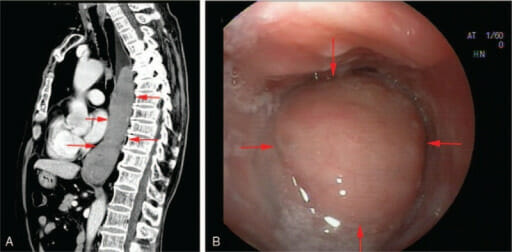
Mucosa-associated lymphoid tissue lymphoma of the esophagus

Linfoma del tejido linfoide asociado a la mucosa del esófago:
La tomografía computarizada (imagen A) y la endoscopia (imagen B) muestran una neoplasia del esófago medio e inferior.
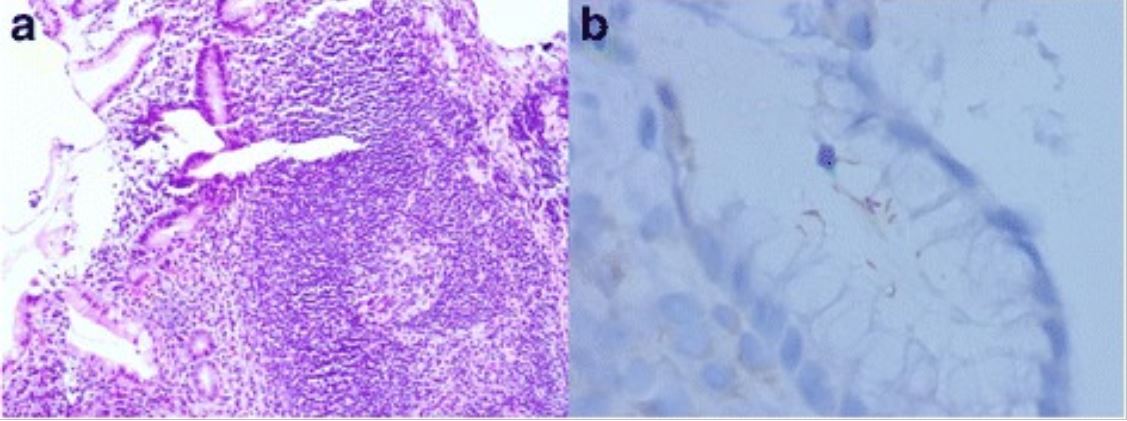
Imagen: “F1” por Medicine. Licencia: CC BY 4.0
Linfoma MALT gástrico asociado a H. pylori

Linfoma MALT gástrico asociado a H. pylori:
a: Folículo linfoide con un centro germinal reactivo y una zona marginal ligeramente expandida (H&E, aumento original, 100X)
b: La inmunotinción de H. pylori muestra bacterias intrafoveolares con una configuración curva, característica de H. pylori.
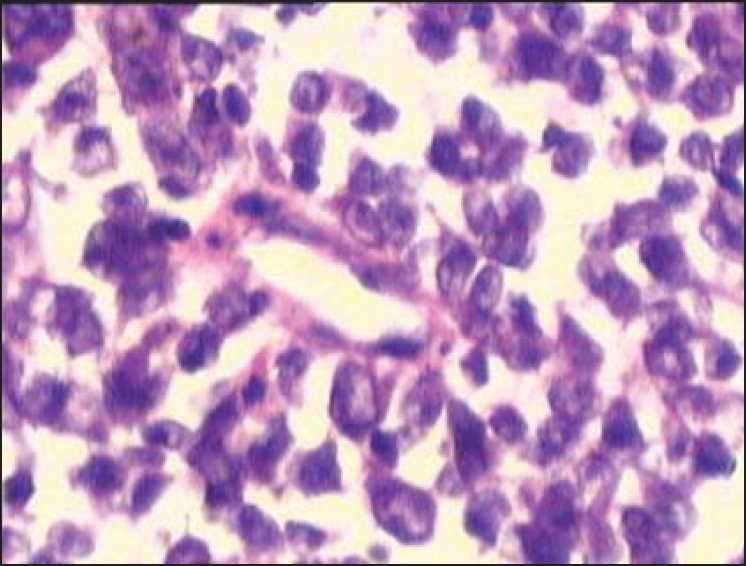
Imagen: “Gastric mucosa-associated lymphoid tissue lymphoma and Helicobacter pylori infection: a review of current diagnosis and management” por Hu Q, Zhang Y, Zhang X, Fu K. Licencia: CC BY 4.0
Linfoma MALT de colon

Linfoma MALT de colon:
Infiltración de células linfoides de aspecto maligno en la lámina propia que sugiere un linfoma de malta

Imagen: “Synchronous adenocarcinoma and mucosa-associated lymphoid tissue lymphoma of the colon” por Devi P, Pattanayak L, Samantaray S. Licencia: CC BY 2.0

Estadificación

  • Sistema de estadificación de Lugano (para la afectación gástrica):
    • Estadio I/II:
      • Lesión primaria única
      • Múltiples lesiones no contiguas confinadas al AL Amyloidosis tracto gastrointestinal que pueden tener afectación ganglionar
    • No se ha HA Hemolytic anemia (HA) is the term given to a large group of anemias that are caused by the premature destruction/hemolysis of circulating red blood cells (RBCs). Hemolysis can occur within (intravascular hemolysis) or outside the blood vessels (extravascular hemolysis). Hemolytic Anemia definido el estadio III
    • Estadio IV:
      • Afectación extraganglionar diseminada o
      • Afectación ganglionar supradiafragmática concomitante
  • Sistema de estadificación de Ann Arbor para el MALT MALT Colon, Cecum, and Appendix: Anatomy no gástrico:
    • Estadio 1: región de un solo ganglio linfático
    • Estadio 2: un lado del diafragma
    • Estadio 3: ambos lados del diafragma
    • Estadio 4: diseminada

Tratamiento y Pronóstico

Tratamiento

  • Linfoma MALT MALT Colon, Cecum, and Appendix: Anatomy gástrico:
    • H. pylori H. pylori A spiral bacterium active as a human gastric pathogen. It is a gram-negative, urease-positive, curved or slightly spiral organism initially isolated in 1982 from patients with lesions of gastritis or peptic ulcers in Western Australia. Helicobacter pylori was originally classified in the genus campylobacter, but RNA sequencing, cellular fatty acid profiles, growth patterns, and other taxonomic characteristics indicate that the micro-organism should be included in the genus Helicobacter. It has been officially transferred to Helicobacter gen. Helicobacter–positivo:
      • Terapia de erradicación de H. pylori H. pylori A spiral bacterium active as a human gastric pathogen. It is a gram-negative, urease-positive, curved or slightly spiral organism initially isolated in 1982 from patients with lesions of gastritis or peptic ulcers in Western Australia. Helicobacter pylori was originally classified in the genus campylobacter, but RNA sequencing, cellular fatty acid profiles, growth patterns, and other taxonomic characteristics indicate that the micro-organism should be included in the genus Helicobacter. It has been officially transferred to Helicobacter gen. Helicobacter
      • Seguimiento con endoscopias seriadas
      • Fracasos del tratamiento: tratar con radioterapia
      • Resección gástrica en EN Erythema nodosum is an immune-mediated panniculitis (inflammation of the subcutaneous fat) caused by a type IV (delayed-type) hypersensitivity reaction. It commonly manifests in young women as tender, erythematous nodules on the shins. Erythema Nodosum caso de perforación, hemorragia incontrolada u obstrucción
    • H. pylori H. pylori A spiral bacterium active as a human gastric pathogen. It is a gram-negative, urease-positive, curved or slightly spiral organism initially isolated in 1982 from patients with lesions of gastritis or peptic ulcers in Western Australia. Helicobacter pylori was originally classified in the genus campylobacter, but RNA sequencing, cellular fatty acid profiles, growth patterns, and other taxonomic characteristics indicate that the micro-organism should be included in the genus Helicobacter. It has been officially transferred to Helicobacter gen. Helicobacter–negativo:
      • Radioterapia
      • Inmunoterapia o quimioterapia para el fracaso de la radioterapia o el estadio IV de Lugano
  • Linfoma MALT MALT Colon, Cecum, and Appendix: Anatomy no gástrico: el tratamiento depende de la localización y el estadio de la enfermedad:
    • Radioterapia en EN Erythema nodosum is an immune-mediated panniculitis (inflammation of the subcutaneous fat) caused by a type IV (delayed-type) hypersensitivity reaction. It commonly manifests in young women as tender, erythematous nodules on the shins. Erythema Nodosum el sitio involucrado: opción primaria
    • Cirugía: con fines de diagnóstico o para tumores en EN Erythema nodosum is an immune-mediated panniculitis (inflammation of the subcutaneous fat) caused by a type IV (delayed-type) hypersensitivity reaction. It commonly manifests in young women as tender, erythematous nodules on the shins. Erythema Nodosum zonas no propicias para la radioterapia, como el pulmón
    • Rituximab Rituximab A murine-derived monoclonal antibody and antineoplastic agent that binds specifically to the cd20 antigen and is used in the treatment of leukemia; lymphoma and rheumatoid arthritis. Immunosuppressants si el paciente no puede recibir radioterapia en EN Erythema nodosum is an immune-mediated panniculitis (inflammation of the subcutaneous fat) caused by a type IV (delayed-type) hypersensitivity reaction. It commonly manifests in young women as tender, erythematous nodules on the shins. Erythema Nodosum el sitio involucrado o si la enfermedad está avanzada
  • Linfoma de células grandes coexistente ( en EN Erythema nodosum is an immune-mediated panniculitis (inflammation of the subcutaneous fat) caused by a type IV (delayed-type) hypersensitivity reaction. It commonly manifests in young women as tender, erythematous nodules on the shins. Erythema Nodosum cualquier sitio o estadio) tratado como linfoma difuso de células B grandes

Pronóstico

  • En EN Erythema nodosum is an immune-mediated panniculitis (inflammation of the subcutaneous fat) caused by a type IV (delayed-type) hypersensitivity reaction. It commonly manifests in young women as tender, erythematous nodules on the shins. Erythema Nodosum general, el pronóstico es relativamente bueno: supervivencia media > 10 años
  • El pronóstico es peor con el linfoma MALT MALT Colon, Cecum, and Appendix: Anatomy de mayor grado.
  • Índice pronóstico internacional del MALT MALT Colon, Cecum, and Appendix: Anatomy (MALT-IPI):
    • Sistema de puntuación de pronóstico para el linfoma MALT MALT Colon, Cecum, and Appendix: Anatomy
    • Identifica a los LOS Neisseria pacientes con enfermedad de alto riesgo con más probabilidades de progresar
    • Se identificaron 3 factores pronósticos adversos independientes:
      • Edad ≥ 70 años
      • Estadio III o IV
      • Nivel de LDH LDH Osteosarcoma en EN Erythema nodosum is an immune-mediated panniculitis (inflammation of the subcutaneous fat) caused by a type IV (delayed-type) hypersensitivity reaction. It commonly manifests in young women as tender, erythematous nodules on the shins. Erythema Nodosum suero superior al AL Amyloidosis límite superior de la normalidad
    • 3 grupos de riesgo:
      • Bajo riesgo (sin factores de riesgo): supervivencia global, 99%.
      • Riesgo intermedio (1 factor de riesgo): supervivencia global, 93%.
      • Alto riesgo (≥ 2 factores de riesgo): supervivencia global, 64%.

Diagnóstico Diferencial

  • Lesiones reactivas: tejido hiperplásico indoloro resultante de una respuesta de reparación: las lesiones reactivas se desarrollan en EN Erythema nodosum is an immune-mediated panniculitis (inflammation of the subcutaneous fat) caused by a type IV (delayed-type) hypersensitivity reaction. It commonly manifests in young women as tender, erythematous nodules on the shins. Erythema Nodosum respuesta a la inflamación crónica. Las lesiones reactivas suelen limitarse al AL Amyloidosis folículo. El linfoma MALT MALT Colon, Cecum, and Appendix: Anatomy suele distinguirse de las lesiones reactivas por la demostración de la restricción de la cadena ligera de la inmunoglobulina o los LOS Neisseria reordenamientos clonales de la IgH mediante técnicas moleculares. El tratamiento es muy variable Variable Variables represent information about something that can change. The design of the measurement scales, or of the methods for obtaining information, will determine the data gathered and the characteristics of that data. As a result, a variable can be qualitative or quantitative, and may be further classified into subgroups. Types of Variables y depende de la etiología y la localización.
  • Linfoma de la zona marginal nodal y esplénica: un linfoma nodal primario con características histológicas idénticas a las de los LOS Neisseria ganglios linfáticos afectados por el linfoma MALT MALT Colon, Cecum, and Appendix: Anatomy o el linfoma de la zona marginal esplénica, pero sin una afectación extraganglionar prominente: El diagnóstico de linfoma de la zona marginal esplénica es más probable cuando hay una afectación ganglionar generalizada, aunque haya un agrandamiento esplénico y/o una mínima enfermedad extraganglionar. El tratamiento se centra en EN Erythema nodosum is an immune-mediated panniculitis (inflammation of the subcutaneous fat) caused by a type IV (delayed-type) hypersensitivity reaction. It commonly manifests in young women as tender, erythematous nodules on the shins. Erythema Nodosum el alivio de los LOS Neisseria síntomas, la reversión de las citopenias y la mejora de la calidad de vida.
  • Otras neoplasias de células B:
    • Linfoma difuso de células B grandes: el subtipo más común de linfoma no Hodgkin con una presentación principalmente extranodal: El linfoma difuso de células B grandes es muy agresivo clínicamente y tiene un crecimiento rápido. Caracterizado por grandes grupos de células o láminas de células grandes, el linfoma difuso de células B grandes es citogenética, biológica y clínicamente diferente al AL Amyloidosis linfoma MALT MALT Colon, Cecum, and Appendix: Anatomy y tiene un pronóstico mucho peor. El tratamiento es con rituximab Rituximab A murine-derived monoclonal antibody and antineoplastic agent that binds specifically to the cd20 antigen and is used in the treatment of leukemia; lymphoma and rheumatoid arthritis. Immunosuppressants y/o quimioterapia.
    • Linfoma linfocítico pequeño: una variante de tumor Tumor Inflammation sólido de la más común leucemia linfocítica crónica: el linfoma linfocítico pequeño se asienta principalmente en EN Erythema nodosum is an immune-mediated panniculitis (inflammation of the subcutaneous fat) caused by a type IV (delayed-type) hypersensitivity reaction. It commonly manifests in young women as tender, erythematous nodules on the shins. Erythema Nodosum los LOS Neisseria ganglios, y la enfermedad extraganglionar se desarrolla solo al AL Amyloidosis final del curso de la enfermedad. Inmunofenotípicamente, el linfoma linfocítico pequeño coexpresa CD5 y CD23, mientras que los LOS Neisseria linfomas MALT MALT Colon, Cecum, and Appendix: Anatomy no lo hacen. El tratamiento es principalmente observación; no hay un algoritmo de tratamiento comúnmente acordado.
    • Linfoma de células del manto: es un linfoma no Hodgkin de células B maduras compuesto por linfocitos de tamaño pequeño a mediano que puede afectar al AL Amyloidosis tracto gastrointestinal: inmunofenotípicamente, el linfoma de células del manto expresa CD5 y ciclina D1 debido a la translocación t(11;14). El linfoma MALT MALT Colon, Cecum, and Appendix: Anatomy no expresa estos marcadores ni tiene esta translocación. El tratamiento es con quimioterapia combinada más inmunoterapia con trasplante autólogo de células hematopoyéticas.
    • Linfoma folicular: linfoma derivado de células B del centro germinal con folículos prominentes y/o reactivos que a veces están colonizados por células de la zona marginal o monocitoides: La presentación suele ser una adenopatía periférica indolora. El tratamiento es la observación, con tratamiento dirigido a aliviar los LOS Neisseria síntomas, incluyendo radioterapia y terapia de anticuerpos monoclonales CD20.

Referencias

  1. Freedman AS, Aster JC. (2020). Clinical manifestations, pathologic features, and diagnosis of extranodal marginal zone lymphoma of mucosa associated lymphoid tissue (MALT). UpToDate. Retrieved March 20, 2021, from https://www.uptodate.com/contents/clinical-manifestations-pathologic-features-and-diagnosis-of-extranodal-marginal-zone-lymphoma-of-mucosa-associated-lymphoid-tissue-malt
  2. Freedman AS, Friedberg JW, Ng AK. (2021). Treatment of extranodal marginal node lymphoma of mucosa associated lymphoid tissue (MALT). UpToDate. Retrieved March 20, 2021, from https://www.uptodate.com/contents/treatment-of-extranodal-marginal-zone-lymphoma-of-mucosa-associated-lymphoid-tissue-malt-lymphoma
  3. Kumar V, Abbas AK, Aster JC. (2015). Robbins & Cotran Pathologic Basis of Disease. Philadelphia: Elsevier Saunders.
  4. Novak U, et al. (2011). Genomic analysis of non-splenic marginal zone lymphomas (MZL) indicates similarities between nodal and extranodal MZL and supports their derivation from memory B-cells. Br J Haematol 155(3):362-365. https://pubmed.ncbi.nlm.nih.gov/21883140/
  5. Sagaert X, et al. (2007). The pathogenesis of MALT lymphomas: where do we stand? Leucemia 21(3):89-396. https://pubmed.ncbi.nlm.nih.gov/17230229/
  6. Zucca E, et al. (2020). Marginal zone lymphomas: ESMO Clinical Practice Guidelines for diagnosis, treatment and follow-up. Ann Oncol 31(1):17-29. https://pubmed.ncbi.nlm.nih.gov/31912792/

¡Crea tu cuenta gratis o inicia una sesión para seguir leyendo!

Regístrate ahora y obtén acceso gratuito a Lecturio con páginas de concepto, videos médicos y cuestionarios para tu educación médica.

User Reviews

Que tengas una sesión de estudio alegre y navideña 🎁 Ahorra 50% en todos los planes >>

Details