Domina Conceptos Médicos

Estudia para la escuela de medicina y tus examenes con Lecturio.

Linfocitosis

Los LOS Neisseria glóbulos blancos se desarrollan a partir de células madre en EN Erythema nodosum is an immune-mediated panniculitis (inflammation of the subcutaneous fat) caused by a type IV (delayed-type) hypersensitivity reaction. It commonly manifests in young women as tender, erythematous nodules on the shins. Erythema Nodosum la médula ósea y se denominan leucocitos cuando circulan en EN Erythema nodosum is an immune-mediated panniculitis (inflammation of the subcutaneous fat) caused by a type IV (delayed-type) hypersensitivity reaction. It commonly manifests in young women as tender, erythematous nodules on the shins. Erythema Nodosum el torrente sanguíneo. Los LOS Neisseria linfocitos son 1 de las 5 subclases de los LOS Neisseria leucocitos. La linfocitosis es un aumento en EN Erythema nodosum is an immune-mediated panniculitis (inflammation of the subcutaneous fat) caused by a type IV (delayed-type) hypersensitivity reaction. It commonly manifests in young women as tender, erythematous nodules on the shins. Erythema Nodosum el número o la proporción de la subclase de linfocitos de los LOS Neisseria leucocitos, a menudo como resultado de una respuesta inmunitaria a la infección (conocida como linfocitosis reactiva). Las presentaciones comunes incluyen fiebre, linfadenopatía y síntomas de las vías respiratorias superiores. Generalmente transitoria, la linfocitosis se resuelve por sí sola en EN Erythema nodosum is an immune-mediated panniculitis (inflammation of the subcutaneous fat) caused by a type IV (delayed-type) hypersensitivity reaction. It commonly manifests in young women as tender, erythematous nodules on the shins. Erythema Nodosum la mayoría de los LOS Neisseria casos después de la resolución de la infección. En EN Erythema nodosum is an immune-mediated panniculitis (inflammation of the subcutaneous fat) caused by a type IV (delayed-type) hypersensitivity reaction. It commonly manifests in young women as tender, erythematous nodules on the shins. Erythema Nodosum otras situaciones, puede indicar un trastorno linfoproliferativo (conocido como linfocitosis clonal). El diagnóstico se basa en EN Erythema nodosum is an immune-mediated panniculitis (inflammation of the subcutaneous fat) caused by a type IV (delayed-type) hypersensitivity reaction. It commonly manifests in young women as tender, erythematous nodules on the shins. Erythema Nodosum frotis de sangre periférica, citometría de flujo y, potencialmente, una biopsia de médula ósea. El tratamiento depende de la causa subyacente.

Last updated: Dec 15, 2025

Editorial responsibility: Stanley Oiseth, Lindsay Jones, Evelin Maza

Descripción General

Definición

Linfocitosis se refiere a niveles elevados de linfocitos. Este incremento resulta con frecuencia, de una mayor producción.

  • Linfocitos:
    • Leucocitos agranulocíticos
    • Células inmunocompetentes circulantes que pueden reconocer antígenos en EN Erythema nodosum is an immune-mediated panniculitis (inflammation of the subcutaneous fat) caused by a type IV (delayed-type) hypersensitivity reaction. It commonly manifests in young women as tender, erythematous nodules on the shins. Erythema Nodosum la sangre
    • Salen del torrente sanguíneo a través de ganglios linfáticos, luego puede volver a entrar en EN Erythema nodosum is an immune-mediated panniculitis (inflammation of the subcutaneous fat) caused by a type IV (delayed-type) hypersensitivity reaction. It commonly manifests in young women as tender, erythematous nodules on the shins. Erythema Nodosum la sangre
    • Varían en EN Erythema nodosum is an immune-mediated panniculitis (inflammation of the subcutaneous fat) caused by a type IV (delayed-type) hypersensitivity reaction. It commonly manifests in young women as tender, erythematous nodules on the shins. Erythema Nodosum tamaño desde pequeño (6–8 µm) hasta grande (18 µm)
    • Los LOS Neisseria linfocitos son 1 de las 5 subclases de leucocitos:
      • Neutrófilos (aproximadamente 56%)
      • Linfocitos (aproximadamente 34%)
      • Monocitos (aproximadamente 4%)
      • Eosinófilos (aproximadamente 3%)
      • Basófilos (aproximadamente 0,3%)
  • La linfocitosis corresponde a un recuento absoluto de linfocitos:
    • > 4 000 linfocitos/µL para adultos
    • > 8 000 linfocitos/µL para niños <12 años
    • Ecuación: recuento absoluto de linfocitos = conteo de leucocitos (células/µL) x (% linfocitos ÷ 100)
    • Recuento absoluto de linfocitos es usado para la cuantificación de linfocitos en EN Erythema nodosum is an immune-mediated panniculitis (inflammation of the subcutaneous fat) caused by a type IV (delayed-type) hypersensitivity reaction. It commonly manifests in young women as tender, erythematous nodules on the shins. Erythema Nodosum sangre periférica ( en EN Erythema nodosum is an immune-mediated panniculitis (inflammation of the subcutaneous fat) caused by a type IV (delayed-type) hypersensitivity reaction. It commonly manifests in young women as tender, erythematous nodules on the shins. Erythema Nodosum lugar del porcentaje de linfocitos en EN Erythema nodosum is an immune-mediated panniculitis (inflammation of the subcutaneous fat) caused by a type IV (delayed-type) hypersensitivity reaction. It commonly manifests in young women as tender, erythematous nodules on the shins. Erythema Nodosum la cuenta diferencial de leucocitos)
    • Valores normales de recuento absoluto de linfocitos pueden variar en EN Erythema nodosum is an immune-mediated panniculitis (inflammation of the subcutaneous fat) caused by a type IV (delayed-type) hypersensitivity reaction. It commonly manifests in young women as tender, erythematous nodules on the shins. Erythema Nodosum diferentes laboratorios
  • Importante: el término leucocitosis se refiere a niveles elevados de leucocitos en EN Erythema nodosum is an immune-mediated panniculitis (inflammation of the subcutaneous fat) caused by a type IV (delayed-type) hypersensitivity reaction. It commonly manifests in young women as tender, erythematous nodules on the shins. Erythema Nodosum general.

Subconjuntos de linfocitos

  • Células T:
    • Representan 60% – 80% de linfocitos
    • Responsables de la inmunidad mediada por células, que se centra en EN Erythema nodosum is an immune-mediated panniculitis (inflammation of the subcutaneous fat) caused by a type IV (delayed-type) hypersensitivity reaction. It commonly manifests in young women as tender, erythematous nodules on the shins. Erythema Nodosum la destrucción activa de células infectadas o cancerosas
    • Tipos de linfocitos T:
      • Células T citotóxicas: se unen directamente a las células que contienen antígenos y las destruyen
      • Células T colaboladoras (CD4+): estimulan la producción de anticuerpos por parte de las células B y producen sustancias que activan otras células T
      • Células T reguladoras (CD4+, CD25+): suprimen la respuesta de las células B y T a los LOS Neisseria antígenos
  • Células B:
    • 10%–20% de linfocitos
    • Responsable de la inmunidad humoral (producción de anticuerpos)
      • Se centran en EN Erythema nodosum is an immune-mediated panniculitis (inflammation of the subcutaneous fat) caused by a type IV (delayed-type) hypersensitivity reaction. It commonly manifests in young women as tender, erythematous nodules on the shins. Erythema Nodosum la identificación de antígenos antes de la infección celular.
      • Crean anticuerpos contra antígenos.
  • Células asesinas naturales:
    • 5%–10% de linfocitos
    • Responsables de la vigilancia inmunológica: lisan células huésped alteradas por infección o malignidad
  • Células de memoria:
    • Linfocitos B o T que reconocen antígenos previamente encontrados
    • Dirigen una respuesta inmune más rápidamente en EN Erythema nodosum is an immune-mediated panniculitis (inflammation of the subcutaneous fat) caused by a type IV (delayed-type) hypersensitivity reaction. It commonly manifests in young women as tender, erythematous nodules on the shins. Erythema Nodosum exposiciones posteriores
    • Almacenados en EN Erythema nodosum is an immune-mediated panniculitis (inflammation of the subcutaneous fat) caused by a type IV (delayed-type) hypersensitivity reaction. It commonly manifests in young women as tender, erythematous nodules on the shins. Erythema Nodosum ganglios linfáticos y bazo
    • Pueden proporcionar inmunidad de por vida contra ciertos patógenos (e.g., sarampión y paperas)

Epidemiología

  • La mayoría de las veces se debe a un proceso infeccioso viral

Etiología y Fisiopatología

La linfocitosis puede resultar de una mayor producción de linfocitos (lo más común) o de varios mecanismos adicionales.

Aumento de la producción de linfocitos

La producción de linfocitos puede aumentar debido a:

  • Respuesta a un proceso infeccioso:
    • Viral (más común)
    • Bacteriano
    • Parasitario
  • Trastornos linfoproliferativos:
    • Linfocitosis monoclonal de células B
    • Leucemia linfocítica crónica
    • Leucemia de linfocitos granulares grandes
    • Linfoma no-Hodgkin
    • Leucemia linfocítica aguda
    • Linfocitosis policlonal persistente de células B
  • Reacciones de hipersensibilidad a medicamentos, más comúnmente a:
    • Fenitoína
    • Alopurinol
    • Carbamazepina
    • Vancomicina
    • Medicamentos sulfa
  • Inflamación crónica, por ejemplo:
    • Artritis
    • Trastornos autoinmunes
  • Otras causas:
    • Hipertiroidismo
    • Estrés médico severo:
      • Trauma
      • Emergencias cardiacas
      • Estado epiléptico
Tabla: Procesos infecciosos asociados a linfocitosis
Tipo de infección Microorganismos/afecciones
Viral
  • Miembros de la familia del herpesvirus:
    • Virus Virus Viruses are infectious, obligate intracellular parasites composed of a nucleic acid core surrounded by a protein capsid. Viruses can be either naked (non-enveloped) or enveloped. The classification of viruses is complex and based on many factors, including type and structure of the nucleoid and capsid, the presence of an envelope, the replication cycle, and the host range. Virology del Epstein-Barr
    • CMV
    • Varicela
    • Otros
  • VIH, infecciones agudas
  • Sarampión
  • Paperas
  • Rubéola
  • Influenza Influenza Influenza viruses are members of the Orthomyxoviridae family and the causative organisms of influenza, a highly contagious febrile respiratory disease. There are 3 primary influenza viruses (A, B, and C) and various subtypes, which are classified based on their virulent surface antigens, hemagglutinin (HA) and neuraminidase (NA). Influenza typically presents with a fever, myalgia, headache, and symptoms of an upper respiratory infection. Influenza Viruses/Influenza
  • Hepatitis viral
  • Adenovirus Adenovirus Adenovirus (member of the family Adenoviridae) is a nonenveloped, double-stranded DNA virus. Adenovirus is transmitted in a variety of ways, and it can have various presentations based on the site of entry. Presentation can include febrile pharyngitis, conjunctivitis, acute respiratory disease, atypical pneumonia, and gastroenteritis. Adenovirus
  • Virus Virus Viruses are infectious, obligate intracellular parasites composed of a nucleic acid core surrounded by a protein capsid. Viruses can be either naked (non-enveloped) or enveloped. The classification of viruses is complex and based on many factors, including type and structure of the nucleoid and capsid, the presence of an envelope, the replication cycle, and the host range. Virology Coxsackie B
  • Enterovirus Enterovirus A genus of the family picornaviridae whose members preferentially inhabit the intestinal tract of a variety of hosts. The genus contains many species. Newly described members of human enteroviruses are assigned continuous numbers with the species designated ‘human enterovirus’. Coxsackievirus, incluido el poliovirus Poliovirus Poliomyelitis is an infectious disease caused by the poliovirus. This virus is a member of the Picornaviridae family. It is a small, single-stranded, positive-sense RNA virus without a lipid envelope. Transmission occurs through the fecal-oral route and, occasionally, through respiratory aerosols. Poliovirus/Poliomyelitis
Bacteriana
  • Tosferina
  • Tuberculosis Tuberculosis Tuberculosis (TB) is an infectious disease caused by Mycobacterium tuberculosis complex bacteria. The bacteria usually attack the lungs but can also damage other parts of the body. Approximately 30% of people around the world are infected with this pathogen, with the majority harboring a latent infection. Tuberculosis spreads through the air when a person with active pulmonary infection coughs or sneezes. Tuberculosis
  • Brucelosis
  • Sífilis
  • Enfermedad por arañazo de gato ( Bartonella henselae Bartonella henselae A species of gram-negative bacteria that is the etiologic agent of bacillary angiomatosis. This organism can also be a cause of cat-scratch disease in immunocompetent patients. Bartonella)
Parasitaria
  • Toxoplasmosis Toxoplasmosis Toxoplasmosis is an infectious disease caused by Toxoplasma gondii, an obligate intracellular protozoan parasite. Felines are the definitive host, but transmission to humans can occur through contact with cat feces or the consumption of contaminated foods. The clinical presentation and complications depend on the host’s immune status. Toxoplasma/Toxoplasmosis
  • Malaria Malaria Malaria is an infectious parasitic disease affecting humans and other animals. Most commonly transmitted via the bite of a female Anopheles mosquito infected with microorganisms of the Plasmodium genus. Patients present with fever, chills, myalgia, headache, and diaphoresis. Plasmodium/Malaria
  • Babesiosis Babesiosis Babesiosis is an infection caused by a protozoa belonging to the genus, Babesia. The most common Babesia seen in the United States is B. microti, which is transmitted by the Ixodes tick. The protozoa thrive and replicate within host erythrocytes. Lysis of erythrocytes and the body’s immune response result in clinical symptoms. Babesia/Babesiosis

Otros mecanismos de la linfocitosis

  • Redistribución de linfocitos de la médula ósea o de órganos linfoides secundarios: visto después de la esplenectomía
  • Disminución de la extravasación de linfocitos de la sangre periférica a los LOS Neisseria órganos linfoides: se observa en EN Erythema nodosum is an immune-mediated panniculitis (inflammation of the subcutaneous fat) caused by a type IV (delayed-type) hypersensitivity reaction. It commonly manifests in young women as tender, erythematous nodules on the shins. Erythema Nodosum infecciones por tosferina
  • Disminución de la muerte celular por alteración de la apoptosis Apoptosis A regulated cell death mechanism characterized by distinctive morphologic changes in the nucleus and cytoplasm, including the endonucleolytic cleavage of genomic DNA, at regularly spaced, internucleosomal sites, I.e., DNA fragmentation. It is genetically-programmed and serves as a balance to mitosis in regulating the size of animal tissues and in mediating pathologic processes associated with tumor growth. Ischemic Cell Damage: se observa en EN Erythema nodosum is an immune-mediated panniculitis (inflammation of the subcutaneous fat) caused by a type IV (delayed-type) hypersensitivity reaction. It commonly manifests in young women as tender, erythematous nodules on the shins. Erythema Nodosum algunos trastornos linfoproliferativos
  • Mecanismos poco claros: timoma maligno

Fisiopatología

La fisiopatología depende de la etiología subyacente. El aumento de la producción de linfocitos puede deberse a un proceso clonal o un proceso reactivo.

  • Linfocitosis clonal:
    • Visto en EN Erythema nodosum is an immune-mediated panniculitis (inflammation of the subcutaneous fat) caused by a type IV (delayed-type) hypersensitivity reaction. It commonly manifests in young women as tender, erythematous nodules on the shins. Erythema Nodosum pacientes con un trastorno linfoproliferativo
    • Debido a la proliferación anormal de linfocitos, generalmente debido a mutaciones genéticas
    • Implica la expansión de un solo clon (monoclonal) o células relacionadas
  • Linfocitosis reactiva:
    • Visto en EN Erythema nodosum is an immune-mediated panniculitis (inflammation of the subcutaneous fat) caused by a type IV (delayed-type) hypersensitivity reaction. It commonly manifests in young women as tender, erythematous nodules on the shins. Erythema Nodosum pacientes sin un trastorno linfoproliferativo
    • Debido a la proliferación de linfocitos “normales” en EN Erythema nodosum is an immune-mediated panniculitis (inflammation of the subcutaneous fat) caused by a type IV (delayed-type) hypersensitivity reaction. It commonly manifests in young women as tender, erythematous nodules on the shins. Erythema Nodosum respuesta a una infección o inflamación (i.e., la linfocitosis es parte de una respuesta inmunitaria)
    • Para obtener más detalles sobre la respuesta inmunitaria, consultar:
      • Inmunidad innata
      • Inmunidad adaptativa
      • Inmunidad celular
      • Inmunidad humoral
    • La expansión policlonal se observa en EN Erythema nodosum is an immune-mediated panniculitis (inflammation of the subcutaneous fat) caused by a type IV (delayed-type) hypersensitivity reaction. It commonly manifests in young women as tender, erythematous nodules on the shins. Erythema Nodosum 1 o más subconjuntos de linfocitos (e.g., células T, células B o células asesinas naturales).
    • La linfocitosis debe normalizarse < 2 meses después de la resolución de la afección médica aguda que desencadenó la linfocitosis reactiva.

Presentación Clínica

La presentación clínica depende de la causa principal (es decir, infecciones o trastornos linfoproliferativos). La linfocitosis puede ser un hallazgo incidental asintomático.

Presentaciones asociadas a infección

Los LOS Neisseria signos y síntomas pueden incluir:

  • Fiebre
  • Linfadenopatía
  • Hepatoesplenomegalia
  • Síntomas respiratorios superiores:
    • Dolor Dolor Inflammation de garganta
    • Congestión nasal/rinorrea
    • Tos TOS Thoracic outlet syndrome (TOS) is a broad term used for a spectrum of syndromes related to the general region of the thoracic outlet, which involves the compression or irritation of elements of the brachial plexus, subclavian artery, or subclavian vein. Thoracic Outlet Syndrome
  • Erupciones
  • Fatiga
  • Artralgias y mialgias

Presentaciones asociadas a trastornos linfoproliferativos

Los LOS Neisseria signos y síntomas pueden incluir:

  • Fiebre leve
  • Sudoración nocturna
  • Pérdida de peso
  • Adenopatías difusas o localizadas
  • Esplenomegalia
  • Dificultad para respirar
  • Prurito
  • Signos/síntomas relacionados con la infiltración de la médula ósea:
    • Anemia Anemia Anemia is a condition in which individuals have low Hb levels, which can arise from various causes. Anemia is accompanied by a reduced number of RBCs and may manifest with fatigue, shortness of breath, pallor, and weakness. Subtypes are classified by the size of RBCs, chronicity, and etiology. Anemia: Overview and Types: palidez, fatiga, disnea
    • Trombocitopenia: moretones o sangrado fácil, púrpura

Diagnóstico y Tratamiento

El estudio inicial para la linfocitosis implica una historia clínica y un examen físico completo, un hemograma y un frotis de sangre periférica. Si el diagnóstico aún es incierto, o si los LOS Neisseria hallazgos son preocupantes para malignidad, se debe establecer la clonalidad mediante citometría de flujo.

Factores históricos a considerar

  • Antecedentes o evidencia clínica de infección y/o inflamación, por ejemplo:
    • Fiebre y exantema de nueva aparición
    • Síntomas de infección de las vías respiratorias superiores
    • Antecedente de artritis
    • Trauma reciente
  • Estabilidad clínica/agudeza de la enfermedad
  • Inicio rápido
  • Asplenia Asplenia Asplenia is the absence of splenic tissue or function and can stem from several factors ranging from congenital to iatrogenic. There is a distinction between anatomic asplenia, which is due to the surgical removal of the spleen, and functional asplenia, which is due to a condition that leads to splenic atrophy, infarct, congestion, or infiltrative disease. Asplenia quirúrgica o funcional
  • Medicamentos

Hallazgos en EN Erythema nodosum is an immune-mediated panniculitis (inflammation of the subcutaneous fat) caused by a type IV (delayed-type) hypersensitivity reaction. It commonly manifests in young women as tender, erythematous nodules on the shins. Erythema Nodosum el hemograma

Los LOS Neisseria hallazgos en EN Erythema nodosum is an immune-mediated panniculitis (inflammation of the subcutaneous fat) caused by a type IV (delayed-type) hypersensitivity reaction. It commonly manifests in young women as tender, erythematous nodules on the shins. Erythema Nodosum el hemograma asociados con la linfocitosis incluyen:

  • Cambios en EN Erythema nodosum is an immune-mediated panniculitis (inflammation of the subcutaneous fat) caused by a type IV (delayed-type) hypersensitivity reaction. It commonly manifests in young women as tender, erythematous nodules on the shins. Erythema Nodosum hemogramas anteriores
  • ↑ Eosinófilos o basófilos, que pueden indicar:
    • Infección y/o inflamación
    • Condiciones alérgicas
    • Hipersensibilidades a medicamentos
  • ↑ Neutrófilos y/o monocitos, que pueden indicar:
    • Infecciones y/o inflamaciones
    • Estrés médico severo
    • Asplenia Asplenia Asplenia is the absence of splenic tissue or function and can stem from several factors ranging from congenital to iatrogenic. There is a distinction between anatomic asplenia, which is due to the surgical removal of the spleen, and functional asplenia, which is due to a condition that leads to splenic atrophy, infarct, congestion, or infiltrative disease. Asplenia
  • Anemia Anemia Anemia is a condition in which individuals have low Hb levels, which can arise from various causes. Anemia is accompanied by a reduced number of RBCs and may manifest with fatigue, shortness of breath, pallor, and weakness. Subtypes are classified by the size of RBCs, chronicity, and etiology. Anemia: Overview and Types, que puede indicar:
    • Infiltración de médula ósea
    • Anemia Anemia Anemia is a condition in which individuals have low Hb levels, which can arise from various causes. Anemia is accompanied by a reduced number of RBCs and may manifest with fatigue, shortness of breath, pallor, and weakness. Subtypes are classified by the size of RBCs, chronicity, and etiology. Anemia: Overview and Types de enfermedad crónica asociada con afecciones inflamatorias crónicas o infecciones
    • Anemia Anemia Anemia is a condition in which individuals have low Hb levels, which can arise from various causes. Anemia is accompanied by a reduced number of RBCs and may manifest with fatigue, shortness of breath, pallor, and weakness. Subtypes are classified by the size of RBCs, chronicity, and etiology. Anemia: Overview and Types hemolítica asociada con leucemia linfocítica crónica o leucemia de linfocitos grandes granulares
  • Las anomalías hematológicas graves o múltiples (e.g., recuento absoluto de linfocitos > 50 000 células/µL) requieren una evaluación más urgente.

Frotis de sangre periférica

El frotis de sangre periférica para la morfología de los LOS Neisseria linfocitos puede mostrar:
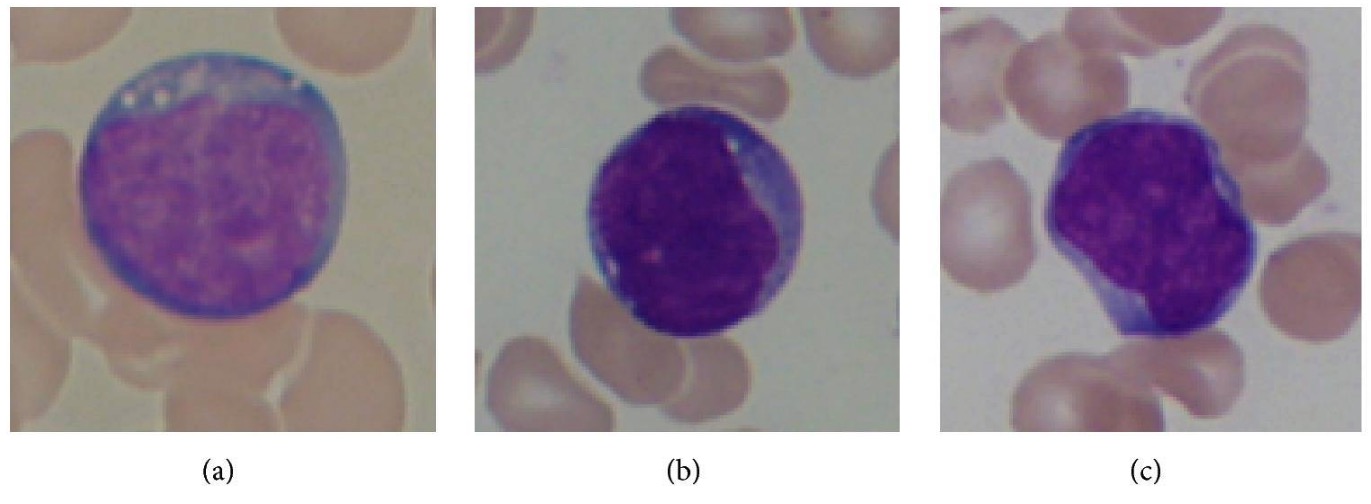
  • Linfocitos atípicos (también conocidos como células de Downey):
    • Características: nucleolos más prominentes y citoplasma más abundante
    • Visto en EN Erythema nodosum is an immune-mediated panniculitis (inflammation of the subcutaneous fat) caused by a type IV (delayed-type) hypersensitivity reaction. It commonly manifests in young women as tender, erythematous nodules on the shins. Erythema Nodosum mononucleosis Mononucleosis Infectious mononucleosis (IM), also known as “the kissing disease,” is a highly contagious viral infection caused by the Epstein-Barr virus. Its common name is derived from its main method of transmission: the spread of infected saliva via kissing. Clinical manifestations of IM include fever, tonsillar pharyngitis, and lymphadenopathy. Mononucleosis infecciosa por VEB o CMV, toxoplasmosis Toxoplasmosis Toxoplasmosis is an infectious disease caused by Toxoplasma gondii, an obligate intracellular protozoan parasite. Felines are the definitive host, but transmission to humans can occur through contact with cat feces or the consumption of contaminated foods. The clinical presentation and complications depend on the host’s immune status. Toxoplasma/Toxoplasmosis y hepatitis viral
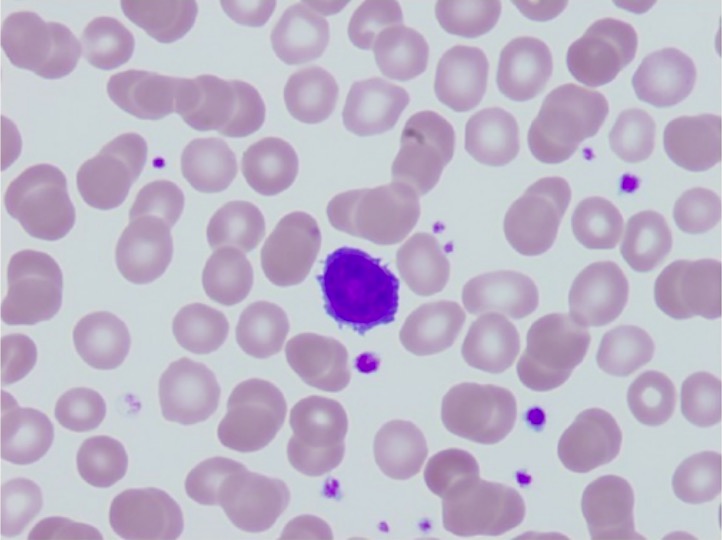
  • Linfocitos con proyecciones similares a filamentos → vistos en EN Erythema nodosum is an immune-mediated panniculitis (inflammation of the subcutaneous fat) caused by a type IV (delayed-type) hypersensitivity reaction. It commonly manifests in young women as tender, erythematous nodules on the shins. Erythema Nodosum leucemia de células pilosas
  • Linfocitos con gránulos azurofílicos → vistos en EN Erythema nodosum is an immune-mediated panniculitis (inflammation of the subcutaneous fat) caused by a type IV (delayed-type) hypersensitivity reaction. It commonly manifests in young women as tender, erythematous nodules on the shins. Erythema Nodosum la leucemia de linfocitos grandes granulares
  • Linfoblastos → vistos en EN Erythema nodosum is an immune-mediated panniculitis (inflammation of the subcutaneous fat) caused by a type IV (delayed-type) hypersensitivity reaction. It commonly manifests in young women as tender, erythematous nodules on the shins. Erythema Nodosum leucemia linfocítica aguda
  • Células difuminadas y linfoblastos → vistos en EN Erythema nodosum is an immune-mediated panniculitis (inflammation of the subcutaneous fat) caused by a type IV (delayed-type) hypersensitivity reaction. It commonly manifests in young women as tender, erythematous nodules on the shins. Erythema Nodosum leucemia linfocítica crónica
Frotis de sangre periférica con linfocitos pequeños ocasionales

Frotis de sangre periférica que muestra un linfocito con proyecciones citoplásmicas similares a filamentos (conocidas como células pilosas”) en la leucemia de células pilosas

Imagen: Peripheral blood smear por Department of Pathology and Laboratory Medicine and Department of Hematology-Oncology, Tufts Medical Center, Tufts University Medical School, Washington Street 800, Boston, MA 02111, USA. Licencia: CC BY 3.0
Citometría de flujo

  • Determina la clonalidad y el inmunofenotipo de una linfocitosis.
  • Importante en EN Erythema nodosum is an immune-mediated panniculitis (inflammation of the subcutaneous fat) caused by a type IV (delayed-type) hypersensitivity reaction. It commonly manifests in young women as tender, erythematous nodules on the shins. Erythema Nodosum el diagnóstico de malignidad: Toda linfocitosis maligna es clonal (aunque no toda la linfocitosis clonal es maligna).
  • Indicaciones:
    • Sospecha de malignidad (e.g., linfoblastos en EN Erythema nodosum is an immune-mediated panniculitis (inflammation of the subcutaneous fat) caused by a type IV (delayed-type) hypersensitivity reaction. It commonly manifests in young women as tender, erythematous nodules on the shins. Erythema Nodosum frotis periférico)
    • Recuento absoluto de linfocitos > 30 000 células/µL sin una causa conocida
    • Linfadenopatía
    • Hepatoesplenomegalia
    • Citopenias

Exámenes adicionales

Es posible que se requieran pruebas adicionales según el diagnóstico provisional:

  • Serologías virales
  • Biopsia de médula ósea
  • Imagenología
  • Las pruebas especializadas para la clonalidad incluyen:
    • Citometría de flujo (prueba de primera línea)
    • Pruebas moleculares y genéticas (e.g., PCR PCR Polymerase chain reaction (PCR) is a technique that amplifies DNA fragments exponentially for analysis. The process is highly specific, allowing for the targeting of specific genomic sequences, even with minuscule sample amounts. The PCR cycles multiple times through 3 phases: denaturation of the template DNA, annealing of a specific primer to the individual DNA strands, and synthesis/elongation of new DNA molecules. Polymerase Chain Reaction (PCR) y secuenciación de ADN)
    • Análisis de cromosomas

Linfocitosis persistente

Si la linfocitosis persiste durante ≥ 3 meses y la causa no está clara, se debe completar un estudio adicional. Este trabajo debe incluir:

  • Hemograma en EN Erythema nodosum is an immune-mediated panniculitis (inflammation of the subcutaneous fat) caused by a type IV (delayed-type) hypersensitivity reaction. It commonly manifests in young women as tender, erythematous nodules on the shins. Erythema Nodosum serie con diferencial
  • Pruebas químicas (para evaluar la función hepática y renal)
  • Velocidad de sedimentación globular ( ESR ESR Soft Tissue Abscess, por sus siglas en EN Erythema nodosum is an immune-mediated panniculitis (inflammation of the subcutaneous fat) caused by a type IV (delayed-type) hypersensitivity reaction. It commonly manifests in young women as tender, erythematous nodules on the shins. Erythema Nodosum inglés) y PCR PCR Polymerase chain reaction (PCR) is a technique that amplifies DNA fragments exponentially for analysis. The process is highly specific, allowing for the targeting of specific genomic sequences, even with minuscule sample amounts. The PCR cycles multiple times through 3 phases: denaturation of the template DNA, annealing of a specific primer to the individual DNA strands, and synthesis/elongation of new DNA molecules. Polymerase Chain Reaction (PCR)
  • Frotis de sangre periférica (si aún no se ha HA Hemolytic anemia (HA) is the term given to a large group of anemias that are caused by the premature destruction/hemolysis of circulating red blood cells (RBCs). Hemolysis can occur within (intravascular hemolysis) or outside the blood vessels (extravascular hemolysis). Hemolytic Anemia hecho)
  • Citometría de flujo de sangre periférica (si aún no se ha HA Hemolytic anemia (HA) is the term given to a large group of anemias that are caused by the premature destruction/hemolysis of circulating red blood cells (RBCs). Hemolysis can occur within (intravascular hemolysis) or outside the blood vessels (extravascular hemolysis). Hemolytic Anemia hecho)

Tratamiento

El tratamiento de la linfocitosis está relacionado con la etiología subyacente.

  • Etiologías infecciosas:
    • Por lo general, transitoria y asintomática: en EN Erythema nodosum is an immune-mediated panniculitis (inflammation of the subcutaneous fat) caused by a type IV (delayed-type) hypersensitivity reaction. It commonly manifests in young women as tender, erythematous nodules on the shins. Erythema Nodosum la mayoría de los LOS Neisseria casos, la linfocitosis se resuelve por sí sola después de la resolución de la infección.
    • Observación y cuidado de soporte
    • Antibióticos normalmente indicados para infecciones bacterianas
  • Trastornos linfoproliferativos:
    • Tratamiento por un especialista en EN Erythema nodosum is an immune-mediated panniculitis (inflammation of the subcutaneous fat) caused by a type IV (delayed-type) hypersensitivity reaction. It commonly manifests in young women as tender, erythematous nodules on the shins. Erythema Nodosum hemato-oncología
    • El tratamiento puede implicar:
      • Quimioterapia
      • Inmunoterapia
      • Radioterapia
      • Trasplante de médula ósea

Diagnóstico Diferencial

  • Causas infecciosas (ver tabla bajo “Etiología y fisiopatología”)
  • Leucemia linfocítica aguda: cáncer de la sangre y de la médula ósea como resultado de una proliferación anormal de linfocitos. Existen > 10 subtipos de leucemia linfocítica aguda. Leucemia linfocítica aguda es rara, con < 6 000 adultos y niños diagnosticados en EN Erythema nodosum is an immune-mediated panniculitis (inflammation of the subcutaneous fat) caused by a type IV (delayed-type) hypersensitivity reaction. It commonly manifests in young women as tender, erythematous nodules on the shins. Erythema Nodosum los LOS Neisseria Estados Unidos cada año, aunque la leucemia linfocítica aguda es el cáncer infantil más común.
  • Leucemia linfocítica crónica: leucemia más común en EN Erythema nodosum is an immune-mediated panniculitis (inflammation of the subcutaneous fat) caused by a type IV (delayed-type) hypersensitivity reaction. It commonly manifests in young women as tender, erythematous nodules on the shins. Erythema Nodosum adultos. La leucemia linfocítica crónica es una proliferación de células B monoclonales que infiltra la médula ósea y/o los LOS Neisseria ganglios linfáticos. Las células B se detienen antes de la maduración y muchos pacientes tienen hipogammaglobulinemia que provoca infecciones recurrentes. La leucemia linfocítica crónica se encuentra principalmente en EN Erythema nodosum is an immune-mediated panniculitis (inflammation of the subcutaneous fat) caused by a type IV (delayed-type) hypersensitivity reaction. It commonly manifests in young women as tender, erythematous nodules on the shins. Erythema Nodosum análisis de sangre incidentales que muestran linfocitosis, aunque los LOS Neisseria pacientes también pueden presentar linfadenopatía, hepatoesplenomegalia o manifestaciones cutáneas. Los LOS Neisseria frotis de sangre periférica muestran células manchadas.
  • Linfocitosis monoclonal de células B: afección caracterizada por elevación de células B monoclonales que persiste ≥3 meses. Los LOS Neisseria linfocitos B monoclonales son fenotípicamente similares a los LOS Neisseria de la leucemia linfocítica crónica (aunque se encuentran en EN Erythema nodosum is an immune-mediated panniculitis (inflammation of the subcutaneous fat) caused by a type IV (delayed-type) hypersensitivity reaction. It commonly manifests in young women as tender, erythematous nodules on the shins. Erythema Nodosum niveles por debajo del umbral de la leucemia linfocítica crónica), en EN Erythema nodosum is an immune-mediated panniculitis (inflammation of the subcutaneous fat) caused by a type IV (delayed-type) hypersensitivity reaction. It commonly manifests in young women as tender, erythematous nodules on the shins. Erythema Nodosum ausencia de otras características típicas de los LOS Neisseria trastornos linfoproliferativos (e.g., esplenomegalia, linfadenopatía u otras citopenias). Linfocitosis monoclonal de células B puede progresar a leucemia linfocítica crónica.
  • Linfocitosis policlonal congénita de células B: raro trastorno congénito de los LOS Neisseria niños que se presenta en EN Erythema nodosum is an immune-mediated panniculitis (inflammation of the subcutaneous fat) caused by a type IV (delayed-type) hypersensitivity reaction. It commonly manifests in young women as tender, erythematous nodules on the shins. Erythema Nodosum la infancia con linfocitosis significativa y esplenomegalia debido a la expansión de células B policlonales. La linfocitosis puede volverse indistinguible de la leucemia linfocítica crónica más adelante en EN Erythema nodosum is an immune-mediated panniculitis (inflammation of the subcutaneous fat) caused by a type IV (delayed-type) hypersensitivity reaction. It commonly manifests in young women as tender, erythematous nodules on the shins. Erythema Nodosum la vida.
  • Linfocitosis policlonal persistente de células B: síndrome raro caracterizado por expansión policlonal de células B, esplenomegalia y/o linfadenopatía. Este trastorno generalmente se diagnostica en EN Erythema nodosum is an immune-mediated panniculitis (inflammation of the subcutaneous fat) caused by a type IV (delayed-type) hypersensitivity reaction. It commonly manifests in young women as tender, erythematous nodules on the shins. Erythema Nodosum mujeres jóvenes y de mediana edad que fuman cigarrillos. La patogenia es desconocida.
  • Leucemia de linfocitos grandes granulares: linfocitosis atípica relativamente rara caracterizada por linfocitos grandes con núcleos ligeramente excéntricos y abundante citoplasma azul pálido que contiene muchos gránulos azurofílicos. Fenotípicamente, estos son linfocitos clonales. Estos pacientes suelen presentarse en EN Erythema nodosum is an immune-mediated panniculitis (inflammation of the subcutaneous fat) caused by a type IV (delayed-type) hypersensitivity reaction. It commonly manifests in young women as tender, erythematous nodules on the shins. Erythema Nodosum la mediana edad con esplenomegalia y manifestaciones autoinmunes. Si bien puede haber una linfocitosis absoluta en EN Erythema nodosum is an immune-mediated panniculitis (inflammation of the subcutaneous fat) caused by a type IV (delayed-type) hypersensitivity reaction. It commonly manifests in young women as tender, erythematous nodules on the shins. Erythema Nodosum la leucemia de linfocitos grandes granulares, con frecuencia hay una neutropenia Neutropenia Neutrophils are an important component of the immune system and play a significant role in the eradication of infections. Low numbers of circulating neutrophils, referred to as neutropenia, predispose the body to recurrent infections or sepsis, though patients can also be asymptomatic. Neutropenia y/o un recuento normal de linfocitos totales con un porcentaje aumentado de células T citotóxicas.
  • Timoma maligno: tumor Tumor Inflammation maligno de la glándula del timo. El timoma maligno afecta típicamente a adultos de mediana edad y puede estar asociado con síndromes autoinmunitarios paraneoplásicos. La causa de la linfocitosis no está clara, pero la morfología parece normal. Esta afección está asociada con la linfocitosis policlonal de células T y se resuelve luego de un tratamiento exitoso del tumor Tumor Inflammation.

Referencias

  1. Davids, M.S. (2025). Approach to the adult with lymphocytosis or lymphocytopenia.  UpToDate. Retrieved on May 2, 2025, from https://www.uptodate.com/contents/approach-to-the-adult-with-lymphocytosis-or-lymphocytopenia
  2. Coates, T.D. (2025). Approach to the child with lymphocytosis or lymphocytopenia.  UpToDate. Retrieved on May 2, 2025, from https://www.uptodate.com/contents/approach-to-the-child-with-lymphocytosis-or-lymphocytopenia
  3. British Society for Immunology. (2023). Regulatory T cells (Tregs). https://www.immunology.org/public-information/bitesized-immunology/cells/regulatory-t-cells-tregs
  4. Snow, A.L., Xiao, W., et al. (2012). Congenital B cell lymphocytosis explained by novel germline CARD11 mutations. Journal of Experimental Medicine 209:2247–2261.
  5. Dasanu, C.A., Codreanu, I. (2012). Persistent polyclonal B-cell lymphocytosis in chronic smokers: more than meets the eye. Connecticut Medicine 76(2):69–72.

¡Crea tu cuenta gratis o inicia una sesión para seguir leyendo!

Regístrate ahora y obtén acceso gratuito a Lecturio con páginas de concepto, videos médicos y cuestionarios para tu educación médica.

User Reviews

Details