
Domina Conceptos Médicos

Estudia para la escuela de medicina y tus examenes con Lecturio.

Inmunodeficiencia Combinada Grave

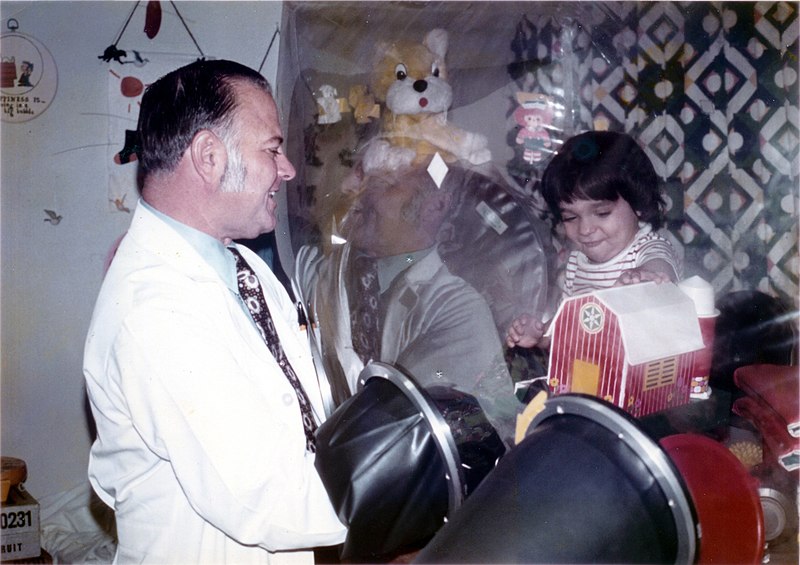
La inmunodeficiencia combinada grave, también llamada "enfermedad del niño burbuja", es un trastorno genético poco frecuente en EN Erythema nodosum is an immune-mediated panniculitis (inflammation of the subcutaneous fat) caused by a type IV (delayed-type) hypersensitivity reaction. It commonly manifests in young women as tender, erythematous nodules on the shins. Erythema Nodosum el que el desarrollo de las células B y T funcionales se ve VE Ventilation: Mechanics of Breathing alterado debido a varias mutaciones genéticas que dan lugar a una función inmunitaria reducida o ausente. Es la forma más grave de inmunodeficiencia primaria y se caracteriza por la alteración de las respuestas inmunes humoral y celular. Múltiples mutaciones pueden dar lugar a tipos heterogéneos de inmunodeficiencia combinada grave. Los LOS Neisseria pacientes presentan infecciones graves y recurrentes en EN Erythema nodosum is an immune-mediated panniculitis (inflammation of the subcutaneous fat) caused by a type IV (delayed-type) hypersensitivity reaction. It commonly manifests in young women as tender, erythematous nodules on the shins. Erythema Nodosum los LOS Neisseria primeros meses de vida. El tratamiento incluye inmunoglobulinas intravenosas y trasplante de médula ósea. Si no se trata, la inmunodeficiencia combinada grave suele ser mortal en EN Erythema nodosum is an immune-mediated panniculitis (inflammation of the subcutaneous fat) caused by a type IV (delayed-type) hypersensitivity reaction. It commonly manifests in young women as tender, erythematous nodules on the shins. Erythema Nodosum el 1er año de vida.

Last updated: Dec 15, 2025

Editorial responsibility: Stanley Oiseth, Lindsay Jones, Evelin Maza

Epidemiología y Etiología

Epidemiología

  • Prevalencia: < 1 de cada 100 000 nacidos vivos
  • Las tasas de prevalencia más elevadas se encuentran en EN Erythema nodosum is an immune-mediated panniculitis (inflammation of the subcutaneous fat) caused by a type IV (delayed-type) hypersensitivity reaction. It commonly manifests in young women as tender, erythematous nodules on the shins. Erythema Nodosum zonas y culturas en EN Erythema nodosum is an immune-mediated panniculitis (inflammation of the subcutaneous fat) caused by a type IV (delayed-type) hypersensitivity reaction. It commonly manifests in young women as tender, erythematous nodules on the shins. Erythema Nodosum las que el apareamiento consanguíneo es habitual.
  • Incidencia de 1 entre 2 500 entre los LOS Neisseria niños navajos y apaches

Etiología

Se conoce que al AL Amyloidosis menos 12 genes Genes A category of nucleic acid sequences that function as units of heredity and which code for the basic instructions for the development, reproduction, and maintenance of organisms. DNA Types and Structure de estar mutados causan immunodeficiencia combinada grave, incluyendo los LOS Neisseria que codifican para lo siguiente:

  • La cadena γ común compartida por los LOS Neisseria receptores de las citocinas:
    • IL-2, IL-4, IL-7 IL-7 A proinflammatory cytokine produced primarily by T-lymphocytes or their precursors. Several subtypes of interleukin-17 have been identified, each of which is a product of a unique gene. Severe Combined Immunodeficiency (SCID), IL-9 e IL-15
    • IL-7 IL-7 A proinflammatory cytokine produced primarily by T-lymphocytes or their precursors. Several subtypes of interleukin-17 have been identified, each of which is a product of a unique gene. Severe Combined Immunodeficiency (SCID) es la citoquina más importante porque estimula la supervivencia y la expansión de los LOS Neisseria precursores inmaduros de células B y T.
  • Adenosina deaminasa ( ADA ADA An enzyme that catalyzes the hydrolysis of adenosine to inosine with the elimination of ammonia. Purine and Pyrimidine Metabolism)
  • Purina nucleósido fosforilasa
  • Adenilato quinasa mitocondrial 2
  • Janus quinasa-3 ( JAK3 JAK3 A janus kinase subtype that is predominantly expressed in hematopoietic cells. It is involved in signaling from a broad variety of cytokine receptors including ones that utilize the interleukin receptor common gamma subunit. Severe Combined Immunodeficiency (SCID))
  • Genes Genes A category of nucleic acid sequences that function as units of heredity and which code for the basic instructions for the development, reproduction, and maintenance of organisms. DNA Types and Structure RAG-1 y RAG-2

El patrón de herencia depende del tipo de mutación genética:

  • Aproximadamente el 50% de los LOS Neisseria casos siguen un patrón de herencia recesivo ligado al AL Amyloidosis cromosoma X y están asociados a mutaciones de la cadena γ común.
  • Aproximadamente el 40%50% de los LOS Neisseria casos siguen un patrón de herencia autosómico recesivo y a menudo (50%) se asocian con mutaciones de ADA ADA An enzyme that catalyzes the hydrolysis of adenosine to inosine with the elimination of ammonia. Purine and Pyrimidine Metabolism.

Fisiopatología

  • El gen afectado determinará qué tipo de célula está ausente o es deficiente, siendo las células T, B y NK las más comúnmente afectadas.
  • Todos los LOS Neisseria tipos de inmunodeficiencia combinada grave se clasifican por un nivel bajo o ausente de células T.
  • Los LOS Neisseria receptores que contienen la cadena γ común se localizan en EN Erythema nodosum is an immune-mediated panniculitis (inflammation of the subcutaneous fat) caused by a type IV (delayed-type) hypersensitivity reaction. It commonly manifests in young women as tender, erythematous nodules on the shins. Erythema Nodosum la superficie de las células inmaduras de la médula ósea, que:
    • Ayudan a la formación de linfocitos
    • Regulan el crecimiento y la maduración de varios subtipos de células T, células B y células asesinas naturales
    • Regulan todo el sistema inmune.
  • Las mutaciones que afectan a estos receptores dan lugar a órganos linfoides atróficos o hipoplásicos y a linfopenia.
  • Así, los LOS Neisseria pacientes con inmunodeficiencia combinada grave tienen una extrema susceptibilidad a infecciones durante la infancia.
Tabla: Posibles fenotipos de inmunodeficiencia combinada grave
Fenotipo Defecto genético
TB+NK γC, JAK3 JAK3 A janus kinase subtype that is predominantly expressed in hematopoietic cells. It is involved in signaling from a broad variety of cytokine receptors including ones that utilize the interleukin receptor common gamma subunit. Severe Combined Immunodeficiency (SCID)
TBNK+ RAG-1, RAG-2, Artemis, ADN ligasa IV, Cernunnos, ADN PKcs
TB+NK+ IL-7Rα, CD3δ, CD3ζ, Coronin-1A, ZAP-70, CD45
TBNK ADA ADA An enzyme that catalyzes the hydrolysis of adenosine to inosine with the elimination of ammonia. Purine and Pyrimidine Metabolism, AK2
Tabla: Tipos de inmunodeficiencia combinada grave
Síndrome Defecto
Inmunodeficiencia combinada grave ligada al AL Amyloidosis cromosoma X Mutaciones en EN Erythema nodosum is an immune-mediated panniculitis (inflammation of the subcutaneous fat) caused by a type IV (delayed-type) hypersensitivity reaction. It commonly manifests in young women as tender, erythematous nodules on the shins. Erythema Nodosum el gen que codifica la cadena γ común, una proteína que comparten los LOS Neisseria receptores de las interleucinas IL-2, IL-4, IL-7 IL-7 A proinflammatory cytokine produced primarily by T-lymphocytes or their precursors. Several subtypes of interleukin-17 have been identified, each of which is a product of a unique gene. Severe Combined Immunodeficiency (SCID), IL-9, IL-15 e IL-21
Deficiencia de adenosina deaminasa
  • Causada por una enzima defectuosa, ADA ADA An enzyme that catalyzes the hydrolysis of adenosine to inosine with the elimination of ammonia. Purine and Pyrimidine Metabolism, necesaria para la descomposición de las purinas
  • Conduce a una acumulación de dATP, que inhibe la actividad de la ribonucleótido reductasa (enzima que genera desoxirribonucleótidos)
Deficiencia de purina nucleósido fosforilasa ( PNP PNP An enzyme that catalyzes the reaction between a purine nucleoside and orthophosphate to form a free purine plus ribose-5-phosphate. Purine and Pyrimidine Metabolism) Trastorno autosómico recesivo que implica mutaciones del gen PNP PNP An enzyme that catalyzes the reaction between a purine nucleoside and orthophosphate to form a free purine plus ribose-5-phosphate. Purine and Pyrimidine Metabolism
Disgenesia reticular Incapacidad de los LOS Neisseria precursores de granulocitos para formar gránulos, secundaria a un mal funcionamiento de la adenilato quinasa 2 mitocondrial
Síndrome de Omenn
  • Causado por una pérdida parcial de la función del gen RAG
  • Conduce a la pérdida o a la recombinación defectuosa de genes Genes A category of nucleic acid sequences that function as units of heredity and which code for the basic instructions for the development, reproduction, and maintenance of organisms. DNA Types and Structure en EN Erythema nodosum is an immune-mediated panniculitis (inflammation of the subcutaneous fat) caused by a type IV (delayed-type) hypersensitivity reaction. It commonly manifests in young women as tender, erythematous nodules on the shins. Erythema Nodosum los LOS Neisseria receptores de células T y B, lo que da lugar a una alteración del reconocimiento de patógenos
Síndrome de los LOS Neisseria linfocitos desnudos
  • Enfermedad autosómica recesiva en EN Erythema nodosum is an immune-mediated panniculitis (inflammation of the subcutaneous fat) caused by a type IV (delayed-type) hypersensitivity reaction. It commonly manifests in young women as tender, erythematous nodules on the shins. Erythema Nodosum la que las moléculas del CMH son afectadas
  • Este tipo destaca por tener niveles normales de células B y T; su funcionalidad está alterada, no su desarrollo.
JAK3 JAK3 A janus kinase subtype that is predominantly expressed in hematopoietic cells. It is involved in signaling from a broad variety of cytokine receptors including ones that utilize the interleukin receptor common gamma subunit. Severe Combined Immunodeficiency (SCID) JAK3 JAK3 A janus kinase subtype that is predominantly expressed in hematopoietic cells. It is involved in signaling from a broad variety of cytokine receptors including ones that utilize the interleukin receptor common gamma subunit. Severe Combined Immunodeficiency (SCID) es una enzima que media la transducción de las señales γc.

Presentación Clínica

La enfermedad suele presentarse en EN Erythema nodosum is an immune-mediated panniculitis (inflammation of the subcutaneous fat) caused by a type IV (delayed-type) hypersensitivity reaction. It commonly manifests in young women as tender, erythematous nodules on the shins. Erythema Nodosum la primera infancia (26 meses). Se observan infecciones oportunistas graves y recurrentes en EN Erythema nodosum is an immune-mediated panniculitis (inflammation of the subcutaneous fat) caused by a type IV (delayed-type) hypersensitivity reaction. It commonly manifests in young women as tender, erythematous nodules on the shins. Erythema Nodosum los LOS Neisseria individuos afectados.
  • Diarrea crónica
  • Dermatitis Dermatitis Any inflammation of the skin. Atopic Dermatitis (Eczema)
  • Retraso en EN Erythema nodosum is an immune-mediated panniculitis (inflammation of the subcutaneous fat) caused by a type IV (delayed-type) hypersensitivity reaction. It commonly manifests in young women as tender, erythematous nodules on the shins. Erythema Nodosum el desarrollo debido a infecciones recurrentes y desnutrición
  • Infecciones víricas (e.g., citomegalovirus [CMV] rotavirus Rotavirus A genus of Reoviridae, causing acute gastroenteritis in birds and mammals, including humans. Transmission is horizontal and by environmental contamination. Seven species (rotaviruses A through G) are recognized. Rotavirus, varicela)
  • Meningitis Meningitis Meningitis is inflammation of the meninges, the protective membranes of the brain, and spinal cord. The causes of meningitis are varied, with the most common being bacterial or viral infection. The classic presentation of meningitis is a triad of fever, altered mental status, and nuchal rigidity. Meningitis
  • Candidiasis Candidiasis Candida is a genus of dimorphic, opportunistic fungi. Candida albicans is part of the normal human flora and is the most common cause of candidiasis. The clinical presentation varies and can include localized mucocutaneous infections (e.g., oropharyngeal, esophageal, intertriginous, and vulvovaginal candidiasis) and invasive disease (e.g., candidemia, intraabdominal abscess, pericarditis, and meningitis). Candida/Candidiasis
  • Infección por el complejo Mycobacterium avium Mycobacterium avium A bacterium causing tuberculosis in domestic fowl and other birds. In pigs, it may cause localized and sometimes disseminated disease. The organism occurs occasionally in sheep and cattle. It should be distinguished from the m. avium complex, which infects primarily humans. Mycobacterium
  • Neumonía por Pneumocystis (presentación común en EN Erythema nodosum is an immune-mediated panniculitis (inflammation of the subcutaneous fat) caused by a type IV (delayed-type) hypersensitivity reaction. It commonly manifests in young women as tender, erythematous nodules on the shins. Erythema Nodosum pacientes sin células T)
  • Los LOS Neisseria ganglios linfáticos, el timo y las amígdalas suelen ser hipoplásicos o estar ausentes en EN Erythema nodosum is an immune-mediated panniculitis (inflammation of the subcutaneous fat) caused by a type IV (delayed-type) hypersensitivity reaction. It commonly manifests in young women as tender, erythematous nodules on the shins. Erythema Nodosum estos pacientes.
  • Retraso en EN Erythema nodosum is an immune-mediated panniculitis (inflammation of the subcutaneous fat) caused by a type IV (delayed-type) hypersensitivity reaction. It commonly manifests in young women as tender, erythematous nodules on the shins. Erythema Nodosum el crecimiento debido a infecciones recurrentes y malnutrición

Diagnóstico

  • El diagnóstico precoz es posible mediante la evaluación neonatal de la inmunodeficiencia combinada grave:
    • Aunque el tamizaje no está disponible ni se utiliza a nivel mundial, todos los LOS Neisseria recién nacidos en EN Erythema nodosum is an immune-mediated panniculitis (inflammation of the subcutaneous fat) caused by a type IV (delayed-type) hypersensitivity reaction. It commonly manifests in young women as tender, erythematous nodules on the shins. Erythema Nodosum Estados Unidos son examinados para detectar la inmunodeficiencia combinada grave.
    • Sin la evaluación neonatal, el diagnóstico es difícil y empeora el pronóstico.
    • La prueba neonatal para la inmunodeficiencia combinada grave mide los LOS Neisseria círculos de escisión del receptor Receptor Receptors are proteins located either on the surface of or within a cell that can bind to signaling molecules known as ligands (e.g., hormones) and cause some type of response within the cell. Receptors de células T, un subproducto del desarrollo de las células T. La falta de los LOS Neisseria circulos de escisión del receptor Receptor Receptors are proteins located either on the surface of or within a cell that can bind to signaling molecules known as ligands (e.g., hormones) and cause some type of response within the cell. Receptors de células T confirma la inmunodeficiencia combinada grave.
  • Síntomas que hacen sospechar o apoyan el diagnóstico de inmunodeficiencia combinada grave:
    • Antecedentes familiares de muertes infantiles
    • Presencia de tos TOS Thoracic outlet syndrome (TOS) is a broad term used for a spectrum of syndromes related to the general region of the thoracic outlet, which involves the compression or irritation of elements of the brachial plexus, subclavian artery, or subclavian vein. Thoracic Outlet Syndrome crónica
    • Presencia de pulmones hiperinflados
    • Infecciones recurrentes y persistentes
  • Para confirmar el diagnóstico:
    • Hemograma completo: niveles reducidos de células T y B o células asesinas naturales (o ambos)
    • Citometría de flujo: Deficiencia de subpoblación de células T (diagnóstico definitivo)
  • Pruebas auxiliares en EN Erythema nodosum is an immune-mediated panniculitis (inflammation of the subcutaneous fat) caused by a type IV (delayed-type) hypersensitivity reaction. It commonly manifests in young women as tender, erythematous nodules on the shins. Erythema Nodosum pacientes con inmunodeficiencia combinada grave (si son necesarias):
    • Radiografía de tórax: ausencia de timo
    • Biopsia de ganglios linfáticos: ausencia de centros germinales
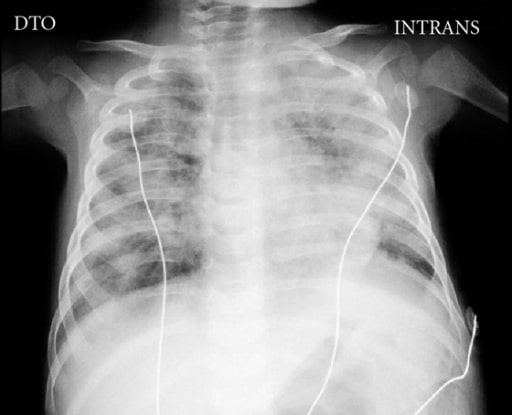
Radiografía de la IDCG

Radiografía de tórax de un niño de 5 meses con inmunodeficiencia combinada grave complicada por la enfermedad diseminada del bacilo de Calmette-Guérin que muestra la ausencia de timo y áreas bilaterales de opacidades

Imagen: “Chest X-ray” por Pediatric Intensive Care Unit, Hospital Dona Estefânia, 1169-045 Lisboa, Portugal. License: CC BY 3.0
Tratamiento y Pronóstico

  • Trasplante de células madre hematopoyéticas (TCMH) antes de los LOS Neisseria 3 meses de edad:
    • Evitar la exposición pública antes del trasplante.
    • Idealmente, el mejor donante es un hermano con un tejido compatible.
  • Infusión intravenosa de inmunoglobulinas:
    • Reemplaza la inmunoglobulina que falta por la disfunción de las células B debido a la falta de células T
    • Los LOS Neisseria resultados de la infusión intravenosa de inmunoglobulinas duran aproximadamente 3 semanas.
  • Profilaxis de la neumonía por Pneumocystis con trimetoprim-sulfametoxazol a partir del mes de edad
  • Aislamiento inverso
  • Sustitución enzimática para la deficiencia de ADA ADA An enzyme that catalyzes the hydrolysis of adenosine to inosine with the elimination of ammonia. Purine and Pyrimidine Metabolism
  • Las terapias en EN Erythema nodosum is an immune-mediated panniculitis (inflammation of the subcutaneous fat) caused by a type IV (delayed-type) hypersensitivity reaction. It commonly manifests in young women as tender, erythematous nodules on the shins. Erythema Nodosum investigación incluyen la terapia génica:
    • La inmunodeficiencia combinada grave es la primera enfermedad en EN Erythema nodosum is an immune-mediated panniculitis (inflammation of the subcutaneous fat) caused by a type IV (delayed-type) hypersensitivity reaction. It commonly manifests in young women as tender, erythematous nodules on the shins. Erythema Nodosum la que la terapia génica ha HA Hemolytic anemia (HA) is the term given to a large group of anemias that are caused by the premature destruction/hemolysis of circulating red blood cells (RBCs). Hemolysis can occur within (intravascular hemolysis) or outside the blood vessels (extravascular hemolysis). Hemolytic Anemia conseguido sustituir el gen mutado.
    • Todavía se considera experimental o en EN Erythema nodosum is an immune-mediated panniculitis (inflammation of the subcutaneous fat) caused by a type IV (delayed-type) hypersensitivity reaction. It commonly manifests in young women as tender, erythematous nodules on the shins. Erythema Nodosum investigación porque algunos de los LOS Neisseria pacientes que recibieron el tratamiento desarrollaron posteriormente leucemia
  • Pronóstico:
    • Altamente mortal
    • La muerte se produce por infecciones repetidas antes de los LOS Neisseria 2 años

Diagnóstico Diferencial

Las siguientes condiciones son diagnósticos diferenciales para la inmunodeficiencia combinada grave:

  • Síndrome de DiGeorge: enfermedad causada por una microdeleción en EN Erythema nodosum is an immune-mediated panniculitis (inflammation of the subcutaneous fat) caused by a type IV (delayed-type) hypersensitivity reaction. It commonly manifests in young women as tender, erythematous nodules on the shins. Erythema Nodosum un lugar designado q11.2 del cromosoma 22, debido a un desarrollo defectuoso de las bolsas faríngeas 3ra y 4ta, lo que provoca una hipoplasia tímica y paratiroidea (lo que causa inmunodeficiencia de células T e hipocalcemia, respectivamente). Otras manifestaciones incluyen rasgos faciales característicos, defectos cardíacos congénitos, infecciones frecuentes y trastornos neuropsiquiátricos.
  • Síndrome de CHARGE: trastorno genético poco frecuente en EN Erythema nodosum is an immune-mediated panniculitis (inflammation of the subcutaneous fat) caused by a type IV (delayed-type) hypersensitivity reaction. It commonly manifests in young women as tender, erythematous nodules on the shins. Erythema Nodosum los LOS Neisseria niños que afecta a casi todos los LOS Neisseria sistemas corporales debido a una expresión genética alterada como resultado de mutaciones heredadas en EN Erythema nodosum is an immune-mediated panniculitis (inflammation of the subcutaneous fat) caused by a type IV (delayed-type) hypersensitivity reaction. It commonly manifests in young women as tender, erythematous nodules on the shins. Erythema Nodosum los LOS Neisseria genes Genes A category of nucleic acid sequences that function as units of heredity and which code for the basic instructions for the development, reproduction, and maintenance of organisms. DNA Types and Structure específicos. CHARGE ( en EN Erythema nodosum is an immune-mediated panniculitis (inflammation of the subcutaneous fat) caused by a type IV (delayed-type) hypersensitivity reaction. It commonly manifests in young women as tender, erythematous nodules on the shins. Erythema Nodosum inglés) significa Coloboma ( coloboma Coloboma Congenital anomaly in which some of the structures of the eye are absent due to incomplete fusion of the fetal intraocular fissure during gestation. Esophageal Atresia and Tracheoesophageal Fistula), Heart defects (defectos cardíacos), Atresia choanae ( atresia Atresia Hypoplastic Left Heart Syndrome (HLHS) de coanas), Growth retardation (retraso del crecimiento), Genital abnormalities (anomalías genitales) y E ar AR Aortic regurgitation (AR) is a cardiac condition characterized by the backflow of blood from the aorta to the left ventricle during diastole. Aortic regurgitation is associated with an abnormal aortic valve and/or aortic root stemming from multiple causes, commonly rheumatic heart disease as well as congenital and degenerative valvular disorders. Aortic Regurgitation abnormalities (anomalías del oído). El síndrome suele estar asociado a una hipoplasia o aplasia Aplasia Cranial Nerve Palsies del timo, lo que conlleva a una inmunodeficiencia.
  • Síndrome de Wiskott-Aldrich: un trastorno mixto ligado al AL Amyloidosis cromosoma X de deficiencia de células B y T. El síndrome de Wiskott-Aldrich es causado por una mutación del gen WAS que provoca una alteración del citoesqueleto de actina, de la fagocitosis y de la quimiotaxis, una alteración del desarrollo de las plaquetas y, en EN Erythema nodosum is an immune-mediated panniculitis (inflammation of the subcutaneous fat) caused by a type IV (delayed-type) hypersensitivity reaction. It commonly manifests in young women as tender, erythematous nodules on the shins. Erythema Nodosum general, una pérdida de respuestas humorales y celulares. El síndrome se presenta como eczema Eczema Atopic dermatitis, also known as eczema, is a chronic, relapsing, pruritic, inflammatory skin disease that occurs more frequently in children, although adults can also be affected. The condition is often associated with elevated serum levels of IgE and a personal or family history of atopy. Skin dryness, erythema, oozing, crusting, and lichenification are present. Atopic Dermatitis (Eczema), trastornos hemorrágicos, infecciones oportunistas recurrentes y autoinmunidad.
  • Infección por VIH y SIDA: causada por un virus Virus Viruses are infectious, obligate intracellular parasites composed of a nucleic acid core surrounded by a protein capsid. Viruses can be either naked (non-enveloped) or enveloped. The classification of viruses is complex and based on many factors, including type and structure of the nucleoid and capsid, the presence of an envelope, the replication cycle, and the host range. Virology ARN monocatenario de la familia Retroviridae Retroviridae The human immunodeficiency virus (HIV) is a species of Lentivirus, a genus of the family Retroviridae, which causes HIV infections and acquired immunodeficiency syndrome (AIDS). The virus has high genetic variability and is divided into 2 major types, HIV type 1 (HIV-1) and HIV type 2 (HIV-2). The human immunodeficiency virus is a single-stranded, positive-sense, enveloped RNA virus, which targets and destroys WBCs, leading to frequent opportunistic infections and, eventually, death. Human Immunodeficiency Virus (HIV); se transmite a través del intercambio de fluidos corporales como el semen y la sangre. La presentación está marcada por un deterioro del sistema inmunitario, que comienza con síntomas constitucionales como la linfadenopatía, y avanza hacia las enfermedades definitorias del SIDA, como las infecciones oportunistas.
  • Inmunodeficiencia común variable Variable Variables represent information about something that can change. The design of the measurement scales, or of the methods for obtaining information, will determine the data gathered and the characteristics of that data. As a result, a variable can be qualitative or quantitative, and may be further classified into subgroups. Types of Variables: tipo de inmunodeficiencia primaria caracterizada por la reducción de los LOS Neisseria niveles séricos de inmunoglobulinas G, A y M. Se desconocen las causas subyacentes. Los LOS Neisseria pacientes con esta enfermedad son propensos a las infecciones en EN Erythema nodosum is an immune-mediated panniculitis (inflammation of the subcutaneous fat) caused by a type IV (delayed-type) hypersensitivity reaction. It commonly manifests in young women as tender, erythematous nodules on the shins. Erythema Nodosum el tracto gastrointestinal y en EN Erythema nodosum is an immune-mediated panniculitis (inflammation of the subcutaneous fat) caused by a type IV (delayed-type) hypersensitivity reaction. It commonly manifests in young women as tender, erythematous nodules on the shins. Erythema Nodosum las vías respiratorias superiores e inferiores y tienen un mayor riesgo de desarrollar enfermedades autoinmunes, granulomatosas y neoplásicas.

Referencias

  1. National Institute of Allergy and Infectious Diseases (2019. https://www.niaid.nih.gov/diseases-conditions/severe-combined-immunodeficiency-scid
  2. American Academy of Allergy, Asthma, & Immunology. (2024). *Severe combined immunodeficiency (SCID)*. https://www.aaaai.org/conditions-treatments/primary-immunodeficiency-disease/severe-combined-immunodeficiency
  3. Boyer, D. E., & Puck, J. M. (2023). The Importance of Newborn Screening for SCID: Implications for Early Diagnosis and Management. Pediatrics, 151(5), e2022059871.
  4. Cohen, J. I., et al. (2023). Outcomes of hematopoietic stem cell transplantation for SCID: A single-center experience. Blood Advances, 7(1), 45-55.
  5. Fischer, A., et al. (2024). Immunological and genetic aspects of severe combined immunodeficiency: A review. Nature Reviews Immunology, 24(1), 12-28.
  6. Gershwin, M. E., & Arumugham, R. (2023). Primary Immunodeficiency: Understanding SCID and Its Treatment. The Journal of Clinical Investigation, 133(3), e165236.
  7. Kohn, D. B., et al. (2024). ADA-SCID Gene Therapy Update. Immune Deficiency Foundation.
  8. Meyer, S. A., et al. (2023). New insights into the genetics and diagnosis of severe combined immunodeficiency. Nature Reviews Genetics, 25(2), 67-82.
  9. Puck, J. M., & Fleisher, T. A. (2021). Severe Combined Immunodeficiency: New Insights and Challenges in Diagnosis and Management. In Primary Immunodeficiency: Diseases of Children and Adults.
  10. Rochman, Y., et al. (2020). SCID: Insights into Pathogenesis and Therapy. In The Journal of Clinical Investigation, 130(8), 4217-4227.
  11. Wang, K., & Zhou, L. (2023). Gene therapy for SCID: Current status and future perspectives. Frontiers in Immunology, 14, 1084541.
  12. Wahlstrom, J. T., Dvorak, C. C., & Cowan, M. J. (2015). Hematopoietic stem cell transplantation for severe combined immunodeficiency. Current Pediatric Reports, 3(1), 1–10. https://doi.org/10.1007/s40124-014-0071-7

¡Crea tu cuenta gratis o inicia una sesión para seguir leyendo!

Regístrate ahora y obtén acceso gratuito a Lecturio con páginas de concepto, videos médicos y cuestionarios para tu educación médica.

User Reviews

Que tengas una sesión de estudio alegre y navideña 🎁 Ahorra 50% en todos los planes >>

Details