Domina Conceptos Médicos

Estudia para la escuela de medicina y tus examenes con Lecturio.

Glioblastoma Multiforme

El glioblastoma multiforme Glioblastoma multiforme Glioblastoma multiforme is a high-grade astrocytoma, an aggressive brain tumor arising from astrocytes, with an unknown cause and a poorly understood link to risk factors. There are two main types: primary, a more aggressive form seen more commonly in older patients, and secondary, developing from lower-grade astrocytomas and seen more commonly in younger patients. Glioblastoma Multiforme es un astrocitoma de alto grado, el cual es un tumor Tumor Inflammation cerebral agresivo que surge de los LOS Neisseria astrocitos, con una causa desconocida y una relación poco conocida con los LOS Neisseria factores de riesgo. Existen dos tipos principales: el primario, el cual es una forma más agresiva que se observa con mayor frecuencia en EN Erythema nodosum is an immune-mediated panniculitis (inflammation of the subcutaneous fat) caused by a type IV (delayed-type) hypersensitivity reaction. It commonly manifests in young women as tender, erythematous nodules on the shins. Erythema Nodosum pacientes de edad avanzada y el secundario, que se desarrolla a partir de astrocitomas de bajo grado y se observa con mayor frecuencia en EN Erythema nodosum is an immune-mediated panniculitis (inflammation of the subcutaneous fat) caused by a type IV (delayed-type) hypersensitivity reaction. It commonly manifests in young women as tender, erythematous nodules on the shins. Erythema Nodosum pacientes más jóvenes. Los LOS Neisseria glioblastomas suelen presentarse con cefalea, convulsiones y déficits neurológicos. La RM es el estándar de oro y la resección quirúrgica combinada con radiación y quimioterapia son el tratamiento de elección. El pronóstico es extremadamente malo, con una supervivencia solamente de 1–5 años en EN Erythema nodosum is an immune-mediated panniculitis (inflammation of the subcutaneous fat) caused by a type IV (delayed-type) hypersensitivity reaction. It commonly manifests in young women as tender, erythematous nodules on the shins. Erythema Nodosum los LOS Neisseria pacientes que reciben un tratamiento agresivo y de solo 3 meses en EN Erythema nodosum is an immune-mediated panniculitis (inflammation of the subcutaneous fat) caused by a type IV (delayed-type) hypersensitivity reaction. It commonly manifests in young women as tender, erythematous nodules on the shins. Erythema Nodosum los LOS Neisseria pacientes que no se someten a tratamiento.

Last updated: Dec 15, 2025

Editorial responsibility: Stanley Oiseth, Lindsay Jones, Evelin Maza

Descripción General

Definición

El glioblastoma multiforme Glioblastoma multiforme Glioblastoma multiforme is a high-grade astrocytoma, an aggressive brain tumor arising from astrocytes, with an unknown cause and a poorly understood link to risk factors. There are two main types: primary, a more aggressive form seen more commonly in older patients, and secondary, developing from lower-grade astrocytomas and seen more commonly in younger patients. Glioblastoma Multiforme es un tipo de tumor Tumor Inflammation cerebral agresivo y rápidamente progresivo que surge de los LOS Neisseria astrocitos:

  • Clasificado por la OMS como astrocitoma de grado IV (un glioma maligno de alto grado)
  • Las células gliales son tejidos de soporte en EN Erythema nodosum is an immune-mediated panniculitis (inflammation of the subcutaneous fat) caused by a type IV (delayed-type) hypersensitivity reaction. It commonly manifests in young women as tender, erythematous nodules on the shins. Erythema Nodosum el cerebro y el sistema nervioso.
  • Los LOS Neisseria tumores neuroepiteliales son los LOS Neisseria aquellos que afectan al AL Amyloidosis parénquima cerebral.
  • Los LOS Neisseria astrocitomas, incluidos los LOS Neisseria glioblastoma multiforme Glioblastoma multiforme Glioblastoma multiforme is a high-grade astrocytoma, an aggressive brain tumor arising from astrocytes, with an unknown cause and a poorly understood link to risk factors. There are two main types: primary, a more aggressive form seen more commonly in older patients, and secondary, developing from lower-grade astrocytomas and seen more commonly in younger patients. Glioblastoma Multiforme, se clasifican pero no se estadifican.

Clasificación de los LOS Neisseria tumores del sistema nervioso

Tabla: Clasificación de los LOS Neisseria tumores del sistema nervioso
Categorías Tumores específicos
Tumores neuroepiteliales en EN Erythema nodosum is an immune-mediated panniculitis (inflammation of the subcutaneous fat) caused by a type IV (delayed-type) hypersensitivity reaction. It commonly manifests in young women as tender, erythematous nodules on the shins. Erythema Nodosum el SNC
  • Astrocitomas, incluido el glioblastoma multiforme Glioblastoma multiforme Glioblastoma multiforme is a high-grade astrocytoma, an aggressive brain tumor arising from astrocytes, with an unknown cause and a poorly understood link to risk factors. There are two main types: primary, a more aggressive form seen more commonly in older patients, and secondary, developing from lower-grade astrocytomas and seen more commonly in younger patients. Glioblastoma Multiforme
  • Oligodendroglioma Oligodendroglioma Oligodendrogliomas are malignant CNS tumors arising from neural glial cell precursors. Oligodendrogliomas often arise in the frontal lobes of the brain and have a generally favorable prognosis when compared to other gliomas. Oligodendrogliomas are the 3rd most common CNS tumor. The most frequent presenting symptom is a seizure. Oligodendroglioma
  • Ependimoma y tumores del plexo coroideo
  • Meduloblastomas (tumores embrionarios)
Tumores meníngeos
  • Meningiomas
  • Hemangioblastomas Hemangioblastomas A benign tumor of the nervous system that may occur sporadically or in association with von Hippel-Lindau disease. It accounts for approximately 2% of intracranial tumors, arising most frequently in the cerebellar hemispheres and vermis. Histologically, the tumors are composed of multiple capillary and sinusoidal channels lined with endothelial cells and clusters of lipid-laden pseudoxanthoma cells. Usually solitary, these tumors can be multiple and may also occur in the brain stem, spinal cord, retina, and supratentorial compartment. Cerebellar hemangioblastomas usually present in the third decade with intracranial hypertension, and ataxia. Von Hippel-Lindau Disease
Tumores de la región selar
  • Craneofaringioma
  • Adenoma hipofisario
  • Pinealoma/pinealoblastoma
Linfoma primario del SNC Linfoma primario del SNC
Metástasis al AL Amyloidosis cerebro (5 veces más frecuente que los LOS Neisseria tumores cerebrales primarios) Más comúnmente surgen de:
  • Carcinomas de pulmón, mama y células renales
  • Melanoma Melanoma Melanoma is a malignant tumor arising from melanocytes, the melanin-producing cells of the epidermis. These tumors are most common in fair-skinned individuals with a history of excessive sun exposure and sunburns. Melanoma
Tumores periféricos
  • Schwannomas, incluido el neurinoma del acústico
  • Neuroblastoma Neuroblastoma Neuroblastoma is a malignancy that arises from the neural crest cell derivatives along the sympathetic chain (neuroblasts) and is most commonly located in the adrenal medulla. The tumor often presents in childhood with a flank mass that crosses the midline. Neuroblastoma

Epidemiología

  • Es el más común de los LOS Neisseria tumores cerebrales malignos
  • Incidencia:
    • 3 por cada 100 000 personas
    • Representa el 23% de todos los LOS Neisseria tumores cerebrales primarios.
    • El 60% de los LOS Neisseria astrocitomas son de grado IV ( glioblastoma multiforme Glioblastoma multiforme Glioblastoma multiforme is a high-grade astrocytoma, an aggressive brain tumor arising from astrocytes, with an unknown cause and a poorly understood link to risk factors. There are two main types: primary, a more aggressive form seen more commonly in older patients, and secondary, developing from lower-grade astrocytomas and seen more commonly in younger patients. Glioblastoma Multiforme) en EN Erythema nodosum is an immune-mediated panniculitis (inflammation of the subcutaneous fat) caused by a type IV (delayed-type) hypersensitivity reaction. It commonly manifests in young women as tender, erythematous nodules on the shins. Erythema Nodosum el momento del diagnóstico.
  • Edad:
    • Puede ocurrir en EN Erythema nodosum is an immune-mediated panniculitis (inflammation of the subcutaneous fat) caused by a type IV (delayed-type) hypersensitivity reaction. It commonly manifests in young women as tender, erythematous nodules on the shins. Erythema Nodosum cualquier grupo de edad
    • Pico de incidencia: 45–70 años de edad
    • Edad media en EN Erythema nodosum is an immune-mediated panniculitis (inflammation of the subcutaneous fat) caused by a type IV (delayed-type) hypersensitivity reaction. It commonly manifests in young women as tender, erythematous nodules on the shins. Erythema Nodosum el momento del diagnóstico: aproximadamente 55–60 años
  • Sexo: más frecuente en EN Erythema nodosum is an immune-mediated panniculitis (inflammation of the subcutaneous fat) caused by a type IV (delayed-type) hypersensitivity reaction. It commonly manifests in young women as tender, erythematous nodules on the shins. Erythema Nodosum hombres que en EN Erythema nodosum is an immune-mediated panniculitis (inflammation of the subcutaneous fat) caused by a type IV (delayed-type) hypersensitivity reaction. It commonly manifests in young women as tender, erythematous nodules on the shins. Erythema Nodosum mujeres
  • Raza/etnia: no parece afectar la incidencia
  • Mortalidad: El glioblastoma multiforme Glioblastoma multiforme Glioblastoma multiforme is a high-grade astrocytoma, an aggressive brain tumor arising from astrocytes, with an unknown cause and a poorly understood link to risk factors. There are two main types: primary, a more aggressive form seen more commonly in older patients, and secondary, developing from lower-grade astrocytomas and seen more commonly in younger patients. Glioblastoma Multiforme tiene una tasa baja de supervivencia
    • 40% de mortalidad en EN Erythema nodosum is an immune-mediated panniculitis (inflammation of the subcutaneous fat) caused by a type IV (delayed-type) hypersensitivity reaction. It commonly manifests in young women as tender, erythematous nodules on the shins. Erythema Nodosum el primer año después del diagnóstico
    • 17% en EN Erythema nodosum is an immune-mediated panniculitis (inflammation of the subcutaneous fat) caused by a type IV (delayed-type) hypersensitivity reaction. It commonly manifests in young women as tender, erythematous nodules on the shins. Erythema Nodosum el segundo año después del diagnóstico

Clasificación

Los LOS Neisseria dos tipos principales de glioblastoma son:

  • Glioblastoma primario:
    • Una forma más agresiva del glioblastoma multiforme Glioblastoma multiforme Glioblastoma multiforme is a high-grade astrocytoma, an aggressive brain tumor arising from astrocytes, with an unknown cause and a poorly understood link to risk factors. There are two main types: primary, a more aggressive form seen more commonly in older patients, and secondary, developing from lower-grade astrocytomas and seen more commonly in younger patients. Glioblastoma Multiforme que surge de novo (sin progresar desde un astrocitoma de grado inferior)
    • Más común que el glioblastoma multiforme Glioblastoma multiforme Glioblastoma multiforme is a high-grade astrocytoma, an aggressive brain tumor arising from astrocytes, with an unknown cause and a poorly understood link to risk factors. There are two main types: primary, a more aggressive form seen more commonly in older patients, and secondary, developing from lower-grade astrocytomas and seen more commonly in younger patients. Glioblastoma Multiforme secundario
    • Normalmente, se observa en EN Erythema nodosum is an immune-mediated panniculitis (inflammation of the subcutaneous fat) caused by a type IV (delayed-type) hypersensitivity reaction. It commonly manifests in young women as tender, erythematous nodules on the shins. Erythema Nodosum pacientes de edad avanzada (> 50 años)
    • Los LOS Neisseria pacientes se presentan con un antecedente breve y sin evidencia de una lesión preexistente.
  • Glioblastoma secundario:
    • Una forma de glioblastoma multiforme Glioblastoma multiforme Glioblastoma multiforme is a high-grade astrocytoma, an aggressive brain tumor arising from astrocytes, with an unknown cause and a poorly understood link to risk factors. There are two main types: primary, a more aggressive form seen more commonly in older patients, and secondary, developing from lower-grade astrocytomas and seen more commonly in younger patients. Glioblastoma Multiforme de crecimiento más lento que se desarrolla a partir de un astrocitoma de grado inferior (e.g., de grado II o III) a lo largo de 1–10 años (media, 5).
    • Normalmente, se observa en EN Erythema nodosum is an immune-mediated panniculitis (inflammation of the subcutaneous fat) caused by a type IV (delayed-type) hypersensitivity reaction. It commonly manifests in young women as tender, erythematous nodules on the shins. Erythema Nodosum pacientes jóvenes (< 45 años)
    • Los LOS Neisseria pacientes presentan síntomas de larga duración y evidencias de una lesión preexistente.

Fisiopatología

Factores de riesgo

La causa de los LOS Neisseria glioblastomas no está clara y es difícil determinar una única causa. Los LOS Neisseria factores de riesgo que parecen contribuir al AL Amyloidosis glioblastoma incluyen:

  • Exposición previa a radiación terapéutica
  • Asociaciones genéticas:
    • Síndrome de Li-Fraumeni (mutaciones en EN Erythema nodosum is an immune-mediated panniculitis (inflammation of the subcutaneous fat) caused by a type IV (delayed-type) hypersensitivity reaction. It commonly manifests in young women as tender, erythematous nodules on the shins. Erythema Nodosum la línea germinal de p53)
    • Síndrome de Lynch
    • El síndrome constitutivo de deficiencia de reparación de errores de emparejamientos
  • Grandes estudios no han demostrado sistemáticamente que el uso del teléfono móvil sea un factor de riesgo.

Patogénesis

Hay varias mutaciones genéticas asociadas a los LOS Neisseria astrocitomas:

  • Pérdida de heterocigosidad en el cromosoma 10q:
    • Ocurre en el 60%–90% de los glioblastoma multiforme (tanto en los primarios como en los secundarios)
    • Específico para glioblastoma multiforme (rara vez se encuentra en astrocitomas de bajo grado) → es un marcador de diagnóstico de glioblastoma multiforme
    • La pérdida de heterocigosidad más 1 o 2 mutaciones adicionales son probablemente los protagonistas en el desarrollo del glioblastoma multiforme.
  • Mutaciones activadoras del promotor de la transcriptasa inversa de la telomerasa (TERT, por sus siglas en inglés):
    • TERT es una subunidad catalítica de la telomerasa → las mutaciones activadoras permiten que las células tumorales se vuelvan “inmortales”.
    • Marcador diagnóstico para el glioblastoma multiforme Glioblastoma multiforme Glioblastoma multiforme is a high-grade astrocytoma, an aggressive brain tumor arising from astrocytes, with an unknown cause and a poorly understood link to risk factors. There are two main types: primary, a more aggressive form seen more commonly in older patients, and secondary, developing from lower-grade astrocytomas and seen more commonly in younger patients. Glioblastoma Multiforme
  • Mutaciones activadoras del receptor Receptor Receptors are proteins located either on the surface of or within a cell that can bind to signaling molecules known as ligands (e.g., hormones) and cause some type of response within the cell. Receptors del factor de crecimiento epidérmico (EGFR, por sus siglas en EN Erythema nodosum is an immune-mediated panniculitis (inflammation of the subcutaneous fat) caused by a type IV (delayed-type) hypersensitivity reaction. It commonly manifests in young women as tender, erythematous nodules on the shins. Erythema Nodosum inglés):
    • El EGFR ayuda a controlar la proliferación celular → las mutaciones activadoras contribuyen a ↑ la proliferación
    • Marcador diagnóstico del glioblastoma multiforme Glioblastoma multiforme Glioblastoma multiforme is a high-grade astrocytoma, an aggressive brain tumor arising from astrocytes, with an unknown cause and a poorly understood link to risk factors. There are two main types: primary, a more aggressive form seen more commonly in older patients, and secondary, developing from lower-grade astrocytomas and seen more commonly in younger patients. Glioblastoma Multiforme
  • Mutaciones en EN Erythema nodosum is an immune-mediated panniculitis (inflammation of the subcutaneous fat) caused by a type IV (delayed-type) hypersensitivity reaction. It commonly manifests in young women as tender, erythematous nodules on the shins. Erythema Nodosum la isocitrato deshidrogenasa (IDH):
    • IDH:
      • Cataliza la descarboxilación oxidativa reversible del isocitrato → α-cetoglutarato (α-KG) en EN Erythema nodosum is an immune-mediated panniculitis (inflammation of the subcutaneous fat) caused by a type IV (delayed-type) hypersensitivity reaction. It commonly manifests in young women as tender, erythematous nodules on the shins. Erythema Nodosum el ciclo del ácido tricarboxílico (TCA, por sus siglas en EN Erythema nodosum is an immune-mediated panniculitis (inflammation of the subcutaneous fat) caused by a type IV (delayed-type) hypersensitivity reaction. It commonly manifests in young women as tender, erythematous nodules on the shins. Erythema Nodosum inglés)
      • Productor primario de nicotinamida adenina dinucleótido fosfato ( NADPH NADPH Nicotinamide adenine dinucleotide phosphate. A coenzyme composed of ribosylnicotinamide 5′-phosphate (nmn) coupled by pyrophosphate linkage to the 5′-phosphate adenosine 2. Pentose Phosphate Pathway) en EN Erythema nodosum is an immune-mediated panniculitis (inflammation of the subcutaneous fat) caused by a type IV (delayed-type) hypersensitivity reaction. It commonly manifests in young women as tender, erythematous nodules on the shins. Erythema Nodosum la mayoría de los LOS Neisseria tejidos, especialmente en EN Erythema nodosum is an immune-mediated panniculitis (inflammation of the subcutaneous fat) caused by a type IV (delayed-type) hypersensitivity reaction. It commonly manifests in young women as tender, erythematous nodules on the shins. Erythema Nodosum el cerebro
      • También participa en EN Erythema nodosum is an immune-mediated panniculitis (inflammation of the subcutaneous fat) caused by a type IV (delayed-type) hypersensitivity reaction. It commonly manifests in young women as tender, erythematous nodules on the shins. Erythema Nodosum la mitigación del daño oxidativo
    • Las mutaciones conducen a la producción y acumulación de la 2-hidroxiglutarato ( 2-HG 2-HG Astrocytoma):
      • La 2-HG 2-HG Astrocytoma inhibe la función enzimática de las dioxigenasas dependientes de la α-KG, que participan en EN Erythema nodosum is an immune-mediated panniculitis (inflammation of the subcutaneous fat) caused by a type IV (delayed-type) hypersensitivity reaction. It commonly manifests in young women as tender, erythematous nodules on the shins. Erythema Nodosum la desmetilación del ADN.
      • ↑ del 2-HG 2-HG Astrocytoma provoca una desregulación epigenética → puede conducir al AL Amyloidosis desarrollo de tumores
  • Metilación (i.e., silenciamiento) del promotor de la O-6-metilguanina-ADN metiltransferasa (MGMT):
    • MGMT es una enzima que interviene en EN Erythema nodosum is an immune-mediated panniculitis (inflammation of the subcutaneous fat) caused by a type IV (delayed-type) hypersensitivity reaction. It commonly manifests in young women as tender, erythematous nodules on the shins. Erythema Nodosum la reparación del ADN (incluida la reparación del ADN tras la quimioterapia con agentes alquilantes).
    • Metilación de MGMT en EN Erythema nodosum is an immune-mediated panniculitis (inflammation of the subcutaneous fat) caused by a type IV (delayed-type) hypersensitivity reaction. It commonly manifests in young women as tender, erythematous nodules on the shins. Erythema Nodosum la región promotora:
      • Silencia la expresión del gen
      • Puede ocurrir durante el desarrollo del tumor Tumor Inflammation → impide la reparación del daño en EN Erythema nodosum is an immune-mediated panniculitis (inflammation of the subcutaneous fat) caused by a type IV (delayed-type) hypersensitivity reaction. It commonly manifests in young women as tender, erythematous nodules on the shins. Erythema Nodosum el ADN
      • Mejora la respuesta a la quimioterapia y la supervivencia global (independientemente de otros factores de riesgo)
  • Inactivación de las mutaciones de p53
  • Sobreexpresión del factor de crecimiento derivado de las plaquetas alfa (PDGF-α, por sus siglas en EN Erythema nodosum is an immune-mediated panniculitis (inflammation of the subcutaneous fat) caused by a type IV (delayed-type) hypersensitivity reaction. It commonly manifests in young women as tender, erythematous nodules on the shins. Erythema Nodosum inglés): común en EN Erythema nodosum is an immune-mediated panniculitis (inflammation of the subcutaneous fat) caused by a type IV (delayed-type) hypersensitivity reaction. It commonly manifests in young women as tender, erythematous nodules on the shins. Erythema Nodosum elglioblastoma multiforme secundario

Fisiopatología

  • Localización: Los LOS Neisseria glioblastoma multiforme Glioblastoma multiforme Glioblastoma multiforme is a high-grade astrocytoma, an aggressive brain tumor arising from astrocytes, with an unknown cause and a poorly understood link to risk factors. There are two main types: primary, a more aggressive form seen more commonly in older patients, and secondary, developing from lower-grade astrocytomas and seen more commonly in younger patients. Glioblastoma Multiforme suelen surgir en EN Erythema nodosum is an immune-mediated panniculitis (inflammation of the subcutaneous fat) caused by a type IV (delayed-type) hypersensitivity reaction. It commonly manifests in young women as tender, erythematous nodules on the shins. Erythema Nodosum los LOS Neisseria hemisferios cerebrales (i.e., en EN Erythema nodosum is an immune-mediated panniculitis (inflammation of the subcutaneous fat) caused by a type IV (delayed-type) hypersensitivity reaction. It commonly manifests in young women as tender, erythematous nodules on the shins. Erythema Nodosum el parénquima).
    • Localizaciones frecuentes:
      • Lóbulo frontal Frontal The bone that forms the frontal aspect of the skull. Its flat part forms the forehead, articulating inferiorly with the nasal bone and the cheek bone on each side of the face. Skull: Anatomy
      • Lóbulo temporal
    • Localizaciones menos frecuentes:
      • Tallo cerebral
      • Cerebelo
      • Médula espinal
  • Los LOS Neisseria efectos regionales en EN Erythema nodosum is an immune-mediated panniculitis (inflammation of the subcutaneous fat) caused by a type IV (delayed-type) hypersensitivity reaction. It commonly manifests in young women as tender, erythematous nodules on the shins. Erythema Nodosum el parénquima cerebral incluyen:
    • Compresión
    • Invasión
    • Destrucción
  • El ↑ de la presión intracraneal (PIC) puede deberse a:
    • Efecto de masa del tumor Tumor Inflammation
    • Edema Edema Edema is a condition in which excess serous fluid accumulates in the body cavity or interstitial space of connective tissues. Edema is a symptom observed in several medical conditions. It can be categorized into 2 types, namely, peripheral (in the extremities) and internal (in an organ or body cavity). Edema en EN Erythema nodosum is an immune-mediated panniculitis (inflammation of the subcutaneous fat) caused by a type IV (delayed-type) hypersensitivity reaction. It commonly manifests in young women as tender, erythematous nodules on the shins. Erythema Nodosum el tejido cerebral circundante
    • ↑ Volumen sanguíneo
    • ↑ Volumen de LCR/hidrocefalia
  • Las alteraciones de las funciones normales del parénquima se deben a:
    • Hipoxia
    • Competencia por los LOS Neisseria nutrientes
    • Liberación de productos finales del metabolismo:
      • Radicales libres
      • Alteración de los LOS Neisseria electrolitos
      • Neurotransmisores
    • Liberación y reclutamiento de mediadores celulares (e.g., citoquinas)

Presentación Clínica

Aparición

  • El 50% de los LOS Neisseria casos se presentan con un antecedente reciente, a menos que se desarrollen a partir de un astrocitoma de grado inferior.
  • Los LOS Neisseria síntomas clínicos progresan durante días o semanas.
  • Los LOS Neisseria signos y síntomas varían según la localización del tumor Tumor Inflammation.

Signos y síntomas

Muchos síntomas generalizados se deben al AL Amyloidosis aumento de la PIC. Los LOS Neisseria síntomas pueden incluir:

  • Generales (síntomas que pueden presentarse con tumores en EN Erythema nodosum is an immune-mediated panniculitis (inflammation of the subcutaneous fat) caused by a type IV (delayed-type) hypersensitivity reaction. It commonly manifests in young women as tender, erythematous nodules on the shins. Erythema Nodosum cualquier localización):
    • Cefalea, generalmente por la mañana (50%–60% de los LOS Neisseria pacientes)
    • Náuseas y/o vómitos
    • Dificultades cognitivas:
    • Papiledema
  • Focal (síntomas que se producen debido a tumores en EN Erythema nodosum is an immune-mediated panniculitis (inflammation of the subcutaneous fat) caused by a type IV (delayed-type) hypersensitivity reaction. It commonly manifests in young women as tender, erythematous nodules on the shins. Erythema Nodosum lugares específicos):
    • Convulsiones (20%–50% de los LOS Neisseria pacientes)
    • Afasia
    • Déficit del campo visual
    • Debilidad motora
    • Hemiparesia
    • Anomalías sensoriales

Diagnóstico

El diagnóstico de los LOS Neisseria glioblastomas se basa principalmente en EN Erythema nodosum is an immune-mediated panniculitis (inflammation of the subcutaneous fat) caused by a type IV (delayed-type) hypersensitivity reaction. It commonly manifests in young women as tender, erythematous nodules on the shins. Erythema Nodosum el diagnóstico por imagen después de la presentación clínica, con una evaluación cuidadosa de antecedentes y del examen físico que hagan sospechar de un tumor Tumor Inflammation cerebral. Se requiere una biopsia para confirmar el diagnóstico. Los LOS Neisseria estudios de laboratorio no son útiles para diagnosticar los LOS Neisseria glioblastoma multiforme Glioblastoma multiforme Glioblastoma multiforme is a high-grade astrocytoma, an aggressive brain tumor arising from astrocytes, with an unknown cause and a poorly understood link to risk factors. There are two main types: primary, a more aggressive form seen more commonly in older patients, and secondary, developing from lower-grade astrocytomas and seen more commonly in younger patients. Glioblastoma Multiforme.
Imagenología

  • RM:
    • Es el estándar de oro como método de diagnóstico
    • Debe solicitarse con y sin contraste
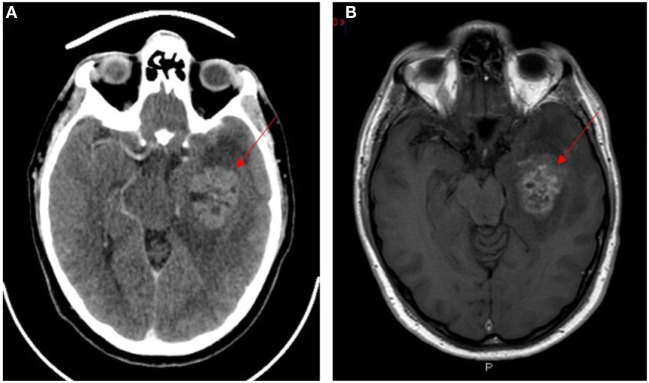
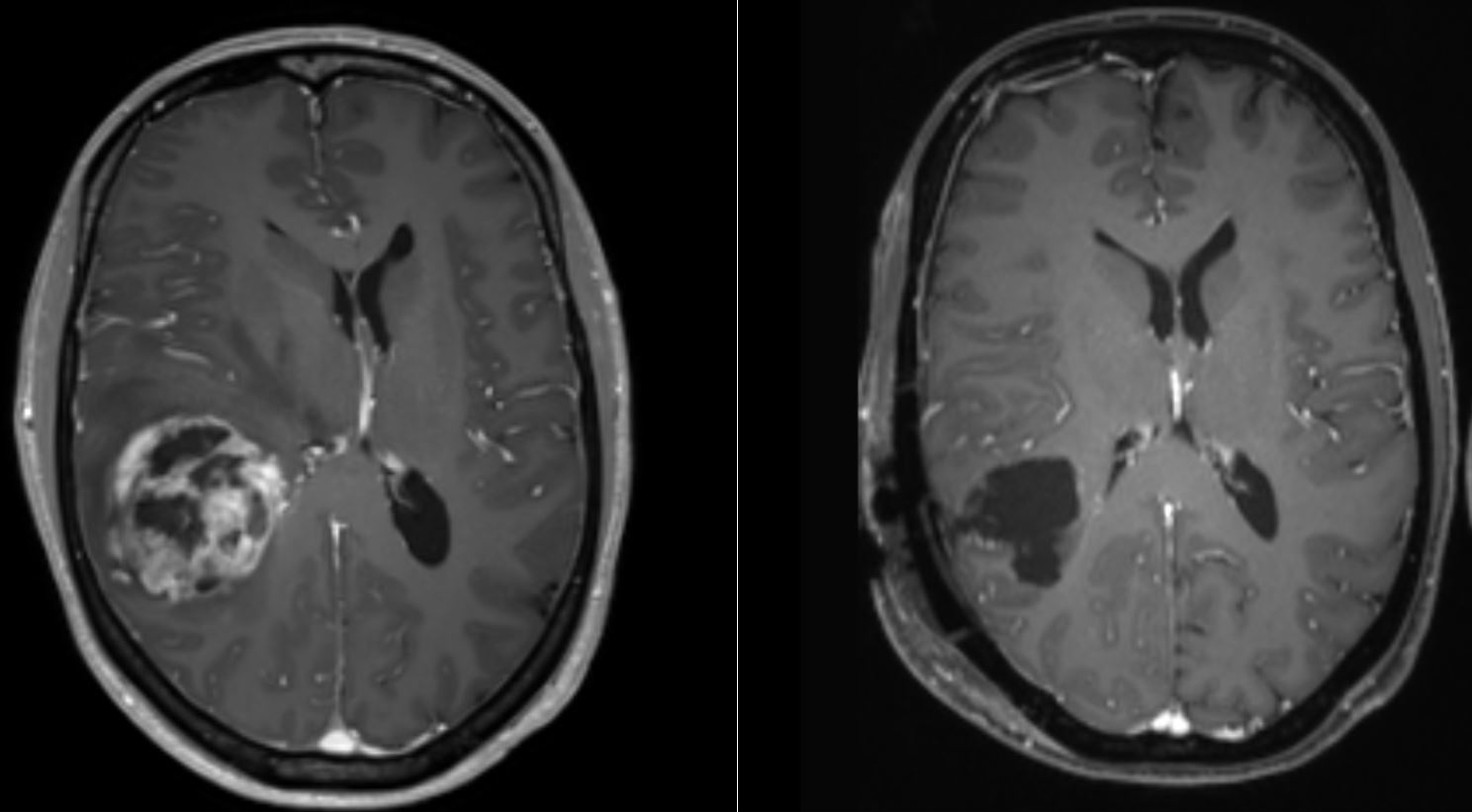
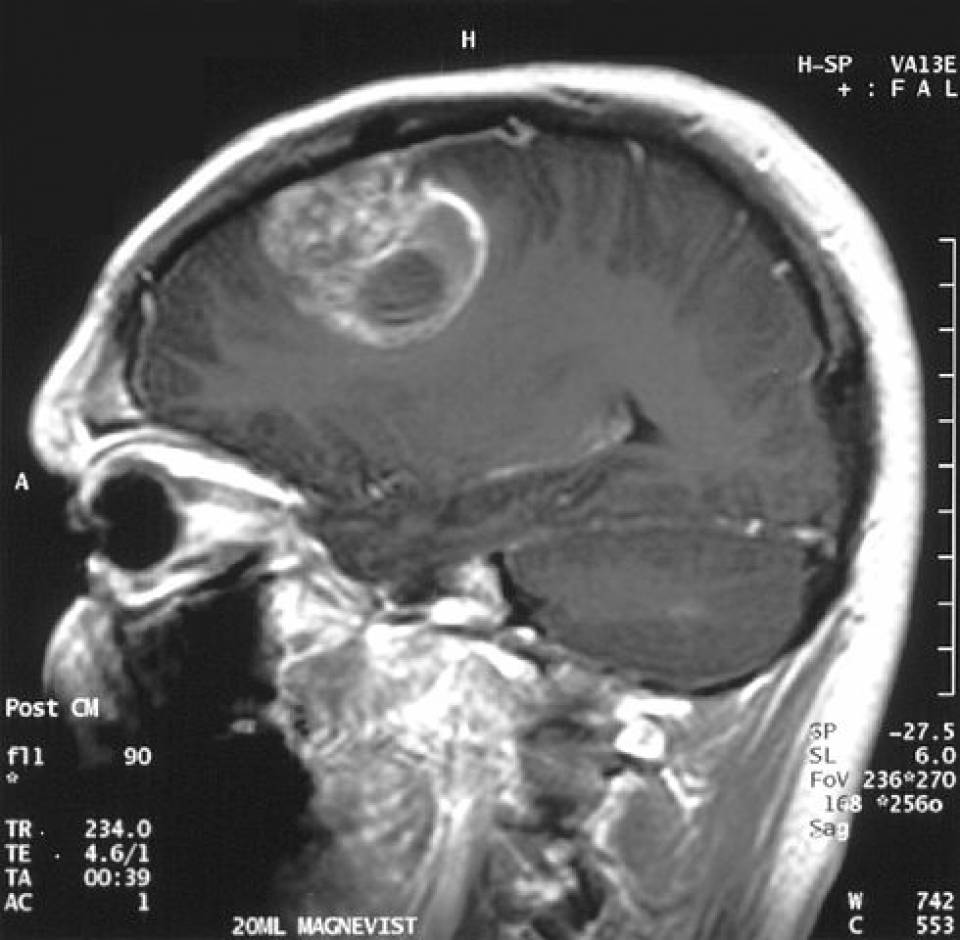
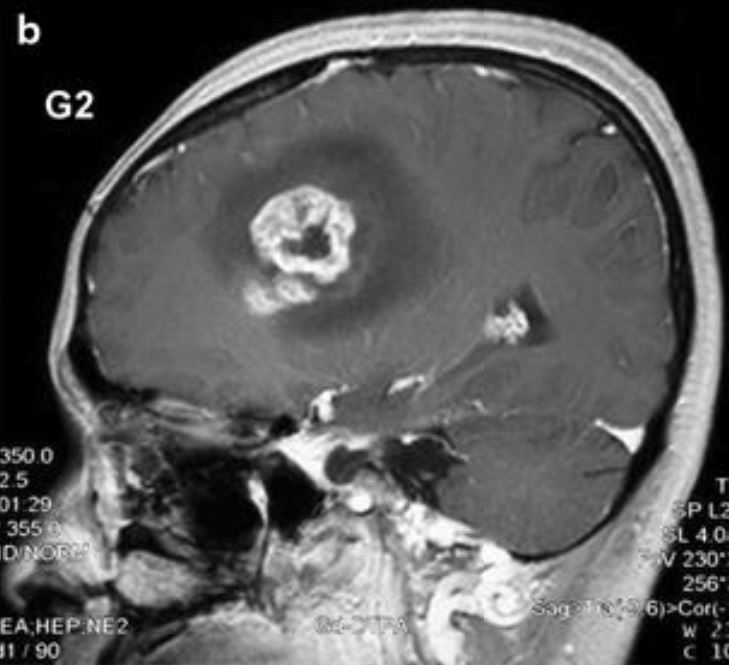
    • Las imágenes ponderadas en EN Erythema nodosum is an immune-mediated panniculitis (inflammation of the subcutaneous fat) caused by a type IV (delayed-type) hypersensitivity reaction. It commonly manifests in young women as tender, erythematous nodules on the shins. Erythema Nodosum T1 muestran una masa hipointensa, de forma irregular, con un realce en EN Erythema nodosum is an immune-mediated panniculitis (inflammation of the subcutaneous fat) caused by a type IV (delayed-type) hypersensitivity reaction. It commonly manifests in young women as tender, erythematous nodules on the shins. Erythema Nodosum forma de anillo, con una área de aclaramiento central (que indica necrosis Necrosis The death of cells in an organ or tissue due to disease, injury or failure of the blood supply. Ischemic Cell Damage central).
    • Las imágenes ponderadas en EN Erythema nodosum is an immune-mediated panniculitis (inflammation of the subcutaneous fat) caused by a type IV (delayed-type) hypersensitivity reaction. It commonly manifests in young women as tender, erythematous nodules on the shins. Erythema Nodosum T2 muestran una lesión hiperintensa, de forma irregular, con una amplia zona de edema Edema Edema is a condition in which excess serous fluid accumulates in the body cavity or interstitial space of connective tissues. Edema is a symptom observed in several medical conditions. It can be categorized into 2 types, namely, peripheral (in the extremities) and internal (in an organ or body cavity). Edema circundante,
  • TC:
    • Indicado en EN Erythema nodosum is an immune-mediated panniculitis (inflammation of the subcutaneous fat) caused by a type IV (delayed-type) hypersensitivity reaction. It commonly manifests in young women as tender, erythematous nodules on the shins. Erythema Nodosum pacientes con una contraindicación para la RM o en EN Erythema nodosum is an immune-mediated panniculitis (inflammation of the subcutaneous fat) caused by a type IV (delayed-type) hypersensitivity reaction. It commonly manifests in young women as tender, erythematous nodules on the shins. Erythema Nodosum eventos agudos (por ejemplo, para descartar una hemorragia o un accidente cerebrovascular)
    • Las lesiones aparecen hipointensas en EN Erythema nodosum is an immune-mediated panniculitis (inflammation of the subcutaneous fat) caused by a type IV (delayed-type) hypersensitivity reaction. It commonly manifests in young women as tender, erythematous nodules on the shins. Erythema Nodosum comparación con el tejido cerebral adyacente.
    • El desplazamiento de la línea media está presente debido a un edema Edema Edema is a condition in which excess serous fluid accumulates in the body cavity or interstitial space of connective tissues. Edema is a symptom observed in several medical conditions. It can be categorized into 2 types, namely, peripheral (in the extremities) and internal (in an organ or body cavity). Edema de moderado a severo.

Biopsia

Se requiere una muestra histopatológica obtenida mediante biopsia para el diagnóstico definitivo. Los LOS Neisseria hallazgos incluyen:
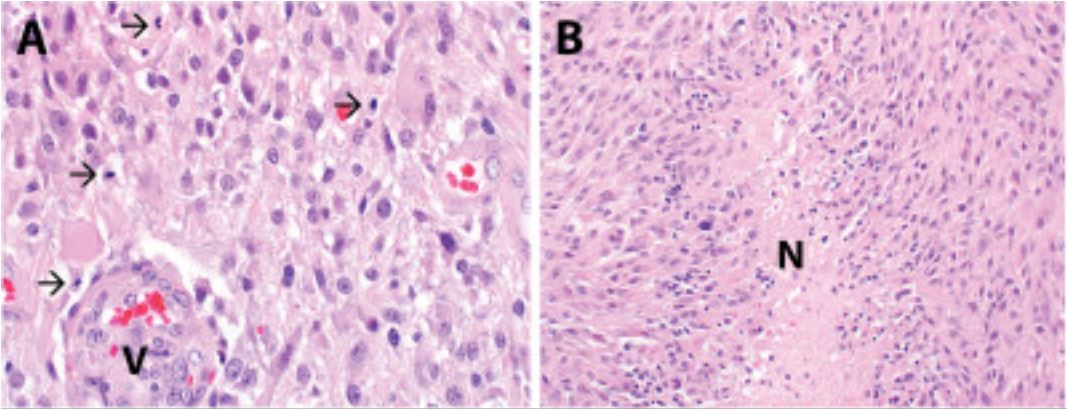
  • Áreas de necrosis Necrosis The death of cells in an organ or tissue due to disease, injury or failure of the blood supply. Ischemic Cell Damage (característica diagnóstica clave para diferenciar el glioblastoma multiforme Glioblastoma multiforme Glioblastoma multiforme is a high-grade astrocytoma, an aggressive brain tumor arising from astrocytes, with an unknown cause and a poorly understood link to risk factors. There are two main types: primary, a more aggressive form seen more commonly in older patients, and secondary, developing from lower-grade astrocytomas and seen more commonly in younger patients. Glioblastoma Multiforme de los LOS Neisseria astrocitomas de grado III)
  • Áreas de proliferación microvascular
  • Células astrocíticas irregulares y alargadas con núcleos eosinófilos e hipercromáticos
  • Marcado pleomorfismo nuclear y atipia
  • Múltiples figuras mitóticas
  • Pruebas moleculares clave para realizar en EN Erythema nodosum is an immune-mediated panniculitis (inflammation of the subcutaneous fat) caused by a type IV (delayed-type) hypersensitivity reaction. It commonly manifests in young women as tender, erythematous nodules on the shins. Erythema Nodosum la muestra de la biopsia:
    • Tinción inmunohistoquímica para mutaciones en EN Erythema nodosum is an immune-mediated panniculitis (inflammation of the subcutaneous fat) caused by a type IV (delayed-type) hypersensitivity reaction. It commonly manifests in young women as tender, erythematous nodules on the shins. Erythema Nodosum IDH y p53
    • Ensayos de metilación o PCR PCR Polymerase chain reaction (PCR) is a technique that amplifies DNA fragments exponentially for analysis. The process is highly specific, allowing for the targeting of specific genomic sequences, even with minuscule sample amounts. The PCR cycles multiple times through 3 phases: denaturation of the template DNA, annealing of a specific primer to the individual DNA strands, and synthesis/elongation of new DNA molecules. Polymerase Chain Reaction (PCR) para evaluar el estado de metilación del promotor MGMT

Tratamiento y Pronóstico

El enfoque principal del tratamiento es la intervención quirúrgica, seguida de radioterapia y quimioterapia. Ningún tratamiento es curativo y el pronóstico sigue siendo malo, incluso con un tratamiento agresivo.

Retos en EN Erythema nodosum is an immune-mediated panniculitis (inflammation of the subcutaneous fat) caused by a type IV (delayed-type) hypersensitivity reaction. It commonly manifests in young women as tender, erythematous nodules on the shins. Erythema Nodosum el tratamiento

Los LOS Neisseria retos que dificultan el tratamiento de los LOS Neisseria glioblastomas son:

  • Localización del tumor Tumor Inflammation
  • Márgenes tumorales mal definidos que complican la resección completa.
  • Capacidad limitada de los LOS Neisseria medicamentos para atravesar la barrera hematoencefálica
  • Interrupción del suministro de sangre dentro del tumor Tumor Inflammation, lo que hace HACE Altitude Sickness que la administración de medicamentos sea aún menos eficaz
  • Neurotoxicidad de los LOS Neisseria tratamientos
  • Convulsiones inducidas por tumores

Tratamiento primario

  • Intervención quirúrgica:
    • El objetivo es realizar una resección máxima
    • Efectos de la resección quirúrgica (beneficioso):
      • Reducción de la masa tumoral (lo que también hace HACE Altitude Sickness que la radiación y la quimioterapia sean más eficaces)
      • Alivio de la PIC
      • Mejora de la supervivencia y la calidad de vida
    • Los LOS Neisseria estudios de imagen preoperatorios son importantes para determinar la localización y la extensión del tumor Tumor Inflammation.
  • Radioterapia:
    • Mejora las tasas de supervivencia
    • Inicia después de la cirugía
  • Quimioterapia:
    • Agente principal: temozolomida:
      • Agente alquilante
      • Administrado después de la cirugía por 6 ciclos
    • Otros agentes quimioterapéuticos son:
      • Obleas de polímero de carmustina (implantadas en EN Erythema nodosum is an immune-mediated panniculitis (inflammation of the subcutaneous fat) caused by a type IV (delayed-type) hypersensitivity reaction. It commonly manifests in young women as tender, erythematous nodules on the shins. Erythema Nodosum el momento de la resección quirúrgica)
      • Cisplatino
      • Inhibidores de la tirosina quinasa: erlotinib Erlotinib A quinazoline derivative and antineoplastic agent that functions as a protein kinase inhibitor for egfr associated tyrosine kinase. It is used in the treatment of non-small cell lung cancer. Targeted and Other Nontraditional Antineoplastic Therapy, gefitinib Gefitinib A selective tyrosine kinase inhibitor for the epidermal growth factor receptor (egfr) that is used for the treatment of locally advanced or metastatic non-small cell lung cancer. Targeted and Other Nontraditional Antineoplastic Therapy
      • Bevacizumab Bevacizumab An anti-vegf humanized murine monoclonal antibody. It inhibits vegf receptors and helps to prevent pathologic angiogenesis. Targeted and Other Nontraditional Antineoplastic Therapy + irinotecán (para el glioblastoma multiforme Glioblastoma multiforme Glioblastoma multiforme is a high-grade astrocytoma, an aggressive brain tumor arising from astrocytes, with an unknown cause and a poorly understood link to risk factors. There are two main types: primary, a more aggressive form seen more commonly in older patients, and secondary, developing from lower-grade astrocytomas and seen more commonly in younger patients. Glioblastoma Multiforme recurrente)
  • Terapia con campo eléctrico alterno (el dispositivo Optune):
    • Utiliza campos eléctricos alternos de baja intensidad y frecuencia intermedia para dirigirse selectivamente a las células en EN Erythema nodosum is an immune-mediated panniculitis (inflammation of the subcutaneous fat) caused by a type IV (delayed-type) hypersensitivity reaction. It commonly manifests in young women as tender, erythematous nodules on the shins. Erythema Nodosum división activa
    • Indicaciones:
      • Puede utilizarse en EN Erythema nodosum is an immune-mediated panniculitis (inflammation of the subcutaneous fat) caused by a type IV (delayed-type) hypersensitivity reaction. It commonly manifests in young women as tender, erythematous nodules on the shins. Erythema Nodosum combinación con la temozolomida como terapia inicial
      • Glioblastoma multiforme Glioblastoma multiforme Glioblastoma multiforme is a high-grade astrocytoma, an aggressive brain tumor arising from astrocytes, with an unknown cause and a poorly understood link to risk factors. There are two main types: primary, a more aggressive form seen more commonly in older patients, and secondary, developing from lower-grade astrocytomas and seen more commonly in younger patients. Glioblastoma Multiforme recurrente

Tratamiento de soporte

  • Profilaxis de la trombosis venosa profunda (TVP): en EN Erythema nodosum is an immune-mediated panniculitis (inflammation of the subcutaneous fat) caused by a type IV (delayed-type) hypersensitivity reaction. It commonly manifests in young women as tender, erythematous nodules on the shins. Erythema Nodosum pacientes no ambulatorios y hospitalizados
  • Tratamiento anticonvulsivo: en EN Erythema nodosum is an immune-mediated panniculitis (inflammation of the subcutaneous fat) caused by a type IV (delayed-type) hypersensitivity reaction. It commonly manifests in young women as tender, erythematous nodules on the shins. Erythema Nodosum pacientes con antecedentes de convulsiones (el tratamiento anticonvulsivo profiláctico sigue siendo controvertido)
  • Corticosteroides (e.g., dexametasona): pueden utilizarse por sus propiedades antiinflamatorias para reducir el efecto de masa tumoral y el edema Edema Edema is a condition in which excess serous fluid accumulates in the body cavity or interstitial space of connective tissues. Edema is a symptom observed in several medical conditions. It can be categorized into 2 types, namely, peripheral (in the extremities) and internal (in an organ or body cavity). Edema

Pronóstico

  • Sin terapia, los LOS Neisseria pacientes no suelen sobrevivir más allá de 3 meses.
  • Los LOS Neisseria pacientes tratados con una terapia óptima tienen una supervivencia media de 12‒15 meses:
    • Tasa de supervivencia a 1 año: 38%–50%
    • Tasa de supervivencia a 5 años: 5%–10%
  • Factores que afectan al AL Amyloidosis pronóstico:
    • Edad
    • Metilación MGMT y el estado de la mutación IDH
    • Nivel de capacidad funcional
    • Extensión de la resección lograda con la cirugía

Related videos

Diagnóstico Diferencial

En EN Erythema nodosum is an immune-mediated panniculitis (inflammation of the subcutaneous fat) caused by a type IV (delayed-type) hypersensitivity reaction. It commonly manifests in young women as tender, erythematous nodules on the shins. Erythema Nodosum el caso de los LOS Neisseria pacientes que presentan hallazgos neurológicos, deben considerarse las siguientes afecciones en EN Erythema nodosum is an immune-mediated panniculitis (inflammation of the subcutaneous fat) caused by a type IV (delayed-type) hypersensitivity reaction. It commonly manifests in young women as tender, erythematous nodules on the shins. Erythema Nodosum el diagnóstico diferencial del glioblastoma multiforme Glioblastoma multiforme Glioblastoma multiforme is a high-grade astrocytoma, an aggressive brain tumor arising from astrocytes, with an unknown cause and a poorly understood link to risk factors. There are two main types: primary, a more aggressive form seen more commonly in older patients, and secondary, developing from lower-grade astrocytomas and seen more commonly in younger patients. Glioblastoma Multiforme.

Otros tumores cerebrales

  • Astrocitoma anaplásico: astrocitomas de grado III que suelen evolucionar hacia un glioblastoma multiforme Glioblastoma multiforme Glioblastoma multiforme is a high-grade astrocytoma, an aggressive brain tumor arising from astrocytes, with an unknown cause and a poorly understood link to risk factors. There are two main types: primary, a more aggressive form seen more commonly in older patients, and secondary, developing from lower-grade astrocytomas and seen more commonly in younger patients. Glioblastoma Multiforme secundario en EN Erythema nodosum is an immune-mediated panniculitis (inflammation of the subcutaneous fat) caused by a type IV (delayed-type) hypersensitivity reaction. It commonly manifests in young women as tender, erythematous nodules on the shins. Erythema Nodosum un plazo de 2 años. La presentación clínica es similar a la del glioblastoma multiforme Glioblastoma multiforme Glioblastoma multiforme is a high-grade astrocytoma, an aggressive brain tumor arising from astrocytes, with an unknown cause and a poorly understood link to risk factors. There are two main types: primary, a more aggressive form seen more commonly in older patients, and secondary, developing from lower-grade astrocytomas and seen more commonly in younger patients. Glioblastoma Multiforme. El diagnóstico se realiza mediante imagenología y biopsia, con la diferencia clave de que los LOS Neisseria astrocitomas anaplásicos carecen de necrosis Necrosis The death of cells in an organ or tissue due to disease, injury or failure of the blood supply. Ischemic Cell Damage y proliferación microvascular. El tratamiento es la resección quirúrgica con radiación y quimioterapia.
  • Oligodendroglioma Oligodendroglioma Oligodendrogliomas are malignant CNS tumors arising from neural glial cell precursors. Oligodendrogliomas often arise in the frontal lobes of the brain and have a generally favorable prognosis when compared to other gliomas. Oligodendrogliomas are the 3rd most common CNS tumor. The most frequent presenting symptom is a seizure. Oligodendroglioma: Tumor Tumor Inflammation del SNC que surge de los LOS Neisseria oligodendrocitos. El oligodendroglioma Oligodendroglioma Oligodendrogliomas are malignant CNS tumors arising from neural glial cell precursors. Oligodendrogliomas often arise in the frontal lobes of the brain and have a generally favorable prognosis when compared to other gliomas. Oligodendrogliomas are the 3rd most common CNS tumor. The most frequent presenting symptom is a seizure. Oligodendroglioma se desarrolla con mayor frecuencia en EN Erythema nodosum is an immune-mediated panniculitis (inflammation of the subcutaneous fat) caused by a type IV (delayed-type) hypersensitivity reaction. It commonly manifests in young women as tender, erythematous nodules on the shins. Erythema Nodosum el hemisferio cerebral, normalmente en EN Erythema nodosum is an immune-mediated panniculitis (inflammation of the subcutaneous fat) caused by a type IV (delayed-type) hypersensitivity reaction. It commonly manifests in young women as tender, erythematous nodules on the shins. Erythema Nodosum el lóbulo frontal Frontal The bone that forms the frontal aspect of the skull. Its flat part forms the forehead, articulating inferiorly with the nasal bone and the cheek bone on each side of the face. Skull: Anatomy y se presenta de forma similar al AL Amyloidosis glioblastoma multiforme Glioblastoma multiforme Glioblastoma multiforme is a high-grade astrocytoma, an aggressive brain tumor arising from astrocytes, with an unknown cause and a poorly understood link to risk factors. There are two main types: primary, a more aggressive form seen more commonly in older patients, and secondary, developing from lower-grade astrocytomas and seen more commonly in younger patients. Glioblastoma Multiforme. Un método clave para diferenciar los LOS Neisseria oligodendrogliomas de los LOS Neisseria glioblastoma multiforme Glioblastoma multiforme Glioblastoma multiforme is a high-grade astrocytoma, an aggressive brain tumor arising from astrocytes, with an unknown cause and a poorly understood link to risk factors. There are two main types: primary, a more aggressive form seen more commonly in older patients, and secondary, developing from lower-grade astrocytomas and seen more commonly in younger patients. Glioblastoma Multiforme es el análisis de una muestra de biopsia para detectar una codeleción 1p/19q, que suele estar presente en EN Erythema nodosum is an immune-mediated panniculitis (inflammation of the subcutaneous fat) caused by a type IV (delayed-type) hypersensitivity reaction. It commonly manifests in young women as tender, erythematous nodules on the shins. Erythema Nodosum los LOS Neisseria oligodendrogliomas, pero ausente en EN Erythema nodosum is an immune-mediated panniculitis (inflammation of the subcutaneous fat) caused by a type IV (delayed-type) hypersensitivity reaction. It commonly manifests in young women as tender, erythematous nodules on the shins. Erythema Nodosum los LOS Neisseria glioblastoma multiforme Glioblastoma multiforme Glioblastoma multiforme is a high-grade astrocytoma, an aggressive brain tumor arising from astrocytes, with an unknown cause and a poorly understood link to risk factors. There are two main types: primary, a more aggressive form seen more commonly in older patients, and secondary, developing from lower-grade astrocytomas and seen more commonly in younger patients. Glioblastoma Multiforme. El tratamiento implica la resección quirúrgica, posiblemente acompañada de radiación y/o quimioterapia.
  • Linfoma primario del SNC: variante rara del linfoma no Hodgkin que afecta al AL Amyloidosis cerebro, las leptomeninges Leptomeninges Meninges: Anatomy, los LOS Neisseria ojos o la médula espinal, sin evidencia de enfermedad sistémica. La inmunodeficiencia, incluida la infección por el VIH, es un factor de riesgo primario. La presentación clínica depende de la localización del tumor Tumor Inflammation y es similar a la del glioblastoma multiforme Glioblastoma multiforme Glioblastoma multiforme is a high-grade astrocytoma, an aggressive brain tumor arising from astrocytes, with an unknown cause and a poorly understood link to risk factors. There are two main types: primary, a more aggressive form seen more commonly in older patients, and secondary, developing from lower-grade astrocytomas and seen more commonly in younger patients. Glioblastoma Multiforme. El diagnóstico se realiza por medio de imagenología (normalmente RM), biopsia y potencialmente, evaluación del LCR. El tratamiento suele consistir en EN Erythema nodosum is an immune-mediated panniculitis (inflammation of the subcutaneous fat) caused by a type IV (delayed-type) hypersensitivity reaction. It commonly manifests in young women as tender, erythematous nodules on the shins. Erythema Nodosum quimioterapia, potencialmente radiación en EN Erythema nodosum is an immune-mediated panniculitis (inflammation of the subcutaneous fat) caused by a type IV (delayed-type) hypersensitivity reaction. It commonly manifests in young women as tender, erythematous nodules on the shins. Erythema Nodosum todo el cerebro y en EN Erythema nodosum is an immune-mediated panniculitis (inflammation of the subcutaneous fat) caused by a type IV (delayed-type) hypersensitivity reaction. It commonly manifests in young women as tender, erythematous nodules on the shins. Erythema Nodosum pacientes con VIH/SIDA se añade terapia antirretroviral.
  • Tumor Tumor Inflammation metastásico: células neoplásicas que se han extendido al AL Amyloidosis cerebro a partir de tumores primarios en EN Erythema nodosum is an immune-mediated panniculitis (inflammation of the subcutaneous fat) caused by a type IV (delayed-type) hypersensitivity reaction. It commonly manifests in young women as tender, erythematous nodules on the shins. Erythema Nodosum otra parte del cuerpo. Los LOS Neisseria tumores metastásicos son las neoplasias más comunes en EN Erythema nodosum is an immune-mediated panniculitis (inflammation of the subcutaneous fat) caused by a type IV (delayed-type) hypersensitivity reaction. It commonly manifests in young women as tender, erythematous nodules on the shins. Erythema Nodosum el cerebro. La neuroimagenología suele mostrar múltiples focos del carcinoma, lo que sugiere un origen fuera del cerebro. La presentación clínica depende del tumor Tumor Inflammation primario y de la localización y extensión de la metástasis cerebral. El tratamiento se dirige a la neoplasia subyacente y puede incluir la resección quirúrgica, la radioterapia y la quimioterapia.

Procesos no neoplásicos

  • Hemorragia intracraneal: es una hemorragia potencialmente mortal dentro del cráneo; es la segunda causa más frecuente de accidente cerebrovascular. Las hemorragias pueden deberse a la hipertensión, a la rotura de aneurismas o a hemorragias por malformaciones vasculares. Los LOS Neisseria pacientes suelen presentar signos de aumento de la PIC y/o hallazgos neurológicos. El diagnóstico se realiza mediante la presentación clínica y estudios de imagen (a menudo con una tomografía computarizada en EN Erythema nodosum is an immune-mediated panniculitis (inflammation of the subcutaneous fat) caused by a type IV (delayed-type) hypersensitivity reaction. It commonly manifests in young women as tender, erythematous nodules on the shins. Erythema Nodosum un medio de cuidados intensivos). El tratamiento implica un tratamiento médico y quirúrgico urgente.
  • Encefalitis: inflamación del parénquima cerebral debida a una infección. La encefalitis se presenta con fiebre, cefalea, dolor Dolor Inflammation muscular y articular, fatiga y convulsiones. La enfermedad se diagnostica mediante estudios de imagen, análisis del LCR, pruebas de laboratorio y EEG EEG Seizures. El tratamiento es de soporte y consiste en EN Erythema nodosum is an immune-mediated panniculitis (inflammation of the subcutaneous fat) caused by a type IV (delayed-type) hypersensitivity reaction. It commonly manifests in young women as tender, erythematous nodules on the shins. Erythema Nodosum la administración de antiinflamatorios y si la etiología es vírica, de antivirales.
  • Absceso cerebral: acumulación de pus dentro del cerebro que se desarrolla en EN Erythema nodosum is an immune-mediated panniculitis (inflammation of the subcutaneous fat) caused by a type IV (delayed-type) hypersensitivity reaction. It commonly manifests in young women as tender, erythematous nodules on the shins. Erythema Nodosum respuesta a una infección o a un traumatismo que se presenta clínicamente con fiebre, cefalea, convulsiones, náuseas y vómitos. El absceso cerebral se diagnostica por la presentación clínica, las pruebas de laboratorio e imagenología cerebral. El tratamiento incluye terapia con antibióticos y cirugía para drenar el absceso.

Referencias

  1. Prabhu, V. C. (2021). Glioblastoma multiforme. American Association of Neurological Surgeons. Retrieved May 21, 2021, from https://www.aans.org/en/Patients/Neurosurgical-Conditions-and-Treatments/Glioblastoma-Multiforme
  2. Bruce, J. N., Kennedy, B. C. (2019). Glioblastoma multiforme. Medscape. Retrieved May 21, 2021, fromhttps://emedicine.medscape.com/article/283252-overview
  3. Hanif, F., et al. (2017). Glioblastoma multiforme: A review of its epidemiology and pathogenesis through clinical presentation and treatment. Asian Pac J Cancer Prev. 18(1), 3–9. https://www.ncbi.nlm.nih.gov/pmc/articles/PMC5563115/
  4. Dietrich, J. (2021). Clinical presentation, diagnosis, and initial surgical management of high-grade gliomas. In Eichler, A. F. (Ed.), UpToDate. Retrieved May 21, 2021, from https://www.uptodate.com/contents/clinical-presentation-diagnosis-and-initial-surgical-management-of-high-grade-gliomas
  5. Batchelor, T. (2021). Initial treatment and prognosis of newly diagnosed glioblastoma in adults. In Eichler, A. F. (Ed.), UpToDate. Retrieved May 21, 2021, from https://www.uptodate.com/contents/initial-treatment-and-prognosis-of-newly-diagnosed-glioblastoma-in-adults

¡Crea tu cuenta gratis o inicia una sesión para seguir leyendo!

Regístrate ahora y obtén acceso gratuito a Lecturio con páginas de concepto, videos médicos y cuestionarios para tu educación médica.

User Reviews

Details