Domina Conceptos Médicos

Estudia para la escuela de medicina y tus examenes con Lecturio.

Cryptococcus/Criptococosis

La criptococosis es una infección fúngica oportunista causada por especies de Cryptococcus Cryptococcus Cryptococcosis is an opportunistic, fungal infection caused by the Cryptococcus species. The principal pathogens in humans are C. neoformans (primary) and C. gattii. Cryptococcus neoformans is typically found in pigeon droppings and acquired by inhaling dust from contaminated soil. The majority of affected patients are immunocompromised. Cryptococcus/Cryptococcosis. Los LOS Neisseria principales patógenos en EN Erythema nodosum is an immune-mediated panniculitis (inflammation of the subcutaneous fat) caused by a type IV (delayed-type) hypersensitivity reaction. It commonly manifests in young women as tender, erythematous nodules on the shins. Erythema Nodosum humanos son C. neoformans C. neoformans A species of the fungus cryptococcus. Its teleomorph is filobasidiella neoformans. Cryptococcus/Cryptococcosis (principalmente) y C. gattii C. gattii A species of the fungus cryptococcus. Its teleomorph is filobasidiella bacillispora. Cryptococcus/Cryptococcosis. Cryptococcus Cryptococcus Cryptococcosis is an opportunistic, fungal infection caused by the Cryptococcus species. The principal pathogens in humans are C. neoformans (primary) and C. gattii. Cryptococcus neoformans is typically found in pigeon droppings and acquired by inhaling dust from contaminated soil. The majority of affected patients are immunocompromised. Cryptococcus/Cryptococcosis neoformans se encuentra normalmente en EN Erythema nodosum is an immune-mediated panniculitis (inflammation of the subcutaneous fat) caused by a type IV (delayed-type) hypersensitivity reaction. It commonly manifests in young women as tender, erythematous nodules on the shins. Erythema Nodosum los LOS Neisseria excrementos de las palomas y se adquiere al AL Amyloidosis inhalar el polvo del suelo contaminado. La mayoría de los LOS Neisseria pacientes que se ven afectados están inmunocomprometidos. Los LOS Neisseria pacientes con SIDA, uso crónico de esteroides y trasplante de órgano se ven especialmente afectados. El principal factor de virulencia es la presencia de la cápsula antifagocítica, formada por repetidos antígenos polisacáridos capsulares. La infección suele afectar a los LOS Neisseria pulmones y se presenta como una lesión primaria o neumonía. Si la diseminación ocurre puede afectar al AL Amyloidosis cerebro y las meninges Meninges The brain and the spinal cord are enveloped by 3 overlapping layers of connective tissue called the meninges. The layers are, from the most external layer to the most internal layer, the dura mater, arachnoid mater, and pia mater. Between these layers are 3 potential spaces called the epidural, subdural, and subarachnoid spaces. Meninges: Anatomy, la piel, los LOS Neisseria huesos y los LOS Neisseria órganos viscerales. El tratamiento de la meningitis Meningitis Meningitis is inflammation of the meninges, the protective membranes of the brain, and spinal cord. The causes of meningitis are varied, with the most common being bacterial or viral infection. The classic presentation of meningitis is a triad of fever, altered mental status, and nuchal rigidity. Meningitis criptocócica suele consistir en EN Erythema nodosum is an immune-mediated panniculitis (inflammation of the subcutaneous fat) caused by a type IV (delayed-type) hypersensitivity reaction. It commonly manifests in young women as tender, erythematous nodules on the shins. Erythema Nodosum anfotericina B y flucitosina, seguido de fluconazol. La criptococosis es una enfermedad definitoria del SIDA y se asocia típicamente a un recuento de CD4 < 100 células/μL.

Last updated: Dec 15, 2025

Editorial responsibility: Stanley Oiseth, Lindsay Jones, Evelin Maza

Características Generales de Cryptococcus

Características

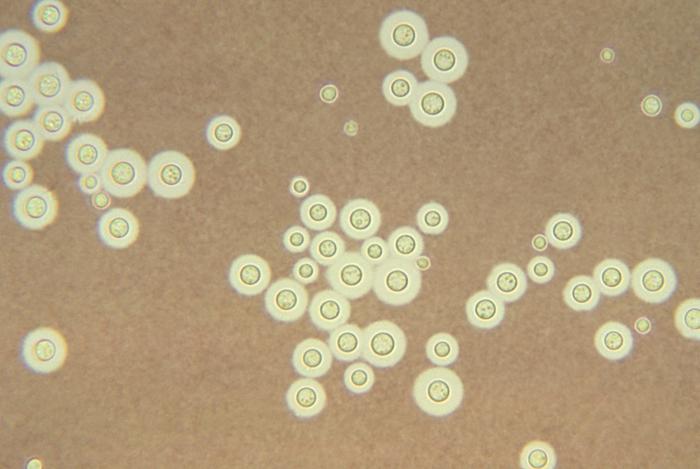
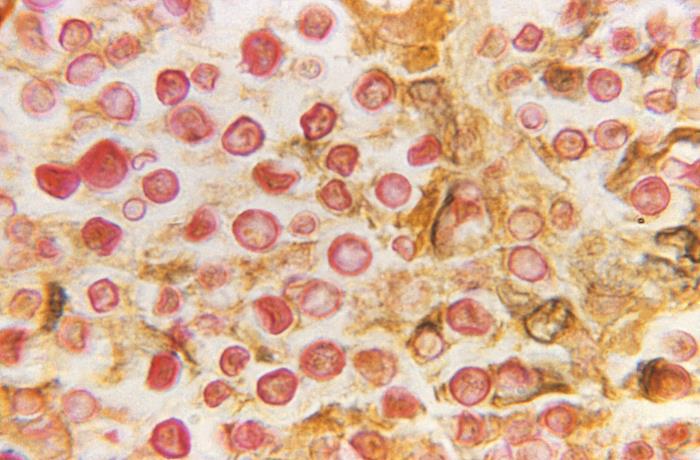
  • Morfología: levadura redonda u ovalada, muy encapsulada (no dimórfica)
    • 5–10 µm de diámetro
    • Espesor variable Variable Variables represent information about something that can change. The design of the measurement scales, or of the methods for obtaining information, will determine the data gathered and the characteristics of that data. As a result, a variable can be qualitative or quantitative, and may be further classified into subgroups. Types of Variables de la cápsula: puede ser > 50% del diámetro de la levadura
  • Características:
    • Aerobio obligado
    • Ureasa positivo
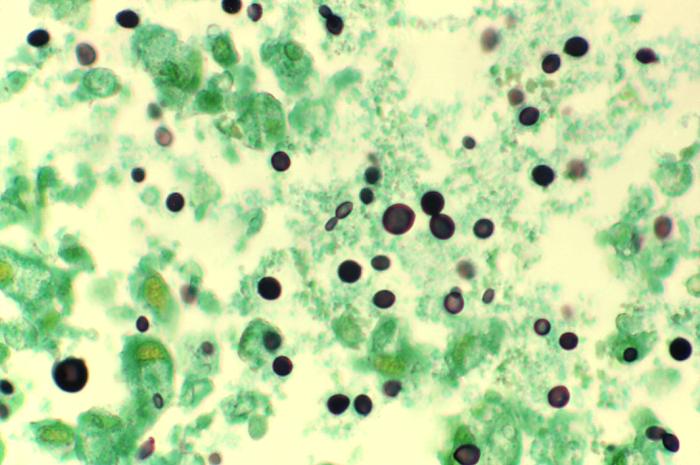
    • Se puede visualizar mediante tinciones con tinta china, plata metenamina y mucicarmín

Especies clínicamente relevantes

  • El género Cryptococcus Cryptococcus Cryptococcosis is an opportunistic, fungal infection caused by the Cryptococcus species. The principal pathogens in humans are C. neoformans (primary) and C. gattii. Cryptococcus neoformans is typically found in pigeon droppings and acquired by inhaling dust from contaminated soil. The majority of affected patients are immunocompromised. Cryptococcus/Cryptococcosis contiene más de 50 especies.
  • Los LOS Neisseria principales patógenos clínicamente importantes en EN Erythema nodosum is an immune-mediated panniculitis (inflammation of the subcutaneous fat) caused by a type IV (delayed-type) hypersensitivity reaction. It commonly manifests in young women as tender, erythematous nodules on the shins. Erythema Nodosum humanos son C. neoformans C. neoformans A species of the fungus cryptococcus. Its teleomorph is filobasidiella neoformans. Cryptococcus/Cryptococcosis y C. gattii C. gattii A species of the fungus cryptococcus. Its teleomorph is filobasidiella bacillispora. Cryptococcus/Cryptococcosis.
  • C. neoformans C. neoformans A species of the fungus cryptococcus. Its teleomorph is filobasidiella neoformans. Cryptococcus/Cryptococcosis es el principal miembro patógeno de este género.

Presentaciones de la enfermedad

  • Criptococosis pulmonar
  • Meningitis Meningitis Meningitis is inflammation of the meninges, the protective membranes of the brain, and spinal cord. The causes of meningitis are varied, with the most common being bacterial or viral infection. The classic presentation of meningitis is a triad of fever, altered mental status, and nuchal rigidity. Meningitis criptocócica
  • Criptococosis cutánea
  • Otras formas (menos comunes):
    • Osteomielitis
    • Criptococosis ocular
    • Pielonefritis
    • Endocarditis Endocarditis Endocarditis is an inflammatory disease involving the inner lining (endometrium) of the heart, most commonly affecting the cardiac valves. Both infectious and noninfectious etiologies lead to vegetations on the valve leaflets. Patients may present with nonspecific symptoms such as fever and fatigue. Endocarditis
    • Hepatitis
    • Sinusitis Sinusitis Sinusitis refers to inflammation of the mucosal lining of the paranasal sinuses. The condition usually occurs concurrently with inflammation of the nasal mucosa (rhinitis), a condition known as rhinosinusitis. Acute sinusitis is due to an upper respiratory infection caused by a viral, bacterial, or fungal agent. Sinusitis

Epidemiología

Incidencia

  • La incidencia de la criptococosis aumentó notablemente entre 1981–1992 debido a la epidemia de SIDA.
  • El desarrollo y el uso de corticosteroides, junto con la mejora de las tasas de supervivencia de los LOS Neisseria pacientes con neoplasias malignas, también contribuyeron al AL Amyloidosis aumento de la incidencia.
  • Tasa de incidencia mundial: 1 millón al AL Amyloidosis año
  • La mayoría de los LOS Neisseria casos reportados han sido en EN Erythema nodosum is an immune-mediated panniculitis (inflammation of the subcutaneous fat) caused by a type IV (delayed-type) hypersensitivity reaction. It commonly manifests in young women as tender, erythematous nodules on the shins. Erythema Nodosum pacientes con SIDA:
    • Aproximadamente 7%–15% de los LOS Neisseria pacientes con SIDA desarrollan infecciones criptocócicas
    • La incidencia ha HA Hemolytic anemia (HA) is the term given to a large group of anemias that are caused by the premature destruction/hemolysis of circulating red blood cells (RBCs). Hemolysis can occur within (intravascular hemolysis) or outside the blood vessels (extravascular hemolysis). Hemolytic Anemia disminuido en EN Erythema nodosum is an immune-mediated panniculitis (inflammation of the subcutaneous fat) caused by a type IV (delayed-type) hypersensitivity reaction. It commonly manifests in young women as tender, erythematous nodules on the shins. Erythema Nodosum los LOS Neisseria últimos 20 años debido a los LOS Neisseria avances en EN Erythema nodosum is an immune-mediated panniculitis (inflammation of the subcutaneous fat) caused by a type IV (delayed-type) hypersensitivity reaction. It commonly manifests in young women as tender, erythematous nodules on the shins. Erythema Nodosum la terapia antirretroviral.

Morbilidad y mortalidad

  • Aproximadamente 625 000 muertes al AL Amyloidosis año a nivel mundial
  • El uso de la anfotericina B ha HA Hemolytic anemia (HA) is the term given to a large group of anemias that are caused by the premature destruction/hemolysis of circulating red blood cells (RBCs). Hemolysis can occur within (intravascular hemolysis) or outside the blood vessels (extravascular hemolysis). Hemolytic Anemia mejorado notablemente el pronóstico de los LOS Neisseria pacientes.
  • Tasa de mortalidad del 14% con anfotericina B + flucitosina

Patogénesis

Proceso infeccioso

  • Hábitat:
    • Se encuentra en EN Erythema nodosum is an immune-mediated panniculitis (inflammation of the subcutaneous fat) caused by a type IV (delayed-type) hypersensitivity reaction. It commonly manifests in young women as tender, erythematous nodules on the shins. Erythema Nodosum gran parte en EN Erythema nodosum is an immune-mediated panniculitis (inflammation of the subcutaneous fat) caused by a type IV (delayed-type) hypersensitivity reaction. It commonly manifests in young women as tender, erythematous nodules on the shins. Erythema Nodosum suelos contaminados con excrementos secos de pájaros
    • También se encuentra en EN Erythema nodosum is an immune-mediated panniculitis (inflammation of the subcutaneous fat) caused by a type IV (delayed-type) hypersensitivity reaction. It commonly manifests in young women as tender, erythematous nodules on the shins. Erythema Nodosum la madera en EN Erythema nodosum is an immune-mediated panniculitis (inflammation of the subcutaneous fat) caused by a type IV (delayed-type) hypersensitivity reaction. It commonly manifests in young women as tender, erythematous nodules on the shins. Erythema Nodosum descomposición y en EN Erythema nodosum is an immune-mediated panniculitis (inflammation of the subcutaneous fat) caused by a type IV (delayed-type) hypersensitivity reaction. It commonly manifests in young women as tender, erythematous nodules on the shins. Erythema Nodosum los LOS Neisseria huecos de los LOS Neisseria árboles
  • Transmisión: Las esporas de la levadura se inhalan del suelo contaminado.
  • Patogenicidad y proceso de la enfermedad:
    • Las esporas se depositan en EN Erythema nodosum is an immune-mediated panniculitis (inflammation of the subcutaneous fat) caused by a type IV (delayed-type) hypersensitivity reaction. It commonly manifests in young women as tender, erythematous nodules on the shins. Erythema Nodosum los LOS Neisseria alvéolos pulmonares → son fagocitadas por los LOS Neisseria macrófagos
    • La cápsula criptocócica de polisacáridos impide el reconocimiento dentro de los LOS Neisseria macrófagos → impide la migración de los LOS Neisseria leucocitos
    • El glucuronoxilomanano y el glucuronoxilomannogalactano (conocidos conjuntamente como GXM):
      • Componentes de la cápsula
      • Altamente inmunosupresores
    • C. neoformans C. neoformans A species of the fungus cryptococcus. Its teleomorph is filobasidiella neoformans. Cryptococcus/Cryptococcosis y C. gattii C. gattii A species of the fungus cryptococcus. Its teleomorph is filobasidiella bacillispora. Cryptococcus/Cryptococcosis también producen fenol oxidasa:
      • ↑ Producción de melanina
      • La melanina se acumula en EN Erythema nodosum is an immune-mediated panniculitis (inflammation of the subcutaneous fat) caused by a type IV (delayed-type) hypersensitivity reaction. It commonly manifests in young women as tender, erythematous nodules on the shins. Erythema Nodosum la pared celular e impide los LOS Neisseria ataques del sistema inmunitario del huésped.
  • Individuos sanos: La infección suele ser autolimitada
  • Inmunocomprometidos:
    • El sitio inicial se infecta y luego se extiende por diseminación hematógena
    • Si es contenida, la reactivación en EN Erythema nodosum is an immune-mediated panniculitis (inflammation of the subcutaneous fat) caused by a type IV (delayed-type) hypersensitivity reaction. It commonly manifests in young women as tender, erythematous nodules on the shins. Erythema Nodosum el sitio inicial puede ocurrir más tarde debido a la disminución del estado inmunológico.

Factores de riesgo del huésped

El factor de riesgo más importante para la infección es el estado de inmunidad. En EN Erythema nodosum is an immune-mediated panniculitis (inflammation of the subcutaneous fat) caused by a type IV (delayed-type) hypersensitivity reaction. It commonly manifests in young women as tender, erythematous nodules on the shins. Erythema Nodosum frecuencia decreciente, las siguientes condiciones son las más frecuentemente asociadas a la infección:

  • VIH y SIDA
  • Uso crónico de esteroides
  • Trasplante de órganos
  • Malignidad
  • Enfermedad hepática
  • Sarcoidosis Sarcoidosis Sarcoidosis is a multisystem inflammatory disease that causes noncaseating granulomas. The exact etiology is unknown. Sarcoidosis usually affects the lungs and thoracic lymph nodes, but it can also affect almost every system in the body, including the skin, heart, and eyes, most commonly. Sarcoidosis

Presentación Clínica

Hallazgos generales

La presentación clínica varía según la zona afectada y el estado inmunitario del huésped:
  • En EN Erythema nodosum is an immune-mediated panniculitis (inflammation of the subcutaneous fat) caused by a type IV (delayed-type) hypersensitivity reaction. It commonly manifests in young women as tender, erythematous nodules on the shins. Erythema Nodosum los LOS Neisseria individuos inmunocompetentes, la infección suele ser asintomática y autorresolutiva.
  • Los LOS Neisseria pulmones son los LOS Neisseria que se infectan con mayor frecuencia, seguidos por el SNC.
  • Otras partes del cuerpo también pueden verse afectadas por una infección diseminada.

Criptococosis pulmonar

  • El patrón puede ser muy variable Variable Variables represent information about something that can change. The design of the measurement scales, or of the methods for obtaining information, will determine the data gathered and the characteristics of that data. As a result, a variable can be qualitative or quantitative, and may be further classified into subgroups. Types of Variables: Hasta el 30% de los LOS Neisseria individuos inmunocompetentes son asintomáticos.
  • Síntomas leves a moderados:
    • Fiebre
    • Malestar general
    • Tos TOS Thoracic outlet syndrome (TOS) is a broad term used for a spectrum of syndromes related to the general region of the thoracic outlet, which involves the compression or irritation of elements of the brachial plexus, subclavian artery, or subclavian vein. Thoracic Outlet Syndrome con esputo escaso
    • Dolor Dolor Inflammation pleurítico
    • Hemoptisis (poco frecuente)
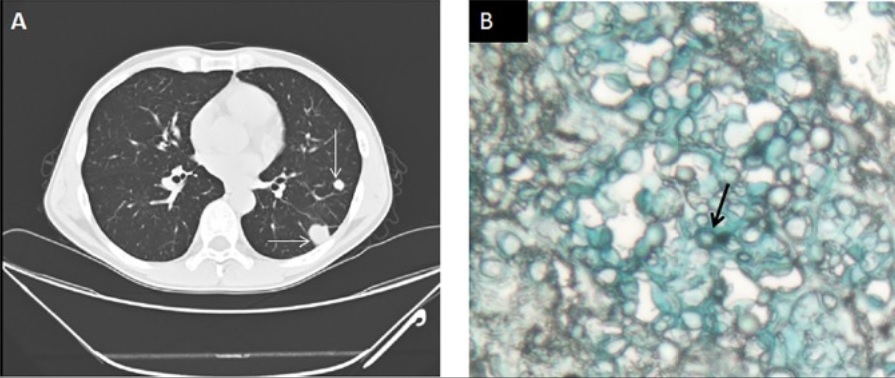
  • Hallazgos radiológicos frecuentes: lesiones nodulares únicas o múltiples
    • Bien definidas
    • No calcificadas
  • El síndrome de dificultad respiratoria aguda (SDRA) puede producirse en EN Erythema nodosum is an immune-mediated panniculitis (inflammation of the subcutaneous fat) caused by a type IV (delayed-type) hypersensitivity reaction. It commonly manifests in young women as tender, erythematous nodules on the shins. Erythema Nodosum casos graves.

Meningitis Meningitis Meningitis is inflammation of the meninges, the protective membranes of the brain, and spinal cord. The causes of meningitis are varied, with the most common being bacterial or viral infection. The classic presentation of meningitis is a triad of fever, altered mental status, and nuchal rigidity. Meningitis/meningoencefalitis criptocócica

  • Principal manifestación clínica de la infección criptocócica y es el sitio más común de diseminación desde los LOS Neisseria pulmones
  • Micosis del SNC más común en EN Erythema nodosum is an immune-mediated panniculitis (inflammation of the subcutaneous fat) caused by a type IV (delayed-type) hypersensitivity reaction. It commonly manifests in young women as tender, erythematous nodules on the shins. Erythema Nodosum pacientes inmunocomprometidos:
    • 90% de los LOS Neisseria casos se observan en EN Erythema nodosum is an immune-mediated panniculitis (inflammation of the subcutaneous fat) caused by a type IV (delayed-type) hypersensitivity reaction. It commonly manifests in young women as tender, erythematous nodules on the shins. Erythema Nodosum pacientes con SIDA
    • Enfermedad definitoria del SIDA: Recuento de CD4 < 100 células/µL
  • Aparición gradual de los LOS Neisseria síntomas:
    • Se desarrolla en EN Erythema nodosum is an immune-mediated panniculitis (inflammation of the subcutaneous fat) caused by a type IV (delayed-type) hypersensitivity reaction. It commonly manifests in young women as tender, erythematous nodules on the shins. Erythema Nodosum el transcurso de semanas a meses desde la infección inicial
    • Cefalea: síntoma de presentación clínica más común
    • Alteración del estado mental
    • Fotofobia
    • Cambios de comportamiento
    • Náuseas y/o vómitos
    • Rigidez del cuello
    • Déficits neurológicos focales
      • Típicamente oculares o faciales
      • Tienden a desarrollarse en EN Erythema nodosum is an immune-mediated panniculitis (inflammation of the subcutaneous fat) caused by a type IV (delayed-type) hypersensitivity reaction. It commonly manifests in young women as tender, erythematous nodules on the shins. Erythema Nodosum un estadio tardío
  • Pacientes inmunocomprometidos:
    • Pueden presentar síntomas mínimos o inespecíficos
    • La fiebre suele estar ausente o ser de bajo grado.

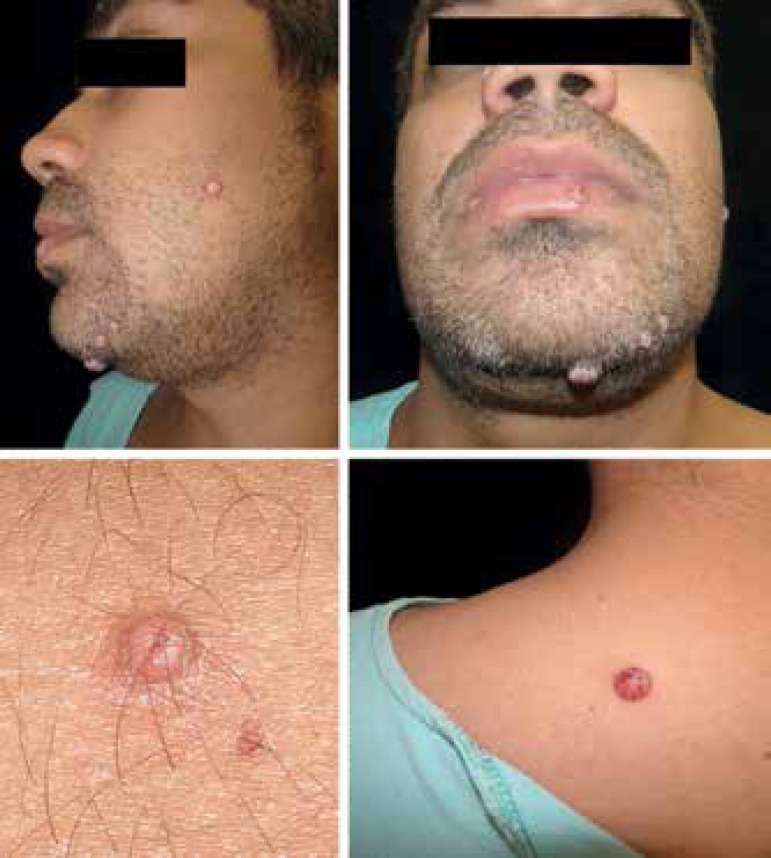
Criptococosis cutánea

  • Ocurre en EN Erythema nodosum is an immune-mediated panniculitis (inflammation of the subcutaneous fat) caused by a type IV (delayed-type) hypersensitivity reaction. It commonly manifests in young women as tender, erythematous nodules on the shins. Erythema Nodosum un 10%–15% de los LOS Neisseria casos
  • Los LOS Neisseria hallazgos en EN Erythema nodosum is an immune-mediated panniculitis (inflammation of the subcutaneous fat) caused by a type IV (delayed-type) hypersensitivity reaction. It commonly manifests in young women as tender, erythematous nodules on the shins. Erythema Nodosum la piel pueden ser variables:
    • Pápulas
    • Pústulas
    • Nódulos
    • Úlceras
    • Drenaje sinusal
  • Se ha HA Hemolytic anemia (HA) is the term given to a large group of anemias that are caused by the premature destruction/hemolysis of circulating red blood cells (RBCs). Hemolysis can occur within (intravascular hemolysis) or outside the blood vessels (extravascular hemolysis). Hemolytic Anemia informado de celulitis complicada con vasculitis Vasculitis Inflammation of any one of the blood vessels, including the arteries; veins; and rest of the vasculature system in the body. Systemic Lupus Erythematosus necrosante en EN Erythema nodosum is an immune-mediated panniculitis (inflammation of the subcutaneous fat) caused by a type IV (delayed-type) hypersensitivity reaction. It commonly manifests in young women as tender, erythematous nodules on the shins. Erythema Nodosum pacientes con trasplante de órganos.
Criptococosis cutánea

Criptococosis cutánea: Las lesiones papulonodulares (algunas muestran costras y centro umbilicado) están en la cara y el dorso superior. La infección por Cryptococcus se confirma en las lesiones cutáneas.

Imagen: “Disseminated cryptococcosis with cutaneous involvement in an immunocompetent patient” por Gabriely Lessa Sacht et al. Licencia: CC BY 4.0
Diagnóstico

Pruebas de laboratorio

  • Infección fuera del SNC:
    • Muestras:
      • Pulmonar: esputo, lavado broncopulmonar, líquido pleural
      • Cutáneo: muestras de piel/tejido
    • Pruebas:
      • Visualización de la levadura mediante tinciones (cápsula vista)
      • Cultivo en EN Erythema nodosum is an immune-mediated panniculitis (inflammation of the subcutaneous fat) caused by a type IV (delayed-type) hypersensitivity reaction. It commonly manifests in young women as tender, erythematous nodules on the shins. Erythema Nodosum agar Sabouraud
      • Antígeno criptocócico en EN Erythema nodosum is an immune-mediated panniculitis (inflammation of the subcutaneous fat) caused by a type IV (delayed-type) hypersensitivity reaction. It commonly manifests in young women as tender, erythematous nodules on the shins. Erythema Nodosum suero ( CrAg CrAg Cryptococcus/Cryptococcosis, por sus siglas en EN Erythema nodosum is an immune-mediated panniculitis (inflammation of the subcutaneous fat) caused by a type IV (delayed-type) hypersensitivity reaction. It commonly manifests in young women as tender, erythematous nodules on the shins. Erythema Nodosum inglés) por aglutinación en EN Erythema nodosum is an immune-mediated panniculitis (inflammation of the subcutaneous fat) caused by a type IV (delayed-type) hypersensitivity reaction. It commonly manifests in young women as tender, erythematous nodules on the shins. Erythema Nodosum látex, inmunoensayos enzimáticos o ensayo de flujo lateral
  • Meningitis Meningitis Meningitis is inflammation of the meninges, the protective membranes of the brain, and spinal cord. The causes of meningitis are varied, with the most common being bacterial or viral infection. The classic presentation of meningitis is a triad of fever, altered mental status, and nuchal rigidity. Meningitis/meningoencefalitis por criptococo:
    • Punción lumbar precedida de neuroimagenología
    • Estudios de LCR y cultivo:
      • Tinción con tinta china que muestra “halos”
      • Elevación de proteínas
      • Glucosa baja o normal
      • CrAg CrAg Cryptococcus/Cryptococcosis positivo en EN Erythema nodosum is an immune-mediated panniculitis (inflammation of the subcutaneous fat) caused by a type IV (delayed-type) hypersensitivity reaction. It commonly manifests in young women as tender, erythematous nodules on the shins. Erythema Nodosum LCR

Imagenología

  • Radiografía de tórax y TC:
    • Los LOS Neisseria hallazgos de la radiografía de tórax varían según la extensión y la presentación clínica:
      • Nódulos
      • Consolidación
      • Cavitación
      • Infiltrados lobares
      • Linfadenopatía hiliar
      • Derrame pleural
      • Colapso pulmonar
    • Los LOS Neisseria hallazgos de la TC pueden proporcionar un mayor detalle y está indicada para los LOS Neisseria casos pulmonares sospechosos en EN Erythema nodosum is an immune-mediated panniculitis (inflammation of the subcutaneous fat) caused by a type IV (delayed-type) hypersensitivity reaction. It commonly manifests in young women as tender, erythematous nodules on the shins. Erythema Nodosum pacientes inmunocomprometidos.
  • Neuroimagenología:
    • Realizar TC o RM del cerebro antes de la punción lumbar en EN Erythema nodosum is an immune-mediated panniculitis (inflammation of the subcutaneous fat) caused by a type IV (delayed-type) hypersensitivity reaction. It commonly manifests in young women as tender, erythematous nodules on the shins. Erythema Nodosum los LOS Neisseria pacientes.
    • Especialmente útil en EN Erythema nodosum is an immune-mediated panniculitis (inflammation of the subcutaneous fat) caused by a type IV (delayed-type) hypersensitivity reaction. It commonly manifests in young women as tender, erythematous nodules on the shins. Erythema Nodosum pacientes con déficits neurológicos focales o papiledema (buscando fuentes del aumento de la presión intracraneal)
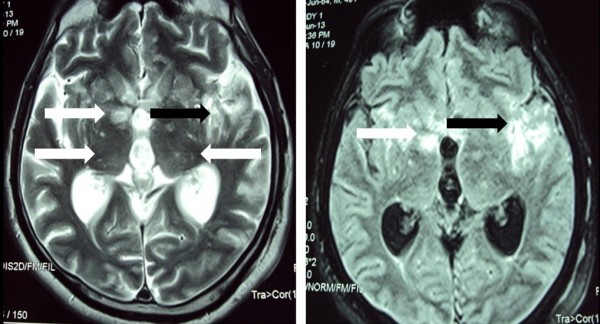
    • La RM es significativamente más sensible que la TC para detectar lesiones cerebrales:
      • Lesiones focales únicas o múltiples
      • Granulomas Granulomas A relatively small nodular inflammatory lesion containing grouped mononuclear phagocytes, caused by infectious and noninfectious agents. Sarcoidosis
      • Pseudoquistes gelatinosos (i.e., las características “lesiones de burbuja de jabón”)

Tratamiento

Principios

  • Dado que la mayoría de las infecciones afectan al AL Amyloidosis SNC (infección meníngea) y a los LOS Neisseria pulmones (infección pulmonar), la mayoría de los LOS Neisseria regímenes evaluados se centran en EN Erythema nodosum is an immune-mediated panniculitis (inflammation of the subcutaneous fat) caused by a type IV (delayed-type) hypersensitivity reaction. It commonly manifests in young women as tender, erythematous nodules on the shins. Erythema Nodosum estas regiones.
  • Las infecciones criptocócicas que no afectan al AL Amyloidosis SNC o a los LOS Neisseria pulmones suelen representar una infección diseminada (aunque es posible la infección en EN Erythema nodosum is an immune-mediated panniculitis (inflammation of the subcutaneous fat) caused by a type IV (delayed-type) hypersensitivity reaction. It commonly manifests in young women as tender, erythematous nodules on the shins. Erythema Nodosum un solo sitio).
  • Las opciones terapéuticas difieren en EN Erythema nodosum is an immune-mediated panniculitis (inflammation of the subcutaneous fat) caused by a type IV (delayed-type) hypersensitivity reaction. It commonly manifests in young women as tender, erythematous nodules on the shins. Erythema Nodosum función del estado inmunitario del huésped y del lugar de la infección:
    • Régimen de infección del SNC:
      • Inducción: flucitosina + anfotericina B IV durante al AL Amyloidosis menos 2 semanas
      • Consolidación: fluconazol durante 8 semanas
      • Mantenimiento: fluconazol (dosis más baja) durante 12 meses después del diagnóstico
    • Fluconazol: 6–12 meses
    • Existen alternativas en EN Erythema nodosum is an immune-mediated panniculitis (inflammation of the subcutaneous fat) caused by a type IV (delayed-type) hypersensitivity reaction. It commonly manifests in young women as tender, erythematous nodules on the shins. Erythema Nodosum determinadas poblaciones o situaciones.
  • El crecimiento de los LOS Neisseria hongos se controla mediante el análisis del LCR durante el tratamiento de la infección del SNC.

Abordaje terapéutico

  • Inmunocompetentes:
    • Pulmonar (sin infección del SNC):
      • Síntomas pulmonares leves o infección focal (sin infiltrados difusos): fluconazol durante 6–12 meses
      • Síntomas pulmonares graves (infiltrados pulmonares difusos): régimen de infección del SNC
    • Infección del SNC o infección diseminada (≥ 2 sitios no contiguos): régimen de infección del SNC
  • Inmunocomprometidos:
    • El tratamiento está indicado en EN Erythema nodosum is an immune-mediated panniculitis (inflammation of the subcutaneous fat) caused by a type IV (delayed-type) hypersensitivity reaction. It commonly manifests in young women as tender, erythematous nodules on the shins. Erythema Nodosum todos los LOS Neisseria pacientes con SIDA.
    • La terapia antirretroviral se retrasa hasta el inicio del tratamiento de la criptococosis (posible síndrome inflamatorio de reconstitución inmune).
    • Infección pulmonar leve: fluconazol 6–12 meses
    • Infección del SNC, enfermedad pulmonar grave o infección diseminada: régimen de infección del SNC
  • Reducir la presión intracraneal:
    • Punción lumbar diaria hasta que sea asintomático
    • Drenajes lumbares o ventriculares
Tabla: Tratamiento de las infecciones criptocócicas
Condición Tratamiento
Infección del SNC Anfotericina B + flucitosina, seguido de terapia de consolidación y mantenimiento
Inmunocompetentes e inmunodeprimidos con infección pulmonar leve (focal) Fluconazol
Inmunocompetentes e inmunodeprimidos con infección pulmonar grave Tratamiento de la infección del SNC
Inmunocompetentes e inmunodeprimidos con infección extrapulmonar, que no afecta al AL Amyloidosis SNC (≥ 2 sitios no contiguos) Tratamiento de la infección del SNC

Prevención

  • Terapia antirretroviral para pacientes con SIDA
  • Pruebas de rutina para el CrAg CrAg Cryptococcus/Cryptococcosis en EN Erythema nodosum is an immune-mediated panniculitis (inflammation of the subcutaneous fat) caused by a type IV (delayed-type) hypersensitivity reaction. It commonly manifests in young women as tender, erythematous nodules on the shins. Erythema Nodosum personas recién diagnosticadas con VIH (recuentos de CD4 ≤ 100 células/µL) sin signos de meningitis Meningitis Meningitis is inflammation of the meninges, the protective membranes of the brain, and spinal cord. The causes of meningitis are varied, with the most common being bacterial or viral infection. The classic presentation of meningitis is a triad of fever, altered mental status, and nuchal rigidity. Meningitis:
    • Prueba positiva → Evaluación del LCR
    • Se debe tratar la antigenemia criptocócica aislada y positiva en EN Erythema nodosum is an immune-mediated panniculitis (inflammation of the subcutaneous fat) caused by a type IV (delayed-type) hypersensitivity reaction. It commonly manifests in young women as tender, erythematous nodules on the shins. Erythema Nodosum suero sin meningitis Meningitis Meningitis is inflammation of the meninges, the protective membranes of the brain, and spinal cord. The causes of meningitis are varied, with the most common being bacterial or viral infection. The classic presentation of meningitis is a triad of fever, altered mental status, and nuchal rigidity. Meningitis como una infección pulmonar focal.
    • En EN Erythema nodosum is an immune-mediated panniculitis (inflammation of the subcutaneous fat) caused by a type IV (delayed-type) hypersensitivity reaction. It commonly manifests in young women as tender, erythematous nodules on the shins. Erythema Nodosum general, no se recomienda la profilaxis antifúngica primaria de rutina en EN Erythema nodosum is an immune-mediated panniculitis (inflammation of the subcutaneous fat) caused by a type IV (delayed-type) hypersensitivity reaction. It commonly manifests in young women as tender, erythematous nodules on the shins. Erythema Nodosum los LOS Neisseria pacientes CrAg-negativos, a pesar del recuento de CD4:
      • Beneficio de supervivencia poco claro con la profilaxis
      • Posibles interacciones con otros medicamentos
      • Potencial de resistencia a los LOS Neisseria medicamentos

Diagnóstico Diferencial

  • Infecciones fúngicas oportunistas: grupo de infecciones que se producen en EN Erythema nodosum is an immune-mediated panniculitis (inflammation of the subcutaneous fat) caused by a type IV (delayed-type) hypersensitivity reaction. It commonly manifests in young women as tender, erythematous nodules on the shins. Erythema Nodosum pacientes con sistemas inmunitarios debilitados (especialmente recuentos de CD4 < 200 células/μL). Las infecciones no suelen causar enfermedades en EN Erythema nodosum is an immune-mediated panniculitis (inflammation of the subcutaneous fat) caused by a type IV (delayed-type) hypersensitivity reaction. It commonly manifests in young women as tender, erythematous nodules on the shins. Erythema Nodosum pacientes sanos con un sistema inmunitario normal. Los LOS Neisseria signos y síntomas generales pueden ser similares a los LOS Neisseria de la criptococosis. La microscopía y el cultivo del esputo o del lavado broncoalveolar con identificación del organismo específico pueden ayudar a diferenciar las posibles causas.
  • Tuberculosis Tuberculosis Tuberculosis (TB) is an infectious disease caused by Mycobacterium tuberculosis complex bacteria. The bacteria usually attack the lungs but can also damage other parts of the body. Approximately 30% of people around the world are infected with this pathogen, with the majority harboring a latent infection. Tuberculosis spreads through the air when a person with active pulmonary infection coughs or sneezes. Tuberculosis ( TB TB Tuberculosis (TB) is an infectious disease caused by Mycobacterium tuberculosis complex bacteria. The bacteria usually attack the lungs but can also damage other parts of the body. Approximately 30% of people around the world are infected with this pathogen, with the majority harboring a latent infection. Tuberculosis spreads through the air when a person with active pulmonary infection coughs or sneezes. Tuberculosis): enfermedad infecciosa causada por bacterias del complejo Mycobacterium tuberculosis Mycobacterium tuberculosis Tuberculosis (TB) is an infectious disease caused by Mycobacterium tuberculosis complex bacteria. The bacteria usually attack the lungs but can also damage other parts of the body. Approximately 30% of people around the world are infected with this pathogen, with the majority harboring a latent infection. Tuberculosis spreads through the air when a person with active pulmonary infection coughs or sneezes. Tuberculosis. Al AL Amyloidosis igual que el Cryptococcus Cryptococcus Cryptococcosis is an opportunistic, fungal infection caused by the Cryptococcus species. The principal pathogens in humans are C. neoformans (primary) and C. gattii. Cryptococcus neoformans is typically found in pigeon droppings and acquired by inhaling dust from contaminated soil. The majority of affected patients are immunocompromised. Cryptococcus/Cryptococcosis, la bacteria Bacteria Bacteria are prokaryotic single-celled microorganisms that are metabolically active and divide by binary fission. Some of these organisms play a significant role in the pathogenesis of diseases. Bacteriology suele infectar los LOS Neisseria pulmones, pero también puede extenderse a otras partes del cuerpo. Ambas están asociadas a un periodo de latencia y pueden presentarse con signos y síntomas similares. Se debe interrogar los LOS Neisseria antecedentes de exposición a un entorno con prevalencia de TB TB Tuberculosis (TB) is an infectious disease caused by Mycobacterium tuberculosis complex bacteria. The bacteria usually attack the lungs but can also damage other parts of the body. Approximately 30% of people around the world are infected with this pathogen, with the majority harboring a latent infection. Tuberculosis spreads through the air when a person with active pulmonary infection coughs or sneezes. Tuberculosis (e.g., entorno sanitario, albergue para personas sin hogar). Un recuento de CD4 de < 300 células/μL suele asociarse a la tuberculosis Tuberculosis Tuberculosis (TB) is an infectious disease caused by Mycobacterium tuberculosis complex bacteria. The bacteria usually attack the lungs but can also damage other parts of the body. Approximately 30% of people around the world are infected with this pathogen, with the majority harboring a latent infection. Tuberculosis spreads through the air when a person with active pulmonary infection coughs or sneezes. Tuberculosis, frente a < 200 células/μL para la criptococosis. El diagnóstico se establece mediante la prueba cutánea de la tuberculina, los LOS Neisseria análisis de sangre, el cultivo de esputo y la imagenología pulmonar.
  • Histoplasmosis Histoplasmosis Histoplasmosis is an infection caused by Histoplasma capsulatum, a dimorphic fungus. Transmission is through inhalation, and exposure to soils containing bird or bat droppings increases the risk of infection. Most infections are asymptomatic; however, immunocompromised individuals generally develop acute pulmonary infection, chronic infection, or even disseminated disease. Histoplasma/Histoplasmosis: infección causada por Histoplasma capsulatum Histoplasma capsulatum Histoplasma/Histoplasmosis. Al AL Amyloidosis igual que la criptococosis, la histoplasmosis Histoplasmosis Histoplasmosis is an infection caused by Histoplasma capsulatum, a dimorphic fungus. Transmission is through inhalation, and exposure to soils containing bird or bat droppings increases the risk of infection. Most infections are asymptomatic; however, immunocompromised individuals generally develop acute pulmonary infection, chronic infection, or even disseminated disease. Histoplasma/Histoplasmosis es una infección fúngica que se adquiere por inhalación y se asocia a suelos contaminados y a individuos inmunocomprometidos. A diferencia de la criptococosis, la histoplasmosis Histoplasmosis Histoplasmosis is an infection caused by Histoplasma capsulatum, a dimorphic fungus. Transmission is through inhalation, and exposure to soils containing bird or bat droppings increases the risk of infection. Most infections are asymptomatic; however, immunocompromised individuals generally develop acute pulmonary infection, chronic infection, or even disseminated disease. Histoplasma/Histoplasmosis está asociada a los LOS Neisseria excrementos de los LOS Neisseria murciélagos (además de los LOS Neisseria excrementos de las aves). Los LOS Neisseria síntomas pueden ser inespecíficos o compatibles con una neumonía. La piel también puede verse afectada. El diagnóstico puede realizarse mediante cultivos para hongos o pruebas de antígenos en EN Erythema nodosum is an immune-mediated panniculitis (inflammation of the subcutaneous fat) caused by a type IV (delayed-type) hypersensitivity reaction. It commonly manifests in young women as tender, erythematous nodules on the shins. Erythema Nodosum orina/suero. Si está presente, una biopsia de una lesión cutánea con cultivo e histología puede ayudar a diferenciarlos.
  • Blastomicosis: enfermedad pulmonar causada por la inhalación de las esporas de Blastomyces Blastomyces Blastomycosis is an infection caused by inhalation of the spores of the fungus, Blastomyces. Blastomyces species thrive in moist soil and decaying material and are common in the Ohio and Mississippi River valleys and the Great Lakes regions of the United States and Canada. Although most patients are asymptomatic, some can develop pneumonia. Blastomyces/Blastomycosis. Los LOS Neisseria pacientes pueden desarrollar neumonía o enfermedad extrapulmonar diseminada. A diferencia de la criptococosis, la afectación de la piel es el sitio más común de diseminación. Puede haber antecedentes de exposición a las regiones de los LOS Neisseria Grandes Lagos, el valle del río Ohio y el valle del río Mississippi, ya que Blastomyces Blastomyces Blastomycosis is an infection caused by inhalation of the spores of the fungus, Blastomyces. Blastomyces species thrive in moist soil and decaying material and are common in the Ohio and Mississippi River valleys and the Great Lakes regions of the United States and Canada. Although most patients are asymptomatic, some can develop pneumonia. Blastomyces/Blastomycosis es endémico en EN Erythema nodosum is an immune-mediated panniculitis (inflammation of the subcutaneous fat) caused by a type IV (delayed-type) hypersensitivity reaction. It commonly manifests in young women as tender, erythematous nodules on the shins. Erythema Nodosum estas regiones. El diagnóstico se realiza mediante cultivos e imagenología.

Referencias

  1. Cox, G., Perfect, J. (2025). Microbiology and epidemiology of Cryptococcus neoformans infection. UpToDate. Retrieved November 25, 2025, from https://www.uptodate.com/contents/microbiology-and-epidemiology-of-cryptococcus-neoformans-infection
  2. Cox, G. M., & Perfect, J. R. (2025). Cryptococcus neoformans: Pulmonary and other infections outside the central nervous system. UpToDate. Retrieved November 25, 2025, from https://www.uptodate.com/contents/cryptococcus-neoformans-pulmonary-and-other-infections-outside-the-central-nervous-system
  3. Cox, G. M., & Perfect, J. R. (2025). Cryptococcus neoformans: Treatment and prevention of meningoencephalitis and disseminated infection in patients without HIV. UpToDate. Retrieved November 25, 2025, from https://www.uptodate.com/contents/cryptococcus-neoformans-treatment-and-prevention-of-meningoencephalitis-and-disseminated-infection-in-patients-without-hiv
  4. Cryptococcosis: NIH. Cryptococcosis | NIH. (n.d.). Retrieved November 25, 2025, from https://clinicalinfo.hiv.gov/en/guidelines/adult-and-adolescent-opportunistic-infection/cryptococcosis?view=full.
  5. Mada, P. (2024). Cryptococcosis: Practice Essentials, Background, Pathophysiology. Medscape. Retrieved November 25, 2025, from https://emedicine.medscape.com/article/215354-overview#a1
  6. Mada, P.K., Jamil, R.T., Alam, M.U. (2023). Cryptococcus. StatPearls. Treasure Island (FL): StatPearls Publishing. https://www.ncbi.nlm.nih.gov/books/NBK431060/
  7. Revankar, S. (2023). Cryptococcosis. Merck Manuals. Retrieved November 25, 2025, from https://www.merckmanuals.com/professional/infectious-diseases/fungi/cryptococcosis?query=cryptococcus#v36860800

¡Crea tu cuenta gratis o inicia una sesión para seguir leyendo!

Regístrate ahora y obtén acceso gratuito a Lecturio con páginas de concepto, videos médicos y cuestionarios para tu educación médica.

User Reviews

Que tengas una sesión de estudio alegre y navideña 🎁 Ahorra 50% en todos los planes >>

Details