Domina Conceptos Médicos

Estudia para la escuela de medicina y tus examenes con Lecturio.

Celulitis

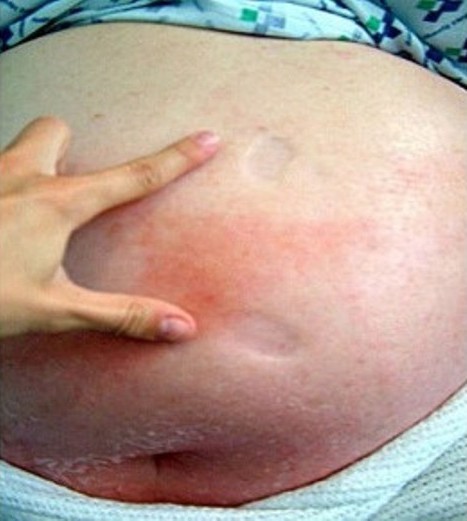
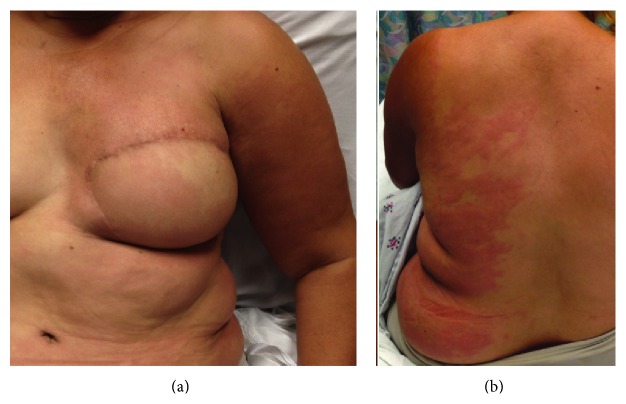
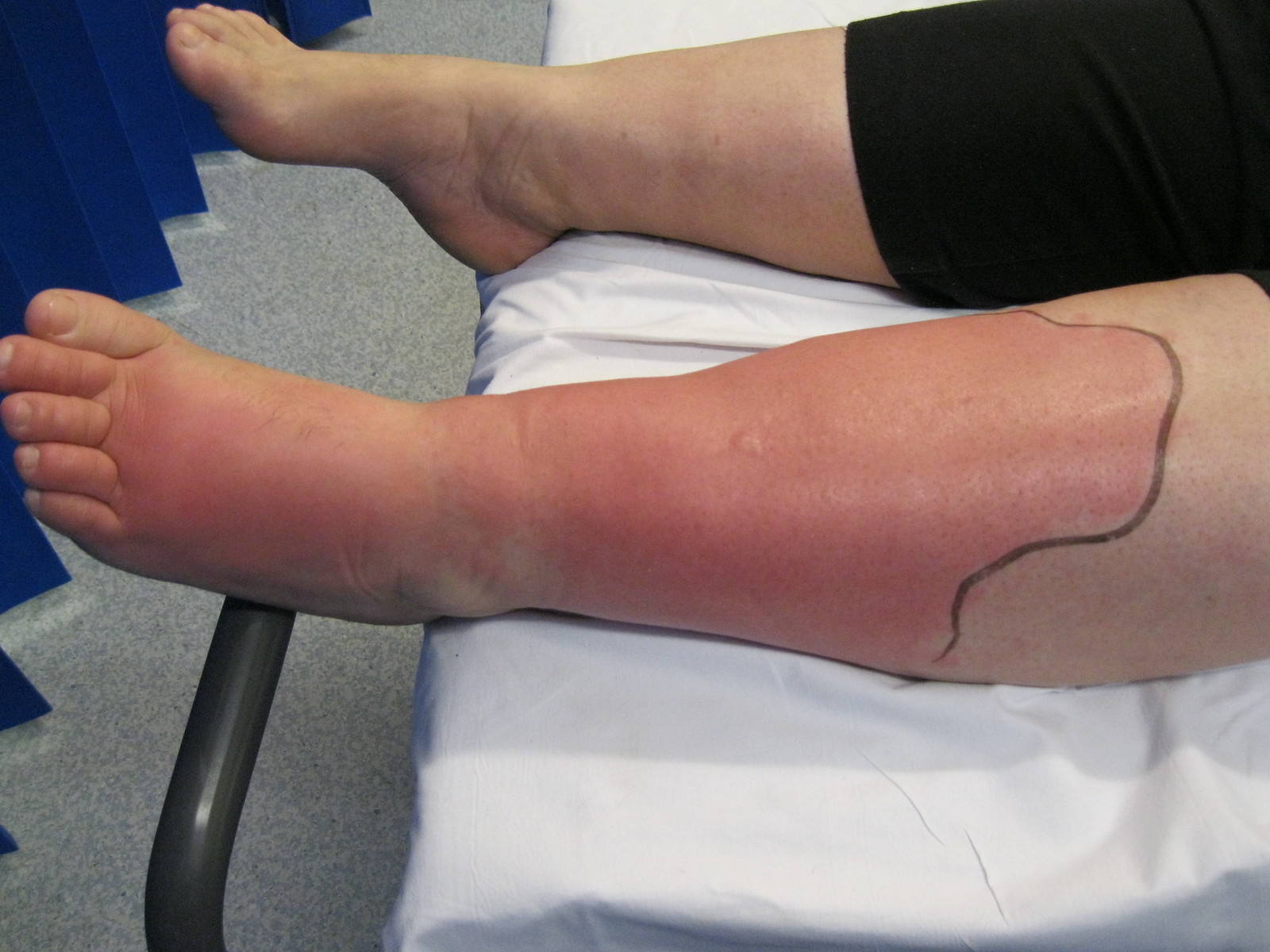
La celulitis es una infección común causada por bacterias que afecta a la dermis y al tejido subcutáneo de la piel. Con frecuencia es causada por Staphylococcus aureus y Streptococcus pyogenes. La infección de la piel se presenta como un área eritematosa y edematosa con calor y dolor a la palpación. Las fronteras no están claramente delimitadas. Las extremidades inferiores son el sitio de infección más frecuente, pero la celulitis puede ocurrir en cualquier parte del cuerpo. El diagnóstico suele ser clínico y el tratamiento incluye antibióticos orales y/o parenterales. Se puede agregar cobertura para staphylococcus aureus resistente a la meticilina ( MRSA MRSA A strain of Staphylococcus aureus that is non-susceptible to the action of methicillin. The mechanism of resistance usually involves modification of normal or the presence of acquired penicillin binding proteins. Staphylococcus, por sus siglas en EN Erythema nodosum is an immune-mediated panniculitis (inflammation of the subcutaneous fat) caused by a type IV (delayed-type) hypersensitivity reaction. It commonly manifests in young women as tender, erythematous nodules on the shins. Erythema Nodosum inglés), dependiendo de la presencia de factores de riesgo.

Last updated: Dec 15, 2025

Editorial responsibility: Stanley Oiseth, Lindsay Jones, Evelin Maza

Descripción General

Definición

La celulitis es una inflamación de la piel y los LOS Neisseria tejidos subcutáneos. A menudo se debe a una infección.
Epidemiología y etiología

  • Incidencia: 200 casos por cada 100 000 pacientes-año
  • Más común en EN Erythema nodosum is an immune-mediated panniculitis (inflammation of the subcutaneous fat) caused by a type IV (delayed-type) hypersensitivity reaction. It commonly manifests in young women as tender, erythematous nodules on the shins. Erythema Nodosum poblaciones de mediana edad y mayores
  • Extremidades inferiores: son el sitio más común
  • Agentes más comunes:
    • Staphylococcus aureus Staphylococcus aureus Potentially pathogenic bacteria found in nasal membranes, skin, hair follicles, and perineum of warm-blooded animals. They may cause a wide range of infections and intoxications. Brain Abscess:
      • Staphylococcus aureus Staphylococcus aureus Potentially pathogenic bacteria found in nasal membranes, skin, hair follicles, and perineum of warm-blooded animals. They may cause a wide range of infections and intoxications. Brain Abscess sensible a la meticilina (MSSA, por sus siglas en EN Erythema nodosum is an immune-mediated panniculitis (inflammation of the subcutaneous fat) caused by a type IV (delayed-type) hypersensitivity reaction. It commonly manifests in young women as tender, erythematous nodules on the shins. Erythema Nodosum inglés)
      • MRSA MRSA A strain of Staphylococcus aureus that is non-susceptible to the action of methicillin. The mechanism of resistance usually involves modification of normal or the presence of acquired penicillin binding proteins. Staphylococcus
    • Estreptococo del grupo A ( Streptococcus Streptococcus Streptococcus is one of the two medically important genera of gram-positive cocci, the other being Staphylococcus. Streptococci are identified as different species on blood agar on the basis of their hemolytic pattern and sensitivity to optochin and bacitracin. There are many pathogenic species of streptococci, including S. pyogenes, S. agalactiae, S. pneumoniae, and the viridans streptococci. Streptococcus pyogenes)
  • Agentes menos comunes:
    • Pasteurella multocida (de mordeduras de animales)
    • Aeromonas hydrophila Aeromonas hydrophila A species of gram-negative, facultatively anaerobic, rod-shaped bacteria that may be pathogenic for frogs, fish, and mammals, including man. In humans, cellulitis and diarrhea can result from infection with this organism. Cellulitis y Vibrio vulnificus Vibrio vulnificus A species of halophilic bacteria in the genus vibrio, which lives in warm seawater. It can cause infections in those who eat raw contaminated seafood or have open wounds exposed to seawater. Vibrio (después de la exposición al AL Amyloidosis agua)
    • Especies de Clostridium (mionecrosis)
    • Pseudomonas aeruginosa Pseudomonas aeruginosa A species of gram-negative, aerobic, rod-shaped bacteria commonly isolated from clinical specimens (wound, burn, and urinary tract infections). It is also found widely distributed in soil and water. P. Aeruginosa is a major agent of nosocomial infection. Pseudomonas ( en EN Erythema nodosum is an immune-mediated panniculitis (inflammation of the subcutaneous fat) caused by a type IV (delayed-type) hypersensitivity reaction. It commonly manifests in young women as tender, erythematous nodules on the shins. Erythema Nodosum pacientes inmunodeprimidos)
    • Erysipelothrix Erysipelothrix A genus of gram-positive, facultatively anaerobic, rod-shaped bacteria that has a tendency to form long filaments. Its organisms are widely distributed in nature and are found in mammals; birds; and fishes. Erysipelothrix may appear gram-negative because they decolorize easily. Cellulitis rhusiopathiae (exposición ocupacional en EN Erythema nodosum is an immune-mediated panniculitis (inflammation of the subcutaneous fat) caused by a type IV (delayed-type) hypersensitivity reaction. It commonly manifests in young women as tender, erythematous nodules on the shins. Erythema Nodosum carniceros, trabajadores de mataderos, agricultores, veterinarios)

Factores de riesgo

  • Ruptura de la barrera cutánea (heridas, úlceras, picaduras de insectos/animales)
  • Inflamación de la piel ( psoriasis Psoriasis Psoriasis is a common T-cell-mediated inflammatory skin condition. The etiology is unknown, but is thought to be due to genetic inheritance and environmental triggers. There are 4 major subtypes, with the most common form being chronic plaque psoriasis. Psoriasis, eccema)
  • Lesiones contaminadas con suciedad o agua de mar
  • Infección preexistente (tiña, varicela)
  • Historia previa de celulitis
  • Lesiones por aplastamiento
  • Quemaduras de segundo y tercer grado
  • Congelación
  • Linfedema o cualquier obstrucción del drenaje linfático
  • Inmunodeficiencia
  • Diabetes Diabetes Diabetes mellitus (DM) is a metabolic disease characterized by hyperglycemia and dysfunction of the regulation of glucose metabolism by insulin. Type 1 DM is diagnosed mostly in children and young adults as the result of autoimmune destruction of β cells in the pancreas and the resulting lack of insulin. Type 2 DM has a significant association with obesity and is characterized by insulin resistance. Diabetes Mellitus mellitus
  • Obesidad
  • Insuficiencia venosa

Fisiopatología y Presentación Clínica

Fisiopatología

  • Las bacterias entran en EN Erythema nodosum is an immune-mediated panniculitis (inflammation of the subcutaneous fat) caused by a type IV (delayed-type) hypersensitivity reaction. It commonly manifests in young women as tender, erythematous nodules on the shins. Erythema Nodosum la barrera cutánea rota:
    • A través de cortes o heridas leves
    • Puede ser secundario a un sitio distante o una infección sistémica
    • En EN Erythema nodosum is an immune-mediated panniculitis (inflammation of the subcutaneous fat) caused by a type IV (delayed-type) hypersensitivity reaction. It commonly manifests in young women as tender, erythematous nodules on the shins. Erythema Nodosum algunos casos, el portal de entrada no es evidente.
  • La invasión de la dermis Dermis A layer of vascularized connective tissue underneath the epidermis. The surface of the dermis contains innervated papillae. Embedded in or beneath the dermis are sweat glands; hair follicles; and sebaceous glands. Skin: Structure and Functions y el tejido subcutáneo desencadena la liberación de citocinas, lo que recluta neutrófilos y otras células inflamatorias en EN Erythema nodosum is an immune-mediated panniculitis (inflammation of the subcutaneous fat) caused by a type IV (delayed-type) hypersensitivity reaction. It commonly manifests in young women as tender, erythematous nodules on the shins. Erythema Nodosum el sitio.
  • Los LOS Neisseria factores bacterianos intrínsecos permiten que el patógeno eluda las defensas iniciales del huésped, lo que provoca eritema, dolor Dolor Inflammation e inflamación local de la piel ( edema Edema Edema is a condition in which excess serous fluid accumulates in the body cavity or interstitial space of connective tissues. Edema is a symptom observed in several medical conditions. It can be categorized into 2 types, namely, peripheral (in the extremities) and internal (in an organ or body cavity). Edema).
  • En EN Erythema nodosum is an immune-mediated panniculitis (inflammation of the subcutaneous fat) caused by a type IV (delayed-type) hypersensitivity reaction. It commonly manifests in young women as tender, erythematous nodules on the shins. Erythema Nodosum pacientes inmunodeprimidos, la infección se limita finalmente al AL Amyloidosis área de invasión.
  • Si el patógeno supera las defensas inmunitarias, se produce una mayor propagación (infección más profunda y/o contigua y bacteriemia en EN Erythema nodosum is an immune-mediated panniculitis (inflammation of the subcutaneous fat) caused by a type IV (delayed-type) hypersensitivity reaction. It commonly manifests in young women as tender, erythematous nodules on the shins. Erythema Nodosum la inmunodeficiencia).
  • El control reducido de la infección se produce en EN Erythema nodosum is an immune-mediated panniculitis (inflammation of the subcutaneous fat) caused by a type IV (delayed-type) hypersensitivity reaction. It commonly manifests in young women as tender, erythematous nodules on the shins. Erythema Nodosum:
    • Disminución de la vascularización y oxigenación de los LOS Neisseria tejidos.
    • Mayor estasis de fluidos periféricos
    • Poca capacidad para combatir infecciones (e.g., diabetes Diabetes Diabetes mellitus (DM) is a metabolic disease characterized by hyperglycemia and dysfunction of the regulation of glucose metabolism by insulin. Type 1 DM is diagnosed mostly in children and young adults as the result of autoimmune destruction of β cells in the pancreas and the resulting lack of insulin. Type 2 DM has a significant association with obesity and is characterized by insulin resistance. Diabetes Mellitus)

Hallazgos clínicos

  • Síntomas sistémicos prodrómicos:
    • Puede tener signos de toxicidad (fiebre > 100,5 ℉ (38 ℃), escalofríos y taquicardia)
    • Dolor Dolor Inflammation muscular y articular.
    • Cefalea
  • Características locales:
    • Lesiones induradas o zona edematosa con eritema y bordes mal definidos
    • Propagación de enrojecimiento o lesiones.
    • Dolor Dolor Inflammation y sensibilidad en EN Erythema nodosum is an immune-mediated panniculitis (inflammation of the subcutaneous fat) caused by a type IV (delayed-type) hypersensitivity reaction. It commonly manifests in young women as tender, erythematous nodules on the shins. Erythema Nodosum el área afectada.
    • Piel tersa, brillante, hinchada o con hoyuelos (notados en EN Erythema nodosum is an immune-mediated panniculitis (inflammation of the subcutaneous fat) caused by a type IV (delayed-type) hypersensitivity reaction. It commonly manifests in young women as tender, erythematous nodules on the shins. Erythema Nodosum el edema Edema Edema is a condition in which excess serous fluid accumulates in the body cavity or interstitial space of connective tissues. Edema is a symptom observed in several medical conditions. It can be categorized into 2 types, namely, peripheral (in the extremities) and internal (in an organ or body cavity). Edema que rodea los LOS Neisseria folículos pilosos)
    • Puede presentarse con exudado purulento (generalmente asociado con S. aureus S. aureus Potentially pathogenic bacteria found in nasal membranes, skin, hair follicles, and perineum of warm-blooded animals. They may cause a wide range of infections and intoxications. Staphylococcus)
    • También se puede encontrar un absceso (acumulación de pus dentro de la dermis Dermis A layer of vascularized connective tissue underneath the epidermis. The surface of the dermis contains innervated papillae. Embedded in or beneath the dermis are sweat glands; hair follicles; and sebaceous glands. Skin: Structure and Functions o capa subcutánea).
  • Signos y síntomas asociados:
    • Inflamación y sensibilidad de los LOS Neisseria ganglios linfáticos regionales (linfadenitis)
    • Infecciones graves:
      • Pueden presentarse con malestar general, fatiga, mareos, confusión, dolores musculares y articulares y diaforesis.
      • Puede presentar ampollas

Diagnóstico

  • El diagnóstico de la celulitis es clínico:
    • Edema Edema Edema is a condition in which excess serous fluid accumulates in the body cavity or interstitial space of connective tissues. Edema is a symptom observed in several medical conditions. It can be categorized into 2 types, namely, peripheral (in the extremities) and internal (in an organ or body cavity). Edema
    • Eritema
    • Calor Calor Inflammation
    • Sensibilidad
    • Linfadenopatía asociada
  • Los LOS Neisseria síntomas, los LOS Neisseria factores de riesgo y la progresión de la lesión cutánea ayudan a descartar diagnósticos diferenciales.
  • Las pruebas de laboratorio son inespecíficas:
    • Leucocitosis (común en EN Erythema nodosum is an immune-mediated panniculitis (inflammation of the subcutaneous fat) caused by a type IV (delayed-type) hypersensitivity reaction. It commonly manifests in young women as tender, erythematous nodules on the shins. Erythema Nodosum todas las infecciones)
    • ↑ Marcadores inflamatorios:
      • Velocidad de sedimentación globular (VES)
      • Niveles de PCR PCR Polymerase chain reaction (PCR) is a technique that amplifies DNA fragments exponentially for analysis. The process is highly specific, allowing for the targeting of specific genomic sequences, even with minuscule sample amounts. The PCR cycles multiple times through 3 phases: denaturation of the template DNA, annealing of a specific primer to the individual DNA strands, and synthesis/elongation of new DNA molecules. Polymerase Chain Reaction (PCR)
  • Estudios microbiológicos:
    • Cultivo de heridas: se utiliza para identificar patógenos y guiar la terapia con antibióticos.
    • Hemocultivo: obtenido en EN Erythema nodosum is an immune-mediated panniculitis (inflammation of the subcutaneous fat) caused by a type IV (delayed-type) hypersensitivity reaction. It commonly manifests in young women as tender, erythematous nodules on the shins. Erythema Nodosum casos sugestivos de bacteriemia y/o en EN Erythema nodosum is an immune-mediated panniculitis (inflammation of the subcutaneous fat) caused by a type IV (delayed-type) hypersensitivity reaction. It commonly manifests in young women as tender, erythematous nodules on the shins. Erythema Nodosum pacientes gravemente inmunodeficientes.
  • Imagenología:
    • El ultrasonido se utiliza para descartar un absceso.
    • Las infecciones complicadas de la piel y los LOS Neisseria tejidos blandos deben evaluarse más a fondo.
      • TC orbitaria y sinusal para determinar la extensión de la celulitis orbitaria y la presencia de un absceso
      • Se puede realizar una RM y/o una gammagrafía ósea en EN Erythema nodosum is an immune-mediated panniculitis (inflammation of the subcutaneous fat) caused by a type IV (delayed-type) hypersensitivity reaction. It commonly manifests in young women as tender, erythematous nodules on the shins. Erythema Nodosum casos de dolor Dolor Inflammation articular severo para confirmar/descartar artritis séptica u osteomielitis.

Tratamiento y Complicaciones

Enfoque del tratamiento

  • Cuidados de soporte:
    • Tratamiento sintomático para fiebre, dolor Dolor Inflammation local y molestias.
    • Hidratación y elevación adecuadas del miembro inferior afectado
  • La terapia empírica cubre el estreptococo del grupo A y el MSSA.
  • Determinación de factores de riesgo y necesidad de terapia parenteral:
    • Factores de riesgo de MRSA MRSA A strain of Staphylococcus aureus that is non-susceptible to the action of methicillin. The mechanism of resistance usually involves modification of normal or the presence of acquired penicillin binding proteins. Staphylococcus:
      • Hospitalización o cirugía reciente ( hace HACE Altitude Sickness ≤ 2 meses)
      • Hemodiálisis
      • Residencia en EN Erythema nodosum is an immune-mediated panniculitis (inflammation of the subcutaneous fat) caused by a type IV (delayed-type) hypersensitivity reaction. It commonly manifests in young women as tender, erythematous nodules on the shins. Erythema Nodosum un centro de cuidados a largo plazo
      • Infección por VIH
      • Episodio previo de MRSA MRSA A strain of Staphylococcus aureus that is non-susceptible to the action of methicillin. The mechanism of resistance usually involves modification of normal or the presence of acquired penicillin binding proteins. Staphylococcus
      • Uso reciente de antibióticos sin cobertura de MRSA MRSA A strain of Staphylococcus aureus that is non-susceptible to the action of methicillin. The mechanism of resistance usually involves modification of normal or the presence of acquired penicillin binding proteins. Staphylococcus
      • Dispositivo médico permanente
    • Necesidad de terapia parenteral:
      • Incapacidad para tolerar la ingesta oral.
      • Signos sistémicos de toxicidad.
      • Progresión rápida del eritema
      • Celulitis sobre un dispositivo médico (injerto vascular o articulación protésica)
      • Falta de respuesta a antibióticos orales previos

Régimen de tratamiento

  • Sin factores de riesgo de MRSA MRSA A strain of Staphylococcus aureus that is non-susceptible to the action of methicillin. The mechanism of resistance usually involves modification of normal or the presence of acquired penicillin binding proteins. Staphylococcus:
    • Terapia oral (infección leve):
      • Dicloxacilina
      • Amoxicilina
      • Cefalexina
      • Clindamicina
    • Terapia parenteral:
      • Cefazolina
      • Nafcilina
      • Oxacilina
      • Clindamicina
  • Con factores de riesgo de MRSA MRSA A strain of Staphylococcus aureus that is non-susceptible to the action of methicillin. The mechanism of resistance usually involves modification of normal or the presence of acquired penicillin binding proteins. Staphylococcus:
    • Terapia oral:
      • Trimetoprim-sulfametoxazol
      • Amoxicilina más doxiciclina
      • Amoxicilina más minociclina
      • Clindamicina
    • Terapia parenteral:
      • Vancomicina
      • Daptomicina
  • Otras consideraciones:
    • Heridas por mordedura: agregue cobertura anaeróbica
    • Hospitalización:
      • Generalmente se requiere para lesiones faciales debido al AL Amyloidosis alto riesgo de propagación de la infección al AL Amyloidosis SNC ( meningitis Meningitis Meningitis is inflammation of the meninges, the protective membranes of the brain, and spinal cord. The causes of meningitis are varied, with the most common being bacterial or viral infection. The classic presentation of meningitis is a triad of fever, altered mental status, and nuchal rigidity. Meningitis, encefalitis)
      • Para aquellos con afecciones concomitantes como insuficiencia hepática, renal o cardíaca
    • Infecciones progresivas graves: pueden requerir desbridamiento quirúrgico de tejido necrótico o abscesos.
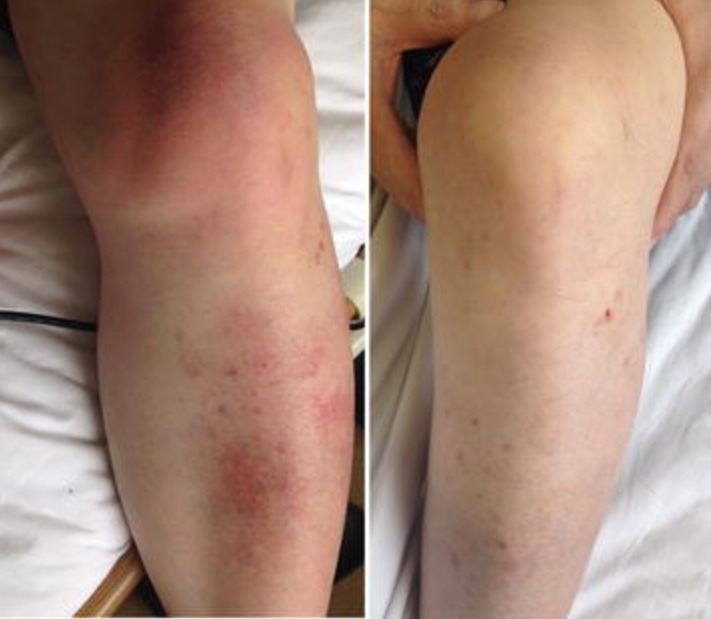
Celulitis de rodilla y pierna izquierda

Celulitis en la parte inferior de la pierna izquierda y la rodilla:
Izquierda: hinchazón local con decoloración de la piel de color rosa salmón y calor local es evidente.
Derecha: pierna después de 6 semanas de terapia con antibióticos

Imagen: “Helicobacter cinaedi bacteremia with cellulitis in a living-donor kidney transplant recipient identified by matrix-assisted laser desorption ionization time-of-flight mass spectrometry: a case report” por BMC Research Notes. Licencia: CC BY 4.0

Complicaciones

  • Absceso:
    • Acumulación de pus en EN Erythema nodosum is an immune-mediated panniculitis (inflammation of the subcutaneous fat) caused by a type IV (delayed-type) hypersensitivity reaction. It commonly manifests in young women as tender, erythematous nodules on the shins. Erythema Nodosum la dermis Dermis A layer of vascularized connective tissue underneath the epidermis. The surface of the dermis contains innervated papillae. Embedded in or beneath the dermis are sweat glands; hair follicles; and sebaceous glands. Skin: Structure and Functions o tejido subcutáneo
    • Se presenta como una hinchazón sensible, fluctuante, eritematosa o como un nódulo discreto.
    • Tratamiento: incisión y drenaje de un absceso drenable detectado en EN Erythema nodosum is an immune-mediated panniculitis (inflammation of the subcutaneous fat) caused by a type IV (delayed-type) hypersensitivity reaction. It commonly manifests in young women as tender, erythematous nodules on the shins. Erythema Nodosum un examen o ultrasonido
  • La fascitis necrotizante:
    • Infección profunda asociada con destrucción rápida y necrosis Necrosis The death of cells in an organ or tissue due to disease, injury or failure of the blood supply. Ischemic Cell Damage de la fascia Fascia Layers of connective tissue of variable thickness. The superficial fascia is found immediately below the skin; the deep fascia invests muscles, nerves, and other organs. Cellulitis y tejidos subcutáneos.
    • Potencialmente mortal
  • Artritis séptica:
    • Infección en EN Erythema nodosum is an immune-mediated panniculitis (inflammation of the subcutaneous fat) caused by a type IV (delayed-type) hypersensitivity reaction. It commonly manifests in young women as tender, erythematous nodules on the shins. Erythema Nodosum una articulación, frecuentemente secundaria a bacterias.
    • Se desarrolla a partir de la siembra hematógena, pero también puede surgir de la extensión de la infección desde la piel/tejidos blandos.
  • Osteomielitis:
    • Infección del hueso
    • Las infecciones de la piel y los LOS Neisseria tejidos blandos que no cicatrizan bien están en EN Erythema nodosum is an immune-mediated panniculitis (inflammation of the subcutaneous fat) caused by a type IV (delayed-type) hypersensitivity reaction. It commonly manifests in young women as tender, erythematous nodules on the shins. Erythema Nodosum riesgo.
  • Septicemia:
    • Disfunción orgánica potencialmente mortal causada por una respuesta desregulada del huésped a la infección
    • La presentación puede incluir fiebre, taquicardia, taquipnea, hipotensión y/o alteración del estado de ánimo.
    • Los LOS Neisseria pacientes inmunodeprimidos con infecciones de la piel tienen riesgo de padecer esta afección.

Related videos

Diagnóstico Diferencial

  • Erisipela: una infección superficial aguda de la dermis Dermis A layer of vascularized connective tissue underneath the epidermis. The surface of the dermis contains innervated papillae. Embedded in or beneath the dermis are sweat glands; hair follicles; and sebaceous glands. Skin: Structure and Functions superior y los LOS Neisseria vasos linfáticos, generalmente causada por estreptococo beta-hemolítico del grupo A: esta afección se presenta como una lesión cutánea elevada, delimitada de manera nítida, con eritema, edema Edema Edema is a condition in which excess serous fluid accumulates in the body cavity or interstitial space of connective tissues. Edema is a symptom observed in several medical conditions. It can be categorized into 2 types, namely, peripheral (in the extremities) and internal (in an organ or body cavity). Edema y calor Calor Inflammation.
  • Fascitis necrotizante: una infección rápidamente progresiva que produce una necrosis Necrosis The death of cells in an organ or tissue due to disease, injury or failure of the blood supply. Ischemic Cell Damage extensa del tejido subcutáneo, la fascia Fascia Layers of connective tissue of variable thickness. The superficial fascia is found immediately below the skin; the deep fascia invests muscles, nerves, and other organs. Cellulitis y el músculo: la fascitis necrotizante es causada más comúnmente por estreptococos del grupo A, pero a menudo involucra otros tipos de bacterias en EN Erythema nodosum is an immune-mediated panniculitis (inflammation of the subcutaneous fat) caused by a type IV (delayed-type) hypersensitivity reaction. It commonly manifests in young women as tender, erythematous nodules on the shins. Erythema Nodosum una infección mixta. La afección se presenta con necrosis Necrosis The death of cells in an organ or tissue due to disease, injury or failure of the blood supply. Ischemic Cell Damage, crepitación, ampollas y coloración púrpura de la piel.
  • Dermatitis Dermatitis Any inflammation of the skin. Atopic Dermatitis (Eczema): término general para la erupción cutánea edematosa causada por una reacción alérgica, irritante o infección.
  • Foliculitis: inflamación localizada del folículo piloso o de las glándulas sebáceas causada principalmente por S. aureus S. aureus Potentially pathogenic bacteria found in nasal membranes, skin, hair follicles, and perineum of warm-blooded animals. They may cause a wide range of infections and intoxications. Staphylococcus: la presentación incluye eritema, pápulas, pústulas y dolor Dolor Inflammation a la palpación del área afectada.
  • Impétigo: una infección cutánea altamente contagiosa de la epidermis Epidermis The external, nonvascular layer of the skin. It is made up, from within outward, of five layers of epithelium: (1) basal layer (stratum basale epidermidis); (2) spinous layer (stratum spinosum epidermidis); (3) granular layer (stratum granulosum epidermidis); (4) clear layer (stratum lucidum epidermidis); and (5) horny layer (stratum corneum epidermidis). Skin: Structure and Functions superior: el impétigo afecta comúnmente a los LOS Neisseria niños < 5 años de edad y es causada por S. aureus S. aureus Potentially pathogenic bacteria found in nasal membranes, skin, hair follicles, and perineum of warm-blooded animals. They may cause a wide range of infections and intoxications. Staphylococcus o Streptococcus Streptococcus Streptococcus is one of the two medically important genera of gram-positive cocci, the other being Staphylococcus. Streptococci are identified as different species on blood agar on the basis of their hemolytic pattern and sensitivity to optochin and bacitracin. There are many pathogenic species of streptococci, including S. pyogenes, S. agalactiae, S. pneumoniae, and the viridans streptococci. Streptococcus del grupo A. Los LOS Neisseria pacientes se presentan con un área eritematosa cubierta por pequeñas vesículas, pústulas y/o costras de color miel.
  • Síndrome de piel escaldada por estafilococos: un trastorno cutáneo con ampollas mediado por toxinas causado por S. aureus S. aureus Potentially pathogenic bacteria found in nasal membranes, skin, hair follicles, and perineum of warm-blooded animals. They may cause a wide range of infections and intoxications. Staphylococcus. La presentación incluye eritema cutáneo difuso, dolor Dolor Inflammation a la palpación, formación de ampollas y descamación superficial (desprendimiento de la capa superficial de la piel, dejando una apariencia roja escaldada). Se conservan las membranas mucosas.

Referencias

  1. Herchline T (2019). Cellulitis. Medscape. Retrieved February 26, 2021, from https://emedicine.medscape.com/article/214222-overview#a1
  2. Kalyanakrishnan R, Salinas R, Higuita N (2015). Skin and soft tissue infections. Am Fam Physician. 92 (6), 474–483.
  3. Klotz C, et al. (2019). Adherence to antibiotic guidelines for erysipelas or cellulitis is associated with a favorable outcome. Eur J Clin Microbiol Infect Dis. 38 (4), 703–709.
  4. Spelman D, Baddour LM (2020). Cellulitis and skin abscess in adults: Treatment. UpToDate. Retrieved January 30, 2021, from https://www.uptodate.com/contents/cellulitis-and-skin-abscess-in-adults-treatment
  5. Spelman D, Baddour LM (2020). Cellulitis and skin abscess: Epidemiology, microbiology, clinical manifestations, and diagnosis. UpToDate. Retrieved January 30, 2021, from https://www.uptodate.com/contents/cellulitis-and-skin-abscess-epidemiology-microbiology-clinical-manifestations-and-diagnosis
  6. Stevens DL, et al. (2014). Practice guidelines for the diagnosis and management of skin and soft tissue infections: 2014 update by the Infectious Diseases Society of America. Clin Infect Dis. 59 (2), e10–52.

¡Crea tu cuenta gratis o inicia una sesión para seguir leyendo!

Regístrate ahora y obtén acceso gratuito a Lecturio con páginas de concepto, videos médicos y cuestionarios para tu educación médica.

User Reviews

Que tengas una sesión de estudio alegre y navideña 🎁 Ahorra 50% en todos los planes >>

Details