Domina Conceptos Médicos

Estudia para la escuela de medicina y tus examenes con Lecturio.

Blastomyces/Blastomicosis

La blastomicosis es una infección causada por la inhalación de las esporas del hongo Blastomyces Blastomyces Blastomycosis is an infection caused by inhalation of the spores of the fungus, Blastomyces. Blastomyces species thrive in moist soil and decaying material and are common in the Ohio and Mississippi River valleys and the Great Lakes regions of the United States and Canada. Although most patients are asymptomatic, some can develop pneumonia. Blastomyces/Blastomycosis. Las especies de Blastomyces Blastomyces Blastomycosis is an infection caused by inhalation of the spores of the fungus, Blastomyces. Blastomyces species thrive in moist soil and decaying material and are common in the Ohio and Mississippi River valleys and the Great Lakes regions of the United States and Canada. Although most patients are asymptomatic, some can develop pneumonia. Blastomyces/Blastomycosis crecen en EN Erythema nodosum is an immune-mediated panniculitis (inflammation of the subcutaneous fat) caused by a type IV (delayed-type) hypersensitivity reaction. It commonly manifests in young women as tender, erythematous nodules on the shins. Erythema Nodosum suelos húmedos y en EN Erythema nodosum is an immune-mediated panniculitis (inflammation of the subcutaneous fat) caused by a type IV (delayed-type) hypersensitivity reaction. It commonly manifests in young women as tender, erythematous nodules on the shins. Erythema Nodosum material en EN Erythema nodosum is an immune-mediated panniculitis (inflammation of the subcutaneous fat) caused by a type IV (delayed-type) hypersensitivity reaction. It commonly manifests in young women as tender, erythematous nodules on the shins. Erythema Nodosum descomposición, además son comunes en EN Erythema nodosum is an immune-mediated panniculitis (inflammation of the subcutaneous fat) caused by a type IV (delayed-type) hypersensitivity reaction. It commonly manifests in young women as tender, erythematous nodules on the shins. Erythema Nodosum los LOS Neisseria valles de los LOS Neisseria ríos Ohio y Mississippi y en EN Erythema nodosum is an immune-mediated panniculitis (inflammation of the subcutaneous fat) caused by a type IV (delayed-type) hypersensitivity reaction. It commonly manifests in young women as tender, erythematous nodules on the shins. Erythema Nodosum las regiones de los LOS Neisseria Grandes Lagos de Estados Unidos y Canadá. Aunque la mayoría de los LOS Neisseria pacientes son asintomáticos, algunos pueden desarrollar neumonía. Pueden producirse enfermedades extrapulmonares, como lesiones cutáneas, osteomielitis, infecciones genitourinarias y meningitis Meningitis Meningitis is inflammation of the meninges, the protective membranes of the brain, and spinal cord. The causes of meningitis are varied, with the most common being bacterial or viral infection. The classic presentation of meningitis is a triad of fever, altered mental status, and nuchal rigidity. Meningitis. El diagnóstico se realiza identificando el organismo en EN Erythema nodosum is an immune-mediated panniculitis (inflammation of the subcutaneous fat) caused by a type IV (delayed-type) hypersensitivity reaction. It commonly manifests in young women as tender, erythematous nodules on the shins. Erythema Nodosum muestras de esputo o de tejido mediante cultivo, PCR PCR Polymerase chain reaction (PCR) is a technique that amplifies DNA fragments exponentially for analysis. The process is highly specific, allowing for the targeting of specific genomic sequences, even with minuscule sample amounts. The PCR cycles multiple times through 3 phases: denaturation of the template DNA, annealing of a specific primer to the individual DNA strands, and synthesis/elongation of new DNA molecules. Polymerase Chain Reaction (PCR) o pruebas de antígenos. Para el tratamiento se utilizan antifúngicos.

Last updated: Dec 15, 2025
Editorial responsibility: Stanley Oiseth, Lindsay Jones, Evelin Maza

Características Generales y Epidemiología

Características básicas de los LOS Neisseria Blastomyces Blastomyces Blastomycosis is an infection caused by inhalation of the spores of the fungus, Blastomyces. Blastomyces species thrive in moist soil and decaying material and are common in the Ohio and Mississippi River valleys and the Great Lakes regions of the United States and Canada. Although most patients are asymptomatic, some can develop pneumonia. Blastomyces/Blastomycosis

  • Taxonomía:
  • Microhongos dimórficos:
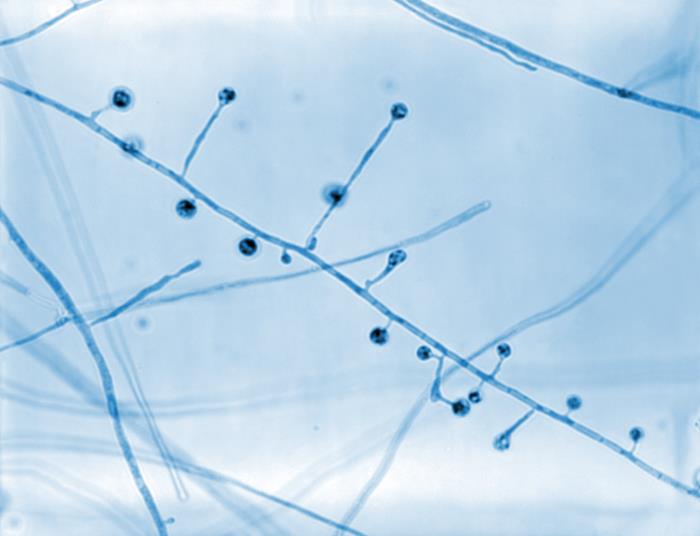
    • Fase de micelio:
      • Presente a temperatura ambiente
      • Moho blanco → troncos de color marrón claro
      • Hifas ramificadas
      • Conidióforos en EN Erythema nodosum is an immune-mediated panniculitis (inflammation of the subcutaneous fat) caused by a type IV (delayed-type) hypersensitivity reaction. It commonly manifests in young women as tender, erythematous nodules on the shins. Erythema Nodosum ángulo recto con un solo conidio
      • Forma conidios (esporas)
    • Fase de levadura:
      • Ocurre a 37°C (98,6°F)
      • Color crema o bronceado
      • Pared celular gruesa
      • Multinucleado
      • Reproducción asexual: gemación
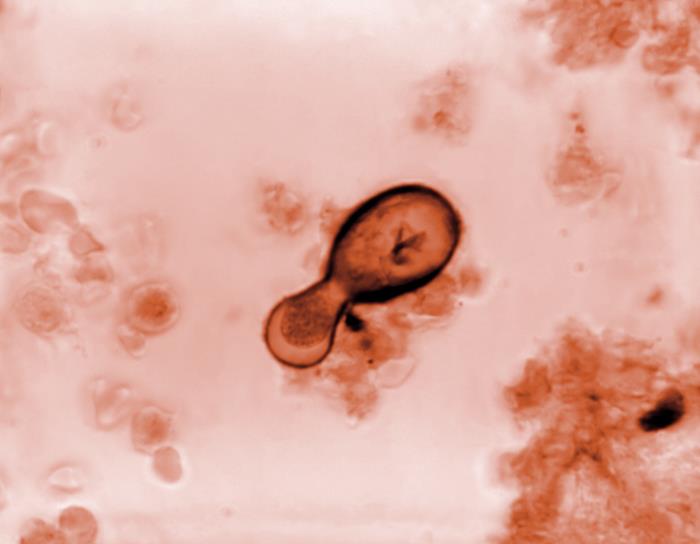
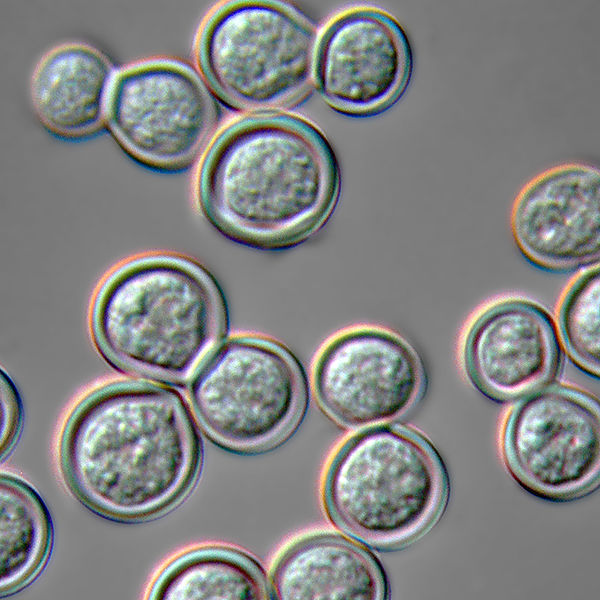
Blastomyces dermatitidis en forma de levadura

Blastomyces dermatitidis en forma de levadura a 37°C

Imagen: “Blastomyces dermatitidis yeast form” por Medmyco. Licencia: CC0 1.0
Especies clínicamente relevantes

La blastomicosis es causada por Blastomyces dermatitidis Blastomyces dermatitidis Blastomyces/Blastomycosis.

Epidemiología

  • Endémica en EN Erythema nodosum is an immune-mediated panniculitis (inflammation of the subcutaneous fat) caused by a type IV (delayed-type) hypersensitivity reaction. It commonly manifests in young women as tender, erythematous nodules on the shins. Erythema Nodosum los LOS Neisseria suelos de:
    • Valles de los LOS Neisseria ríos Ohio y Mississippi
    • Región de los LOS Neisseria Grandes Lagos
    • Sureste de Estados Unidos
  • Tasas de incidencia anual en EN Erythema nodosum is an immune-mediated panniculitis (inflammation of the subcutaneous fat) caused by a type IV (delayed-type) hypersensitivity reaction. It commonly manifests in young women as tender, erythematous nodules on the shins. Erythema Nodosum regiones endémicas: < 1 caso por cada 100 000 personas

Patogénesis

Reservorios

  • Suelo húmedo
  • Material en EN Erythema nodosum is an immune-mediated panniculitis (inflammation of the subcutaneous fat) caused by a type IV (delayed-type) hypersensitivity reaction. It commonly manifests in young women as tender, erythematous nodules on the shins. Erythema Nodosum descomposición

Transmisión

Los LOS Neisseria conidios de B. dermatitidis pueden aerosolizarse al AL Amyloidosis perturbar la colonia fúngica y luego son inhalados.

Factores de riesgo del huésped

La blastomicosis es más común en EN Erythema nodosum is an immune-mediated panniculitis (inflammation of the subcutaneous fat) caused by a type IV (delayed-type) hypersensitivity reaction. It commonly manifests in young women as tender, erythematous nodules on the shins. Erythema Nodosum individuos inmunocomprometidos, pero también puede ocurrir en EN Erythema nodosum is an immune-mediated panniculitis (inflammation of the subcutaneous fat) caused by a type IV (delayed-type) hypersensitivity reaction. It commonly manifests in young women as tender, erythematous nodules on the shins. Erythema Nodosum individuos inmunocompetentes.

Factores de virulencia

  • Las gruesas paredes celulares proporcionan resistencia a la fagocitosis.
  • Adhesina de Blastomyces Blastomyces Blastomycosis is an infection caused by inhalation of the spores of the fungus, Blastomyces. Blastomyces species thrive in moist soil and decaying material and are common in the Ohio and Mississippi River valleys and the Great Lakes regions of the United States and Canada. Although most patients are asymptomatic, some can develop pneumonia. Blastomyces/Blastomycosis 1 ( BAD-1 BAD-1 Blastomyces/Blastomycosis, por sus siglas en EN Erythema nodosum is an immune-mediated panniculitis (inflammation of the subcutaneous fat) caused by a type IV (delayed-type) hypersensitivity reaction. It commonly manifests in young women as tender, erythematous nodules on the shins. Erythema Nodosum inglés):
    • Glucoproteína adhesina
    • Permite la adhesión a las células del huésped
    • Disminuye la respuesta proinflamatoria
  • Dipeptidil peptidasa-IVA:
    • Serina proteasa
    • Reduce la liberación de citoquinas
    • Inactiva el factor estimulante de colonias de granulocitos ( GM-CSF GM-CSF An acidic glycoprotein of mw 23 kda with internal disulfide bonds. The protein is produced in response to a number of inflammatory mediators by mesenchymal cells present in the hemopoietic environment and at peripheral sites of inflammation. GM-CSF is able to stimulate the production of neutrophilic granulocytes, macrophages, and mixed granulocyte-macrophage colonies from bone marrow cells and can stimulate the formation of eosinophil colonies from fetal liver progenitor cells. GM-CSF can also stimulate some functional activities in mature granulocytes and macrophages. White Myeloid Cells: Histology, por sus siglas en EN Erythema nodosum is an immune-mediated panniculitis (inflammation of the subcutaneous fat) caused by a type IV (delayed-type) hypersensitivity reaction. It commonly manifests in young women as tender, erythematous nodules on the shins. Erythema Nodosum inglés)

Fisiopatología

  • Los LOS Neisseria conidios se inhalan → son fagocitados por los LOS Neisseria neutrófilos y macrófagos en EN Erythema nodosum is an immune-mediated panniculitis (inflammation of the subcutaneous fat) caused by a type IV (delayed-type) hypersensitivity reaction. It commonly manifests in young women as tender, erythematous nodules on the shins. Erythema Nodosum los LOS Neisseria alvéolos → se elimina la infección
  • Algunos hongos evaden la fagocitosis → pasan rápidamente a la fase de levadura → resistentes a la fagocitosis
  • La levadura se multiplica en EN Erythema nodosum is an immune-mediated panniculitis (inflammation of the subcutaneous fat) caused by a type IV (delayed-type) hypersensitivity reaction. It commonly manifests in young women as tender, erythematous nodules on the shins. Erythema Nodosum los LOS Neisseria tejidos pulmonares → se propaga a través de la sangre o los LOS Neisseria vasos linfáticos a otros tejidos:
    • Piel
    • Hueso
    • Tracto genitourinario
    • Cerebro

Presentación Clínica

La gravedad de la infección depende del sistema inmunitario de la persona.
Enfermedad pulmonar

  • Neumonía aguda:
    • Fiebre
    • Tos TOS Thoracic outlet syndrome (TOS) is a broad term used for a spectrum of syndromes related to the general region of the thoracic outlet, which involves the compression or irritation of elements of the brachial plexus, subclavian artery, or subclavian vein. Thoracic Outlet Syndrome:
      • Inicialmente no productiva
      • A menudo se vuelve productiva (esputo purulento)
    • Dolor Dolor Inflammation torácico
    • Disnea
    • Hemoptisis
    • Mialgia
  • Neumonía crónica:
    • Presentación similar a la TB TB Tuberculosis (TB) is an infectious disease caused by Mycobacterium tuberculosis complex bacteria. The bacteria usually attack the lungs but can also damage other parts of the body. Approximately 30% of people around the world are infected with this pathogen, with the majority harboring a latent infection. Tuberculosis spreads through the air when a person with active pulmonary infection coughs or sneezes. Tuberculosis
    • Fiebre de bajo grado
    • Tos TOS Thoracic outlet syndrome (TOS) is a broad term used for a spectrum of syndromes related to the general region of the thoracic outlet, which involves the compression or irritation of elements of the brachial plexus, subclavian artery, or subclavian vein. Thoracic Outlet Syndrome
    • Sudoración nocturna
    • Pérdida de peso
  • SDRA:
    • Raro
    • Neumonitis difusa
    • Rápidamente progresiva
    • Alta mortalidad

Enfermedades extrapulmonares

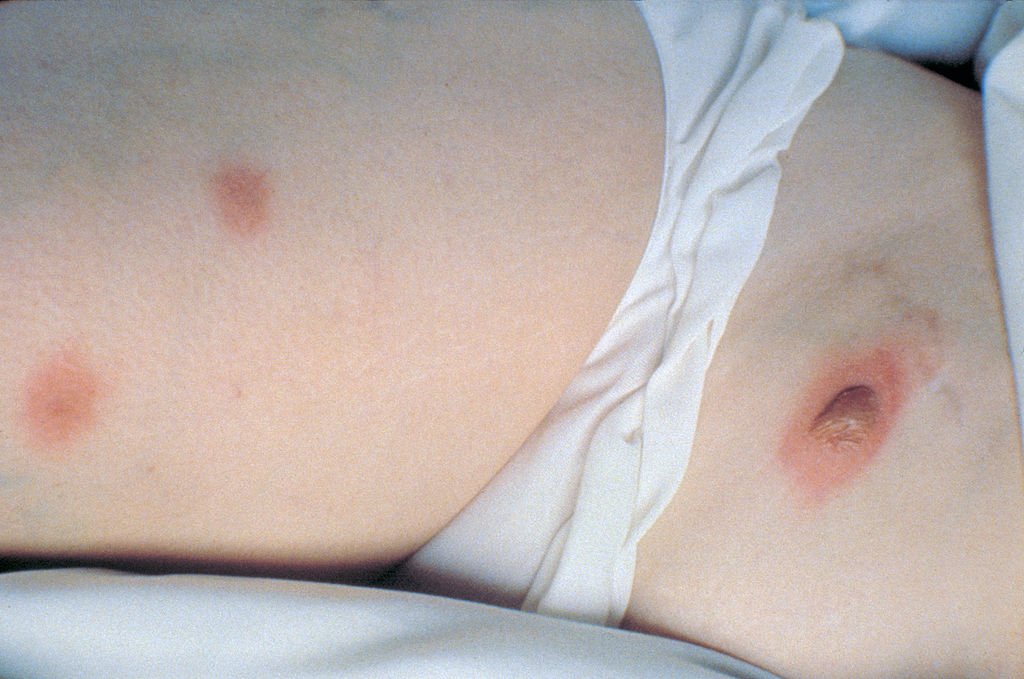
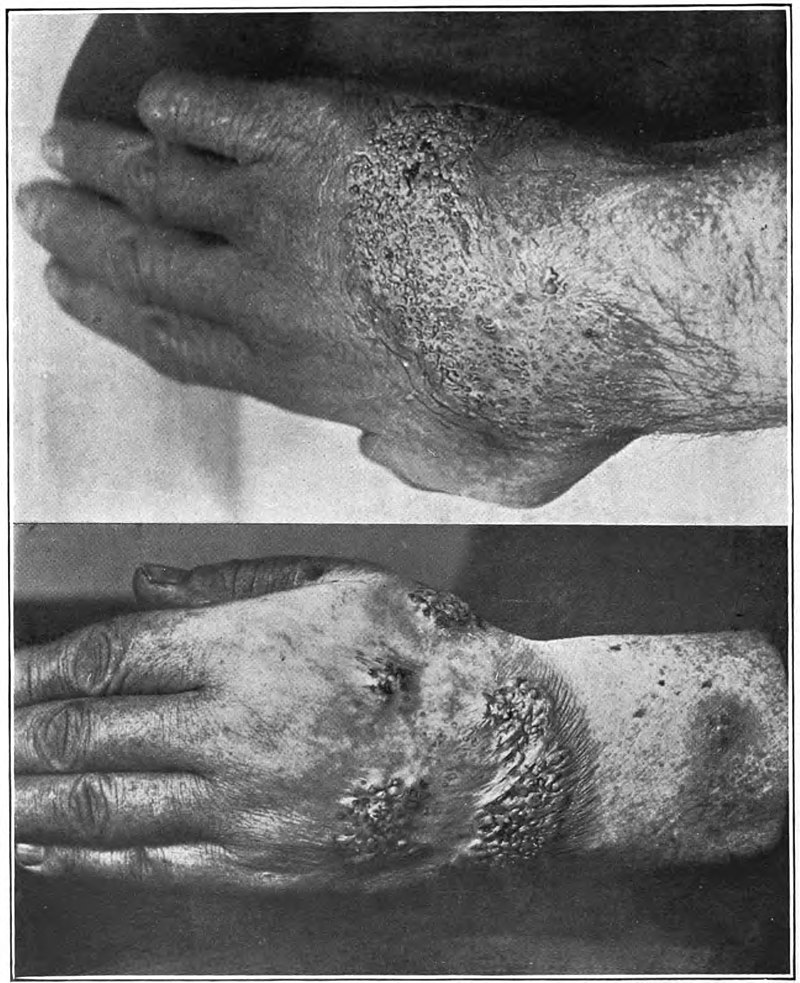
  • Cutáneas:
    • Verrugosa
    • Lesión ulcerada con pequeñas pústulas en EN Erythema nodosum is an immune-mediated panniculitis (inflammation of the subcutaneous fat) caused by a type IV (delayed-type) hypersensitivity reaction. It commonly manifests in young women as tender, erythematous nodules on the shins. Erythema Nodosum los LOS Neisseria márgenes
  • De los LOS Neisseria huesos y articulaciones:
    • Osteomielitis:
      • Las lesiones líticas pueden causar dolor Dolor Inflammation óseo o articular.
      • Edema Edema Edema is a condition in which excess serous fluid accumulates in the body cavity or interstitial space of connective tissues. Edema is a symptom observed in several medical conditions. It can be categorized into 2 types, namely, peripheral (in the extremities) and internal (in an organ or body cavity). Edema de los LOS Neisseria tejidos blandos
      • Drenaje del tracto sinusal
    • Artritis
  • Genitales:
    • Piuria asintomática
    • Prostatitis Prostatitis Prostatitis is inflammation or an irritative condition of the prostate that presents as different syndromes: acute bacterial, chronic bacterial, chronic prostatitis/chronic pelvic pain, and asymptomatic. Bacterial prostatitis is easier to identify clinically and the management (antibiotics) is better established. Prostatitis
    • Epidídimo-orquitis
    • Endometritis Endometritis Endometritis is an inflammation of the endometrium, the inner layer of the uterus. The most common subtype is postpartum endometritis, resulting from the ascension of normal vaginal flora to the previously aseptic uterus. Postpartum Endometritis
    • Absceso tubo-ovárico
  • Del sistema nervioso:
    • Meningitis Meningitis Meningitis is inflammation of the meninges, the protective membranes of the brain, and spinal cord. The causes of meningitis are varied, with the most common being bacterial or viral infection. The classic presentation of meningitis is a triad of fever, altered mental status, and nuchal rigidity. Meningitis
    • Absceso intracraneal
    • Absceso epidural

Diagnóstico y Tratamiento

Diagnóstico

  • Se confirma mediante la identificación de organismos en EN Erythema nodosum is an immune-mediated panniculitis (inflammation of the subcutaneous fat) caused by a type IV (delayed-type) hypersensitivity reaction. It commonly manifests in young women as tender, erythematous nodules on the shins. Erythema Nodosum el esputo o los LOS Neisseria tejidos utilizando:
    • Preparación de KOH
    • Histología (biopsia tisular)
  • PCR PCR Polymerase chain reaction (PCR) is a technique that amplifies DNA fragments exponentially for analysis. The process is highly specific, allowing for the targeting of specific genomic sequences, even with minuscule sample amounts. The PCR cycles multiple times through 3 phases: denaturation of the template DNA, annealing of a specific primer to the individual DNA strands, and synthesis/elongation of new DNA molecules. Polymerase Chain Reaction (PCR) para el ADN de B. dermatitidis
  • Análisis de antígenos en EN Erythema nodosum is an immune-mediated panniculitis (inflammation of the subcutaneous fat) caused by a type IV (delayed-type) hypersensitivity reaction. It commonly manifests in young women as tender, erythematous nodules on the shins. Erythema Nodosum orina
  • Cultivo del organismo
  • Estudios de imagen (depende de la presentación):
    • Pulmonar:
      • Radiografía de tórax: infiltrados alveolares o lesión masiva
      • TC de tórax: nódulos, consolidación +/- cavitación, opacidades en EN Erythema nodosum is an immune-mediated panniculitis (inflammation of the subcutaneous fat) caused by a type IV (delayed-type) hypersensitivity reaction. It commonly manifests in young women as tender, erythematous nodules on the shins. Erythema Nodosum de árbol en EN Erythema nodosum is an immune-mediated panniculitis (inflammation of the subcutaneous fat) caused by a type IV (delayed-type) hypersensitivity reaction. It commonly manifests in young women as tender, erythematous nodules on the shins. Erythema Nodosum brote
    • Osteomielitis: lesión osteolítica bien circunscrita (la más común)

Tratamiento

Puede producirse una remisión espontánea, pero debe indicarse a los LOS Neisseria pacientes una terapia antifúngica para reducir las posibilidades de diseminación o recurrencia.

  • Itraconazol (tratamiento de elección para la mayoría de las formas de la enfermedad)
  • Anfotericina B:
    • Alternativa más tóxica
    • Reservado para pacientes críticos y con infecciones del SNC
  • Azoles Azoles Azoles are a widely used class of antifungal medications inhibiting the production of ergosterol, a critical component in the fungal cell membrane. The 2 primary subclasses of azoles are the imidazoles, older agents typically only used for topical applications, and the triazoles, newer agents with a wide spectrum of uses. Azoles:
    • Se utilizan como terapia de reducción para pacientes con enfermedad del SNC
    • Buena penetración en EN Erythema nodosum is an immune-mediated panniculitis (inflammation of the subcutaneous fat) caused by a type IV (delayed-type) hypersensitivity reaction. It commonly manifests in young women as tender, erythematous nodules on the shins. Erythema Nodosum el SNC
    • Opciones:
      • Itraconazol
      • Voriconazol
      • Fluconazol

Pronóstico

  • La recurrencia es rara.
  • 80%–95% de los LOS Neisseria individuos inmunocompetentes son tratados con éxito.
  • El pronóstico es malo en EN Erythema nodosum is an immune-mediated panniculitis (inflammation of the subcutaneous fat) caused by a type IV (delayed-type) hypersensitivity reaction. It commonly manifests in young women as tender, erythematous nodules on the shins. Erythema Nodosum los LOS Neisseria pacientes inmunocomprometidos.

Diagnóstico Diferencial

  • Tuberculosis Tuberculosis Tuberculosis (TB) is an infectious disease caused by Mycobacterium tuberculosis complex bacteria. The bacteria usually attack the lungs but can also damage other parts of the body. Approximately 30% of people around the world are infected with this pathogen, with the majority harboring a latent infection. Tuberculosis spreads through the air when a person with active pulmonary infection coughs or sneezes. Tuberculosis: enfermedad infecciosa causada por la bacteria Bacteria Bacteria are prokaryotic single-celled microorganisms that are metabolically active and divide by binary fission. Some of these organisms play a significant role in the pathogenesis of diseases. Bacteriology del complejo Mycobacterium tuberculosis Mycobacterium tuberculosis Tuberculosis (TB) is an infectious disease caused by Mycobacterium tuberculosis complex bacteria. The bacteria usually attack the lungs but can also damage other parts of the body. Approximately 30% of people around the world are infected with this pathogen, with the majority harboring a latent infection. Tuberculosis spreads through the air when a person with active pulmonary infection coughs or sneezes. Tuberculosis. La enfermedad pulmonar se presenta con fiebre, sudoración nocturna, tos TOS Thoracic outlet syndrome (TOS) is a broad term used for a spectrum of syndromes related to the general region of the thoracic outlet, which involves the compression or irritation of elements of the brachial plexus, subclavian artery, or subclavian vein. Thoracic Outlet Syndrome, hemoptisis, fatiga y pérdida de peso. Las manifestaciones extrapulmonares pueden incluir pleuritis Pleuritis Pleuritis, also known as pleurisy, is an inflammation of the visceral and parietal layers of the pleural membranes of the lungs. The condition can be primary or secondary and results in sudden, sharp, and intense chest pain on inhalation and exhalation. Pleuritis, meningitis Meningitis Meningitis is inflammation of the meninges, the protective membranes of the brain, and spinal cord. The causes of meningitis are varied, with the most common being bacterial or viral infection. The classic presentation of meningitis is a triad of fever, altered mental status, and nuchal rigidity. Meningitis, enfermedad de Pott, pericarditis Pericarditis Pericarditis is an inflammation of the pericardium, often with fluid accumulation. It can be caused by infection (often viral), myocardial infarction, drugs, malignancies, metabolic disorders, autoimmune disorders, or trauma. Acute, subacute, and chronic forms exist. Pericarditis y enfermedad miliar. El diagnóstico se establece mediante la prueba cutánea de la tuberculina, el cultivo de esputo y la imagenología pulmonar. La base del tratamiento son los LOS Neisseria medicamentos antimicobacterianos.
  • Neumonía atípica: forma de infección pulmonar que suele tener un inicio y progresión lenta y que se presenta con una tos TOS Thoracic outlet syndrome (TOS) is a broad term used for a spectrum of syndromes related to the general region of the thoracic outlet, which involves the compression or irritation of elements of the brachial plexus, subclavian artery, or subclavian vein. Thoracic Outlet Syndrome seca no productiva y síntomas extrapulmonares como fatiga, malestar y cefalea. El diagnóstico se realiza mediante los LOS Neisseria antecedentes, el examen físico y la imagenología de tórax. La neumonía atípica suele tratarse con antibióticos.
  • Cáncer de pulmón: transformación maligna del tejido pulmonar y la principal causa de muerte relacionada con cáncer. El cáncer de pulmón suele clasificarse histológicamente como cáncer de pulmón de células pequeñas o cáncer de pulmón de células no pequeñas. Los LOS Neisseria síntomas incluyen tos TOS Thoracic outlet syndrome (TOS) is a broad term used for a spectrum of syndromes related to the general region of the thoracic outlet, which involves the compression or irritation of elements of the brachial plexus, subclavian artery, or subclavian vein. Thoracic Outlet Syndrome, disnea, pérdida de peso y molestias en EN Erythema nodosum is an immune-mediated panniculitis (inflammation of the subcutaneous fat) caused by a type IV (delayed-type) hypersensitivity reaction. It commonly manifests in young women as tender, erythematous nodules on the shins. Erythema Nodosum el tórax. El diagnóstico definitivo y la estadificación se realizan mediante la biopsia, la identificación de mutaciones genéticas con pruebas de biomarcadores y la imagenología. El tratamiento se elige de acuerdo al AL Amyloidosis estadio del cáncer y el perfil molecular asociado.
  • Tularemia: infección rara causada por Francisella tularensis Francisella Tularensis Aminoglycosides, que se adquiere por contacto con tejidos animales, garrapatas o moscas picadoras. La infección se manifiesta como una pápula, seguida de fiebre, cefalea y linfadenopatía supurativa. La tularemia puede tener una afectación multiorgánica. El diagnóstico se basa en EN Erythema nodosum is an immune-mediated panniculitis (inflammation of the subcutaneous fat) caused by a type IV (delayed-type) hypersensitivity reaction. It commonly manifests in young women as tender, erythematous nodules on the shins. Erythema Nodosum el hemocultivo y el cultivo de tejidos infectados. El tratamiento es con antibióticos.
  • Carcinoma de células escamosas (CCE): proliferación maligna de queratinocitos atípicos. El cáncer se presenta como una placa o pápula firme, eritematosa y queratósica. Debe realizarse un examen histopatológico en EN Erythema nodosum is an immune-mediated panniculitis (inflammation of the subcutaneous fat) caused by a type IV (delayed-type) hypersensitivity reaction. It commonly manifests in young women as tender, erythematous nodules on the shins. Erythema Nodosum todos los LOS Neisseria casos sospechosos, ya que muchas lesiones, como la queratosis actínica, imitan el aspecto del CCE. La escisión quirúrgica es la base del tratamiento.
  • Pioderma gangrenoso: una necrosis Necrosis The death of cells in an organ or tissue due to disease, injury or failure of the blood supply. Ischemic Cell Damage cutánea neutrofílica crónica y progresiva. La etiología del pioderma gangrenoso es desconocida, pero a menudo se asocia con enfermedades sistémicas. Los LOS Neisseria pacientes pueden tener presentaciones clínicas variadas, con lesiones cutáneas que progresan desde una pápula o nódulo hasta úlceras con una base necrótica y un borde violáceo. Estas presentaciones clínicas pueden ir acompañadas de fiebre y malestar general. El diagnóstico es clínico. El tratamiento incluye el cuidado de las heridas y el tratamiento con medicamentos antiinflamatorios e inmunosupresores.

Referencias

  1. Centers for Disease Control and Prevention (2024). Blastomycosis Basics. Retrieved January 19, 2025, from https://www.cdc.gov/blastomycosis/about/index.html
  2. Castillo, C.G., Kauffman, C.A., Miceli, M.H. (2016). Blastomycosis. Infectious Disease Clinics of North America. https://pubmed.ncbi.nlm.nih.gov/26739607
  3. Cano, M.V., Ponce-de-Leon, G.F.; Tippen, S., Lindsley, M.D.; Warwick, M., Hajjeh, R.A. (2003). Blastomycosis in Missouri: Epidemiology and Risk Factors for Endemic Disease. Epidemiology and Infection. https://www.ncbi.nlm.nih.gov/pmc/articles/PMC2870035
  4. Smith, J.A., Riddell, J., Kauffman, C.A. (2013). Cutaneous manifestations of endemic mycoses. Curr Infect Dis Rep. https://www.ncbi.nlm.nih.gov/pubmed/23917880
  5. Gray, N.A., Baddour, L.M. (2002). Cutaneous inoculation blastomycosis. Clin Infect Dis. https://www.ncbi.nlm.nih.gov/pubmed/11981746
  6. Saccente, M., Woods, G.L. (2010). Clinical and laboratory update on blastomycosis. Clin Microbiol Rev. https://www.ncbi.nlm.nih.gov/pmc/articles/PMC2863359/
  7. Lohrenz, S., Minion, J., Pandey, M., Karunakaran, K. (2018). Blastomycosis in Southern Saskatchewan 2000-2015: Unique presentations and disease characteristics. https://www.ncbi.nlm.nih.gov/pubmed/29924358
  8. Patel, A.J., Gattuso, P., Reddy, V.B. (2010). Diagnosis of blastomycosis in surgical pathology and cytopathology: Correlation with microbiologic culture. Am J Surg Pathol. https://www.ncbi.nlm.nih.gov/pubmed/20090507
  9. Goughenour, K.D., Rappleye, C.A. (2016). Antifungal therapeutics for dimorphic fungal pathogens. Virulence. https://www.ncbi.nlm.nih.gov/pmc/articles/PMC5354166/
  10. Lestner, J., Hope, W.W. (2013). Itraconazole: An update on pharmacology and clinical use for the treatment of invasive and allergic fungal infections. Expert Opin Drug Metab Toxicol. https://www.ncbi.nlm.nih.gov/pubmed/23641752
  11. Baker, T., Patel, A., Halteh, P., Toussi, S.S., DeLaMora, P., Lipner, S., Schuetz, A.N., Hartman, B. (2017). Blastomycosis during pregnancy: A case report and review of the literature. Diagn Microbiol Infect Dis. https://www.ncbi.nlm.nih.gov/pubmed/28291633
  12. Schwartz, I.S., Embil, J.M., Sharma, A., Goulet, S., Light, R.B. (2016). Management and Outcomes of Acute Respiratory Distress Syndrome Caused by Blastomycosis: A Retrospective Case Series. Medicine (Baltimore). https://www.ncbi.nlm.nih.gov/pmc/articles/PMC4863776/
  13. Bradsher, Jr., R.W. (2024). Mycology, pathogenesis, and epidemiology of blastomycosis. In Mitty, J. (Ed.), UpToDate. Retrieved January 19, 2025, from https://www.uptodate.com/contents/mycology-pathogenesis-and-epidemiology-of-blastomycosis
  14. Bradsher, Jr., R.W. (2024). Clinical manifestations and diagnosis of blastomycosis. In Mitty, J. (Ed.), UpToDate. Retrieved January 19, 2025, from https://www.uptodate.com/contents/clinical-manifestations-and-diagnosis-of-blastomycosis
  15. Bradsher, Jr., R.W. (2024). Treatment of blastomycosis. In Mitty, J. (Ed.), UpToDate. Retrieved January 19, 2025, from https://www.uptodate.com/contents/treatment-of-blastomycosis
  16. Miceli, A., and Krishnamurthy, K. (2023). Blastomycosis. [online] StatPearls. Retrieved January 19, 2025, from https://www.ncbi.nlm.nih.gov/books/NBK441987/

¡Crea tu cuenta gratis o inicia una sesión para seguir leyendo!

Regístrate ahora y obtén acceso gratuito a Lecturio con páginas de concepto, videos médicos y cuestionarios para tu educación médica.

User Reviews

Que tengas una sesión de estudio alegre y navideña 🎁 Ahorra 50% en todos los planes >>

Details