Domina Conceptos Médicos

Estudia para la escuela de medicina y tus examenes con Lecturio.

Anomalías de la Placenta

La estructura y la función normales de la placenta Placenta A highly vascularized mammalian fetal-maternal organ and major site of transport of oxygen, nutrients, and fetal waste products. It includes a fetal portion (chorionic villi) derived from trophoblasts and a maternal portion (decidua) derived from the uterine endometrium. The placenta produces an array of steroid, protein and peptide hormones (placental hormones). Placenta, Umbilical Cord, and Amniotic Cavity son esenciales para un embarazo saludable. Algunas de las anomalías más comunes de la placenta Placenta A highly vascularized mammalian fetal-maternal organ and major site of transport of oxygen, nutrients, and fetal waste products. It includes a fetal portion (chorionic villi) derived from trophoblasts and a maternal portion (decidua) derived from the uterine endometrium. The placenta produces an array of steroid, protein and peptide hormones (placental hormones). Placenta, Umbilical Cord, and Amniotic Cavity son las anomalías estructurales (como la placenta Placenta A highly vascularized mammalian fetal-maternal organ and major site of transport of oxygen, nutrients, and fetal waste products. It includes a fetal portion (chorionic villi) derived from trophoblasts and a maternal portion (decidua) derived from the uterine endometrium. The placenta produces an array of steroid, protein and peptide hormones (placental hormones). Placenta, Umbilical Cord, and Amniotic Cavity succenturiata o la inserción velamentosa del cordón), anomalías de implantación (como la placenta Placenta A highly vascularized mammalian fetal-maternal organ and major site of transport of oxygen, nutrients, and fetal waste products. It includes a fetal portion (chorionic villi) derived from trophoblasts and a maternal portion (decidua) derived from the uterine endometrium. The placenta produces an array of steroid, protein and peptide hormones (placental hormones). Placenta, Umbilical Cord, and Amniotic Cavity acreta y la placenta previa Placenta Previa Abnormal placentation in which the placenta implants in the lower segment of the uterus (the zone of dilation) and may cover part or all of the opening of the cervix. It is often associated with serious antepartum bleeding and premature labor. Placental Abnormalities) y las anomalías funcionales (como la insuficiencia placentaria). La placenta Placenta A highly vascularized mammalian fetal-maternal organ and major site of transport of oxygen, nutrients, and fetal waste products. It includes a fetal portion (chorionic villi) derived from trophoblasts and a maternal portion (decidua) derived from the uterine endometrium. The placenta produces an array of steroid, protein and peptide hormones (placental hormones). Placenta, Umbilical Cord, and Amniotic Cavity suele verse bien en EN Erythema nodosum is an immune-mediated panniculitis (inflammation of the subcutaneous fat) caused by a type IV (delayed-type) hypersensitivity reaction. It commonly manifests in young women as tender, erythematous nodules on the shins. Erythema Nodosum el ultrasonido, y la evaluación de la placenta Placenta A highly vascularized mammalian fetal-maternal organ and major site of transport of oxygen, nutrients, and fetal waste products. It includes a fetal portion (chorionic villi) derived from trophoblasts and a maternal portion (decidua) derived from the uterine endometrium. The placenta produces an array of steroid, protein and peptide hormones (placental hormones). Placenta, Umbilical Cord, and Amniotic Cavity forma parte del tamizaje prenatal rutinario, que es cuando se identifican la mayoría de las anomalías estructurales y de implantación. Debido a la amplia circulación materna y fetal a través de la placenta Placenta A highly vascularized mammalian fetal-maternal organ and major site of transport of oxygen, nutrients, and fetal waste products. It includes a fetal portion (chorionic villi) derived from trophoblasts and a maternal portion (decidua) derived from the uterine endometrium. The placenta produces an array of steroid, protein and peptide hormones (placental hormones). Placenta, Umbilical Cord, and Amniotic Cavity, las anomalías placentarias pueden aumentar significativamente el riesgo de hemorragia grave antes o después del parto. Las anomalías de la placenta Placenta A highly vascularized mammalian fetal-maternal organ and major site of transport of oxygen, nutrients, and fetal waste products. It includes a fetal portion (chorionic villi) derived from trophoblasts and a maternal portion (decidua) derived from the uterine endometrium. The placenta produces an array of steroid, protein and peptide hormones (placental hormones). Placenta, Umbilical Cord, and Amniotic Cavity también suelen influir en EN Erythema nodosum is an immune-mediated panniculitis (inflammation of the subcutaneous fat) caused by a type IV (delayed-type) hypersensitivity reaction. It commonly manifests in young women as tender, erythematous nodules on the shins. Erythema Nodosum las decisiones relativas al AL Amyloidosis momento y la vía del parto.

Last updated: Dec 15, 2025

Editorial responsibility: Stanley Oiseth, Lindsay Jones, Evelin Maza

Descripción General

La placenta Placenta A highly vascularized mammalian fetal-maternal organ and major site of transport of oxygen, nutrients, and fetal waste products. It includes a fetal portion (chorionic villi) derived from trophoblasts and a maternal portion (decidua) derived from the uterine endometrium. The placenta produces an array of steroid, protein and peptide hormones (placental hormones). Placenta, Umbilical Cord, and Amniotic Cavity es una estructura importante para el crecimiento y el desarrollo del feto durante su vida embrionaria y fetal. Las anomalías en EN Erythema nodosum is an immune-mediated panniculitis (inflammation of the subcutaneous fat) caused by a type IV (delayed-type) hypersensitivity reaction. It commonly manifests in young women as tender, erythematous nodules on the shins. Erythema Nodosum su estructura, función o implantación pueden provocar complicaciones graves y potencialmente mortales tanto para el feto como para la madre.
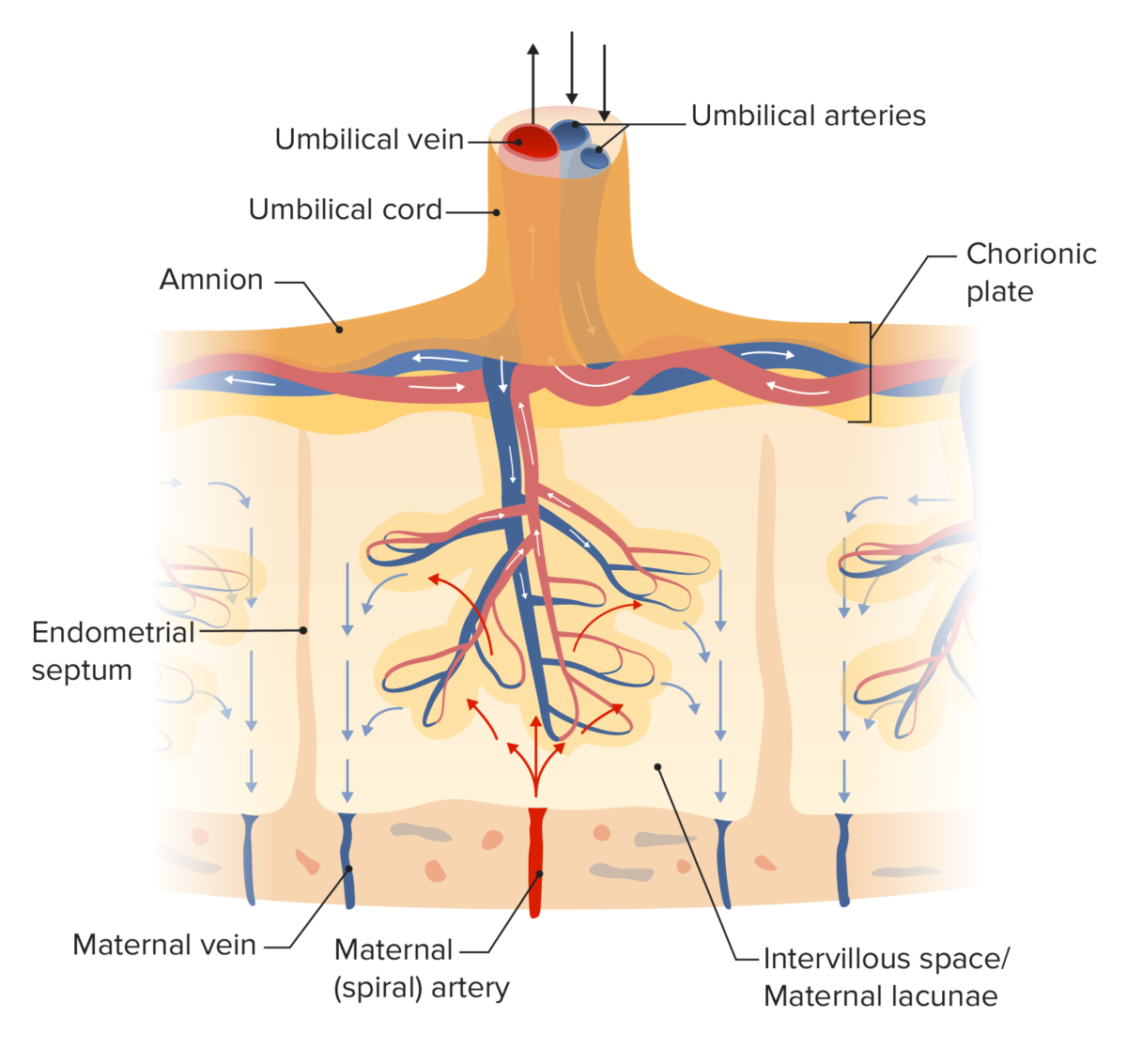
Estructura y circulación de la placenta Placenta A highly vascularized mammalian fetal-maternal organ and major site of transport of oxygen, nutrients, and fetal waste products. It includes a fetal portion (chorionic villi) derived from trophoblasts and a maternal portion (decidua) derived from the uterine endometrium. The placenta produces an array of steroid, protein and peptide hormones (placental hormones). Placenta, Umbilical Cord, and Amniotic Cavity

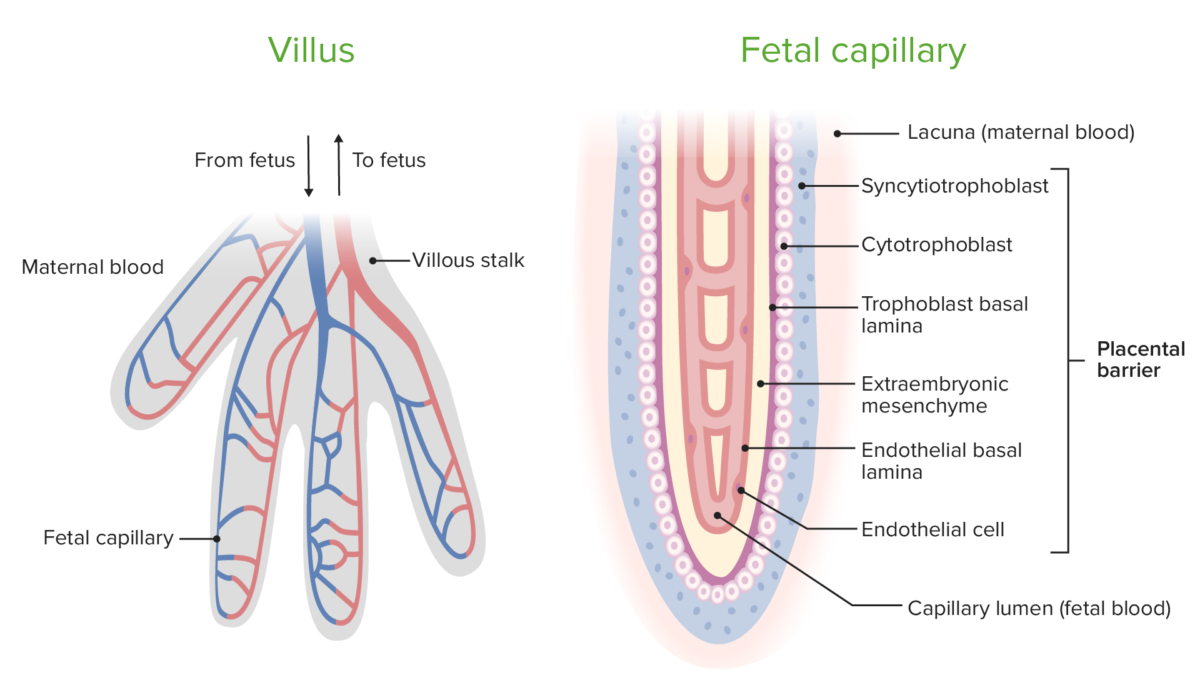
  • Las vellosidades coriónicas proporcionan una gran superficie para el intercambio materno-fetal.
  • Las arterias espirales (maternas) llenan los LOS Neisseria espacios intervellosos de la capa basal de la decidua del endometrio:
    • Aportan sangre oxigenada para el feto
    • Las arterias espirales se “rompen” y se convierten en EN Erythema nodosum is an immune-mediated panniculitis (inflammation of the subcutaneous fat) caused by a type IV (delayed-type) hypersensitivity reaction. It commonly manifests in young women as tender, erythematous nodules on the shins. Erythema Nodosum grandes espacios llamados lagunas, que:
      • Son zonas de muy baja resistencia
      • No tienen la capacidad de regular Regular Insulin el flujo sanguíneo a través del órgano
  • 2 arterias umbilicales llevan la sangre desoxigenada del feto a las vellosidades coriónicas de la placenta Placenta A highly vascularized mammalian fetal-maternal organ and major site of transport of oxygen, nutrients, and fetal waste products. It includes a fetal portion (chorionic villi) derived from trophoblasts and a maternal portion (decidua) derived from the uterine endometrium. The placenta produces an array of steroid, protein and peptide hormones (placental hormones). Placenta, Umbilical Cord, and Amniotic Cavity.
  • El intercambio de gases y moléculas se produce entre la sangre fetal en EN Erythema nodosum is an immune-mediated panniculitis (inflammation of the subcutaneous fat) caused by a type IV (delayed-type) hypersensitivity reaction. It commonly manifests in young women as tender, erythematous nodules on the shins. Erythema Nodosum las vellosidades coriónicas y la sangre materna en EN Erythema nodosum is an immune-mediated panniculitis (inflammation of the subcutaneous fat) caused by a type IV (delayed-type) hypersensitivity reaction. It commonly manifests in young women as tender, erythematous nodules on the shins. Erythema Nodosum las lagunas, a través de la barrera placentaria.
  • La vena umbilical transporta la sangre oxigenada al AL Amyloidosis feto.
  • Las venas maternas llevan la sangre desoxigenada de vuelta a la circulación materna.
  • La sangre materna y la del feto nunca entran en EN Erythema nodosum is an immune-mediated panniculitis (inflammation of the subcutaneous fat) caused by a type IV (delayed-type) hypersensitivity reaction. It commonly manifests in young women as tender, erythematous nodules on the shins. Erythema Nodosum contacto directo.
  • La hemoglobina fetal tiene ↑ afinidad por el O2 en EN Erythema nodosum is an immune-mediated panniculitis (inflammation of the subcutaneous fat) caused by a type IV (delayed-type) hypersensitivity reaction. It commonly manifests in young women as tender, erythematous nodules on the shins. Erythema Nodosum comparación con la hemoglobina materna → hace HACE Altitude Sickness que el O2 pase de los LOS Neisseria eritrocitos maternos a los LOS Neisseria fetales

Funciones de la placenta Placenta A highly vascularized mammalian fetal-maternal organ and major site of transport of oxygen, nutrients, and fetal waste products. It includes a fetal portion (chorionic villi) derived from trophoblasts and a maternal portion (decidua) derived from the uterine endometrium. The placenta produces an array of steroid, protein and peptide hormones (placental hormones). Placenta, Umbilical Cord, and Amniotic Cavity

  • Intercambio de gases (O2 y CO2)
  • Intercambio de nutrientes
  • Eliminación de residuos fetales
  • Producción de hormonas (órgano endocrino fetal y materno durante el embarazo):
    • Gonadotropina coriónica humana (hCG, por sus siglas en EN Erythema nodosum is an immune-mediated panniculitis (inflammation of the subcutaneous fat) caused by a type IV (delayed-type) hypersensitivity reaction. It commonly manifests in young women as tender, erythematous nodules on the shins. Erythema Nodosum inglés)
    • Lactógeno placentario humano (hPL, por sus siglas en EN Erythema nodosum is an immune-mediated panniculitis (inflammation of the subcutaneous fat) caused by a type IV (delayed-type) hypersensitivity reaction. It commonly manifests in young women as tender, erythematous nodules on the shins. Erythema Nodosum inglés)
    • Hormona de crecimiento placentaria
    • Hormona liberadora de corticotropina coriónica (CRH, por sus siglas en EN Erythema nodosum is an immune-mediated panniculitis (inflammation of the subcutaneous fat) caused by a type IV (delayed-type) hypersensitivity reaction. It commonly manifests in young women as tender, erythematous nodules on the shins. Erythema Nodosum inglés)
    • Progesterona
    • Estrógenos
    • Glucocorticoides
    • Factores de crecimiento
  • Funciones metabólicas de apoyo al AL Amyloidosis feto:
    • Síntesis de glucógeno y colesterol
    • Metabolismo de las proteínas
  • Ayuda al AL Amyloidosis rechazo del sistema inmunitario materno

Visión general de la implantación normal y anormal de la placenta Placenta A highly vascularized mammalian fetal-maternal organ and major site of transport of oxygen, nutrients, and fetal waste products. It includes a fetal portion (chorionic villi) derived from trophoblasts and a maternal portion (decidua) derived from the uterine endometrium. The placenta produces an array of steroid, protein and peptide hormones (placental hormones). Placenta, Umbilical Cord, and Amniotic Cavity

  • Las células trofoblásticas fetales tempranas invaden la capa basal de la decidua materna del endometrio:
    • Las células trofoblásticas no deben invadir el miometrio por debajo del endometrio.
    • Cuando las células trofoblásticas invaden el miometrio, la situación se denomina placenta Placenta A highly vascularized mammalian fetal-maternal organ and major site of transport of oxygen, nutrients, and fetal waste products. It includes a fetal portion (chorionic villi) derived from trophoblasts and a maternal portion (decidua) derived from the uterine endometrium. The placenta produces an array of steroid, protein and peptide hormones (placental hormones). Placenta, Umbilical Cord, and Amniotic Cavity acreta.
  • Las placentas suelen implantarse en EN Erythema nodosum is an immune-mediated panniculitis (inflammation of the subcutaneous fat) caused by a type IV (delayed-type) hypersensitivity reaction. It commonly manifests in young women as tender, erythematous nodules on the shins. Erythema Nodosum la región del fondo del útero:
    • El borde de la placenta Placenta A highly vascularized mammalian fetal-maternal organ and major site of transport of oxygen, nutrients, and fetal waste products. It includes a fetal portion (chorionic villi) derived from trophoblasts and a maternal portion (decidua) derived from the uterine endometrium. The placenta produces an array of steroid, protein and peptide hormones (placental hormones). Placenta, Umbilical Cord, and Amniotic Cavity debe estar alejado del orificio cervical interno.
    • Cuando la placenta Placenta A highly vascularized mammalian fetal-maternal organ and major site of transport of oxygen, nutrients, and fetal waste products. It includes a fetal portion (chorionic villi) derived from trophoblasts and a maternal portion (decidua) derived from the uterine endometrium. The placenta produces an array of steroid, protein and peptide hormones (placental hormones). Placenta, Umbilical Cord, and Amniotic Cavity cubre el orificio cervical interno, la situación se denomina placenta previa Placenta Previa Abnormal placentation in which the placenta implants in the lower segment of the uterus (the zone of dilation) and may cover part or all of the opening of the cervix. It is often associated with serious antepartum bleeding and premature labor. Placental Abnormalities.
    • Cuando el borde de la placenta Placenta A highly vascularized mammalian fetal-maternal organ and major site of transport of oxygen, nutrients, and fetal waste products. It includes a fetal portion (chorionic villi) derived from trophoblasts and a maternal portion (decidua) derived from the uterine endometrium. The placenta produces an array of steroid, protein and peptide hormones (placental hormones). Placenta, Umbilical Cord, and Amniotic Cavity está a menos de 2 cm del orificio cervical, se denomina placenta Placenta A highly vascularized mammalian fetal-maternal organ and major site of transport of oxygen, nutrients, and fetal waste products. It includes a fetal portion (chorionic villi) derived from trophoblasts and a maternal portion (decidua) derived from the uterine endometrium. The placenta produces an array of steroid, protein and peptide hormones (placental hormones). Placenta, Umbilical Cord, and Amniotic Cavity baja.
  • La placenta Placenta A highly vascularized mammalian fetal-maternal organ and major site of transport of oxygen, nutrients, and fetal waste products. It includes a fetal portion (chorionic villi) derived from trophoblasts and a maternal portion (decidua) derived from the uterine endometrium. The placenta produces an array of steroid, protein and peptide hormones (placental hormones). Placenta, Umbilical Cord, and Amniotic Cavity debe permanecer conectada al AL Amyloidosis endometrio materno, proporcionando O2 y nutrientes, hasta después del parto.
    • Cuando la placenta Placenta A highly vascularized mammalian fetal-maternal organ and major site of transport of oxygen, nutrients, and fetal waste products. It includes a fetal portion (chorionic villi) derived from trophoblasts and a maternal portion (decidua) derived from the uterine endometrium. The placenta produces an array of steroid, protein and peptide hormones (placental hormones). Placenta, Umbilical Cord, and Amniotic Cavity se separa antes de tiempo, la situación se denomina desprendimiento de placenta Placenta A highly vascularized mammalian fetal-maternal organ and major site of transport of oxygen, nutrients, and fetal waste products. It includes a fetal portion (chorionic villi) derived from trophoblasts and a maternal portion (decidua) derived from the uterine endometrium. The placenta produces an array of steroid, protein and peptide hormones (placental hormones). Placenta, Umbilical Cord, and Amniotic Cavity.
    • Cuando la placenta Placenta A highly vascularized mammalian fetal-maternal organ and major site of transport of oxygen, nutrients, and fetal waste products. It includes a fetal portion (chorionic villi) derived from trophoblasts and a maternal portion (decidua) derived from the uterine endometrium. The placenta produces an array of steroid, protein and peptide hormones (placental hormones). Placenta, Umbilical Cord, and Amniotic Cavity no proporciona el O2 o los LOS Neisseria nutrientes adecuados al AL Amyloidosis feto, la situación se denomina insuficiencia placentaria.

Anomalías Estructurales de la Placenta y el Cordón Umbilical

Placentas bilobuladas y succenturiatas

  • Placenta Placenta A highly vascularized mammalian fetal-maternal organ and major site of transport of oxygen, nutrients, and fetal waste products. It includes a fetal portion (chorionic villi) derived from trophoblasts and a maternal portion (decidua) derived from the uterine endometrium. The placenta produces an array of steroid, protein and peptide hormones (placental hormones). Placenta, Umbilical Cord, and Amniotic Cavity bilobulada:
    • Separación de la placenta Placenta A highly vascularized mammalian fetal-maternal organ and major site of transport of oxygen, nutrients, and fetal waste products. It includes a fetal portion (chorionic villi) derived from trophoblasts and a maternal portion (decidua) derived from the uterine endometrium. The placenta produces an array of steroid, protein and peptide hormones (placental hormones). Placenta, Umbilical Cord, and Amniotic Cavity en EN Erythema nodosum is an immune-mediated panniculitis (inflammation of the subcutaneous fat) caused by a type IV (delayed-type) hypersensitivity reaction. It commonly manifests in young women as tender, erythematous nodules on the shins. Erythema Nodosum lóbulos de tamaño casi igual con el cordón umbilical insertado entre ellos
    • Incidencia: 1 de cada 350 partos
  • Placenta Placenta A highly vascularized mammalian fetal-maternal organ and major site of transport of oxygen, nutrients, and fetal waste products. It includes a fetal portion (chorionic villi) derived from trophoblasts and a maternal portion (decidua) derived from the uterine endometrium. The placenta produces an array of steroid, protein and peptide hormones (placental hormones). Placenta, Umbilical Cord, and Amniotic Cavity multilobulada: La placenta Placenta A highly vascularized mammalian fetal-maternal organ and major site of transport of oxygen, nutrients, and fetal waste products. It includes a fetal portion (chorionic villi) derived from trophoblasts and a maternal portion (decidua) derived from the uterine endometrium. The placenta produces an array of steroid, protein and peptide hormones (placental hormones). Placenta, Umbilical Cord, and Amniotic Cavity tiene ≥ 3 lóbulos.
  • Lóbulo succenturiado:
    • Se desarrollan 1 o más lóbulos más pequeños.
    • Los LOS Neisseria lóbulos suelen desarrollarse a distancia de la placenta Placenta A highly vascularized mammalian fetal-maternal organ and major site of transport of oxygen, nutrients, and fetal waste products. It includes a fetal portion (chorionic villi) derived from trophoblasts and a maternal portion (decidua) derived from the uterine endometrium. The placenta produces an array of steroid, protein and peptide hormones (placental hormones). Placenta, Umbilical Cord, and Amniotic Cavity principal, pero con una conexión vascular.
    • Más común en EN Erythema nodosum is an immune-mediated panniculitis (inflammation of the subcutaneous fat) caused by a type IV (delayed-type) hypersensitivity reaction. It commonly manifests in young women as tender, erythematous nodules on the shins. Erythema Nodosum los LOS Neisseria gemelos
  • Diagnóstico: Típicamente identificada en EN Erythema nodosum is an immune-mediated panniculitis (inflammation of the subcutaneous fat) caused by a type IV (delayed-type) hypersensitivity reaction. It commonly manifests in young women as tender, erythematous nodules on the shins. Erythema Nodosum el ultrasonido prenatal de rutina mediante la visualización directa de la placenta Placenta A highly vascularized mammalian fetal-maternal organ and major site of transport of oxygen, nutrients, and fetal waste products. It includes a fetal portion (chorionic villi) derived from trophoblasts and a maternal portion (decidua) derived from the uterine endometrium. The placenta produces an array of steroid, protein and peptide hormones (placental hormones). Placenta, Umbilical Cord, and Amniotic Cavity anormal.
  • Complicaciones:
    • ↑ Riesgo de hemorragia posparto debido a la retención de tejido placentario (e.g., el lóbulo principal dio a luz, pero el lóbulo succenturiado no).
    • Los LOS Neisseria vasos que conectan la placenta Placenta A highly vascularized mammalian fetal-maternal organ and major site of transport of oxygen, nutrients, and fetal waste products. It includes a fetal portion (chorionic villi) derived from trophoblasts and a maternal portion (decidua) derived from the uterine endometrium. The placenta produces an array of steroid, protein and peptide hormones (placental hormones). Placenta, Umbilical Cord, and Amniotic Cavity principal con la placenta Placenta A highly vascularized mammalian fetal-maternal organ and major site of transport of oxygen, nutrients, and fetal waste products. It includes a fetal portion (chorionic villi) derived from trophoblasts and a maternal portion (decidua) derived from the uterine endometrium. The placenta produces an array of steroid, protein and peptide hormones (placental hormones). Placenta, Umbilical Cord, and Amniotic Cavity succenturiata pueden romperse durante el trabajo de parto y provocar una hemorragia/pérdida fetal.
    • ↑ Riesgo de vasa previa Vasa previa Pregnancy complication where fetal blood vessels, normally inside the umbilical cord, are left unprotected and cross fetal membranes. It is associated with antepartum bleeding and fetal death and stillbirth due to exsanguination. Antepartum Hemorrhage (ver abajo)

Inserción velamentosa del cordón

  • Definición:
    • Los LOS Neisseria últimos centímetros del cordón umbilical que entran en EN Erythema nodosum is an immune-mediated panniculitis (inflammation of the subcutaneous fat) caused by a type IV (delayed-type) hypersensitivity reaction. It commonly manifests in young women as tender, erythematous nodules on the shins. Erythema Nodosum la placenta Placenta A highly vascularized mammalian fetal-maternal organ and major site of transport of oxygen, nutrients, and fetal waste products. It includes a fetal portion (chorionic villi) derived from trophoblasts and a maternal portion (decidua) derived from the uterine endometrium. The placenta produces an array of steroid, protein and peptide hormones (placental hormones). Placenta, Umbilical Cord, and Amniotic Cavity carecen de la gelatina protectora de Wharton.
    • Los LOS Neisseria vasos están “expuestos” y cubiertos únicamente por las membranas fetales.
  • Epidemiología:
  • Factores de riesgo:
    • Embarazos múltiples, principalmente gestaciones gemelares
    • Placenta previa Placenta Previa Abnormal placentation in which the placenta implants in the lower segment of the uterus (the zone of dilation) and may cover part or all of the opening of the cervix. It is often associated with serious antepartum bleeding and premature labor. Placental Abnormalities
  • Diagnóstico:
    • El ultrasonido prenatal muestra que los LOS Neisseria vasos del cordón umbilical se separan entre sí a medida que se acercan a la placenta Placenta A highly vascularized mammalian fetal-maternal organ and major site of transport of oxygen, nutrients, and fetal waste products. It includes a fetal portion (chorionic villi) derived from trophoblasts and a maternal portion (decidua) derived from the uterine endometrium. The placenta produces an array of steroid, protein and peptide hormones (placental hormones). Placenta, Umbilical Cord, and Amniotic Cavity.
    • Los LOS Neisseria vasos se insertan con frecuencia cerca del borde de la placenta Placenta A highly vascularized mammalian fetal-maternal organ and major site of transport of oxygen, nutrients, and fetal waste products. It includes a fetal portion (chorionic villi) derived from trophoblasts and a maternal portion (decidua) derived from the uterine endometrium. The placenta produces an array of steroid, protein and peptide hormones (placental hormones). Placenta, Umbilical Cord, and Amniotic Cavity ( en EN Erythema nodosum is an immune-mediated panniculitis (inflammation of the subcutaneous fat) caused by a type IV (delayed-type) hypersensitivity reaction. It commonly manifests in young women as tender, erythematous nodules on the shins. Erythema Nodosum lugar de en EN Erythema nodosum is an immune-mediated panniculitis (inflammation of the subcutaneous fat) caused by a type IV (delayed-type) hypersensitivity reaction. It commonly manifests in young women as tender, erythematous nodules on the shins. Erythema Nodosum la ubicación central normal).
  • Tratamiento:
    • Anteparto: evaluaciones de crecimiento seriadas
    • Intraparto:
      • Monitorización continua de la frecuencia cardíaca fetal
      • Bajo umbral para el parto por cesárea
      • Mínima o nula tracción del cordón umbilical durante el alumbramiento de la placenta Placenta A highly vascularized mammalian fetal-maternal organ and major site of transport of oxygen, nutrients, and fetal waste products. It includes a fetal portion (chorionic villi) derived from trophoblasts and a maternal portion (decidua) derived from the uterine endometrium. The placenta produces an array of steroid, protein and peptide hormones (placental hormones). Placenta, Umbilical Cord, and Amniotic Cavity
  • Complicaciones:
    • Los LOS Neisseria vasos son mucho más vulnerables a la ruptura, lo que puede llevar a una rápida exanguinación del feto.
    • Compresión vascular → morbilidad y mortalidad fetal
    • Riesgo mucho mayor de vasa previa Vasa previa Pregnancy complication where fetal blood vessels, normally inside the umbilical cord, are left unprotected and cross fetal membranes. It is associated with antepartum bleeding and fetal death and stillbirth due to exsanguination. Antepartum Hemorrhage y hemorragia prenatal
    • Avulsión del cordón (i.e., desprendimiento del cordón de la placenta Placenta A highly vascularized mammalian fetal-maternal organ and major site of transport of oxygen, nutrients, and fetal waste products. It includes a fetal portion (chorionic villi) derived from trophoblasts and a maternal portion (decidua) derived from the uterine endometrium. The placenta produces an array of steroid, protein and peptide hormones (placental hormones). Placenta, Umbilical Cord, and Amniotic Cavity) durante el parto → ↑ riesgo de retención de tejido placentario → ↑ riesgo de:
      • Hemorragia posparto tardía
      • Infección
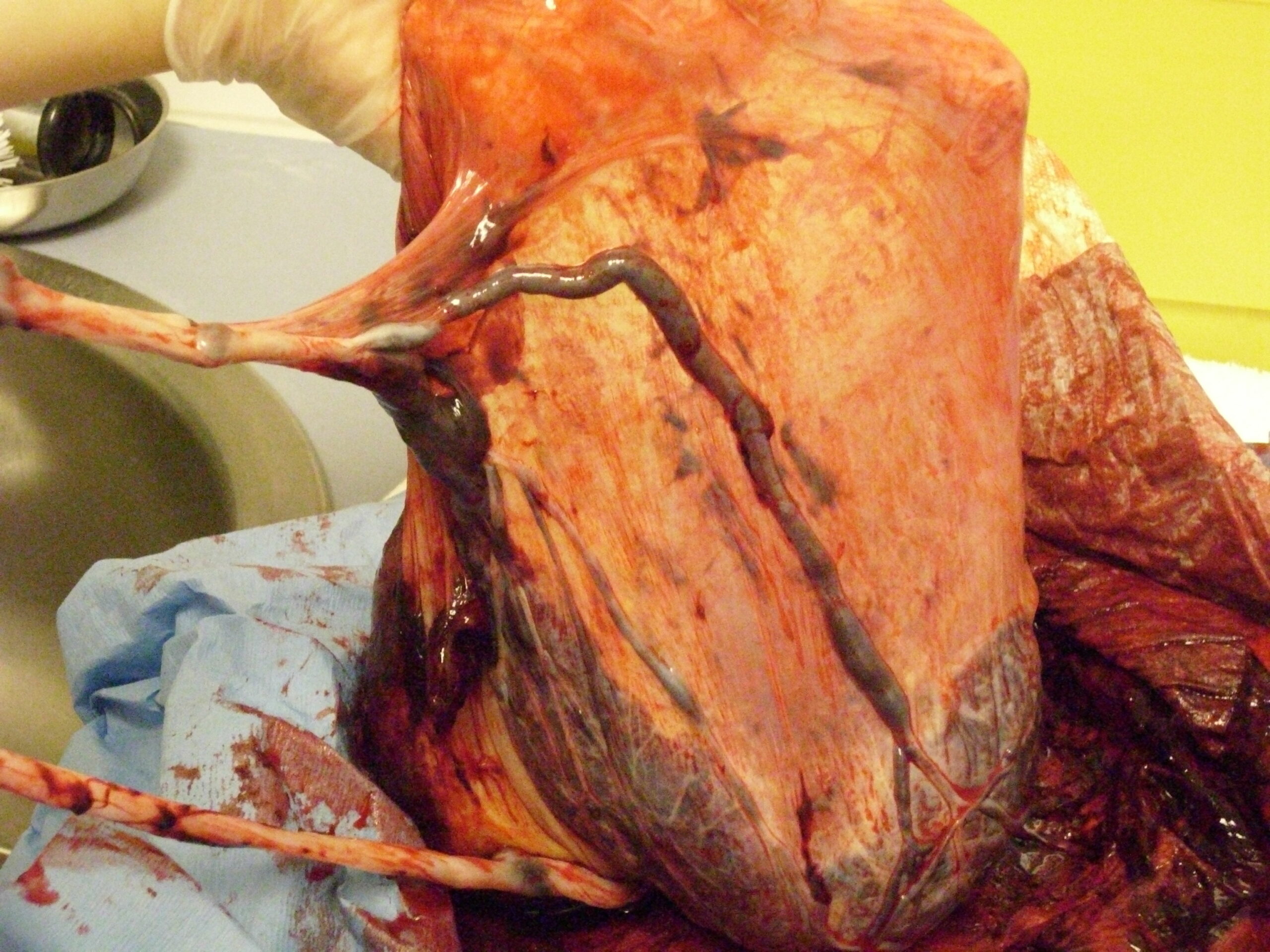
Inserción del cordón velamentoso Anomalías de la placenta

Inserción de cordón velamentoso:
Obsérvese que en los últimos centímetros no hay gelatina de Wharton protectora que rodee los vasos; solo están cubiertos por una fina membrana fetal.

Imagen: “Velamentous cord insertion” por Schokohäubchen. Licencia: Dominio Público

Vasa previa Vasa previa Pregnancy complication where fetal blood vessels, normally inside the umbilical cord, are left unprotected and cross fetal membranes. It is associated with antepartum bleeding and fetal death and stillbirth due to exsanguination. Antepartum Hemorrhage

  • Definición: se produce cuando los LOS Neisseria vasos sanguíneos del feto atraviesan o discurren cerca del orificio cervical interno
  • Epidemiología: 1 de cada 5200 embarazos
  • Factores de riesgo asociados:
    • Cordón umbilical velamentoso
    • Lóbulos placentarios succenturiados
    • Embarazos concebidos mediante fecundación in vitro
    • Gestaciones múltiples
  • Presentación clínica sintomática clásica: tríada formada por:
    • Ruptura de membrana
    • Sangrado vaginal indoloro (sangre fetal)
    • Bradicardia fetal (frecuencia cardiaca < 110/min)
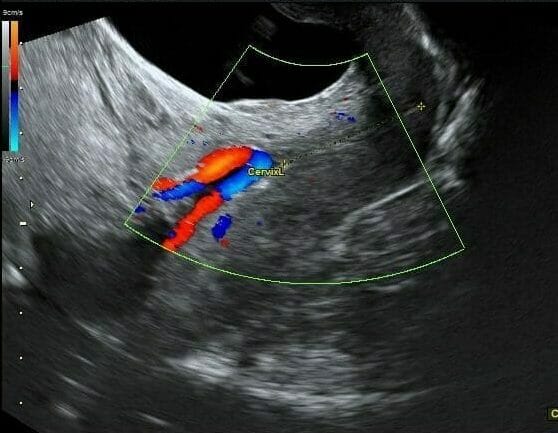
  • Diagnóstico: el ultrasonido prenatal con doppler Doppler Ultrasonography applying the doppler effect, with frequency-shifted ultrasound reflections produced by moving targets (usually red blood cells) in the bloodstream along the ultrasound axis in direct proportion to the velocity of movement of the targets, to determine both direction and velocity of blood flow. Ultrasound (Sonography) de flujo en EN Erythema nodosum is an immune-mediated panniculitis (inflammation of the subcutaneous fat) caused by a type IV (delayed-type) hypersensitivity reaction. It commonly manifests in young women as tender, erythematous nodules on the shins. Erythema Nodosum color muestra los LOS Neisseria vasos fetales que atraviesan el orificio cervical interno.
  • Tratamiento:
    • Reposo pélvico (sin tactos vaginales, sin relaciones sexuales; “nada en EN Erythema nodosum is an immune-mediated panniculitis (inflammation of the subcutaneous fat) caused by a type IV (delayed-type) hypersensitivity reaction. It commonly manifests in young women as tender, erythematous nodules on the shins. Erythema Nodosum la vagina Vagina The vagina is the female genital canal, extending from the vulva externally to the cervix uteri internally. The structures have sexual, reproductive, and urinary functions and a rich blood supply, mainly arising from the internal iliac artery. Vagina, Vulva, and Pelvic Floor: Anatomy”) prenatal
    • Parto por cesárea inmediato por hemorragia clínica y/o signos de labor de parto
    • Corticosteroides prenatales si el parto es prematuro y se prevé dentro de los LOS Neisseria 7 días (generalmente entre las 24 y 34 semanas)
    • Observación hospitalaria con monitorización fetal diaria a partir de las 30-34 semanas
    • Parto por cesárea programada a las 34-37 semanas (antes del inicio de la labor de parto).
  • Complicaciones: rotura de vasos sanguíneos → hemorragia de la circulación fetoplacentaria → desangramiento fetal y muerte
Imagen ecográfica de una vasa previa. Anomalías de la placenta

Imagen de ultrasonido de vasa previa:
El flujo doppler en color ilumina los vasos fijos que atraviesan el orificio cervical interno. El canal cervical se muestra con una línea de puntos amarilla.

Imagen: “Measurement of the cervical length by color Doppler transvaginal examination” por Bohîlțea RE et al. Licencia: CC BY 2.0

Otras anomalías de la placenta Placenta A highly vascularized mammalian fetal-maternal organ and major site of transport of oxygen, nutrients, and fetal waste products. It includes a fetal portion (chorionic villi) derived from trophoblasts and a maternal portion (decidua) derived from the uterine endometrium. The placenta produces an array of steroid, protein and peptide hormones (placental hormones). Placenta, Umbilical Cord, and Amniotic Cavity y del cordón umbilical

  • Arteria umbilical única (puede ↑ el riesgo de aneuploidía u otras anomalías asociadas)
  • Inserción marginal del cordón:
    • Inserción del cordón cerca del borde de la placenta Placenta A highly vascularized mammalian fetal-maternal organ and major site of transport of oxygen, nutrients, and fetal waste products. It includes a fetal portion (chorionic villi) derived from trophoblasts and a maternal portion (decidua) derived from the uterine endometrium. The placenta produces an array of steroid, protein and peptide hormones (placental hormones). Placenta, Umbilical Cord, and Amniotic Cavity en EN Erythema nodosum is an immune-mediated panniculitis (inflammation of the subcutaneous fat) caused by a type IV (delayed-type) hypersensitivity reaction. It commonly manifests in young women as tender, erythematous nodules on the shins. Erythema Nodosum lugar de en EN Erythema nodosum is an immune-mediated panniculitis (inflammation of the subcutaneous fat) caused by a type IV (delayed-type) hypersensitivity reaction. It commonly manifests in young women as tender, erythematous nodules on the shins. Erythema Nodosum el centro
    • Puede ↑ el riesgo de que el cordón umbilical se desgarre durante la salida de la placenta Placenta A highly vascularized mammalian fetal-maternal organ and major site of transport of oxygen, nutrients, and fetal waste products. It includes a fetal portion (chorionic villi) derived from trophoblasts and a maternal portion (decidua) derived from the uterine endometrium. The placenta produces an array of steroid, protein and peptide hormones (placental hormones). Placenta, Umbilical Cord, and Amniotic Cavity
  • Bucles y/o nudos del cordón umbilical, que pueden impedir el flujo sanguíneo.
  • Presentación fúnica:
    • Cuando una parte del cordón umbilical normal está metido debajo de la parte de presentación del feto
    • ↑ Riesgo de prolapso del cordón umbilical o de sufrimiento fetal debido a la compresión del cordón
    • Normalmente requiere cesárea
  • Masas
    • Quiste
    • Teratoma Teratoma A true neoplasm composed of a number of different types of tissue, none of which is native to the area in which it occurs. It is composed of tissues that are derived from three germinal layers, the endoderm, mesoderm, and ectoderm. They are classified histologically as mature (benign) or immature (malignant). Imaging of the Mediastinum
    • Hematoma Hematoma A collection of blood outside the blood vessels. Hematoma can be localized in an organ, space, or tissue. Intussusception

Espectro de la Placenta Acreta

Definición

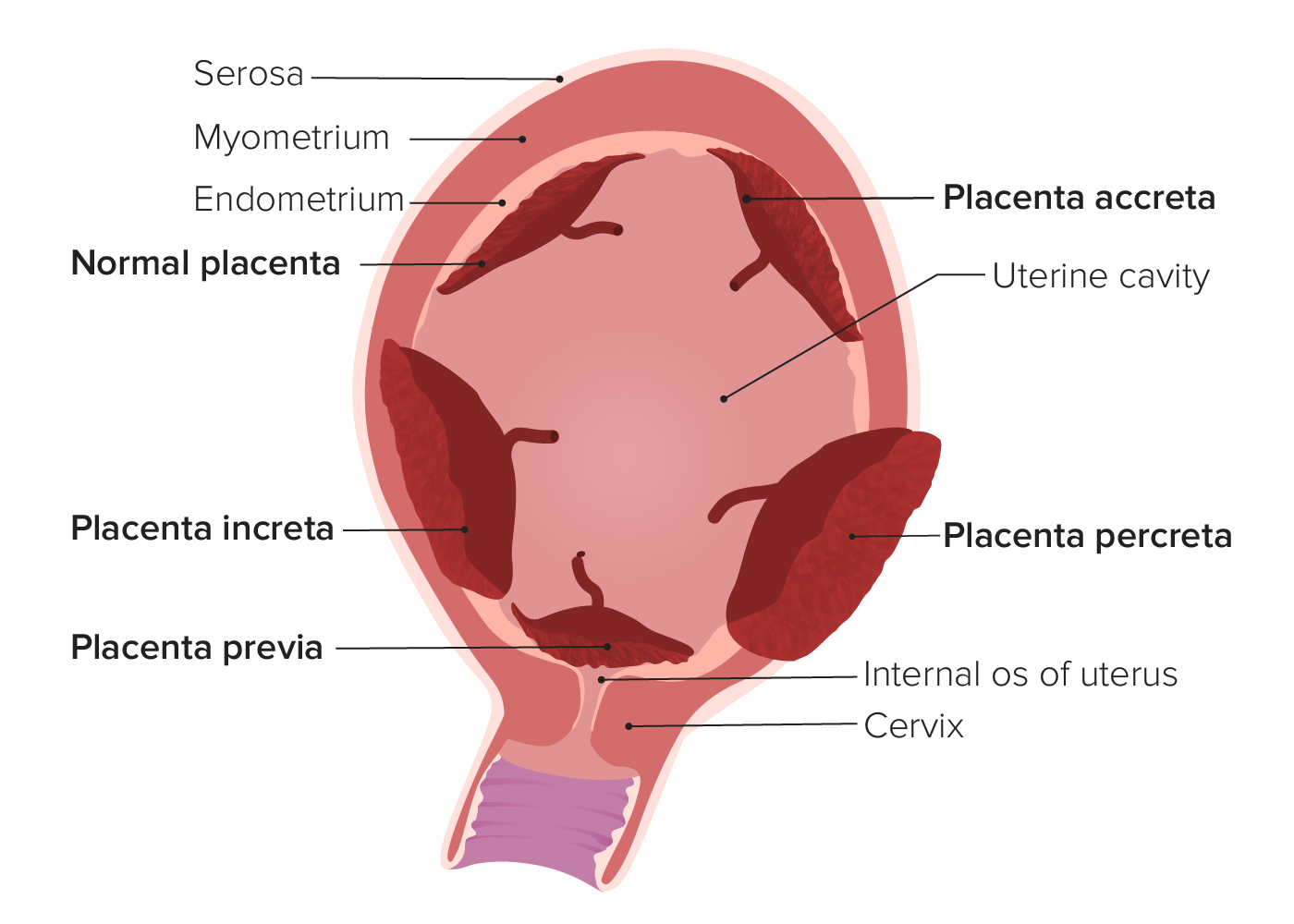
El espectro de placenta Placenta A highly vascularized mammalian fetal-maternal organ and major site of transport of oxygen, nutrients, and fetal waste products. It includes a fetal portion (chorionic villi) derived from trophoblasts and a maternal portion (decidua) derived from the uterine endometrium. The placenta produces an array of steroid, protein and peptide hormones (placental hormones). Placenta, Umbilical Cord, and Amniotic Cavity acreta describe un espectro de placentación anormal en EN Erythema nodosum is an immune-mediated panniculitis (inflammation of the subcutaneous fat) caused by a type IV (delayed-type) hypersensitivity reaction. It commonly manifests in young women as tender, erythematous nodules on the shins. Erythema Nodosum el que la placenta Placenta A highly vascularized mammalian fetal-maternal organ and major site of transport of oxygen, nutrients, and fetal waste products. It includes a fetal portion (chorionic villi) derived from trophoblasts and a maternal portion (decidua) derived from the uterine endometrium. The placenta produces an array of steroid, protein and peptide hormones (placental hormones). Placenta, Umbilical Cord, and Amniotic Cavity se adhiere de forma anormal y firme a la pared uterina. Los LOS Neisseria 3 grados de espectro de placenta Placenta A highly vascularized mammalian fetal-maternal organ and major site of transport of oxygen, nutrients, and fetal waste products. It includes a fetal portion (chorionic villi) derived from trophoblasts and a maternal portion (decidua) derived from the uterine endometrium. The placenta produces an array of steroid, protein and peptide hormones (placental hormones). Placenta, Umbilical Cord, and Amniotic Cavity acreta son:

  • Placenta Placenta A highly vascularized mammalian fetal-maternal organ and major site of transport of oxygen, nutrients, and fetal waste products. It includes a fetal portion (chorionic villi) derived from trophoblasts and a maternal portion (decidua) derived from the uterine endometrium. The placenta produces an array of steroid, protein and peptide hormones (placental hormones). Placenta, Umbilical Cord, and Amniotic Cavity acreta (aproximadamente el 65%): La placenta Placenta A highly vascularized mammalian fetal-maternal organ and major site of transport of oxygen, nutrients, and fetal waste products. It includes a fetal portion (chorionic villi) derived from trophoblasts and a maternal portion (decidua) derived from the uterine endometrium. The placenta produces an array of steroid, protein and peptide hormones (placental hormones). Placenta, Umbilical Cord, and Amniotic Cavity se adhiere directamente al AL Amyloidosis miometrio debido a la ausencia parcial o total de la decidua basal.
  • Placenta Placenta A highly vascularized mammalian fetal-maternal organ and major site of transport of oxygen, nutrients, and fetal waste products. It includes a fetal portion (chorionic villi) derived from trophoblasts and a maternal portion (decidua) derived from the uterine endometrium. The placenta produces an array of steroid, protein and peptide hormones (placental hormones). Placenta, Umbilical Cord, and Amniotic Cavity increta (15%): Las vellosidades de la placenta Placenta A highly vascularized mammalian fetal-maternal organ and major site of transport of oxygen, nutrients, and fetal waste products. It includes a fetal portion (chorionic villi) derived from trophoblasts and a maternal portion (decidua) derived from the uterine endometrium. The placenta produces an array of steroid, protein and peptide hormones (placental hormones). Placenta, Umbilical Cord, and Amniotic Cavity invaden el miometrio.
  • Placenta Placenta A highly vascularized mammalian fetal-maternal organ and major site of transport of oxygen, nutrients, and fetal waste products. It includes a fetal portion (chorionic villi) derived from trophoblasts and a maternal portion (decidua) derived from the uterine endometrium. The placenta produces an array of steroid, protein and peptide hormones (placental hormones). Placenta, Umbilical Cord, and Amniotic Cavity percreta (aproximadamente el 20%): Las vellosidades placentarias penetran a través de todo el miometrio y pueden invadir otras estructuras circundantes.
Tipos de placentación anormal

Tipos de placentación anormal

En la placenta acreta, la placenta se adhiere (al menos en parte) al miometrio subyacente. En la placenta increta, las vellosidades de la placenta invaden el miometrio. En la placenta percreta, las vellosidades de la placenta invaden toda la pared uterina y pueden invadir las estructuras circundantes (e.g., la vejiga). La placenta previa se produce cuando la placenta cubre el orificio cervical interno.

Imagen por Lecturio. Licencia: CC BY-NC-SA 4.0
Epidemiología y patogénesis

  • La prevalencia ha HA Hemolytic anemia (HA) is the term given to a large group of anemias that are caused by the premature destruction/hemolysis of circulating red blood cells (RBCs). Hemolysis can occur within (intravascular hemolysis) or outside the blood vessels (extravascular hemolysis). Hemolytic Anemia ido aumentando de forma constante en EN Erythema nodosum is an immune-mediated panniculitis (inflammation of the subcutaneous fat) caused by a type IV (delayed-type) hypersensitivity reaction. It commonly manifests in young women as tender, erythematous nodules on the shins. Erythema Nodosum las últimas décadas y actualmente es de aproximadamente el 0,2% de los LOS Neisseria embarazos.
  • Probablemente debido a una decidualización defectuosa en EN Erythema nodosum is an immune-mediated panniculitis (inflammation of the subcutaneous fat) caused by a type IV (delayed-type) hypersensitivity reaction. It commonly manifests in young women as tender, erythematous nodules on the shins. Erythema Nodosum una zona de cicatriz causada por una cirugía uterina previa

Factores de riesgo

  • Placenta previa Placenta Previa Abnormal placentation in which the placenta implants in the lower segment of the uterus (the zone of dilation) and may cover part or all of the opening of the cervix. It is often associated with serious antepartum bleeding and premature labor. Placental Abnormalities tras una cesárea previa:
    • Factor de riesgo más importante
    • > 60% de probabilidad de espectro de placenta Placenta A highly vascularized mammalian fetal-maternal organ and major site of transport of oxygen, nutrients, and fetal waste products. It includes a fetal portion (chorionic villi) derived from trophoblasts and a maternal portion (decidua) derived from the uterine endometrium. The placenta produces an array of steroid, protein and peptide hormones (placental hormones). Placenta, Umbilical Cord, and Amniotic Cavity acreta después de 4 cesáreas, si hay placenta previa Placenta Previa Abnormal placentation in which the placenta implants in the lower segment of the uterus (the zone of dilation) and may cover part or all of the opening of the cervix. It is often associated with serious antepartum bleeding and premature labor. Placental Abnormalities
  • Antecedentes de cirugía/procedimientos uterinos:
    • Parto por cesárea
    • Miomectomía
    • Dilatación y legrado
    • Ablación endometrial
  • Procedimientos de infertilidad
  • Edad materna > 35 años
  • Multiparidad
  • Antecedentes de endometritis Endometritis Endometritis is an inflammation of the endometrium, the inner layer of the uterus. The most common subtype is postpartum endometritis, resulting from the ascension of normal vaginal flora to the previously aseptic uterus. Postpartum Endometritis posparto

Diagnóstico

  • Típicamente asintomático
  • Generalmente, se diagnostica en EN Erythema nodosum is an immune-mediated panniculitis (inflammation of the subcutaneous fat) caused by a type IV (delayed-type) hypersensitivity reaction. It commonly manifests in young women as tender, erythematous nodules on the shins. Erythema Nodosum un ultrasonido prenatal rutinario
  • Si no se detecta en EN Erythema nodosum is an immune-mediated panniculitis (inflammation of the subcutaneous fat) caused by a type IV (delayed-type) hypersensitivity reaction. It commonly manifests in young women as tender, erythematous nodules on the shins. Erythema Nodosum el ultrasonido, el espectro de placenta Placenta A highly vascularized mammalian fetal-maternal organ and major site of transport of oxygen, nutrients, and fetal waste products. It includes a fetal portion (chorionic villi) derived from trophoblasts and a maternal portion (decidua) derived from the uterine endometrium. The placenta produces an array of steroid, protein and peptide hormones (placental hormones). Placenta, Umbilical Cord, and Amniotic Cavity acreta suele diagnosticarse en EN Erythema nodosum is an immune-mediated panniculitis (inflammation of the subcutaneous fat) caused by a type IV (delayed-type) hypersensitivity reaction. It commonly manifests in young women as tender, erythematous nodules on the shins. Erythema Nodosum el momento del parto, cuando la placenta Placenta A highly vascularized mammalian fetal-maternal organ and major site of transport of oxygen, nutrients, and fetal waste products. It includes a fetal portion (chorionic villi) derived from trophoblasts and a maternal portion (decidua) derived from the uterine endometrium. The placenta produces an array of steroid, protein and peptide hormones (placental hormones). Placenta, Umbilical Cord, and Amniotic Cavity no se desprende durante el alumbramiento.
  • Dato clínico:
    • Puede producirse una hemorragia postparto masiva cuando se intenta separar la placenta Placenta A highly vascularized mammalian fetal-maternal organ and major site of transport of oxygen, nutrients, and fetal waste products. It includes a fetal portion (chorionic villi) derived from trophoblasts and a maternal portion (decidua) derived from the uterine endometrium. The placenta produces an array of steroid, protein and peptide hormones (placental hormones). Placenta, Umbilical Cord, and Amniotic Cavity manualmente.
    • Por lo tanto, al AL Amyloidosis intentar la extracción manual de la placenta Placenta A highly vascularized mammalian fetal-maternal organ and major site of transport of oxygen, nutrients, and fetal waste products. It includes a fetal portion (chorionic villi) derived from trophoblasts and a maternal portion (decidua) derived from the uterine endometrium. The placenta produces an array of steroid, protein and peptide hormones (placental hormones). Placenta, Umbilical Cord, and Amniotic Cavity:
      • Intentar encontrar el plano de tejido natural entre la placenta Placenta A highly vascularized mammalian fetal-maternal organ and major site of transport of oxygen, nutrients, and fetal waste products. It includes a fetal portion (chorionic villi) derived from trophoblasts and a maternal portion (decidua) derived from the uterine endometrium. The placenta produces an array of steroid, protein and peptide hormones (placental hormones). Placenta, Umbilical Cord, and Amniotic Cavity y el útero, y extraerla intacta.
      • No crear un plano rasgando la placenta Placenta A highly vascularized mammalian fetal-maternal organ and major site of transport of oxygen, nutrients, and fetal waste products. It includes a fetal portion (chorionic villi) derived from trophoblasts and a maternal portion (decidua) derived from the uterine endometrium. The placenta produces an array of steroid, protein and peptide hormones (placental hormones). Placenta, Umbilical Cord, and Amniotic Cavity.

Tratamiento

  • Parto por cesárea planificado
  • A menudo se requiere una histerectomía concurrente → las pacientes requieren un amplio asesoramiento
  • Estar preparada para una hemorragia posparto potencialmente masiva e inmediata → tener derivados sanguíneos y medicamentos para la hemorragia posparto inmediatamente disponibles
  • Si el espectro de la placenta Placenta A highly vascularized mammalian fetal-maternal organ and major site of transport of oxygen, nutrients, and fetal waste products. It includes a fetal portion (chorionic villi) derived from trophoblasts and a maternal portion (decidua) derived from the uterine endometrium. The placenta produces an array of steroid, protein and peptide hormones (placental hormones). Placenta, Umbilical Cord, and Amniotic Cavity acreta se diagnostica en EN Erythema nodosum is an immune-mediated panniculitis (inflammation of the subcutaneous fat) caused by a type IV (delayed-type) hypersensitivity reaction. It commonly manifests in young women as tender, erythematous nodules on the shins. Erythema Nodosum el momento del parto vaginal → manejo quirúrgico

Complicaciones

  • Hemorragia posparto severa secundaria a la retención de tejido placentario (la sangre entra en EN Erythema nodosum is an immune-mediated panniculitis (inflammation of the subcutaneous fat) caused by a type IV (delayed-type) hypersensitivity reaction. It commonly manifests in young women as tender, erythematous nodules on the shins. Erythema Nodosum las lagunas maternas que ahora están “abiertas” sin la presencia de la placa coriónica fetal)
  • Complicaciones relacionadas con el shock Shock Shock is a life-threatening condition associated with impaired circulation that results in tissue hypoxia. The different types of shock are based on the underlying cause: distributive (↑ cardiac output (CO), ↓ systemic vascular resistance (SVR)), cardiogenic (↓ CO, ↑ SVR), hypovolemic (↓ CO, ↑ SVR), obstructive (↓ CO), and mixed. Types of Shock hipovolémico/hemorrágico, incluido el hipopituitarismo posparto (i.e., síndrome de Sheehan)

Placenta Previa

Definición

La placenta previa Placenta Previa Abnormal placentation in which the placenta implants in the lower segment of the uterus (the zone of dilation) and may cover part or all of the opening of the cervix. It is often associated with serious antepartum bleeding and premature labor. Placental Abnormalities se refiere a la presencia de tejido placentario que cubre el orificio cervical interno. Cuando el cuello uterino comienza a dilatarse, la placenta Placenta A highly vascularized mammalian fetal-maternal organ and major site of transport of oxygen, nutrients, and fetal waste products. It includes a fetal portion (chorionic villi) derived from trophoblasts and a maternal portion (decidua) derived from the uterine endometrium. The placenta produces an array of steroid, protein and peptide hormones (placental hormones). Placenta, Umbilical Cord, and Amniotic Cavity se “desprende” sobre el orificio cervical que se está abriendo, lo que provoca una hemorragia fetal potencialmente mortal.
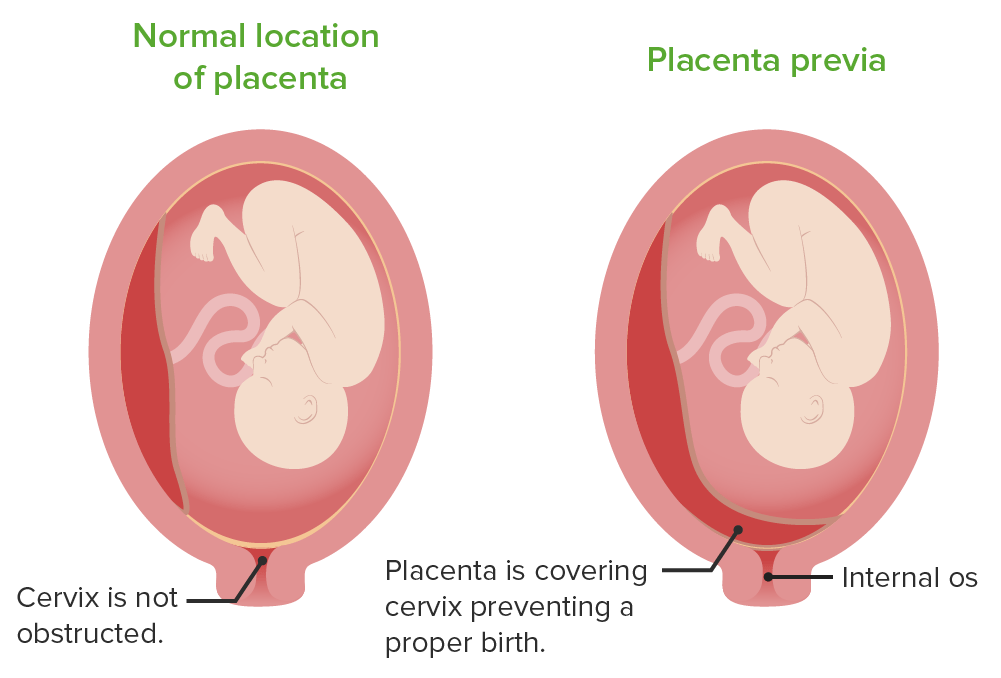
The location of the placenta in placenta previa

The location of the placenta in placenta previa

Image by Lecturio.

Factores de riesgo

  • Placenta previa Placenta Previa Abnormal placentation in which the placenta implants in the lower segment of the uterus (the zone of dilation) and may cover part or all of the opening of the cervix. It is often associated with serious antepartum bleeding and premature labor. Placental Abnormalities en EN Erythema nodosum is an immune-mediated panniculitis (inflammation of the subcutaneous fat) caused by a type IV (delayed-type) hypersensitivity reaction. It commonly manifests in young women as tender, erythematous nodules on the shins. Erythema Nodosum embarazo anterior
  • Parto por cesárea anterior
  • Procedimientos uterinos previos (e.g., dilatación y legrado)
  • Gestaciones múltiples
  • Multiparidad
  • Consumo de cocaína por parte de la madre

Diagnóstico

  • Normalmente, se diagnostica en EN Erythema nodosum is an immune-mediated panniculitis (inflammation of the subcutaneous fat) caused by a type IV (delayed-type) hypersensitivity reaction. It commonly manifests in young women as tender, erythematous nodules on the shins. Erythema Nodosum el ultrasonido prenatal de rutina, que muestra la placenta Placenta A highly vascularized mammalian fetal-maternal organ and major site of transport of oxygen, nutrients, and fetal waste products. It includes a fetal portion (chorionic villi) derived from trophoblasts and a maternal portion (decidua) derived from the uterine endometrium. The placenta produces an array of steroid, protein and peptide hormones (placental hormones). Placenta, Umbilical Cord, and Amniotic Cavity sobre el orificio cervical
  • Si no se ve VE Ventilation: Mechanics of Breathing en EN Erythema nodosum is an immune-mediated panniculitis (inflammation of the subcutaneous fat) caused by a type IV (delayed-type) hypersensitivity reaction. It commonly manifests in young women as tender, erythematous nodules on the shins. Erythema Nodosum el ultrasonido, puede presentarse con una hemorragia indolora de color rojo brillante:
    • A menudo ocurre después de un tacto o una relación sexual
    • Puede diferenciarse del desprendimiento de placenta Placenta A highly vascularized mammalian fetal-maternal organ and major site of transport of oxygen, nutrients, and fetal waste products. It includes a fetal portion (chorionic villi) derived from trophoblasts and a maternal portion (decidua) derived from the uterine endometrium. The placenta produces an array of steroid, protein and peptide hormones (placental hormones). Placenta, Umbilical Cord, and Amniotic Cavity, que se presenta con una hemorragia dolorosa e irritabilidad uterina

Tratamiento

  • Nota: Aproximadamente el 90% de las previas identificadas en EN Erythema nodosum is an immune-mediated panniculitis (inflammation of the subcutaneous fat) caused by a type IV (delayed-type) hypersensitivity reaction. It commonly manifests in young women as tender, erythematous nodules on the shins. Erythema Nodosum < 20 semanas de gestación se resolverán a medida que el segmento uterino inferior crezca, “alejando” la placenta Placenta A highly vascularized mammalian fetal-maternal organ and major site of transport of oxygen, nutrients, and fetal waste products. It includes a fetal portion (chorionic villi) derived from trophoblasts and a maternal portion (decidua) derived from the uterine endometrium. The placenta produces an array of steroid, protein and peptide hormones (placental hormones). Placenta, Umbilical Cord, and Amniotic Cavity del orificio cervical.
    • La resolución es más probable cuando solo el borde de la placenta Placenta A highly vascularized mammalian fetal-maternal organ and major site of transport of oxygen, nutrients, and fetal waste products. It includes a fetal portion (chorionic villi) derived from trophoblasts and a maternal portion (decidua) derived from the uterine endometrium. The placenta produces an array of steroid, protein and peptide hormones (placental hormones). Placenta, Umbilical Cord, and Amniotic Cavity toca el borde del cuello uterino.
    • Es menos probable que se resuelva cuando el orificio cervical está completamente cubierto
  • Reposo pélvico
  • Evitar los LOS Neisseria tactos vaginales (la dilatación cervical debe evaluarse visualmente con un espéculo).
  • Seguimiento con ultrasonidos en EN Erythema nodosum is an immune-mediated panniculitis (inflammation of the subcutaneous fat) caused by a type IV (delayed-type) hypersensitivity reaction. It commonly manifests in young women as tender, erythematous nodules on the shins. Erythema Nodosum serie para evaluar por resolución.
  • Parto por cesárea planificada a las 36-37 +6 semanas si la placenta previa Placenta Previa Abnormal placentation in which the placenta implants in the lower segment of the uterus (the zone of dilation) and may cover part or all of the opening of the cervix. It is often associated with serious antepartum bleeding and premature labor. Placental Abnormalities permanece (o al AL Amyloidosis inicio de la labor de parto)
  • Si hay sangrado:
    • Evaluar la estabilidad hemodinámica de la madre → reanimar si es necesario
    • Monitorización fetal continua
    • Corticosteroides para la madurez pulmonar del feto (si no hay parto urgente)
    • Inmunoglobulina Rh(D) si la madre es Rh negativa
    • Indicaciones de parto (por cesárea), independientemente de la edad gestacional:
      • Labor de parto activa
      • Monitorización fetal no tranquilizadora
      • Sangrado continuo y/o inestabilidad hemodinámica
    • Si la hemorragia es leve y se resuelve, la observación puede ser una opción.

Complicaciones

  • Parto prematuro (aproximadamente el 45% de las pacientes)
  • Hemorragia prenatal (aproximadamente el 50% de las pacientes)
  • Hemorragia posparto (aproximadamente el 25% de las pacientes)
  • Riesgo de recurrencia en EN Erythema nodosum is an immune-mediated panniculitis (inflammation of the subcutaneous fat) caused by a type IV (delayed-type) hypersensitivity reaction. It commonly manifests in young women as tender, erythematous nodules on the shins. Erythema Nodosum embarazos posteriores (4%‒8% de las pacientes)

Insuficiencia Útero-Placentaria

Definición

La insuficiencia útero-placentaria puede ser aguda o crónica y se refiere a la incapacidad de la placenta Placenta A highly vascularized mammalian fetal-maternal organ and major site of transport of oxygen, nutrients, and fetal waste products. It includes a fetal portion (chorionic villi) derived from trophoblasts and a maternal portion (decidua) derived from the uterine endometrium. The placenta produces an array of steroid, protein and peptide hormones (placental hormones). Placenta, Umbilical Cord, and Amniotic Cavity para proporcionar un suministro suficiente de O2 y nutrientes al AL Amyloidosis feto.

Insuficiencia útero-placentaria crónica

La insuficiencia útero-placentaria crónica provoca una restricción del crecimiento fetal y complicaciones asociadas.

  • Etiología/factores de riesgo:
    • Enfermedad vascular materna, especialmente:
      • Hipertensión crónica
      • Preeclampsia Preeclampsia A complication of pregnancy, characterized by a complex of symptoms including maternal hypertension and proteinuria with or without pathological edema. Symptoms may range between mild and severe. Pre-eclampsia usually occurs after the 20th week of gestation, but may develop before this time in the presence of trophoblastic disease. Hypertensive Pregnancy Disorders
      • Diabetes Diabetes Diabetes mellitus (DM) is a metabolic disease characterized by hyperglycemia and dysfunction of the regulation of glucose metabolism by insulin. Type 1 DM is diagnosed mostly in children and young adults as the result of autoimmune destruction of β cells in the pancreas and the resulting lack of insulin. Type 2 DM has a significant association with obesity and is characterized by insulin resistance. Diabetes Mellitus pregestacional
    • Anemia Anemia Anemia is a condition in which individuals have low Hb levels, which can arise from various causes. Anemia is accompanied by a reduced number of RBCs and may manifest with fatigue, shortness of breath, pallor, and weakness. Subtypes are classified by the size of RBCs, chronicity, and etiology. Anemia: Overview and Types materna grave
    • Consumo de tabaco o cocaína por parte de la madre
    • Malformaciones uterinas
  • Diagnóstico mediante ultrasonido, demostrando:
    • Restricción del crecimiento fetal
    • Oligohidramnios (frecuente)
    • Aumento de la resistencia vascular dentro de la placenta Placenta A highly vascularized mammalian fetal-maternal organ and major site of transport of oxygen, nutrients, and fetal waste products. It includes a fetal portion (chorionic villi) derived from trophoblasts and a maternal portion (decidua) derived from the uterine endometrium. The placenta produces an array of steroid, protein and peptide hormones (placental hormones). Placenta, Umbilical Cord, and Amniotic Cavity en EN Erythema nodosum is an immune-mediated panniculitis (inflammation of the subcutaneous fat) caused by a type IV (delayed-type) hypersensitivity reaction. It commonly manifests in young women as tender, erythematous nodules on the shins. Erythema Nodosum los LOS Neisseria estudios Doppler Doppler Ultrasonography applying the doppler effect, with frequency-shifted ultrasound reflections produced by moving targets (usually red blood cells) in the bloodstream along the ultrasound axis in direct proportion to the velocity of movement of the targets, to determine both direction and velocity of blood flow. Ultrasound (Sonography)
  • Tratamiento:
    • Las pacientes deben ser controladas prenatalmente con pruebas frecuentes sin estrés y ultrasonido para buscar signos de descompensación fetal.
    • El parto está indicado cuando el feto comienza a mostrar signos de sufrimiento (e.g., un estado fetal no tranquilizador en EN Erythema nodosum is an immune-mediated panniculitis (inflammation of the subcutaneous fat) caused by a type IV (delayed-type) hypersensitivity reaction. It commonly manifests in young women as tender, erythematous nodules on the shins. Erythema Nodosum las pruebas).
    • Normalmente, si las pacientes son candidatas a un parto vaginal, se recomienda la inducción del parto en EN Erythema nodosum is an immune-mediated panniculitis (inflammation of the subcutaneous fat) caused by a type IV (delayed-type) hypersensitivity reaction. It commonly manifests in young women as tender, erythematous nodules on the shins. Erythema Nodosum lugar de la cesárea planificada, con una monitorización estricta intraparto.
    • Si es prematuro, administrar un pulso de esteroides (normalmente betametasona intramuscular) para ayudar a promover la madurez pulmonar del feto antes del parto.

Insuficiencia útero-placentaria aguda

  • Etiología:
    • Períodos de isquemia durante las contracciones del parto, que impiden el suministro de O2 y nutrientes a los LOS Neisseria niveles requeridos para satisfacer las necesidades del feto
    • Nota: La isquemia relativa se produce durante el parto normal, pero puede magnificarse con la patología de la placenta Placenta A highly vascularized mammalian fetal-maternal organ and major site of transport of oxygen, nutrients, and fetal waste products. It includes a fetal portion (chorionic villi) derived from trophoblasts and a maternal portion (decidua) derived from the uterine endometrium. The placenta produces an array of steroid, protein and peptide hormones (placental hormones). Placenta, Umbilical Cord, and Amniotic Cavity.
    • Desprendimiento parcial o total de la placenta Placenta A highly vascularized mammalian fetal-maternal organ and major site of transport of oxygen, nutrients, and fetal waste products. It includes a fetal portion (chorionic villi) derived from trophoblasts and a maternal portion (decidua) derived from the uterine endometrium. The placenta produces an array of steroid, protein and peptide hormones (placental hormones). Placenta, Umbilical Cord, and Amniotic Cavity
  • El diagnóstico se realiza a través de las anomalías observadas en EN Erythema nodosum is an immune-mediated panniculitis (inflammation of the subcutaneous fat) caused by a type IV (delayed-type) hypersensitivity reaction. It commonly manifests in young women as tender, erythematous nodules on the shins. Erythema Nodosum la monitorización cardíaca fetal:
    • Desaceleraciones tardías recurrentes
    • Bradicardia fetal persistente
    • El útero es frecuentemente hipertónico y/o taquisistólico.
  • Técnicas de reanimación intrauterina:
    • Reposicionar a la madre (puede aliviar la compresión de los LOS Neisseria vasos).
    • Administrar a la madre líquidos intravenosos y suplementos de oxígeno si la madre presenta hipoxemia.
    • ↓ Uterotónicos (e.g., pitocin) y/o administrar tocolíticos uterinos (e.g., terbutalina)
  • El parto acelerado está indicado si los LOS Neisseria lactantes no responden a la reanimación, vía:
    • Parto por cesárea (si está alejado del parto)
    • Parto vaginal quirúrgico (e.g., fórceps o extracción con ventosa) si las candidatas están en EN Erythema nodosum is an immune-mediated panniculitis (inflammation of the subcutaneous fat) caused by a type IV (delayed-type) hypersensitivity reaction. It commonly manifests in young women as tender, erythematous nodules on the shins. Erythema Nodosum la 2da fase del parto

Relevancia Clínica

Las complicaciones clínicas más comunes de la placentación anormal son la hemorragia preparto y posparto, que pueden ser graves y poner en EN Erythema nodosum is an immune-mediated panniculitis (inflammation of the subcutaneous fat) caused by a type IV (delayed-type) hypersensitivity reaction. It commonly manifests in young women as tender, erythematous nodules on the shins. Erythema Nodosum peligro la vida, dependiendo de la situación clínica. Además, la placenta Placenta A highly vascularized mammalian fetal-maternal organ and major site of transport of oxygen, nutrients, and fetal waste products. It includes a fetal portion (chorionic villi) derived from trophoblasts and a maternal portion (decidua) derived from the uterine endometrium. The placenta produces an array of steroid, protein and peptide hormones (placental hormones). Placenta, Umbilical Cord, and Amniotic Cavity puede infectarse o desarrollar una neoplasia.

  • Hemorragia preparto: se refiere a la hemorragia uterina que se produce antes del inicio del parto. Los LOS Neisseria tipos de hemorragia preparto más importantes desde el punto de vista clínico que deben identificarse y tratarse inmediatamente son las hemorragias por desprendimiento de la placenta Placenta A highly vascularized mammalian fetal-maternal organ and major site of transport of oxygen, nutrients, and fetal waste products. It includes a fetal portion (chorionic villi) derived from trophoblasts and a maternal portion (decidua) derived from the uterine endometrium. The placenta produces an array of steroid, protein and peptide hormones (placental hormones). Placenta, Umbilical Cord, and Amniotic Cavity (normalmente dolorosas), por placenta Placenta A highly vascularized mammalian fetal-maternal organ and major site of transport of oxygen, nutrients, and fetal waste products. It includes a fetal portion (chorionic villi) derived from trophoblasts and a maternal portion (decidua) derived from the uterine endometrium. The placenta produces an array of steroid, protein and peptide hormones (placental hormones). Placenta, Umbilical Cord, and Amniotic Cavity o vasa previa Vasa previa Pregnancy complication where fetal blood vessels, normally inside the umbilical cord, are left unprotected and cross fetal membranes. It is associated with antepartum bleeding and fetal death and stillbirth due to exsanguination. Antepartum Hemorrhage (normalmente indoloras) o por ruptura uterina ( en EN Erythema nodosum is an immune-mediated panniculitis (inflammation of the subcutaneous fat) caused by a type IV (delayed-type) hypersensitivity reaction. It commonly manifests in young women as tender, erythematous nodules on the shins. Erythema Nodosum pacientes con antecedentes de cirugía uterina mayor, incluido un parto por cesárea). Las hemorragias suelen afectar tanto a la madre como al AL Amyloidosis lactante, por lo que el parto inmediato está indicado en EN Erythema nodosum is an immune-mediated panniculitis (inflammation of the subcutaneous fat) caused by a type IV (delayed-type) hypersensitivity reaction. It commonly manifests in young women as tender, erythematous nodules on the shins. Erythema Nodosum la mayoría de los LOS Neisseria casos.
  • Hemorragia posparto: se refiere a la hemorragia uterina después del parto. Las 4 causas principales pueden recordarse como las 4 T: Tono (atonía uterina, por mucho la más frecuente), Tejido (retención de tejido placentario), Trauma (laceraciones del periné, vagina Vagina The vagina is the female genital canal, extending from the vulva externally to the cervix uteri internally. The structures have sexual, reproductive, and urinary functions and a rich blood supply, mainly arising from the internal iliac artery. Vagina, Vulva, and Pelvic Floor: Anatomy o cuello uterino) y Trombina (trastornos de la coagulación, especialmente la coagulación intravascular diseminada). El diagnóstico es típicamente clínico. El tejido de la placenta Placenta A highly vascularized mammalian fetal-maternal organ and major site of transport of oxygen, nutrients, and fetal waste products. It includes a fetal portion (chorionic villi) derived from trophoblasts and a maternal portion (decidua) derived from the uterine endometrium. The placenta produces an array of steroid, protein and peptide hormones (placental hormones). Placenta, Umbilical Cord, and Amniotic Cavity retenida debe retirarse manual o quirúrgicamente.
  • Corioamnionitis (infección intraamniótica): complicación obstétrica común que implica la infección e inflamación de las membranas fetales, líquido amniótico, placenta Placenta A highly vascularized mammalian fetal-maternal organ and major site of transport of oxygen, nutrients, and fetal waste products. It includes a fetal portion (chorionic villi) derived from trophoblasts and a maternal portion (decidua) derived from the uterine endometrium. The placenta produces an array of steroid, protein and peptide hormones (placental hormones). Placenta, Umbilical Cord, and Amniotic Cavity o el propio feto. La corioamnionitis suele estar causada por una infección polimicrobiana ascendente procedente del tracto genitourinario inferior, más comúnmente tras la ruptura prolongada de membranas. Existen criterios clínicos específicos para el diagnóstico, incluyendo la fiebre materna. Una infección intraamniótica se trata con antibióticos y, en EN Erythema nodosum is an immune-mediated panniculitis (inflammation of the subcutaneous fat) caused by a type IV (delayed-type) hypersensitivity reaction. It commonly manifests in young women as tender, erythematous nodules on the shins. Erythema Nodosum última instancia, con el parto, que suele resultar en EN Erythema nodosum is an immune-mediated panniculitis (inflammation of the subcutaneous fat) caused by a type IV (delayed-type) hypersensitivity reaction. It commonly manifests in young women as tender, erythematous nodules on the shins. Erythema Nodosum su resolución.
  • Enfermedad trofoblástica gestacional: grupo de tumores relacionados con el embarazo que resultan de un crecimiento trofoblástico anormal de la placenta Placenta A highly vascularized mammalian fetal-maternal organ and major site of transport of oxygen, nutrients, and fetal waste products. It includes a fetal portion (chorionic villi) derived from trophoblasts and a maternal portion (decidua) derived from the uterine endometrium. The placenta produces an array of steroid, protein and peptide hormones (placental hormones). Placenta, Umbilical Cord, and Amniotic Cavity, que van desde embarazos molares benignos (completos y parciales) hasta afecciones neoplásicas (e.g., mola invasiva, coriocarcinoma y tumor Tumor Inflammation trofoblástico de sitio placentario). Las pacientes suelen tener niveles séricos de β-hCG muy elevados y hallazgos de ultrasonido característicos. El tratamiento consiste en EN Erythema nodosum is an immune-mediated panniculitis (inflammation of the subcutaneous fat) caused by a type IV (delayed-type) hypersensitivity reaction. It commonly manifests in young women as tender, erythematous nodules on the shins. Erythema Nodosum cirugía y/o quimioterapia, generalmente con metotrexato.

Referencias

  1. Cunningham, F.G., Leveno, K.J., et al. (2010). Williams Obstetrics (23rd ed. pp. 36‒72, 557‒585).
  2. Lockwood, C.J., Russo-Stieglitz, K. (2025). Placenta previa: Epidemiology, clinical features, diagnosis, morbidity, and mortality. In Barss, V.A. (Ed.), UpToDate. Retrieved October 22, 2025, from https://www.uptodate.com/contents/placenta-previa-epidemiology-clinical-features-diagnosis-morbidity-and-mortality 
  3. Silver, R.M. (2025). Placenta accreta spectrum: Clinical features, diagnosis, and potential consequences. In Barss, V.A. (Ed.), UpToDate. Retrieved October 22, 2025, from https://www.uptodate.com/contents/placenta-accreta-spectrum-clinical-features-diagnosis-and-potential-consequences
  4. Mari, G. (2025). Fetal growth restriction: Evaluation. In J. Miller (Ed.), UpToDate. Retrieved October 22, 2025, from https://www.uptodate.com/contents/fetal-growth-restriction-evaluation

¡Crea tu cuenta gratis o inicia una sesión para seguir leyendo!

Regístrate ahora y obtén acceso gratuito a Lecturio con páginas de concepto, videos médicos y cuestionarios para tu educación médica.

User Reviews

Que tengas una sesión de estudio alegre y navideña 🎁 Ahorra 50% en todos los planes >>

Details