


Oxazolidinonas

As oxazolidinonas (linezolida e tedizolida) são inibidores da síntese de proteínas bacterianas. O seu local de ligação único no RNA RNA A polynucleotide consisting essentially of chains with a repeating backbone of phosphate and ribose units to which nitrogenous bases are attached. RNA is unique among biological macromolecules in that it can encode genetic information, serve as an abundant structural component of cells, and also possesses catalytic activity. RNA Types and Structure ribossómico 23S do ribossoma 50S impede que a bactéria desenvolva resistência cruzada quando exposta a outros antibióticos. Estes fármacos são facilmente absorvidos e amplamente distribuídos no corpo, e estão indicados para infeções por bactérias gram-positivas, incluindo MRSA MRSA A strain of Staphylococcus aureus that is non-susceptible to the action of methicillin. The mechanism of resistance usually involves modification of normal or the presence of acquired penicillin binding proteins. Staphylococcus e Enterococcus Enterococcus Enterococcus is a genus of oval-shaped gram-positive cocci that are arranged in pairs or short chains. Distinguishing factors include optochin resistance and the presence of pyrrolidonyl arylamidase (PYR) and Lancefield D antigen. Enterococcus is part of the normal flora of the human GI tract. Enterococcus resistente à vancomicina. Os efeitos adversos incluem distúrbios gastrointestinais, mielossupressão, neuropatia periférica ou ótica e acidose lática. A linezolida é um inibidor fraco da monoamina oxidase Oxidase Neisseria, que pode aumentar o risco de síndrome da serotonina quando coadministrado com outros fármacos serotoninérgicos.

Last updated: Dec 15, 2025
Editorial responsibility: Stanley Oiseth, Lindsay Jones, Evelin Maza

Estrutura Química e Farmacodinâmica

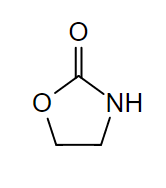
Estrutura química

  • Os fármacos de oxazolidinona contêm o mesmo anel pentatómico (2-oxazolidona) contendo nitrogénio (N) e oxigénio (O).
  • Semelhante a um azol (oxazol) contendo N e O, com um carbono oxidado a uma cetona

Mecanismo de ação

  • Inibe a síntese de proteínas bacterianas
    • Liga-se ao RNA RNA A polynucleotide consisting essentially of chains with a repeating backbone of phosphate and ribose units to which nitrogenous bases are attached. RNA is unique among biological macromolecules in that it can encode genetic information, serve as an abundant structural component of cells, and also possesses catalytic activity. RNA Types and Structure ribossómico ( rRNA rRNA The most abundant form of RNA. Together with proteins, it forms the ribosomes, playing a structural role and also a role in ribosomal binding of mRNA and tRNAs. Individual chains are conventionally designated by their sedimentation coefficients. In eukaryotes, four large chains exist, synthesized in the nucleolus and constituting about 50% of the ribosome. RNA Types and Structure) 23S bacteriano da subunidade 50S
    • Bloqueia a formação do complexo de iniciação 70S → impede a tradução
  • Previne:
    • Crescimento bacteriano
    • Produção de toxinas
  • Principalmente bacteriostático (exceção: bactericida contra a maioria das estirpes de Streptococcus Streptococcus Streptococcus is one of the two medically important genera of gram-positive cocci, the other being Staphylococcus. Streptococci are identified as different species on blood agar on the basis of their hemolytic pattern and sensitivity to optochin and bacitracin. There are many pathogenic species of streptococci, including S. pyogenes, S. agalactiae, S. pneumoniae, and the viridans streptococci. Streptococcus)
  • Resistência:
    • Pode ocorrer devido a uma mutação no local de ligação no rRNA rRNA The most abundant form of RNA. Together with proteins, it forms the ribosomes, playing a structural role and also a role in ribosomal binding of mRNA and tRNAs. Individual chains are conventionally designated by their sedimentation coefficients. In eukaryotes, four large chains exist, synthesized in the nucleolus and constituting about 50% of the ribosome. RNA Types and Structure 23S
    • Sem resistência cruzada com outros antibióticos inibidores da síntese de proteínas
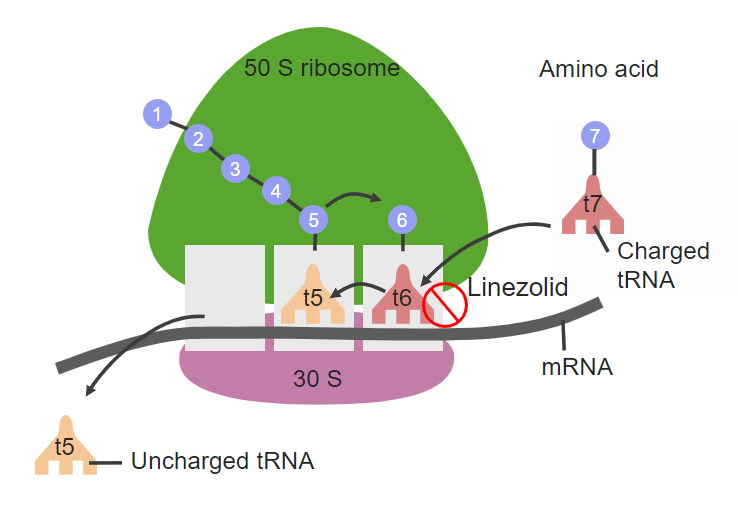
Local de ação da linezolida

Local de ação da linezolida na subunidade ribossómica 50S:
Esta construção inibe o início da síntese de proteínas e evita a replicação bacteriana.

Imagem por Lecturio. Licença: CC BY-NC-SA 4.0

Farmacocinética

Absorção e distribuição

  • 90%–100% de biodisponibilidade após a administração oral
  • A tedizolida é um pró-fármaco → convertido na forma ativa por fosfatases
  • Ligação proteica:
    • Linezolida: fraca
    • Tedizolida: muito forte
  • Distribuído rapidamente em tecidos bem perfundidos
  • O volume de distribuição da linezolida é semelhante à água corporal total (↑ para a tedizolida).

Metabolismo

  • Hepático:
    • Linezolida: metabolizado por oxidação não enzimática em 2 metabolitos inativos
    • Tedizolida: sulfatação em conjugados de sulfato inativos
  • Não induzem nem inibem as enzimas do citocromo P450

Excreção

  • Linezolida: urina > fezes
  • Tedizolida: fezes > urina

Indicações

Cobertura antimicrobiana

  • As oxazolidinonas são usadas para tratar infeções causadas por bactérias gram-positivas, incluindo:
    • Streptococcus Streptococcus Streptococcus is one of the two medically important genera of gram-positive cocci, the other being Staphylococcus. Streptococci are identified as different species on blood agar on the basis of their hemolytic pattern and sensitivity to optochin and bacitracin. There are many pathogenic species of streptococci, including S. pyogenes, S. agalactiae, S. pneumoniae, and the viridans streptococci. Streptococcus
    • Enterococcus Enterococcus Enterococcus is a genus of oval-shaped gram-positive cocci that are arranged in pairs or short chains. Distinguishing factors include optochin resistance and the presence of pyrrolidonyl arylamidase (PYR) and Lancefield D antigen. Enterococcus is part of the normal flora of the human GI tract. Enterococcus, incluindo Enterococcus Enterococcus Enterococcus is a genus of oval-shaped gram-positive cocci that are arranged in pairs or short chains. Distinguishing factors include optochin resistance and the presence of pyrrolidonyl arylamidase (PYR) and Lancefield D antigen. Enterococcus is part of the normal flora of the human GI tract. Enterococcus resistente à vancomicina (VRE)
    • Estafilococos coagulase-negativa
    • Staphylococcus aureus Staphylococcus aureus Potentially pathogenic bacteria found in nasal membranes, skin, hair follicles, and perineum of warm-blooded animals. They may cause a wide range of infections and intoxications. Brain Abscess, incluindo MRSA MRSA A strain of Staphylococcus aureus that is non-susceptible to the action of methicillin. The mechanism of resistance usually involves modification of normal or the presence of acquired penicillin binding proteins. Staphylococcus
    • Bacillus Bacillus Bacillus are aerobic, spore-forming, gram-positive bacilli. Two pathogenic species are Bacillus anthracis (B. anthracis) and B. cereus. Bacillus
    • Corynebacterium Corynebacterium Corynebacteria are gram-positive, club-shaped bacilli. Corynebacteria are commonly isolated on tellurite or Loeffler’s media and have characteristic metachromatic granules. The major pathogenic species is Corynebacterium diphtheriae, which causes a severe respiratory infection called diphtheria. Corynebacterium
    • Listeria Listeria Listeria spp. are motile, flagellated, gram-positive, facultative intracellular bacilli. The major pathogenic species is Listeria monocytogenes. Listeria are part of the normal gastrointestinal flora of domestic mammals and poultry and are transmitted to humans through the ingestion of contaminated food, especially unpasteurized dairy products. Listeria Monocytogenes/Listeriosis
  • A atividade contra espécies de Mycobacterium Mycobacterium Mycobacterium is a genus of the family Mycobacteriaceae in the phylum Actinobacteria. Mycobacteria comprise more than 150 species of facultative intracellular bacilli that are mostly obligate aerobes. Mycobacteria are responsible for multiple human infections including serious diseases, such as tuberculosis (M. tuberculosis), leprosy (M. leprae), and M. avium complex infections. Mycobacterium também foi demonstrada in vitro.

Tipos de infeções

Estes fármacos estão aprovados pela FDA para:

  • Linezolida:
    • Infeções da pele e dos tecidos moles Moles Primary Skin Lesions
    • Pneumonia Pneumonia Pneumonia or pulmonary inflammation is an acute or chronic inflammation of lung tissue. Causes include infection with bacteria, viruses, or fungi. In more rare cases, pneumonia can also be caused through toxic triggers through inhalation of toxic substances, immunological processes, or in the course of radiotherapy. Pneumonia
    • Infeções por VRE
  • Tedizolida: infeções da pele e dos tecidos moles Moles Primary Skin Lesions

Efeitos Adversos

Efeitos adversos

Precauções

A linezolida pode causar uma crise hipertensiva nas seguintes situações:

  • Hipertensão não controlada
  • Hipertiroidismo/tirotoxicose
  • Feocromocitoma

Interações farmacológicas

  • Agentes serotonérgicos: a linezolida pode inibir reversivelmente a monoamina oxidase Oxidase Neisseria → ↑ risco de síndrome da serotonina
    • Inibidores seletivos da recaptação da serotonina
    • Inibidores da recaptação da serotonina-norepinefrina
    • Inibidores da monoamina oxidase Oxidase Neisseria
  • Varfarina: ↑ TP
  • Fármacos simpaticomiméticos, vasopressores ou dopaminérgicos: ↑ pressão arterial

Comparação de Antibióticos

Tabela: Comparação de várias classes de antibióticos inibidores da síntese de proteínas bacterianas
Classe do fármaco Mecanismo de ação Cobertura Efeitos adversos
Anfenicois
  • Ligam-se à subunidade 50S
  • Previnem a transpeptidação
  • Gram-positivos
  • Gram-negativos
  • Atípicos
  • Distúrbios GI
  • Neurite ótica
  • Anemia Anemia Anemia is a condition in which individuals have low Hb levels, which can arise from various causes. Anemia is accompanied by a reduced number of RBCs and may manifest with fatigue, shortness of breath, pallor, and weakness. Subtypes are classified by the size of RBCs, chronicity, and etiology. Anemia: Overview and Types aplásica
  • Síndrome do bebé cinzento
Lincosamidas
  • Ligam-se à subunidade 50S
  • Previnem a transpeptidação
  • Cocos gram-positivos:
    • MSSA
    • MRSA MRSA A strain of Staphylococcus aureus that is non-susceptible to the action of methicillin. The mechanism of resistance usually involves modification of normal or the presence of acquired penicillin binding proteins. Staphylococcus
    • Streptococcus Streptococcus Streptococcus is one of the two medically important genera of gram-positive cocci, the other being Staphylococcus. Streptococci are identified as different species on blood agar on the basis of their hemolytic pattern and sensitivity to optochin and bacitracin. There are many pathogenic species of streptococci, including S. pyogenes, S. agalactiae, S. pneumoniae, and the viridans streptococci. Streptococcus
  • Anaeróbios
  • Distúrbios GI
  • Reações alérgicas
  • Colite pseudomembranosa
Macrólidos
  • Ligam-se à subunidade 50S
  • Previnem a transpeptidação
  • Gram-positivos
  • Gram-negativos
  • Atípicos
  • Complexo Mycobacterium avium Mycobacterium avium A bacterium causing tuberculosis in domestic fowl and other birds. In pigs, it may cause localized and sometimes disseminated disease. The organism occurs occasionally in sheep and cattle. It should be distinguished from the m. avium complex, which infects primarily humans. Mycobacterium
  • Distúrbios GI
  • Prolongamento do intervalo QT
  • Hepatotoxicidade
  • Exacerbação de miastenia gravis
Oxazolidinonas
  • Ligam-se ao rRNA rRNA The most abundant form of RNA. Together with proteins, it forms the ribosomes, playing a structural role and also a role in ribosomal binding of mRNA and tRNAs. Individual chains are conventionally designated by their sedimentation coefficients. In eukaryotes, four large chains exist, synthesized in the nucleolus and constituting about 50% of the ribosome. RNA Types and Structure 23S da subunidade 50S
  • Impedem a formação do complexo de iniciação
Cocos gram-positivos:
  • MSSA
  • MRSA MRSA A strain of Staphylococcus aureus that is non-susceptible to the action of methicillin. The mechanism of resistance usually involves modification of normal or the presence of acquired penicillin binding proteins. Staphylococcus
  • VRE
  • Streptococcus Streptococcus Streptococcus is one of the two medically important genera of gram-positive cocci, the other being Staphylococcus. Streptococci are identified as different species on blood agar on the basis of their hemolytic pattern and sensitivity to optochin and bacitracin. There are many pathogenic species of streptococci, including S. pyogenes, S. agalactiae, S. pneumoniae, and the viridans streptococci. Streptococcus
  • Mielossupressão
  • Neuropatia
  • Acidose lática
  • Síndrome serotoninérgico
rRNA: RNA ribossómico
VRE: Enterococcus resistente à vancomicina
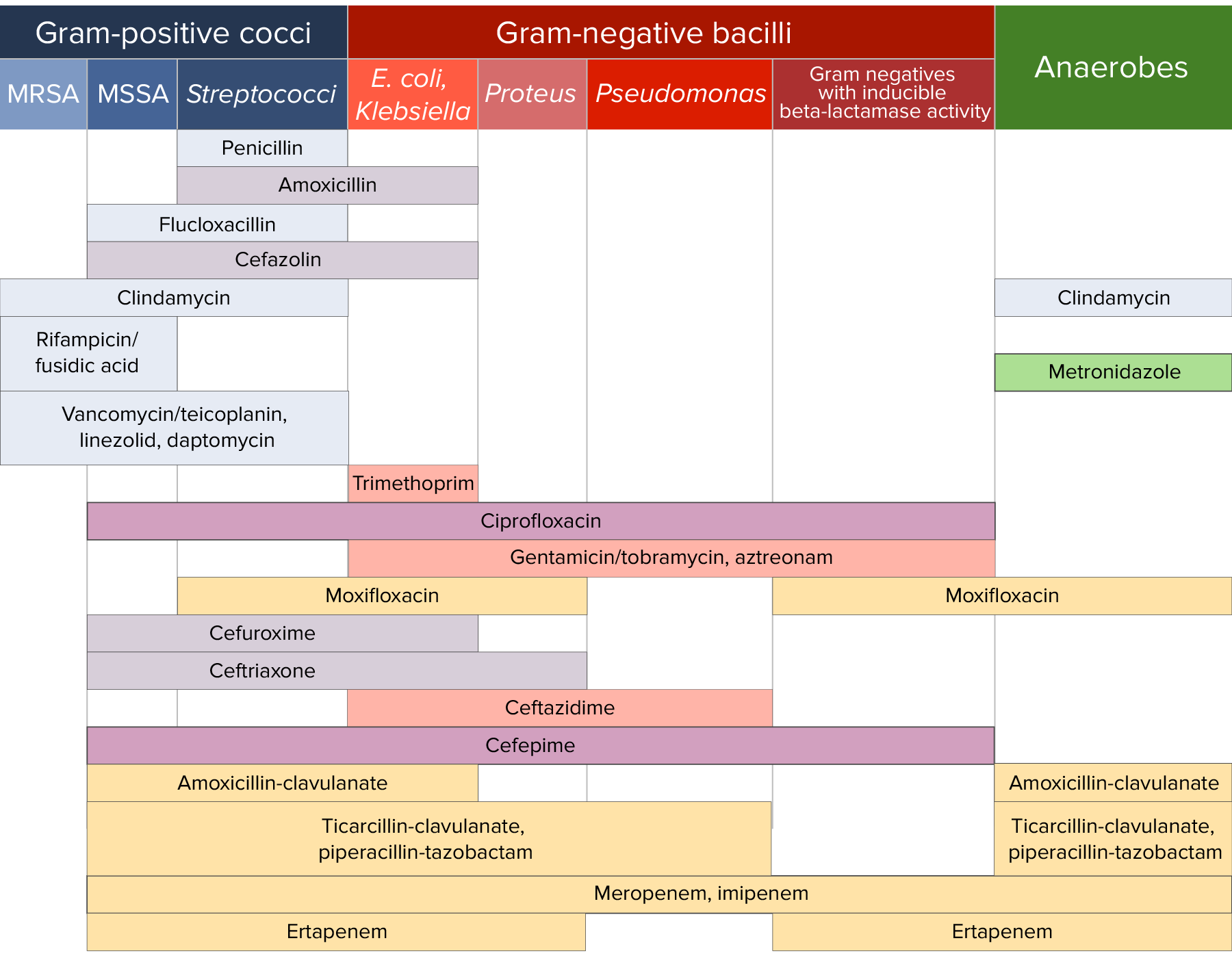
Gráfico de sensibilidade a antibióticos

Sensibilidade aos antibióticos:
Gráfico que compara a cobertura microbiana de diferentes antibióticos para cocos gram-positivos, bacilos gram-negativos e anaeróbios.

Imagem por Lecturio. Licença: CC BY-NC-SA 4.0

Referências

  1. Norrby R. (2001). Linezolid—a review of the first oxazolidinone. Expert Opin Pharmacother 2:293–302. https://pubmed.ncbi.nlm.nih.gov/11336587/
  2. Hamel JC, Stapert D, Moerman JK, Ford CW. (200). Linezolid, critical characteristics. Infection 28:60–64. https://pubmed.ncbi.nlm.nih.gov/10697798/
  3. Diekema DI, Jones RN. (2000). Oxazolidinones: a review. Drugs 59:7–16. https://pubmed.ncbi.nlm.nih.gov/10718097/
  4. Deck DH, Winston LG. (2012). Tetracyclines, macrolides, clindamycin, chloramphenicol, streptogramins, & oxazolidinones. In Katzung BG, Masters SB, Trevor AJ (Eds.), Basic & Clinical Pharmacology, 12th ed., pp. 809–819. https://pharmacomedicale.org/images/cnpm/CNPM_2016/katzung-pharmacology.pdf
  5. Drew RH, Peel T. (2025). Linezolid and tedizolid (oxazolidinones): An overview. In Baron, E.L. (Ed.), UpToDate. Retrieved February 12, 2025, from https://www.uptodate.com/contents/linezolid-and-tedizolid-oxazolidinones-an-overview
  6. Azzouz A, Preuss CV. (2024). Linezolid. StatPearls. Retrieved February 12, 2025, from https://www.ncbi.nlm.nih.gov/books/NBK539793/
  7. Werth BJ. (2024). Lincosamides, oxazolidinones, and streptogramins. MSD Manual Professional Version. Retrieved February 12, 2025, from https://www.msdmanuals.com/professional/infectious-diseases/bacteria-and-antibacterial-drugs/lincosamides,-oxazolidinones,-and-streptogramins
  8. Pandit N, Singla RK, Shrivastava B. (2012). Current updates on oxazolidinone and its significance. International Journal of Medicinal Chemistry. https://doi.org/10.1155/2012/159285

Crie sua conta gratuita ou faça login para continuar lendo!

Cadastre-se agora e tenha acesso grátis ao Lecturio, com páginas de conceitos, vídeos de medicina e questões para sua educação médica.

Aprende mais com a Lecturio:

Multiple devices displaying human anatomy and health education content.

Complementa o teu estudo da faculdade com o companheiro de estudo tudo-em-um da Lecturio, através de métodos de ensino baseados em evidência.

Estuda onde quiseres

Two iPhones display medical education apps, one showing anatomy, the other Bookmatcher.

A Lecturio Medical complementa o teu estudo através de métodos de ensino baseados em evidência, vídeos de palestras, perguntas e muito mais – tudo combinado num só lugar e fácil de usar.

User Reviews

Have a holly, jolly study session 🎁 Save 50% on all plans now >>

Que tengas una sesión de estudio alegre y navideña 🎁 Ahorra 50% en todos los planes >>

Details