


Lincosamidas

As lincosamidas, lincomicina e clindamicina, são inibidoras da síntese proteica bacteriana. Os fármacos desta classe partilham o mesmo local de ligação que os macrólidos e anfenicois; no entanto, diferem na estrutura química. As lincosamidas têm como alvo a subunidade ribossómica 50S e interferem na transpeptidação. A cobertura antimicrobiana das lincosamidas abrange cocos gram-positivos (incluindo MRSA MRSA A strain of Staphylococcus aureus that is non-susceptible to the action of methicillin. The mechanism of resistance usually involves modification of normal or the presence of acquired penicillin binding proteins. Staphylococcus) e anaeróbios. A clindamicina também pode ser usada para tratar a síndrome do choque tóxico e a fasceíte necrotizante devido ao seu efeito antitoxina. A diarreia é um efeito adverso comum e a clindamicina costuma estar associada a um risco maior de colite por Clostridioides difficile.

Last updated: Dec 15, 2025
Editorial responsibility: Stanley Oiseth, Lindsay Jones, Evelin Maza

Estrutura Química e Farmacodinâmica

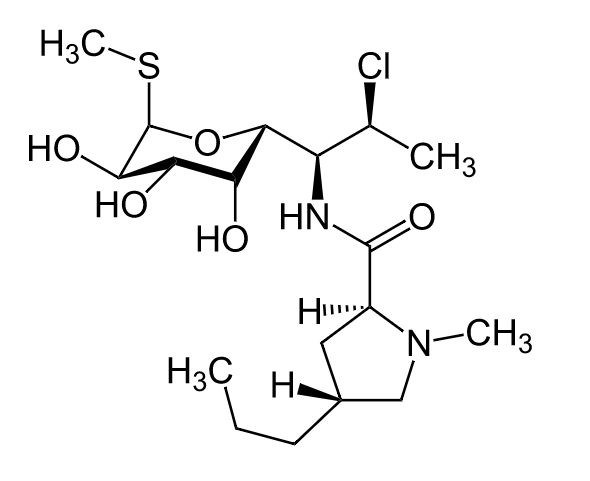
Estrutura química

  • A estrutura química consiste em aminoácidos e porções de açúcar.
  • A lincomicina é o fármaco padrão.
  • A clindamicina é um derivado clorado.
estrutura química da clindamicina

Estrutura química da clindamicina

Imagem: “Clindamycin” por Jü. Licença: Public Domain
Mecanismo de ação

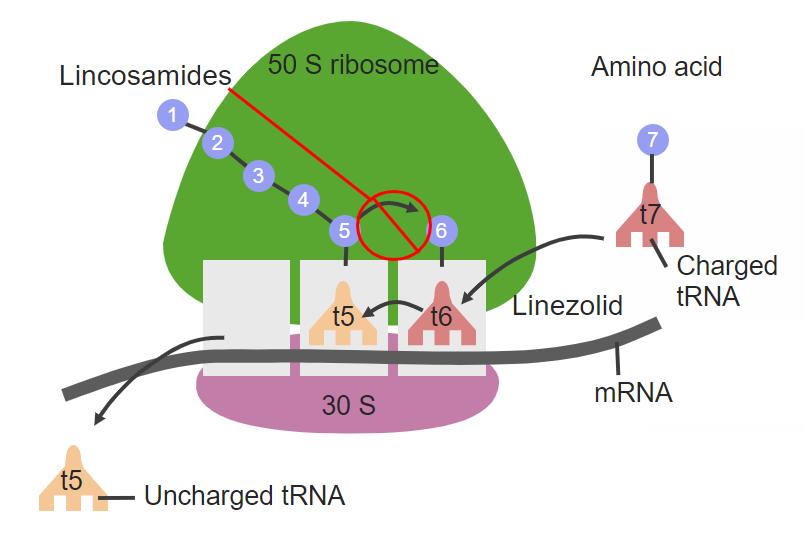
  • Inibe a síntese de proteínas bacterianas ao ligar-se reversivelmente à subunidade ribossómica 50S:
    • Liga-se perto do centro da peptidiltransferase → evita que a peptidiltransferase adicione aminoácidos ao péptido em crescimento (impede a transpeptidação)
    • Local de ligação semelhante ao dos macrólidos e cloranfenicol
  • Limita o crescimento bacteriano → bacteriostático
  • Pode exercer um efeito de morte dependente do tempo em algumas bactérias
  • Efeito adicional: inibe a produção de toxinas estafilocócicas e estreptocócicas
Local de ação da clindamicina

Local de ação da clindamicina na subunidade ribossómica 50S

Imagem por Lecturio. Licença: CC BY-NC-SA 4.0

Farmacocinética

Uma vez que a lincomicina raramente é usada, apresenta-se a farmacocinética da clindamicina:

Absorção e distribuição

  • Absorção rápida
    • Absorção de aproximadamente 90% das doses orais
    • Pico de concentração plasmática 2-4 horas após dose oral e 1-2 horas após dose IM
  • Ligada a proteínas
  • Captada por células fagocíticas
  • Amplamente distribuída nos fluidos corporais, ossos e tecidos
    • Atravessa a placenta Placenta A highly vascularized mammalian fetal-maternal organ and major site of transport of oxygen, nutrients, and fetal waste products. It includes a fetal portion (chorionic villi) derived from trophoblasts and a maternal portion (decidua) derived from the uterine endometrium. The placenta produces an array of steroid, protein and peptide hormones (placental hormones). Placenta, Umbilical Cord, and Amniotic Cavity
    • Não atravessa a barreira hematoencefálica

Metabolismo e excreção

Indicações

Cobertura antimicrobiana

  • Micróbios gram-positivos:
    • Streptococcus Streptococcus Streptococcus is one of the two medically important genera of gram-positive cocci, the other being Staphylococcus. Streptococci are identified as different species on blood agar on the basis of their hemolytic pattern and sensitivity to optochin and bacitracin. There are many pathogenic species of streptococci, including S. pyogenes, S. agalactiae, S. pneumoniae, and the viridans streptococci. Streptococcus
    • Staphylococcus Staphylococcus Staphylococcus is a medically important genera of Gram-positive, aerobic cocci. These bacteria form clusters resembling grapes on culture plates. Staphylococci are ubiquitous for humans, and many strains compose the normal skin flora. Staphylococcus (incluindo MRSA MRSA A strain of Staphylococcus aureus that is non-susceptible to the action of methicillin. The mechanism of resistance usually involves modification of normal or the presence of acquired penicillin binding proteins. Staphylococcus)
  • Anaeróbios:
    • Bacteroides Bacteroides Bacteroides is a genus of opportunistic, anaerobic, gram-negative bacilli. Bacteroides fragilis is the most common species involved in human disease and is part of the normal flora of the large intestine. Bacteroides
    • Clostridium perfringens Clostridium perfringens The most common etiologic agent of gas gangrene. It is differentiable into several distinct types based on the distribution of twelve different toxins. Gas Gangrene
    • Fusobacterium Fusobacterium A genus of gram-negative, anaerobic, rod-shaped bacteria found in cavities of humans and other animals. No endospores are formed. Some species are pathogenic and occur in various purulent or gangrenous infections. Dog and Cat Bites
    • Prevotella Prevotella A genus of gram-negative, anaerobic, nonsporeforming, nonmotile rods. Organisms of this genus had originally been classified as members of the bacteroides genus but overwhelming biochemical and chemical findings in 1990 indicated the need to separate them from other bacteroides species, and hence, this new genus was established. Dog and Cat Bites melaninogenicus
    • Peptostreptococcus Peptostreptococcus A genus of gram-positive, anaerobic, coccoid bacteria that is part of the normal flora of humans. Its organisms are opportunistic pathogens causing bacteremias and soft tissue infections. Perianal and Perirectal Abscess

Tipos de infeção

  • Infeções da pele e dos tecidos moles Moles Primary Skin Lesions:
    • Acne
    • Celulite
  • Infeções respiratórias:
    • Infeções orais
    • Pneumonia Pneumonia Pneumonia or pulmonary inflammation is an acute or chronic inflammation of lung tissue. Causes include infection with bacteria, viruses, or fungi. In more rare cases, pneumonia can also be caused through toxic triggers through inhalation of toxic substances, immunological processes, or in the course of radiotherapy. Pneumonia
    • Abcesso pulmonar
  • Infeções ósseas e articulares:
    • Osteomielite
    • Infeção de prótese articular
    • Artrite sética
  • Infeções intra-abdominais
  • Infeções ginecológicas:
    • Vaginose bacteriana
    • Doença inflamatória pélvica
    • Endometrite
  • Usado como parte da terapêutica combinada para:
    • Babesiose
    • Toxoplasmose
    • Pneumonia Pneumonia Pneumonia or pulmonary inflammation is an acute or chronic inflammation of lung tissue. Causes include infection with bacteria, viruses, or fungi. In more rare cases, pneumonia can also be caused through toxic triggers through inhalation of toxic substances, immunological processes, or in the course of radiotherapy. Pneumonia por Pneumocystis jirovecii
    • Síndrome do choque tóxico e fasceíte necrotizante (efeito antitoxina)

Efeitos Adversos e Contraindicações

Efeitos adversos

  • Tópico:
    • Prurido
    • Xeroderma
    • Eritema
    • Esfoliação
  • Vaginal:
    • Candidíase
    • Vulvovaginite
  • Sistémico:
    • Distúrbios gastrointestinais e diarreia
    • Colite pseudomembranosa (Clostridioides difficile)
    • Esofagite
    • Gosto metálico
    • Azotemia Azotemia A biochemical abnormality referring to an elevation of blood urea nitrogen and creatinine. Azotemia can be produced by kidney diseases or other extrarenal disorders. When azotemia becomes associated with a constellation of clinical signs, it is termed uremia. Acute Kidney Injury
    • Agranulocitose
    • Reações alérgicas:
      • Eritema multiforme
      • Síndrome de Stevens-Johnson
      • Anafilaxia

Contraindicações

  • História de infeções por C. difficile
  • História de alergia à lincosamida

Interações farmacológicas

Mecanismos de Resistência

Existem 3 vias principais de resistência:

  • Alteração do local alvo:
    • A metilação ou mutação ribossomal impede a ligação do antibiótico ao seu alvo ribossómico.
    • Mecanismo de resistência mais MAIS Androgen Insensitivity Syndrome prevalente às lincosamidas
  • Bombas de efluxo
  • Inativação enzimática (incomum, observada principalmente em Staphylococcus Staphylococcus Staphylococcus is a medically important genera of Gram-positive, aerobic cocci. These bacteria form clusters resembling grapes on culture plates. Staphylococci are ubiquitous for humans, and many strains compose the normal skin flora. Staphylococcus)

Comparação de Antibióticos

A tabela a seguir compara várias classes de antibióticos inibidores da síntese de proteínas bacterianas:

Tabela: Comparação de várias classes de antibióticos inibidores da síntese de proteínas bacterianas
Classe do fármaco Mecanismo de ação Cobertura Efeitos adversos
Anfenicois
  • Ligam-se à subunidade 50S
  • Previnem a transpeptidação
  • Gram-positivos
  • Gram-negativos
  • Atípicos
  • Distúrbios GI
  • Neurite óptica
  • Anemia Anemia Anemia is a condition in which individuals have low Hb levels, which can arise from various causes. Anemia is accompanied by a reduced number of RBCs and may manifest with fatigue, shortness of breath, pallor, and weakness. Subtypes are classified by the size of RBCs, chronicity, and etiology. Anemia: Overview and Types aplásica
  • Síndrome do bebé cinzento
Lincosamidas
  • Ligam-se à subunidade 50S
  • Previnem a transpeptidação
  • Cocos gram-positivos:
    • MSSA
    • MRSA MRSA A strain of Staphylococcus aureus that is non-susceptible to the action of methicillin. The mechanism of resistance usually involves modification of normal or the presence of acquired penicillin binding proteins. Staphylococcus
    • Streptococcus Streptococcus Streptococcus is one of the two medically important genera of gram-positive cocci, the other being Staphylococcus. Streptococci are identified as different species on blood agar on the basis of their hemolytic pattern and sensitivity to optochin and bacitracin. There are many pathogenic species of streptococci, including S. pyogenes, S. agalactiae, S. pneumoniae, and the viridans streptococci. Streptococcus
  • Anaeróbios
  • Distúrbios GI
  • Reações alérgicas
  • Colite pseudomembranosa
Macrólidos
  • Ligam-se à subunidade 50S
  • Previnem a transpeptidação
  • Gram-positivos
  • Gram-negativos
  • Atípicos
  • Complexo Mycobacterium avium Mycobacterium avium A bacterium causing tuberculosis in domestic fowl and other birds. In pigs, it may cause localized and sometimes disseminated disease. The organism occurs occasionally in sheep and cattle. It should be distinguished from the m. avium complex, which infects primarily humans. Mycobacterium
  • Distúrbios GI
  • Prolongamento do intervalo QT
  • Hepatotoxicidade
  • Exacerbação de miastenia gravis
Oxazolidinonas
  • Ligam-se ao rRNA rRNA The most abundant form of RNA. Together with proteins, it forms the ribosomes, playing a structural role and also a role in ribosomal binding of mRNA and tRNAs. Individual chains are conventionally designated by their sedimentation coefficients. In eukaryotes, four large chains exist, synthesized in the nucleolus and constituting about 50% of the ribosome. RNA Types and Structure 23S da subunidade 50S
  • Impedem a formação de complexo de iniciação
Cocos gram-positivos:
  • MSSA
  • MRSA MRSA A strain of Staphylococcus aureus that is non-susceptible to the action of methicillin. The mechanism of resistance usually involves modification of normal or the presence of acquired penicillin binding proteins. Staphylococcus
  • VRE
  • Streptococcus Streptococcus Streptococcus is one of the two medically important genera of gram-positive cocci, the other being Staphylococcus. Streptococci are identified as different species on blood agar on the basis of their hemolytic pattern and sensitivity to optochin and bacitracin. There are many pathogenic species of streptococci, including S. pyogenes, S. agalactiae, S. pneumoniae, and the viridans streptococci. Streptococcus
  • Mielossupressão
  • Neuropatia
  • Acidose láctica
  • Síndrome serotoninérgico
rRNA: RNA ribossómico
VRE: Enterococcus resistente à vancomicina
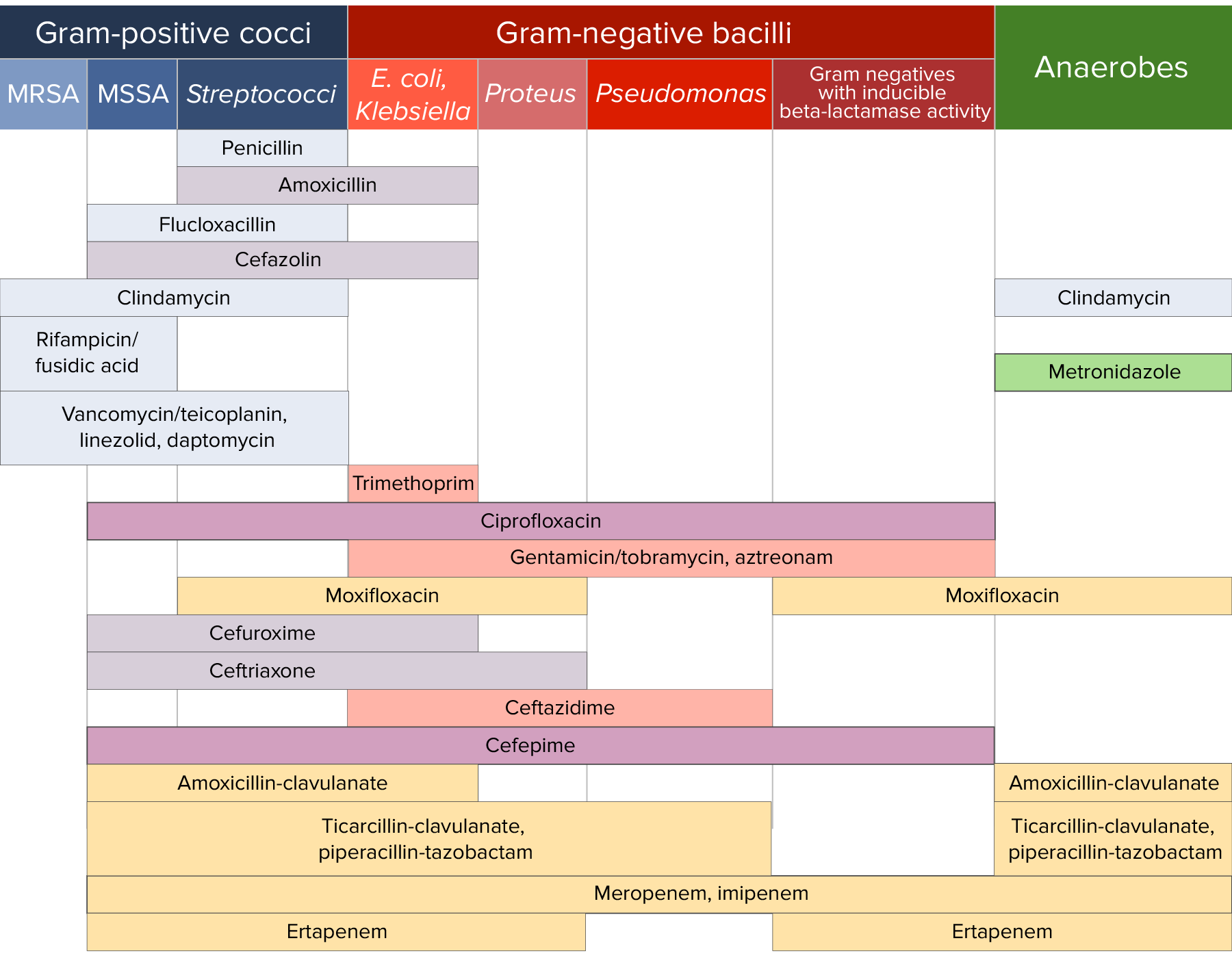
Gráfico de sensibilidade a antibióticos

Sensibilidade aos antibióticos:
Gráfico que compara a cobertura microbiana de diferentes antibióticos para cocos gram-positivos, bacilos gram-negativos e anaeróbios.

Imagem por Lecturio. Licença: CC BY-NC-SA 4.0

Referências

  1. Deck, D.H., Winston, L.G. (2012). Tetracyclines, macrolides, clindamycin, chloramphenicol, streptogramins, & oxazolidinones. In Katzung, B.G., Masters, S.B., Trevor, A.J. (Eds.), Basic & Clinical Pharmacology (12th edition, pp. 809-819). https://pharmacomedicale.org/images/cnpm/CNPM_2016/katzung-pharmacology.pdf
  2. Leclercq, R. (2002). Mechanisms of resistance to macrolides and lincosamides: Nature of the resistance elements and their clinical implications. Clinical Infectious Diseases, 34(4), 482-492. https://academic.oup.com/cid/article/34/4/482/412492
  3. Johnson, M. (2020). Clindamycin: An overview. In Bond, S. (Ed.), UpToDate. Retrieved June 30, 2021, from https://www.uptodate.com/contents/clindamycin-an-overview
  4. Murphy, P.B., Bistas, K.G., Le, J.K. (2020). Clindamycin. StatPearls. Retrieved June 30, 2021, from https://www.ncbi.nlm.nih.gov/books/NBK519574/
  5. Werth, B.J. (2020). Clindamycin. MSD Manual Professional Version. Retrieved June 30, 2021, from https://www.msdmanuals.com/professional/infectious-diseases/bacteria-and-antibacterial-drugs/clindamycin

Crie sua conta gratuita ou faça login para continuar lendo!

Cadastre-se agora e tenha acesso grátis ao Lecturio, com páginas de conceitos, vídeos de medicina e questões para sua educação médica.

Aprende mais com a Lecturio:

Multiple devices displaying human anatomy and health education content.

Complementa o teu estudo da faculdade com o companheiro de estudo tudo-em-um da Lecturio, através de métodos de ensino baseados em evidência.

Estuda onde quiseres

Two iPhones display medical education apps, one showing anatomy, the other Bookmatcher.

A Lecturio Medical complementa o teu estudo através de métodos de ensino baseados em evidência, vídeos de palestras, perguntas e muito mais – tudo combinado num só lugar e fácil de usar.

User Reviews

Have a holly, jolly study session 🎁 Save 50% on all plans now >>

Que tengas una sesión de estudio alegre y navideña 🎁 Ahorra 50% en todos los planes >>

Details