
Domina Conceptos Médicos

Estudia para la escuela de medicina y tus examenes con Lecturio.

Virus de la Encefalitis de San Luis

El virus Virus Viruses are infectious, obligate intracellular parasites composed of a nucleic acid core surrounded by a protein capsid. Viruses can be either naked (non-enveloped) or enveloped. The classification of viruses is complex and based on many factors, including type and structure of the nucleoid and capsid, the presence of an envelope, the replication cycle, and the host range. Virology de la encefalitis de San Luis es un miembro del género Flavivirus Flavivirus A genus of flaviviridae containing several subgroups and many species. Most are arboviruses transmitted by mosquitoes or ticks. The type species is yellow fever virus. Tick-borne Encephalitis Virus y es la causa de la encefalitis de San Luis. Este virus Virus Viruses are infectious, obligate intracellular parasites composed of a nucleic acid core surrounded by a protein capsid. Viruses can be either naked (non-enveloped) or enveloped. The classification of viruses is complex and based on many factors, including type and structure of the nucleoid and capsid, the presence of an envelope, the replication cycle, and the host range. Virology de ARN monocatenario, pequeño, envuelto, de sentido positivo, es transmitido por especies de mosquitos Culex y es prevalente en EN Erythema nodosum is an immune-mediated panniculitis (inflammation of the subcutaneous fat) caused by a type IV (delayed-type) hypersensitivity reaction. It commonly manifests in young women as tender, erythematous nodules on the shins. Erythema Nodosum Estados Unidos. La mayoría de las infecciones son asintomáticas. Los LOS Neisseria individuos sintomáticos pueden tener presentaciones variadas, con síntomas similares a los LOS Neisseria de la gripe, meningitis Meningitis Meningitis is inflammation of the meninges, the protective membranes of the brain, and spinal cord. The causes of meningitis are varied, with the most common being bacterial or viral infection. The classic presentation of meningitis is a triad of fever, altered mental status, and nuchal rigidity. Meningitis aséptica, encefalitis o meningoencefalitis. El diagnóstico se confirma con serología. No existe un tratamiento antiviral Antiviral Antivirals for Hepatitis B eficaz, por lo que el tratamiento es de soporte. La prevención tiene como objetivo el control local de los LOS Neisseria mosquitos y la protección personal con repelente de insectos y ropa protectora.

Last updated: Dec 15, 2025
Editorial responsibility: Stanley Oiseth, Lindsay Jones, Evelin Maza

Clasificación

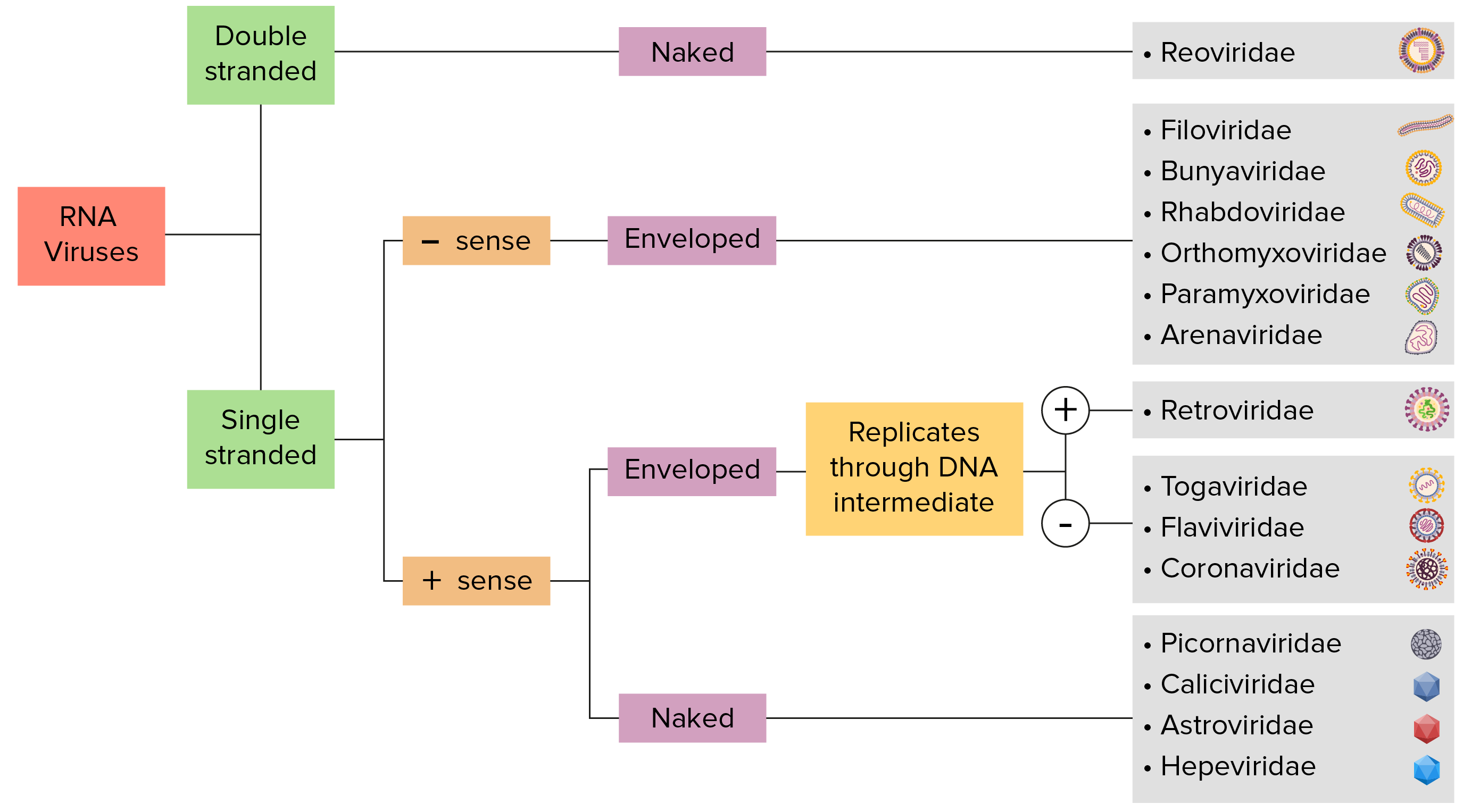
Diagrama de flujo de la clasificación de virus de ARN

Identificación del virus de ARN:
Los virus se pueden clasificar de muchas formas. La mayoría de los virus, sin embargo, tendrán un genoma formado por ADN o ARN. Los virus del genoma de ARN pueden caracterizarse además por ARN monocatenario o bicatenario. Los virus “envueltos” están cubiertos por una fina capa de membrana celular (generalmente extraída de la célula huésped). Si la envoltura está ausente, los virus se denominan virus “desnudos”. Los virus con genomas monocatenarios son virus de “sentido positivo” si el genoma se emplea directamente como ARN mensajero (ARNm), que se traduce en proteínas. Los virus monocatenarios de “sentido negativo” emplean la ARN polimerasa dependiente de ARN, una enzima viral, para transcribir su genoma en ARN mensajero.
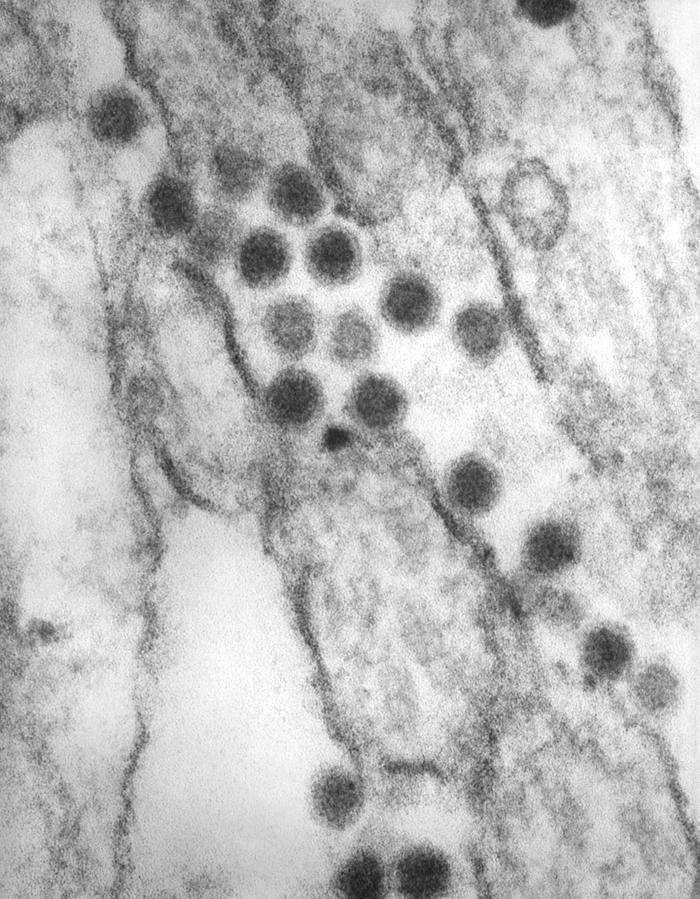
Imagen por Lecturio. Licencia: CC BY-NC-SA 4.0

Características Generales y Epidemiología

Características básicas del virus Virus Viruses are infectious, obligate intracellular parasites composed of a nucleic acid core surrounded by a protein capsid. Viruses can be either naked (non-enveloped) or enveloped. The classification of viruses is complex and based on many factors, including type and structure of the nucleoid and capsid, the presence of an envelope, the replication cycle, and the host range. Virology de la encefalitis de San Luis

  • Taxonomía:
    • Familia: Flaviviridae Flaviviridae A family of RNA viruses, many of which cause disease in humans and domestic animals. There are three genera flavivirus; pestivirus; and hepacivirus, as well as several unassigned species. Hepatitis C Virus
    • Género: Flavivirus Flavivirus A genus of flaviviridae containing several subgroups and many species. Most are arboviruses transmitted by mosquitoes or ticks. The type species is yellow fever virus. Tick-borne Encephalitis Virus
  • Virus Virus Viruses are infectious, obligate intracellular parasites composed of a nucleic acid core surrounded by a protein capsid. Viruses can be either naked (non-enveloped) or enveloped. The classification of viruses is complex and based on many factors, including type and structure of the nucleoid and capsid, the presence of an envelope, the replication cycle, and the host range. Virology de ARN
    • Monocatenario
    • Sentido positivo
    • Lineal
  • Esférico
  • Simetría icosaédrica
  • Envuelto
  • Tamaño: aproximadamente 50 nm
  • Núcleo de ARN monocatenario de sentido positivo
Viriones Flaviviridae de encefalitis de St. Louis

Imagen de microscopía electrónica de transmisión de numerosos viriones del virus de la encefalitis de San Luis dentro de una muestra de tejido no identificada:
Este virus es miembro del género Flavivirus.

Imagen: “Numerous St. Louis encephalitis (SLE) virions that were contained within an unidentified tissue sample” por CDC. Licencia: Dominio Público

Enfermedad asociada

El virus Virus Viruses are infectious, obligate intracellular parasites composed of a nucleic acid core surrounded by a protein capsid. Viruses can be either naked (non-enveloped) or enveloped. The classification of viruses is complex and based on many factors, including type and structure of the nucleoid and capsid, the presence of an envelope, the replication cycle, and the host range. Virology de la encefalitis de San Luis causa la encefalitis de San Luis.
Epidemiología

  • Incidencia: 0,003–0,752 casos por 100 000 personas en EN Erythema nodosum is an immune-mediated panniculitis (inflammation of the subcutaneous fat) caused by a type IV (delayed-type) hypersensitivity reaction. It commonly manifests in young women as tender, erythematous nodules on the shins. Erythema Nodosum Estados Unidos
    • Aproximadamente 100 casos por año
    • La incidencia está disminuyendo
  • La mayoría de los LOS Neisseria casos ocurren durante el verano.
    • En EN Erythema nodosum is an immune-mediated panniculitis (inflammation of the subcutaneous fat) caused by a type IV (delayed-type) hypersensitivity reaction. It commonly manifests in young women as tender, erythematous nodules on the shins. Erythema Nodosum las zonas más cálidas, la temporada infecciosa es más larga porque los LOS Neisseria mosquitos son más activos a finales de año.
  • Tasa de mortalidad: 3%–30%
  • Distribución geográfica:
    • Estados Unidos (más común en EN Erythema nodosum is an immune-mediated panniculitis (inflammation of the subcutaneous fat) caused by a type IV (delayed-type) hypersensitivity reaction. It commonly manifests in young women as tender, erythematous nodules on the shins. Erythema Nodosum el valle del río Misisipi, a lo largo de la costa del Golfo y en EN Erythema nodosum is an immune-mediated panniculitis (inflammation of the subcutaneous fat) caused by a type IV (delayed-type) hypersensitivity reaction. It commonly manifests in young women as tender, erythematous nodules on the shins. Erythema Nodosum el suroeste)
    • Canadá
    • Caribe
    • Centroamérica
    • Sudamérica
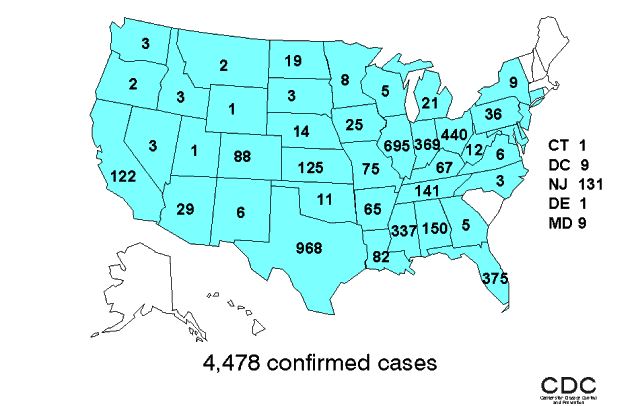
Mapa de encefalitis de St Louis Flaviviridae

Casos de encefalitis de San Luis en Estados Unidos (1964–1998):
Obsérvese la distribución de los casos. La enfermedad se encuentra con mayor frecuencia en el valle del río Misisipi, a lo largo de la costa del Golfo y en el suroeste.
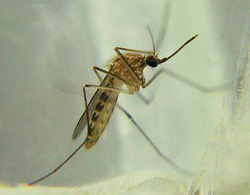
Imagen: “Human incidence of Saint Louis encephalitis in the United States, 1964-1998” por CDC. Licencia: Dominio Público

Patogénesis

Reservorio

  • Huéspedes primarios: aves
  • Huéspedes accidentales:
    • Humanos
    • Otros mamíferos

Transmisión

  • Vector:
    • Especies de mosquitos Culex
    • Requiere de 7 a 10 días de incubación en EN Erythema nodosum is an immune-mediated panniculitis (inflammation of the subcutaneous fat) caused by a type IV (delayed-type) hypersensitivity reaction. It commonly manifests in young women as tender, erythematous nodules on the shins. Erythema Nodosum el mosquito antes de transmitir la infección al AL Amyloidosis huésped humano
  • Trasplante de órganos sólidos (poco común)
Mosquito Culex Virus de la encefalitis de St. Louis Flaviviridae

Foto de primer plano de un mosquito Culex, el vector del virus de la encefalitis de San Luis.

Imagen: “Close-up photo of a Culex mosquito” por CDC. Licencia: Dominio Público

Factores de riesgo del huésped

Factores de riesgo para desarrollar infección por el virus Virus Viruses are infectious, obligate intracellular parasites composed of a nucleic acid core surrounded by a protein capsid. Viruses can be either naked (non-enveloped) or enveloped. The classification of viruses is complex and based on many factors, including type and structure of the nucleoid and capsid, the presence of an envelope, the replication cycle, and the host range. Virology de la encefalitis de San Luis:

  • Edad avanzada (el más importante)
  • Actividades al AL Amyloidosis aire libre en EN Erythema nodosum is an immune-mediated panniculitis (inflammation of the subcutaneous fat) caused by a type IV (delayed-type) hypersensitivity reaction. It commonly manifests in young women as tender, erythematous nodules on the shins. Erythema Nodosum zonas endémicas
  • Comorbilidades:
    • Enfermedad cardiovascular
    • Hipertensión
    • Inmunocompromiso

Fisiopatología

  • El mosquito inocula el virus Virus Viruses are infectious, obligate intracellular parasites composed of a nucleic acid core surrounded by a protein capsid. Viruses can be either naked (non-enveloped) or enveloped. The classification of viruses is complex and based on many factors, including type and structure of the nucleoid and capsid, the presence of an envelope, the replication cycle, and the host range. Virology de la encefalitis de San Luis en EN Erythema nodosum is an immune-mediated panniculitis (inflammation of the subcutaneous fat) caused by a type IV (delayed-type) hypersensitivity reaction. It commonly manifests in young women as tender, erythematous nodules on the shins. Erythema Nodosum un humano
  • La replicación ocurre en EN Erythema nodosum is an immune-mediated panniculitis (inflammation of the subcutaneous fat) caused by a type IV (delayed-type) hypersensitivity reaction. It commonly manifests in young women as tender, erythematous nodules on the shins. Erythema Nodosum los LOS Neisseria tejidos locales → diseminación a los LOS Neisseria ganglios linfáticos regionales
  • Propagación del virus Virus Viruses are infectious, obligate intracellular parasites composed of a nucleic acid core surrounded by a protein capsid. Viruses can be either naked (non-enveloped) or enveloped. The classification of viruses is complex and based on many factors, including type and structure of the nucleoid and capsid, the presence of an envelope, the replication cycle, and the host range. Virology a través de los LOS Neisseria vasos linfáticos y el torrente sanguíneo
  • Entrada al AL Amyloidosis SNC (mecanismo poco claro) → afecta predominantemente la sustancia gris
  • Inflamación y daño neuronal → síntomas neurológicos

Presentación Clínica

La gran mayoría de las personas infectadas será asintomática. El período de incubación para los LOS Neisseria individuos sintomáticos es de 4–21 días y la enfermedad varía en EN Erythema nodosum is an immune-mediated panniculitis (inflammation of the subcutaneous fat) caused by a type IV (delayed-type) hypersensitivity reaction. It commonly manifests in young women as tender, erythematous nodules on the shins. Erythema Nodosum presentación y gravedad.

Pródromo

General:

  • Fiebre
  • Cefalea
  • Malestar
  • Mialgias

Respiratorio:

  • Tos TOS Thoracic outlet syndrome (TOS) is a broad term used for a spectrum of syndromes related to the general region of the thoracic outlet, which involves the compression or irritation of elements of the brachial plexus, subclavian artery, or subclavian vein. Thoracic Outlet Syndrome
  • Dolor Dolor Inflammation de garganta

Urinario:

  • Disuria
  • Urgencia
  • Incontinencia

Signos y síntomas neurológicos

Los LOS Neisseria pacientes pueden presentar meningitis Meningitis Meningitis is inflammation of the meninges, the protective membranes of the brain, and spinal cord. The causes of meningitis are varied, with the most common being bacterial or viral infection. The classic presentation of meningitis is a triad of fever, altered mental status, and nuchal rigidity. Meningitis, encefalitis o una combinación de las 2 (meningoencefalitis).

Meningitis Meningitis Meningitis is inflammation of the meninges, the protective membranes of the brain, and spinal cord. The causes of meningitis are varied, with the most common being bacterial or viral infection. The classic presentation of meningitis is a triad of fever, altered mental status, and nuchal rigidity. Meningitis aséptica (muy común):

  • Cefalea
  • Fiebre
  • Rigidez nucal
  • Fotofobia
  • Náuseas y vómitos

Encefalitis:

  • Estado mental alterado
    • Desorientación
    • Agitación
    • Coma Coma Coma is defined as a deep state of unarousable unresponsiveness, characterized by a score of 3 points on the GCS. A comatose state can be caused by a multitude of conditions, making the precise epidemiology and prognosis of coma difficult to determine. Coma
  • Temblores que involucran:
    • Párpados
    • Lengua
    • Labios
    • Extremidades
  • Disfunción de los LOS Neisseria pares craneales
  • Parálisis espástica
  • Ataxia Ataxia Impairment of the ability to perform smoothly coordinated voluntary movements. This condition may affect the limbs, trunk, eyes, pharynx, larynx, and other structures. Ataxia may result from impaired sensory or motor function. Sensory ataxia may result from posterior column injury or peripheral nerve diseases. Motor ataxia may be associated with cerebellar diseases; cerebral cortex diseases; thalamic diseases; basal ganglia diseases; injury to the red nucleus; and other conditions. Ataxia-telangiectasia
  • Convulsión (rara)

Diagnóstico y Tratamiento

Diagnóstico

El diagnóstico puede sospecharse por los LOS Neisseria antecedentes y el examen físico.

  • Prueba definitiva: serología (ensayo inmunoabsorbente ligado a enzimas ( ELISA ELISA An immunoassay utilizing an antibody labeled with an enzyme marker such as horseradish peroxidase. While either the enzyme or the antibody is bound to an immunosorbent substrate, they both retain their biologic activity; the change in enzyme activity as a result of the enzyme-antibody-antigen reaction is proportional to the concentration of the antigen and can be measured spectrophotometrically or with the naked eye. Many variations of the method have been developed. St. Louis Encephalitis Virus, por sus siglas en EN Erythema nodosum is an immune-mediated panniculitis (inflammation of the subcutaneous fat) caused by a type IV (delayed-type) hypersensitivity reaction. It commonly manifests in young women as tender, erythematous nodules on the shins. Erythema Nodosum inglés)) de sangre y LCR
  • Evaluación de apoyo:
    • Posibles hallazgos de laboratorio:
      • Leucocitos normales o ↑
      • Hiponatremia → síndrome de secreción inadecuada de hormona antidiurética ( SIADH SIADH Syndrome of inappropriate antidiuretic hormone secretion (SIADH) is a disorder of impaired water excretion due to the inability to suppress the secretion of antidiuretic hormone (ADH). SIADH is characterized by impaired water excretion leading to dilutional hyponatremia, which is mainly asymptomatic but may cause neurologic symptoms. S Syndrome of Inappropriate Antidiuretic Hormone Secretion (SIADH), por sus siglas en EN Erythema nodosum is an immune-mediated panniculitis (inflammation of the subcutaneous fat) caused by a type IV (delayed-type) hypersensitivity reaction. It commonly manifests in young women as tender, erythematous nodules on the shins. Erythema Nodosum inglés) por encefalitis
    • Análisis de LCR:
      • Presión de apertura normal o ↑
      • ↑ Proteína
      • Glucosa normal
      • Leve ↑ leucocitos (predominio inicial de neutrófilos, seguido de predominio monocítico o linfocítico)

Tratamiento

No existen tratamientos antivirales efectivos para el virus Virus Viruses are infectious, obligate intracellular parasites composed of a nucleic acid core surrounded by a protein capsid. Viruses can be either naked (non-enveloped) or enveloped. The classification of viruses is complex and based on many factors, including type and structure of the nucleoid and capsid, the presence of an envelope, the replication cycle, and the host range. Virology de la encefalitis de San Luis, por lo que el tratamiento es de soporte.

  • Monitorización del equilibrio de líquidos y electrolitos
  • Restricción de agua para el SIADH SIADH Syndrome of inappropriate antidiuretic hormone secretion (SIADH) is a disorder of impaired water excretion due to the inability to suppress the secretion of antidiuretic hormone (ADH). SIADH is characterized by impaired water excretion leading to dilutional hyponatremia, which is mainly asymptomatic but may cause neurologic symptoms. S Syndrome of Inappropriate Antidiuretic Hormone Secretion (SIADH)
  • Terapia sintomática
    • Antieméticos
    • Antipiréticos
  • Soporte ventilatorio para la insuficiencia respiratoria o la incapacidad para proteger la vía aérea

Prevención

  • Control local de mosquitos
  • Repelente de insectos
  • Ropa protectora
  • Evitar agua estancada.
  • No hay vacunas para el virus Virus Viruses are infectious, obligate intracellular parasites composed of a nucleic acid core surrounded by a protein capsid. Viruses can be either naked (non-enveloped) or enveloped. The classification of viruses is complex and based on many factors, including type and structure of the nucleoid and capsid, the presence of an envelope, the replication cycle, and the host range. Virology de la encefalitis de San Luis.

Comparación de Especies de Flavivirus Similares

Tabla: Características y enfermedades de varias especies de Flavivirus Flavivirus A genus of flaviviridae containing several subgroups and many species. Most are arboviruses transmitted by mosquitoes or ticks. The type species is yellow fever virus. Tick-borne Encephalitis Virus .
Organismo Virus Virus Viruses are infectious, obligate intracellular parasites composed of a nucleic acid core surrounded by a protein capsid. Viruses can be either naked (non-enveloped) or enveloped. The classification of viruses is complex and based on many factors, including type and structure of the nucleoid and capsid, the presence of an envelope, the replication cycle, and the host range. Virology de la encefalitis transmitida por garrapatas Virus Virus Viruses are infectious, obligate intracellular parasites composed of a nucleic acid core surrounded by a protein capsid. Viruses can be either naked (non-enveloped) or enveloped. The classification of viruses is complex and based on many factors, including type and structure of the nucleoid and capsid, the presence of an envelope, the replication cycle, and the host range. Virology de la encefalitis japonesa Virus Virus Viruses are infectious, obligate intracellular parasites composed of a nucleic acid core surrounded by a protein capsid. Viruses can be either naked (non-enveloped) or enveloped. The classification of viruses is complex and based on many factors, including type and structure of the nucleoid and capsid, the presence of an envelope, the replication cycle, and the host range. Virology de la encefalitis de San Luis Virus Virus Viruses are infectious, obligate intracellular parasites composed of a nucleic acid core surrounded by a protein capsid. Viruses can be either naked (non-enveloped) or enveloped. The classification of viruses is complex and based on many factors, including type and structure of the nucleoid and capsid, the presence of an envelope, the replication cycle, and the host range. Virology del Nilo Occidental
Caracteristicas Las características estructurales son casi idénticas.
Región Norteamérica
Transmisión Garrapata Mosquito Mosquito Mosquito
Presentación clínica
  • La mayoría son asintomáticos.
  • Síntomas inicialmente inespecíficos
  • Fase neurológica:
    • Meningitis Meningitis Meningitis is inflammation of the meninges, the protective membranes of the brain, and spinal cord. The causes of meningitis are varied, with the most common being bacterial or viral infection. The classic presentation of meningitis is a triad of fever, altered mental status, and nuchal rigidity. Meningitis
    • Encefalitis
    • Meningoencefalitis
  • Enfermedad febril inespecífica
  • Meningitis Meningitis Meningitis is inflammation of the meninges, the protective membranes of the brain, and spinal cord. The causes of meningitis are varied, with the most common being bacterial or viral infection. The classic presentation of meningitis is a triad of fever, altered mental status, and nuchal rigidity. Meningitis
  • Encefalitis
  • Parálisis flácida aguda
  • Síndrome de Guillain-Barré
  • La mayoría son asintomáticos.
  • Enfermedad febril inespecífica
  • Meningitis Meningitis Meningitis is inflammation of the meninges, the protective membranes of the brain, and spinal cord. The causes of meningitis are varied, with the most common being bacterial or viral infection. The classic presentation of meningitis is a triad of fever, altered mental status, and nuchal rigidity. Meningitis
  • Encefalitis
  • Meningoencefalitis
  • La mayoría son asintomáticos.
  • Fiebre del Nilo occidental
  • Enfermedad neuroinvasiva:
    • Meningitis Meningitis Meningitis is inflammation of the meninges, the protective membranes of the brain, and spinal cord. The causes of meningitis are varied, with the most common being bacterial or viral infection. The classic presentation of meningitis is a triad of fever, altered mental status, and nuchal rigidity. Meningitis
    • Encefalitis
    • Parálisis flácida aguda
Diagnóstico
  • Serología
  • PCR PCR Polymerase chain reaction (PCR) is a technique that amplifies DNA fragments exponentially for analysis. The process is highly specific, allowing for the targeting of specific genomic sequences, even with minuscule sample amounts. The PCR cycles multiple times through 3 phases: denaturation of the template DNA, annealing of a specific primer to the individual DNA strands, and synthesis/elongation of new DNA molecules. Polymerase Chain Reaction (PCR)
Serología Serología
  • Serología
  • PCR PCR Polymerase chain reaction (PCR) is a technique that amplifies DNA fragments exponentially for analysis. The process is highly specific, allowing for the targeting of specific genomic sequences, even with minuscule sample amounts. The PCR cycles multiple times through 3 phases: denaturation of the template DNA, annealing of a specific primer to the individual DNA strands, and synthesis/elongation of new DNA molecules. Polymerase Chain Reaction (PCR)
Tratamiento De soporte De soporte De soporte De soporte
Prevención
  • Medidas para evitar garrapatas
  • Vacunación ( en EN Erythema nodosum is an immune-mediated panniculitis (inflammation of the subcutaneous fat) caused by a type IV (delayed-type) hypersensitivity reaction. It commonly manifests in young women as tender, erythematous nodules on the shins. Erythema Nodosum áreas endémicas)
  • Medidas para evitar los LOS Neisseria mosquitos
  • Vacunación
Medidas para evitar los LOS Neisseria mosquitos Medidas para evitar los LOS Neisseria mosquitos
PCR: reacción en cadena de la polimerasa (por sus siglas en inglés)

Diagnóstico Diferencial

  • Enfermedad de Lyme: infección transmitida por garrapatas causada por la espiroqueta gram-negativa Borrelia burgdorferi Borrelia burgdorferi A specific species of bacteria, part of the borrelia burgdorferi group, whose common name is lyme disease spirochete. Borrelia. La presentación de la enfermedad de Lyme puede variar según el estadio de la enfermedad y puede incluir la erupción característica por eritema migratorio, lo cual no es observado en EN Erythema nodosum is an immune-mediated panniculitis (inflammation of the subcutaneous fat) caused by a type IV (delayed-type) hypersensitivity reaction. It commonly manifests in young women as tender, erythematous nodules on the shins. Erythema Nodosum la encefalitis de San Luis. Las manifestaciones neurológicas, cardíacas, oculares y articulares también son comunes en EN Erythema nodosum is an immune-mediated panniculitis (inflammation of the subcutaneous fat) caused by a type IV (delayed-type) hypersensitivity reaction. It commonly manifests in young women as tender, erythematous nodules on the shins. Erythema Nodosum estadios posteriores. El diagnóstico se basa en EN Erythema nodosum is an immune-mediated panniculitis (inflammation of the subcutaneous fat) caused by a type IV (delayed-type) hypersensitivity reaction. It commonly manifests in young women as tender, erythematous nodules on the shins. Erythema Nodosum los LOS Neisseria hallazgos clínicos y la exposición a las garrapatas y está respaldado por pruebas serológicas. Los LOS Neisseria antibióticos se utilizan para el tratamiento.
  • Erliquiosis y anaplasmosis Anaplasmosis Anaplasmosis is a tick-borne bacterial infection. The most common causative species include Anaplasma phagocytophilum, which infect and multiply within granulocytes. The clinical presentation can vary widely, but often includes fever, malaise, headache, myalgia, and arthralgias. Ehrlichiosis and Anaplasmosis: infecciones transmitidas por garrapatas causadas por Ehrlichia chaffeensis Ehrlichia chaffeensis A species of gram-negative bacteria that is the causative agent of human ehrlichiosis. This organism was first discovered at fort chaffee, arkansas, when blood samples from suspected human ehrlichiosis patients were studied. Ehrlichiosis and Anaplasmosis y Anaplasmosis Anaplasmosis Anaplasmosis is a tick-borne bacterial infection. The most common causative species include Anaplasma phagocytophilum, which infect and multiply within granulocytes. The clinical presentation can vary widely, but often includes fever, malaise, headache, myalgia, and arthralgias. Ehrlichiosis and Anaplasmosis phagocytophilum, respectivamente. Los LOS Neisseria síntomas de erliquiosis y anaplasmosis Anaplasmosis Anaplasmosis is a tick-borne bacterial infection. The most common causative species include Anaplasma phagocytophilum, which infect and multiply within granulocytes. The clinical presentation can vary widely, but often includes fever, malaise, headache, myalgia, and arthralgias. Ehrlichiosis and Anaplasmosis incluyen fiebre, cefalea y malestar. La meningoencefalitis también puede ocurrir en EN Erythema nodosum is an immune-mediated panniculitis (inflammation of the subcutaneous fat) caused by a type IV (delayed-type) hypersensitivity reaction. It commonly manifests in young women as tender, erythematous nodules on the shins. Erythema Nodosum la enfermedad grave. El diagnóstico se realiza mediante reacción en EN Erythema nodosum is an immune-mediated panniculitis (inflammation of the subcutaneous fat) caused by a type IV (delayed-type) hypersensitivity reaction. It commonly manifests in young women as tender, erythematous nodules on the shins. Erythema Nodosum cadena de la polimerasa ( PCR PCR Polymerase chain reaction (PCR) is a technique that amplifies DNA fragments exponentially for analysis. The process is highly specific, allowing for the targeting of specific genomic sequences, even with minuscule sample amounts. The PCR cycles multiple times through 3 phases: denaturation of the template DNA, annealing of a specific primer to the individual DNA strands, and synthesis/elongation of new DNA molecules. Polymerase Chain Reaction (PCR), por sus siglas en EN Erythema nodosum is an immune-mediated panniculitis (inflammation of the subcutaneous fat) caused by a type IV (delayed-type) hypersensitivity reaction. It commonly manifests in young women as tender, erythematous nodules on the shins. Erythema Nodosum inglés). El tratamiento de ambas enfermedades es con doxiciclina.
  • Fiebre maculosa de las Montañas Rocosas: enfermedad causada por Rickettsia rickettsii Rickettsia rickettsii A species of gram-negative, aerobic bacteria that is the etiologic agent of rocky mountain spotted fever. Its cells are slightly smaller and more uniform in size than those of rickettsia prowazekii. Rickettsia que se presenta con fiebre, fatiga, cefalea y sarpullido después de la picadura de una garrapata. El diagnóstico se basa en EN Erythema nodosum is an immune-mediated panniculitis (inflammation of the subcutaneous fat) caused by a type IV (delayed-type) hypersensitivity reaction. It commonly manifests in young women as tender, erythematous nodules on the shins. Erythema Nodosum las características clínicas, la biopsia del exantema y las pruebas serológicas. El tratamiento incluye antibióticos, incluida la doxiciclina.
  • Encefalitis por herpes simple: infección grave del SNC causada por el virus Virus Viruses are infectious, obligate intracellular parasites composed of a nucleic acid core surrounded by a protein capsid. Viruses can be either naked (non-enveloped) or enveloped. The classification of viruses is complex and based on many factors, including type and structure of the nucleoid and capsid, the presence of an envelope, the replication cycle, and the host range. Virology herpes simple. Los LOS Neisseria pacientes desarrollan fiebre de inicio rápido, cefalea, alteración del nivel de conciencia, déficits neurológicos focales y convulsiones. El diagnóstico se confirma con la prueba de PCR PCR Polymerase chain reaction (PCR) is a technique that amplifies DNA fragments exponentially for analysis. The process is highly specific, allowing for the targeting of specific genomic sequences, even with minuscule sample amounts. The PCR cycles multiple times through 3 phases: denaturation of the template DNA, annealing of a specific primer to the individual DNA strands, and synthesis/elongation of new DNA molecules. Polymerase Chain Reaction (PCR) del LCR. La RM puede mostrar lesiones hiperintensas en EN Erythema nodosum is an immune-mediated panniculitis (inflammation of the subcutaneous fat) caused by a type IV (delayed-type) hypersensitivity reaction. It commonly manifests in young women as tender, erythematous nodules on the shins. Erythema Nodosum los LOS Neisseria lóbulos temporales. El aciclovir intravenoso es el tratamiento de elección.
  • Virus Virus Viruses are infectious, obligate intracellular parasites composed of a nucleic acid core surrounded by a protein capsid. Viruses can be either naked (non-enveloped) or enveloped. The classification of viruses is complex and based on many factors, including type and structure of the nucleoid and capsid, the presence of an envelope, the replication cycle, and the host range. Virology de la encefalitis equina: arbovirus de la familia Togaviridae Togaviridae A family of RNA viruses, mainly arboviruses, consisting of two genera: alphavirus (group A arboviruses), and rubivirus. Virions are spherical, 60-70 nm in diameter, with a lipoprotein envelope tightly applied to the icosahedral nucleocapsid. Rubella Virus transmitidos por mosquitos. Los LOS Neisseria síntomas iniciales incluyen fiebre, cefalea y vómitos. La mayoría de los LOS Neisseria pacientes se recuperan, pero la enfermedad puede progresar a una encefalitis grave. El diagnóstico se realiza mediante hallazgos clínicos y análisis de LCR mediante serología o PCR PCR Polymerase chain reaction (PCR) is a technique that amplifies DNA fragments exponentially for analysis. The process is highly specific, allowing for the targeting of specific genomic sequences, even with minuscule sample amounts. The PCR cycles multiple times through 3 phases: denaturation of the template DNA, annealing of a specific primer to the individual DNA strands, and synthesis/elongation of new DNA molecules. Polymerase Chain Reaction (PCR). No existe un tratamiento específico y la terapia es, en EN Erythema nodosum is an immune-mediated panniculitis (inflammation of the subcutaneous fat) caused by a type IV (delayed-type) hypersensitivity reaction. It commonly manifests in young women as tender, erythematous nodules on the shins. Erythema Nodosum gran medida, de soporte.
  • Meningitis Meningitis Meningitis is inflammation of the meninges, the protective membranes of the brain, and spinal cord. The causes of meningitis are varied, with the most common being bacterial or viral infection. The classic presentation of meningitis is a triad of fever, altered mental status, and nuchal rigidity. Meningitis bacteriana: infección aguda de las meninges Meninges The brain and the spinal cord are enveloped by 3 overlapping layers of connective tissue called the meninges. The layers are, from the most external layer to the most internal layer, the dura mater, arachnoid mater, and pia mater. Between these layers are 3 potential spaces called the epidural, subdural, and subarachnoid spaces. Meninges: Anatomy. Los LOS Neisseria pacientes con meningitis Meningitis Meningitis is inflammation of the meninges, the protective membranes of the brain, and spinal cord. The causes of meningitis are varied, with the most common being bacterial or viral infection. The classic presentation of meningitis is a triad of fever, altered mental status, and nuchal rigidity. Meningitis bacteriana presentan cefalea, fiebre, rigidez nucal y rápido deterioro clínico. Se realiza una punción lumbar para hacer el diagnóstico. A diferencia de la meningitis Meningitis Meningitis is inflammation of the meninges, the protective membranes of the brain, and spinal cord. The causes of meningitis are varied, with the most common being bacterial or viral infection. The classic presentation of meningitis is a triad of fever, altered mental status, and nuchal rigidity. Meningitis viral, los LOS Neisseria estudios de LCR mostrarán líquido turbio, glucosa baja y un recuento de leucocitos elevado con predominio de neutrófilos. La tinción de Gram y el cultivo determinarán las bacterias causantes. El tratamiento incluye antibióticos y corticosteroides.

Referencias

  1. Laurido-Soto O, Brier MR, Simon LE, McCullough A, Bucelli RC, Day GS. (2019). Patient characteristics and outcome associations in AMPA receptor encephalitis. J Neurol 266:450–460. https://www.ncbi.nlm.nih.gov/pubmed/30560455
  2. Auguste AJ, Pybus OG, Carrington CV. (2009). Evolution and dispersal of St. Louis encephalitis virus in the Americas. Infect Genet Evol 9:709–715. 
  3. Diaz A, Coffey LL, Burkett-Cadena N, Day JF. (2018). The reemergence of St. Louis encephalitis virus in the Americas. Emerg Infect Dis 24:2150–2147. https://www.ncbi.nlm.nih.gov/pubmed/30457961
  4. Curren EJ, Lindsey NP, Fischer M, Hills SL. (2018). St. Louis encephalitis virus disease in the United States, 2003-2017. Am J Trop Med Hyg 99:1074–1079. https://www.ncbi.nlm.nih.gov/pubmed/30182919
  5. Soung A, Klein RS. (2018). Viral encephalitis and neurologic diseases: focus on astrocytes. Trends Mol Med 24:950–962. https://www.ncbi.nlm.nih.gov/pubmed/30314877
  6. Centers for Disease Control and Prevention. (2024).  About St. Louis encephalitis. U.S. Department of Health and Human Services. Retrieved October 14, 2025, from https://www.cdc.gov/sle/about/
  7. Simon, L. V., Kong, E. L., Graham, C. (2023). St. Louis encephalitis. StatPearls Publishing. https://www.ncbi.nlm.nih.gov/books/NBK470426/
  8. Simon LV, Kong EL, Graham C. (2023). St. Louis encephalitis. StatPearls. Retrieved October 14, 2025, from https://www.ncbi.nlm.nih.gov/books/NBK470426/
  9. Howes, D. S. (2024). Encephalitis. In B. E. Brenner (Ed.), Medscape. Retrieved October 14, 2025, from  https://emedicine.medscape.com/article/791896-overview

¡Crea tu cuenta gratis o inicia una sesión para seguir leyendo!

Regístrate ahora y obtén acceso gratuito a Lecturio con páginas de concepto, videos médicos y cuestionarios para tu educación médica.

User Reviews

Details