Domina Conceptos Médicos

Estudia para la escuela de medicina y tus examenes con Lecturio.

Trombosis Venosa Cerebral

La trombosis venosa cerebral (TVC) es un coágulo sanguíneo en EN Erythema nodosum is an immune-mediated panniculitis (inflammation of the subcutaneous fat) caused by a type IV (delayed-type) hypersensitivity reaction. It commonly manifests in young women as tender, erythematous nodules on the shins. Erythema Nodosum las venas cerebrales o los LOS Neisseria senos durales que afecta predominantemente a adultos jóvenes. Entre los LOS Neisseria factores de riesgo figuran estados hipercoagulables, infecciones, traumatismos encefalocraneanos, afecciones inflamatorias y medicamentos. La TVC puede tener presentaciones clínicas variadas. Los LOS Neisseria síntomas incluyen cefalea, déficits neurológicos focales, convulsiones y signos generales de aumento de la PIC. Los LOS Neisseria pacientes con esta sospecha diagnóstica deben someterse a una neuroimagen urgente con venografía cerebral por resonancia magnética. La anticoagulación es el pilar del tratamiento. La TVC puede ser mortal durante la fase aguda; sin embargo, el pronóstico general a largo plazo es favorable en EN Erythema nodosum is an immune-mediated panniculitis (inflammation of the subcutaneous fat) caused by a type IV (delayed-type) hypersensitivity reaction. It commonly manifests in young women as tender, erythematous nodules on the shins. Erythema Nodosum los LOS Neisseria pacientes que sobreviven.

Last updated: Dec 15, 2025

Editorial responsibility: Stanley Oiseth, Lindsay Jones, Evelin Maza

Descripción General

Definición

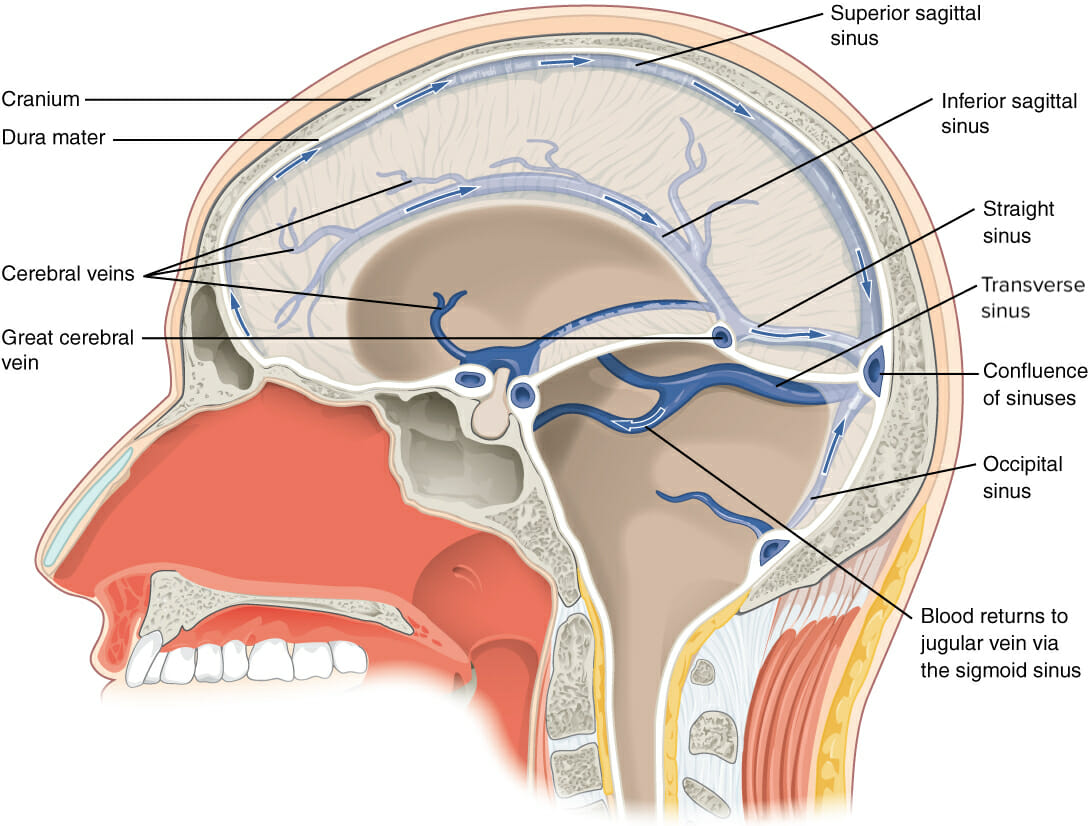
La trombosis venosa cerebral (TVC) es un coágulo de sangre en EN Erythema nodosum is an immune-mediated panniculitis (inflammation of the subcutaneous fat) caused by a type IV (delayed-type) hypersensitivity reaction. It commonly manifests in young women as tender, erythematous nodules on the shins. Erythema Nodosum las venas cerebrales o los LOS Neisseria senos durales.
Epidemiología

  • Afecta a una población más joven que el ACV isquémico (edad promedio, 35 años)
  • Incidencia anual: 1-2/100 000 habitantes
  • Más frecuente en EN Erythema nodosum is an immune-mediated panniculitis (inflammation of the subcutaneous fat) caused by a type IV (delayed-type) hypersensitivity reaction. It commonly manifests in young women as tender, erythematous nodules on the shins. Erythema Nodosum mujeres (3:1)

Factores de riesgo

  • Estados hipercoagulables (genéticos o adquiridos):
    • Síndrome antifosfolípido
    • Deficiencia de proteína C o S
    • Mutación del factor V Factor V Heat- and storage-labile plasma glycoprotein which accelerates the conversion of prothrombin to thrombin in blood coagulation. Factor V accomplishes this by forming a complex with factor Xa, phospholipid, and calcium (prothrombinase complex). Hemostasis de Leiden
    • Hiperhomocisteinemia
    • Embarazo y periodo periparto
    • Malignidad
    • Síndrome nefrótico
    • Hemoglobinuria Hemoglobinuria The presence of free hemoglobin in the urine, indicating hemolysis of erythrocytes within the vascular system. After saturating the hemoglobin-binding proteins (haptoglobins), free hemoglobin begins to appear in the urine. Transfusion Reactions paroxística nocturna
  • Infecciones:
    • Localizadas en EN Erythema nodosum is an immune-mediated panniculitis (inflammation of the subcutaneous fat) caused by a type IV (delayed-type) hypersensitivity reaction. It commonly manifests in young women as tender, erythematous nodules on the shins. Erythema Nodosum cabeza/cuello (por ejemplo, la sinusitis Sinusitis Sinusitis refers to inflammation of the mucosal lining of the paranasal sinuses. The condition usually occurs concurrently with inflammation of the nasal mucosa (rhinitis), a condition known as rhinosinusitis. Acute sinusitis is due to an upper respiratory infection caused by a viral, bacterial, or fungal agent. Sinusitis frontal Frontal The bone that forms the frontal aspect of the skull. Its flat part forms the forehead, articulating inferiorly with the nasal bone and the cheek bone on each side of the face. Skull: Anatomy puede propagarse a través de las venas emisarias y causar trombosis del seno cavernoso).
    • Sistémico (por ejemplo, COVID-19 COVID-19 Coronavirus disease 2019 (COVID-19) is an infectious disease caused by the severe acute respiratory syndrome coronavirus 2 (SARS-CoV-2) that mainly affects the respiratory system but can also cause damage to other body systems (cardiovascular, gastrointestinal, renal, and central nervous systems). )
  • Traumatismo craneal
  • Afecciones inflamatorias:
    • Lupus eritematoso sistémico (LES)
    • Enfermedad inflamatoria intestinal
    • Granulomatosis con poliangeítis
    • Enfermedad de Behçet
  • Medicamentos:
    • Anticonceptivos orales (factor de riesgo más frecuente en EN Erythema nodosum is an immune-mediated panniculitis (inflammation of the subcutaneous fat) caused by a type IV (delayed-type) hypersensitivity reaction. It commonly manifests in young women as tender, erythematous nodules on the shins. Erythema Nodosum mujeres jóvenes)
    • Tamoxifeno
    • Corticosteroides
    • Eritropoyetina
    • Quimioterapia
      • L-asparaginasa
      • Cisplatino
      • Ácido transretinoico
  • Otros:
    • Obesidad
    • Cardiopatías congénitas

Fisiopatología

  • Cuando un coágulo obstruye el sistema venoso cerebral, puede causar síntomas a través de 2 mecanismos principales:
    • ↓ Absorción del LCR → ↑ Presión intracraneal (PIC).
    • Obstrucción de la salida de sangre del cerebro → infartos cerebrales (ACV).
  • Causas de obstrucción venosa:
    • ↑ Presión venosa y ↓ presión de perfusión capilar → ↓ flujo sanguíneo cerebral.
    • ↑ Presión intravascular y ↓ perfusión cerebral → ↓ Fallo de la bomba Na+/K+ ATPasa → entrada de agua en EN Erythema nodosum is an immune-mediated panniculitis (inflammation of the subcutaneous fat) caused by a type IV (delayed-type) hypersensitivity reaction. It commonly manifests in young women as tender, erythematous nodules on the shins. Erythema Nodosum las células → fuga de plasma Plasma The residual portion of blood that is left after removal of blood cells by centrifugation without prior blood coagulation. Transfusion Products sanguíneo al AL Amyloidosis espacio intersticial.
  • Resulta en EN Erythema nodosum is an immune-mediated panniculitis (inflammation of the subcutaneous fat) caused by a type IV (delayed-type) hypersensitivity reaction. It commonly manifests in young women as tender, erythematous nodules on the shins. Erythema Nodosum:
    • Alteración de la barrera hematoencefálica → edema Edema Edema is a condition in which excess serous fluid accumulates in the body cavity or interstitial space of connective tissues. Edema is a symptom observed in several medical conditions. It can be categorized into 2 types, namely, peripheral (in the extremities) and internal (in an organ or body cavity). Edema vasogénico (cefalea).
    • Infarto venoso y hemorragia (ACV)

Presentación Clínica

Las presentaciones clínicas pueden variar significativamente. Algunos casos pueden presentarse con signos aislados de PIC, mientras que otros presentan síntomas isquémicos. El inicio de los LOS Neisseria síntomas también puede diferir (agudo, subagudo, crónico).

Signos y síntomas

  • Cefalea:
    • Característica clínica más común
    • Puede ser difusa o localizada frontalmente
    • El inicio suele ser gradual, pero puede ser explosivo (“trueno”).
    • Peor con:
      • Decúbito
      • Tos TOS Thoracic outlet syndrome (TOS) is a broad term used for a spectrum of syndromes related to the general region of the thoracic outlet, which involves the compression or irritation of elements of the brachial plexus, subclavian artery, or subclavian vein. Thoracic Outlet Syndrome
      • Estornudos
      • Maniobra de Valsalva
    • Puede presentar vómitos o diplopía asociados
  • Papiledema: un signo de ↑ PIC.
  • Déficits neurológicos focales:
    • Parálisis del nervio craneal
    • Hemiparesia
    • Pérdida hemisensorial
    • Hemianopsia
  • Convulsión focal o generalizada
  • Estado mental alterado (encefalopatía)

Síndromes aislados

  • La trombosis del seno cavernoso se presenta con síntomas predominantemente oculares:
    • Dolor Dolor Inflammation orbitario
    • Edema Edema Edema is a condition in which excess serous fluid accumulates in the body cavity or interstitial space of connective tissues. Edema is a symptom observed in several medical conditions. It can be categorized into 2 types, namely, peripheral (in the extremities) and internal (in an organ or body cavity). Edema conjuntival
    • Proptosis Proptosis Retinoblastoma
    • Parálisis oculomotoras
  • Oclusión de la vena cortical:
    • Déficits motores y sensoriales
    • Convulsiones
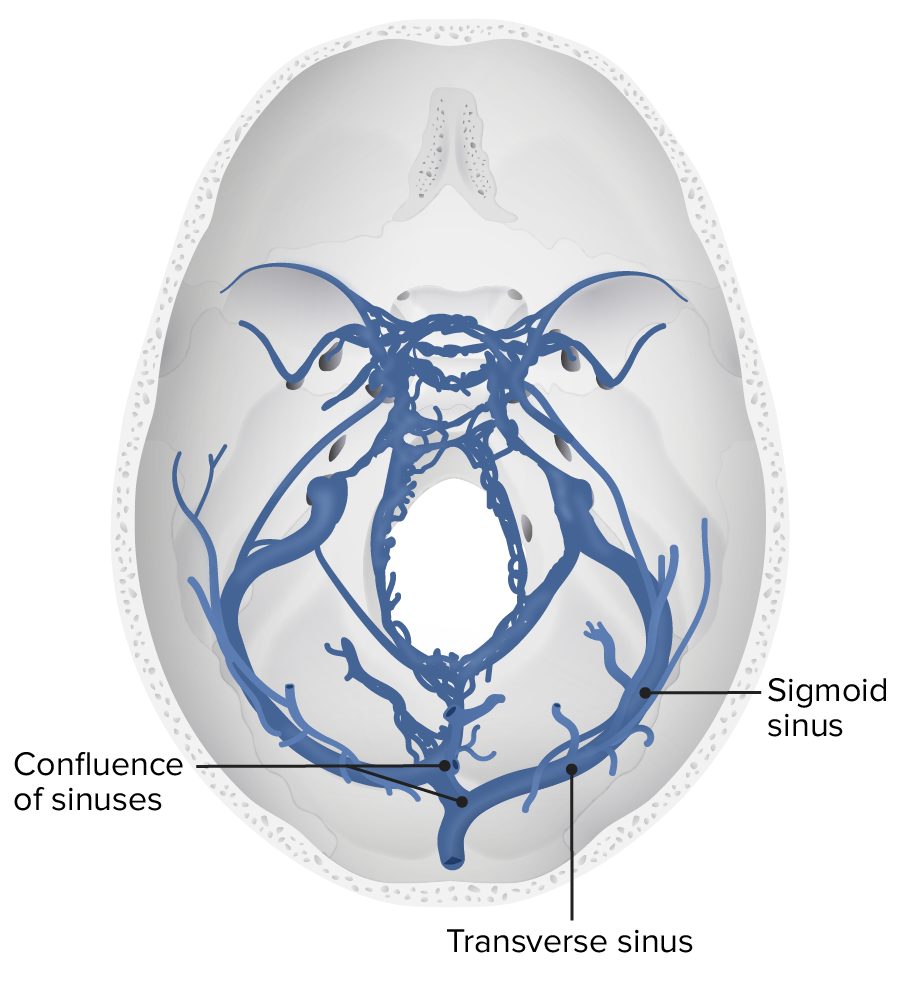
  • Oclusión del seno transverso izquierdo: afasia
  • Sistema venoso cerebral profundo (por ejemplo, seno recto):
    • Síntomas severos
    • Coma Coma Coma is defined as a deep state of unarousable unresponsiveness, characterized by a score of 3 points on the GCS. A comatose state can be caused by a multitude of conditions, making the precise epidemiology and prognosis of coma difficult to determine. Coma
    • Déficit motor Motor Neurons which send impulses peripherally to activate muscles or secretory cells. Nervous System: Histology bilateral

Diagnóstico

Los LOS Neisseria estudios de imagen urgentes están indicados para quienes presenten signos preocupantes de TVC. Las pruebas de laboratorio no desempeñan ningún papel en EN Erythema nodosum is an immune-mediated panniculitis (inflammation of the subcutaneous fat) caused by a type IV (delayed-type) hypersensitivity reaction. It commonly manifests in young women as tender, erythematous nodules on the shins. Erythema Nodosum el diagnóstico de la TVC, pero pueden ayudar a identificar la causa subyacente.
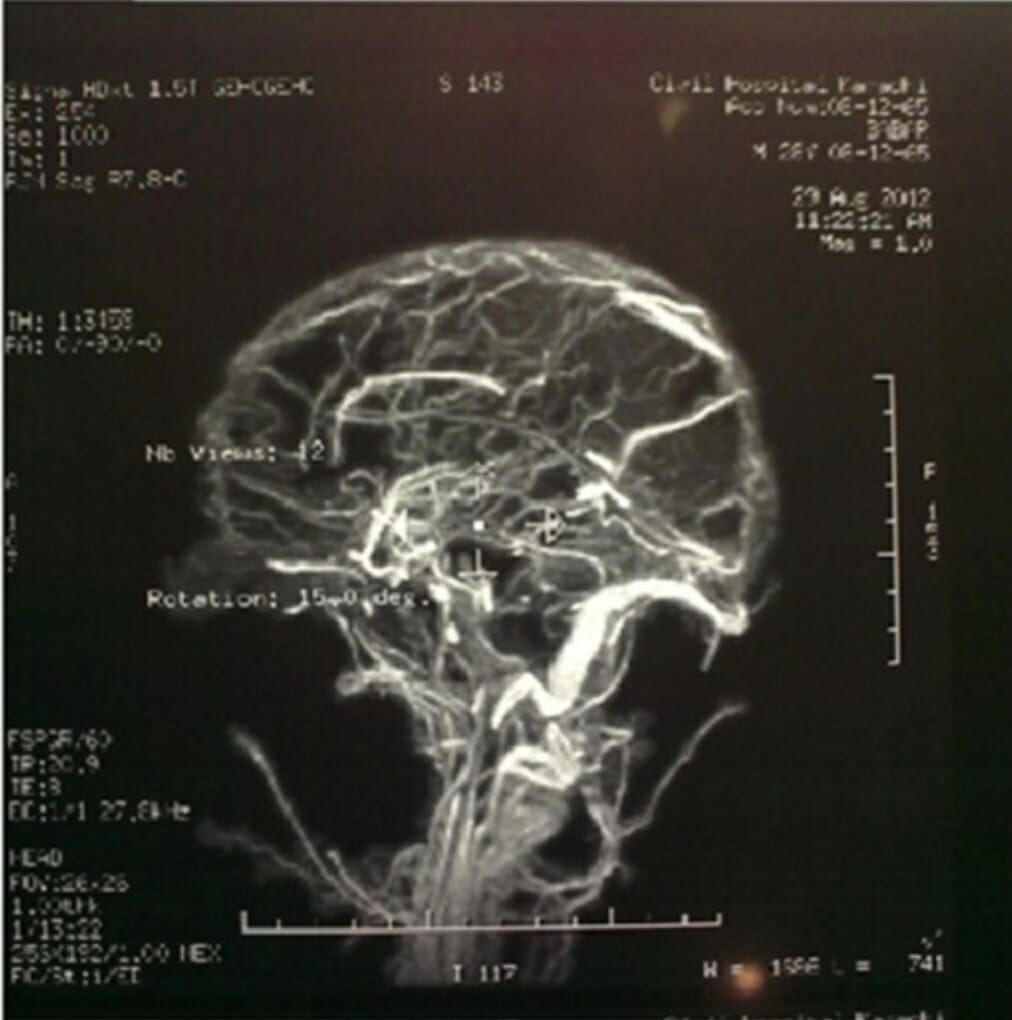
Imagenología

  • TC de cabeza:
    • A menudo normal
    • Puede visualizar venas (signo del cordón) y senos trombosados e hiperdensos (signo del triángulo) en EN Erythema nodosum is an immune-mediated panniculitis (inflammation of the subcutaneous fat) caused by a type IV (delayed-type) hypersensitivity reaction. It commonly manifests in young women as tender, erythematous nodules on the shins. Erythema Nodosum ⅓ de los LOS Neisseria casos.
    • También pueden observarse lesiones hemorrágicas.
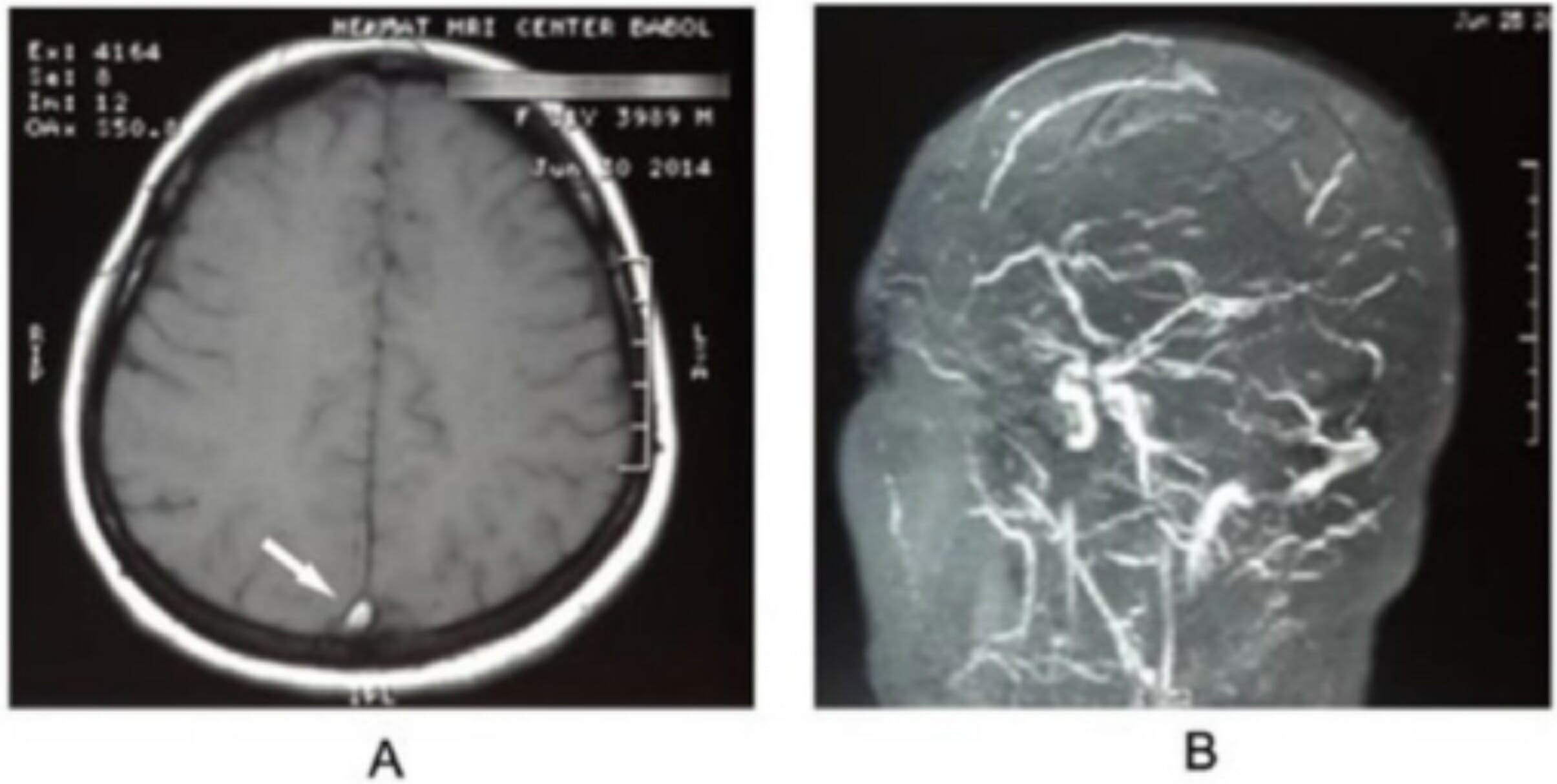
  • RM cerebral con venografía por RM:
    • Prueba más sensible
    • Los LOS Neisseria hallazgos pueden incluir:
      • Edema Edema Edema is a condition in which excess serous fluid accumulates in the body cavity or interstitial space of connective tissues. Edema is a symptom observed in several medical conditions. It can be categorized into 2 types, namely, peripheral (in the extremities) and internal (in an organ or body cavity). Edema cerebral difuso o focal
      • Infartos parenquimatosos venosos ( en EN Erythema nodosum is an immune-mediated panniculitis (inflammation of the subcutaneous fat) caused by a type IV (delayed-type) hypersensitivity reaction. It commonly manifests in young women as tender, erythematous nodules on the shins. Erythema Nodosum patrones no compatibles con infartos arteriales)
      • Infarto venoso hemorrágico
  • Venografía por TC:
    • Puede utilizarse si no se puede hacer venografía por RM
    • Puede mostrar un defecto de llenado (ausencia de flujo sanguíneo)
    • Tiene limitaciones debidas a la variación anatómica
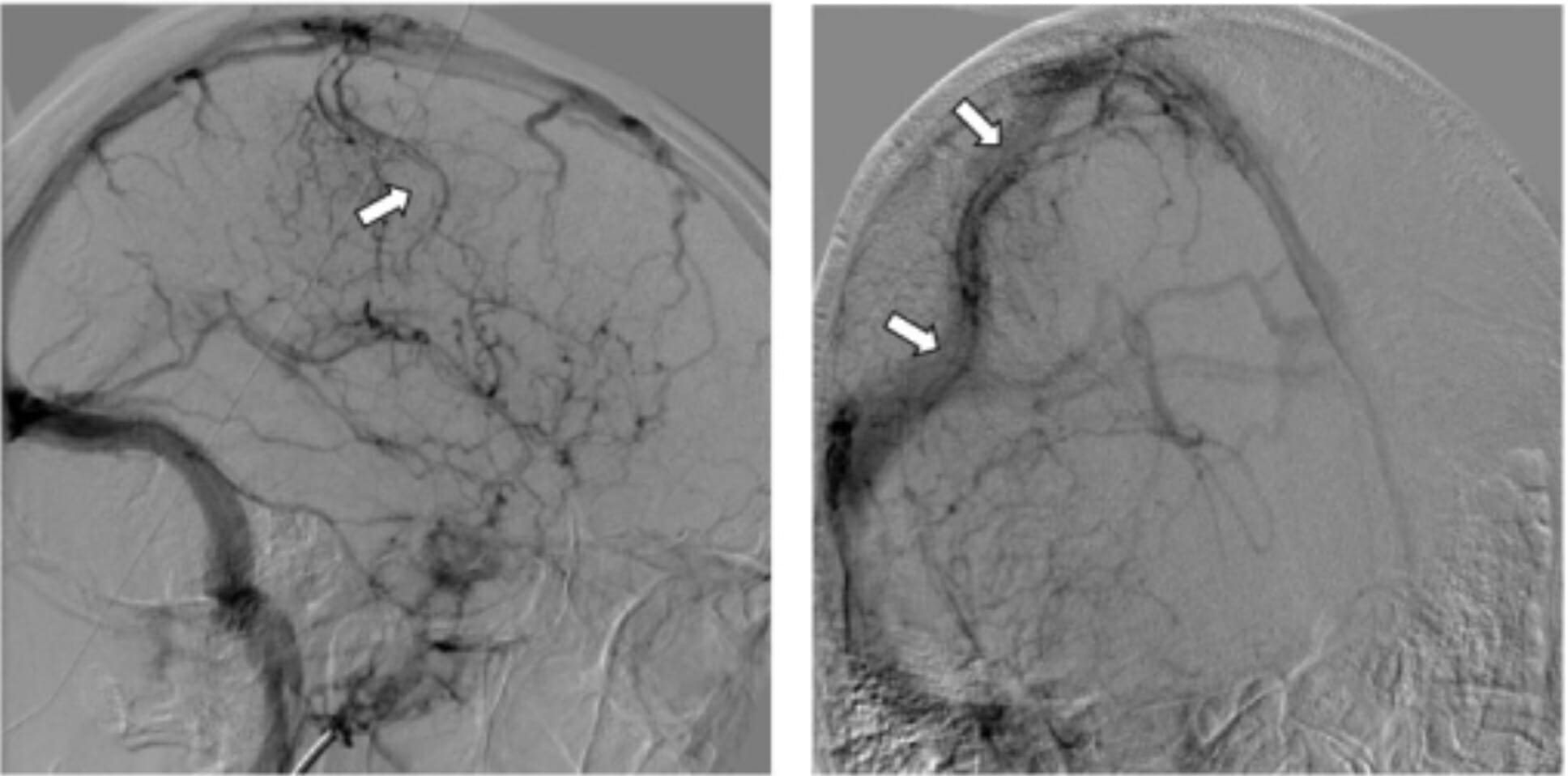
  • Puede considerarse la angiografía cerebral por sustracción digital si la venografía por RM o TC no son concluyentes.

Estudios de laboratorio

  • Dímero D:
    • Puede estar ↑
    • Niveles bajos no descartan el diagnóstico.
  • Hemograma completo → evaluar para:
    • Policitemia
    • Trombocitopenia
    • Infección
  • Estudios de coagulación
  • Marcadores inflamatorios y hemocultivos
  • Perfil hepático
  • Proteinuria Proteinuria The presence of proteins in the urine, an indicator of kidney diseases. Nephrotic Syndrome in Children → evaluar para síndrome nefrótico.
  • Tamizaje de trombofilia en EN Erythema nodosum is an immune-mediated panniculitis (inflammation of the subcutaneous fat) caused by a type IV (delayed-type) hypersensitivity reaction. It commonly manifests in young women as tender, erythematous nodules on the shins. Erythema Nodosum casos de:
    • Antecedentes de trombosis venosa
    • Edad temprana de inicio
    • Ningún otro factor de riesgo

Otros

  • Punción lumbar:
    • Evaluar la presión de apertura (> 25 cm H2O es alta)
    • Puede descartar meningitis Meningitis Meningitis is inflammation of the meninges, the protective membranes of the brain, and spinal cord. The causes of meningitis are varied, with the most common being bacterial or viral infection. The classic presentation of meningitis is a triad of fever, altered mental status, and nuchal rigidity. Meningitis
    • Los LOS Neisseria estudios de LCR suelen ser inespecíficos.
  • EEG EEG Seizures (si hay convulsiones)

Tratamiento

Manejo agudo

  • Ingreso en EN Erythema nodosum is an immune-mediated panniculitis (inflammation of the subcutaneous fat) caused by a type IV (delayed-type) hypersensitivity reaction. It commonly manifests in young women as tender, erythematous nodules on the shins. Erythema Nodosum UCI de pacientes con PIC ↑:
    • Control del PIC
    • Medidas de control PIC ↑:
      • Elevar la cabecera de la cama
      • Sedación leve, según sea necesario
      • Terapia osmótica con manitol o solución salina hipertónica
      • La hiperventilación (si está intubado) como medida temporal es controvertida.
  • Eliminar los LOS Neisseria factores causantes, si es posible (por ejemplo, anticonceptivos orales).
  • Anticoagulación:
    • Heparina IV o heparina subcutánea de bajo peso molecular (HBPM)
    • Nota: Los LOS Neisseria individuos con infarto venoso hemorrágico y TVC pueden seguir recibiendo tratamiento anticoagulante.
  • Trombólisis endovascular o trombectomía mecánica para:
    • Empeoramiento de los LOS Neisseria síntomas a pesar de un tratamiento adecuado, o
    • Contraindicaciones para la anticoagulación
  • Medicación anticonvulsiva:
    • Indicación de profilaxis: convulsión conocida y lesión supratentorial
    • Duración óptima desconocida
  • Antibióticos: si se sospecha infección concurrente (por ejemplo, meningitis Meningitis Meningitis is inflammation of the meninges, the protective membranes of the brain, and spinal cord. The causes of meningitis are varied, with the most common being bacterial or viral infection. The classic presentation of meningitis is a triad of fever, altered mental status, and nuchal rigidity. Meningitis, mastoiditis Mastoiditis Inflammation of the honeycomb-like mastoid bone in the skull just behind the ear. It is usually a complication of otitis media. Mumps Virus/Mumps).
  • Glucocorticoides: si existe enfermedad autoinmune (por ejemplo, vasculitis Vasculitis Inflammation of any one of the blood vessels, including the arteries; veins; and rest of the vasculature system in the body. Systemic Lupus Erythematosus, síndrome de Behçet, LES).

Manejo a largo plazo

  • Anticoagulación:
    • Generales:
      • Duración: 3-12 meses
      • Opciones: warfarina o anticoagulante oral directo
    • Durante el embarazo y hasta 8 semanas después del parto:
      • HBPM
      • Profilaxis con HBPM en EN Erythema nodosum is an immune-mediated panniculitis (inflammation of the subcutaneous fat) caused by a type IV (delayed-type) hypersensitivity reaction. It commonly manifests in young women as tender, erythematous nodules on the shins. Erythema Nodosum embarazos posteriores
  • Suspenda los LOS Neisseria anticonceptivos orales y la terapia hormonal de la menopausia (excepto las píldoras que contienen solo progestágeno).

Diagnóstico Diferencial

  • Hipertensión intracraneal idiopática: También conocido como pseudotumor cerebri Pseudotumor cerebri Idiopathic intracranial hypertension (IIH), also known as pseudotumor cerebri, is a clinical disorder that presents with symptoms due to increased intracranial pressure (ICP; ≥ 20 mm hg) or CSF pressure (> 250 mm H2O), with no structural changes or other attributable causes. Idiopathic Intracranial Hypertension, este trastorno se presenta con signos de aumento de la PIC (cefalea, vómitos, papiledema) sin evidencia de un defecto estructural. Esta afección es más frecuente en EN Erythema nodosum is an immune-mediated panniculitis (inflammation of the subcutaneous fat) caused by a type IV (delayed-type) hypersensitivity reaction. It commonly manifests in young women as tender, erythematous nodules on the shins. Erythema Nodosum las mujeres en EN Erythema nodosum is an immune-mediated panniculitis (inflammation of the subcutaneous fat) caused by a type IV (delayed-type) hypersensitivity reaction. It commonly manifests in young women as tender, erythematous nodules on the shins. Erythema Nodosum edad fértil, sobre todo en EN Erythema nodosum is an immune-mediated panniculitis (inflammation of the subcutaneous fat) caused by a type IV (delayed-type) hypersensitivity reaction. It commonly manifests in young women as tender, erythematous nodules on the shins. Erythema Nodosum las que tienen sobrepeso. El diagnóstico se realiza mediante una combinación de hallazgos en EN Erythema nodosum is an immune-mediated panniculitis (inflammation of the subcutaneous fat) caused by a type IV (delayed-type) hypersensitivity reaction. It commonly manifests in young women as tender, erythematous nodules on the shins. Erythema Nodosum el examen físico, estudios de imagen y punción lumbar. El objetivo principal del tratamiento es reducir la PIC, a menudo con inhibidores de la anhidrasa carbónica.
  • Hemorragia subaracnoidea (HSA): hemorragia entre la aracnoides y la piamadre debida a la rotura de un aneurisma sacular. La HSA se presenta con cefalea “en trueno”, vómitos, rigidez de nuca, déficits neurológicos focales y convulsiones. El diagnóstico se realiza con estudios de imagen y punción lumbar. La HSA requiere una intervención neuroquirúrgica urgente para detener la hemorragia y tiene una alta tasa de mortalidad sin tratamiento.
  • Preeclampsia Preeclampsia A complication of pregnancy, characterized by a complex of symptoms including maternal hypertension and proteinuria with or without pathological edema. Symptoms may range between mild and severe. Pre-eclampsia usually occurs after the 20th week of gestation, but may develop before this time in the presence of trophoblastic disease. Hypertensive Pregnancy Disorders y eclampsia Eclampsia Onset of hyperreflexia; seizures; or coma in a previously diagnosed pre-eclamptic patient (pre-eclampsia). Hypertensive Pregnancy Disorders: La preeclampsia Preeclampsia A complication of pregnancy, characterized by a complex of symptoms including maternal hypertension and proteinuria with or without pathological edema. Symptoms may range between mild and severe. Pre-eclampsia usually occurs after the 20th week of gestation, but may develop before this time in the presence of trophoblastic disease. Hypertensive Pregnancy Disorders es la hipertensión gestacional con proteinuria Proteinuria The presence of proteins in the urine, an indicator of kidney diseases. Nephrotic Syndrome in Children y/o daños en EN Erythema nodosum is an immune-mediated panniculitis (inflammation of the subcutaneous fat) caused by a type IV (delayed-type) hypersensitivity reaction. It commonly manifests in young women as tender, erythematous nodules on the shins. Erythema Nodosum órganos diana. La eclampsia Eclampsia Onset of hyperreflexia; seizures; or coma in a previously diagnosed pre-eclamptic patient (pre-eclampsia). Hypertensive Pregnancy Disorders es una preeclampsia Preeclampsia A complication of pregnancy, characterized by a complex of symptoms including maternal hypertension and proteinuria with or without pathological edema. Symptoms may range between mild and severe. Pre-eclampsia usually occurs after the 20th week of gestation, but may develop before this time in the presence of trophoblastic disease. Hypertensive Pregnancy Disorders con convulsiones. El tratamiento consiste en EN Erythema nodosum is an immune-mediated panniculitis (inflammation of the subcutaneous fat) caused by a type IV (delayed-type) hypersensitivity reaction. It commonly manifests in young women as tender, erythematous nodules on the shins. Erythema Nodosum antihipertensivos y sulfato de magnesio para la profilaxis o el tratamiento de las convulsiones. El tratamiento definitivo es el parto.
  • Síndrome de vasoconstricción cerebral reversible: grupo de trastornos con estrechamiento y dilatación reversibles de las arterias cerebrales. Se caracteriza por cefaleas intensas. También pueden presentarse déficits neurológicos focales y convulsiones. La neuroimagen muestra un estrechamiento focal de las arterias en EN Erythema nodosum is an immune-mediated panniculitis (inflammation of the subcutaneous fat) caused by a type IV (delayed-type) hypersensitivity reaction. It commonly manifests in young women as tender, erythematous nodules on the shins. Erythema Nodosum el círculo de Willis. Estos cambios pueden desaparecer espontáneamente. El tratamiento se centra en EN Erythema nodosum is an immune-mediated panniculitis (inflammation of the subcutaneous fat) caused by a type IV (delayed-type) hypersensitivity reaction. It commonly manifests in young women as tender, erythematous nodules on the shins. Erythema Nodosum los LOS Neisseria cuidados de soporte y la resolución de los LOS Neisseria síntomas con el tiempo.

Referencias

  1. ​​​​Ferro, J. M., Aguiar de Sousa, D. (2019). Cerebral venous thrombosis: an update. Current Neurology and Neuroscience Reports, 19(10). https://link.springer.com/article/10.1007/s11910-019-0988-x
  2. Ferro, J. M., Canhão, P. (2025). Etiology, clinical features, and diagnosis. UpToDate. Retrieved August 5, 2025, from https://www.uptodate.com/contents/cerebral-venous-thrombosis-etiology-clinical-features-and-diagnosis
  3. Ferro, J. M., Canhão, P. (2025). Cerebral venous thrombosis: treatment and prognosis. UpToDate. Retrieved August 5, 2025, from https://www.uptodate.com/contents/cerebral-venous-thrombosis-treatment-and-prognosis
  4. Singhal, A. (2024). Reversible cerebral vasoconstriction syndrome. UpToDate. Retrieved August 5, 2025, from https://www.uptodate.com/contents/reversible-cerebral-vasoconstriction-syndrome
  5. Capecchi, M., Abbattista, M., Martinelli, I. (2018). Cerebral venous sinus thrombosis. Journal of Thrombosis and Haemostasis, 16(10), 1918–1931. https://doi.org/10.1111/jth.14210
  6. McElveen, W., Keegan, A. (2024). Cerebral venous thrombosis. Medscape. Retrieved August 5, 2025, from https://emedicine.medscape.com/article/1162804-overview
  7. Zhang, Z., et al. (2019). Hyperventilation in neurological patients: from physiology to outcome evidence. Current Opinion in Anaesthesiology, 32(5), 568–573. DOI: 10.1097/ACO.0000000000000764

¡Crea tu cuenta gratis o inicia una sesión para seguir leyendo!

Regístrate ahora y obtén acceso gratuito a Lecturio con páginas de concepto, videos médicos y cuestionarios para tu educación médica.

User Reviews

Que tengas una sesión de estudio alegre y navideña 🎁 Ahorra 50% en todos los planes >>

Details