Domina Conceptos Médicos

Estudia para la escuela de medicina y tus examenes con Lecturio.

Trabajo de Parto y Nacimiento Prematuros

El trabajo de parto prematuro se refiere a las contracciones uterinas regulares que conducen a un cambio cervical antes de las 37 semanas de gestación; el nacimiento prematuro se refiere al AL Amyloidosis nacimiento antes de las 37 semanas de gestación. El nacimiento prematuro puede ser espontáneo, debido a un trabajo de parto prematuro, una rotura prematura de membranas (RPM) o una insuficiencia cervical. El nacimiento prematuro también puede ser iniciado por el proveedor de salud por una variedad de indicaciones maternas o fetales. El diagnóstico incluye evaluaciones para detectar cambios cervicales y monitorear contracciones uterinas regulares. El tratamiento depende de la edad gestacional, pero suele incluir la administración de corticosteroides (para mejorar la madurez pulmonar del feto), sulfato de magnesio (para la neuroprotección del feto contra la parálisis cerebral), profilaxis contra el estreptococo del grupo B y 48 horas de tocolíticos para ayudar a los LOS Neisseria pacientes a completar un tratamiento completo de esteroides.

Last updated: Jan 20, 2026

Editorial responsibility: Stanley Oiseth, Lindsay Jones, Evelin Maza

Descripción General

Definición

El trabajo de parto prematuro se define como las contracciones uterinas regulares que condicionan un cambio en EN Erythema nodosum is an immune-mediated panniculitis (inflammation of the subcutaneous fat) caused by a type IV (delayed-type) hypersensitivity reaction. It commonly manifests in young women as tender, erythematous nodules on the shins. Erythema Nodosum la dilatación y/o borramiento cervical antes de las 37 semanas de gestación.

El nacimiento prematuro se define como el nacimiento a una edad gestacional de entre 20-37 semanas.

Epidemiología

Trabajo de parto prematuro:

  • < 10% de las mujeres con parto prematuro dan a luz antes de los LOS Neisseria 7 días.
  • El 50% de las pacientes hospitalizadas por trabajo de parto prematuro acaban dando a luz a término.

Nacimiento prematuro:

  • Incidencia: 10% de todos los LOS Neisseria nacidos vivos
    • Nacimiento prematuro espontáneo: aproximadamente el 75%.
    • Nacimiento prematuro indicado: aproximadamente el 25%.
  • Tendencia racial y étnica: Afroamericanos > Caucásicos
  • Impacto:
    • 70% de las muertes neonatales
    • 25%–50% de deterioro neurológico a largo plazo

Etiología y Factores de Riesgo

Etiología del nacimiento prematuro espontáneo

  • Labor de parto prematuro
  • Rotura prematura de membranas (RPM)
  • Insuficiencia cervical

Etiología del nacimiento prematuro indicado

  • Indicaciones maternas:
    • Trastornos hipertensivos:
      • Preeclampsia Preeclampsia A complication of pregnancy, characterized by a complex of symptoms including maternal hypertension and proteinuria with or without pathological edema. Symptoms may range between mild and severe. Pre-eclampsia usually occurs after the 20th week of gestation, but may develop before this time in the presence of trophoblastic disease. Hypertensive Pregnancy Disorders severa
      • Hipertensión crónica mal controlada
    • Infecciones graves
    • Inestabilidad hemodinámica
  • Indicaciones obstétricas:
    • RPM sin trabajo de parto después de 34 semanas
    • Infección intraamniótica
    • Cesárea clásica previa
  • Indicaciones fetales:
    • Restricción del crecimiento intrauterino (RCIU)
    • Oligohidramnios
    • Gestación múltiple
    • Anomalías congénitas
  • Indicaciones placentarias:
    • Placenta previa Placenta Previa Abnormal placentation in which the placenta implants in the lower segment of the uterus (the zone of dilation) and may cover part or all of the opening of the cervix. It is often associated with serious antepartum bleeding and premature labor. Placental Abnormalities ( placenta Placenta A highly vascularized mammalian fetal-maternal organ and major site of transport of oxygen, nutrients, and fetal waste products. It includes a fetal portion (chorionic villi) derived from trophoblasts and a maternal portion (decidua) derived from the uterine endometrium. The placenta produces an array of steroid, protein and peptide hormones (placental hormones). Placenta, Umbilical Cord, and Amniotic Cavity cerca del orificio cervical)
    • Placenta Placenta A highly vascularized mammalian fetal-maternal organ and major site of transport of oxygen, nutrients, and fetal waste products. It includes a fetal portion (chorionic villi) derived from trophoblasts and a maternal portion (decidua) derived from the uterine endometrium. The placenta produces an array of steroid, protein and peptide hormones (placental hormones). Placenta, Umbilical Cord, and Amniotic Cavity acreta ( placenta Placenta A highly vascularized mammalian fetal-maternal organ and major site of transport of oxygen, nutrients, and fetal waste products. It includes a fetal portion (chorionic villi) derived from trophoblasts and a maternal portion (decidua) derived from the uterine endometrium. The placenta produces an array of steroid, protein and peptide hormones (placental hormones). Placenta, Umbilical Cord, and Amniotic Cavity que invade el miometrio)
    • Desprendimiento placentario (separación de la placenta Placenta A highly vascularized mammalian fetal-maternal organ and major site of transport of oxygen, nutrients, and fetal waste products. It includes a fetal portion (chorionic villi) derived from trophoblasts and a maternal portion (decidua) derived from the uterine endometrium. The placenta produces an array of steroid, protein and peptide hormones (placental hormones). Placenta, Umbilical Cord, and Amniotic Cavity de la decidua)
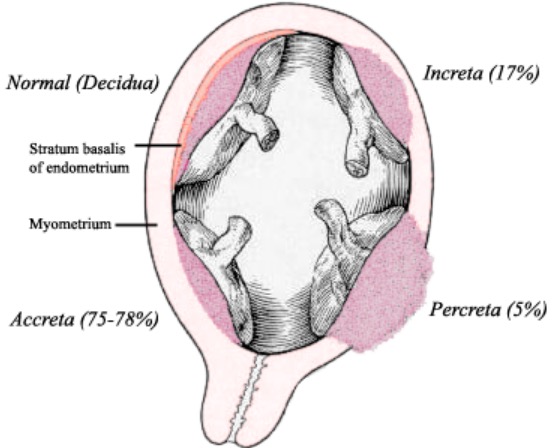
Placenta acreta

Placenta acreta:
La placenta acreta, una etiología conocida indicada para el nacimiento prematuro, describe una placenta que invade el miometrio a diferentes profundidades.

Imagen: “Placenta accreta” por TheNewMessiah. Licencia: Dominio Público

Factores de riesgo de trabajo del parto y nacimiento prematuros

Dado que el trabajo de parto prematuro es una de las principales etiologías del nacimiento prematuro, todos los LOS Neisseria factores de riesgo de trabajo de parto prematuro son también factores de riesgo de nacimiento prematuro espontáneo.

  • Antecedentes obstétricos previos:
    • Nacimiento prematuro previo:
      • El factor de riesgo más importante en EN Erythema nodosum is an immune-mediated panniculitis (inflammation of the subcutaneous fat) caused by a type IV (delayed-type) hypersensitivity reaction. It commonly manifests in young women as tender, erythematous nodules on the shins. Erythema Nodosum general
      • Incluye tanto los LOS Neisseria nacimientos prematuros espontáneos como los LOS Neisseria indicados
    • RPM previa
    • Evacuación uterina previa
  • Edad, raza y genética:
    • Mujeres negras no hispanas
    • Extremos de la edad materna (jóvenes y mayores)
    • Polimorfismos genéticos: contribuyen al AL Amyloidosis riesgo (aunque los LOS Neisseria factores ambientales son probablemente más importantes)
  • Factores fetales:
    • Anomalías congénitas
    • Restricción del crecimiento
  • Factores cervicales:
    • Antecedentes de cirugía cervical (e.g., conización)
    • Cérvix corto en EN Erythema nodosum is an immune-mediated panniculitis (inflammation of the subcutaneous fat) caused by a type IV (delayed-type) hypersensitivity reaction. It commonly manifests in young women as tender, erythematous nodules on the shins. Erythema Nodosum el ultrasonido
    • Dilatación cervical ≥ 1 cm antes de las 24 semanas
  • Factores uterinos:
    • Anomalías uterinas congénitas (por ejemplo, tabique uterino)
    • Leiomiomas (fibromas)
    • Sobredistensión uterina:
      • Gestación múltiple
      • Polihidramnios
  • Hemorragia intrauterina:
    • Desprendimiento placentario
    • Hemorragia decidual al AL Amyloidosis principio del embarazo
  • Infecciones:
    • Infección intraamniótica (corioamnionitis)
    • Infección del tracto genital:
      • Estreptococo del grupo B
      • ETS
      • Vaginosis bacteriana
      • Nota: Candida Candida Candida is a genus of dimorphic, opportunistic fungi. Candida albicans is part of the normal human flora and is the most common cause of candidiasis. The clinical presentation varies and can include localized mucocutaneous infections (e.g., oropharyngeal, esophageal, intertriginous, and vulvovaginal candidiasis) and invasive disease (e.g., candidemia, intraabdominal abscess, pericarditis, and meningitis). Candida/Candidiasis no es un factor de riesgo.
    • Pielonefritis
    • Neumonía
    • Enfermedad periodontal
    • Malaria Malaria Malaria is an infectious parasitic disease affecting humans and other animals. Most commonly transmitted via the bite of a female Anopheles mosquito infected with microorganisms of the Plasmodium genus. Patients present with fever, chills, myalgia, headache, and diaphoresis. Plasmodium/Malaria
  • Trastornos médicos crónicos de la madre:
    • Hipertensión
    • Diabetes Diabetes Diabetes mellitus (DM) is a metabolic disease characterized by hyperglycemia and dysfunction of the regulation of glucose metabolism by insulin. Type 1 DM is diagnosed mostly in children and young adults as the result of autoimmune destruction of β cells in the pancreas and the resulting lack of insulin. Type 2 DM has a significant association with obesity and is characterized by insulin resistance. Diabetes Mellitus mellitus tipo 1
    • Insuficiencia renal
    • Enfermedad autoinmune
  • Otros factores maternos:
    • Embarazo como resultado de la tecnología de reproducción asistida
    • Cirugía abdominal durante el embarazo
    • Intervalo intergenésico corto
    • Mala atención prenatal
    • Tabaquismo y abuso de sustancias
    • Desnutrición
    • Extremos del peso antes del embarazo (bajo y alto)
    • Actividad profesional:
      • Estar de pie y caminar durante mucho tiempo
      • Levantar objetos pesados
      • Trabajar en EN Erythema nodosum is an immune-mediated panniculitis (inflammation of the subcutaneous fat) caused by a type IV (delayed-type) hypersensitivity reaction. It commonly manifests in young women as tender, erythematous nodules on the shins. Erythema Nodosum turnos de noche
      • Trabajar muchas horas
  • Factores ambientales:
    • Contaminación atmosférica (partículas finas, ozono)
    • Alta temperatura ambiental
    • Exposición a ftalatos

Fisiopatología y Presentación Clínica

Trabajo de parto prematuro

Vía final común para iniciar el trabajo de parto prematuro:

  • Secreción de prostaglandinas:
    • Altera el colágeno y los LOS Neisseria glucosaminoglucanos del tejido cervical (maduración cervical)
    • ↑ Contracción uterina
  • Degradación de la matriz extracelular alrededor de las membranas fetales
  • Oxitocina → contracciones uterinas coordinadas

Vías primarias (4) que conducen a la vía final común:

  • Estrés:
    • Estrés → ↑ hormona liberadora de corticotropina (CRH, por sus siglas en EN Erythema nodosum is an immune-mediated panniculitis (inflammation of the subcutaneous fat) caused by a type IV (delayed-type) hypersensitivity reaction. It commonly manifests in young women as tender, erythematous nodules on the shins. Erythema Nodosum inglés) placentaria → ↑ prostaglandinas
    • Sufrimiento fetal (más común): insuficiencia vascular útero-placentaria
    • Estrés materno (menos común): estrés psicosocial
  • Infección e inflamación:
    • Las bacterias pueden producir:
      • Fosfolipasa A2 → promueve la síntesis de prostaglandinas
      • Endotoxina → estimular directamente las contracciones uterinas
      • Proteasa, colagenasa, elastasa → degradan las membranas fetales → RPM
    • Las bacterias se unen a los LOS Neisseria receptores tipo Toll (TLR, por sus siglas en EN Erythema nodosum is an immune-mediated panniculitis (inflammation of the subcutaneous fat) caused by a type IV (delayed-type) hypersensitivity reaction. It commonly manifests in young women as tender, erythematous nodules on the shins. Erythema Nodosum inglés) en EN Erythema nodosum is an immune-mediated panniculitis (inflammation of the subcutaneous fat) caused by a type IV (delayed-type) hypersensitivity reaction. It commonly manifests in young women as tender, erythematous nodules on the shins. Erythema Nodosum el tejido uterino, placentario y membranoso → desencadenan la liberación de mediadores inflamatorios:
      • Interleucina (IL)-1, IL-6 e IL-8
      • Factor de necrosis Necrosis The death of cells in an organ or tissue due to disease, injury or failure of the blood supply. Ischemic Cell Damage tumoral ( TNF TNF Tumor necrosis factor (TNF) is a major cytokine, released primarily by macrophages in response to stimuli. The presence of microbial products and dead cells and injury are among the stimulating factors. This protein belongs to the TNF superfamily, a group of ligands and receptors performing functions in inflammatory response, morphogenesis, and cell proliferation. Tumor Necrosis Factor (TNF), por sus siglas en EN Erythema nodosum is an immune-mediated panniculitis (inflammation of the subcutaneous fat) caused by a type IV (delayed-type) hypersensitivity reaction. It commonly manifests in young women as tender, erythematous nodules on the shins. Erythema Nodosum inglés))
      • Metaloproteinasa de la matriz
    • Efecto de los LOS Neisseria mediadores inflamatorios:
      • ↑ Secreción de prostaglandinas
      • ↑ Contracción uterina
      • Inducen la proteasa → RPM
  • Hemorragia decidual:
    • Hemorragia intrauterina → activación de la cascada de coagulación
    • Trombina → se une al AL Amyloidosis receptor Receptor Receptors are proteins located either on the surface of or within a cell that can bind to signaling molecules known as ligands (e.g., hormones) and cause some type of response within the cell. Receptors activado por la proteasa ( PAR PAR The PAR is the attributable risk for an entire population. It represents the fraction of cases that would not occur in a population if the exposure was eliminated. Measures of Risk, por sus siglas en EN Erythema nodosum is an immune-mediated panniculitis (inflammation of the subcutaneous fat) caused by a type IV (delayed-type) hypersensitivity reaction. It commonly manifests in young women as tender, erythematous nodules on the shins. Erythema Nodosum inglés) 1 y 3:
      • ↑ Frecuencia, intensidad y tono de las contracciones miometriales.
      • ↑ Metaloproteinasas de la matriz
      • ↑ IL-8 en EN Erythema nodosum is an immune-mediated panniculitis (inflammation of the subcutaneous fat) caused by a type IV (delayed-type) hypersensitivity reaction. It commonly manifests in young women as tender, erythematous nodules on the shins. Erythema Nodosum las células deciduales
  • Sobredistensión uterina:
    • Causas frecuentes:
      • Gestaciones múltiples
      • Polihidramnios
    • Estiramiento del miometrio:
      • Aumenta los LOS Neisseria receptores de oxitocina
      • ↑ Citoquina inflamatoria, prostaglandina y colagenasa

Nacimiento prematuro

Todas las vías que conducen al AL Amyloidosis trabajo de parto prematuro (antes mencionadas) pueden evolucionar hacia un nacimiento prematuro.

El nacimiento prematuro también puede ser causado por una insuficiencia cervical:

  • Dilatación cervical sin contracciones (no es trabajo de parto)
  • Debido a la debilidad estructural del cérvix:
    • Cirugía cervical previa
    • Síndrome de Ehlers-Danlos
    • Inflamación

Presentación clínica

Mujeres embarazadas de < 37 semanas de edad gestacional que presentan:

  • Contracciones o dolor Dolor Inflammation similares a los LOS Neisseria del trabajo de parto
  • Calambres similares a los LOS Neisseria de la menstruación
  • Dolor Dolor Inflammation de espalda o abdominal bajo
  • Presión pélvica o vaginal
  • Secreción vaginal (tapón de moco)
  • Sangrado vaginal
  • Pérdida de líquido (trabajo de parto prematuro asociado a RPM)

Diagnóstico

La clave para diagnosticar el trabajo de parto prematuro es determinar si se están produciendo cambios cervicales y si las contracciones regulares son la causa de esos cambios. La longitud cervical también es importante para ayudar a predecir un nacimiento prematuro independientemente de las contracciones.
Examen físico y monitoreo inicial

  • Especuloscopía estéril: siempre se hace HACE Altitude Sickness en EN Erythema nodosum is an immune-mediated panniculitis (inflammation of the subcutaneous fat) caused by a type IV (delayed-type) hypersensitivity reaction. It commonly manifests in young women as tender, erythematous nodules on the shins. Erythema Nodosum primer lugar
    • Evaluar visualmente la dilatación cervical: ≥ 3 cm sugiere trabajo de parto prematuro.
    • Evaluar el estado de las membranas: La acumulación de líquido es sugestivo de RPM.
    • Recolección de hisopados para más pruebas
  • Tacto vaginal (después de la especuloscopía estéril):
    • Excluir placenta previa Placenta Previa Abnormal placentation in which the placenta implants in the lower segment of the uterus (the zone of dilation) and may cover part or all of the opening of the cervix. It is often associated with serious antepartum bleeding and premature labor. Placental Abnormalities y RPM antes de los LOS Neisseria exámenes cervicales.
    • A menudo se repite para monitorear los LOS Neisseria cambios cervicales
  • Monitoreo fetal y tocometría:
    • Tocometría: registra las contracciones uterinas
    • Monitor de frecuencia cardíaca fetal: verifica el bienestar fetal
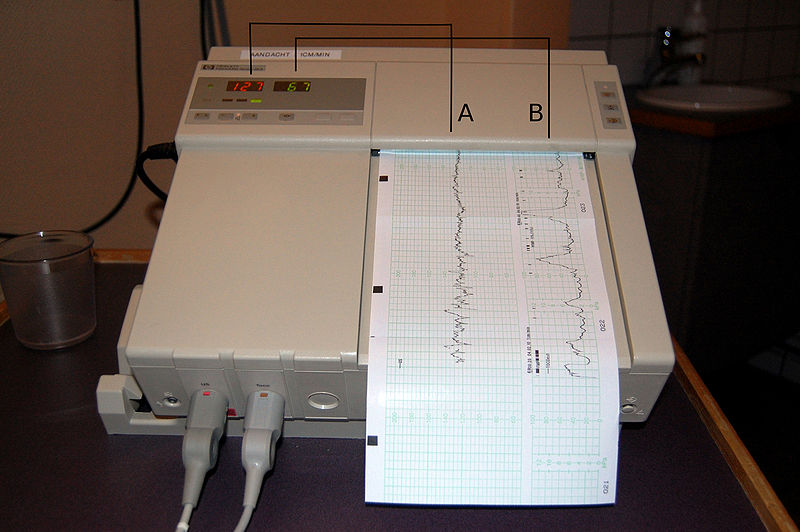
Diagrama de cardiotocografía

Monitoreo fetal con tocometría:
A: Registro de la frecuencia cardíaca fetal determinada por ultrasonido externo
B: Registro de las contracciones uterinas medidas por un transductor de presión externo

Los valores se registran continuamente a lo largo del tiempo.
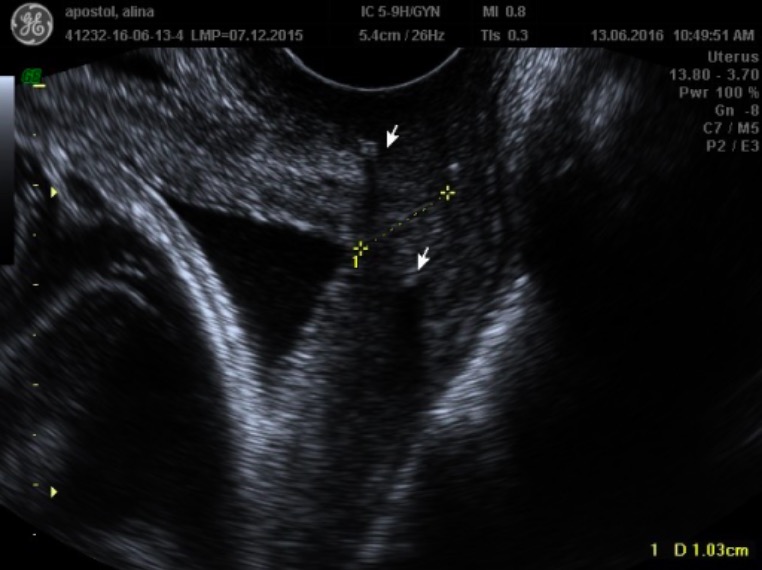
Imagen: “Schematic explanation of cardiotocography” por Steven Fruitsmaak. Licencia: CC BY 3.0

Pruebas e imagenología

  • Pruebas de infecciones del tracto urogenital:
    • Cultivo rectovaginal para estreptococos del grupo B (si no se ha HA Hemolytic anemia (HA) is the term given to a large group of anemias that are caused by the premature destruction/hemolysis of circulating red blood cells (RBCs). Hemolysis can occur within (intravascular hemolysis) or outside the blood vessels (extravascular hemolysis). Hemolytic Anemia obtenido ya)
    • Microscopía (para la vaginitis)
    • Prueba de clamidia y gonorrea (solo para pacientes de alto riesgo)
    • Análisis de orina y urocultivo
  • Fibronectina fetal (fFN, por sus siglas en EN Erythema nodosum is an immune-mediated panniculitis (inflammation of the subcutaneous fat) caused by a type IV (delayed-type) hypersensitivity reaction. It commonly manifests in young women as tender, erythematous nodules on the shins. Erythema Nodosum inglés):
    • fFN: una proteína de la matriz extracelular presente en EN Erythema nodosum is an immune-mediated panniculitis (inflammation of the subcutaneous fat) caused by a type IV (delayed-type) hypersensitivity reaction. It commonly manifests in young women as tender, erythematous nodules on the shins. Erythema Nodosum la interfaz entre la decidua y el corion
    • La interrupción de la interfaz libera fFN en EN Erythema nodosum is an immune-mediated panniculitis (inflammation of the subcutaneous fat) caused by a type IV (delayed-type) hypersensitivity reaction. It commonly manifests in young women as tender, erythematous nodules on the shins. Erythema Nodosum las secreciones cervicales.
    • Predicción del nacimiento prematuro:
      • La detección de fFN ayuda a predecir el alumbramiento en EN Erythema nodosum is an immune-mediated panniculitis (inflammation of the subcutaneous fat) caused by a type IV (delayed-type) hypersensitivity reaction. It commonly manifests in young women as tender, erythematous nodules on the shins. Erythema Nodosum los LOS Neisseria próximos 7 días.
      • Más útil en EN Erythema nodosum is an immune-mediated panniculitis (inflammation of the subcutaneous fat) caused by a type IV (delayed-type) hypersensitivity reaction. It commonly manifests in young women as tender, erythematous nodules on the shins. Erythema Nodosum casos con longitudes cervicales de 20-30 mm
      • ↑ Valor predictivo negativo
      • ↓ Valor predictivo positivo
    • Los LOS Neisseria falsos positivos pueden ser causados por:
      • Exposición a eyaculación coital en EN Erythema nodosum is an immune-mediated panniculitis (inflammation of the subcutaneous fat) caused by a type IV (delayed-type) hypersensitivity reaction. It commonly manifests in young women as tender, erythematous nodules on the shins. Erythema Nodosum las últimas 24 horas
      • Sangre
      • Tactos vaginales
  • Ultrasonido transvaginal:
    • Longitud cervical:
      • > 30 mm tiene un valor predictivo negativo ↑ de nacimiento prematuro.
      • < 30 mm predice ↑ riesgo de nacimiento prematuro.
  • Ultrasonido abdominal obstétrico:
    • Confirmar la localización de la placenta Placenta A highly vascularized mammalian fetal-maternal organ and major site of transport of oxygen, nutrients, and fetal waste products. It includes a fetal portion (chorionic villi) derived from trophoblasts and a maternal portion (decidua) derived from the uterine endometrium. The placenta produces an array of steroid, protein and peptide hormones (placental hormones). Placenta, Umbilical Cord, and Amniotic Cavity.
    • Evaluar el volumen de líquido:
      • Bolsa única más profunda de líquido: El rango normal es de 2–8 cm.
      • Índice de líquido amniótico: El rango normal es de 5–25 cm.
      • Oligohidramnios: bolsa única más profunda ≤ 2 cm o índice de líquido amniótico ≤ 5 cm
      • Polihidramnios: bolsa única más profunda ≥ 8 cm o índice de líquido amniótico ≥ 24 cm
    • Estimar el peso del feto (útil para el equipo de pediatría).
Cérvix acortado en el ultrasonido

Una imagen de un ultrasonido transvaginal que demuestra un cérvix acortado de 1,0 cm (línea amarilla punteada):
Las flechas indican la sutura hiperecoica del cerclaje.

Imagen: “Patient A” por RE Bohîlțea et al. Licencia: CC BY 2.0

Criterios diagnósticos

El diagnóstico de trabajo de parto prematuro requiere la presencia de contracciones uterinas más cambios cervicales:

  • Contracciones uterinas:
    • ≥ 4 en EN Erythema nodosum is an immune-mediated panniculitis (inflammation of the subcutaneous fat) caused by a type IV (delayed-type) hypersensitivity reaction. It commonly manifests in young women as tender, erythematous nodules on the shins. Erythema Nodosum 20 minutos, u ≥ 8 en EN Erythema nodosum is an immune-mediated panniculitis (inflammation of the subcutaneous fat) caused by a type IV (delayed-type) hypersensitivity reaction. It commonly manifests in young women as tender, erythematous nodules on the shins. Erythema Nodosum 60 minutos
  • Cambio cervical:
    • Dilatación ≥ 3 cm
    • Longitud cervical < 20 mm en EN Erythema nodosum is an immune-mediated panniculitis (inflammation of the subcutaneous fat) caused by a type IV (delayed-type) hypersensitivity reaction. It commonly manifests in young women as tender, erythematous nodules on the shins. Erythema Nodosum el ultrasonido
    • Longitud cervical de 20-30 mm en EN Erythema nodosum is an immune-mediated panniculitis (inflammation of the subcutaneous fat) caused by a type IV (delayed-type) hypersensitivity reaction. It commonly manifests in young women as tender, erythematous nodules on the shins. Erythema Nodosum el ultrasonido con fFN positiva

Tratamiento

Las pacientes con diagnóstico de trabajo de parto prematuro deben ser hospitalizadas para observación de la evolución del trabajo de parto y para su tratamiento.
  • Corticosteroides (más comúnmente se administra betametasona):
    • Beneficios: ↓ morbilidad y mortalidad neonatal
      • ↑ Madurez pulmonar del feto → ↓ riesgo de dificultad respiratorio neonatal
      • ↓ Hemorragia intraventricular
      • Enterocolitis Enterocolitis Inflammation of the mucosa of both the small intestine and the large intestine. Etiology includes ischemia, infections, allergic, and immune responses. Yersinia spp./Yersiniosis necrosante
      • ↓ Muerte
    • Dosificación:
      • Un solo curso: 2 dosis, con 24 horas de diferencia
      • Beneficio máximo: de 48 horas a 7 días después de la 1era dosis
    • Administrar a:
      • Todas las pacientes < 34 semanas
      • Pacientes de 34-37 semanas cuando se prevé el alumbramiento en EN Erythema nodosum is an immune-mediated panniculitis (inflammation of the subcutaneous fat) caused by a type IV (delayed-type) hypersensitivity reaction. It commonly manifests in young women as tender, erythematous nodules on the shins. Erythema Nodosum los LOS Neisseria siguientes 7 días
  • Sulfato de magnesio:
    • Beneficios:
      • Neuroprotección fetal → ↓ parálisis cerebral
      • Es beneficioso cuando se administra en EN Erythema nodosum is an immune-mediated panniculitis (inflammation of the subcutaneous fat) caused by a type IV (delayed-type) hypersensitivity reaction. It commonly manifests in young women as tender, erythematous nodules on the shins. Erythema Nodosum el momento del parto
    • Administrar a pacientes < 32 semanas de edad gestacional.
  • Tocolíticos:
    • Beneficios:
      • Disminuir la fuerza e intensidad de las contracciones
      • Se administra solo hasta 48 horas → permite el máximo beneficio de los LOS Neisseria corticosteroides
    • Opciones:
      • Indometacina
      • Nifedipino
      • Terbutalina
    • Contraindicaciones:
      • Infección intraamniótica
      • RPM
      • Estado fetal no tranquilizador
      • Feto inviable
      • Inestabilidad materna (e.g., hemorragia materna, preeclampsia Preeclampsia A complication of pregnancy, characterized by a complex of symptoms including maternal hypertension and proteinuria with or without pathological edema. Symptoms may range between mild and severe. Pre-eclampsia usually occurs after the 20th week of gestation, but may develop before this time in the presence of trophoblastic disease. Hypertensive Pregnancy Disorders severa)
  • Profilaxis del estreptococo del grupo B:
    • Penicilina o ampicilina IV
    • Tratar durante el trabajo de parto si el estado de estreptococo del grupo B es positivo o desconocido.
    • Las pacientes con cultivos negativos documentados recientemente no requieren tratamiento.

Prevención

Antecedentes de nacimiento prematuro espontáneo

  • Suplemento de progesterona
  • Cerclaje:
    • Una sutura permanente colocada en EN Erythema nodosum is an immune-mediated panniculitis (inflammation of the subcutaneous fat) caused by a type IV (delayed-type) hypersensitivity reaction. It commonly manifests in young women as tender, erythematous nodules on the shins. Erythema Nodosum forma de bolsa alrededor del cuello uterino para mantenerlo cerrado.
    • Tamizaje por ultrasonido transvaginal en EN Erythema nodosum is an immune-mediated panniculitis (inflammation of the subcutaneous fat) caused by a type IV (delayed-type) hypersensitivity reaction. It commonly manifests in young women as tender, erythematous nodules on the shins. Erythema Nodosum pacientes con antecedentes de insuficiencia cervical
    • Indicado para pacientes < 24 semanas con un cuello uterino < 25 mm
    • Corte en EN Erythema nodosum is an immune-mediated panniculitis (inflammation of the subcutaneous fat) caused by a type IV (delayed-type) hypersensitivity reaction. It commonly manifests in young women as tender, erythematous nodules on the shins. Erythema Nodosum el trabajo de parto: La fuerza de las contracciones hará que la sutura se desgarre a través del cérvix.
  • Corrección preconcepcional de cualquier malformación uterina:
    • Miomectomía
    • Resección de tabique uterino
  • Optimización preconcepcional del:
    • Peso
    • Nutrición
    • Cese de tabaquismo
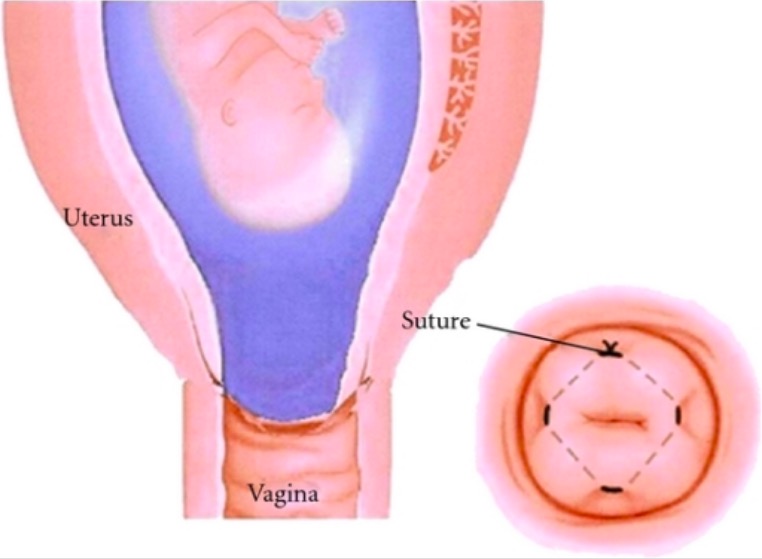
Cerclaje cervical

Cerclaje cervical:
La imagen más grande muestra un cérvix dilatado con membranas visibles en especuloscopía estéril. Se coloca una sutura de cerclaje circunferencialmente en forma de bolsa alrededor del cérvix.

Imagen: “Cervical cerclage” por Department of Obstetrics and Gynaecology, Al Wasl Hospital, Dubai 9115, UAE. Licencia: CC BY 4.0

Antecedentes de nacimiento prematuro indicado

  • Aspirina en EN Erythema nodosum is an immune-mediated panniculitis (inflammation of the subcutaneous fat) caused by a type IV (delayed-type) hypersensitivity reaction. It commonly manifests in young women as tender, erythematous nodules on the shins. Erythema Nodosum dosis bajas → reduce el riesgo de preeclampsia Preeclampsia A complication of pregnancy, characterized by a complex of symptoms including maternal hypertension and proteinuria with or without pathological edema. Symptoms may range between mild and severe. Pre-eclampsia usually occurs after the 20th week of gestation, but may develop before this time in the presence of trophoblastic disease. Hypertensive Pregnancy Disorders recurrente
  • Optimización preconcepcional de las condiciones médicas crónicas

Diagnóstico Diferencial

  • Falso trabajo de parto/contracciones de Braxton Hicks: contracciones uterinas sin cambios cervicales. Contracciones leves e irregulares son normales durante todo el embarazo. Las contracciones de Braxton Hicks no suelen aumentar en EN Erythema nodosum is an immune-mediated panniculitis (inflammation of the subcutaneous fat) caused by a type IV (delayed-type) hypersensitivity reaction. It commonly manifests in young women as tender, erythematous nodules on the shins. Erythema Nodosum intensidad ni en EN Erythema nodosum is an immune-mediated panniculitis (inflammation of the subcutaneous fat) caused by a type IV (delayed-type) hypersensitivity reaction. It commonly manifests in young women as tender, erythematous nodules on the shins. Erythema Nodosum duración, pero pueden producirse con mayor frecuencia a medida que aumenta la edad gestacional. No existe ninguna prueba o umbral claro para identificar quiénes progresarán al AL Amyloidosis verdadero trabajo de parto. Por lo tanto, a menudo se requiere una evaluación seriada para el diagnóstico. La deshidratación y la actividad prolongada se han asociado a un falso trabajo de parto.
  • Rotura prematura de membranas (RPM): ruptura de las membranas (corion y amnios) antes del inicio del trabajo de parto. Las pacientes suelen presentar una “descarga de líquido” procedente de la vagina Vagina The vagina is the female genital canal, extending from the vulva externally to the cervix uteri internally. The structures have sexual, reproductive, and urinary functions and a rich blood supply, mainly arising from the internal iliac artery. Vagina, Vulva, and Pelvic Floor: Anatomy. La diferencia clave entre la RPM y el trabajo de parto prematuro es la presencia de contracciones. Las contracciones estarán inicialmente ausentes en EN Erythema nodosum is an immune-mediated panniculitis (inflammation of the subcutaneous fat) caused by a type IV (delayed-type) hypersensitivity reaction. It commonly manifests in young women as tender, erythematous nodules on the shins. Erythema Nodosum la RPM, pero a menudo se desarrollan si hay infección. El trabajo de parto prematuro puede ser precipitado por la RPM. Las pacientes tienen un alto riesgo de infección intraamniótica ascendente una vez que las membranas se han roto.

Referencias

  1. Robinson, J. N., & Norwitz, E. R. (2025). Spontaneous preterm birth: Overview of risk factors and prognosis. UpToDate. Retrieved January 19, 2026, from https://www.uptodate.com/contents/spontaneous-preterm-birth-overview-of-risk-factors-and-prognosis
  2. Lockwood, C. J. (2025). Preterm labor: Clinical findings, diagnostic evaluation, and initial treatment. In Barss, V. A. (Ed.), UpToDate. Retrieved January 19, 2026, from https://www.uptodate.com/contents/preterm-labor-clinical-findings-diagnostic-evaluation-and-initial-treatment
  3. Lockwood, C. J. (2024). Spontaneous preterm birth: Pathogenesis. In Barss, V. A. (Ed.), UpToDate. Retrieved January 19, 2026, from https://www.uptodate.com/contents/spontaneous-preterm-birth-pathogenesis
  4. Berghella, V. (2025). Cervical insufficiency. In Barss, V. A. (Ed.), UpToDate. Retrieved January 19, 2026, from https://www.uptodate.com/contents/cervical-insufficiency
  5. American College of Obstetrics and Gynecology Committee on Obstetrics. (2023). ACOG Committee Opinion No. 455: Magnesium sulfate before anticipated preterm birth for neuroprotection. Retrieved January 19, 2026, from https://www.acog.org/clinical/clinical-guidance/committee-opinion/articles/2010/03/magnesium-sulfate-before-anticipated-preterm-birth-for-neuroprotection
  6. American College of Obstetrics and Gynecology Committee on Obstetrics. (2024). ACOG Committee Opinion No. 713: Antenatal corticosteroid therapy for fetal maturation. Retrieved January 19, 2026, from https://www.acog.org/clinical/clinical-guidance/committee-opinion/articles/2017/08/antenatal-corticosteroid-therapy-for-fetal-maturation 
  7. Suman, V. (2025). Preterm labor. In Luther, E. (Ed.) StatPearls. Retrieved January 19, 2026, from https://www.statpearls.com/articlelibrary/viewarticle/27706

¡Crea tu cuenta gratis o inicia una sesión para seguir leyendo!

Regístrate ahora y obtén acceso gratuito a Lecturio con páginas de concepto, videos médicos y cuestionarios para tu educación médica.

User Reviews

Details