
Domina Conceptos Médicos

Estudia para la escuela de medicina y tus examenes con Lecturio.

Síndrome de Wiskott-Aldrich

El síndrome de Wiskott-Aldrich, también conocido como síndrome de eczema-trombocitopenia-inmunodeficiencia, IMD2 IMD2 Wiskott-aldrich syndrome (WAS), also known as eczema-thrombocytopenia-immunodeficiency syndrome, IMD2, or immunodeficiency 2, is a rare genetic mixed disorder of B- and T-cell deficiency that follows an X-linked recessive inheritance pattern. It is caused by a WAS gene mutation that leads to impaired actin cytoskeleton, phagocytosis and chemotaxis, impaired platelet development, and, in general, a loss of humoral and cellular responses. Wiskott-Aldrich Syndrome o inmunodeficiencia 2, es un raro trastorno genético mixto de deficiencia de células B y T que sigue un patrón de herencia recesivo ligado al AL Amyloidosis cromosoma X. Es causado por una mutación del gen WAS que provoca una alteración del citoesqueleto de actina, de la fagocitosis y de la quimiotaxis, una alteración del desarrollo de las plaquetas y, en EN Erythema nodosum is an immune-mediated panniculitis (inflammation of the subcutaneous fat) caused by a type IV (delayed-type) hypersensitivity reaction. It commonly manifests in young women as tender, erythematous nodules on the shins. Erythema Nodosum general, una pérdida de las respuestas humoral y celular. El síndrome de Wiskott-Aldrich se presenta con una tríada clásica de eczema Eczema Atopic dermatitis, also known as eczema, is a chronic, relapsing, pruritic, inflammatory skin disease that occurs more frequently in children, although adults can also be affected. The condition is often associated with elevated serum levels of IgE and a personal or family history of atopy. Skin dryness, erythema, oozing, crusting, and lichenification are present. Atopic Dermatitis (Eczema), diátesis hemorrágica e infecciones oportunistas recurrentes, pero también conlleva un alto riesgo de desarrollo de autoinmunidad y malignidad. El tratamiento incluye el trasplante de células madre hematopoyéticas, la terapia de sustitución de inmunoglobulina, los LOS Neisseria antibióticos profilácticos y terapéuticos, y los LOS Neisseria esteroides sistémicos. Sin el trasplante de células madre hematopoyéticas el pronóstico no es bueno y la expectativa de vida se reduce.

Last updated: Dec 15, 2025
Editorial responsibility: Stanley Oiseth, Lindsay Jones, Evelin Maza

Etiología y Fisiopatología

Epidemiología

  • 1 de cada 100 000 nacimientos vivos en EN Erythema nodosum is an immune-mediated panniculitis (inflammation of the subcutaneous fat) caused by a type IV (delayed-type) hypersensitivity reaction. It commonly manifests in young women as tender, erythematous nodules on the shins. Erythema Nodosum los LOS Neisseria Estados Unidos
  • 110 en EN Erythema nodosum is an immune-mediated panniculitis (inflammation of the subcutaneous fat) caused by a type IV (delayed-type) hypersensitivity reaction. It commonly manifests in young women as tender, erythematous nodules on the shins. Erythema Nodosum 1 000 000 de hombres a nivel mundial
  • Se presenta casi exclusivamente en EN Erythema nodosum is an immune-mediated panniculitis (inflammation of the subcutaneous fat) caused by a type IV (delayed-type) hypersensitivity reaction. It commonly manifests in young women as tender, erythematous nodules on the shins. Erythema Nodosum los LOS Neisseria hombres debido a su patrón de herencia recesivo ligado al AL Amyloidosis cromosoma X

Etiología

  • Mutaciones en EN Erythema nodosum is an immune-mediated panniculitis (inflammation of the subcutaneous fat) caused by a type IV (delayed-type) hypersensitivity reaction. It commonly manifests in young women as tender, erythematous nodules on the shins. Erythema Nodosum el gen WAS del brazo corto del cromosoma X (Xp11.22-23)
  • El gen WAS codifica la proteína WASp (proteína del síndrome de Wiskott-Aldrich) que se expresa principalmente en EN Erythema nodosum is an immune-mediated panniculitis (inflammation of the subcutaneous fat) caused by a type IV (delayed-type) hypersensitivity reaction. It commonly manifests in young women as tender, erythematous nodules on the shins. Erythema Nodosum las células hematopoyéticas y provoca señales de activación defectuosas dependientes del citoesqueleto en EN Erythema nodosum is an immune-mediated panniculitis (inflammation of the subcutaneous fat) caused by a type IV (delayed-type) hypersensitivity reaction. It commonly manifests in young women as tender, erythematous nodules on the shins. Erythema Nodosum los LOS Neisseria linfocitos, presentación defectuosa de antígenos y migración de leucocitos.
  • Se han identificado más de 300 mutaciones en EN Erythema nodosum is an immune-mediated panniculitis (inflammation of the subcutaneous fat) caused by a type IV (delayed-type) hypersensitivity reaction. It commonly manifests in young women as tender, erythematous nodules on the shins. Erythema Nodosum el gen WAS, incluidas mutaciones sin sentido, mutaciones en EN Erythema nodosum is an immune-mediated panniculitis (inflammation of the subcutaneous fat) caused by a type IV (delayed-type) hypersensitivity reaction. It commonly manifests in young women as tender, erythematous nodules on the shins. Erythema Nodosum el sitio de empalme y pequeñas deleciones.
    • Síndrome de Wiskott-Aldrich clásico: causado por mutaciones que conducen a la ausencia o no funcionalidad de la expresión de WASp
    • Trombocitopenia ligada al AL Amyloidosis cromosoma X: causada por mutaciones que conducen a una expresión reducida pero parcialmente funcional de WASp
    • Neutropenia Neutropenia Neutrophils are an important component of the immune system and play a significant role in the eradication of infections. Low numbers of circulating neutrophils, referred to as neutropenia, predispose the body to recurrent infections or sepsis, though patients can also be asymptomatic. Neutropenia ligada al AL Amyloidosis cromosoma X: causada por mutaciones de ganancia de función en EN Erythema nodosum is an immune-mediated panniculitis (inflammation of the subcutaneous fat) caused by a type IV (delayed-type) hypersensitivity reaction. It commonly manifests in young women as tender, erythematous nodules on the shins. Erythema Nodosum el dominio de unión de la guanosina trifosfatasa (GTPasa)
    • Las mutaciones de puntos críticos (T45M, R86C y R211X) se asocian con fenotipos distintos.
    • Los LOS Neisseria defectos en EN Erythema nodosum is an immune-mediated panniculitis (inflammation of the subcutaneous fat) caused by a type IV (delayed-type) hypersensitivity reaction. It commonly manifests in young women as tender, erythematous nodules on the shins. Erythema Nodosum las moléculas CD43 CD43 A sialic acid-rich protein and an integral cell membrane mucin. It plays an important role in activation of T-lymphocytes. Wiskott-Aldrich Syndrome también se asocian al AL Amyloidosis síndrome de Wiskott-Aldrich.

Fisiopatología

  • La mutación del gen WAS da lugar a microtrombocitos (plaquetas pequeñas, defectuosas) que son eliminados por el bazo y/o el hígado, lo que da lugar a un menor recuento plaquetario → diátesis hemorrágica
  • Presentación de antígenos y señalización leucocitaria defectuosas → mayor susceptibilidad a las infecciones por patógenos oportunistas, más comúnmente en EN Erythema nodosum is an immune-mediated panniculitis (inflammation of the subcutaneous fat) caused by a type IV (delayed-type) hypersensitivity reaction. It commonly manifests in young women as tender, erythematous nodules on the shins. Erythema Nodosum el tracto respiratorio, el tracto gastrointestinal y la piel

Presentación Clínica

  • Tríada clásica (presente desde el nacimiento en EN Erythema nodosum is an immune-mediated panniculitis (inflammation of the subcutaneous fat) caused by a type IV (delayed-type) hypersensitivity reaction. It commonly manifests in young women as tender, erythematous nodules on the shins. Erythema Nodosum el 30% de los LOS Neisseria casos):
    • Eczema Eczema Atopic dermatitis, also known as eczema, is a chronic, relapsing, pruritic, inflammatory skin disease that occurs more frequently in children, although adults can also be affected. The condition is often associated with elevated serum levels of IgE and a personal or family history of atopy. Skin dryness, erythema, oozing, crusting, and lichenification are present. Atopic Dermatitis (Eczema) (80% de los LOS Neisseria casos)
    • Diátesis hemorrágica (como consecuencia de un bajo recuento plaquetario):
      • Petequias
      • Hematomas
      • Púrpura
      • Hemorragias nasales espontáneas
      • Diarrea sanguinolenta
    • Infecciones oportunistas recurrentes (generalmente por organismos encapsulados):
      • Streptococcus Streptococcus Streptococcus is one of the two medically important genera of gram-positive cocci, the other being Staphylococcus. Streptococci are identified as different species on blood agar on the basis of their hemolytic pattern and sensitivity to optochin and bacitracin. There are many pathogenic species of streptococci, including S. pyogenes, S. agalactiae, S. pneumoniae, and the viridans streptococci. Streptococcus pneumoniae (más comúnmente, otitis media)
      • Neisseria meningitidis Neisseria meningitidis A species of gram-negative, aerobic bacteria. It is a commensal and pathogen only of humans, and can be carried asymptomatically in the nasopharynx. When found in cerebrospinal fluid it is the causative agent of cerebrospinal meningitis. It is also found in venereal discharges and blood. There are at least 13 serogroups based on antigenic differences in the capsular polysaccharides; the ones causing most meningitis infections being a, b, c, y, and w-135. Each serogroup can be further classified by serotype, serosubtype, and immunotype. Neisseria
      • Haemophilus influenzae Haemophilus Influenzae A species of Haemophilus found on the mucous membranes of humans and a variety of animals. The species is further divided into biotypes I through viii. Haemophilus
      • También infecciones por candida Candida Candida is a genus of dimorphic, opportunistic fungi. Candida albicans is part of the normal human flora and is the most common cause of candidiasis. The clinical presentation varies and can include localized mucocutaneous infections (e.g., oropharyngeal, esophageal, intertriginous, and vulvovaginal candidiasis) and invasive disease (e.g., candidemia, intraabdominal abscess, pericarditis, and meningitis). Candida/Candidiasis en EN Erythema nodosum is an immune-mediated panniculitis (inflammation of the subcutaneous fat) caused by a type IV (delayed-type) hypersensitivity reaction. It commonly manifests in young women as tender, erythematous nodules on the shins. Erythema Nodosum las vías respiratorias, el tracto gastrointestinal o la piel
  • Mayor riesgo de manifestaciones autoinmunes (4070% de los LOS Neisseria casos, debido a un recuento elevado de eosinófilos), incluyendo:
    • Anemia Anemia Anemia is a condition in which individuals have low Hb levels, which can arise from various causes. Anemia is accompanied by a reduced number of RBCs and may manifest with fatigue, shortness of breath, pallor, and weakness. Subtypes are classified by the size of RBCs, chronicity, and etiology. Anemia: Overview and Types hemolítica autoinmune
    • Neutropenia Neutropenia Neutrophils are an important component of the immune system and play a significant role in the eradication of infections. Low numbers of circulating neutrophils, referred to as neutropenia, predispose the body to recurrent infections or sepsis, though patients can also be asymptomatic. Neutropenia
    • Vasculitis Vasculitis Inflammation of any one of the blood vessels, including the arteries; veins; and rest of the vasculature system in the body. Systemic Lupus Erythematosus
    • Enfermedad inflamatoria intestinal
    • Enfermedad renal
    • Artritis reumatoide
  • Mayor riesgo de neoplasias hematológicas (1020% de los LOS Neisseria casos, más comúnmente el linfoma de células B)
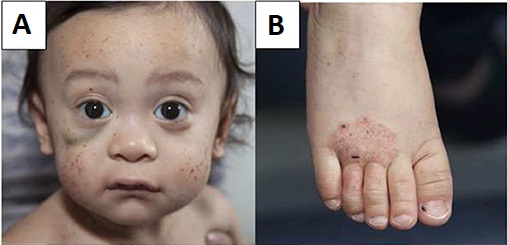
Síndrome de Wiskott-Aldrich: petequias, hematomas y eczemas

Paciente joven con síndrome de Wiskott-Aldrich que presenta múltiples petequias en la cara y un hematoma bajo el ojo derecho (A) y eczema en el pie (B)

Imagen: “Wiskott–Aldrich syndrome” por Michael H. Albert and Alexandra F. Freeman, on behalf of the Inborn Errors Working Party (IEWP) of the European Society for Blood and Marrow Transplantation (EBMT). Licencia: CC BY 4.0

Diagnóstico

  • Comprobar los LOS Neisseria niveles de inmunoglobulinas:
    • Niveles normales o bajos de IgG IgG The major immunoglobulin isotype class in normal human serum. There are several isotype subclasses of igg, for example, igg1, igg2a, and igg2b. Hypersensitivity Pneumonitis e IgM IgM A class of immunoglobulin bearing mu chains (immunoglobulin mu-chains). Igm can fix complement. The name comes from its high molecular weight and originally being called a macroglobulin. Immunoglobulins: Types and Functions (baja especificidad, ya que la IgG IgG The major immunoglobulin isotype class in normal human serum. There are several isotype subclasses of igg, for example, igg1, igg2a, and igg2b. Hypersensitivity Pneumonitis también puede estar elevada)
    • Aumento de los LOS Neisseria niveles de IgE IgE An immunoglobulin associated with mast cells. Overexpression has been associated with allergic hypersensitivity. Immunoglobulins: Types and Functions e IgA IgA Represents 15-20% of the human serum immunoglobulins, mostly as the 4-chain polymer in humans or dimer in other mammals. Secretory iga is the main immunoglobulin in secretions. Immunoglobulins: Types and Functions
  • Evaluar el hemograma:
    • Recuento plaquetario bajo de 20 000/mm3–50 000/mm3
    • Plaquetas pequeñas (microtrombocitopenia)
  • Pruebas genéticas para detectar la mutación del gen WAS confirman el diagnóstico
  • Pruebas opcionales adicionales:
    • Serología: disminución del recuento de células T y B
    • Las pruebas inmunológicas cutáneas pueden revelar hiposensibilidad o sensibilidad tardía.
    • Se observan niveles reducidos de WASp

Tratamiento

  • El trasplante de células madre hematopoyéticas es la única cura posible.
  • Medidas generales:
    • Para evitar las hemorragias cerebrales en EN Erythema nodosum is an immune-mediated panniculitis (inflammation of the subcutaneous fat) caused by a type IV (delayed-type) hypersensitivity reaction. It commonly manifests in young women as tender, erythematous nodules on the shins. Erythema Nodosum los LOS Neisseria niños, es necesario utilizar cascos protectores.
    • Los LOS Neisseria pacientes pueden beneficiarse de las transfusiones en EN Erythema nodosum is an immune-mediated panniculitis (inflammation of the subcutaneous fat) caused by a type IV (delayed-type) hypersensitivity reaction. It commonly manifests in young women as tender, erythematous nodules on the shins. Erythema Nodosum caso de trombocitopenia grave.
    • Los LOS Neisseria suplementos de hierro se recomiendan para la anemia Anemia Anemia is a condition in which individuals have low Hb levels, which can arise from various causes. Anemia is accompanied by a reduced number of RBCs and may manifest with fatigue, shortness of breath, pallor, and weakness. Subtypes are classified by the size of RBCs, chronicity, and etiology. Anemia: Overview and Types debida a la pérdida crónica de sangre.
    • Los LOS Neisseria esteroides tópicos o sistémicos se recomiendan para el eczema Eczema Atopic dermatitis, also known as eczema, is a chronic, relapsing, pruritic, inflammatory skin disease that occurs more frequently in children, although adults can also be affected. The condition is often associated with elevated serum levels of IgE and a personal or family history of atopy. Skin dryness, erythema, oozing, crusting, and lichenification are present. Atopic Dermatitis (Eczema) grave, pero deben emplearse con precaución debido a los LOS Neisseria efectos inmunosupresores.
    • Antibióticos profilácticos para prevenir la infección
    • Terapia de sustitución de inmunoglobulina, con preferencia a la inyección intravenosa en EN Erythema nodosum is an immune-mediated panniculitis (inflammation of the subcutaneous fat) caused by a type IV (delayed-type) hypersensitivity reaction. It commonly manifests in young women as tender, erythematous nodules on the shins. Erythema Nodosum lugar de la subcutánea debido al AL Amyloidosis mayor riesgo de hemorragia
    • El ácido acetilsalicílico y los LOS Neisseria antiinflamatorios no esteroideos (AINE) están contraindicados debido a sus efectos sobre la función plaquetaria.
  • Pronóstico:
    • El trasplante de células madre hematopoyéticas tiene una tasa de supervivencia del 90%.
    • Sin el trasplante de células madre hematopoyéticas, la expectativa de vida media es de 1520 años.

Diagnóstico Diferencial

Las siguientes condiciones son diagnósticos diferenciales para el síndrome de Wiskott-Aldrich:

  • Púrpura trombocitopénica idiopática (PTI): afección que se desarrolla de forma secundaria a la destrucción inmunomediada de las plaquetas, dando lugar a una trombocitopenia (recuento plaquetario < 150 X 10⁹/L). La afección puede ser primaria con una disminución aislada del recuento de plaquetas. Las causas secundarias son inducidas por fármacos o debidas a infecciones como el VIH o la hepatitis C Hepatitis C Hepatitis C is an infection of the liver caused by the hepatitis C virus (HCV). The infection can be transmitted through infectious blood or body fluids and may be transmitted during childbirth or through IV drug use or sexual intercourse. Hepatitis C virus can cause both acute and chronic hepatitis, ranging from a mild to a serious, lifelong illness including liver cirrhosis and hepatocellular carcinoma (HCC). Hepatitis C Virus. La púrpura trombocitopénica idiopática suele ser un diagnóstico de exclusión.
  • Aloinmunización plaquetaria en EN Erythema nodosum is an immune-mediated panniculitis (inflammation of the subcutaneous fat) caused by a type IV (delayed-type) hypersensitivity reaction. It commonly manifests in young women as tender, erythematous nodules on the shins. Erythema Nodosum neonatos: enfermedad caracterizada por un bajo recuento plaquetario que se produce en EN Erythema nodosum is an immune-mediated panniculitis (inflammation of the subcutaneous fat) caused by a type IV (delayed-type) hypersensitivity reaction. It commonly manifests in young women as tender, erythematous nodules on the shins. Erythema Nodosum los LOS Neisseria lactantes debido a los LOS Neisseria anticuerpos maternos dirigidos contra los LOS Neisseria aloantígenos de las plaquetas fetales.
  • Inmunodeficiencia combinada grave: la forma más grave de inmunodeficiencia primaria, la inmunodeficiencia combinada grave es un trastorno genético que implica una respuesta defectuosa de los LOS Neisseria anticuerpos debido a la implicación directa de los LOS Neisseria linfocitos B o a la activación inadecuada de los LOS Neisseria linfocitos B debido a la falta de funcionamiento de las células T auxiliares. Se presenta como infecciones oportunistas graves y recurrentes y se diagnostica mediante la reacción en EN Erythema nodosum is an immune-mediated panniculitis (inflammation of the subcutaneous fat) caused by a type IV (delayed-type) hypersensitivity reaction. It commonly manifests in young women as tender, erythematous nodules on the shins. Erythema Nodosum cadena de la polimerasa ( PCR PCR Polymerase chain reaction (PCR) is a technique that amplifies DNA fragments exponentially for analysis. The process is highly specific, allowing for the targeting of specific genomic sequences, even with minuscule sample amounts. The PCR cycles multiple times through 3 phases: denaturation of the template DNA, annealing of a specific primer to the individual DNA strands, and synthesis/elongation of new DNA molecules. Polymerase Chain Reaction (PCR)) cuantitativa y la citometría de flujo.
  • Púrpura trombocitopénica trombótica (PTT): una afección potencialmente mortal debida a una deficiencia congénita o a una deficiencia adquirida de ADAMTS-13, una metaloproteinasa que escinde los LOS Neisseria multímeros del factor von Willebrand (FvW). Estos grandes multímeros agregan entonces un número excesivo de plaquetas, lo que da lugar a una trombosis y a un mayor uso de las plaquetas, lo que conlleva a trombocitopenia.

Referencias

  1. Ochs, H. (2024). Wiskott-Aldrich syndrome. UpToDate. Retrieved November 26, 2024, from: https://www.uptodate.com/contents/wiskott-aldrich-syndrome
  2. Huynh, P. (2024). Wiskott-Aldrich Syndrome. Medscape. Retrieved November 26, 2024, from: https://emedicine.medscape.com/article/137015-overview
  3. Wiskott-Aldrich Syndrome: Medlineplus genetics. (n.d.-b). Retrieved November 26, 2024, from https://medlineplus.gov/genetics/condition/wiskott-aldrich-syndrome/#frequency
  4. Bohm, S., et al. (2023). Outcomes of hematopoietic stem cell gene therapy for Wiskott-Aldrich syndrome. Blood, 142(15), 1281-1292. https://doi.org/10.1182/blood.2022019117
  5. Jiang, Y., et al. (2023). Immunological features and treatment of Wiskott-Aldrich syndrome. Frontiers in Immunology, 14, 123456.
  6. Michels, A., et al. (2023). Excellent outcomes following hematopoietic cell transplantation for Wiskott-Aldrich syndrome. Blood, 135(23), 2094-2104. https://doi.org/10.1182/blood.2019002939
  7. Vallée, T., et al. (2024). Wiskott-Aldrich syndrome: A study of 577 patients defines the genotype as a predictive biomarker for disease severity. Blood, 143(24), 2504-2514. https://doi.org/10.1182/blood.2023021411
  8. Vallée, T., et al. (2024). Recent advances in understanding the pathophysiology of Wiskott-Aldrich syndrome. Blood, American Society of Hematology. https://doi.org/10.1182/blood-2008-12-115253

¡Crea tu cuenta gratis o inicia una sesión para seguir leyendo!

Regístrate ahora y obtén acceso gratuito a Lecturio con páginas de concepto, videos médicos y cuestionarios para tu educación médica.

User Reviews

Que tengas una sesión de estudio alegre y navideña 🎁 Ahorra 50% en todos los planes >>

Details