Domina Conceptos Médicos

Estudia para la escuela de medicina y tus examenes con Lecturio.

Reacción de Hipersensibilidad Tipo IV

La reacción de hipersensibilidad tipo IV, o hipersensibilidad retardada, es una respuesta mediada por células a la exposición de antígenos. La reacción implica a los LOS Neisseria linfocitos T, no a los LOS Neisseria anticuerpos, y se desarrolla durante varios días. Los LOS Neisseria linfocitos T previamente sensibilizados inician la defensa inmune, lo que provoca daño tisular. Los LOS Neisseria linfocitos T colaboradores activan un proceso mediado por citoquinas, mientras que los LOS Neisseria linfocitos T citotóxicos liberan directamente citotoxinas a las células infectadas o disfuncionales, provocando lisis celular. Las manifestaciones clínicas dependen del sistema implicado, por lo que las pruebas de diagnóstico se basan en EN Erythema nodosum is an immune-mediated panniculitis (inflammation of the subcutaneous fat) caused by a type IV (delayed-type) hypersensitivity reaction. It commonly manifests in young women as tender, erythematous nodules on the shins. Erythema Nodosum los LOS Neisseria antecedentes y los LOS Neisseria hallazgos. El tratamiento incluye el control de los LOS Neisseria efectos de la respuesta inmune con glucocorticoides y terapia inmunosupresora, al AL Amyloidosis mismo tiempo que se controlan las complicaciones asociadas a la enfermedad.

Last updated: Dec 15, 2025

Editorial responsibility: Stanley Oiseth, Lindsay Jones, Evelin Maza

Descripción General

  • Reacción de hipersensibilidad
    • Una respuesta “hiper” o exagerada a lo que deberían considerarse antígenos ambientales inofensivos
    • Los LOS Neisseria tipos I, II y III son reacciones inmediatas que se producen en EN Erythema nodosum is an immune-mediated panniculitis (inflammation of the subcutaneous fat) caused by a type IV (delayed-type) hypersensitivity reaction. It commonly manifests in young women as tender, erythematous nodules on the shins. Erythema Nodosum un plazo de 24 horas.
    • La reacción de tipo IV se desarrolla durante varios días.
  • Reacción de hipersensibilidad tipo IV
    • Reacción de hipersensibilidad medida por celulas
    • A diferencia de las otras reacciones de hipersensibilidad, que están mediadas por anticuerpos, en EN Erythema nodosum is an immune-mediated panniculitis (inflammation of the subcutaneous fat) caused by a type IV (delayed-type) hypersensitivity reaction. It commonly manifests in young women as tender, erythematous nodules on the shins. Erythema Nodosum la tipo IV intervienen linfocitos T efectores específicos para antígenos.
    • No se produce hasta 24–72 horas después de la exposición de un individuo sensibilizado (por tanto, es una hipersensibilidad retardada)
    • El retraso se debe al AL Amyloidosis tiempo necesario para la diferenciación de linfocitos T, la secreción de citoquinas y quimioquinas, y la acumulación de leucocitos en EN Erythema nodosum is an immune-mediated panniculitis (inflammation of the subcutaneous fat) caused by a type IV (delayed-type) hypersensitivity reaction. It commonly manifests in young women as tender, erythematous nodules on the shins. Erythema Nodosum el lugar.

Fisiopatología

Función de los LOS Neisseria linfocitos T

  • Las reacciones de hipersensibilidad de tipo IV no involucran anticuerpos.
  • En EN Erythema nodosum is an immune-mediated panniculitis (inflammation of the subcutaneous fat) caused by a type IV (delayed-type) hypersensitivity reaction. It commonly manifests in young women as tender, erythematous nodules on the shins. Erythema Nodosum cambio, involucran linfocitos T. Tipos principales:
    • Linfocitos T colaboradores
      • Linfocitos T CD4+/linfocitos colaboradores
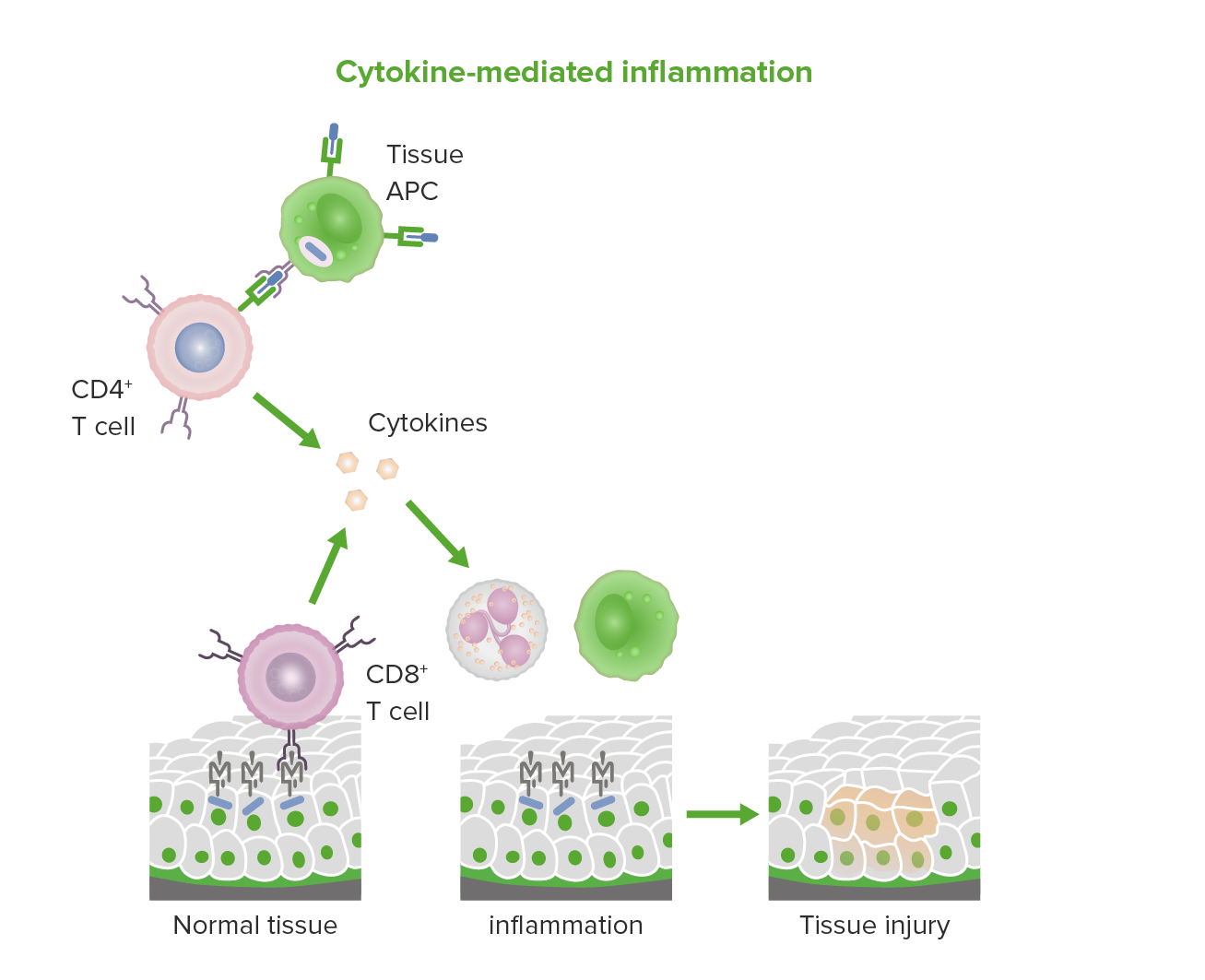
      • Regulan la respuesta inmune mediante la secreción de citoquinas que activan a los LOS Neisseria linfocitos B, a otros linfocitos T y a los LOS Neisseria fagocitos
    • Linfocitos T citotóxicos
      • Linfocitos T CD8+/linfocitos citotóxicos o asesinos
      • Matan directamente a las células o utilizan citoquinas en EN Erythema nodosum is an immune-mediated panniculitis (inflammation of the subcutaneous fat) caused by a type IV (delayed-type) hypersensitivity reaction. It commonly manifests in young women as tender, erythematous nodules on the shins. Erythema Nodosum una respuesta inmune

Patogénesis

Fase de sensibilización

  • Captación, procesamiento y presentación del antígeno
  • Las células dendríticas/macrófagos (células presentadoras de antígeno (CPA)) reconocen el antígeno → presentado a los LOS Neisseria linfocitos colaboradores y los LOS Neisseria linfocitos T son estimulados

Fase efectora

  • Mediada por citoquinas
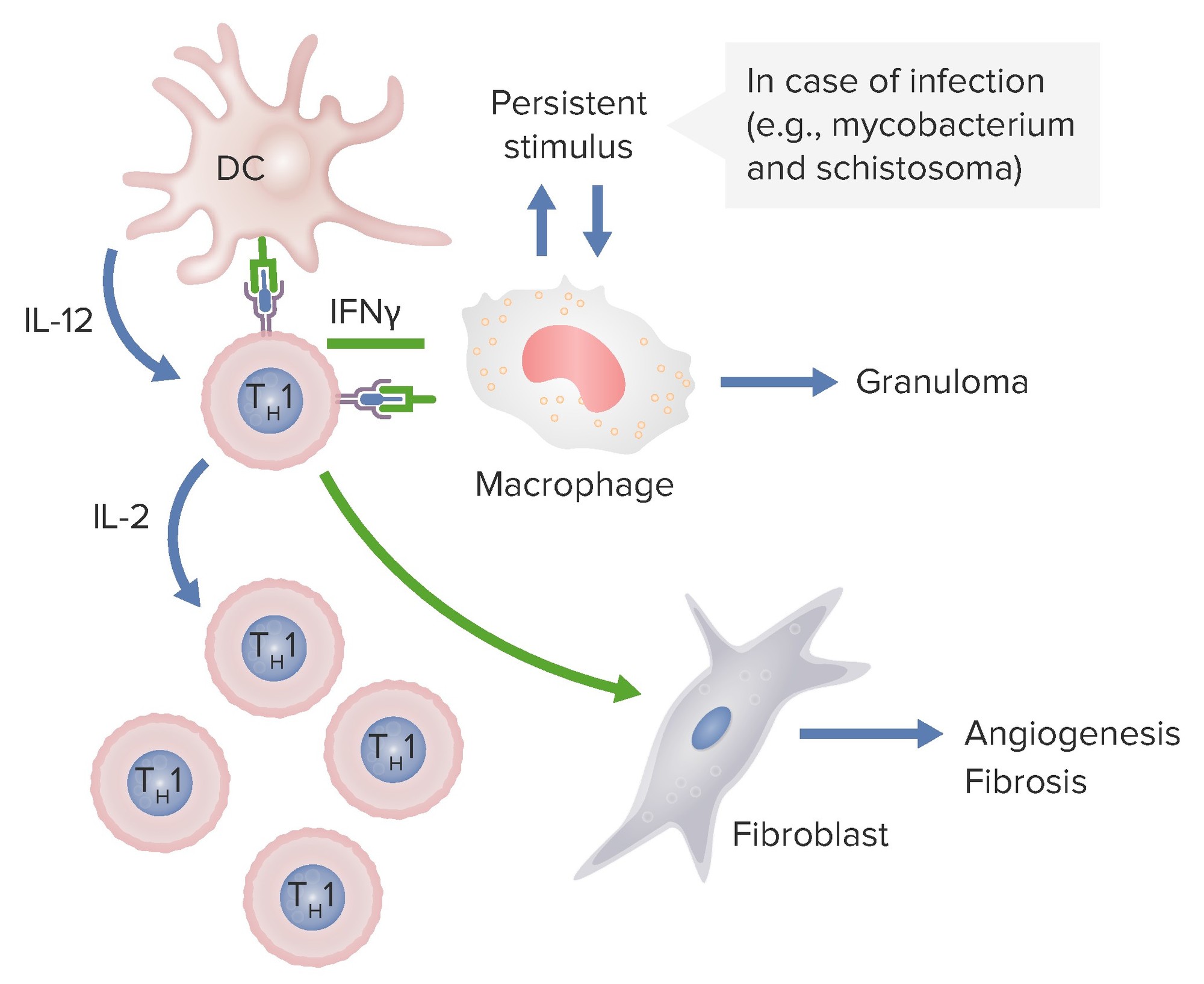
    • El antígeno ( en EN Erythema nodosum is an immune-mediated panniculitis (inflammation of the subcutaneous fat) caused by a type IV (delayed-type) hypersensitivity reaction. It commonly manifests in young women as tender, erythematous nodules on the shins. Erythema Nodosum la superficie de las CPA) es reconocido por los LOS Neisseria linfocitos colaboradores estimulados → las CPA producen interleucina (IL-12), que induce diferenciación a linfocitos Th1 Th1 A subset of helper-inducer T-lymphocytes which synthesize and secrete interleukin-2; interferon-gamma; and interleukin-12. Due to their ability to kill antigen-presenting cells and their lymphokine-mediated effector activity, th1 cells are associated with vigorous delayed-type hypersensitivity reactions. T cells: Types and Functions
    • Los LOS Neisseria linfocitos Th1 Th1 A subset of helper-inducer T-lymphocytes which synthesize and secrete interleukin-2; interferon-gamma; and interleukin-12. Due to their ability to kill antigen-presenting cells and their lymphokine-mediated effector activity, th1 cells are associated with vigorous delayed-type hypersensitivity reactions. T cells: Types and Functions producen
      • IL-2: aumenta la producción de linfocitos Th1 Th1 A subset of helper-inducer T-lymphocytes which synthesize and secrete interleukin-2; interferon-gamma; and interleukin-12. Due to their ability to kill antigen-presenting cells and their lymphokine-mediated effector activity, th1 cells are associated with vigorous delayed-type hypersensitivity reactions. T cells: Types and Functions
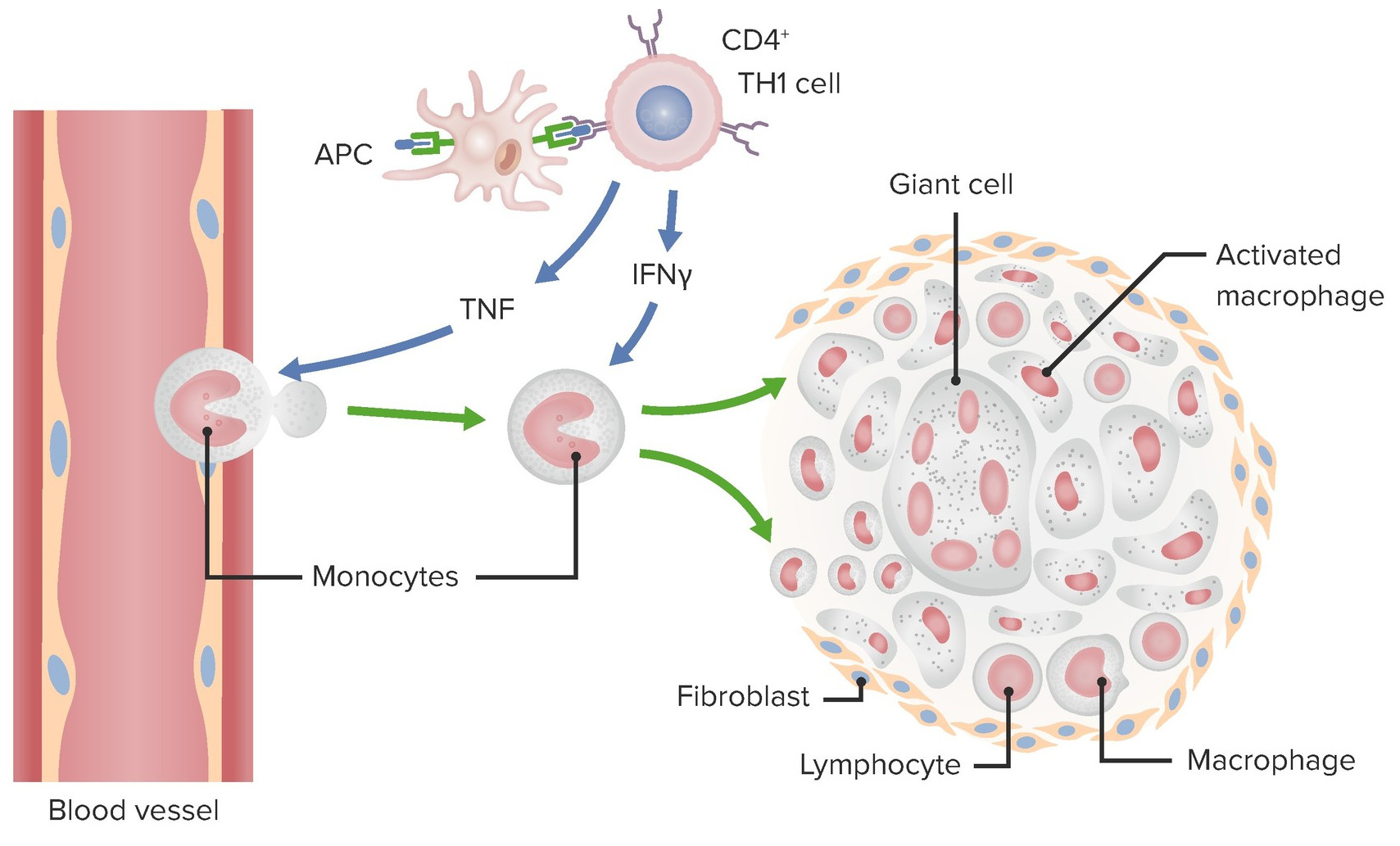
      • Interferón-gamma: recluta macrófagos
      • Factor de necrosis Necrosis The death of cells in an organ or tissue due to disease, injury or failure of the blood supply. Ischemic Cell Damage tumoral ( TNF TNF Tumor necrosis factor (TNF) is a major cytokine, released primarily by macrophages in response to stimuli. The presence of microbial products and dead cells and injury are among the stimulating factors. This protein belongs to the TNF superfamily, a group of ligands and receptors performing functions in inflammatory response, morphogenesis, and cell proliferation. Tumor Necrosis Factor (TNF), por sus siglas en EN Erythema nodosum is an immune-mediated panniculitis (inflammation of the subcutaneous fat) caused by a type IV (delayed-type) hypersensitivity reaction. It commonly manifests in young women as tender, erythematous nodules on the shins. Erythema Nodosum inglés): aumenta la permeabilidad vascular y recluta más leucocitos
    • Liberación de mediadores inflamatorios → daño celular, luego lesión tisular.
    • Estimulación antigénica persistente → formación de granulomas Granulomas A relatively small nodular inflammatory lesion containing grouped mononuclear phagocytes, caused by infectious and noninfectious agents. Sarcoidosis
      • El antígeno no pudo ser fagocitado, por lo que el sistema inmunológico intenta “encapsular la zona”.
      • Los LOS Neisseria macrófagos se vuelven alargados (epitelioides) y pueden fusionarse (célula gigante de Langhans).
      • Se reclutan más linfocitos, con fibroblastos que hacen una “formación encapsulante en forma de bola”.
  • Citotoxicidad celular directa: Los LOS Neisseria linfocitos T CD8+/citotóxicos liberan citotoxinas → matan a las células diana → lesión tisular

Presentación Clínica

Dermatitis Dermatitis Any inflammation of the skin. Atopic Dermatitis (Eczema) de contacto alérgica

  • Etiología: hiedra venenosa (antígeno: uroshiol), níquel, perfume, jabón, látex
  • Reacción máxima en EN Erythema nodosum is an immune-mediated panniculitis (inflammation of the subcutaneous fat) caused by a type IV (delayed-type) hypersensitivity reaction. It commonly manifests in young women as tender, erythematous nodules on the shins. Erythema Nodosum 48 a 72 horas
  • Erupción pruriginosa, puede ser papular y/o vesicular
  • Puede extenderse a otras partes con la transferencia de antígenos por contacto

Tuberculina

  • Inyección intradérmica de tuberculina, un derivado proteico purificado (PPD, por sus siglas en EN Erythema nodosum is an immune-mediated panniculitis (inflammation of the subcutaneous fat) caused by a type IV (delayed-type) hypersensitivity reaction. It commonly manifests in young women as tender, erythematous nodules on the shins. Erythema Nodosum inglés) del bacilo tuberculoso
  • Reacción localizada tipo IV en EN Erythema nodosum is an immune-mediated panniculitis (inflammation of the subcutaneous fat) caused by a type IV (delayed-type) hypersensitivity reaction. It commonly manifests in young women as tender, erythematous nodules on the shins. Erythema Nodosum el lugar de la inoculación en EN Erythema nodosum is an immune-mediated panniculitis (inflammation of the subcutaneous fat) caused by a type IV (delayed-type) hypersensitivity reaction. It commonly manifests in young women as tender, erythematous nodules on the shins. Erythema Nodosum 24–72 horas
  • A grandes rasgos se ve VE Ventilation: Mechanics of Breathing como un nódulo firme e hinchado
  • La reacción es generalmente mínima y de corta duración

Enfermedades granulomatosas

  • El tiempo máximo de reacción es de 21–28 días
  • Ejemplos:
    • Infecciones que causan presencia persistente de antígenos
      • Tuberculosis Tuberculosis Tuberculosis (TB) is an infectious disease caused by Mycobacterium tuberculosis complex bacteria. The bacteria usually attack the lungs but can also damage other parts of the body. Approximately 30% of people around the world are infected with this pathogen, with the majority harboring a latent infection. Tuberculosis spreads through the air when a person with active pulmonary infection coughs or sneezes. Tuberculosis ( Mycobacterium tuberculosis Mycobacterium tuberculosis Tuberculosis (TB) is an infectious disease caused by Mycobacterium tuberculosis complex bacteria. The bacteria usually attack the lungs but can also damage other parts of the body. Approximately 30% of people around the world are infected with this pathogen, with the majority harboring a latent infection. Tuberculosis spreads through the air when a person with active pulmonary infection coughs or sneezes. Tuberculosis): síntomas pulmonares (puede tener manifestaciones extratorácicas)
      • Lepra (M. leprae): lesiones cutáneas crónicas y pérdida sensorial
    • Sarcoidosis Sarcoidosis Sarcoidosis is a multisystem inflammatory disease that causes noncaseating granulomas. The exact etiology is unknown. Sarcoidosis usually affects the lungs and thoracic lymph nodes, but it can also affect almost every system in the body, including the skin, heart, and eyes, most commonly. Sarcoidosis
      • El estímulo exacto no está claro, probable infección o desencadenante ambiental
      • Síntomas pulmonares (también tiene manifestaciones extratorácicas)
    • Enfermedad de Crohn ( colitis Colitis Inflammation of the colon section of the large intestine, usually with symptoms such as diarrhea (often with blood and mucus), abdominal pain, and fever. Pseudomembranous Colitis granulomatosa)
      • Dolor Dolor Inflammation abdominal, diarrea con o sin sangrado y pérdida de peso
      • Puede provocar fístulas y abscesos intestinales

Miocarditis autoinmune

  • Enfermedad inflamatoria del músculo cardíaco
  • Se origina sobre todo de la infección viral cardiotrópica, especialmente por el Coxsackievirus Coxsackievirus Coxsackievirus is a member of a family of viruses called Picornaviridae and the genus Enterovirus. Coxsackieviruses are single-stranded, positive-sense RNA viruses, and are divided into coxsackie group A and B viruses. Both groups of viruses cause upper respiratory infections, rashes, aseptic meningitis, or encephalitis. Coxsackievirus B3
  • Presentación: infección respiratoria superior reciente, mialgias, insuficiencia cardíaca

Diabetes Diabetes Diabetes mellitus (DM) is a metabolic disease characterized by hyperglycemia and dysfunction of the regulation of glucose metabolism by insulin. Type 1 DM is diagnosed mostly in children and young adults as the result of autoimmune destruction of β cells in the pancreas and the resulting lack of insulin. Type 2 DM has a significant association with obesity and is characterized by insulin resistance. Diabetes Mellitus mellitus tipo I

  • Los LOS Neisseria linfocitos T median la destrucción de las células beta en EN Erythema nodosum is an immune-mediated panniculitis (inflammation of the subcutaneous fat) caused by a type IV (delayed-type) hypersensitivity reaction. It commonly manifests in young women as tender, erythematous nodules on the shins. Erythema Nodosum los LOS Neisseria islotes pancreáticos
  • Presentación: pérdida de peso, poliuria, polidipsia, polifagia, infecciones frecuentes
  • Cetoacidosis diabética:
    • Complicación potencialmente mortal
    • Puede ser la primera presentación en EN Erythema nodosum is an immune-mediated panniculitis (inflammation of the subcutaneous fat) caused by a type IV (delayed-type) hypersensitivity reaction. It commonly manifests in young women as tender, erythematous nodules on the shins. Erythema Nodosum algunos pacientes

Hipersensibilidad medicamentosa

  • Inicio retardado, normalmente 48–72 horas después de la exposición al AL Amyloidosis medicamento
  • Reacciones de hipersensibilidad medicamentosa retardada más peligrosas:
    • Síndrome de Stevens-Johnson/necrólisis epidérmica tóxica (SSJ/NET, por sus siglas en EN Erythema nodosum is an immune-mediated panniculitis (inflammation of the subcutaneous fat) caused by a type IV (delayed-type) hypersensitivity reaction. It commonly manifests in young women as tender, erythematous nodules on the shins. Erythema Nodosum inglés):
      • Dermatitis Dermatitis Any inflammation of the skin. Atopic Dermatitis (Eczema) ampollosa severa, fiebre; signo de Nikolsky
      • Pone en EN Erythema nodosum is an immune-mediated panniculitis (inflammation of the subcutaneous fat) caused by a type IV (delayed-type) hypersensitivity reaction. It commonly manifests in young women as tender, erythematous nodules on the shins. Erythema Nodosum peligro la vida
      • Medicamentos comunes: alopurinol, antiepilépticos, sulfonamidas antibacterianas
    • Erupción medicamentosa con eosinofilia y síntomas sistémicos/síndrome de hipersensibilidad inducida por medicamentos:
      • Erupción, fiebre y falla multiorgánica
      • Hígado: órgano más comúnmente involucrado
      • Involucrado en EN Erythema nodosum is an immune-mediated panniculitis (inflammation of the subcutaneous fat) caused by a type IV (delayed-type) hypersensitivity reaction. It commonly manifests in young women as tender, erythematous nodules on the shins. Erythema Nodosum el uso de varios medicamentos antiepilépticos

Síndrome de Guillain-Barré

  • Post-infección (a menudo por Campylobacter jejuni Campylobacter jejuni A species of bacteria that resemble small tightly coiled spirals. Its organisms are known to cause abortion in sheep and fever and enteritis in man and may be associated with enteric diseases of calves, lambs, and other animals. Campylobacter o una enfermedad viral)
  • Una enfermedad respiratoria o gastrointestinal precede por 3–4 semanas a la aparición.
  • Reacciones inmunológicas dirigidas contra la cápsula de C. jejuni:
    • Reacción cruzada con el gangliósido de la mielina (mimetismo molecular) → daño neuronal
  • Polineuropatía desmielinizante aguda:
    • Presentación más común
    • Debilidad inicial simétrica de las extremidades que evoluciona hacia una parálisis ascendente
  • En EN Erythema nodosum is an immune-mediated panniculitis (inflammation of the subcutaneous fat) caused by a type IV (delayed-type) hypersensitivity reaction. It commonly manifests in young women as tender, erythematous nodules on the shins. Erythema Nodosum el 25% de los LOS Neisseria pacientes, debilidad muscular respiratoria → insuficiencia respiratoria
Enfermedad Antígeno diana Efectos
Dermatitis Dermatitis Any inflammation of the skin. Atopic Dermatitis (Eczema) de contacto alérgica Productos químicos ambientales como el urushiol Urushiol Toxicology of Plants (de la hiedra venenosa y el roble venenoso), metales (e.g., níquel), medicamentos tópicos Necrosis Necrosis The death of cells in an organ or tissue due to disease, injury or failure of the blood supply. Ischemic Cell Damage epidérmica, inflamación, erupción cutánea y ampollas
Miocarditis autoinmune Proteína de la cadena pesada de la miosina Cardiomiopatía
Diabetes Diabetes Diabetes mellitus (DM) is a metabolic disease characterized by hyperglycemia and dysfunction of the regulation of glucose metabolism by insulin. Type 1 DM is diagnosed mostly in children and young adults as the result of autoimmune destruction of β cells in the pancreas and the resulting lack of insulin. Type 2 DM has a significant association with obesity and is characterized by insulin resistance. Diabetes Mellitus mellitus tipo I Proteínas de las células beta pancreáticas (posiblemente insulina, glutamato descarboxilasa) Insulitis, destrucción de células beta
Granulomas Granulomas A relatively small nodular inflammatory lesion containing grouped mononuclear phagocytes, caused by infectious and noninfectious agents. Sarcoidosis Varios, dependiendo de la enfermedad subyacente Lesión encapsulada que contiene macrófagos y otras células
Algunas neuropatías periféricas Antígeno de células de Schwann Neuritis, parálisis
Tiroiditis de Hashimoto Antígeno de tiroglobulina Hipotiroidismo, bocio, timitis folicular
Enfermedad inflamatoria intestinal Microbiota entérica y/o autoantígenos Hiperactivación de los LOS Neisseria linfocitos T, liberación de citoquinas, reclutamiento de macrófagos y otras células inmunológicas, inflamación
Esclerosis múltiple Antígenos de la mielina (e.g., proteína básica de la mielina) Destrucción de la mielina, inflamación
Artritis reumatoide Posiblemente colágeno y/o auto-proteínas citrulinadas Artritis crónica, inflamación, destrucción del cartílago articular y del hueso
Reacción a la tuberculina (prueba de Mantoux) Tuberculina La induración y el eritema alrededor del lugar de la inyección indican una exposición previa
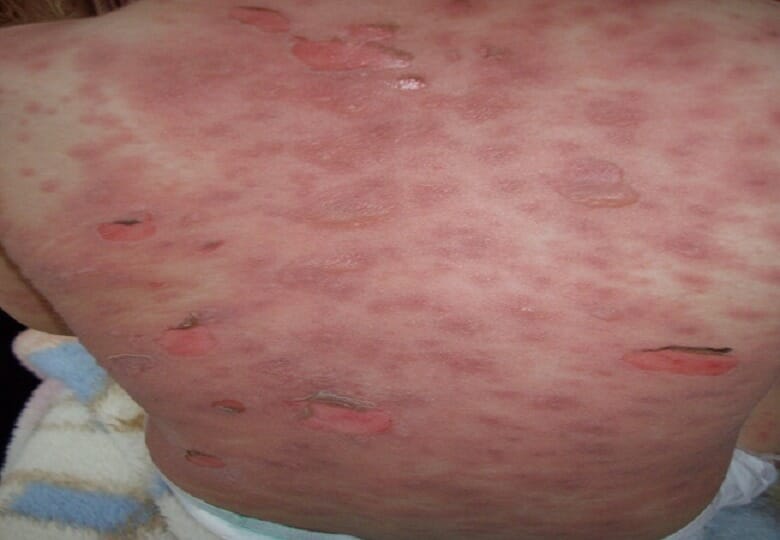
A case of Steven-Johnson syndrome after antibiotic use showing erythematous rash with flaccid blisters

Un caso de síndrome de Steven-Johnson después del uso de antibióticos que muestra erupción eritematosa con ampollas flácidas

Imagen: “Erythematous rash with flaccid blisters affecting the trunk” por Neila Fathallah et al. Licencia: CC BY 4.0

Diagnóstico y Tratamiento

Dermatitis Dermatitis Any inflammation of the skin. Atopic Dermatitis (Eczema) de contacto alérgica

  • Diagnóstico: Prueba del parche
    • Alérgeno fijado en EN Erythema nodosum is an immune-mediated panniculitis (inflammation of the subcutaneous fat) caused by a type IV (delayed-type) hypersensitivity reaction. It commonly manifests in young women as tender, erythematous nodules on the shins. Erythema Nodosum un parche y aplicado en EN Erythema nodosum is an immune-mediated panniculitis (inflammation of the subcutaneous fat) caused by a type IV (delayed-type) hypersensitivity reaction. It commonly manifests in young women as tender, erythematous nodules on the shins. Erythema Nodosum la piel (espalda o brazo)
    • Leer después de 2 días y en EN Erythema nodosum is an immune-mediated panniculitis (inflammation of the subcutaneous fat) caused by a type IV (delayed-type) hypersensitivity reaction. It commonly manifests in young women as tender, erythematous nodules on the shins. Erythema Nodosum el día 4 o 5
    • Resultado positivo: eritema, pápulas, vesículas
  • Tratamiento:
    • Evitar el alérgeno
    • Antihistamínicos, glucocorticoides tópicos/sistémicos dependiendo de la severidad
    • Inhibidores de la calcineurina (p. ej., tacrolimus Tacrolimus A macrolide isolated from the culture broth of a strain of streptomyces tsukubaensis that has strong immunosuppressive activity in vivo and prevents the activation of T-lymphocytes in response to antigenic or mitogenic stimulation in vitro. Immunosuppressants) como agentes ahorradores de esteroides para casos crónicos

Tuberculosis Tuberculosis Tuberculosis (TB) is an infectious disease caused by Mycobacterium tuberculosis complex bacteria. The bacteria usually attack the lungs but can also damage other parts of the body. Approximately 30% of people around the world are infected with this pathogen, with the majority harboring a latent infection. Tuberculosis spreads through the air when a person with active pulmonary infection coughs or sneezes. Tuberculosis

  • Diagnóstico:
    • Prueba de tuberculina positiva
    • Radiografía de tórax: infiltración focal en EN Erythema nodosum is an immune-mediated panniculitis (inflammation of the subcutaneous fat) caused by a type IV (delayed-type) hypersensitivity reaction. It commonly manifests in young women as tender, erythematous nodules on the shins. Erythema Nodosum lóbulo(s) superior(es)
    • Frotis de bacilos ácido-alcohol resistentes en EN Erythema nodosum is an immune-mediated panniculitis (inflammation of the subcutaneous fat) caused by a type IV (delayed-type) hypersensitivity reaction. It commonly manifests in young women as tender, erythematous nodules on the shins. Erythema Nodosum esputo y cultivo de micobacterias
    • Pruebas moleculares
  • Tratamiento: isoniazida, rifampicina, etambutol, pirazinamida (régimen básico)

Lepra

  • Diagnóstico:
    • Biopsia de piel, frotis de piel (descartar bacilos ácido-alcohol resistentes)
    • Reacción en EN Erythema nodosum is an immune-mediated panniculitis (inflammation of the subcutaneous fat) caused by a type IV (delayed-type) hypersensitivity reaction. It commonly manifests in young women as tender, erythematous nodules on the shins. Erythema Nodosum cadena de la polimerasa ( PCR PCR Polymerase chain reaction (PCR) is a technique that amplifies DNA fragments exponentially for analysis. The process is highly specific, allowing for the targeting of specific genomic sequences, even with minuscule sample amounts. The PCR cycles multiple times through 3 phases: denaturation of the template DNA, annealing of a specific primer to the individual DNA strands, and synthesis/elongation of new DNA molecules. Polymerase Chain Reaction (PCR))
  • Tratamiento:
    • Primera línea: dapsona, rifampicina, clofazimina

Sarcoidosis Sarcoidosis Sarcoidosis is a multisystem inflammatory disease that causes noncaseating granulomas. The exact etiology is unknown. Sarcoidosis usually affects the lungs and thoracic lymph nodes, but it can also affect almost every system in the body, including the skin, heart, and eyes, most commonly. Sarcoidosis

  • Diagnóstico:
    • Prueba de tuberculina negativa
    • Radiografía de tórax: inicialmente con adenopatías hiliares bilaterales, seguidas de opacidades reticulares
    • Biopsia (transbronquial o de pulmón/ganglio linfático): granuloma no caseificante
  • Tratamiento:
    • Dependiendo de los LOS Neisseria síntomas, el tratamiento puede ser desde observación hasta esteroides y terapia inmunosupresora

Enfermedad de Crohn

  • Diagnóstico:
    • Serie gastrointestinal superior con seguimiento del intestino delgado: puede mostrar el signo de la “cuerda” (luz intestinal estrecha)
    • Ileocolonoscopia con biopsia: segmentos de intestino de apariencia normal interrumpidos por grandes áreas afectadas por la enfermedad; se observa preservación del recto
    • Patología: ulceraciones focales, con granulomas Granulomas A relatively small nodular inflammatory lesion containing grouped mononuclear phagocytes, caused by infectious and noninfectious agents. Sarcoidosis observados en EN Erythema nodosum is an immune-mediated panniculitis (inflammation of the subcutaneous fat) caused by a type IV (delayed-type) hypersensitivity reaction. It commonly manifests in young women as tender, erythematous nodules on the shins. Erythema Nodosum el 30%.
  • Tratamiento:
    • Enfermedad leve: glucocorticoides, 5-aminosalicilatos
    • Enfermedad moderada a severa:
      • Inmunomoduladores (p. ej., azatioprina, metotrexato, vedolizumab)
      • Inhibidores del factor de necrosis Necrosis The death of cells in an organ or tissue due to disease, injury or failure of the blood supply. Ischemic Cell Damage tumoral alfa (p. ej., infliximab Infliximab A chimeric monoclonal antibody to tnf-alpha that is used in the treatment of rheumatoid arthritis; ankylosing spondylitis; psoriatic arthritis and Crohn’s disease. Disease-Modifying Antirheumatic Drugs (DMARDs), adalimumab Adalimumab A humanized monoclonal antibody that binds specifically to tnf-alpha and blocks its interaction with endogenous tnf receptors to modulate inflammation. It is used in the treatment of rheumatoid arthritis; psoriatic arthritis; Crohn’s disease and ulcerative colitis. Disease-Modifying Antirheumatic Drugs (DMARDs))
      • Inhibidores de las Janus cinasas (JAK) (p. ej., upadacitinib)
    • Cirugía de perforación intestinal, obstrucción, fístula entérica refractaria

Miocarditis autoinmune

  • Diagnóstico:
    • Se sospecha si hay signos de infarto al AL Amyloidosis miocardio (cambios en EN Erythema nodosum is an immune-mediated panniculitis (inflammation of the subcutaneous fat) caused by a type IV (delayed-type) hypersensitivity reaction. It commonly manifests in young women as tender, erythematous nodules on the shins. Erythema Nodosum el electrocardiograma ( ECG ECG An electrocardiogram (ECG) is a graphic representation of the electrical activity of the heart plotted against time. Adhesive electrodes are affixed to the skin surface allowing measurement of cardiac impulses from many angles. The ECG provides 3-dimensional information about the conduction system of the heart, the myocardium, and other cardiac structures. Electrocardiogram (ECG)), elevación de las enzimas cardíacas) pero no hay factores de riesgo cardiovascular y el angiograma coronario es normal
    • Ecocardiograma: la disfunción sistólica es generalmente global
    • Resonancia magnética (RM) cardíaca: edema Edema Edema is a condition in which excess serous fluid accumulates in the body cavity or interstitial space of connective tissues. Edema is a symptom observed in several medical conditions. It can be categorized into 2 types, namely, peripheral (in the extremities) and internal (in an organ or body cavity). Edema miocárdico (intensidad de señal alta: necrosis Necrosis The death of cells in an organ or tissue due to disease, injury or failure of the blood supply. Ischemic Cell Damage presente)
    • Biopsia endomiocárdica solo si los LOS Neisseria resultados cambian el tratamiento
  • Tratamiento:
    • Tratar las secuelas (insuficiencia cardíaca, arritmia)

Diabetes Diabetes Diabetes mellitus (DM) is a metabolic disease characterized by hyperglycemia and dysfunction of the regulation of glucose metabolism by insulin. Type 1 DM is diagnosed mostly in children and young adults as the result of autoimmune destruction of β cells in the pancreas and the resulting lack of insulin. Type 2 DM has a significant association with obesity and is characterized by insulin resistance. Diabetes Mellitus mellitus tipo I

  • Diagnóstico: las pruebas de laboratorio incluyen hemoglobina A1c, panel metabólico
  • Tratamiento: insulina

Hipersensibilidad medicamentosa

  • Diagnóstico:
    • Clínica; hallazgos físicos y antecedentes de exposición a medicamentos
    • Erupción medicamentosa con eosinofilia y síntomas sistémicos, normalmente con un periodo más largo entre la toma del medicamento y los LOS Neisseria síntomas
    • Biopsia de piel: dermatitis Dermatitis Any inflammation of the skin. Atopic Dermatitis (Eczema) de interfase, cambios eczematosos (Erupción medicamentosa con eosinofilia y síntomas sistémicos), necrosis Necrosis The death of cells in an organ or tissue due to disease, injury or failure of the blood supply. Ischemic Cell Damage de queratinocitos, bullas subepidérmicas (SSJ)
  • Tratamiento:
    • Retirar el medicamento causante y terapia de soporte
    • Glucocorticoides según necesidad

Síndrome de Guillain-Barré

  • Diagnóstico:
    • Punción lumbar: proteínas elevadas en EN Erythema nodosum is an immune-mediated panniculitis (inflammation of the subcutaneous fat) caused by a type IV (delayed-type) hypersensitivity reaction. It commonly manifests in young women as tender, erythematous nodules on the shins. Erythema Nodosum líquido cefalorraquídeo
    • Electromiografía y estudios nerviosos: polineuropatía desmielinizante (disminución de la velocidad de conducción nerviosa en EN Erythema nodosum is an immune-mediated panniculitis (inflammation of the subcutaneous fat) caused by a type IV (delayed-type) hypersensitivity reaction. It commonly manifests in young women as tender, erythematous nodules on the shins. Erythema Nodosum los LOS Neisseria nervios motores y sensitivos)
    • Prueba de función pulmonar: patrón restrictivo
  • Tratamiento:
    • Inmunoglobulina intravenosa, plasmaféresis
    • Ventilación mecánica de ser necesaria

Referencias

  1. Agrawal, A., & Singh, P. (2024). Immune complex-mediated diseases: Pathophysiology and management. Journal of Clinical Immunology, 44(2), 155-168.
  2. King, T., Flaherty, K., & Hollingsworth, H. (2024). Clinical manifestations and diagnosis of pulmonary sarcoidosis. UpToDate. Retrieved November 23, 2024, from https://www.uptodate.com/contents/clinical-manifestations-and-diagnosis-of-pulmonary-sarcoidosis
  3. Kumar, V., Abbas, A. K., & Aster, J. C. (2021). Robbins and Cotran Pathologic Basis of Disease (10th ed.). Elsevier.
  4. Pichler, W. J., Adkinson, N. F., & Feldweg, A. (2024). Drug hypersensitivity: Classification and clinical features. UpToDate. Retrieved November 23, 2024, from https://www.uptodate.com/contents/drug-hypersensitivity-classification-and-clinical-features
  5. Vaillant, A., Zulfiqar, H., & Ramphul, K. (2023). Delayed hypersensitivity reactions. StatPearls. Retrieved November 23, 2024, from https://www.ncbi.nlm.nih.gov/books/NBK519023/
  6. Zeldin, R. K., & Schwartz, M. (2024). Immunology Made Ridiculously Simple. (4th ed.). MedMaster Inc.
  7. Ziegler, S. F., & Stoeckle, C. (2023). T cell biology and the pathogenesis of type IV hypersensitivity. Nature Reviews Immunology, 23(5), 321-334.
  8. Brod, B. A. (2023). Management of allergic contact dermatitis in adults. In J. Fowler & R. Corona (Eds.), UpToDate. Retrieved November 23, 2024, from https://www.uptodate.com/contents/management-of-allergic-contact-dermatitis-in-adults
  9. Cohen, S., & Reddy, V. (2024). Overview of the Janus kinase inhibitors for rheumatologic and other inflammatory disorders. In E. W. St Clair & S. M. Case (Eds.), UpToDate. Retrieved November 23, 2024, from https://www.uptodate.com/contents/overview-of-the-janus-kinase-inhibitors-for-rheumatologic-and-other-inflammatory-disorders

¡Crea tu cuenta gratis o inicia una sesión para seguir leyendo!

Regístrate ahora y obtén acceso gratuito a Lecturio con páginas de concepto, videos médicos y cuestionarios para tu educación médica.

User Reviews

Que tengas una sesión de estudio alegre y navideña 🎁 Ahorra 50% en todos los planes >>

Details