Domina Conceptos Médicos

Estudia para la escuela de medicina y tus examenes con Lecturio.

Leucemia Linfoblástica Aguda

La leucemia/linfoma linfoblástico agudo son neoplasias malignas hematológicas caracterizadas por la proliferación descontrolada de células precursoras linfoides. La leucemia/linfoma linfoblástico agudo, son las formas más comunes de cáncer que afectan a los LOS Neisseria niños, muestran la presencia de un aumento de linfoblastos. En EN Erythema nodosum is an immune-mediated panniculitis (inflammation of the subcutaneous fat) caused by a type IV (delayed-type) hypersensitivity reaction. It commonly manifests in young women as tender, erythematous nodules on the shins. Erythema Nodosum la leucemia/linfoma linfoblástico agudo, los LOS Neisseria linfoblastos reemplazan la médula ósea normal, eventualmente ingresan a la circulación e infiltran otros órganos. La presentación clínica incluye fatiga, hemorragia, fiebre e infecciones, todas ellas relacionadas con anemia Anemia Anemia is a condition in which individuals have low Hb levels, which can arise from various causes. Anemia is accompanied by a reduced number of RBCs and may manifest with fatigue, shortness of breath, pallor, and weakness. Subtypes are classified by the size of RBCs, chronicity, and etiology. Anemia: Overview and Types, trombocitopenia y falta de leucocitos funcionales. La aparición de los LOS Neisseria síntomas tardan días o semanas. Los LOS Neisseria efectos de masa de la infiltración maligna ( en EN Erythema nodosum is an immune-mediated panniculitis (inflammation of the subcutaneous fat) caused by a type IV (delayed-type) hypersensitivity reaction. It commonly manifests in young women as tender, erythematous nodules on the shins. Erythema Nodosum hueso, hígado, bazo) son comunes; por tanto, se observan hepatoesplenomegalia y linfadenopatía. El diagnóstico se realiza mediante frotis de sangre periférica y biopsia de médula ósea, que muestran la presencia de linfoblastos. Los LOS Neisseria estudios de inmunofenotipificación, histoquímica y genética ayudan en EN Erythema nodosum is an immune-mediated panniculitis (inflammation of the subcutaneous fat) caused by a type IV (delayed-type) hypersensitivity reaction. It commonly manifests in young women as tender, erythematous nodules on the shins. Erythema Nodosum la clasificación y orientación del tratamiento. El tratamiento es principalmente por quimioterapia, la cual se administra en EN Erythema nodosum is an immune-mediated panniculitis (inflammation of the subcutaneous fat) caused by a type IV (delayed-type) hypersensitivity reaction. It commonly manifests in young women as tender, erythematous nodules on the shins. Erythema Nodosum fases (inducción, consolidación y mantenimiento). El pronóstico varía según la edad de aparición y el tipo de leucemia. La tasa de curación en EN Erythema nodosum is an immune-mediated panniculitis (inflammation of the subcutaneous fat) caused by a type IV (delayed-type) hypersensitivity reaction. It commonly manifests in young women as tender, erythematous nodules on the shins. Erythema Nodosum niños es del 85%.

Last updated: Apr 14, 2022

Editorial responsibility: Stanley Oiseth, Lindsay Jones, Evelin Maza

Descripción General

Definición

La leucemia/linfoma linfoblástico agudo son neoplasias malignas hematológicas caracterizadas por la proliferación patológica de células precursoras linfoides (principalmente los LOS Neisseria linajes de células B y T)
en EN Erythema nodosum is an immune-mediated panniculitis (inflammation of the subcutaneous fat) caused by a type IV (delayed-type) hypersensitivity reaction. It commonly manifests in young women as tender, erythematous nodules on the shins. Erythema Nodosum la médula ósea, con el desplazamiento posterior de otros precursores de células sanguíneas.

Clasificación

Sistema de la World Health Organization (WHO) 2016 (reemplaza la clasificación franco-estadounidense-británica):

  • Leucemia/linfoma linfoblástico agudo de células B subclasificados según las características moleculares y citogenéticas:
    • Leucemia/linfoma linfoblástico agudo de células B con anomalías genéticas recurrentes:
      • t(12;21)(p13.2;q22.1): lesión genética más común en EN Erythema nodosum is an immune-mediated panniculitis (inflammation of the subcutaneous fat) caused by a type IV (delayed-type) hypersensitivity reaction. It commonly manifests in young women as tender, erythematous nodules on the shins. Erythema Nodosum la leucemia/linfoma linfoblástico agudo infantil
      • t(9;22); gen de fusión BCR-ABL1 (cromosoma Filadelfia)
      • t(v;11q23); KMT2A reorganizado
      • t(12;21)(p13.2;q22.1); ETV6-RUNX1
      • Hiperdiploidía (> 50 cromosomas)
      • Hipodiploidía (< 46 cromosomas)
      • t(5;14)(q31.1;q32.3); IL3-IGH
      • t(1;19)(q23;p13.3); TCF3-PBX1
    • Leucemia/linfoma linfoblástico agudo de células B no especificado de otra manera
  • Leucemia/linfoma linfoblástico agudo de células T

Epidemiología y Etiología

Epidemiología

  • Cáncer infantil más común:
    • Alrededor del 85% de los LOS Neisseria casos se manifiestan en EN Erythema nodosum is an immune-mediated panniculitis (inflammation of the subcutaneous fat) caused by a type IV (delayed-type) hypersensitivity reaction. It commonly manifests in young women as tender, erythematous nodules on the shins. Erythema Nodosum la infancia.
    • En EN Erythema nodosum is an immune-mediated panniculitis (inflammation of the subcutaneous fat) caused by a type IV (delayed-type) hypersensitivity reaction. It commonly manifests in young women as tender, erythematous nodules on the shins. Erythema Nodosum los LOS Neisseria niños, es 5 veces más común que la leucemia mieloide aguda.
  • Afecta a más niños que niñas
  • Pico de incidencia:
    • 2–5 años de edad
    • De nuevo a > 65 años de edad
  • En EN Erythema nodosum is an immune-mediated panniculitis (inflammation of the subcutaneous fat) caused by a type IV (delayed-type) hypersensitivity reaction. It commonly manifests in young women as tender, erythematous nodules on the shins. Erythema Nodosum los LOS Neisseria Estados Unidos: incidencia de 3,4 casos en EN Erythema nodosum is an immune-mediated panniculitis (inflammation of the subcutaneous fat) caused by a type IV (delayed-type) hypersensitivity reaction. It commonly manifests in young women as tender, erythematous nodules on the shins. Erythema Nodosum niños por cada 100 000 habitantes
  • Peor pronóstico en EN Erythema nodosum is an immune-mediated panniculitis (inflammation of the subcutaneous fat) caused by a type IV (delayed-type) hypersensitivity reaction. It commonly manifests in young women as tender, erythematous nodules on the shins. Erythema Nodosum adultos

Etiología

  • Factores de riesgo:
    • Radiación ionizante
    • Exposición química (benceno, quimioterapia previa)
    • El virus Virus Viruses are infectious, obligate intracellular parasites composed of a nucleic acid core surrounded by a protein capsid. Viruses can be either naked (non-enveloped) or enveloped. The classification of viruses is complex and based on many factors, including type and structure of the nucleoid and capsid, the presence of an envelope, the replication cycle, and the host range. Virology de la leucemia de células T humanas I ( HTLV-I HTLV-I Acute Lymphoblastic Leukemia, por sus siglas en EN Erythema nodosum is an immune-mediated panniculitis (inflammation of the subcutaneous fat) caused by a type IV (delayed-type) hypersensitivity reaction. It commonly manifests in young women as tender, erythematous nodules on the shins. Erythema Nodosum inglés), endémico en EN Erythema nodosum is an immune-mediated panniculitis (inflammation of the subcutaneous fat) caused by a type IV (delayed-type) hypersensitivity reaction. It commonly manifests in young women as tender, erythematous nodules on the shins. Erythema Nodosum Japón y el Caribe, conduce a la leucemia/linfoma de células T en EN Erythema nodosum is an immune-mediated panniculitis (inflammation of the subcutaneous fat) caused by a type IV (delayed-type) hypersensitivity reaction. It commonly manifests in young women as tender, erythematous nodules on the shins. Erythema Nodosum adultos.
  • Mayor riesgo en EN Erythema nodosum is an immune-mediated panniculitis (inflammation of the subcutaneous fat) caused by a type IV (delayed-type) hypersensitivity reaction. It commonly manifests in young women as tender, erythematous nodules on the shins. Erythema Nodosum las siguientes afecciones con anomalías genéticas:
    • Síndrome de Down
    • Síndrome de Bloom
    • Ataxia-telangiectasia Ataxia-telangiectasia Ataxia-telangiectasia, also known as Louis-Bar syndrome, is a neurocutaneous syndrome, which involves multiple systems but mainly affects the neurological system. Ataxia-telangiectasia is an autosomal recessive genetic disorder caused by a mutation in the ATM gene (ATM serine/threonine kinase or the ataxia-telangiectasia mutated gene). Ataxia-telangiectasia
    • Neurofibromatosis

Mnemotecnia

  • Para recordar la diferenciación entre leucemia linfoblástica aguda y leucemia crónica, “remember your ABC” ( en EN Erythema nodosum is an immune-mediated panniculitis (inflammation of the subcutaneous fat) caused by a type IV (delayed-type) hypersensitivity reaction. It commonly manifests in young women as tender, erythematous nodules on the shins. Erythema Nodosum inglés), son:
    • A – Acute (agudo)
    • B Blasts Blasts Injuries resulting when a person is struck by particles impelled with violent force from an explosion. Blast causes pulmonary contusion and hemorrhage, laceration of other thoracic and abdominal viscera, ruptured ear drums, and minor effects in the central nervous system. Blunt Chest Trauma predominate (predominan los LOS Neisseria blastos)
    • C – Common in Children (común en EN Erythema nodosum is an immune-mediated panniculitis (inflammation of the subcutaneous fat) caused by a type IV (delayed-type) hypersensitivity reaction. It commonly manifests in young women as tender, erythematous nodules on the shins. Erythema Nodosum niños)
    • D – Drastic course (evolución drástica)
    • E – Elderly (ancianos) (2do pico de incidencia)
    • F – Few mature WBCs cause Fevers (leucopenia causa fiebre)
  • Para la crónica, es lo contrario:
    • Predominan las células maduras
    • Se presenta en EN Erythema nodosum is an immune-mediated panniculitis (inflammation of the subcutaneous fat) caused by a type IV (delayed-type) hypersensitivity reaction. It commonly manifests in young women as tender, erythematous nodules on the shins. Erythema Nodosum adultos de mediana edad y mayores
    • Evolución menos debilitante
    • Leucocitosis y menos casos de fiebre/infecciones

Fisiopatología

Hematopoyesis

La hematopoyesis comienza con una célula madre hematopoyética, que se incita a dividirse y diferenciarse con estímulos químicos apropiados (factores de crecimiento hematopoyéticos).
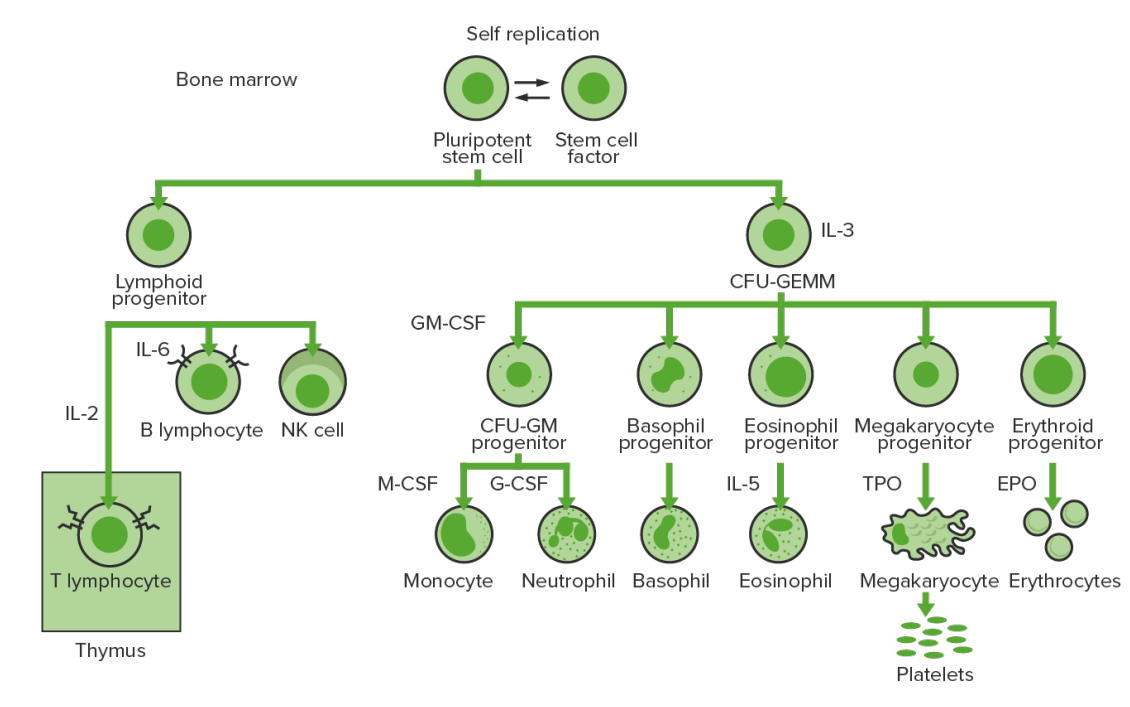
  • Las células madre linfoides dan lugar a los LOS Neisseria linfocitos:
    • Células T
    • Células B
    • Células asesinas naturales
  • Las células madre mieloides finalmente se diferencian en EN Erythema nodosum is an immune-mediated panniculitis (inflammation of the subcutaneous fat) caused by a type IV (delayed-type) hypersensitivity reaction. It commonly manifests in young women as tender, erythematous nodules on the shins. Erythema Nodosum plaquetas, eritrocitos, granulocitos (neutrófilos, basófilos, eosinófilos) y monocitos:
    • Interleuquina-3 estimula la diferenciación de células madre hematopoyéticas multipotenciales en EN Erythema nodosum is an immune-mediated panniculitis (inflammation of the subcutaneous fat) caused by a type IV (delayed-type) hypersensitivity reaction. It commonly manifests in young women as tender, erythematous nodules on the shins. Erythema Nodosum células progenitoras mieloides.
    • Factor estimulante de colonias de granulocitos y macrófagos → diferenciación de progenitores mieloides a granulocitos (neutrófilos) y monocitos
    • Interleuquina-5 → diferenciación a eosinófilos
    • Trombopoyetina → diferenciación a trombocitos (plaquetas)
    • Eritropoyetina → diferenciación a eritrocitos
Hematopoyesis de la médula ósea

Hematopoyesis de la médula ósea:
Proliferación y diferenciación de los elementos formes de la sangre:
En la leucemia mieloide crónica, existe una proliferación sostenida de células en la línea granulocítica (mieloblastos → neutrófilos, basófilos, eosinófilos). Se ven tanto células en proceso de maduración como céulas maduras; por lo tanto, hay células que son solo parcialmente efectivas.
CFU-GEMM: unidad formadora de colonias de granulocitos, eritrocitos, monocitos, megacariocitos
CFU-GM: unidad formadora de colonias de macrófagos y granulocitos
GM-CSF: factor estimulante de colonias de granulocitos y macrófagos
M-CSF: factor estimulante de colonias de macrófagos
G-CSF: factor estimulante de colonias de granulocitos
NK: células asesinas naturales
TPO: trombopoyetina

Imagen por Lecturio. Licencia: CC BY-NC-SA 4.0

Patogénesis

  • Los LOS Neisseria cambios genéticos afectan la expresión y función de los LOS Neisseria factores de transcripción en EN Erythema nodosum is an immune-mediated panniculitis (inflammation of the subcutaneous fat) caused by a type IV (delayed-type) hypersensitivity reaction. It commonly manifests in young women as tender, erythematous nodules on the shins. Erythema Nodosum la maduración de las células madre.
  • Los LOS Neisseria cambios incluyen:
    • Mutaciones genéticas que afectan a PAX5, ETV6
    • Variantes polimórficas de ARID5B, CDKN2A e IKZF1
  • Las células progenitoras hematopoyéticas no se diferencian en EN Erythema nodosum is an immune-mediated panniculitis (inflammation of the subcutaneous fat) caused by a type IV (delayed-type) hypersensitivity reaction. It commonly manifests in young women as tender, erythematous nodules on the shins. Erythema Nodosum células funcionales, lo que conduce a una maduración defectuosa de los LOS Neisseria precursores de linfocitos:
    • Linaje B: 85%
    • Linaje T: 10%–15%
    • Linaje asesinas naturales: < 1%
  • En EN Erythema nodosum is an immune-mediated panniculitis (inflammation of the subcutaneous fat) caused by a type IV (delayed-type) hypersensitivity reaction. It commonly manifests in young women as tender, erythematous nodules on the shins. Erythema Nodosum las leucemias agudas, las células anormales proliferan, pero no se diferencian en EN Erythema nodosum is an immune-mediated panniculitis (inflammation of the subcutaneous fat) caused by a type IV (delayed-type) hypersensitivity reaction. It commonly manifests in young women as tender, erythematous nodules on the shins. Erythema Nodosum células sanguíneas maduras:
    • Las células leucémicas ocupan el espacio de la médula ósea, suprimiendo la hematopoyesis normal → leucopenia, trombocitopenia y anemia Anemia Anemia is a condition in which individuals have low Hb levels, which can arise from various causes. Anemia is accompanied by a reduced number of RBCs and may manifest with fatigue, shortness of breath, pallor, and weakness. Subtypes are classified by the size of RBCs, chronicity, and etiology. Anemia: Overview and Types
    • Los LOS Neisseria blastos disfuncionales e inmaduros eventualmente ingresan al AL Amyloidosis torrente sanguíneo, infiltrándose en EN Erythema nodosum is an immune-mediated panniculitis (inflammation of the subcutaneous fat) caused by a type IV (delayed-type) hypersensitivity reaction. It commonly manifests in young women as tender, erythematous nodules on the shins. Erythema Nodosum otros órganos.

Presentación Clínica

Características clínicas generales

  • Alrededor del 6% de los LOS Neisseria pacientes son asintomáticos.
  • La hepatomegalia y esplenomegalia (hallazgos más comunes en EN Erythema nodosum is an immune-mediated panniculitis (inflammation of the subcutaneous fat) caused by a type IV (delayed-type) hypersensitivity reaction. It commonly manifests in young women as tender, erythematous nodules on the shins. Erythema Nodosum la presentación) pueden manifestarse como:
    • Dolor Dolor Inflammation abdominal
    • Distensión abdominal
    • Anorexia Anorexia The lack or loss of appetite accompanied by an aversion to food and the inability to eat. It is the defining characteristic of the disorder anorexia nervosa. Anorexia Nervosa
    • Pérdida de peso
  • Linfadenopatía (no dolorosa, firme, gomosa)
  • Fiebre
  • Dolor Dolor Inflammation de huesos:
    • Asociado con infiltración de la médula ósea
    • Los LOS Neisseria niños pueden presentar cojera o dificultad para soportar peso.
  • Anomalías hematológicas:
    • Anemia Anemia Anemia is a condition in which individuals have low Hb levels, which can arise from various causes. Anemia is accompanied by a reduced number of RBCs and may manifest with fatigue, shortness of breath, pallor, and weakness. Subtypes are classified by the size of RBCs, chronicity, and etiology. Anemia: Overview and Types:
      • Palidez
      • Taquicardia, fatiga
    • Trombocitopenia:
      • Equimosis
      • Petequias
    • El recuento leucocitario puede ser normal, elevado o disminuido, pero muestra una función anormal y se presenta como:
      • Infecciones frecuentes o recurrentes
      • Fiebre
  • Menos frecuente:
    • Cefalea por diseminación meníngea (< 5%)
    • Agrandamiento testicular unilateral indoloro (< 1%)
    • Masa mediastínica (asociada con leucemia/linfoma linfoblástico agudo de células T):
      • Puede causar el síndrome de la vena cava superior
      • Puede conducir a dificultad respiratoria (por compresión)

Leucemia linfoblástica aguda vs. leucemia mieloide aguda

Tabla: Leucemia linfoblástica aguda vs. leucemia mieloide aguda
Características Leucemia linfoblástica aguda Leucemia mieloide aguda
Población Más común en EN Erythema nodosum is an immune-mediated panniculitis (inflammation of the subcutaneous fat) caused by a type IV (delayed-type) hypersensitivity reaction. It commonly manifests in young women as tender, erythematous nodules on the shins. Erythema Nodosum niños Más común en EN Erythema nodosum is an immune-mediated panniculitis (inflammation of the subcutaneous fat) caused by a type IV (delayed-type) hypersensitivity reaction. It commonly manifests in young women as tender, erythematous nodules on the shins. Erythema Nodosum adultos
Características comunes
  • Síntomas de anemia Anemia Anemia is a condition in which individuals have low Hb levels, which can arise from various causes. Anemia is accompanied by a reduced number of RBCs and may manifest with fatigue, shortness of breath, pallor, and weakness. Subtypes are classified by the size of RBCs, chronicity, and etiology. Anemia: Overview and Types, trombocitopenia, neutropenia Neutropenia Neutrophils are an important component of the immune system and play a significant role in the eradication of infections. Low numbers of circulating neutrophils, referred to as neutropenia, predispose the body to recurrent infections or sepsis, though patients can also be asymptomatic. Neutropenia (por función medular deprimida)
  • Inicio brusco (días a semanas)
  • Afectación del sistema nervioso central (SNC)
Hallazgos clínicos
  • Hepatomegalia y esplenomegalia
  • Linfadenopatía
  • Dolor Dolor Inflammation de huesos (más común)
  • Puede afectar los LOS Neisseria testículos
  • Puede tener masa mediastínica
  • Organomegalia (menos frecuente)
  • Linfadenopatía (raro)
  • Leucemia cutis
  • Hipertrofia gingival
  • Coagulación intravascular diseminada (CID)

Diagnóstico

Hallazgos diagnósticos

  • Hemograma con diferencial:
    • Anemia Anemia Anemia is a condition in which individuals have low Hb levels, which can arise from various causes. Anemia is accompanied by a reduced number of RBCs and may manifest with fatigue, shortness of breath, pallor, and weakness. Subtypes are classified by the size of RBCs, chronicity, and etiology. Anemia: Overview and Types, trombocitopenia
    • Recuento leucocitario variable Variable Variables represent information about something that can change. The design of the measurement scales, or of the methods for obtaining information, will determine the data gathered and the characteristics of that data. As a result, a variable can be qualitative or quantitative, and may be further classified into subgroups. Types of Variables
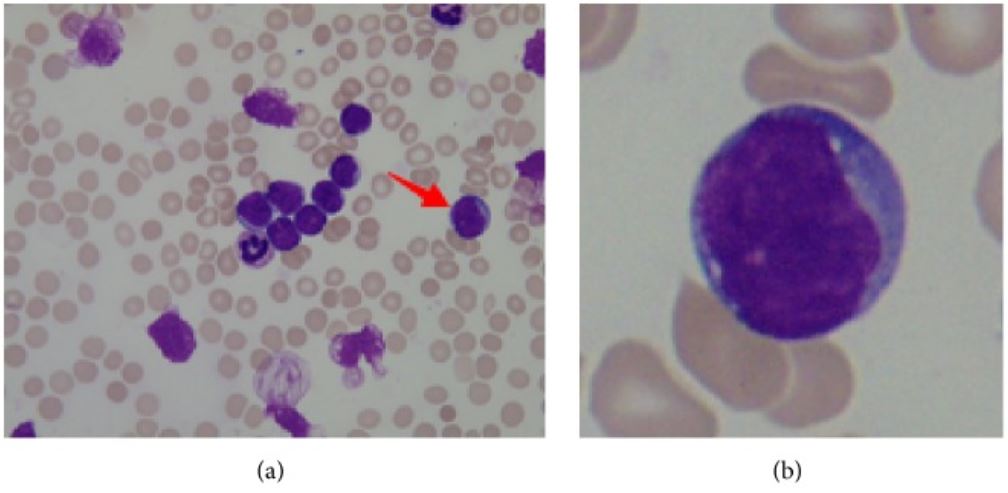
  • Frotis periférico: linfoblastos
    • Escaso citoplasma basófilo (normalmente carecen de gránulos)
    • Núcleos prominentes
    • Nucléolos discretos/indistintos
    • Cromatina condensada
  • Examen de la médula ósea:
    • Hipercelularidad
    • Linfoblastos densamente empaquetados
  • Citoquímica:
    • Tinción acidó peryódico de Schiff: a menudo positiva (algunas células tienen gránulos acidó peryódico de Schiff positivos)
    • Mieloperoxidasa: negativa
    • Desoxinucleotidil transferasa terminal: positiva
  • Inmunofenotipicación (mediante citometría de flujo):
    • Caracteriza antígenos o marcadores en EN Erythema nodosum is an immune-mediated panniculitis (inflammation of the subcutaneous fat) caused by a type IV (delayed-type) hypersensitivity reaction. It commonly manifests in young women as tender, erythematous nodules on the shins. Erythema Nodosum células tumorales:
      • Leucemia/linfoma linfoblástico agudo de células B: la mayoría son positivos para CD10, CD19, CD20, CD24, CD22 citoplasmático y CD-79a.
      • Leucemia/linfoma linfoblástico agudo de células T: positivo para CD3 CD3 Complex of at least five membrane-bound polypeptides in mature T-lymphocytes that are non-covalently associated with one another and with the T-cell receptor. The CD3 complex includes the gamma, delta, epsilon, zeta, and eta chains (subunits). When antigen binds to the T-cell receptor, the CD3 complex transduces the activating signals to the cytoplasm of the T-cell. The CD3 gamma and delta chains (subunits) are separate from and not related to the gamma/delta chains of the T-cell receptor. T cells: Types and Functions (se ven CD2–8); negativos para antígenos de células B
    • Ayuda en EN Erythema nodosum is an immune-mediated panniculitis (inflammation of the subcutaneous fat) caused by a type IV (delayed-type) hypersensitivity reaction. It commonly manifests in young women as tender, erythematous nodules on the shins. Erythema Nodosum la clasificación y determinación del tratamiento y pronóstico
  • Análisis genético:
    • Identifica mutaciones
    • Importante en EN Erythema nodosum is an immune-mediated panniculitis (inflammation of the subcutaneous fat) caused by a type IV (delayed-type) hypersensitivity reaction. It commonly manifests in young women as tender, erythematous nodules on the shins. Erythema Nodosum el pronóstico
Frotis de médula ósea de un paciente con leucemia linfoblástica aguda

a: frotis de médula ósea de un paciente con leucemia linfoblástica aguda, flecha que apunta a linfoblasto
b: linfoblasto: núcleo grande, citoplasma escaso

Imagen: “Segmentation of White Blood Cell From Acute Lymphoblastic Leukemia Images Using Dual-Threshold Method” por Li Y, Zhu R, Mi L, Cao Y, Yao D Licencia: CC BY 4.0

Estudios adicionales

  • Química sanguínea: puede sugerir síndrome de lisis tumoral u otras complicaciones metabólicas
  • Perfil de coagulación
  • Punción lumbar:
    • Para evaluar la afectación leucémica del SNC
    • Todos los LOS Neisseria niños deben ser evaluados antes de la terapia, ya que la participación del SNC afecta el tratamiento.
  • Imagenología:
    • Tomografía computarizada (TC) de tórax: evaluación de leucemia/linfoma linfoblástico agudo de células T (asociado a masa mediastínica)
    • Ecocardiograma o exploración cardiaca: evaluación previa al AL Amyloidosis tratamiento de la función cardiaca (ya que puede verse afectada negativamente por la quimioterapia)

Leucemia linfoblástica aguda vs. leucemia mieloide aguda

Tabla: Leucemia linfoblástica aguda vs. leucemia mieloide aguda
Características Leucemia linfoblástica aguda Leucemia mieloide aguda
Hallazgos de laboratorio Anemia Anemia Anemia is a condition in which individuals have low Hb levels, which can arise from various causes. Anemia is accompanied by a reduced number of RBCs and may manifest with fatigue, shortness of breath, pallor, and weakness. Subtypes are classified by the size of RBCs, chronicity, and etiology. Anemia: Overview and Types, trombocitopenia, variación en EN Erythema nodosum is an immune-mediated panniculitis (inflammation of the subcutaneous fat) caused by a type IV (delayed-type) hypersensitivity reaction. It commonly manifests in young women as tender, erythematous nodules on the shins. Erythema Nodosum los LOS Neisseria leucocitos
Frotis periférico o examen de médula ósea (morfología) Linfoblastos:
  • Núcleos grandes
  • Cromatina condensada
  • Nucléolos discretos
  • Citoplasma basófilo escaso
Mieloblastos:
  • Cromatina fina nuclear
  • Nucléolos prominentes (2–4)
  • Citoplasma más voluminoso
  • Gránulos citoplasmáticos azurófilos finos
  • Bastones de Auer
Citoquímica
  • Acidó peryódico de Schiff: positivo
  • MPO MPO Acute Myeloid Leukemia: negativa
  • Desoxinucleotidil transferasa terminal: positiva
  • Acidó peryódico de Schiff: negativo
  • Sudán negro B: positivo
  • MPO MPO Acute Myeloid Leukemia: positiva
  • Desoxinucleotidil transferasa terminal: negativa
Inmunofenotipificación
  • B-LLA/LBL: CD10, CD19, CD20, CD24, CD22 citoplasmático y CD-79a
  • T-LLA/LBL: CD2–8
CD13, CD33, CD117, HLA-DR
B-LLA/LBL: leucemia/linfoma linfoblástico agudo de células B
T-ALL/LBL: leucemia/linfoma linfoblástico agudo de células T
MPO: mieloperoxidasa

Tratamiento

Tratamiento

La quimioterapia, que puede durar de 2–3 años, es muy eficaz en EN Erythema nodosum is an immune-mediated panniculitis (inflammation of the subcutaneous fat) caused by a type IV (delayed-type) hypersensitivity reaction. It commonly manifests in young women as tender, erythematous nodules on the shins. Erythema Nodosum pacientes jóvenes.

  • Terapia de inducción:
    • La quimioterapia inicial se administra para:
      • Erradicar las células tumorales (hasta < 5% de blastos)
      • Lograr una hematopoyesis normal
    • Régimen:
      • Vincristina, corticoides, asparaginasa
      • Con/sin antraciclina (doxorrubicina o daunorrubicina)
    • Los LOS Neisseria inhibidores de la tirosina cinasa se utilizan en EN Erythema nodosum is an immune-mediated panniculitis (inflammation of the subcutaneous fat) caused by a type IV (delayed-type) hypersensitivity reaction. It commonly manifests in young women as tender, erythematous nodules on the shins. Erythema Nodosum casos de translocación t(9;22) (cromosoma Filadelfia).
    • Los LOS Neisseria efectos secundarios (debido a la toxicidad del medicamento o la rápida erradicación de las células tumorales) incluyen:
      • Síndrome de lisis tumoral
      • Sangrado o trombosis
      • Infección
      • Reacción alérgica/anafilaxia
      • Neuropatía (por vincristina)
      • Supresión del eje hipotálamo-hipófisis-glándula suprarrenal (por corticosteroides)
  • Profilaxis del SNC:
    • Recomendada en EN Erythema nodosum is an immune-mediated panniculitis (inflammation of the subcutaneous fat) caused by a type IV (delayed-type) hypersensitivity reaction. It commonly manifests in young women as tender, erythematous nodules on the shins. Erythema Nodosum todos los LOS Neisseria niños
    • Comienza en EN Erythema nodosum is an immune-mediated panniculitis (inflammation of the subcutaneous fat) caused by a type IV (delayed-type) hypersensitivity reaction. It commonly manifests in young women as tender, erythematous nodules on the shins. Erythema Nodosum la fase de inducción y se administra durante todo el período de tratamiento
    • Los LOS Neisseria protocolos incluyen:
      • Quimioterapia intratecal
      • Con/sin radioterapia del SNC (asociada con deterioro cognitivo, disminución del volumen de la sustancia blanca, tumores cerebrales secundarios)
  • Consolidación:
    • Ciclos adicionales de quimioterapia para eliminar las células tumorales restantes
    • Objetivo:
      • Evitar el rebrote
      • Disminuir la carga tumoral
      • Reducir los LOS Neisseria riesgos de las células leucémicas resistentes a los LOS Neisseria medicamentos
    • Comienza después de lograr la remisión completa
    • Los LOS Neisseria regímenes incluyen:
      • Citarabina
      • Metotrexato
      • Antraciclinas (e.g., daunorrubicina)
      • Agentes alquilantes (e.g., ciclofosfamida)
      • Epipodofilotoxinas (e.g., etopósido)
  • Tratamiento de mantenimiento:
    • Tratamiento menos intensivo durante 1–2 años
    • Régimen:
      • 6-mercaptopurina oral diaria ( 6-MP 6-MP An antimetabolite antineoplastic agent with immunosuppressant properties. It interferes with nucleic acid synthesis by inhibiting purine metabolism and is used, usually in combination with other drugs, in the treatment of or in remission maintenance programs for leukemia. Antimetabolite Chemotherapy)
      • Metotrexato semanal
      • Vincristina periódica, prednisona, terapia intratecal
  • Trasplante alogénico de células madre para la leucemia linfoblástica aguda de alto riesgo, como:
    • Pacientes con leucemia linfoblástica aguda con cromosoma Filadelfia positivo
    • Pacientes con mala respuesta inicial a la terapia de inducción

Terapia de soporte y monitoreo

  • Durante el tratamiento:
    • Monitorear la respuesta de la médula ósea.
    • Monitorear los LOS Neisseria efectos secundarios de la quimioterapia, que pueden incluir:
      • Supresión de la médula ósea
      • Estomatitis (úlceras en EN Erythema nodosum is an immune-mediated panniculitis (inflammation of the subcutaneous fat) caused by a type IV (delayed-type) hypersensitivity reaction. It commonly manifests in young women as tender, erythematous nodules on the shins. Erythema Nodosum la boca)
      • Diarrea
    • Mejorar los LOS Neisseria síntomas y prevenir infecciones:
      • Transfusiones de eritrocitos y plaquetas para la anemia Anemia Anemia is a condition in which individuals have low Hb levels, which can arise from various causes. Anemia is accompanied by a reduced number of RBCs and may manifest with fatigue, shortness of breath, pallor, and weakness. Subtypes are classified by the size of RBCs, chronicity, and etiology. Anemia: Overview and Types y la trombocitopenia
      • Factor estimulante de colonias de granulocitos para la neutropenia Neutropenia Neutrophils are an important component of the immune system and play a significant role in the eradication of infections. Low numbers of circulating neutrophils, referred to as neutropenia, predispose the body to recurrent infections or sepsis, though patients can also be asymptomatic. Neutropenia
      • Solo vacunas inactivas durante la quimioterapia
      • Profilaxis con trimetoprim-sulfametoxazol para la neumonía por Pneumocystis carinii
      • Profilaxis del herpes simple con aciclovir
    • Si hay fiebre, especialmente acompañada de neutropenia Neutropenia Neutrophils are an important component of the immune system and play a significant role in the eradication of infections. Low numbers of circulating neutrophils, referred to as neutropenia, predispose the body to recurrent infections or sepsis, though patients can also be asymptomatic. Neutropenia, se administran antibióticos de amplio espectro.
    • Modificación dietética (ajustar para pacientes con mucositis Mucositis Stomatitis is a general term referring to inflammation of the mucous membranes of the mouth, which may include sores. Stomatitis can be caused by infections, autoimmune disorders, allergic reactions, or exposure to irritants. The typical presentation may be either solitary or a group of painful oral lesions. Stomatitis, dieta neutropénica)
  • Monitorización de recaída:
    • Tasa de recaída: 10%–15% en EN Erythema nodosum is an immune-mediated panniculitis (inflammation of the subcutaneous fat) caused by a type IV (delayed-type) hypersensitivity reaction. It commonly manifests in young women as tender, erythematous nodules on the shins. Erythema Nodosum niños
    • Síntomas similares a los LOS Neisseria observados en EN Erythema nodosum is an immune-mediated panniculitis (inflammation of the subcutaneous fat) caused by a type IV (delayed-type) hypersensitivity reaction. It commonly manifests in young women as tender, erythematous nodules on the shins. Erythema Nodosum la presentación inicial
    • Áreas de recaída:
      • Médula ósea
      • SNC
      • Testículos

Pronóstico

  • Niños (< 15 años); tasa de curación > 85%
  • El pronóstico disminuye con el aumento de la edad: tasa de curación de 30%–40% en EN Erythema nodosum is an immune-mediated panniculitis (inflammation of the subcutaneous fat) caused by a type IV (delayed-type) hypersensitivity reaction. It commonly manifests in young women as tender, erythematous nodules on the shins. Erythema Nodosum adultos (≥ 40 años)
  • Un mejor pronóstico se asocia con:
    • Edad < 30 años
    • Mujer
    • Recuento leucocitario < 30 000/µL
    • Sin citogenética adversa
    • Translocación entre los LOS Neisseria cromosomas 12 y 21
    • Hiperdiploidía (células leucémicas con > 46 cromosomas)
    • Remisión completa en EN Erythema nodosum is an immune-mediated panniculitis (inflammation of the subcutaneous fat) caused by a type IV (delayed-type) hypersensitivity reaction. It commonly manifests in young women as tender, erythematous nodules on the shins. Erythema Nodosum 4 semanas
  • Un peor pronóstico se asocia con:
    • Edad > 60 años
    • Hombres
    • Recuento leucocitario elevado (> 100 000/µL)
    • Citogenética adversa con translocaciones t(9;22) o cromosoma Filadelfia
    • Hipodiploidía (células leucémicas con < 46 cromosomas)

Leucemia linfoblástica aguda vs. leucemia mieloide aguda

Tabla: Leucemia linfoblástica aguda vs. leucemia mieloide aguda
Tratamiento Leucemia linfoblástica aguda Leucemia mieloide aguda
Inducción
  • Vincristina, corticoides, asparaginasa
  • Con/sin antraciclina (doxorrubicina o daunorrubicina)
  • Citarabina + daunorrubicina o idarrubicina
  • Medicamento adicional dirigido (basado en EN Erythema nodosum is an immune-mediated panniculitis (inflammation of the subcutaneous fat) caused by a type IV (delayed-type) hypersensitivity reaction. It commonly manifests in young women as tender, erythematous nodules on the shins. Erythema Nodosum la mutación)
Consolidación Opciones:
  • Citarabina
  • Metotrexato
  • Antraciclinas
  • Agentes alquilantes
  • Epipodofilotoxinas
Quimioterapia adicional (citarabina)
Mantenimiento
  • 6-mercaptopurina oral diaria
  • Metotrexato semanal
  • Vincristina periódica, prednisona, terapia intratecal
Quimioterapia no mielosupresora y/o agente dirigido
Tratamiento adicional
  • Se administran inhibidores de la tirosina quinasa (e.g., imatinib Imatinib A tyrosine kinase inhibitor and antineoplastic agent that inhibits the bcr-abl kinase created by chromosome rearrangements in chronic myeloid leukemia and acute lymphoblastic leukemia, as well as pdg-derived tyrosine kinases that are overexpressed in gastrointestinal stromal tumors. Targeted and Other Nontraditional Antineoplastic Therapy), si hay translocación t(9;22) (cromosoma de Filadelfia)
  • Profilaxis del SNC
Leucemia promielocítica aguda:
  • ¡Emergencia médica!
  • Administrar ácido trans-retinoico + trióxido de arsénico.
Trasplante de células hematopoyéticas Para pacientes con mal pronóstico
Pronóstico
  • Generalmente mejor pronóstico en EN Erythema nodosum is an immune-mediated panniculitis (inflammation of the subcutaneous fat) caused by a type IV (delayed-type) hypersensitivity reaction. It commonly manifests in young women as tender, erythematous nodules on the shins. Erythema Nodosum edades < 50 años
  • Las mutaciones asociadas afectan el pronóstico.

Diagnóstico Diferencial

  • Leucemia mieloide aguda: una neoplasia hematológica con transformación maligna y proliferación descontrolada de precursores mieloides. La leucemia mieloide aguda se observa predominantemente en EN Erythema nodosum is an immune-mediated panniculitis (inflammation of the subcutaneous fat) caused by a type IV (delayed-type) hypersensitivity reaction. It commonly manifests in young women as tender, erythematous nodules on the shins. Erythema Nodosum los LOS Neisseria ancianos y se caracteriza por la acumulación de mieloblastos. La presentación clínica que consiste en EN Erythema nodosum is an immune-mediated panniculitis (inflammation of the subcutaneous fat) caused by a type IV (delayed-type) hypersensitivity reaction. It commonly manifests in young women as tender, erythematous nodules on the shins. Erythema Nodosum fatiga, palidez, hemorragia, fiebre e infección está relacionada con anemia Anemia Anemia is a condition in which individuals have low Hb levels, which can arise from various causes. Anemia is accompanied by a reduced number of RBCs and may manifest with fatigue, shortness of breath, pallor, and weakness. Subtypes are classified by the size of RBCs, chronicity, and etiology. Anemia: Overview and Types, trombocitopenia y falta de leucocitos funcionales. Los LOS Neisseria efectos de masa de la infiltración maligna ( en EN Erythema nodosum is an immune-mediated panniculitis (inflammation of the subcutaneous fat) caused by a type IV (delayed-type) hypersensitivity reaction. It commonly manifests in young women as tender, erythematous nodules on the shins. Erythema Nodosum hueso, hígado y bazo) son menos frecuentes (que la leucemia linfocítica aguda). El frotis de sangre periférica y la biopsia de médula ósea muestran mieloblastos y la presencia de bastones de Auer. El tratamiento consiste principalmente en EN Erythema nodosum is an immune-mediated panniculitis (inflammation of the subcutaneous fat) caused by a type IV (delayed-type) hypersensitivity reaction. It commonly manifests in young women as tender, erythematous nodules on the shins. Erythema Nodosum quimioterapia. El pronóstico varía según la edad de aparición y el tipo de leucemia.
  • Leucemia mieloide crónica: una proliferación maligna de la línea celular granulocítica con una diferenciación bastante normal. La anomalía genética subyacente es el cromosoma Filadelfia, un cromosoma 22 abreviado que resulta de la translocación recíproca (9;22)(q34;q11). Los LOS Neisseria pacientes tienen síntomas constitucionales, dolor Dolor Inflammation esternal y esplenomegalia. Después de las pruebas de laboratorio se revela un recuento elevado de leucocitos y un mayor número de células inmaduras en EN Erythema nodosum is an immune-mediated panniculitis (inflammation of the subcutaneous fat) caused by a type IV (delayed-type) hypersensitivity reaction. It commonly manifests in young women as tender, erythematous nodules on the shins. Erythema Nodosum un frotis periférico. En EN Erythema nodosum is an immune-mediated panniculitis (inflammation of the subcutaneous fat) caused by a type IV (delayed-type) hypersensitivity reaction. It commonly manifests in young women as tender, erythematous nodules on the shins. Erythema Nodosum el 10% de las crisis blásticas, hay un aumento de linfoblastos como en EN Erythema nodosum is an immune-mediated panniculitis (inflammation of the subcutaneous fat) caused by a type IV (delayed-type) hypersensitivity reaction. It commonly manifests in young women as tender, erythematous nodules on the shins. Erythema Nodosum la leucemia/linfoma linfoblástico agudo. El cromosoma Filadelfia se demuestra en EN Erythema nodosum is an immune-mediated panniculitis (inflammation of the subcutaneous fat) caused by a type IV (delayed-type) hypersensitivity reaction. It commonly manifests in young women as tender, erythematous nodules on the shins. Erythema Nodosum las células mieloides en EN Erythema nodosum is an immune-mediated panniculitis (inflammation of the subcutaneous fat) caused by a type IV (delayed-type) hypersensitivity reaction. It commonly manifests in young women as tender, erythematous nodules on the shins. Erythema Nodosum la leucemia mieloide crónica.
  • Leucemia linfocítica crónica: una neoplasia maligna hematológica caracterizada por la producción excesiva de linfocitos B monoclonales en EN Erythema nodosum is an immune-mediated panniculitis (inflammation of the subcutaneous fat) caused by a type IV (delayed-type) hypersensitivity reaction. It commonly manifests in young women as tender, erythematous nodules on the shins. Erythema Nodosum la sangre periférica. Cuando la afectación es principalmente ganglionar, la afección se denomina linfoma linfocítico pequeño. La leucemia linfocítica crónica generalmente se presenta en EN Erythema nodosum is an immune-mediated panniculitis (inflammation of the subcutaneous fat) caused by a type IV (delayed-type) hypersensitivity reaction. It commonly manifests in young women as tender, erythematous nodules on the shins. Erythema Nodosum ancianos y tiene una edad promedio de 70 años. El diagnóstico generalmente se realiza cuando se observa linfocitosis anormal en EN Erythema nodosum is an immune-mediated panniculitis (inflammation of the subcutaneous fat) caused by a type IV (delayed-type) hypersensitivity reaction. It commonly manifests in young women as tender, erythematous nodules on the shins. Erythema Nodosum los LOS Neisseria hallazgos de laboratorio. También se pueden observar citopenias. Los LOS Neisseria linfocitos parecen maduros, pero son funcionalmente incompetentes; por lo tanto, las infecciones recurrentes son posibles.
  • Linfocitosis: las enfermedades infecciosas ( mononucleosis Mononucleosis Infectious mononucleosis (IM), also known as “the kissing disease,” is a highly contagious viral infection caused by the Epstein-Barr virus. Its common name is derived from its main method of transmission: the spread of infected saliva via kissing. Clinical manifestations of IM include fever, tonsillar pharyngitis, and lymphadenopathy. Mononucleosis infecciosa, infección por virus Virus Viruses are infectious, obligate intracellular parasites composed of a nucleic acid core surrounded by a protein capsid. Viruses can be either naked (non-enveloped) or enveloped. The classification of viruses is complex and based on many factors, including type and structure of the nucleoid and capsid, the presence of an envelope, the replication cycle, and the host range. Virology de inmunodeficiencia humana (VIH), tuberculosis Tuberculosis Tuberculosis (TB) is an infectious disease caused by Mycobacterium tuberculosis complex bacteria. The bacteria usually attack the lungs but can also damage other parts of the body. Approximately 30% of people around the world are infected with this pathogen, with the majority harboring a latent infection. Tuberculosis spreads through the air when a person with active pulmonary infection coughs or sneezes. Tuberculosis) y otras afecciones no infecciosas (enfermedades autoinmunes, hipersensibilidad) pueden dar lugar a linfocitos aberrantes. Los LOS Neisseria niveles elevados de linfocitos pueden persistir durante semanas o meses. Una afección subyacente suele revelarse mediante los LOS Neisseria antecedentes, el examen físico y los LOS Neisseria estudios de laboratorio.

Referencias

  1. Arber, D.A., et al. (2016). The 2016 revision to the World Health Organization classification of myeloid neoplasms and acute leukemia. Blood. 127(20), 2391–2405. Retrieved April 26, 2021, from https://doi.org/10.1182/blood-2016-03-643544
  2. Blum, W., Bloomfield, C.D. (2018). Acute myeloid leukemia. In Jameson, J., et al. (Eds.), Harrison’s Principles of Internal Medicine, 20e. McGraw-Hill. https://accessmedicine.mhmedical.com/content.aspx?bookid=2129&sectionid=192017732
  3. Weir, E. G., & Borowitz, M. J. (2001). Flow cytometry in the diagnosis of acute leukemia. Seminars in Hematology, 38(2), 124–138. https://doi.org/10.1016/S0037-1963(01)90046-0
  4. Hoelzer, D. (2018). Acute lymphoid leukemia. In Jameson J., et al. (Eds.), Harrison’s Principles of Internal Medicine, 20e. McGraw-Hill. https://accessmedicine.mhmedical.com/content.aspx?bookid=2129&sectionid=192017841
  5. Horton, T.M., Steuber, P., Aster, J.C. (2021). Overview of the clinical presentation and diagnosis of acute lymphoblastic leukemia/lymphoma in children. UpToDate. Retrieved April 27, 2021, from https://www.uptodate.com/contents/overview-of-the-clinical-presentation-and-diagnosis-of-acute-lymphoblastic-leukemia-lymphoma-in-children
  6. Kolitz, J.E. (2021). Overview of acute myeloid leukemia in adults. UpToDate. Retrieved June 8, 2021, from https://www.uptodate.com/contents/overview-of-acute-myeloid-leukemia-in-adults
  7. Larson, R. (2021). Initial treatment of acute promyelocytic leukemia in adults. UpToDate. Retrieved June 9, 2021, from https://www.uptodate.com/contents/initial-treatment-of-acute-promyelocytic-leukemia-in-adults
  8. Larson, R. (2021). Induction therapy for acute myeloid leukemia in medically-fit adults. UpToDate. Retrieved June 9, 2021, from https://www.uptodate.com/contents/induction-therapy-for-acute-myeloid-leukemia-in-medically-fit-adults
  9. Larson, R., Klepin, H. (2021). Pretreatment evaluation and prognosis of acute myeloid leukemia in older adults. UpToDate. Retrieved June 9, 2021, from https://www.uptodate.com/contents/pretreatment-evaluation-and-prognosis-of-acute-myeloid-leukemia-in-older-adults
  10. Roberts, K.G. (2018). Genetics and prognosis of ALL in children vs adults. Hematology. American Society of Hematology. Education Program. 2018(1), 137–145. https://doi.org/10.1182/asheducation-2018.1.137
  11. Schiffer, C. (2021). Prognosis of acute myeloid leukemia. UpToDate. Retrieved June 9, 2021, from https://www.uptodate.com/contents/prognosis-of-acute-myeloid-leukemia
  12. Schiffer, C., Gurbuxani, S. (2021) Clinical manifestations, pathologic features and diagnosis of acute myeloid leukemia. UpToDate. Retrieved June 8, 2021, from https://www.uptodate.com/contents/clinical-manifestations-pathologic-features-and-diagnosis-of-acute-myeloid-leukemia
  13. Schiffer, C., Gurbuxani, S. (2021). Classification of acute myeloid leukemia. UpToDate. Retrieved June 8, 2021, from https://www.uptodate.com/contents/classification-of-acute-myeloid-leukemia
  14. Stock, W., Thirman, M. (2021). Pathogenesis of acute myeloid leukemia. UpToDate. Retrieved June 8, 2021, from https://www.uptodate.com/contents/pathogenesis-of-acute-myeloid-leukemia
  15. Thirman, M.J., et al. (1993). Rearrangement of the MLL gene in acute lymphoblastic and acute myeloid leukemias with 11q23 chromosomal translocations. NEJM. 329(13), 909–914. https://doi.org/10.1056/NEJM199309233291302
  16. Zhang, Y., Le Beau, M., Aster, J. (2021). Classification, cytogenetics and molecular genetics of acute lymphoblastic leukemia/lymphoma. UpToDate. Retrieved June 8, 2021, from https://www.uptodate.com/contents/classification-cytogenetics-and-molecular-genetics-of-acute-lymphoblastic-leukemia-lymphoma

¡Crea tu cuenta gratis o inicia una sesión para seguir leyendo!

Regístrate ahora y obtén acceso gratuito a Lecturio con páginas de concepto, videos médicos y cuestionarios para tu educación médica.

User Reviews

Que tengas una sesión de estudio alegre y navideña 🎁 Ahorra 50% en todos los planes >>

Details