Domina Conceptos Médicos

Estudia para la escuela de medicina y tus examenes con Lecturio.

Lesión Celular y Muerte

La célula sufre una variedad de cambios en EN Erythema nodosum is an immune-mediated panniculitis (inflammation of the subcutaneous fat) caused by a type IV (delayed-type) hypersensitivity reaction. It commonly manifests in young women as tender, erythematous nodules on the shins. Erythema Nodosum respuesta a una lesión, que pueden conducir o no a la muerte celular. Los LOS Neisseria estímulos nocivos desencadenan el proceso de adaptación celular, mediante el cual las células responden para resistir los LOS Neisseria cambios dañinos en EN Erythema nodosum is an immune-mediated panniculitis (inflammation of the subcutaneous fat) caused by a type IV (delayed-type) hypersensitivity reaction. It commonly manifests in young women as tender, erythematous nodules on the shins. Erythema Nodosum su entorno. Los LOS Neisseria mecanismos adaptativos saturados conducen a una lesión celular. Los LOS Neisseria estímulos leves producen una lesión reversible. Si el estímulo es severo o persistente, la lesión se vuelve irreversible. Los LOS Neisseria principales objetivos de la lesión celular son las membranas celulares, las mitocondrias, la maquinaria de la síntesis proteica y el ADN. Múltiples anomalías celulares resultantes del daño provocan la muerte celular. Los LOS Neisseria 2 tipos principales de muerte celular son la necrosis Necrosis The death of cells in an organ or tissue due to disease, injury or failure of the blood supply. Ischemic Cell Damage y la apoptosis Apoptosis A regulated cell death mechanism characterized by distinctive morphologic changes in the nucleus and cytoplasm, including the endonucleolytic cleavage of genomic DNA, at regularly spaced, internucleosomal sites, I.e., DNA fragmentation. It is genetically-programmed and serves as a balance to mitosis in regulating the size of animal tissues and in mediating pathologic processes associated with tumor growth. Ischemic Cell Damage. La necrosis Necrosis The death of cells in an organ or tissue due to disease, injury or failure of the blood supply. Ischemic Cell Damage es una muerte celular descontrolada caracterizada por cambios inflamatorios en EN Erythema nodosum is an immune-mediated panniculitis (inflammation of the subcutaneous fat) caused by a type IV (delayed-type) hypersensitivity reaction. It commonly manifests in young women as tender, erythematous nodules on the shins. Erythema Nodosum una condición patológica. La apoptosis Apoptosis A regulated cell death mechanism characterized by distinctive morphologic changes in the nucleus and cytoplasm, including the endonucleolytic cleavage of genomic DNA, at regularly spaced, internucleosomal sites, I.e., DNA fragmentation. It is genetically-programmed and serves as a balance to mitosis in regulating the size of animal tissues and in mediating pathologic processes associated with tumor growth. Ischemic Cell Damage es la muerte celular programada, un mecanismo con efectos fisiológicos y patológicos.

Last updated: Dec 15, 2025

Editorial responsibility: Stanley Oiseth, Lindsay Jones, Evelin Maza

Descripción General

Definiciones

  • Homeostasis Homeostasis The processes whereby the internal environment of an organism tends to remain balanced and stable. Cell Injury and Death:
    • Estado de equilibrio
    • La célula tiene una función óptima, satisfaciendo las demandas fisiológicas.
  • Adaptación celular: cambios reversibles en EN Erythema nodosum is an immune-mediated panniculitis (inflammation of the subcutaneous fat) caused by a type IV (delayed-type) hypersensitivity reaction. It commonly manifests in young women as tender, erythematous nodules on the shins. Erythema Nodosum las estructuras o funciones celulares en EN Erythema nodosum is an immune-mediated panniculitis (inflammation of the subcutaneous fat) caused by a type IV (delayed-type) hypersensitivity reaction. It commonly manifests in young women as tender, erythematous nodules on the shins. Erythema Nodosum respuesta a cambios en EN Erythema nodosum is an immune-mediated panniculitis (inflammation of the subcutaneous fat) caused by a type IV (delayed-type) hypersensitivity reaction. It commonly manifests in young women as tender, erythematous nodules on the shins. Erythema Nodosum el entorno celular

Lesión celular

  • Las células no pueden adaptarse, o la respuesta adaptativa máxima a estímulos fisiológicos o patológicos es excedida.
  • Ocurre por estímulos dañinos, pérdida de nutrientes esenciales o mutaciones
  • Factores que afectan la lesión celular:
    • Naturaleza, duración y gravedad de la lesión
    • Tipo y adaptabilidad de la célula
    • Mecanismos de lesión simultáneos estimulados por el agente etiológico
  • Tipos de lesión celular:
    • Lesión reversible
    • Lesión irreversible (conduce a la muerte celular)
  • Mecanismos de lesión celular (pueden ocurrir al AL Amyloidosis mismo tiempo):
    • Daño mitocondrial
    • Homeostasis Homeostasis The processes whereby the internal environment of an organism tends to remain balanced and stable. Cell Injury and Death anormal del calcio
    • Daño del ADN
    • Daño de la membrana
    • Estrés del retículo endoplásmico
    • Estrés oxidativo

Muerte celular

  • Estado en EN Erythema nodosum is an immune-mediated panniculitis (inflammation of the subcutaneous fat) caused by a type IV (delayed-type) hypersensitivity reaction. It commonly manifests in young women as tender, erythematous nodules on the shins. Erythema Nodosum el que la célula deja de realizar funciones
  • Parte de la embriogénesis, del desarrollo de órganos y el mantenimiento de la homeostasis Homeostasis The processes whereby the internal environment of an organism tends to remain balanced and stable. Cell Injury and Death, donde se eliminan las células dañadas e innecesarias
  • Efecto de lesión irreversible, cuando la célula no puede superar los LOS Neisseria daños
  • Vías:
    • Apoptosis Apoptosis A regulated cell death mechanism characterized by distinctive morphologic changes in the nucleus and cytoplasm, including the endonucleolytic cleavage of genomic DNA, at regularly spaced, internucleosomal sites, I.e., DNA fragmentation. It is genetically-programmed and serves as a balance to mitosis in regulating the size of animal tissues and in mediating pathologic processes associated with tumor growth. Ischemic Cell Damage
    • Necrosis Necrosis The death of cells in an organ or tissue due to disease, injury or failure of the blood supply. Ischemic Cell Damage
Respuesta celular al estrés y las lesiones.

Respuesta celular al estrés y las lesiones

Imagen por Lecturio.
Etiología y Tipos de Lesión Celular

Estímulos nocivos

  • Agentes físicos:
    • Trauma mecánico
    • Cambios de temperatura y presión atmosférica
    • Radiación
    • Descarga eléctrica
  • Agentes químicos y medicamentos:
    • Productos químicos que causan alteraciones electrolíticas (e.g., glucosa)
    • Venenos (e.g., cianuro, arsénico)
    • Contaminantes ambientales
    • Riesgos industriales (e.g., asbesto)
    • Medicamentos (efectos tóxicos)
  • Deprivación de oxígeno:
    • Isquemia
    • Descompensación cardiorrespiratoria
    • ↓ Capacidad de transporte de oxígeno de la sangre ( anemia Anemia Anemia is a condition in which individuals have low Hb levels, which can arise from various causes. Anemia is accompanied by a reduced number of RBCs and may manifest with fatigue, shortness of breath, pallor, and weakness. Subtypes are classified by the size of RBCs, chronicity, and etiology. Anemia: Overview and Types)
  • Infecciones: virus Virus Viruses are infectious, obligate intracellular parasites composed of a nucleic acid core surrounded by a protein capsid. Viruses can be either naked (non-enveloped) or enveloped. The classification of viruses is complex and based on many factors, including type and structure of the nucleoid and capsid, the presence of an envelope, the replication cycle, and the host range. Virology, bacterias, parásitos, otros agentes biológicos
  • Reacciones inmunológicas:
    • Reacciones inmunes a agentes externos
    • Enfermedades autoinmunes
  • Anormalidades genéticas:
    • Malformaciones congénitas
    • Proteína de función deficiente por defectos enzimáticos
    • Proteínas mal plegadas
  • Deficiencias y excesos nutricionales:
    • Deficiencias nutricionales (deficiencia de vitaminas)
    • Exceso nutricional (obesidad, aumento de lípidos)

Tipos de lesión celular

  • Lesión celular reversible:
    • Efecto de daño leve o transitorio
    • La eliminación de los estímulos patológicos o la restauración del suministro crítico lleva a que las células regresen a la estabilidad.
    • Características:
      • Inflamación celular debido a la entrada de agua (manifestación más temprana de la lesión celular)
      • Cambio hidrópico o degeneración vacuolar: pequeñas vacuolas claras dentro del citoplasma (del retículo endoplásmico distendido)
      • Alteraciones de la membrana plasmática (ampollas, embotamiento, pérdida de microvellosidades)
      • Inflamación mitocondrial y aparición de densidades amorfas
      • ↑ Figuras de mielina en el citosol (fosfolípidos de membranas dañadas)
      • Cambios en el núcleo (los elementos granulares y fibrilares se disgregan)
      • Cambio graso por acumulación de vacuolas lipídicas (en órganos involucrados en el metabolismo lipídico)
  • Lesión irreversible:
    • “Punto de no retorno”: la célula no se puede restaurar → muerte celular
    • El estímulo dañino es severo y/o persistente.
    • Características:
      • Incapacidad para revertir la disfunción mitocondrial (pérdida de fosforilación oxidativa y producción de adenosín trifosfato (ATP))
      • Daño significativo a la función de la membrana

Lesión Celular por Daño Mitocondrial

Mitocondria

  • Sitio principal de síntesis de adenosín trifosfato o ATP
  • ATP:
    • Energía requerida en EN Erythema nodosum is an immune-mediated panniculitis (inflammation of the subcutaneous fat) caused by a type IV (delayed-type) hypersensitivity reaction. It commonly manifests in young women as tender, erythematous nodules on the shins. Erythema Nodosum procesos sintéticos y degradantes
    • Fuentes:
      • Por fosforilación oxidativa del difosfato de adenosina
      • De la vía glucolítica (anaeróbica)
  • Sujeta a los LOS Neisseria estímulos más dañinos

Consecuencias del daño mitocondrial

  • Depleción de adenosín trifosfato (ATP): se forma el poro de transición de permeabilidad mitocondrial pérdida de potencial de membrana y fosforilación oxidativa → ATP reducido
  • La depleción de ATP conduce a:
    • Inflamación celular: la bomba de sodio (Na⁺, K⁺-ATPasa) de la membrana plasmática falla → el sodio ingresa a la célula → acumulación de agua
    • Actividad enzimática citosólica reducida: ↑ glucogenólisis y glucólisis para compensar la pérdida de ATP → glucógeno disminuido → ↑ ácido láctico y fosfatos inorgánicos → ↓ pH pH The quantitative measurement of the acidity or basicity of a solution. Acid-Base Balance intracelular → enzimas deterioradas
    • Síntesis de proteínas reducida: desprendimiento de ribosomas
  • Fosforilación oxidativa alterada: se crean especies reactivas del oxígeno (radicales libres), causando daño a lípidos/proteínas/ácidos nucleicos.
  • Apoptosis Apoptosis A regulated cell death mechanism characterized by distinctive morphologic changes in the nucleus and cytoplasm, including the endonucleolytic cleavage of genomic DNA, at regularly spaced, internucleosomal sites, I.e., DNA fragmentation. It is genetically-programmed and serves as a balance to mitosis in regulating the size of animal tissues and in mediating pathologic processes associated with tumor growth. Ischemic Cell Damage/muerte celular: la fuga de proteínas apoptóticas (e.g., citocromo c) da como resultado daños en EN Erythema nodosum is an immune-mediated panniculitis (inflammation of the subcutaneous fat) caused by a type IV (delayed-type) hypersensitivity reaction. It commonly manifests in young women as tender, erythematous nodules on the shins. Erythema Nodosum los LOS Neisseria orgánulos
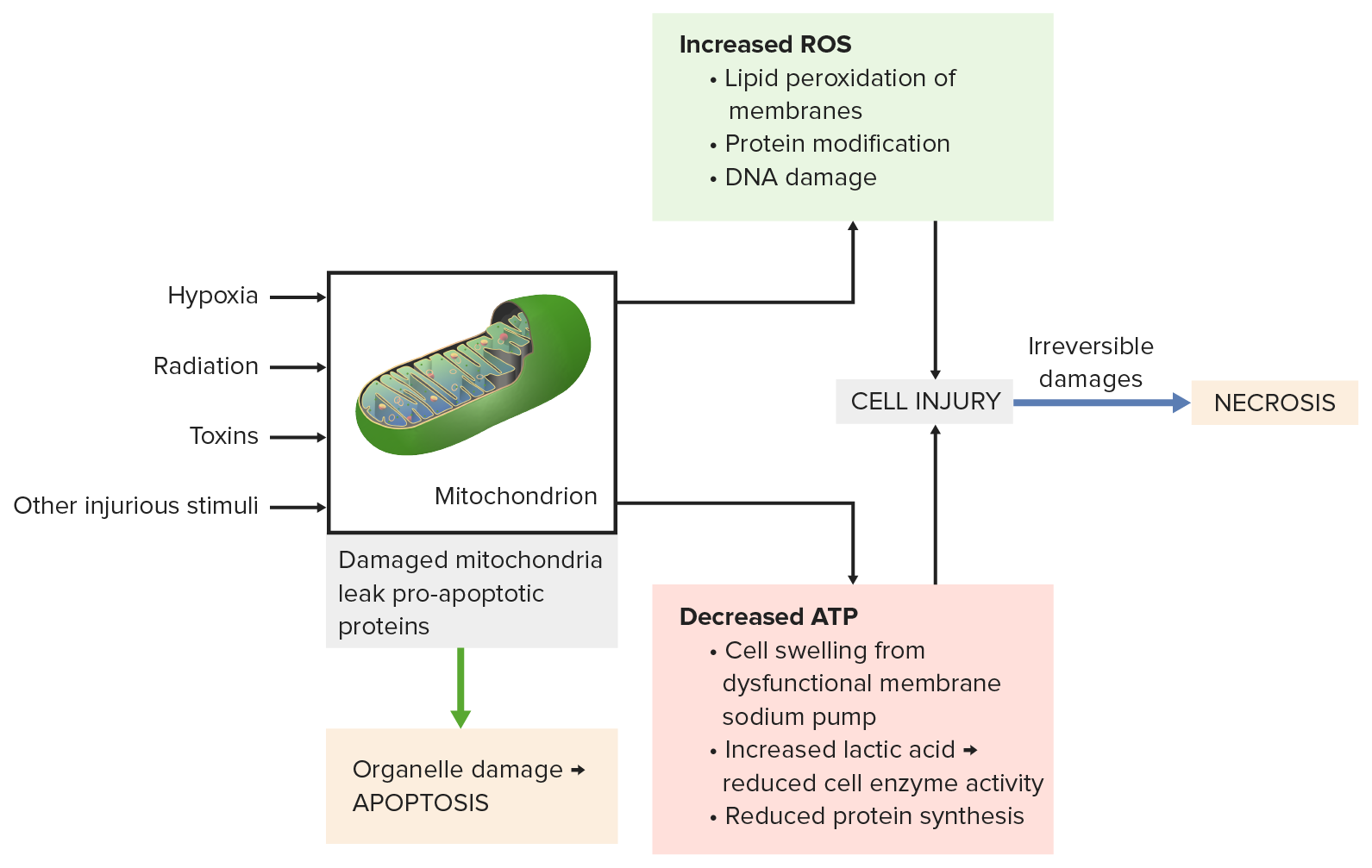
Mecanismos mitocondriales

El daño mitocondrial por estímulos dañinos (e.g., radiación, toxinas) conduce a:
Abajo a la izquierda: las proteínas proapoptóticas se escapan de las mitocondrias y provocan la apoptosis.
Arriba a la derecha: la fosforilación oxidativa incompleta produce especies reactivas del oxígeno. Se dañan membranas, proteínas y ADN.
Abajo a la derecha: la disminución de ATP produce inflamación celular, reducción de la actividad enzimática y síntesis de proteínas.
Todos los procesos conducen a una lesión celular grave, luego se produce la necrosis.
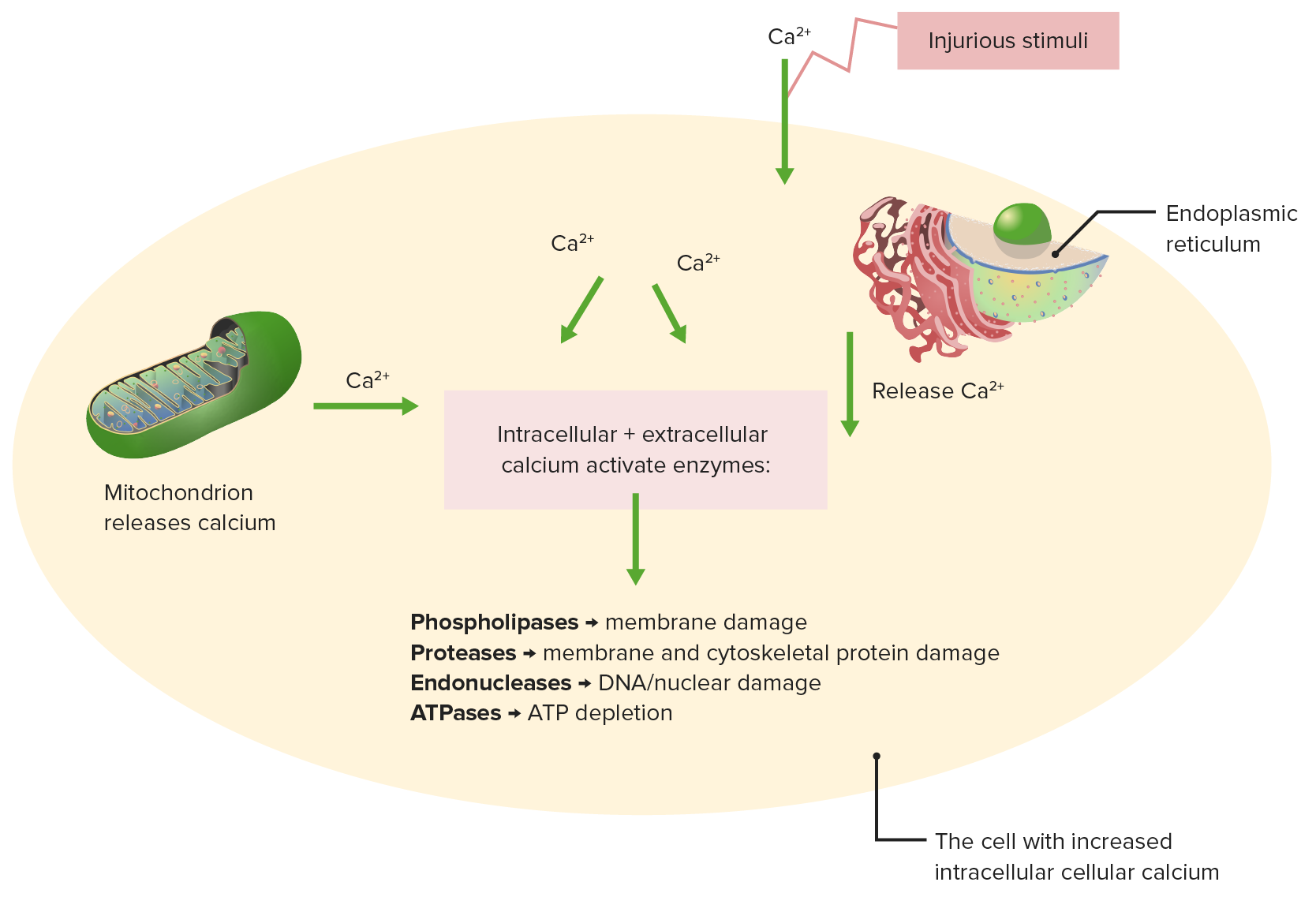
Imagen por Lecturio.

Lesión Celular por Homeostasis Anormal del Calcio

Homeostasis Homeostasis The processes whereby the internal environment of an organism tends to remain balanced and stable. Cell Injury and Death del calcio

  • Calcio intracelular (Ca²⁺): normalmente bajo (secuestrado en EN Erythema nodosum is an immune-mediated panniculitis (inflammation of the subcutaneous fat) caused by a type IV (delayed-type) hypersensitivity reaction. It commonly manifests in young women as tender, erythematous nodules on the shins. Erythema Nodosum la mitocondria y el retículo endoplásmico)
  • Estímulos dañinos comunes:
    • Privación de oxígeno/isquemia
    • Toxinas

Consecuencias de la alteración de la homeostasis Homeostasis The processes whereby the internal environment of an organism tends to remain balanced and stable. Cell Injury and Death del calcio

  • Liberación de Ca²⁺ de las reservas intracelulares y ↑ ingreso de Ca²⁺ a través de la membrana plasmática
  • ↑ Calcio → apertura del poro de transición de permeabilidad mitocondrial → disminución de ATP
  • El aumento de Ca²⁺ activa las enzimas que producen lesión celular:
    • Fosfolipasas → daño de la membrana
    • Proteasas → degradación de proteínas de membrana y del citoesqueleto
    • Endonucleasas → fragmentación de ADN y cromatina
    • ATPasas → depleción del ATP
Mecanismos calcio

Efectos de la homeostasis del calcio alterada
Los estímulos nocivos provocan la liberación de calcio de la mitocondria y el retículo endoplásmico.
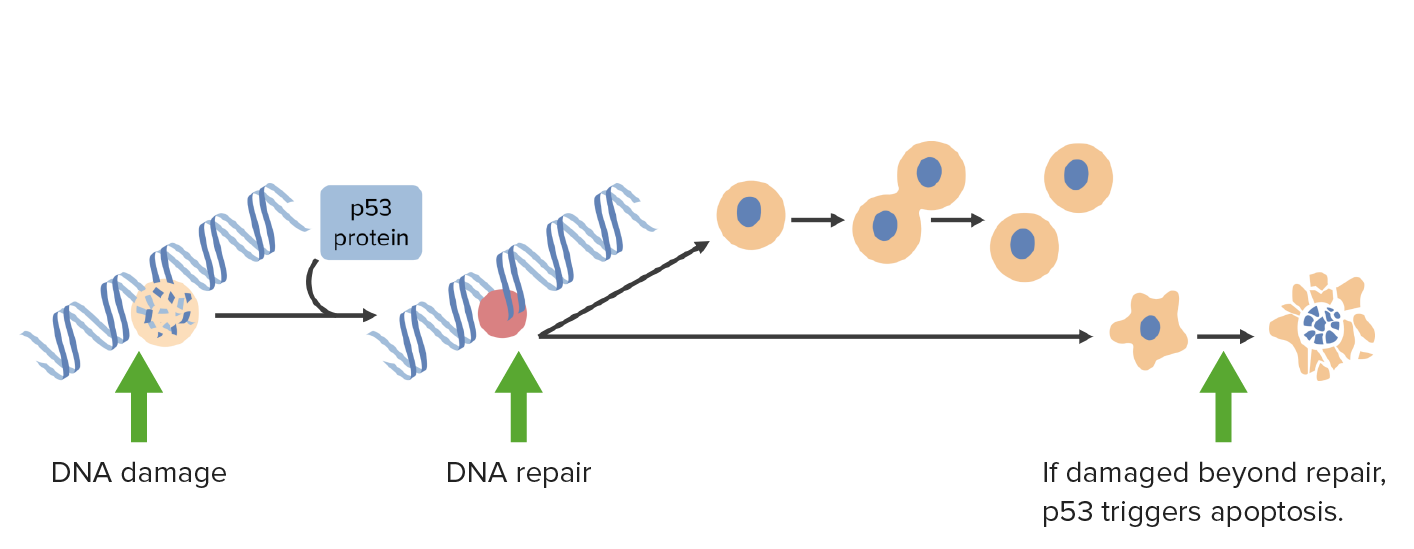
Imagen por Lecturio.

Lesión Celular por Daño del ADN y la Membrana

Daño del ADN

  • Estímulos dañinos comunes:
    • Radiación
    • Medicamentos quimioterápicos
    • Especies reactivas del oxígeno
  • Puede ser parte del envejecimiento

Consecuencias del ADN dañado

  • Activa la vía p53: detiene el ciclo celular en EN Erythema nodosum is an immune-mediated panniculitis (inflammation of the subcutaneous fat) caused by a type IV (delayed-type) hypersensitivity reaction. It commonly manifests in young women as tender, erythematous nodules on the shins. Erythema Nodosum la fase G1, activando los LOS Neisseria mecanismos de reparación
  • La apoptosis Apoptosis A regulated cell death mechanism characterized by distinctive morphologic changes in the nucleus and cytoplasm, including the endonucleolytic cleavage of genomic DNA, at regularly spaced, internucleosomal sites, I.e., DNA fragmentation. It is genetically-programmed and serves as a balance to mitosis in regulating the size of animal tissues and in mediating pathologic processes associated with tumor growth. Ischemic Cell Damage ocurre:
    • Si las reparaciones no pueden corregir el daño
    • Para proteger el tejido involucrado (la célula muere en EN Erythema nodosum is an immune-mediated panniculitis (inflammation of the subcutaneous fat) caused by a type IV (delayed-type) hypersensitivity reaction. It commonly manifests in young women as tender, erythematous nodules on the shins. Erythema Nodosum lugar de persistir con un ADN anormal, el cual tiene potencial de transformación maligna)
El daño del ADN activa p53

El daño del ADN activa la p53 que detiene las células en la fase G1 y desencadena los mecanismos de reparación del ADN. Si el daño es irreparable, la p53 activa la apoptosis.

Imagen por Lecturio.
Daño de la membrana

  • Membrana normal: compuesta por lípidos, siendo los LOS Neisseria fosfolípidos la forma más abundante
  • Estímulos dañinos comunes:
    • Infección bacteriana (toxinas)
    • Proteínas virales
    • Lisis mediada por complemento
    • Agentes físicos/químicos
    • Isquemia
  • Otros mecanismos se superponen y causan daño a la membrana:
    • Radicales libres de oxígeno → peroxidación lipídica → pérdida de fosfolípidos
    • Daño mitocondrial → ATP reducido → síntesis de fosfolípidos disminuida
    • Fosfolipasas dependientes de calcio → degradación de fosfolípidos → pérdida de membrana
    • Proteasas dependientes de calcio → daño del filamento citoesquelético → aumento del edema Edema Edema is a condition in which excess serous fluid accumulates in the body cavity or interstitial space of connective tissues. Edema is a symptom observed in several medical conditions. It can be categorized into 2 types, namely, peripheral (in the extremities) and internal (in an organ or body cavity). Edema y ruptura celular

Consecuencias del daño de la membrana

  • ↑ Permeabilidad de la membrana plasmática → afluencia de fluidos y iones + pérdida del equilibrio osmótico celular
  • Lesión de las membranas lisosomales → las enzimas lisosomales alteran los LOS Neisseria orgánulos citoplasmáticos
Mecanismos de membrana

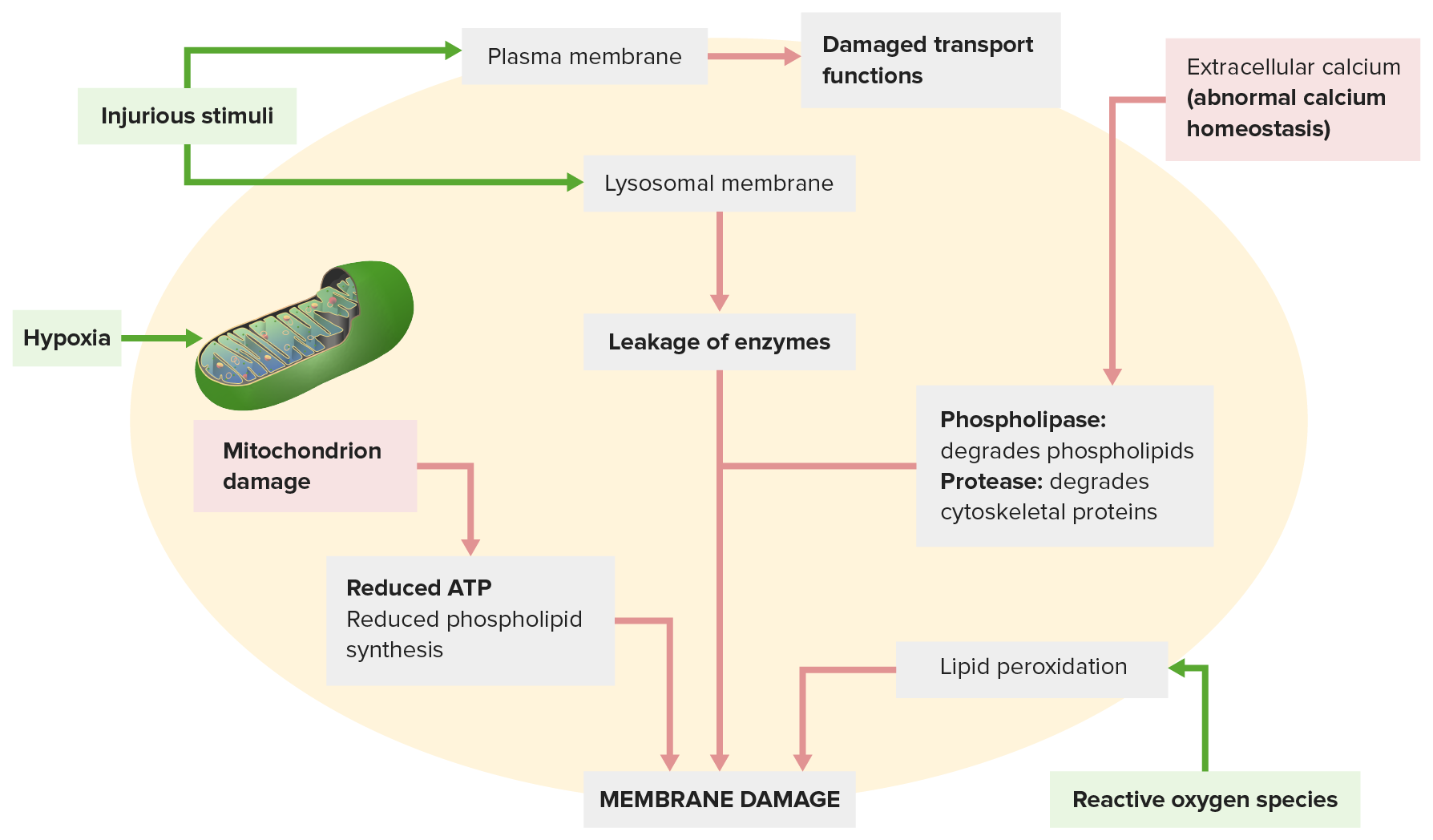
El daño de la membrana ocurre por lo siguiente:
Un estímulo dañino (arriba a la izquierda) conduce a la interrupción de las funciones de transporte. El estímulo dañino también afecta las membranas lisosomales, liberando enzimas que dañan la célula.
Otros mecanismos: la homeostasis anormal del calcio (arriba a la derecha) libera enzimas que degradan la membrana; la disfunción mitocondrial (abajo a la izquierda) reduce la producción de ATP necesaria para la síntesis de membrana.
Las especies reactivas de oxígeno (abajo a la derecha) causan peroxidación lipídica, lo que conduce a la pérdida de fosfolípidos de la membrana.
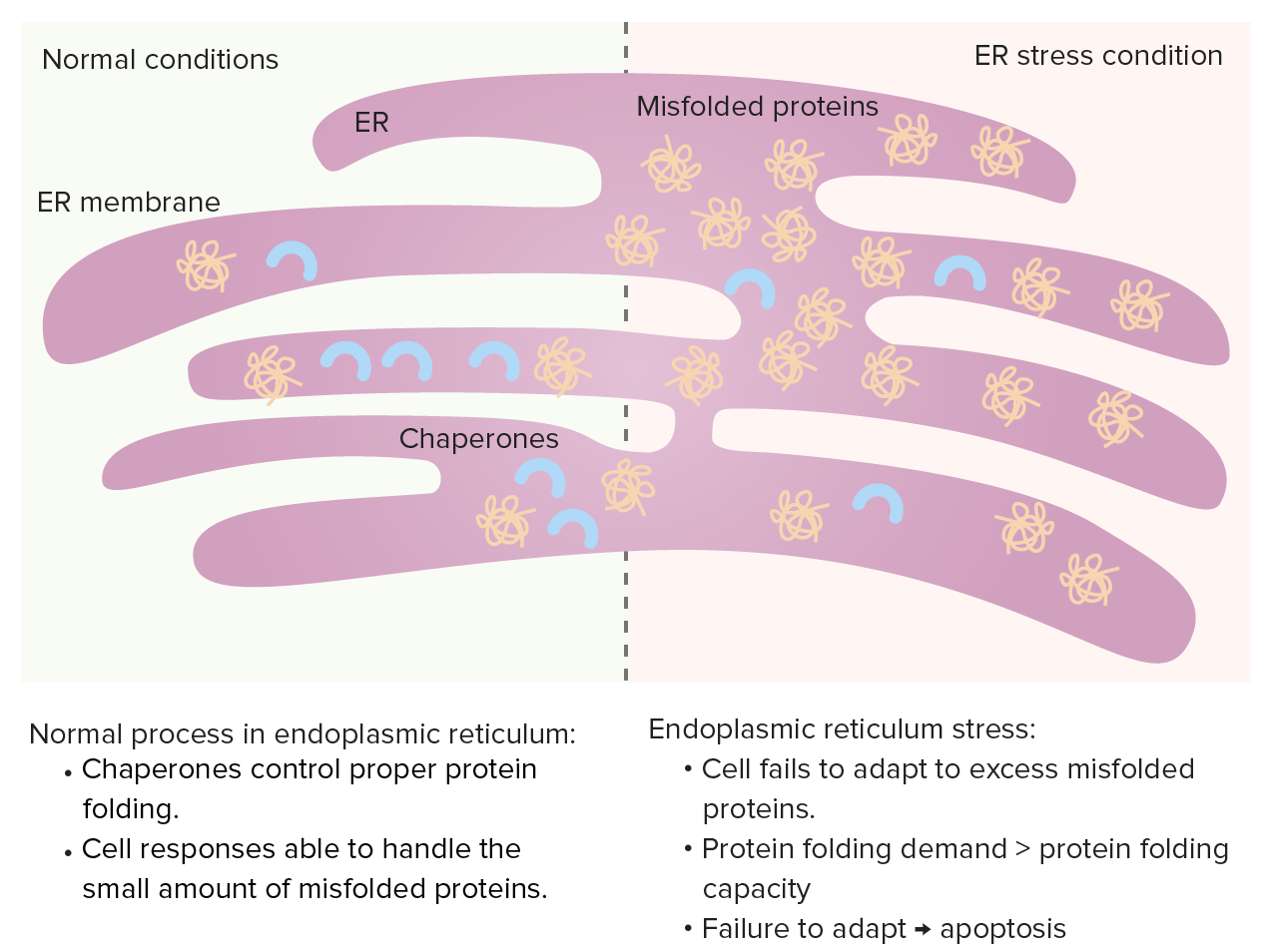
Imagen por Lecturio.

Related videos

Lesión Celular por Estrés del Retículo Endoplásmico

Retículo endoplásmico

  • Sitio de síntesis y plegamiento de proteínas, síntesis de lípidos y almacenamiento de calcio libre
  • Chaperonas: controlan el plegamiento de proteínas
  • Proteínas mal plegadas: generalmente procesadas para proteólisis
  • Respuesta de proteína desplegada:
    • Vías de transducción de señales que detectan proteínas mal plegadas
    • ↑ Chaperonas, ↓ traducción de proteínas y ↑ degradación de proteínas mal plegadas
  • Estímulos nocivos:
    • Anomalías/mutaciones genéticas
    • Isquemia/hipoxia
    • Infecciones virales

Consecuencias del Estrés del Retículo Endoplásmico

  • Estrés del retículo endoplásmico: la demanda de plegamiento de proteínas excede la capacidad de plegamiento de proteínas.
  • Se acumulan proteínas no reparadas → apoptosis Apoptosis A regulated cell death mechanism characterized by distinctive morphologic changes in the nucleus and cytoplasm, including the endonucleolytic cleavage of genomic DNA, at regularly spaced, internucleosomal sites, I.e., DNA fragmentation. It is genetically-programmed and serves as a balance to mitosis in regulating the size of animal tissues and in mediating pathologic processes associated with tumor growth. Ischemic Cell Damage
  • Enfermedades y sus proteínas mal plegadas asociadas:
    • Fibrosis Fibrosis Any pathological condition where fibrous connective tissue invades any organ, usually as a consequence of inflammation or other injury. Bronchiolitis Obliterans quística: regulador de conductancia transmembrana de la fibrosis Fibrosis Any pathological condition where fibrous connective tissue invades any organ, usually as a consequence of inflammation or other injury. Bronchiolitis Obliterans quística
    • Deficiencia de α1-antitripsina: α1-antitripsina
    • Enfermedad de Alzheimer: péptido Aβ
    • Hipercolesterolemia familiar: receptor Receptor Receptors are proteins located either on the surface of or within a cell that can bind to signaling molecules known as ligands (e.g., hormones) and cause some type of response within the cell. Receptors de la lipoproteína de baja densidad (LDL, por sus siglas en EN Erythema nodosum is an immune-mediated panniculitis (inflammation of the subcutaneous fat) caused by a type IV (delayed-type) hypersensitivity reaction. It commonly manifests in young women as tender, erythematous nodules on the shins. Erythema Nodosum inglés)
    • Enfermedad de Creutzfeldt-Jacob: prion
Retículo endoplásmico

Retículo endoplásmico
Las chaperonas controlan el plegamiento de proteínas en el retículo endoplásmico y las proteínas mal plegadas normalmente se someten a proteólisis. Cuando aumentan las proteínas mal plegadas, se produce la respuesta a proteínas desplegadas (aumentando las chaperonas, disminuyendo la síntesis de proteínas y mejorando la degradación de las proteínas mal plegadas).
Estrés del retículo endoplásmico: si aumenta la demanda de plegamiento de proteínas (exceso de proteínas mal plegadas), la capacidad de plegado de proteínas se satura, lo que conduce a la apoptosis celular.
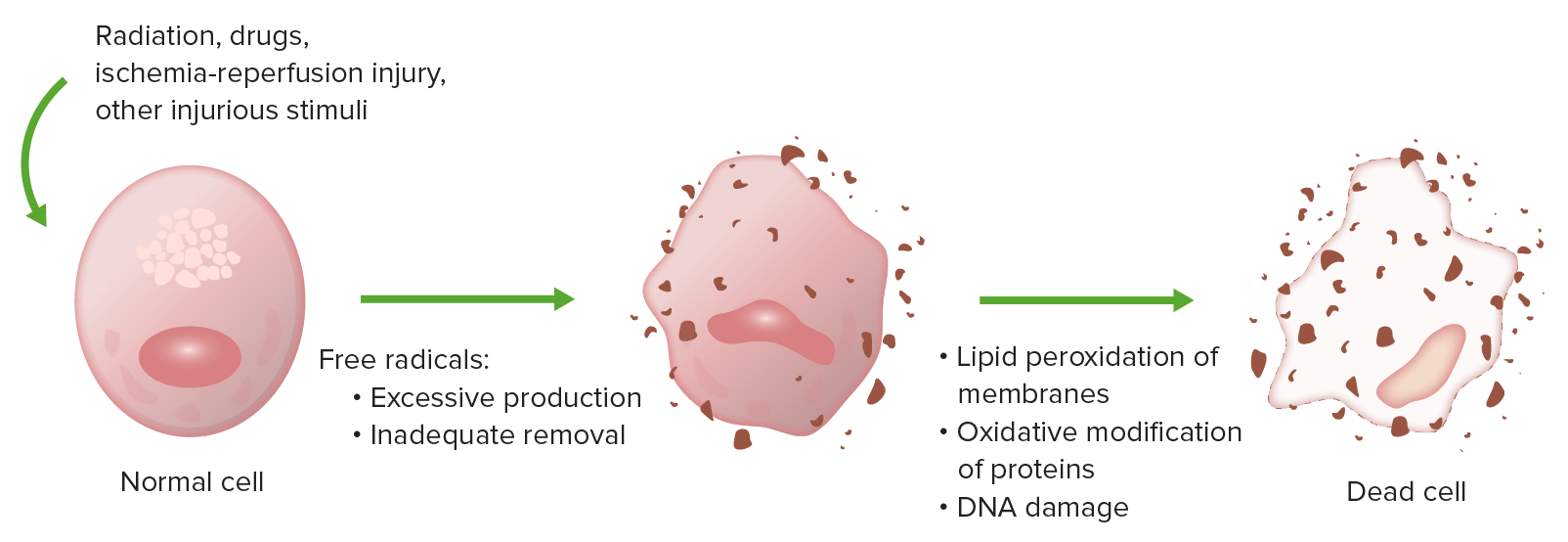
Imagen por Lecturio.

Lesión Celular por Estrés Oxidativo

Radicales libres

  • Especies moleculares con un solo electrón desapareado en EN Erythema nodosum is an immune-mediated panniculitis (inflammation of the subcutaneous fat) caused by a type IV (delayed-type) hypersensitivity reaction. It commonly manifests in young women as tender, erythematous nodules on the shins. Erythema Nodosum la órbita exterior
  • Altamente reactivos: atacan moléculas adyacentes (proteínas, carbohidratos, ácidos nucleicos)
  • Especies reactivas del oxígeno: un radical libre derivado del oxígeno
  • Principales radicales libres:
    • Anión superóxido (O2)
    • Peróxido de hidrógeno (H₂O₂)
    • Radical hidroxilo (OH): especie reactiva de oxígeno más reactiva
    • Peroxinitrito (ONOO⁻)
  • Estímulos nocivos:
    • Lesión por isquemia-reperfusión
    • Lesión química y por radiación
    • Envejecimiento
    • Fagocitosis de microbios

Estrés oxidativo

  • Acumulación de especies reactivas de oxígeno → estrés oxidativo:
    • Por una mayor producción de radicales libres
    • Por disminución de la eliminación de especies reactivas de oxígeno
  • Los LOS Neisseria siguientes generan radicales libres:
    • Reacciones de reducción-oxidación:
      • El O₂ se reduce con la transferencia de electrones a H₂ para formar moléculas de agua.
      • Intermediarios parcialmente reducidos → radicales libres
    • Exposición a radiaciones ionizantes y rayos ultravioleta
    • Los LOS Neisseria neutrófilos polimorfonucleares producen radicales libres durante la respuesta inflamatoria.
    • Metabolismo de sustancias químicas exógenas (e.g., tetracloruro de carbono)
    • Reacciones con metales de transición (e.g., hierro o cobre)
    • Reacción del óxido nítrico (con superóxido) en EN Erythema nodosum is an immune-mediated panniculitis (inflammation of the subcutaneous fat) caused by a type IV (delayed-type) hypersensitivity reaction. It commonly manifests in young women as tender, erythematous nodules on the shins. Erythema Nodosum los LOS Neisseria macrófagos, produciendo peroxinitrito (ONOO⁻), un radical libre

Consecuencias del estrés oxidativo

  • Daño de la membrana por peroxidación lipídica:
    • Las especies reactivas del oxígeno atacan los LOS Neisseria ácidos grasos insaturados de la membrana.
    • Se producen hidroperóxidos lipídicos → ↓ función de las membranas
  • Daño o fragmentación del ADN
  • Modificación oxidativa de proteínas: ↑ entrecruzamiento de proteínas conduce a ↑ degradación y ↓ actividad

Antioxidantes

  • Defensa contra los LOS Neisseria radicales libres (eliminadores de especies reactivas de oxígeno)
  • Eliminan inmediatamente las especies reactivas de oxígeno producidas durante la respiración mitocondrial y la generación de energía
  • Puede haber una cantidad baja de radicales libres, pero no pueden inducir daño.
  • Mecanismo no enzimático:
    • Vitaminas A, C, E
    • Glutatión
    • Ferritina
    • Transferrina
    • Ceruloplasmina
  • Mecanismo enzimático:
    • Glutatión peroxidasa: cataliza la descomposición de radicales hidroxilo
    • Superóxido dismutasa: convierte el superóxido en EN Erythema nodosum is an immune-mediated panniculitis (inflammation of the subcutaneous fat) caused by a type IV (delayed-type) hypersensitivity reaction. It commonly manifests in young women as tender, erythematous nodules on the shins. Erythema Nodosum peróxido de hidrógeno (H₂O₂)
    • Catalasa: descompone H₂O₂
El estrés oxidativo causa daño celular

El estrés oxidativo causa lesión celular por peroxidación lipídica de membranas, modificación oxidativa de proteínas y daño al ADN.

Imagen por Lecturio.

Muerte Celular por Apoptosis

Muerte celular programada ( apoptosis Apoptosis A regulated cell death mechanism characterized by distinctive morphologic changes in the nucleus and cytoplasm, including the endonucleolytic cleavage of genomic DNA, at regularly spaced, internucleosomal sites, I.e., DNA fragmentation. It is genetically-programmed and serves as a balance to mitosis in regulating the size of animal tissues and in mediating pathologic processes associated with tumor growth. Ischemic Cell Damage)

  • Enzimas activadas degradan el ADN y proteínas en EN Erythema nodosum is an immune-mediated panniculitis (inflammation of the subcutaneous fat) caused by a type IV (delayed-type) hypersensitivity reaction. It commonly manifests in young women as tender, erythematous nodules on the shins. Erythema Nodosum células que están destinadas a morir
  • Características:
    • ↓ Tamaño celular, citoplasma eosinofílico
    • Condensación de la cromatina (la cromatina se agrega periféricamente)
    • Ampollas citoplasmáticas y cuerpos apoptóticos
    • Fagocitosis de células apoptóticas por macrófagos

Apoptosis Apoptosis A regulated cell death mechanism characterized by distinctive morphologic changes in the nucleus and cytoplasm, including the endonucleolytic cleavage of genomic DNA, at regularly spaced, internucleosomal sites, I.e., DNA fragmentation. It is genetically-programmed and serves as a balance to mitosis in regulating the size of animal tissues and in mediating pathologic processes associated with tumor growth. Ischemic Cell Damage en EN Erythema nodosum is an immune-mediated panniculitis (inflammation of the subcutaneous fat) caused by a type IV (delayed-type) hypersensitivity reaction. It commonly manifests in young women as tender, erythematous nodules on the shins. Erythema Nodosum diferentes condiciones

  • Condiciones fisiológicas:
    • Desarrollo fetal:
      • Las células mueren después de que se ha HA Hemolytic anemia (HA) is the term given to a large group of anemias that are caused by the premature destruction/hemolysis of circulating red blood cells (RBCs). Hemolysis can occur within (intravascular hemolysis) or outside the blood vessels (extravascular hemolysis). Hemolytic Anemia cumplido su propósito.
      • Eliminación de células supernumerarias durante el desarrollo
    • Involución de tejidos con abstinencia hormonal:
      • Desprendimiento de endometrio en EN Erythema nodosum is an immune-mediated panniculitis (inflammation of the subcutaneous fat) caused by a type IV (delayed-type) hypersensitivity reaction. It commonly manifests in young women as tender, erythematous nodules on the shins. Erythema Nodosum el ciclo menstrual
      • Regresión de la mama lactante (suspensión de la lactancia)
    • Eliminación de linfocitos autorreactivos (pueden causar una enfermedad autoinmune)
    • Eliminación de neutrófilos en EN Erythema nodosum is an immune-mediated panniculitis (inflammation of the subcutaneous fat) caused by a type IV (delayed-type) hypersensitivity reaction. It commonly manifests in young women as tender, erythematous nodules on the shins. Erythema Nodosum una respuesta inflamatoria
    • Control de la proliferación celular, manteniendo un número constante de poblaciones celulares (linfocitos inmaduros en EN Erythema nodosum is an immune-mediated panniculitis (inflammation of the subcutaneous fat) caused by a type IV (delayed-type) hypersensitivity reaction. It commonly manifests in young women as tender, erythematous nodules on the shins. Erythema Nodosum la médula ósea)
  • Condiciones patológicas:
    • Daño del ADN: la apoptosis Apoptosis A regulated cell death mechanism characterized by distinctive morphologic changes in the nucleus and cytoplasm, including the endonucleolytic cleavage of genomic DNA, at regularly spaced, internucleosomal sites, I.e., DNA fragmentation. It is genetically-programmed and serves as a balance to mitosis in regulating the size of animal tissues and in mediating pathologic processes associated with tumor growth. Ischemic Cell Damage previene la supervivencia de células con mutaciones en EN Erythema nodosum is an immune-mediated panniculitis (inflammation of the subcutaneous fat) caused by a type IV (delayed-type) hypersensitivity reaction. It commonly manifests in young women as tender, erythematous nodules on the shins. Erythema Nodosum el ADN (efecto protector).
    • Eliminación de proteínas plegadas incorrectamente
    • Obstrucción ductal (e.g., riñón, glándula parótida): la atrofia se produce por apoptosis Apoptosis A regulated cell death mechanism characterized by distinctive morphologic changes in the nucleus and cytoplasm, including the endonucleolytic cleavage of genomic DNA, at regularly spaced, internucleosomal sites, I.e., DNA fragmentation. It is genetically-programmed and serves as a balance to mitosis in regulating the size of animal tissues and in mediating pathologic processes associated with tumor growth. Ischemic Cell Damage.
    • Infecciones (particularmente enfermedades virales): los LOS Neisseria linfocitos T citotóxicos inducen la apoptosis Apoptosis A regulated cell death mechanism characterized by distinctive morphologic changes in the nucleus and cytoplasm, including the endonucleolytic cleavage of genomic DNA, at regularly spaced, internucleosomal sites, I.e., DNA fragmentation. It is genetically-programmed and serves as a balance to mitosis in regulating the size of animal tissues and in mediating pathologic processes associated with tumor growth. Ischemic Cell Damage para eliminar las células infectadas.

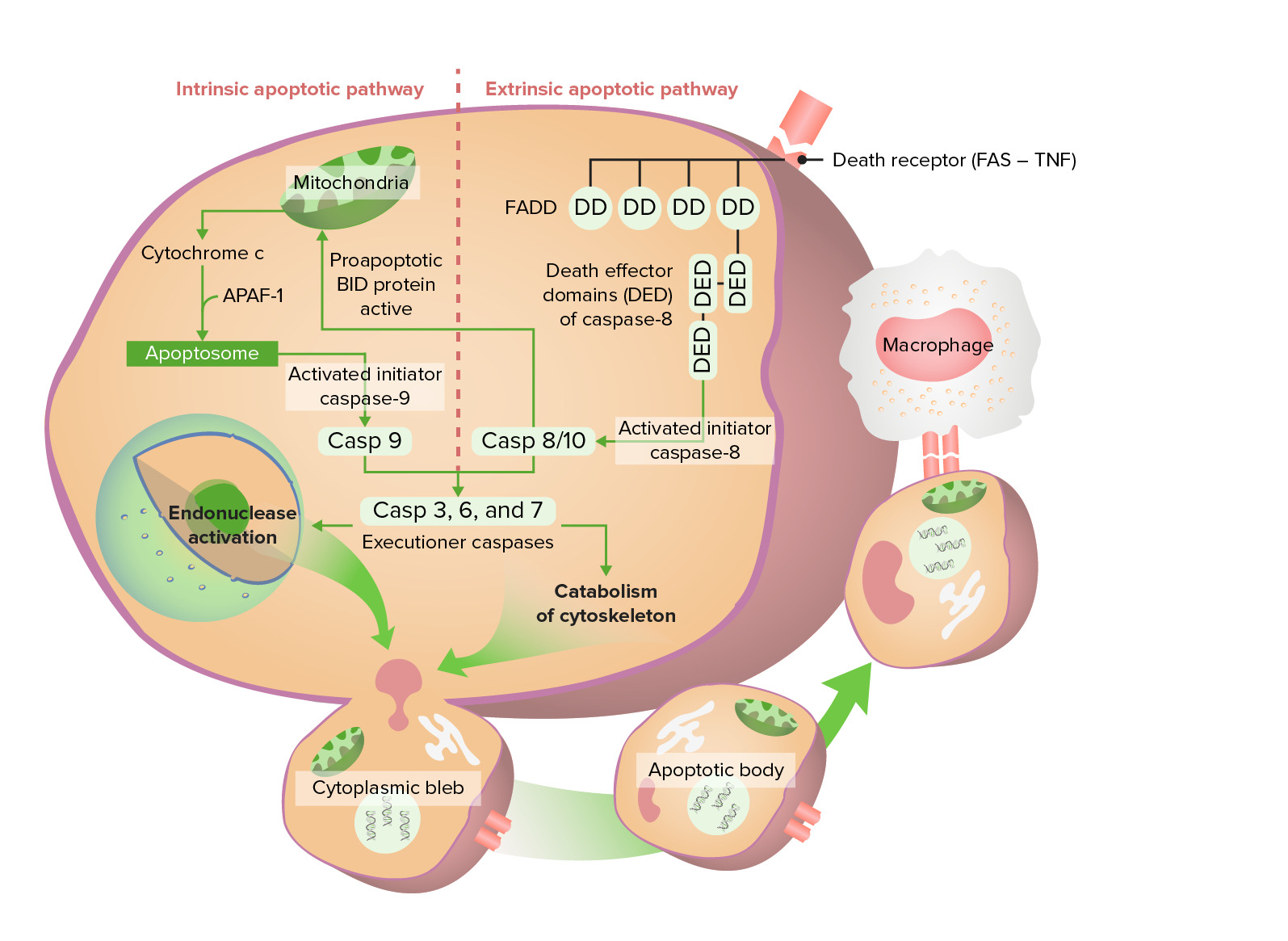
Mecanismos de apoptosis Apoptosis A regulated cell death mechanism characterized by distinctive morphologic changes in the nucleus and cytoplasm, including the endonucleolytic cleavage of genomic DNA, at regularly spaced, internucleosomal sites, I.e., DNA fragmentation. It is genetically-programmed and serves as a balance to mitosis in regulating the size of animal tissues and in mediating pathologic processes associated with tumor growth. Ischemic Cell Damage

Caspasas:

  • Proteasas de ácido aspártico y cisteína
  • Existen en EN Erythema nodosum is an immune-mediated panniculitis (inflammation of the subcutaneous fat) caused by a type IV (delayed-type) hypersensitivity reaction. It commonly manifests in young women as tender, erythematous nodules on the shins. Erythema Nodosum forma inactiva, por lo que requieren activación por escisión enzimática
  • Caspasas activas: un marcador de células que están experimentando apoptosis Apoptosis A regulated cell death mechanism characterized by distinctive morphologic changes in the nucleus and cytoplasm, including the endonucleolytic cleavage of genomic DNA, at regularly spaced, internucleosomal sites, I.e., DNA fragmentation. It is genetically-programmed and serves as a balance to mitosis in regulating the size of animal tissues and in mediating pathologic processes associated with tumor growth. Ischemic Cell Damage
  • Fases de la apoptosis Apoptosis A regulated cell death mechanism characterized by distinctive morphologic changes in the nucleus and cytoplasm, including the endonucleolytic cleavage of genomic DNA, at regularly spaced, internucleosomal sites, I.e., DNA fragmentation. It is genetically-programmed and serves as a balance to mitosis in regulating the size of animal tissues and in mediating pathologic processes associated with tumor growth. Ischemic Cell Damage:
    • Iniciación: activación de caspasas → cascada de otras caspasas
      • Vía intrínseca
      • Vía extrínseca
    • Ejecución: caspasas terminales → fragmentación celular

Vía intrínseca (iniciación):

  • Vía mitocondrial
  • En EN Erythema nodosum is an immune-mediated panniculitis (inflammation of the subcutaneous fat) caused by a type IV (delayed-type) hypersensitivity reaction. It commonly manifests in young women as tender, erythematous nodules on the shins. Erythema Nodosum células viables, los LOS Neisseria factores de crecimiento y las señales de supervivencia reducen la fuga mitocondrial del citocromo c al AL Amyloidosis producir proteínas antiapoptóticas (miembros principales):
    • BCL2
    • BCL-XL
    • MCL-1
  • En EN Erythema nodosum is an immune-mediated panniculitis (inflammation of the subcutaneous fat) caused by a type IV (delayed-type) hypersensitivity reaction. It commonly manifests in young women as tender, erythematous nodules on the shins. Erythema Nodosum células dañadas, la pérdida de señales de supervivencia, daño del ADN, plegamiento incorrecto de proteínas:
    • Permiten la fuga del citocromo c de las mitocondrias mediante la producción de proteínas proapoptóticas (miembros principales):
      • BAX
      • BAK
    • Activan iniciadores de apoptosis Apoptosis A regulated cell death mechanism characterized by distinctive morphologic changes in the nucleus and cytoplasm, including the endonucleolytic cleavage of genomic DNA, at regularly spaced, internucleosomal sites, I.e., DNA fragmentation. It is genetically-programmed and serves as a balance to mitosis in regulating the size of animal tissues and in mediating pathologic processes associated with tumor growth. Ischemic Cell Damage (solo proteínas BH3): BAD, BIM, BID, Puma, Noxa
  • Eventos:
    • Aumento de la permeabilidad de la membrana externa mitocondrial → liberación de citocromo c en EN Erythema nodosum is an immune-mediated panniculitis (inflammation of the subcutaneous fat) caused by a type IV (delayed-type) hypersensitivity reaction. It commonly manifests in young women as tender, erythematous nodules on the shins. Erythema Nodosum el citoplasma
    • El citocromo c inicia la apoptosis Apoptosis A regulated cell death mechanism characterized by distinctive morphologic changes in the nucleus and cytoplasm, including the endonucleolytic cleavage of genomic DNA, at regularly spaced, internucleosomal sites, I.e., DNA fragmentation. It is genetically-programmed and serves as a balance to mitosis in regulating the size of animal tissues and in mediating pathologic processes associated with tumor growth. Ischemic Cell Damage.
    • En EN Erythema nodosum is an immune-mediated panniculitis (inflammation of the subcutaneous fat) caused by a type IV (delayed-type) hypersensitivity reaction. It commonly manifests in young women as tender, erythematous nodules on the shins. Erythema Nodosum el citoplasma, el citocromo c se une al AL Amyloidosis factor activador de apoptosis-1 ( APAF-1 APAF-1 Cell Injury and Death, según sus siglas en EN Erythema nodosum is an immune-mediated panniculitis (inflammation of the subcutaneous fat) caused by a type IV (delayed-type) hypersensitivity reaction. It commonly manifests in young women as tender, erythematous nodules on the shins. Erythema Nodosum inglés), formando una estructura, apoptosoma.
    • El apoptosoma conduce a la autoescisión y activación de la caspasa-9, la caspasa iniciadora.
    • Caspasa-9 activada → cascada de caspasas de ejecución

Vía extrínseca (iniciación):

  • Vía iniciada por el receptor Receptor Receptors are proteins located either on the surface of or within a cell that can bind to signaling molecules known as ligands (e.g., hormones) and cause some type of response within the cell. Receptors de muerte
  • Los LOS Neisseria receptores de muerte de la membrana plasmática inician esta vía.
  • Receptores de muerte:
    • Miembros de la familia del factor de necrosis Necrosis The death of cells in an organ or tissue due to disease, injury or failure of the blood supply. Ischemic Cell Damage tumoral ( TNF TNF Tumor necrosis factor (TNF) is a major cytokine, released primarily by macrophages in response to stimuli. The presence of microbial products and dead cells and injury are among the stimulating factors. This protein belongs to the TNF superfamily, a group of ligands and receptors performing functions in inflammatory response, morphogenesis, and cell proliferation. Tumor Necrosis Factor (TNF), según sus siglas en EN Erythema nodosum is an immune-mediated panniculitis (inflammation of the subcutaneous fat) caused by a type IV (delayed-type) hypersensitivity reaction. It commonly manifests in young women as tender, erythematous nodules on the shins. Erythema Nodosum inglés) con un dominio de muerte citoplásmico (envía las señales apoptóticas)
    • Receptores de muerte más conocidos:
      • Receptor Receptor Receptors are proteins located either on the surface of or within a cell that can bind to signaling molecules known as ligands (e.g., hormones) and cause some type of response within the cell. Receptors TNF TNF Tumor necrosis factor (TNF) is a major cytokine, released primarily by macrophages in response to stimuli. The presence of microbial products and dead cells and injury are among the stimulating factors. This protein belongs to the TNF superfamily, a group of ligands and receptors performing functions in inflammatory response, morphogenesis, and cell proliferation. Tumor Necrosis Factor (TNF) tipo 1 ( TNFR1 TNFR1 A tumor necrosis factor receptor subtype that has specificity for tumor necrosis factor alpha and lymphotoxin alpha. It is constitutively expressed in most tissues and is a key mediator of tumor necrosis factor signaling in the vast majority of cells. The activated receptor signals via a conserved death domain that associates with specific tnf receptor-associated factors in the cytoplasm. Tumor Necrosis Factor (TNF), según sus siglas en EN Erythema nodosum is an immune-mediated panniculitis (inflammation of the subcutaneous fat) caused by a type IV (delayed-type) hypersensitivity reaction. It commonly manifests in young women as tender, erythematous nodules on the shins. Erythema Nodosum inglés)
      • Fas (CD95)
  • Eventos:
    • FasL (ligando Fas en EN Erythema nodosum is an immune-mediated panniculitis (inflammation of the subcutaneous fat) caused by a type IV (delayed-type) hypersensitivity reaction. It commonly manifests in young women as tender, erythematous nodules on the shins. Erythema Nodosum linfocitos T y linfocitos T citotóxicos) se une a Fas → se envía una señal de apoptosis Apoptosis A regulated cell death mechanism characterized by distinctive morphologic changes in the nucleus and cytoplasm, including the endonucleolytic cleavage of genomic DNA, at regularly spaced, internucleosomal sites, I.e., DNA fragmentation. It is genetically-programmed and serves as a balance to mitosis in regulating the size of animal tissues and in mediating pathologic processes associated with tumor growth. Ischemic Cell Damage a la célula.
    • 3 o más moléculas Fas se combinan para formar la proteína, dominio de muerte asociado a Fas (FADD, según sus siglas en EN Erythema nodosum is an immune-mediated panniculitis (inflammation of the subcutaneous fat) caused by a type IV (delayed-type) hypersensitivity reaction. It commonly manifests in young women as tender, erythematous nodules on the shins. Erythema Nodosum inglés).
    • FADD se une a la pro-caspasa-8.
    • Se activa la caspasa-8 (o caspasa-10) → estimula las caspasas de ejecución

Fase de ejecución:

  • Ambas vías convergen en EN Erythema nodosum is an immune-mediated panniculitis (inflammation of the subcutaneous fat) caused by a type IV (delayed-type) hypersensitivity reaction. It commonly manifests in young women as tender, erythematous nodules on the shins. Erythema Nodosum la fase de ejecución.
  • Eventos:
    • Comienza con la activación secuencial de caspasas de ejecución.
    • Se escinde el inhibidor de desoxirribonucleasa (ADNasa) → ADNasa activa → proteólisis y fragmentación nuclear
    • Las proteínas del citoesqueleto se descomponen.
    • Fragmentos celulares → se forman ampollas citoplasmáticas → se convierten en EN Erythema nodosum is an immune-mediated panniculitis (inflammation of the subcutaneous fat) caused by a type IV (delayed-type) hypersensitivity reaction. It commonly manifests in young women as tender, erythematous nodules on the shins. Erythema Nodosum cuerpos apoptóticos
    • Los LOS Neisseria cuerpos apoptóticos son devorados por los LOS Neisseria fagocitos.
  • Eferocitosis:
    • Fagocitosis de células apoptóticas
    • Aclaramiento rápido con producción reducida de citocinas proinflamatorias → reacciones inflamatorias limitadas incluso con apoptosis Apoptosis A regulated cell death mechanism characterized by distinctive morphologic changes in the nucleus and cytoplasm, including the endonucleolytic cleavage of genomic DNA, at regularly spaced, internucleosomal sites, I.e., DNA fragmentation. It is genetically-programmed and serves as a balance to mitosis in regulating the size of animal tissues and in mediating pathologic processes associated with tumor growth. Ischemic Cell Damage sustancial
Vía apoptótica

Vía apoptótica intrínseca y extrínseca
La vía intrínseca comienza con la liberación del citocromo c, que finalmente activa la caspasa 9. La vía extrínseca comienza con la activación de Fas (receptor de muerte), que conduce a la activación de caspasa 8/10. Estas caspasas pasan por la fase de ejecución, formando finalmente cuerpos apoptóticos que sufren fagocitosis.

Imagen por Lecturio.

Correlacion clinica

  • Genes Genes A category of nucleic acid sequences that function as units of heredity and which code for the basic instructions for the development, reproduction, and maintenance of organisms. DNA Types and Structure supresores de tumores:
    • Previenen la proliferación celular descontrolada y conducen a las células hacia la apoptosis Apoptosis A regulated cell death mechanism characterized by distinctive morphologic changes in the nucleus and cytoplasm, including the endonucleolytic cleavage of genomic DNA, at regularly spaced, internucleosomal sites, I.e., DNA fragmentation. It is genetically-programmed and serves as a balance to mitosis in regulating the size of animal tissues and in mediating pathologic processes associated with tumor growth. Ischemic Cell Damage.
    • Inactivación → neoplasia maligna
  • Linfoma folicular:
    • Asociado con translocaciones cromosómicas que involucran el gen BCL2
    • Tiene sobreexpresión de BCL2
    • Aumento de los LOS Neisseria mecanismos antiapoptóticos → expansión de células malignas

Muerte Celular por Necrosis

Proceso de necrosis Necrosis The death of cells in an organ or tissue due to disease, injury or failure of the blood supply. Ischemic Cell Damage

  • Muerte celular incontrolada tras una lesión irreversible:
    • La membrana celular se rompe; las enzimas lisosomales entran y digieren la célula.
    • El contenido celular se libera y circula hacia el espacio extracelular.
    • Los LOS Neisseria contenidos circulantes provocan una reacción inflamatoria y reclutan leucocitos al AL Amyloidosis sitio de necrosis Necrosis The death of cells in an organ or tissue due to disease, injury or failure of the blood supply. Ischemic Cell Damage.
  • Correlación clínica (las pruebas de lesión específica de tejidos representan el contenido intracelular circulante):
    • Troponina: de las células de músculo cardíaco dañadas
    • Fosfatasa alcalina: del epitelio del conducto biliar
    • Transaminasas: de hepatocitos

Cambios celulares

  • Cambios citoplasmáticos:
    • Citoplasma eosinofílico: debido a proteínas citoplasmáticas desnaturalizadas (que se une al tinte de eosina)
    • Citoplasma vacuolado: las enzimas digieren los orgánulos, dejando una apariencia “apolillada”.
    • Figuras de mielina: precipitados grandes de fosfolípidos en EN Erythema nodosum is an immune-mediated panniculitis (inflammation of the subcutaneous fat) caused by a type IV (delayed-type) hypersensitivity reaction. It commonly manifests in young women as tender, erythematous nodules on the shins. Erythema Nodosum espiral (de la membrana dañada), que se fagocitan o degradan a ácidos grasos
  • Cambios nucleares (1 de 3 patrones):
    • Cariólisis: basofilia reducida debido a la pérdida de ADN (efecto de la ADNasa)
    • Picnosis: contracción nuclear y aumento de la basofilia (condensación de la cromatina en EN Erythema nodosum is an immune-mediated panniculitis (inflammation of the subcutaneous fat) caused by a type IV (delayed-type) hypersensitivity reaction. It commonly manifests in young women as tender, erythematous nodules on the shins. Erythema Nodosum una densa masa basófila)
    • Cariorrexis: fragmentación del núcleo
Tabla: Necrosis Necrosis The death of cells in an organ or tissue due to disease, injury or failure of the blood supply. Ischemic Cell Damage y apoptosis Apoptosis A regulated cell death mechanism characterized by distinctive morphologic changes in the nucleus and cytoplasm, including the endonucleolytic cleavage of genomic DNA, at regularly spaced, internucleosomal sites, I.e., DNA fragmentation. It is genetically-programmed and serves as a balance to mitosis in regulating the size of animal tissues and in mediating pathologic processes associated with tumor growth. Ischemic Cell Damage
Características de la necrosis Necrosis The death of cells in an organ or tissue due to disease, injury or failure of the blood supply. Ischemic Cell Damage Características de la apoptosis Apoptosis A regulated cell death mechanism characterized by distinctive morphologic changes in the nucleus and cytoplasm, including the endonucleolytic cleavage of genomic DNA, at regularly spaced, internucleosomal sites, I.e., DNA fragmentation. It is genetically-programmed and serves as a balance to mitosis in regulating the size of animal tissues and in mediating pathologic processes associated with tumor growth. Ischemic Cell Damage
Tamaño celular Agrandada (edematizada) Reducida (encogida)
Núcleo Picnosis, cariorrexis, cariólisis Fragmentación en EN Erythema nodosum is an immune-mediated panniculitis (inflammation of the subcutaneous fat) caused by a type IV (delayed-type) hypersensitivity reaction. It commonly manifests in young women as tender, erythematous nodules on the shins. Erythema Nodosum piezas del tamaño de un nucleosoma
Membrana plasmática Dañada Estructura intacta pero alterada (orientación de los LOS Neisseria lípidos)
Contenidos celulares Digestión enzimática; fuga fuera de la célula Intactos; liberados en EN Erythema nodosum is an immune-mediated panniculitis (inflammation of the subcutaneous fat) caused by a type IV (delayed-type) hypersensitivity reaction. It commonly manifests in young women as tender, erythematous nodules on the shins. Erythema Nodosum cuerpos apoptóticos
Inflamación adyacente Frecuente No
Papel fisiológico o patológico Patológico (resultado de lesión celular irreversible) Fisiológico: eliminación de células no deseadas.
Patológico: lesión celular por daño del ADN y de las proteínas.

Patrones de necrosis Necrosis The death of cells in an organ or tissue due to disease, injury or failure of the blood supply. Ischemic Cell Damage

Necrosis Necrosis The death of cells in an organ or tissue due to disease, injury or failure of the blood supply. Ischemic Cell Damage coagulativa :
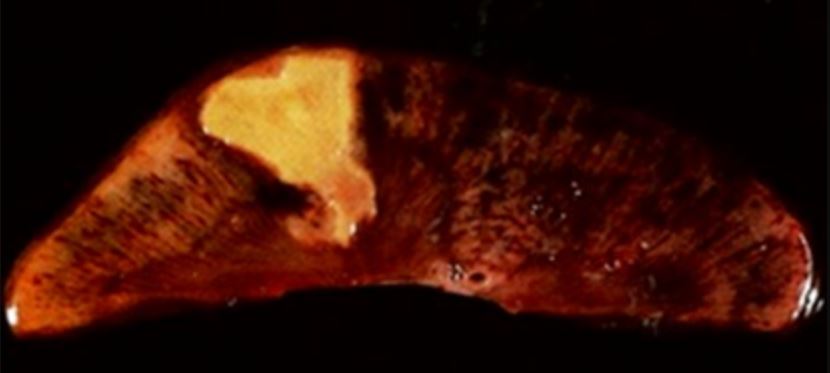
  • Los LOS Neisseria contornos de las células y la arquitectura de los LOS Neisseria tejidos se mantienen durante varios días
  • La lesión también desnaturaliza las enzimas, por lo que se bloquea la proteólisis inicial.
  • Finalmente, las enzimas leucocitarias descomponen las células muertas.
  • A menudo en EN Erythema nodosum is an immune-mediated panniculitis (inflammation of the subcutaneous fat) caused by a type IV (delayed-type) hypersensitivity reaction. It commonly manifests in young women as tender, erythematous nodules on the shins. Erythema Nodosum isquemia o lesión hipóxica
  • Infarto: área localizada de necrosis Necrosis The death of cells in an organ or tissue due to disease, injury or failure of the blood supply. Ischemic Cell Damage coagulativa
  • Se observa en EN Erythema nodosum is an immune-mediated panniculitis (inflammation of the subcutaneous fat) caused by a type IV (delayed-type) hypersensitivity reaction. It commonly manifests in young women as tender, erythematous nodules on the shins. Erythema Nodosum infarto de miocardio y renal

Necrosis Necrosis The death of cells in an organ or tissue due to disease, injury or failure of the blood supply. Ischemic Cell Damage licuefactiva:
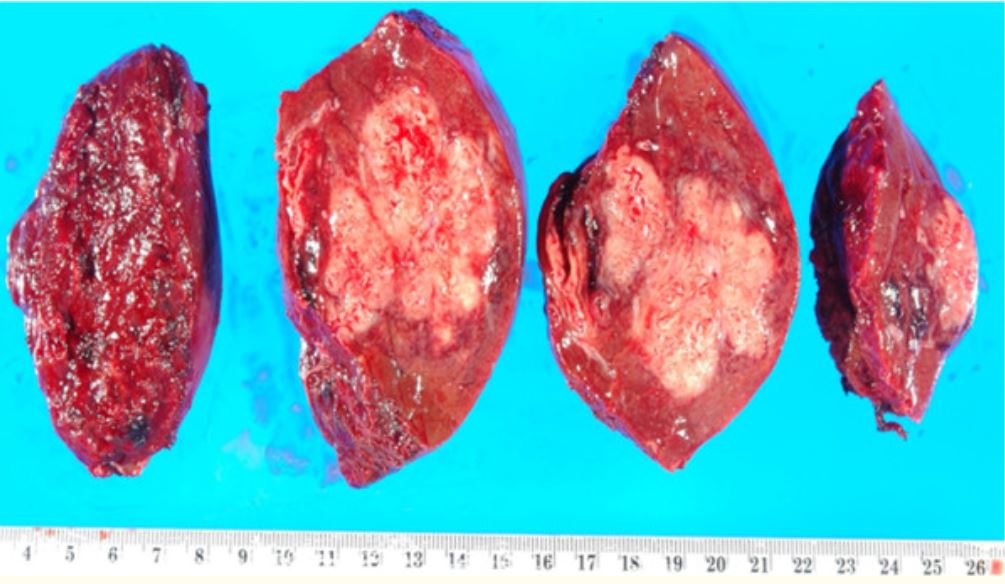
  • Necrosis Necrosis The death of cells in an organ or tissue due to disease, injury or failure of the blood supply. Ischemic Cell Damage colicuativa
  • El tejido es digerido y se disuelve en EN Erythema nodosum is an immune-mediated panniculitis (inflammation of the subcutaneous fat) caused by a type IV (delayed-type) hypersensitivity reaction. It commonly manifests in young women as tender, erythematous nodules on the shins. Erythema Nodosum un líquido viscoso.
  • Se observa en EN Erythema nodosum is an immune-mediated panniculitis (inflammation of the subcutaneous fat) caused by a type IV (delayed-type) hypersensitivity reaction. It commonly manifests in young women as tender, erythematous nodules on the shins. Erythema Nodosum infecciones bacterianas y fúngicas que estimulan los LOS Neisseria leucocitos y la liberación de enzimas hidrolíticas
  • Pus: material necrótico amarillo y cremoso
  • Mecanismo de necrosis Necrosis The death of cells in an organ or tissue due to disease, injury or failure of the blood supply. Ischemic Cell Damage predeterminado, utilizado por células hipóxicas del sistema nervioso central
  • Necrosis Necrosis The death of cells in an organ or tissue due to disease, injury or failure of the blood supply. Ischemic Cell Damage coagulativa y licuefactiva: no son mutuamente excluyentes
  • Los LOS Neisseria miocitos cardíacos dañados sufren necrosis Necrosis The death of cells in an organ or tissue due to disease, injury or failure of the blood supply. Ischemic Cell Damage coagulativa; a medida que los LOS Neisseria leucocitos se establecen y se liberan enzimas, se produce una necrosis Necrosis The death of cells in an organ or tissue due to disease, injury or failure of the blood supply. Ischemic Cell Damage licuefactiva.

Necrosis Necrosis The death of cells in an organ or tissue due to disease, injury or failure of the blood supply. Ischemic Cell Damage caseosa:
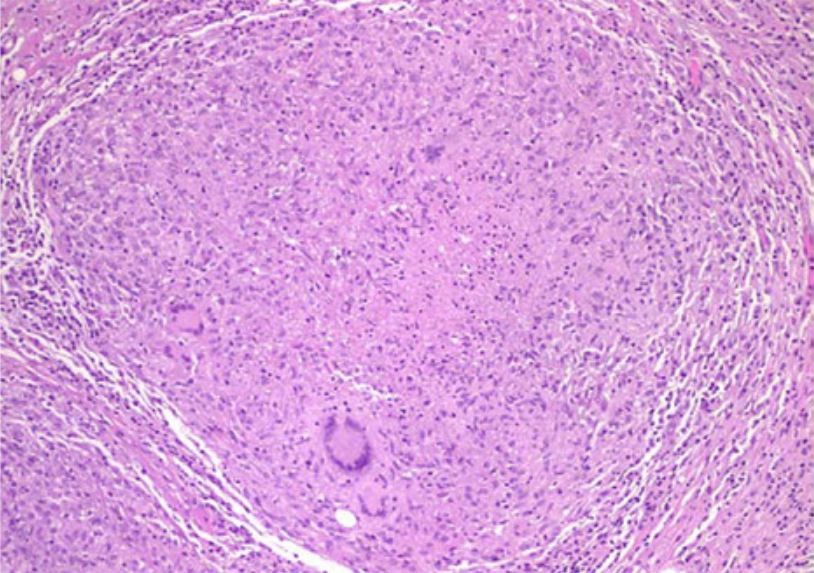
  • Caseosa: “similar al queso”
  • Células fragmentadas y detritos celulares rodeados por un borde inflamatorio: granuloma
  • Se observa en EN Erythema nodosum is an immune-mediated panniculitis (inflammation of the subcutaneous fat) caused by a type IV (delayed-type) hypersensitivity reaction. It commonly manifests in young women as tender, erythematous nodules on the shins. Erythema Nodosum tuberculosis Tuberculosis Tuberculosis (TB) is an infectious disease caused by Mycobacterium tuberculosis complex bacteria. The bacteria usually attack the lungs but can also damage other parts of the body. Approximately 30% of people around the world are infected with this pathogen, with the majority harboring a latent infection. Tuberculosis spreads through the air when a person with active pulmonary infection coughs or sneezes. Tuberculosis y algunas infecciones fúngicas
  • El ácido micólico de la pared celular micobacteriana induce la formación de granulomas Granulomas A relatively small nodular inflammatory lesion containing grouped mononuclear phagocytes, caused by infectious and noninfectious agents. Sarcoidosis.

Necrosis Necrosis The death of cells in an organ or tissue due to disease, injury or failure of the blood supply. Ischemic Cell Damage grasa:
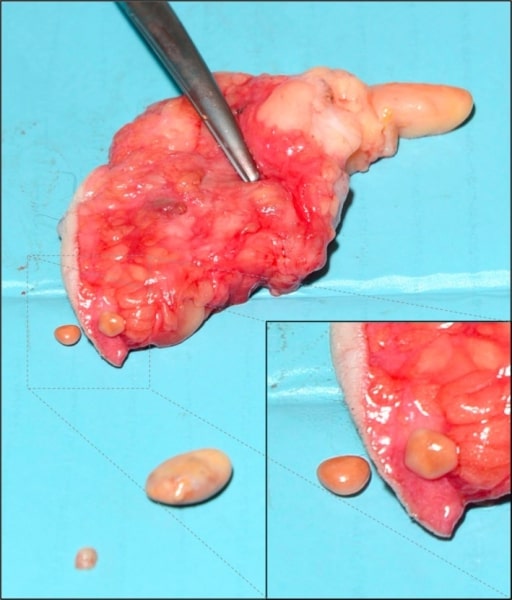
  • Cambio en EN Erythema nodosum is an immune-mediated panniculitis (inflammation of the subcutaneous fat) caused by a type IV (delayed-type) hypersensitivity reaction. It commonly manifests in young women as tender, erythematous nodules on the shins. Erythema Nodosum el tejido adiposo debido a un traumatismo o liberación enzimática
  • Liberación de lipasas pancreáticas en EN Erythema nodosum is an immune-mediated panniculitis (inflammation of the subcutaneous fat) caused by a type IV (delayed-type) hypersensitivity reaction. It commonly manifests in young women as tender, erythematous nodules on the shins. Erythema Nodosum el parénquima pancreático y el peritoneo → destrucción de adipocitos
  • Los LOS Neisseria ácidos grasos liberados se combinan con el calcio, produciendo áreas de color blanco tiza (saponificación de la grasa).
  • Se observa en EN Erythema nodosum is an immune-mediated panniculitis (inflammation of the subcutaneous fat) caused by a type IV (delayed-type) hypersensitivity reaction. It commonly manifests in young women as tender, erythematous nodules on the shins. Erythema Nodosum pancreatitis Pancreatitis Inflammation of the pancreas. Pancreatitis is classified as acute unless there are computed tomographic or endoscopic retrograde cholangiopancreatographic findings of chronic pancreatitis. The two most common forms of acute pancreatitis are alcoholic pancreatitis and gallstone pancreatitis. Acute Pancreatitis aguda, necrosis Necrosis The death of cells in an organ or tissue due to disease, injury or failure of the blood supply. Ischemic Cell Damage adiposa de la mama

Necrosis Necrosis The death of cells in an organ or tissue due to disease, injury or failure of the blood supply. Ischemic Cell Damage fibrinoide:
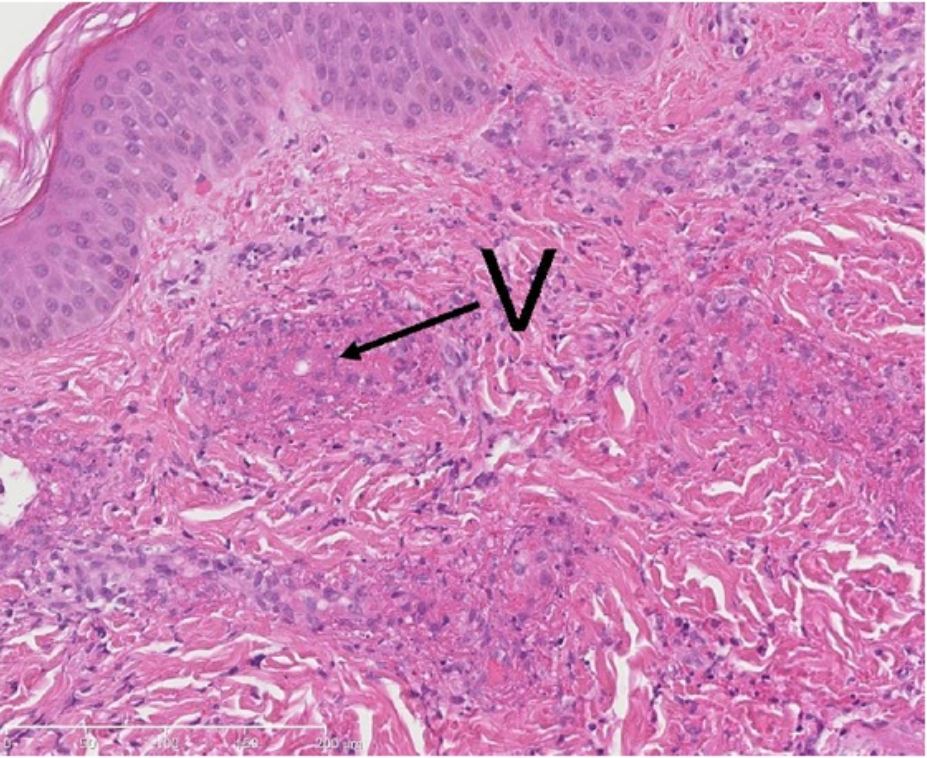
  • Cambio microscópico
  • Depósito de complejos inmunes en EN Erythema nodosum is an immune-mediated panniculitis (inflammation of the subcutaneous fat) caused by a type IV (delayed-type) hypersensitivity reaction. It commonly manifests in young women as tender, erythematous nodules on the shins. Erythema Nodosum las paredes de los LOS Neisseria vasos
  • Fibrinoide: fibrina combinada con inmunocomplejos depositados en EN Erythema nodosum is an immune-mediated panniculitis (inflammation of the subcutaneous fat) caused by a type IV (delayed-type) hypersensitivity reaction. It commonly manifests in young women as tender, erythematous nodules on the shins. Erythema Nodosum las paredes de los LOS Neisseria vasos (homogéneamente rosada en EN Erythema nodosum is an immune-mediated panniculitis (inflammation of the subcutaneous fat) caused by a type IV (delayed-type) hypersensitivity reaction. It commonly manifests in young women as tender, erythematous nodules on the shins. Erythema Nodosum tinciones de hematoxilina y eosina)

Necrosis Necrosis The death of cells in an organ or tissue due to disease, injury or failure of the blood supply. Ischemic Cell Damage gangrenosa:

  • No es un patrón de necrosis Necrosis The death of cells in an organ or tissue due to disease, injury or failure of the blood supply. Ischemic Cell Damage; descripción clínica utilizada cuando una extremidad se vuelve necrótica debido a isquemia
  • Indica necrosis Necrosis The death of cells in an organ or tissue due to disease, injury or failure of the blood supply. Ischemic Cell Damage coagulativa de múltiples capas de tejido (gangrena seca)
  • Con una infección bacteriana superpuesta, se produce necrosis Necrosis The death of cells in an organ or tissue due to disease, injury or failure of the blood supply. Ischemic Cell Damage por licuefacción debido a enzimas de bacterias y leucocitos (gangrena húmeda).

Calcificación distrófica:

  • Células necróticas: eliminadas por digestión enzimática y fagocitosis
  • Las células necróticas reabsorbidas de manera inadecuada se convierten en EN Erythema nodosum is an immune-mediated panniculitis (inflammation of the subcutaneous fat) caused by a type IV (delayed-type) hypersensitivity reaction. It commonly manifests in young women as tender, erythematous nodules on the shins. Erythema Nodosum un centro de depósito de calcio y minerales.

Otros Mecanismos Celulares

Necroptosis Necroptosis A form of regulated cell death initiated by perturbations of extracellular or intracellular homeostasis that trigger a specific cell death pathway involving the activation of RIPK3 and MLKL (mixed lineage kinase domain like pseudokinase). Morphological changes include cytoplasmic and organellar swelling, rupture of the plasma memebrane, and chromatin condensation. Cell Injury and Death

  • Necrosis Necrosis The death of cells in an organ or tissue due to disease, injury or failure of the blood supply. Ischemic Cell Damage programada
  • Muerte celular independiente de caspasas
  • Similar a la necrosis Necrosis The death of cells in an organ or tissue due to disease, injury or failure of the blood supply. Ischemic Cell Damage en EN Erythema nodosum is an immune-mediated panniculitis (inflammation of the subcutaneous fat) caused by a type IV (delayed-type) hypersensitivity reaction. It commonly manifests in young women as tender, erythematous nodules on the shins. Erythema Nodosum morfología, con muerte celular de tipo apoptótico
  • Correlación clínica:
    • Fisiológico: lámina epifisaria de mamíferos
    • Patológico: esteatohepatitis, enfermedad de Parkinson

Piroptosis

  • Apoptosis Apoptosis A regulated cell death mechanism characterized by distinctive morphologic changes in the nucleus and cytoplasm, including the endonucleolytic cleavage of genomic DNA, at regularly spaced, internucleosomal sites, I.e., DNA fragmentation. It is genetically-programmed and serves as a balance to mitosis in regulating the size of animal tissues and in mediating pathologic processes associated with tumor growth. Ischemic Cell Damage acompañada de citocina IL-1 (interleucina-1: citocina inductora de fiebre)
  • La vía de la apoptosis Apoptosis A regulated cell death mechanism characterized by distinctive morphologic changes in the nucleus and cytoplasm, including the endonucleolytic cleavage of genomic DNA, at regularly spaced, internucleosomal sites, I.e., DNA fragmentation. It is genetically-programmed and serves as a balance to mitosis in regulating the size of animal tissues and in mediating pathologic processes associated with tumor growth. Ischemic Cell Damage libera mediadores inflamatorios.
  • Correlación clínica: muerte de células infectadas por microbios

Ferroptosis Ferroptosis A form of regulated cell death initiated by oxidative perturbations of the intracellular microenvironment that is under constitutive control by glutathione peroxidase 4 and can be inhibited by iron chelators and lipophilic antioxidants. Cell Injury and Death

  • Vía de muerte celular dependiente del hierro, caracterizada por peroxidación lipídica
  • Da como resultado la pérdida de la permeabilidad de la membrana (ruptura de la membrana mitocondrial)
  • Ocurre con un exceso de hierro o especies reactivas de oxígeno, que las defensas dependientes del glutatión no pueden manejar
  • Correlación clínica: cáncer, enfermedades neurodegenerativas y accidente cerebrovascular

Autofagia

  • “Auto”: uno mismo; “fagia”: comer → la célula come su propio contenido
  • Mecanismo de supervivencia, como en EN Erythema nodosum is an immune-mediated panniculitis (inflammation of the subcutaneous fat) caused by a type IV (delayed-type) hypersensitivity reaction. It commonly manifests in young women as tender, erythematous nodules on the shins. Erythema Nodosum células atróficas en EN Erythema nodosum is an immune-mediated panniculitis (inflammation of the subcutaneous fat) caused by a type IV (delayed-type) hypersensitivity reaction. It commonly manifests in young women as tender, erythematous nodules on the shins. Erythema Nodosum estados de privación nutricional
  • Desencadena la muerte celular, si no puede afrontar el estrés
  • Mecanismo:
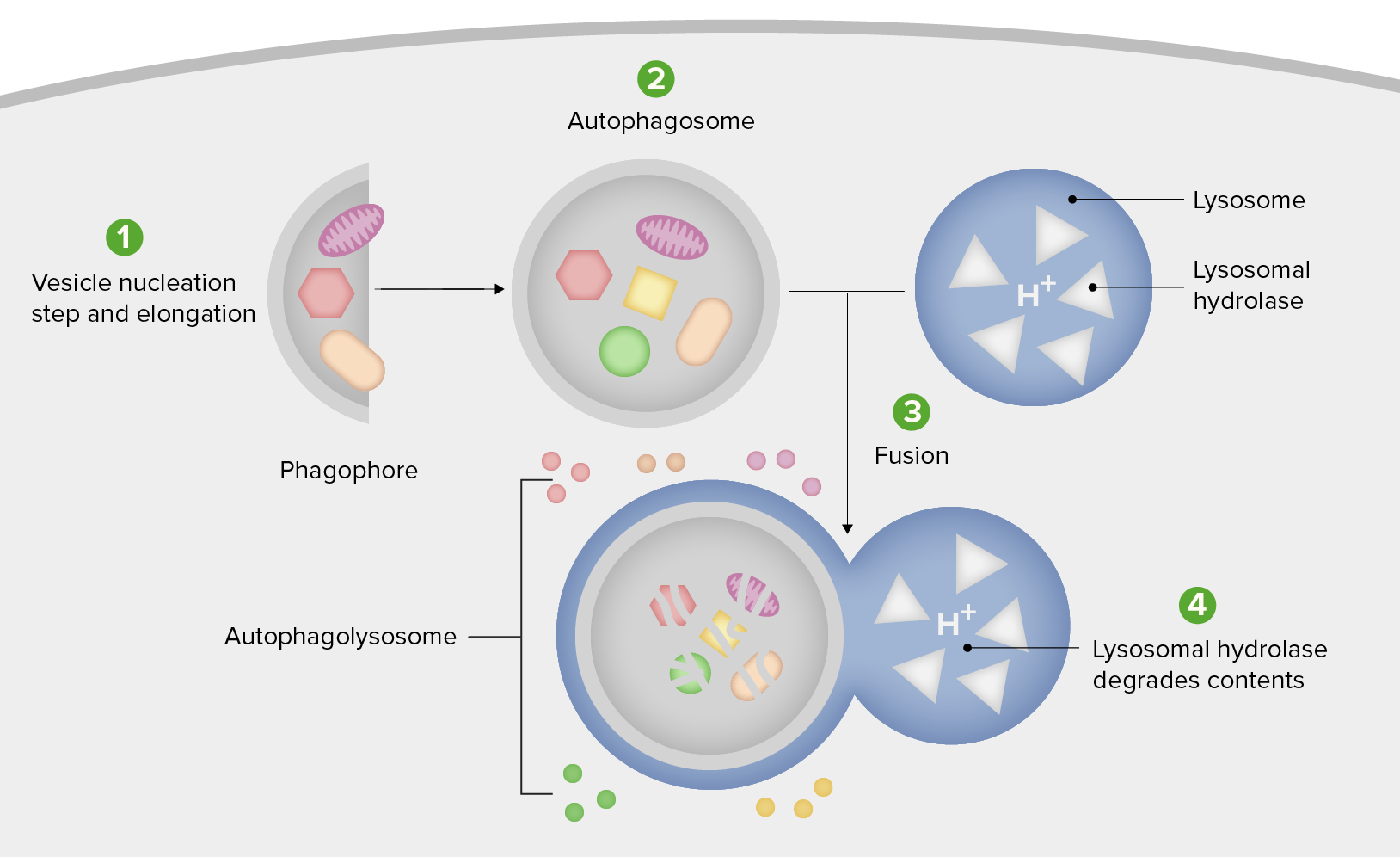
    • Nucleación y formación de un fagóforo, una membrana de aislamiento derivada del retículo endoplásmico, mitocondrias o membrana plasmática
    • Los LOS Neisseria organelos son secuestrados por el fagóforo y se forma una vesícula, el autofagosoma.
    • El autofagosoma maduro se fusiona con un lisosoma (autofagolisosoma), lo que da como resultado la degradación de su contenido.
  • Correlación clínica:
    • Cáncer
    • Trastornos neurodegenerativos (e.g., enfermedad de Alzheimer)
    • Enfermedad infecciosa
    • Enfermedad inflamatoria intestinal
Diagrama esquemático de los pasos de la autofagia.

Diagrama esquemático de los pasos de la autofagia
1. Formación del fagóforo o membrana de aislamiento (etapa de nucleación y elongación de vesículas).
2. Expansión del fagóforo en un autofagosoma.
3. Fusión del autofagosoma con un lisosoma formando un autofagolisosoma.
4. El material secuestrado es degradado dentro del autofagoliosoma y reciclado.

Imagen por Lecturio.

Referencias

  1. Adigun, R., Basit, H., Murray, J. (2020). Cell liquefactive necrosis. StatPearls. https://www.ncbi.nlm.nih.gov/books/NBK430935/#!po=1.85185
  2. Kemp W.L., Burns D.K., Brown T.G. (Eds.) (2008). Cellular pathology. Pathology: The Big Picture. McGraw-Hill.
  3. Lin, J., Walter, P., Benedict Yen, T. (2008). Endoplasmic reticulum stress in Disease Pathogenesis. Annual Rev Patho 3, 399–425. https//:doi.org/10.1146/annurev.pathmechdis.3.121806.151434
  4. Kumar V, Abbas A, Aster J, Robbins, S. Robbins, and Cotran (Eds.) (2020). Pathologic Basis of Disease (10th ed.). Elsevier, Inc.

¡Crea tu cuenta gratis o inicia una sesión para seguir leyendo!

Regístrate ahora y obtén acceso gratuito a Lecturio con páginas de concepto, videos médicos y cuestionarios para tu educación médica.

User Reviews

Que tengas una sesión de estudio alegre y navideña 🎁 Ahorra 50% en todos los planes >>

Details