Domina Conceptos Médicos

Estudia para la escuela de medicina y tus examenes con Lecturio.

Isquemia Mesentérica

La isquemia mesentérica es una afección poco frecuente y potencialmente mortal causada por un flujo sanguíneo inadecuado a través de los LOS Neisseria vasos mesentéricos, que provoca isquemia y necrosis Necrosis The death of cells in an organ or tissue due to disease, injury or failure of the blood supply. Ischemic Cell Damage de la pared intestinal. La isquemia mesentérica puede ser aguda o crónica. La isquemia mesentérica aguda puede estar causada por embolia arterial, trombosis, enfermedad no oclusiva o trombosis venosa. La isquemia mesentérica crónica suele estar causada por una enfermedad aterosclerótica. Los LOS Neisseria pacientes presentan un dolor Dolor Inflammation abdominal desproporcionado con respecto a la exploración abdominal. La peritonitis Peritonitis Inflammation of the peritoneum lining the abdominal cavity as the result of infectious, autoimmune, or chemical processes. Primary peritonitis is due to infection of the peritoneal cavity via hematogenous or lymphatic spread and without intra-abdominal source. Secondary peritonitis arises from the abdominal cavity itself through rupture or abscess of intra-abdominal organs. Penetrating Abdominal Injury, la sepsis Sepsis Systemic inflammatory response syndrome with a proven or suspected infectious etiology. When sepsis is associated with organ dysfunction distant from the site of infection, it is called severe sepsis. When sepsis is accompanied by hypotension despite adequate fluid infusion, it is called septic shock. Sepsis and Septic Shock y la hematoquecia son indicios de infarto intestinal. La tomografía computarizada (TC) con angiografía del abdomen y la pelvis Pelvis The pelvis consists of the bony pelvic girdle, the muscular and ligamentous pelvic floor, and the pelvic cavity, which contains viscera, vessels, and multiple nerves and muscles. The pelvic girdle, composed of 2 "hip" bones and the sacrum, is a ring-like bony structure of the axial skeleton that links the vertebral column with the lower extremities. Pelvis: Anatomy es la modalidad diagnóstica de elección. El tratamiento suele ser quirúrgico y se centra en EN Erythema nodosum is an immune-mediated panniculitis (inflammation of the subcutaneous fat) caused by a type IV (delayed-type) hypersensitivity reaction. It commonly manifests in young women as tender, erythematous nodules on the shins. Erythema Nodosum restablecer el flujo sanguíneo intestinal, así como en EN Erythema nodosum is an immune-mediated panniculitis (inflammation of the subcutaneous fat) caused by a type IV (delayed-type) hypersensitivity reaction. It commonly manifests in young women as tender, erythematous nodules on the shins. Erythema Nodosum la resección de cualquier intestino no viable.

Last updated: Dec 15, 2025

Editorial responsibility: Stanley Oiseth, Lindsay Jones, Evelin Maza

Descripción General

Definición

La isquemia mesentérica es una afección causada por la hipoperfusión del intestino, que provoca isquemia y necrosis Necrosis The death of cells in an organ or tissue due to disease, injury or failure of the blood supply. Ischemic Cell Damage. La isquemia mesentérica se clasifica en EN Erythema nodosum is an immune-mediated panniculitis (inflammation of the subcutaneous fat) caused by a type IV (delayed-type) hypersensitivity reaction. It commonly manifests in young women as tender, erythematous nodules on the shins. Erythema Nodosum función de la evolución:

  • Isquemia mesentérica aguda: causada por una disminución repentina del flujo sanguíneo
  • Isquemia mesentérica crónica: hipoperfusión intestinal episódica, recurrente o constante

Anatomía

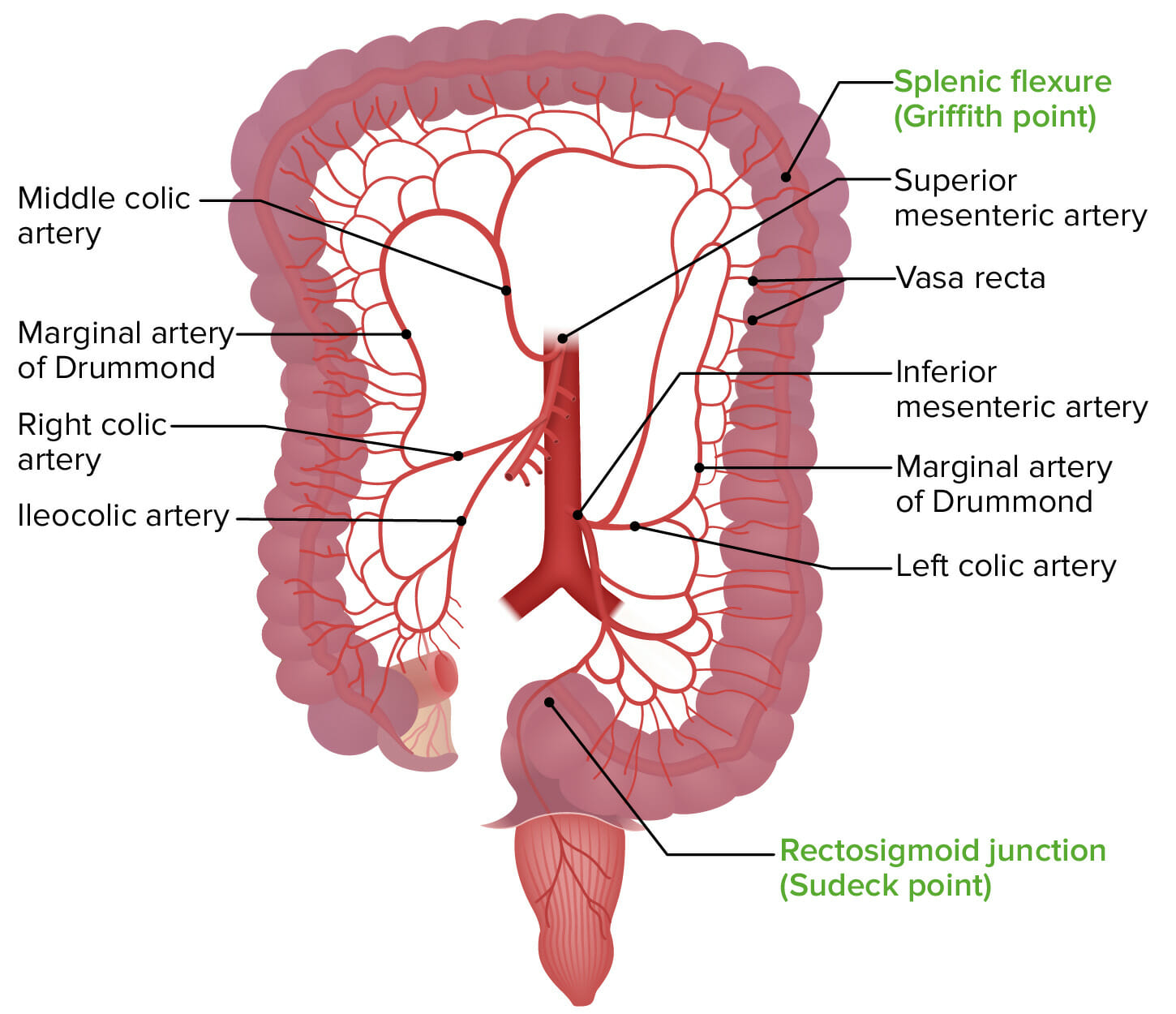
Los LOS Neisseria principales vasos afectados en EN Erythema nodosum is an immune-mediated panniculitis (inflammation of the subcutaneous fat) caused by a type IV (delayed-type) hypersensitivity reaction. It commonly manifests in young women as tender, erythematous nodules on the shins. Erythema Nodosum la isquemia mesentérica son:
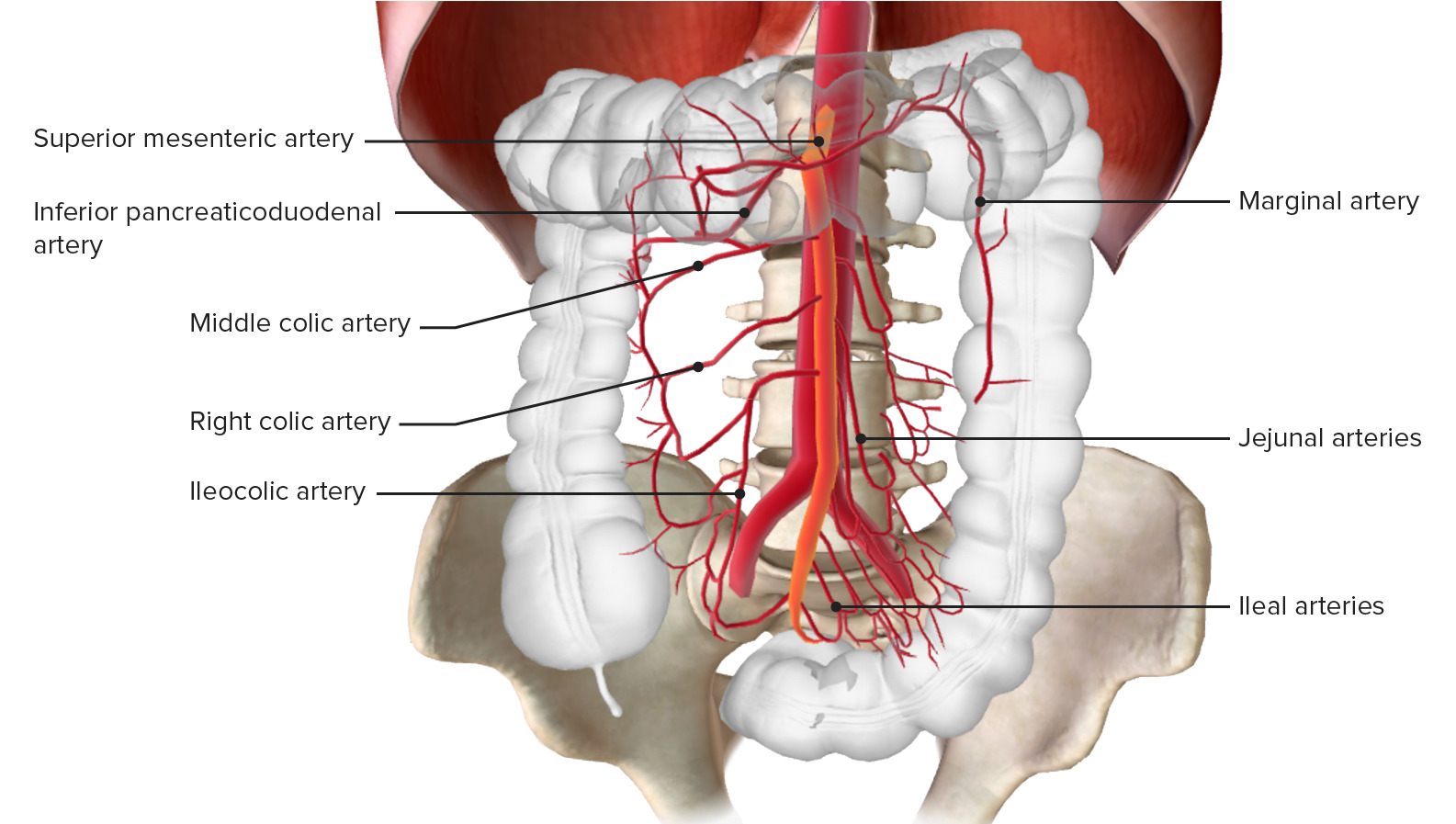
  • Arteria mesentérica superior:
    • La más afectada
    • Irriga el intestino medio (duodeno distal hasta los LOS Neisseria ⅔ proximales del colon Colon The large intestines constitute the last portion of the digestive system. The large intestine consists of the cecum, appendix, colon (with ascending, transverse, descending, and sigmoid segments), rectum, and anal canal. The primary function of the colon is to remove water and compact the stool prior to expulsion from the body via the rectum and anal canal. Colon, Cecum, and Appendix: Anatomy transverso)
  • Arteria mesentérica inferior: irriga el intestino posterior (⅓ distal del colon Colon The large intestines constitute the last portion of the digestive system. The large intestine consists of the cecum, appendix, colon (with ascending, transverse, descending, and sigmoid segments), rectum, and anal canal. The primary function of the colon is to remove water and compact the stool prior to expulsion from the body via the rectum and anal canal. Colon, Cecum, and Appendix: Anatomy transverso hasta el canal anal por encima de la línea pectínea)

Fisiopatología

  • El tracto intestinal tiene una tasa metabólica ↑ requiere un flujo sanguíneo ↑
  • Interrupción del flujo sanguíneo → cambios isquémicos en EN Erythema nodosum is an immune-mediated panniculitis (inflammation of the subcutaneous fat) caused by a type IV (delayed-type) hypersensitivity reaction. It commonly manifests in young women as tender, erythematous nodules on the shins. Erythema Nodosum 15 minutos:
    • Puede provocar un vasoespasmo reactivo → ↓ flujo sanguíneo colateral
    • Hipoxia intestinal → espasmo de la pared intestinal → síntomas:
      • Vómitos
      • Diarrea
    • Puede depender de:
      • Adecuación de la perfusión
      • Cualquier circulación colateral
      • Número de vasos afectados
  • El daño y el desprendimiento de la mucosa se producen en EN Erythema nodosum is an immune-mediated panniculitis (inflammation of the subcutaneous fat) caused by a type IV (delayed-type) hypersensitivity reaction. It commonly manifests in young women as tender, erythematous nodules on the shins. Erythema Nodosum 3 horas y pueden provocar:
    • Hemorragia gastrointestinal y dolor Dolor Inflammation visceral
    • Liberación de mediadores vasoactivos, bacterias y subproductos tóxicos; lo que resulta en EN Erythema nodosum is an immune-mediated panniculitis (inflammation of the subcutaneous fat) caused by a type IV (delayed-type) hypersensitivity reaction. It commonly manifests in young women as tender, erythematous nodules on the shins. Erythema Nodosum:
      • Insuficiencia cardíaca
      • Síndrome de respuesta inflamatoria sistémica (SIRS, por sus siglas en EN Erythema nodosum is an immune-mediated panniculitis (inflammation of the subcutaneous fat) caused by a type IV (delayed-type) hypersensitivity reaction. It commonly manifests in young women as tender, erythematous nodules on the shins. Erythema Nodosum inglés)
      • Falla orgánica multisistémica
  • La pared intestinal se vuelve cianótica y edematosa → fluidos liberados hacia la cavidad peritoneal
  • La necrosis Necrosis The death of cells in an organ or tissue due to disease, injury or failure of the blood supply. Ischemic Cell Damage se produce en EN Erythema nodosum is an immune-mediated panniculitis (inflammation of the subcutaneous fat) caused by a type IV (delayed-type) hypersensitivity reaction. It commonly manifests in young women as tender, erythematous nodules on the shins. Erythema Nodosum 6 horas → signos peritoneales

Related videos

Isquemia Mesentérica Aguda

Epidemiología

  • Se desconoce la prevalencia exacta.
  • Representa el 0,1% de todos los LOS Neisseria ingresos hospitalarios
  • Generalmente se observa en EN Erythema nodosum is an immune-mediated panniculitis (inflammation of the subcutaneous fat) caused by a type IV (delayed-type) hypersensitivity reaction. It commonly manifests in young women as tender, erythematous nodules on the shins. Erythema Nodosum pacientes de > 60 años
  • Tasa de mortalidad: 60%

Etiología

  • Embolia arterial:
    • Tipo más común (40–50%)
    • La edad media es de 70 años.
    • Frecuentemente debido a un émbolo cardíaco:
      • Arritmias auriculares, como la fibrilación auricular
      • Insuficiencia cardíaca
      • Isquemia o infarto de miocardio
      • Aneurisma ventricular
      • Enfermedad valvular y endocarditis Endocarditis Endocarditis is an inflammatory disease involving the inner lining (endometrium) of the heart, most commonly affecting the cardiac valves. Both infectious and noninfectious etiologies lead to vegetations on the valve leaflets. Patients may present with nonspecific symptoms such as fever and fatigue. Endocarditis
    • La arteria más comúnmente afectada es la arteria mesentérica superior debido a:
      • Gran calibre
      • Ángulo agudo en EN Erythema nodosum is an immune-mediated panniculitis (inflammation of the subcutaneous fat) caused by a type IV (delayed-type) hypersensitivity reaction. It commonly manifests in young women as tender, erythematous nodules on the shins. Erythema Nodosum su salida de la aorta Aorta The main trunk of the systemic arteries. Mediastinum and Great Vessels: Anatomy
  • Trombosis arterial:
    • 2do tipo más común (20–30%)
    • A menudo se observa en EN Erythema nodosum is an immune-mediated panniculitis (inflammation of the subcutaneous fat) caused by a type IV (delayed-type) hypersensitivity reaction. It commonly manifests in young women as tender, erythematous nodules on the shins. Erythema Nodosum individuos con antecedentes de síntomas de isquemia mesentérica crónica
    • La oclusión aguda se produce en EN Erythema nodosum is an immune-mediated panniculitis (inflammation of the subcutaneous fat) caused by a type IV (delayed-type) hypersensitivity reaction. It commonly manifests in young women as tender, erythematous nodules on the shins. Erythema Nodosum segmentos del vaso gravemente estrechados:
      • Normalmente, se debe a una aterosclerosis subyacente
      • La mayoría de las veces ocurre en EN Erythema nodosum is an immune-mediated panniculitis (inflammation of the subcutaneous fat) caused by a type IV (delayed-type) hypersensitivity reaction. It commonly manifests in young women as tender, erythematous nodules on the shins. Erythema Nodosum el origen del vaso
    • Los LOS Neisseria factores de riesgo son:
      • Diabetes Diabetes Diabetes mellitus (DM) is a metabolic disease characterized by hyperglycemia and dysfunction of the regulation of glucose metabolism by insulin. Type 1 DM is diagnosed mostly in children and young adults as the result of autoimmune destruction of β cells in the pancreas and the resulting lack of insulin. Type 2 DM has a significant association with obesity and is characterized by insulin resistance. Diabetes Mellitus
      • Hipertensión
      • Hábito tabáquico
      • Hiperlipidemia
  • Isquemia mesentérica no oclusiva:
    • 3er tipo más común (20%)
    • Puede provocar lesiones recurrentes y repetitivas en EN Erythema nodosum is an immune-mediated panniculitis (inflammation of the subcutaneous fat) caused by a type IV (delayed-type) hypersensitivity reaction. It commonly manifests in young women as tender, erythematous nodules on the shins. Erythema Nodosum el intestino
    • Causas:
      • Estados de hipoperfusión (e.g., sepsis Sepsis Systemic inflammatory response syndrome with a proven or suspected infectious etiology. When sepsis is associated with organ dysfunction distant from the site of infection, it is called severe sepsis. When sepsis is accompanied by hypotension despite adequate fluid infusion, it is called septic shock. Sepsis and Septic Shock, hipovolemia, gasto cardíaco ↓, hemodiálisis)
      • Vasoespasmo o vasoconstricción (e.g., vasopresores, cocaína)
  • Trombosis venosa:
    • Tipo menos común (5%–15%)
    • Frecuentemente, afecta a la vena mesentérica superior
    • Los LOS Neisseria factores de riesgo son:
      • Trastornos trombóticos o estados de hipercoagulación (e.g., mujeres jóvenes que toman anticonceptivos orales)
      • Una neoplasia que provoca una compresión venosa
      • Inflamación (e.g., pancreatitis Pancreatitis Inflammation of the pancreas. Pancreatitis is classified as acute unless there are computed tomographic or endoscopic retrograde cholangiopancreatographic findings of chronic pancreatitis. The two most common forms of acute pancreatitis are alcoholic pancreatitis and gallstone pancreatitis. Acute Pancreatitis, infección intraabdominal)
      • Congestión venosa (e.g., hipertensión portal por cirrosis)
      • Trauma

Presentación clínica

  • La tríada clásica:
    1. Dolor Dolor Inflammation abdominal difuso desproporcionado al AL Amyloidosis examen físico:
      • Dolor Dolor Inflammation severo
      • No empeora ni se reproduce con la palpación
      • El abdomen se mantiene blando
      • Puede no responder a medicamentos para el dolor Dolor Inflammation
    2. Vaciado intestinal:
      • Vómitos
      • Diarrea
    3. Antecedentes de enfermedades cardiovasculares o eventos embólicos
  • Sospecha de infarto intestinal:
    • Peritonitis Peritonitis Inflammation of the peritoneum lining the abdominal cavity as the result of infectious, autoimmune, or chemical processes. Primary peritonitis is due to infection of the peritoneal cavity via hematogenous or lymphatic spread and without intra-abdominal source. Secondary peritonitis arises from the abdominal cavity itself through rupture or abscess of intra-abdominal organs. Penetrating Abdominal Injury:
      • Rigidez
      • Defensa
      • Ausencia de sonidos intestinales
    • Shock Shock Shock is a life-threatening condition associated with impaired circulation that results in tissue hypoxia. The different types of shock are based on the underlying cause: distributive (↑ cardiac output (CO), ↓ systemic vascular resistance (SVR)), cardiogenic (↓ CO, ↑ SVR), hypovolemic (↓ CO, ↑ SVR), obstructive (↓ CO), and mixed. Types of Shock séptico:
      • Fiebre
      • Taquicardia
      • Hipotensión
    • Hematoquecia

Diagnóstico

La isquemia mesentérica aguda requiere un alto índice de sospecha para permitir un diagnóstico oportuno.
  • Análisis de laboratorio:
    • Inespecíficos
    • Hallazgos que deben hacer sospechar:
      • ↑ Ácido láctico y lactato deshidrogenasa
      • Acidosis Acidosis A pathologic condition of acid accumulation or depletion of base in the body. The two main types are respiratory acidosis and metabolic acidosis, due to metabolic acid build up. Respiratory Acidosis metabólica (↓ bicarbonato)
      • Leucocitosis con desviación a la izquierda
      • ↑ amilasa
  • Se debe realizar un electrocardiograma ( ECG ECG An electrocardiogram (ECG) is a graphic representation of the electrical activity of the heart plotted against time. Adhesive electrodes are affixed to the skin surface allowing measurement of cardiac impulses from many angles. The ECG provides 3-dimensional information about the conduction system of the heart, the myocardium, and other cardiac structures. Electrocardiogram (ECG)) para evaluar si hay arritmias cardíacas.
  • Imagenología:
    • Radiografías:
      • Inespecífica
      • Posibles hallazgos: íleo y neumatosis intestinal (gas dentro de la pared del intestino)
      • Descartar aire libre (perforación)
    • Ultrasonido dúplex de los LOS Neisseria vasos mesentéricos: evalúa el flujo sanguíneo de la arteria mesentérica superior y la arteria celíaca
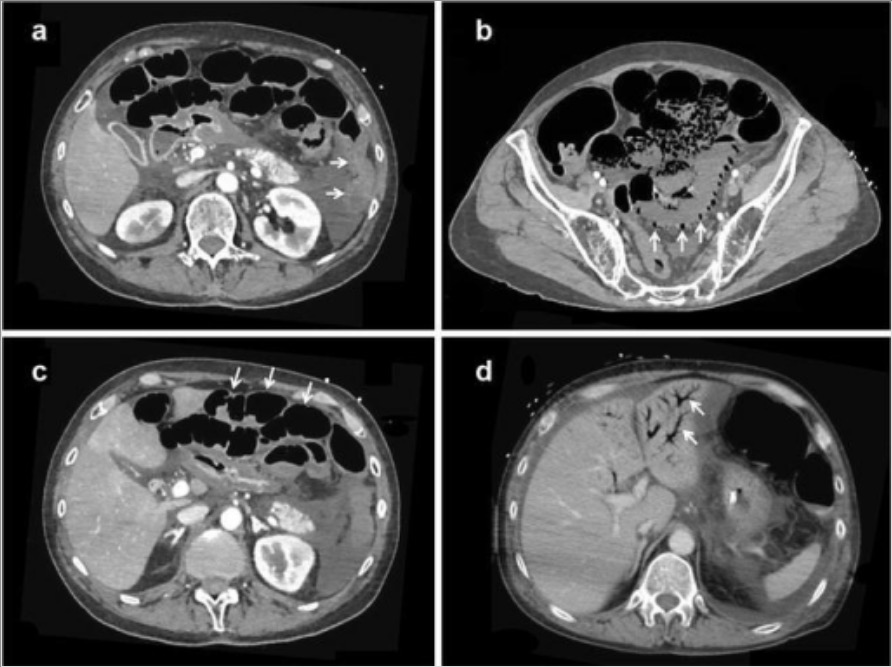
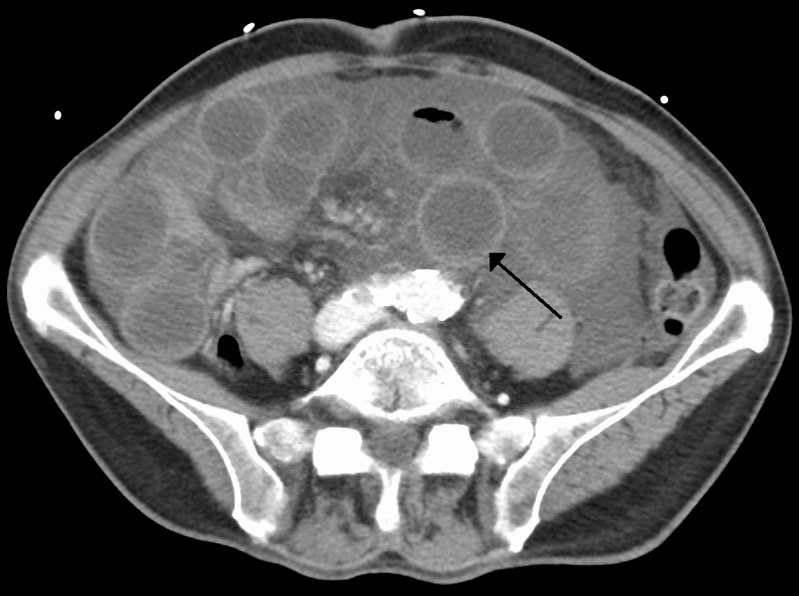
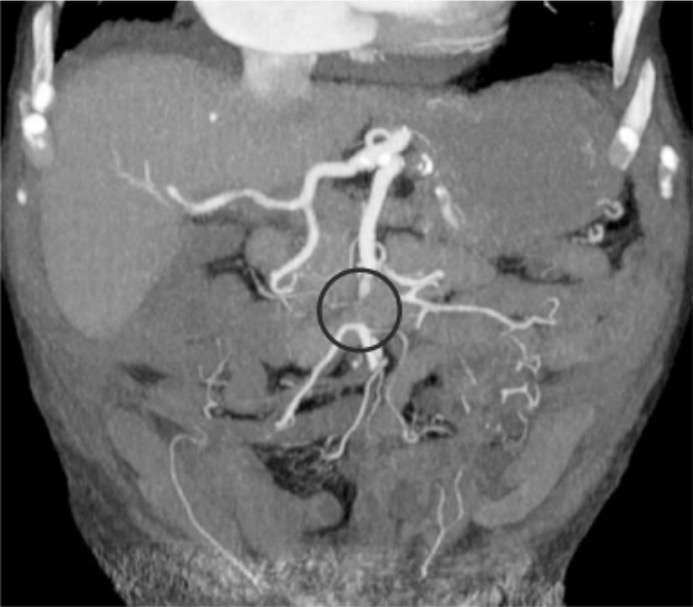
    • Tomografía computarizada (TC) con angiografía
      • Método diagnóstico de preferencia
      • Requiere contraste intravenoso (IV) (no contraste oral)
      • Identifica los LOS Neisseria vasos mesentéricos obstruidos
      • Vasos colaterales pueden estar presentes
      • Evaluar signos de isquemia (e.g., engrosamiento de la pared, neumatosis intestinal, gas venoso portal)
      • Dilatación intestinal y puede observarse la falta de realce de la pared intestinal.
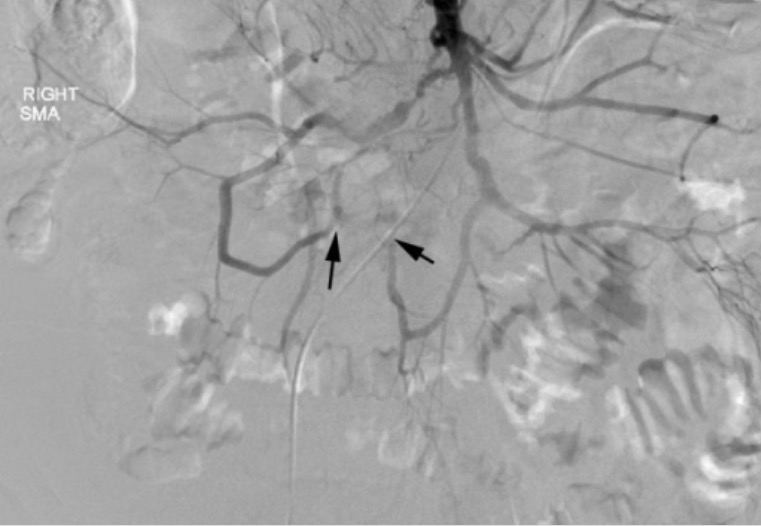
    • Angiograma mesentérico:
      • Identifica los LOS Neisseria vasos mesentéricos ocluidos en EN Erythema nodosum is an immune-mediated panniculitis (inflammation of the subcutaneous fat) caused by a type IV (delayed-type) hypersensitivity reaction. It commonly manifests in young women as tender, erythematous nodules on the shins. Erythema Nodosum tiempo real bajo fluoroscopia
      • Utilizado para intervenciones endovasculares, como la angioplastia y/o stents
      • Puede ser utilizada para la planificación quirúrgica
      • Disponibilidad limitada, requiere un especialista endovascular
      • Requiere contraste IV
  • Laparotomía exploratoria:
    • El diagnóstico mediante imagenología puede omitirse en EN Erythema nodosum is an immune-mediated panniculitis (inflammation of the subcutaneous fat) caused by a type IV (delayed-type) hypersensitivity reaction. It commonly manifests in young women as tender, erythematous nodules on the shins. Erythema Nodosum pacientes con evidencias claras de isquemia avanzada (e.g., sepsis Sepsis Systemic inflammatory response syndrome with a proven or suspected infectious etiology. When sepsis is associated with organ dysfunction distant from the site of infection, it is called severe sepsis. When sepsis is accompanied by hypotension despite adequate fluid infusion, it is called septic shock. Sepsis and Septic Shock, signos peritoneales); puede ser más seguro y expedito.
    • La meta es identificar y prevenir una perforación inminente

Tratamiento

  • Tratamiento inicial:
    • Reanimación temprana con fluidos tipo cristaloides para mantener la estabilidad hemodinámica
    • Antibióticos de amplio espectro para cubrir contra organismos anaerobios y gramnegativos
    • Sonda nasogástrica para la descompresión del estómago y el intestino delgado distendido
    • Corrección de cualquier anomalía electrolítica
    • Control del dolor Dolor Inflammation
    • Evitar los LOS Neisseria vasopresores, de ser posible. Las opciones en EN Erythema nodosum is an immune-mediated panniculitis (inflammation of the subcutaneous fat) caused by a type IV (delayed-type) hypersensitivity reaction. It commonly manifests in young women as tender, erythematous nodules on the shins. Erythema Nodosum caso de tener que utilizar vasopresores son la dobutamina, la dopamina a dosis bajas o la milrinona.
  • Anticoagulación sistémica:
    • Heparina
    • Se utiliza para prevenir la formación o propagación de trombos
  • Angioplastia endovascular:
    • Con stent, embolectomía o trombolíticos
    • Indicaciones:
      • Comorbilidades graves
      • No hay signos de isquemia intestinal avanzada o peritonitis Peritonitis Inflammation of the peritoneum lining the abdominal cavity as the result of infectious, autoimmune, or chemical processes. Primary peritonitis is due to infection of the peritoneal cavity via hematogenous or lymphatic spread and without intra-abdominal source. Secondary peritonitis arises from the abdominal cavity itself through rupture or abscess of intra-abdominal organs. Penetrating Abdominal Injury
      • Corta duración de los LOS Neisseria síntomas
  • Cirugía:
    • Indicaciones:
      • Si el abordaje endovascular falla
      • Si hay algún indicio de isquemia intestinal en EN Erythema nodosum is an immune-mediated panniculitis (inflammation of the subcutaneous fat) caused by a type IV (delayed-type) hypersensitivity reaction. It commonly manifests in young women as tender, erythematous nodules on the shins. Erythema Nodosum el examen físico
    • Opciones:
      • Laparotomía exploratoria
      • Embolectomía abierta
      • Bypass mesentérico
  • Consideraciones especiales:
    • Trombosis venosa:
      • El tratamiento es la anticoagulación.
      • La trombólisis puede considerarse en EN Erythema nodosum is an immune-mediated panniculitis (inflammation of the subcutaneous fat) caused by a type IV (delayed-type) hypersensitivity reaction. It commonly manifests in young women as tender, erythematous nodules on the shins. Erythema Nodosum casos graves.
      • Los LOS Neisseria pacientes con signos peritoneales requieren una interconsulta a cirugía.
    • Isquemia mesentérica no oclusiva:
      • Revertir la causa de la hipoperfusión o el vasoespasmo
      • Se pueden considerar los LOS Neisseria vasodilatadores.
Cirugía de la isquemia mesentérica

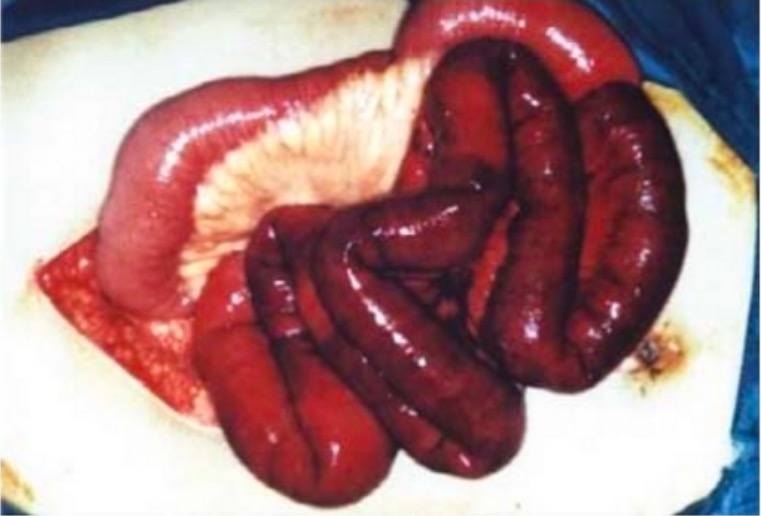
Hallazgos quirúrgicos en la isquemia mesentérica:
Imagen del intestino delgado eviscerado durante una laparotomía exploratoria con el intestino sano de color rosa en la parte superior izquierda y el intestino oscuro, oscuro e isquémico en la parte inferior derecha

Imagen: “Segmental gangrene” por Department of Obstetrics and Gynecology, Kaohsiung Chang Gung Memorial Hospital and Chang Gung University College of Medicine, Kaohsiung City 833, Taiwan. Licencia: CC BY 4.0

Complicaciones

  • Lesión por reperfusión
  • Infección y sepsis Sepsis Systemic inflammatory response syndrome with a proven or suspected infectious etiology. When sepsis is associated with organ dysfunction distant from the site of infection, it is called severe sepsis. When sepsis is accompanied by hypotension despite adequate fluid infusion, it is called septic shock. Sepsis and Septic Shock
  • Síndrome del intestino corto

Isquemia Mesentérica Crónica

Epidemiología

  • Rara
  • El 60% de los LOS Neisseria casos son pacientes hospitalizados de > 60 años.
  • Más común en EN Erythema nodosum is an immune-mediated panniculitis (inflammation of the subcutaneous fat) caused by a type IV (delayed-type) hypersensitivity reaction. It commonly manifests in young women as tender, erythematous nodules on the shins. Erythema Nodosum mujeres

Etiología

La isquemia mesentérica crónica está causada por una estenosis progresiva de las arterias ≥ 2, lo que da lugar a episodios de desajuste de la oferta y la demanda de flujo sanguíneo (normalmente después de comer).

  • La mayoría de los LOS Neisseria casos se deben a una enfermedad aterosclerótica que estrecha los LOS Neisseria vasos mesentéricos en EN Erythema nodosum is an immune-mediated panniculitis (inflammation of the subcutaneous fat) caused by a type IV (delayed-type) hypersensitivity reaction. It commonly manifests in young women as tender, erythematous nodules on the shins. Erythema Nodosum su origen.
  • Causas raras:
    • Vasculitis Vasculitis Inflammation of any one of the blood vessels, including the arteries; veins; and rest of the vasculature system in the body. Systemic Lupus Erythematosus
    • Displasia fibromuscular
    • Disección arterial
    • Fibrosis Fibrosis Any pathological condition where fibrous connective tissue invades any organ, usually as a consequence of inflammation or other injury. Bronchiolitis Obliterans retroperitoneal Retroperitoneal Peritoneum: Anatomy
    • Síndrome del ligamento arcuato medio: compresión de la arteria celíaca por el ligamento arcuato del diafragma

Presentación clínica

  • Dolor Dolor Inflammation abdominal episódico:
    • Se denomina “angina intestinal”
    • Sordo y con cólicos
    • Epigástrico
    • Varía la intensidad
    • Postprandial:
      • Ocurre dentro de 1 hora después de comer
      • Se resuelve en EN Erythema nodosum is an immune-mediated panniculitis (inflammation of the subcutaneous fat) caused by a type IV (delayed-type) hypersensitivity reaction. It commonly manifests in young women as tender, erythematous nodules on the shins. Erythema Nodosum las siguientes 2 horas
  • Miedo a comer
    • Debido al AL Amyloidosis dolor Dolor Inflammation postprandial
    • Conduce a una pérdida de peso significativa en EN Erythema nodosum is an immune-mediated panniculitis (inflammation of the subcutaneous fat) caused by a type IV (delayed-type) hypersensitivity reaction. It commonly manifests in young women as tender, erythematous nodules on the shins. Erythema Nodosum el 80% de los LOS Neisseria pacientes
  • Soplo abdominal: presente en EN Erythema nodosum is an immune-mediated panniculitis (inflammation of the subcutaneous fat) caused by a type IV (delayed-type) hypersensitivity reaction. It commonly manifests in young women as tender, erythematous nodules on the shins. Erythema Nodosum el 50% de los LOS Neisseria pacientes
  • Signos y síntomas menos comunes:
    • Náuseas y vómitos
    • Saciedad temprana
    • Diarrea
    • Hemorragia gastrointestinal
  • Tener cuidado con la isquemia mesentérica aguda sobre crónica:
    • Puede ocurrir debido a la formación de trombos en EN Erythema nodosum is an immune-mediated panniculitis (inflammation of the subcutaneous fat) caused by a type IV (delayed-type) hypersensitivity reaction. It commonly manifests in young women as tender, erythematous nodules on the shins. Erythema Nodosum un paciente con vasos crónicamente estenóticos.
    • Se asocia con una ↑ morbilidad y mortalidad.
    • Síntomas similares a la isquemia mesentérica aguda.

Diagnóstico

La imagenología vascular se utiliza para hacer el diagnóstico.

  • Angiografía por TC:
    • Modalidad de diagnóstico preferida
    • Debe demostrar estenosis de alto grado de ≥ 2 arterias mesentéricas principales
  • Ultrasonido dúplex de los LOS Neisseria vasos mesentéricos: puede utilizarse como estudio de tamizaje

Tratamiento

  • Tratamiento conservador:
    • Se prefiere para:
      • Diagnóstico incidental
      • No hay manifestaciones clínicas manifiestas
    • Se centra en EN Erythema nodosum is an immune-mediated panniculitis (inflammation of the subcutaneous fat) caused by a type IV (delayed-type) hypersensitivity reaction. It commonly manifests in young women as tender, erythematous nodules on the shins. Erythema Nodosum limitar la progresión de la aterosclerosis:
      • Cesación del hábito tabáquico
      • Control glucémico
      • Terapia antiplaquetaria
  • Soporte nutricional:
    • Necesario en EN Erythema nodosum is an immune-mediated panniculitis (inflammation of the subcutaneous fat) caused by a type IV (delayed-type) hypersensitivity reaction. It commonly manifests in young women as tender, erythematous nodules on the shins. Erythema Nodosum pacientes con una pérdida de peso significativa
    • Se puede considerar la nutrición parenteral para los LOS Neisseria casos graves.
  • Revascularización:
    • Indicaciones:
      • Síntomas y estenosis documentada mediante imagenología
      • Peritonitis Peritonitis Inflammation of the peritoneum lining the abdominal cavity as the result of infectious, autoimmune, or chemical processes. Primary peritonitis is due to infection of the peritoneal cavity via hematogenous or lymphatic spread and without intra-abdominal source. Secondary peritonitis arises from the abdominal cavity itself through rupture or abscess of intra-abdominal organs. Penetrating Abdominal Injury
      • Hemorragia gastrointestinal
    • Objetivo: prevenir futuros infartos intestinales.
    • Opciones:
      • Abordaje endovascular con stent y/o angioplastia
      • Abordaje quirúrgico abierto para la endarterectomia o bypass

Diagnóstico Diferencial

  • Obstrucción del intestino delgado: interrupción del contenido intraluminal a través del intestino delgado debido a un problema mecánico o funcional. Los LOS Neisseria pacientes se presentan con dolor Dolor Inflammation abdominal, distensión, náuseas, vómitos y estreñimiento. El diagnóstico se confirma con imagenología abdominal. El tratamiento conservador suele ser el primer paso; nil per os, líquidos intravenosos y descompresión con sonda nasogástrica. El tratamiento conservador falla en EN Erythema nodosum is an immune-mediated panniculitis (inflammation of the subcutaneous fat) caused by a type IV (delayed-type) hypersensitivity reaction. It commonly manifests in young women as tender, erythematous nodules on the shins. Erythema Nodosum algunos pacientes y estos requieren una intervención quirúrgica para aliviar la obstrucción.
  • Peritonitis Peritonitis Inflammation of the peritoneum lining the abdominal cavity as the result of infectious, autoimmune, or chemical processes. Primary peritonitis is due to infection of the peritoneal cavity via hematogenous or lymphatic spread and without intra-abdominal source. Secondary peritonitis arises from the abdominal cavity itself through rupture or abscess of intra-abdominal organs. Penetrating Abdominal Injury bacteriana espontánea: infección bacteriana aguda del líquido peritoneal (una complicación bien conocida en EN Erythema nodosum is an immune-mediated panniculitis (inflammation of the subcutaneous fat) caused by a type IV (delayed-type) hypersensitivity reaction. It commonly manifests in young women as tender, erythematous nodules on the shins. Erythema Nodosum los LOS Neisseria pacientes con cirrosis). Los LOS Neisseria individuos presentan dolor Dolor Inflammation abdominal, distensión, fiebre y escalofríos. El examen físico muestra un abdomen significativamente doloroso. Si se sospecha de peritonitis Peritonitis Inflammation of the peritoneum lining the abdominal cavity as the result of infectious, autoimmune, or chemical processes. Primary peritonitis is due to infection of the peritoneal cavity via hematogenous or lymphatic spread and without intra-abdominal source. Secondary peritonitis arises from the abdominal cavity itself through rupture or abscess of intra-abdominal organs. Penetrating Abdominal Injury bacteriana espontánea, los LOS Neisseria pacientes requieren una paracentesis Paracentesis A procedure in which fluid is withdrawn from a body cavity or organ via a trocar and cannula, needle, or other hollow instrument. Portal Hypertension con análisis y cultivo del líquido ascítico. El tratamiento de elección son los LOS Neisseria antibióticos.
  • Colecistitis aguda: inflamación de la vesícula biliar resultante de la impactación sostenida de cálculos biliares en EN Erythema nodosum is an immune-mediated panniculitis (inflammation of the subcutaneous fat) caused by a type IV (delayed-type) hypersensitivity reaction. It commonly manifests in young women as tender, erythematous nodules on the shins. Erythema Nodosum el conducto cístico. Los LOS Neisseria pacientes presentan dolor Dolor Inflammation abdominal superior de tipo cólico, náuseas y vómitos. La inflamación de la vesícula biliar y los LOS Neisseria cálculos biliares se observan en EN Erythema nodosum is an immune-mediated panniculitis (inflammation of the subcutaneous fat) caused by a type IV (delayed-type) hypersensitivity reaction. It commonly manifests in young women as tender, erythematous nodules on the shins. Erythema Nodosum el ultrasonido o la TC. El tratamiento incluye líquidos intravenosos, antibióticos y colecistectomía.
  • Enfermedad ulceropéptica: ulceraciones localizadas en EN Erythema nodosum is an immune-mediated panniculitis (inflammation of the subcutaneous fat) caused by a type IV (delayed-type) hypersensitivity reaction. It commonly manifests in young women as tender, erythematous nodules on the shins. Erythema Nodosum el estómago y/o el duodeno. La enfermedad ulceropéptica puede ser ocasionada por la infección por Helicobacter pylori Helicobacter pylori A spiral bacterium active as a human gastric pathogen. It is a gram-negative, urease-positive, curved or slightly spiral organism initially isolated in 1982 from patients with lesions of gastritis or peptic ulcers in Western Australia. Helicobacter pylori was originally classified in the genus campylobacter, but RNA sequencing, cellular fatty acid profiles, growth patterns, and other taxonomic characteristics indicate that the micro-organism should be included in the genus Helicobacter. It has been officially transferred to Helicobacter gen. Helicobacter ( H. pylori H. pylori A spiral bacterium active as a human gastric pathogen. It is a gram-negative, urease-positive, curved or slightly spiral organism initially isolated in 1982 from patients with lesions of gastritis or peptic ulcers in Western Australia. Helicobacter pylori was originally classified in the genus campylobacter, but RNA sequencing, cellular fatty acid profiles, growth patterns, and other taxonomic characteristics indicate that the micro-organism should be included in the genus Helicobacter. It has been officially transferred to Helicobacter gen. Helicobacter), por medicamentos (e.g., antiinflamatorios no esteroideos), por factores relacionados con el estilo de vida o por condiciones hipersecretoras. Los LOS Neisseria pacientes pueden presentar dispepsia, dolor Dolor Inflammation postprandial, saciedad precoz, náuseas o evidencia de hemorragia. La prueba diagnóstica de elección es una endoscopia superior. El tratamiento incluye cambios en EN Erythema nodosum is an immune-mediated panniculitis (inflammation of the subcutaneous fat) caused by a type IV (delayed-type) hypersensitivity reaction. It commonly manifests in young women as tender, erythematous nodules on the shins. Erythema Nodosum el estilo de vida, tratamiento del H. pylori H. pylori A spiral bacterium active as a human gastric pathogen. It is a gram-negative, urease-positive, curved or slightly spiral organism initially isolated in 1982 from patients with lesions of gastritis or peptic ulcers in Western Australia. Helicobacter pylori was originally classified in the genus campylobacter, but RNA sequencing, cellular fatty acid profiles, growth patterns, and other taxonomic characteristics indicate that the micro-organism should be included in the genus Helicobacter. It has been officially transferred to Helicobacter gen. Helicobacter e inhibidores de la bomba de protones.
  • Diverticulitis Diverticulitis Inflammation of a diverticulum or diverticula. Diverticular Disease: inflamación o infección de un divertículo colónico; puede complicarse con una perforación, un absceso o la formación de una fístula. Los LOS Neisseria pacientes presentan dolor Dolor Inflammation abdominal difuso o en EN Erythema nodosum is an immune-mediated panniculitis (inflammation of the subcutaneous fat) caused by a type IV (delayed-type) hypersensitivity reaction. It commonly manifests in young women as tender, erythematous nodules on the shins. Erythema Nodosum el cuadrante inferior izquierdo, náuseas, vómitos y fiebre. El diagnóstico se realiza con una TC. El tratamiento incluye antibióticos y, en EN Erythema nodosum is an immune-mediated panniculitis (inflammation of the subcutaneous fat) caused by a type IV (delayed-type) hypersensitivity reaction. It commonly manifests in young women as tender, erythematous nodules on the shins. Erythema Nodosum casos de perforación, resección quirúrgica del intestino.

Referencias

  1. Pearl, G. and Gilani, R. (2025). Acute mesenteric arterial occlusion. Collins, K.A (Ed.), Uptodate. Retrieved May 31, 2025, from https://www.uptodate.com/contents/acute-mesenteric-arterial-occlusion
  2. Tendler, D.A. and Lamont, J.T. (2025). Chronic mesenteric ischemia. Collins, K.A. (Ed.), Uptodate. Retrieved May 31, 2025, from https://www.uptodate.com/contents/chronic-mesenteric-ischemia
  3. Tendler, D.A. and Lamont, J.T. (2025). Overview of intestinal ischemia in adults. Collins, K.A. (Ed.), Uptodate. Retrieved May 31, 2025, from https://www.uptodate.com/contents/overview-of-intestinal-ischemia-in-adults
  4. Dang, C.V. (2024). Acute Mesenteric Ischemia. Geibel, J. (Ed.), Medscape. Retrieved May 31, 2025, from https://emedicine.medscape.com/article/189146-overview
  5. Alrays, A., and Piper, M.H. (2019). Chronic mesenteric ischemia. In Cagir, B. (Ed.), Medscape. Retrieved May 31, 2025, from https://emedicine.medscape.com/article/183683-overview
  6. Ansari, P. (2024). Acute mesenteric ischemia. [online] MSD Manual Professional Version. Retrieved May 31, 2025, from https://www.merckmanuals.com/professional/gastrointestinal-disorders/acute-abdomen-and-surgical-gastroenterology/acute-mesenteric-ischemia
  7. Monita, M.M., and Gonzalez, L. (2023). Acute mesenteric ischemia. [online] StatPearls. Retrieved May 31, 2025, from https://www.ncbi.nlm.nih.gov/books/NBK431068/
  8. Patel, R., Waheed, A., and Costanza, M. (2025). Chronic mesenteric ischemia. [online] StatPearls. Retrieved May 31, 2025, from https://www.ncbi.nlm.nih.gov/books/NBK430748/
  9. Tilsed, J.V.T., Casamassima, A., et al. (2016). ESTES guidelines: acute mesenteric ischaemia. European Journal of Trauma and Emergency Surgery, 42:253-70. https://www.ncbi.nlm.nih.gov/pmc/articles/PMC4830881/

¡Crea tu cuenta gratis o inicia una sesión para seguir leyendo!

Regístrate ahora y obtén acceso gratuito a Lecturio con páginas de concepto, videos médicos y cuestionarios para tu educación médica.

User Reviews

Que tengas una sesión de estudio alegre y navideña 🎁 Ahorra 50% en todos los planes >>

Details