Domina Conceptos Médicos

Estudia para la escuela de medicina y tus examenes con Lecturio.

Isquemia Intestinal

La isquemia intestinal se produce cuando la perfusión no satisface las demandas de los LOS Neisseria intestinos, lo que provoca una lesión tisular isquémica que puede poner en EN Erythema nodosum is an immune-mediated panniculitis (inflammation of the subcutaneous fat) caused by a type IV (delayed-type) hypersensitivity reaction. It commonly manifests in young women as tender, erythematous nodules on the shins. Erythema Nodosum peligro la vida si se produce una necrosis Necrosis The death of cells in an organ or tissue due to disease, injury or failure of the blood supply. Ischemic Cell Damage intestinal y/o una perforación. Los LOS Neisseria síntomas pueden ir desde una indigestión o diarrea leve hasta un dolor Dolor Inflammation abdominal intenso. Para detectar la estenosis o la oclusión se utilizan técnicas de imagen como la tomografía computarizada (TC) y la angiografía. La forma crónica de isquemia intestinal se beneficia de terapias médicas y procedimientos de revascularización (stents, cirugía de derivación gástrica), mientras que las formas agudas requieren intervenciones urgentes para restablecer el flujo sanguíneo y eliminar cualquier tejido intestinal muerto. El retraso en EN Erythema nodosum is an immune-mediated panniculitis (inflammation of the subcutaneous fat) caused by a type IV (delayed-type) hypersensitivity reaction. It commonly manifests in young women as tender, erythematous nodules on the shins. Erythema Nodosum el diagnóstico y el tratamiento de la isquemia intestinal aguda da lugar a una elevada mortalidad y a complicaciones graves, como la perforación intestinal y la sepsis Sepsis Systemic inflammatory response syndrome with a proven or suspected infectious etiology. When sepsis is associated with organ dysfunction distant from the site of infection, it is called severe sepsis. When sepsis is accompanied by hypotension despite adequate fluid infusion, it is called septic shock. Sepsis and Septic Shock.

Last updated: Dec 15, 2025

Editorial responsibility: Stanley Oiseth, Lindsay Jones, Evelin Maza

Descripción General

Definición

La isquemia intestinal es una disminución del flujo sanguíneo a los LOS Neisseria intestinos que da lugar a una hipoperfusión que puede provocar un infarto intestinal. La descamación de la mucosa se produce después de aproximadamente 3 horas de isquemia, y la necrosis Necrosis The death of cells in an organ or tissue due to disease, injury or failure of the blood supply. Ischemic Cell Damage se produce después de aproximadamente 6–12 horas de isquemia.

Tipos de isquemia intestinal

  • Colitis Colitis Inflammation of the colon section of the large intestine, usually with symptoms such as diarrhea (often with blood and mucus), abdominal pain, and fever. Pseudomembranous Colitis isquémica (isquemia de colon Colon The large intestines constitute the last portion of the digestive system. The large intestine consists of the cecum, appendix, colon (with ascending, transverse, descending, and sigmoid segments), rectum, and anal canal. The primary function of the colon is to remove water and compact the stool prior to expulsion from the body via the rectum and anal canal. Colon, Cecum, and Appendix: Anatomy): hipoperfusión del intestino grueso
  • Isquemia mesentérica aguda: pérdida aguda del flujo sanguíneo al AL Amyloidosis intestino delgado
  • Isquemia mesentérica crónica: hipoperfusión constante o episódica del intestino delgado

Epidemiología

Para todos los LOS Neisseria tipos, la isquemia intestinal afecta principalmente a los LOS Neisseria adultos de más de 60 años.

  • Colitis Colitis Inflammation of the colon section of the large intestine, usually with symptoms such as diarrhea (often with blood and mucus), abdominal pain, and fever. Pseudomembranous Colitis isquémica: tipo de isquemia intestinal más común (aproximadamente 60%–70%)
  • Isquemia mesentérica aguda:
    • Además de en EN Erythema nodosum is an immune-mediated panniculitis (inflammation of the subcutaneous fat) caused by a type IV (delayed-type) hypersensitivity reaction. It commonly manifests in young women as tender, erythematous nodules on the shins. Erythema Nodosum los LOS Neisseria adultos mayores, también puede ocurrir en EN Erythema nodosum is an immune-mediated panniculitis (inflammation of the subcutaneous fat) caused by a type IV (delayed-type) hypersensitivity reaction. It commonly manifests in young women as tender, erythematous nodules on the shins. Erythema Nodosum personas más jóvenes con:
      • Fibrilación auricular
      • Estados de hipercoagulabilidad
    • Tasas de mortalidad:
      • El infarto mesentérico oclusivo tiene una tasa de mortalidad ↑↑ (aproximadamente el 60%)
      • La enfermedad no oclusiva tiene una tasa de mortalidad menor
  • Isquemia mesentérica crónica: ↓ incidencia

Isquemia Mesentérica Aguda y Colitis Isquémica

Etiología

Ya sea en EN Erythema nodosum is an immune-mediated panniculitis (inflammation of the subcutaneous fat) caused by a type IV (delayed-type) hypersensitivity reaction. It commonly manifests in young women as tender, erythematous nodules on the shins. Erythema Nodosum el colon Colon The large intestines constitute the last portion of the digestive system. The large intestine consists of the cecum, appendix, colon (with ascending, transverse, descending, and sigmoid segments), rectum, and anal canal. The primary function of the colon is to remove water and compact the stool prior to expulsion from the body via the rectum and anal canal. Colon, Cecum, and Appendix: Anatomy o en EN Erythema nodosum is an immune-mediated panniculitis (inflammation of the subcutaneous fat) caused by a type IV (delayed-type) hypersensitivity reaction. It commonly manifests in young women as tender, erythematous nodules on the shins. Erythema Nodosum el intestino delgado, la isquemia intestinal aguda es el resultado de la reducción del flujo sanguíneo. Las causas incluyen:

Obstrucción del vaso debido a:

  • Embolia arterial aguda (aproximadamente el 50%):
    • Fibrilación auricular
    • Cardiopatía valvular (i.e., endocarditis Endocarditis Endocarditis is an inflammatory disease involving the inner lining (endometrium) of the heart, most commonly affecting the cardiac valves. Both infectious and noninfectious etiologies lead to vegetations on the valve leaflets. Patients may present with nonspecific symptoms such as fever and fatigue. Endocarditis infecciosa)
    • Embolia de colesterol por rotura de placas arteriales
    • Embolia aérea (puede ocurrir en EN Erythema nodosum is an immune-mediated panniculitis (inflammation of the subcutaneous fat) caused by a type IV (delayed-type) hypersensitivity reaction. It commonly manifests in young women as tender, erythematous nodules on the shins. Erythema Nodosum neurocirugías)
  • Trombosis arterial (15%–25%):
  • Trombosis venosa en EN Erythema nodosum is an immune-mediated panniculitis (inflammation of the subcutaneous fat) caused by a type IV (delayed-type) hypersensitivity reaction. It commonly manifests in young women as tender, erythematous nodules on the shins. Erythema Nodosum los LOS Neisseria vasos mesentéricos (aproximadamente el 5%, rara vez afecta al AL Amyloidosis colon Colon The large intestines constitute the last portion of the digestive system. The large intestine consists of the cecum, appendix, colon (with ascending, transverse, descending, and sigmoid segments), rectum, and anal canal. The primary function of the colon is to remove water and compact the stool prior to expulsion from the body via the rectum and anal canal. Colon, Cecum, and Appendix: Anatomy); los LOS Neisseria factores de riesgo son:
    • Malignidad
    • Estados de hipercoagulabilidad/trombofilias
    • Infecciones/inflamación
    • Terapia con estrógenos (e.g., píldoras anticonceptivas orales)
  • Compresión de los LOS Neisseria vasos debido a tumores o adherencias

La isquemia mesentérica no oclusiva (20%–30%) puede deberse a:
  • Hipotensión/ shock Shock Shock is a life-threatening condition associated with impaired circulation that results in tissue hypoxia. The different types of shock are based on the underlying cause: distributive (↑ cardiac output (CO), ↓ systemic vascular resistance (SVR)), cardiogenic (↓ CO, ↑ SVR), hypovolemic (↓ CO, ↑ SVR), obstructive (↓ CO), and mixed. Types of Shock
  • Hipovolemia por pérdida aguda de sangre
  • Laceración de vasos con traumatismo abdominal
  • Sepsis Sepsis Systemic inflammatory response syndrome with a proven or suspected infectious etiology. When sepsis is associated with organ dysfunction distant from the site of infection, it is called severe sepsis. When sepsis is accompanied by hypotension despite adequate fluid infusion, it is called septic shock. Sepsis and Septic Shock
  • Vasoconstricción excesiva, que puede deberse a:
    • Insuficiencia cardíaca congestiva
    • Vasculitis Vasculitis Inflammation of any one of the blood vessels, including the arteries; veins; and rest of the vasculature system in the body. Systemic Lupus Erythematosus
    • Medicamentos vasopresores
    • Abuso de cocaína

Fisiopatología

  • Mecanismos:
    • Hipoperfusión → hipoxia intestinal → daño/inflamación de la pared intestinal
    • Puede evolucionar a infarto y necrosis Necrosis The death of cells in an organ or tissue due to disease, injury or failure of the blood supply. Ischemic Cell Damage en EN Erythema nodosum is an immune-mediated panniculitis (inflammation of the subcutaneous fat) caused by a type IV (delayed-type) hypersensitivity reaction. It commonly manifests in young women as tender, erythematous nodules on the shins. Erythema Nodosum 6–12 horas
    • La obstrucción venosa puede conducir a un vólvulo (torsión del intestino) o a una encarcelación, lo que provoca una hipoperfusión.
  • Sitios comúnmente involucrados en EN Erythema nodosum is an immune-mediated panniculitis (inflammation of the subcutaneous fat) caused by a type IV (delayed-type) hypersensitivity reaction. It commonly manifests in young women as tender, erythematous nodules on the shins. Erythema Nodosum la isquemia mesentérica aguda:
    • Arteria mesentérica superior
      • 90% de los LOS Neisseria casos
      • Irriga: el duodeno distal, el yeyuno, el íleon y el colon Colon The large intestines constitute the last portion of the digestive system. The large intestine consists of the cecum, appendix, colon (with ascending, transverse, descending, and sigmoid segments), rectum, and anal canal. The primary function of the colon is to remove water and compact the stool prior to expulsion from the body via the rectum and anal canal. Colon, Cecum, and Appendix: Anatomy hasta la flexión esplénica
    • Vena mesentérica superior: drena la sangre del intestino delgado
    • Arteria mesentérica inferior (poco común)
    • Arteria celíaca (poco común)
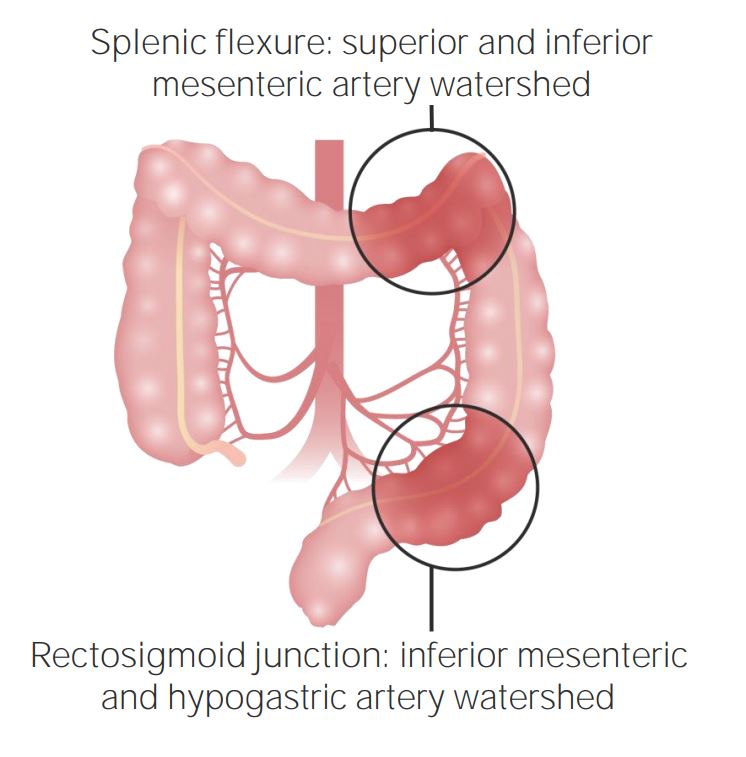
  • Lugares implicados en EN Erythema nodosum is an immune-mediated panniculitis (inflammation of the subcutaneous fat) caused by a type IV (delayed-type) hypersensitivity reaction. It commonly manifests in young women as tender, erythematous nodules on the shins. Erythema Nodosum la colitis Colitis Inflammation of the colon section of the large intestine, usually with symptoms such as diarrhea (often with blood and mucus), abdominal pain, and fever. Pseudomembranous Colitis isquémica: tiende a producirse en EN Erythema nodosum is an immune-mediated panniculitis (inflammation of the subcutaneous fat) caused by a type IV (delayed-type) hypersensitivity reaction. It commonly manifests in young women as tender, erythematous nodules on the shins. Erythema Nodosum zonas de flexión del colon Colon The large intestines constitute the last portion of the digestive system. The large intestine consists of the cecum, appendix, colon (with ascending, transverse, descending, and sigmoid segments), rectum, and anal canal. The primary function of the colon is to remove water and compact the stool prior to expulsion from the body via the rectum and anal canal. Colon, Cecum, and Appendix: Anatomy con circulación colateral limitada
    • La flexión esplénica se encuentra entre las zonas abastecidas por:
      • Arteria mesentérica superior
      • Arteria mesentérica inferior
    • La unión rectosigmoidea se encuentra entre las zonas abastecidas por:
      • Arteria mesentérica inferior
      • Arteria rectal superior
Áreas de flexión del colon

Áreas de flexión del colon

Imagen por Lecturio.

Presentación Clínica

  • Dolor Dolor Inflammation abdominal:
    • Isquemia mesentérica aguda:
      • Hallazgo clásico: aparición súbita de dolor Dolor Inflammation abdominal desproporcionado con respecto a los LOS Neisseria hallazgos físicos (i.e., dolor Dolor Inflammation intenso sin signos peritoneales al AL Amyloidosis principio de la presentación).
      • Dolor Dolor Inflammation abdominal difuso
      • Si no se inicia el tratamiento, se produce una sensibilidad abdominal más focal (debido a la inflamación/infarto local).
    • Colitis Colitis Inflammation of the colon section of the large intestine, usually with symptoms such as diarrhea (often with blood and mucus), abdominal pain, and fever. Pseudomembranous Colitis isquémica:
      • Aparición rápida de un dolor Dolor Inflammation abdominal leve sobre el intestino afectado
      • Más común en EN Erythema nodosum is an immune-mediated panniculitis (inflammation of the subcutaneous fat) caused by a type IV (delayed-type) hypersensitivity reaction. It commonly manifests in young women as tender, erythematous nodules on the shins. Erythema Nodosum el lado izquierdo
  • Otros hallazgos comunes:
    • Náuseas o vómitos
    • Diarrea, que puede ser sanguinolenta en EN Erythema nodosum is an immune-mediated panniculitis (inflammation of the subcutaneous fat) caused by a type IV (delayed-type) hypersensitivity reaction. It commonly manifests in young women as tender, erythematous nodules on the shins. Erythema Nodosum etapas posteriores, lo que indica infarto
    • Distensión abdominal
    • Ruidos intestinales hipoactivos o ausentes
  • Si hay necrosis Necrosis The death of cells in an organ or tissue due to disease, injury or failure of the blood supply. Ischemic Cell Damage y/o perforación:
    • Signos peritoneales: abdomen rígido agudo con defensa y sensibilidad de rebote
    • Shock Shock Shock is a life-threatening condition associated with impaired circulation that results in tissue hypoxia. The different types of shock are based on the underlying cause: distributive (↑ cardiac output (CO), ↓ systemic vascular resistance (SVR)), cardiogenic (↓ CO, ↑ SVR), hypovolemic (↓ CO, ↑ SVR), obstructive (↓ CO), and mixed. Types of Shock séptico: fiebre, hipotensión, signos de daño en EN Erythema nodosum is an immune-mediated panniculitis (inflammation of the subcutaneous fat) caused by a type IV (delayed-type) hypersensitivity reaction. It commonly manifests in young women as tender, erythematous nodules on the shins. Erythema Nodosum los LOS Neisseria órganos diana
  • Trombosis venosa: aparición más gradual de los LOS Neisseria síntomas

Diagnóstico

Los LOS Neisseria pacientes con evidencia de infarto intestinal en EN Erythema nodosum is an immune-mediated panniculitis (inflammation of the subcutaneous fat) caused by a type IV (delayed-type) hypersensitivity reaction. It commonly manifests in young women as tender, erythematous nodules on the shins. Erythema Nodosum el examen deben tener una consulta quirúrgica urgente. Si el paciente está lo suficientemente estable, se debe realizar imagenología.
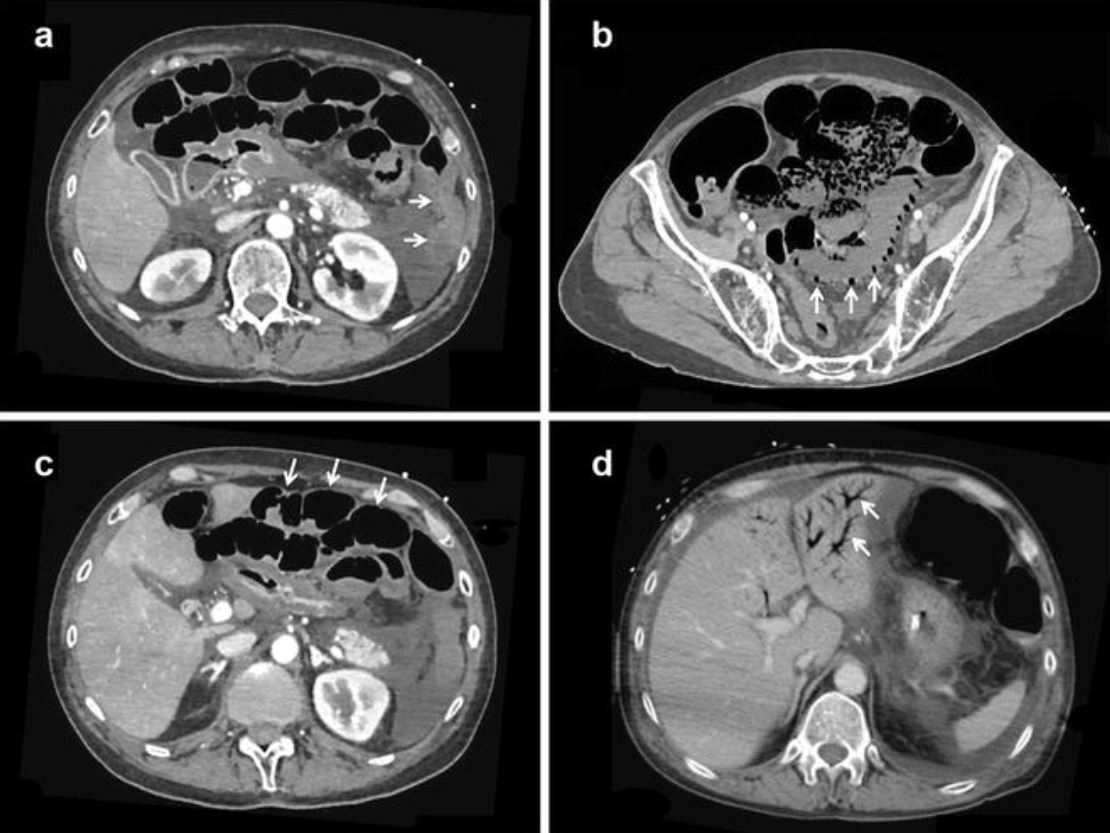
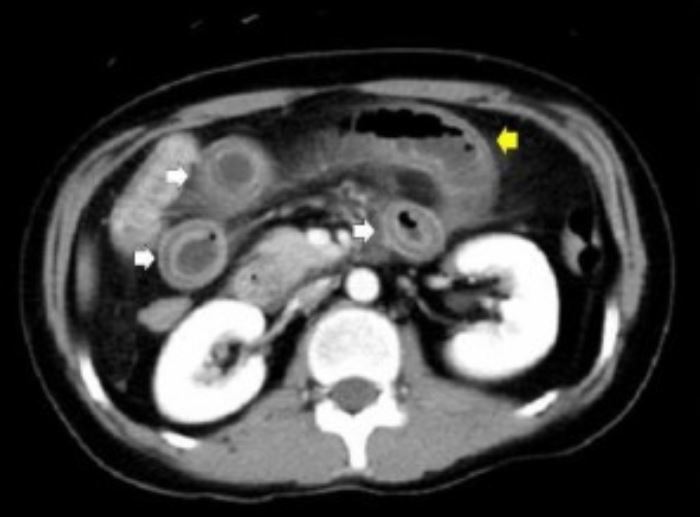
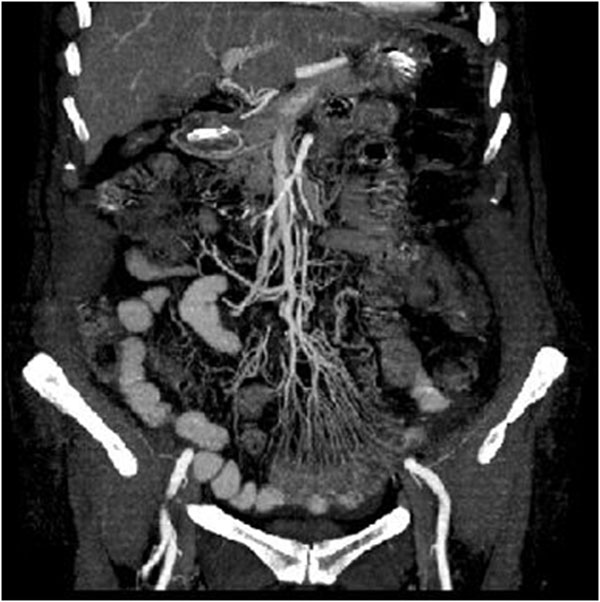
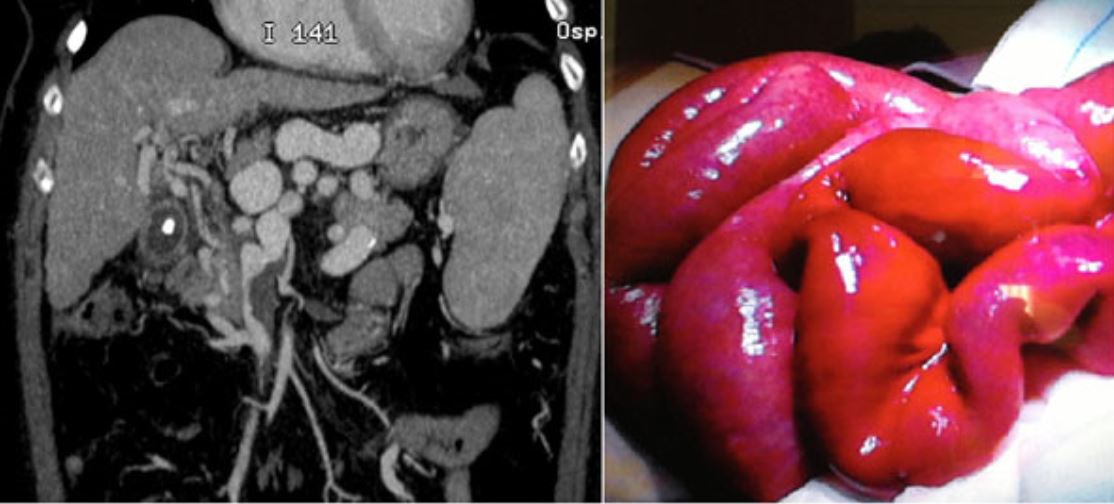
  • Angiografía por tomografía computarizada (1ra línea): detecta la interrupción del flujo sanguíneo y la estenosis vascular; los LOS Neisseria hallazgos pueden incluir:
    • Falta de realce de la pared intestinal
    • Neumatosis intestinal: aire en EN Erythema nodosum is an immune-mediated panniculitis (inflammation of the subcutaneous fat) caused by a type IV (delayed-type) hypersensitivity reaction. It commonly manifests in young women as tender, erythematous nodules on the shins. Erythema Nodosum la pared intestinal
    • Gas en EN Erythema nodosum is an immune-mediated panniculitis (inflammation of the subcutaneous fat) caused by a type IV (delayed-type) hypersensitivity reaction. It commonly manifests in young women as tender, erythematous nodules on the shins. Erythema Nodosum la vena porta
    • Asas intestinales distendidas
    • Engrosamiento de la pared intestinal
    • Niveles de aire-fluido
    • Signo del doble halo (también conocido como signo de la diana): realce anormal de la pared intestinal en EN Erythema nodosum is an immune-mediated panniculitis (inflammation of the subcutaneous fat) caused by a type IV (delayed-type) hypersensitivity reaction. It commonly manifests in young women as tender, erythematous nodules on the shins. Erythema Nodosum la colitis Colitis Inflammation of the colon section of the large intestine, usually with symptoms such as diarrhea (often with blood and mucus), abdominal pain, and fever. Pseudomembranous Colitis isquémica
  • Angiografía por resonancia magnética (RM):
    • Hallazgos similares a los LOS Neisseria observados en EN Erythema nodosum is an immune-mediated panniculitis (inflammation of the subcutaneous fat) caused by a type IV (delayed-type) hypersensitivity reaction. It commonly manifests in young women as tender, erythematous nodules on the shins. Erythema Nodosum la angiografía por tomografía computarizada (TC)
    • Ventajas: mayor sensibilidad y especificidad que la TC
    • Contras: menos práctico, debido al AL Amyloidosis coste y al AL Amyloidosis tiempo necesario para su realización
  • Se puede realizar una angiografía mesentérica convencional si el diagnóstico no está claro:
    • Ventajas: puede tratar y diagnosticar de forma concomitante; es el estándar de oro tradicional
    • Contras: invasivo, requiere tinte intravenoso, no siempre está disponible
  • Los LOS Neisseria hallazgos del laboratorio pueden incluir:
    • ↑ Lactato
    • Acidosis Acidosis A pathologic condition of acid accumulation or depletion of base in the body. The two main types are respiratory acidosis and metabolic acidosis, due to metabolic acid build up. Respiratory Acidosis metabólica
    • ↑ Niveles de amilasa y fosfato
    • Hemograma: leucocitosis, posible anemia Anemia Anemia is a condition in which individuals have low Hb levels, which can arise from various causes. Anemia is accompanied by a reduced number of RBCs and may manifest with fatigue, shortness of breath, pallor, and weakness. Subtypes are classified by the size of RBCs, chronicity, and etiology. Anemia: Overview and Types (especialmente en EN Erythema nodosum is an immune-mediated panniculitis (inflammation of the subcutaneous fat) caused by a type IV (delayed-type) hypersensitivity reaction. It commonly manifests in young women as tender, erythematous nodules on the shins. Erythema Nodosum la colitis Colitis Inflammation of the colon section of the large intestine, usually with symptoms such as diarrhea (often with blood and mucus), abdominal pain, and fever. Pseudomembranous Colitis isquémica)
  • Electrocardiograma ( ECG ECG An electrocardiogram (ECG) is a graphic representation of the electrical activity of the heart plotted against time. Adhesive electrodes are affixed to the skin surface allowing measurement of cardiac impulses from many angles. The ECG provides 3-dimensional information about the conduction system of the heart, the myocardium, and other cardiac structures. Electrocardiogram (ECG)): para buscar disritmias (e.g., fibrilación auricular), que pueden haber provocado un evento embólico
  • Colonoscopia:
    • Puede ser útil para diagnosticar la colitis Colitis Inflammation of the colon section of the large intestine, usually with symptoms such as diarrhea (often with blood and mucus), abdominal pain, and fever. Pseudomembranous Colitis isquémica
    • Los LOS Neisseria hallazgos pueden incluir:
      • Palidez de las mucosas o cianosis
      • Petequias, hemorragias

Tratamiento

  • Objetivos:
    • Restaurar el flujo sanguíneo
    • Disminuir el vasoespasmo
    • Disminuir la propagación del coágulo
  • Reanimación y estabilización:
    • Oxigenoterapia: intubar si es necesario
    • Fluidos intravenosos
    • Transfundir productos sanguíneos según sea necesario
    • Evite los LOS Neisseria agentes vasoconstrictores, si es posible.
    • Sonda nasogástrica y reposo intestinal
    • Control del dolor Dolor Inflammation
  • Antibióticos intravenosos de amplio espectro:
    • Ceftriaxona
    • Ciprofloxacina más metronidazol
  • Anticoagulación:
    • Puede utilizarse si hay un coágulo y en EN Erythema nodosum is an immune-mediated panniculitis (inflammation of the subcutaneous fat) caused by a type IV (delayed-type) hypersensitivity reaction. It commonly manifests in young women as tender, erythematous nodules on the shins. Erythema Nodosum ausencia de una hemorragia activa
    • Normalmente una infusión de heparina
  • Cirugía/procedimientos:
    • Revascularización quirúrgica: embolectomía, cirugía de derivación gástrica vascular, angioplastia y/o stent
    • Resección de intestino necrótico y/o perforado
    • Angiografía mesentérica, que puede incluir infusiones de:
      • Vasodilatadores (e.g., papaverina) para aliviar la oclusión y el vasoespasmo
      • Trombolíticos para disolver coágulos
  • Medidas preventivas a largo plazo para reducir la formación de coágulos en EN Erythema nodosum is an immune-mediated panniculitis (inflammation of the subcutaneous fat) caused by a type IV (delayed-type) hypersensitivity reaction. It commonly manifests in young women as tender, erythematous nodules on the shins. Erythema Nodosum el futuro:
    • Tratamiento anticoagulante en EN Erythema nodosum is an immune-mediated panniculitis (inflammation of the subcutaneous fat) caused by a type IV (delayed-type) hypersensitivity reaction. It commonly manifests in young women as tender, erythematous nodules on the shins. Erythema Nodosum pacientes con fibrilación auricular
    • Dejar de fumar
    • Optimizar el tratamiento de las condiciones que aumentan el riesgo cardiovascular (e.g., hipertensión, hiperlipidemia, diabetes Diabetes Diabetes mellitus (DM) is a metabolic disease characterized by hyperglycemia and dysfunction of the regulation of glucose metabolism by insulin. Type 1 DM is diagnosed mostly in children and young adults as the result of autoimmune destruction of β cells in the pancreas and the resulting lack of insulin. Type 2 DM has a significant association with obesity and is characterized by insulin resistance. Diabetes Mellitus mellitus).
    • Evaluación de la trombofilia en EN Erythema nodosum is an immune-mediated panniculitis (inflammation of the subcutaneous fat) caused by a type IV (delayed-type) hypersensitivity reaction. It commonly manifests in young women as tender, erythematous nodules on the shins. Erythema Nodosum pacientes con trombosis, con el tratamiento adecuado según los LOS Neisseria resultados (normalmente anticoagulación a largo plazo)

Complicaciones

  • Lesión por reperfusión:
    • Puede producirse tras el restablecimiento del flujo sanguíneo después de un periodo de isquemia
    • Mecanismo complejo que implica la liberación de subproductos tóxicos de la lesión isquémica y la activación de los LOS Neisseria neutrófilos
    • Puede provocar un fallo orgánico multisistémico
  • Perforación:
    • Las áreas necróticas del intestino pueden perforarse, derramando el contenido intestinal en EN Erythema nodosum is an immune-mediated panniculitis (inflammation of the subcutaneous fat) caused by a type IV (delayed-type) hypersensitivity reaction. It commonly manifests in young women as tender, erythematous nodules on the shins. Erythema Nodosum la cavidad abdominal.
    • Alta tasa de mortalidad

Isquemia Mesentérica Crónica

Etiología

La isquemia mesentérica crónica es el resultado de una enfermedad vascular crónica, que puede ser causada por:
  • Aterosclerosis
  • Hipertensión
  • Tabaquismo
  • ↑ Lipoproteína de baja densidad (LDL, por sus siglas en EN Erythema nodosum is an immune-mediated panniculitis (inflammation of the subcutaneous fat) caused by a type IV (delayed-type) hypersensitivity reaction. It commonly manifests in young women as tender, erythematous nodules on the shins. Erythema Nodosum inglés)
  • Diabetes Diabetes Diabetes mellitus (DM) is a metabolic disease characterized by hyperglycemia and dysfunction of the regulation of glucose metabolism by insulin. Type 1 DM is diagnosed mostly in children and young adults as the result of autoimmune destruction of β cells in the pancreas and the resulting lack of insulin. Type 2 DM has a significant association with obesity and is characterized by insulin resistance. Diabetes Mellitus mellitus

Fisiopatología

  • Aterosclerosis progresiva de ≥ 2 arterias principales → desajuste entre el flujo sanguíneo y la demanda metabólica intestinal (especialmente después de una comida)
    • Conduce al AL Amyloidosis dolor Dolor Inflammation posprandial
    • Las arterias principales son la arteria mesentérica superior, la arteria mesentérica inferior y la arteria celíaca
    • Cuando solo está afectada una arteria principal, pueden formarse conexiones colaterales entre las arterias y compensar el flujo ↓.
  • La formación súbita de trombos, además de la estenosis, puede provocar una isquemia mesentérica aguda-crónica.

Presentación Clínica

  • Dolor Dolor Inflammation epigástrico posprandial: comienza en EN Erythema nodosum is an immune-mediated panniculitis (inflammation of the subcutaneous fat) caused by a type IV (delayed-type) hypersensitivity reaction. It commonly manifests in young women as tender, erythematous nodules on the shins. Erythema Nodosum la primera hora después de comer y se resuelve en EN Erythema nodosum is an immune-mediated panniculitis (inflammation of the subcutaneous fat) caused by a type IV (delayed-type) hypersensitivity reaction. It commonly manifests in young women as tender, erythematous nodules on the shins. Erythema Nodosum las dos horas siguientes
  • Aversión a la comida y pérdida de peso
  • Otros síntomas pueden ser náuseas, saciedad precoz y diarrea.
  • El examen físico puede revelar un soplo abdominal.
  • Puede ser asintomático, debido a la Irrigación sanguínea colateral

Diagnóstico

  • Sospecha clínica basada en EN Erythema nodosum is an immune-mediated panniculitis (inflammation of the subcutaneous fat) caused by a type IV (delayed-type) hypersensitivity reaction. It commonly manifests in young women as tender, erythematous nodules on the shins. Erythema Nodosum los LOS Neisseria antecedentes y el examen físico
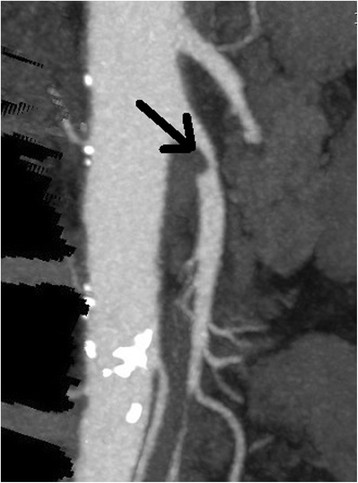
  • La angiografía por TC (estándar de oro) o el ultrasonido Doppler Doppler Ultrasonography applying the doppler effect, with frequency-shifted ultrasound reflections produced by moving targets (usually red blood cells) in the bloodstream along the ultrasound axis in direct proportion to the velocity of movement of the targets, to determine both direction and velocity of blood flow. Ultrasound (Sonography) se utilizan para identificar la enfermedad vascular aterosclerótica y descartar otros trastornos abdominales.
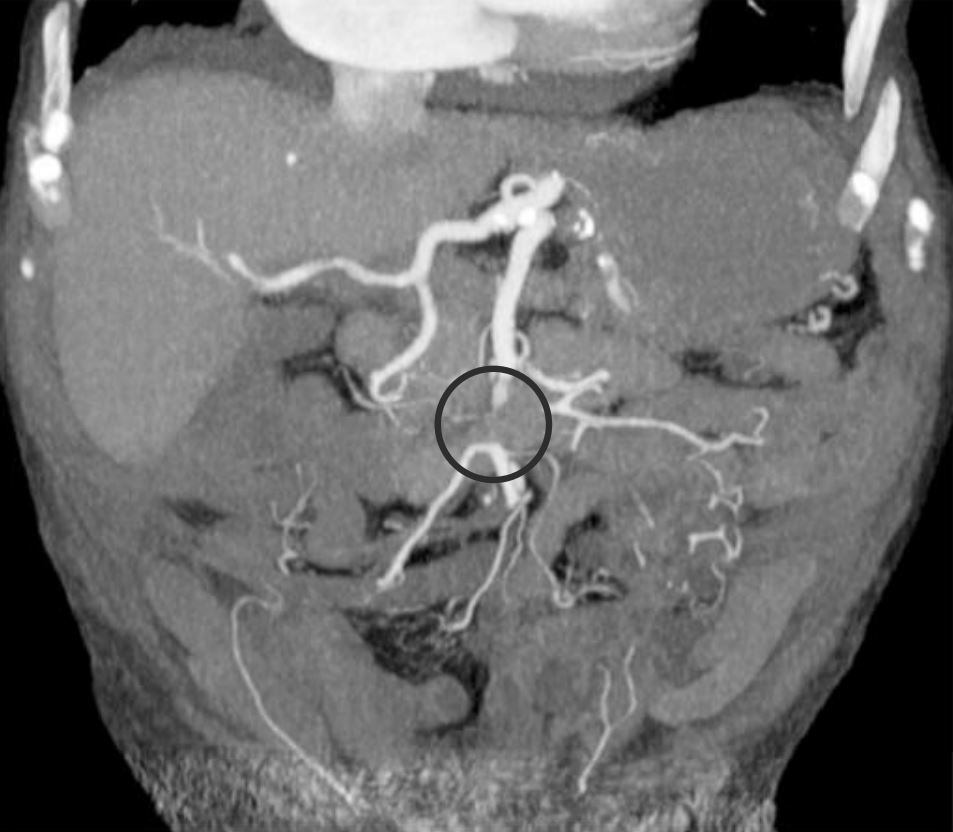
Angiograma por tomografía computarizada que muestra estenosis de la arteria mesentérica superior

Isquemia mesentérica crónica: Angiograma por tomografía computarizada que muestra estenosis de la arteria mesentérica superior

Imagen: “Figure 1” por Spangler et al. Licencia: CC BY 4.0

Tratamiento

  • Reducción de riesgos:
    • Dejar de fumar
    • Hábitos de vida saludables
    • Tratamiento de las enfermedades crónicas (e.g., hipertensión, hiperlipidemia, diabetes Diabetes Diabetes mellitus (DM) is a metabolic disease characterized by hyperglycemia and dysfunction of the regulation of glucose metabolism by insulin. Type 1 DM is diagnosed mostly in children and young adults as the result of autoimmune destruction of β cells in the pancreas and the resulting lack of insulin. Type 2 DM has a significant association with obesity and is characterized by insulin resistance. Diabetes Mellitus)
  • Soporte nutricional
  • Revascularización quirúrgica:
    • Técnicas endovasculares (e.g., angioplastia o stent): primera línea para pacientes sintomáticos
    • Cirugía abierta (e.g., bypass vascular o endarterectomía)
  • Considerar la terapia anticoagulante.

Diagnóstico Diferencial

Dado que la isquemia intestinal suele presentarse con dolor Dolor Inflammation abdominal, el diagnóstico diferencial incluye:

  • Apendicitis: inflamación aguda del apéndice. Los LOS Neisseria síntomas son dolor Dolor Inflammation periumbilical que migra al AL Amyloidosis cuadrante inferior derecho, fiebre, anorexia Anorexia The lack or loss of appetite accompanied by an aversion to food and the inability to eat. It is the defining characteristic of the disorder anorexia nervosa. Anorexia Nervosa, náuseas y vómitos, pero la apendicitis también puede provocar a menudo estreñimiento. El diagnóstico es clínico, pero en EN Erythema nodosum is an immune-mediated panniculitis (inflammation of the subcutaneous fat) caused by a type IV (delayed-type) hypersensitivity reaction. It commonly manifests in young women as tender, erythematous nodules on the shins. Erythema Nodosum caso de incertidumbre se recurre a la tomografía computarizada. El tratamiento estándar es la apendicectomía, aunque los LOS Neisseria antibióticos pueden ser útiles en EN Erythema nodosum is an immune-mediated panniculitis (inflammation of the subcutaneous fat) caused by a type IV (delayed-type) hypersensitivity reaction. It commonly manifests in young women as tender, erythematous nodules on the shins. Erythema Nodosum algunos casos.
  • Obstrucción intestinal: interrupción del flujo del contenido intraluminal a través del intestino delgado. Por lo general, la obstrucción intestinal se presenta con náuseas, vómitos, dolor Dolor Inflammation abdominal, distensión, estreñimiento y/u obstrucción. El diagnóstico se establece mediante imagenología. La mayoría de los LOS Neisseria casos se resuelven con un tratamiento de soporte (reposo intestinal, hidratación intravenosa y descompresión nasogástrica). Sin embargo, la cirugía es necesaria para los LOS Neisseria casos persistentes o complicados.
  • Diverticulitis Diverticulitis Inflammation of a diverticulum or diverticula. Diverticular Disease: inflamación de los LOS Neisseria divertículos (protuberancias de la pared intestinal, a menudo en EN Erythema nodosum is an immune-mediated panniculitis (inflammation of the subcutaneous fat) caused by a type IV (delayed-type) hypersensitivity reaction. It commonly manifests in young women as tender, erythematous nodules on the shins. Erythema Nodosum el colon Colon The large intestines constitute the last portion of the digestive system. The large intestine consists of the cecum, appendix, colon (with ascending, transverse, descending, and sigmoid segments), rectum, and anal canal. The primary function of the colon is to remove water and compact the stool prior to expulsion from the body via the rectum and anal canal. Colon, Cecum, and Appendix: Anatomy). La diverticulitis Diverticulitis Inflammation of a diverticulum or diverticula. Diverticular Disease suele presentarse con dolor Dolor Inflammation abdominal bajo y cambios en EN Erythema nodosum is an immune-mediated panniculitis (inflammation of the subcutaneous fat) caused by a type IV (delayed-type) hypersensitivity reaction. It commonly manifests in young women as tender, erythematous nodules on the shins. Erythema Nodosum los LOS Neisseria hábitos intestinales. La afección puede complicarse aún más con un absceso, una perforación, una fístula y una obstrucción intestinal. El tratamiento consiste en EN Erythema nodosum is an immune-mediated panniculitis (inflammation of the subcutaneous fat) caused by a type IV (delayed-type) hypersensitivity reaction. It commonly manifests in young women as tender, erythematous nodules on the shins. Erythema Nodosum antibióticos, reanimación con líquidos y reposo intestinal. Las complicaciones exigen una intervención quirúrgica.
  • Pancreatitis Pancreatitis Inflammation of the pancreas. Pancreatitis is classified as acute unless there are computed tomographic or endoscopic retrograde cholangiopancreatographic findings of chronic pancreatitis. The two most common forms of acute pancreatitis are alcoholic pancreatitis and gallstone pancreatitis. Acute Pancreatitis aguda: enfermedad inflamatoria del páncreas, generalmente debida a cálculos biliares y/o al AL Amyloidosis consumo excesivo de alcohol. Los LOS Neisseria pacientes suelen presentar un dolor Dolor Inflammation epigástrico que se irradia a la espalda. El diagnóstico incluye la lipasa sérica aumentada a 3 veces el límite superior de la normalidad o los LOS Neisseria hallazgos radiográficos característicos. El tratamiento incluye hidratación intravenosa agresiva, analgesia Analgesia Methods of pain relief that may be used with or in place of analgesics. Anesthesiology: History and Basic Concepts, soporte nutricional y tratamiento de la causa subyacente.
  • Pancreatitis Pancreatitis Inflammation of the pancreas. Pancreatitis is classified as acute unless there are computed tomographic or endoscopic retrograde cholangiopancreatographic findings of chronic pancreatitis. The two most common forms of acute pancreatitis are alcoholic pancreatitis and gallstone pancreatitis. Acute Pancreatitis crónica: inflamación persistente, fibrosis Fibrosis Any pathological condition where fibrous connective tissue invades any organ, usually as a consequence of inflammation or other injury. Bronchiolitis Obliterans y daño celular irreversible en EN Erythema nodosum is an immune-mediated panniculitis (inflammation of the subcutaneous fat) caused by a type IV (delayed-type) hypersensitivity reaction. It commonly manifests in young women as tender, erythematous nodules on the shins. Erythema Nodosum el páncreas. Las etiologías más comunes de la pancreatitis Pancreatitis Inflammation of the pancreas. Pancreatitis is classified as acute unless there are computed tomographic or endoscopic retrograde cholangiopancreatographic findings of chronic pancreatitis. The two most common forms of acute pancreatitis are alcoholic pancreatitis and gallstone pancreatitis. Acute Pancreatitis crónica son el abuso del alcohol y la obstrucción del conducto pancreático. Los LOS Neisseria pacientes presentan dolor Dolor Inflammation abdominal epigástrico recurrente, náuseas y rasgos de síndrome de malabsorción. Los LOS Neisseria hallazgos de la tomografía computarizada incluyen atrofia pancreática, conductos pancreáticos dilatados y calcificaciones pancreáticas. La terapia se centra en EN Erythema nodosum is an immune-mediated panniculitis (inflammation of the subcutaneous fat) caused by a type IV (delayed-type) hypersensitivity reaction. It commonly manifests in young women as tender, erythematous nodules on the shins. Erythema Nodosum el abandono del alcohol, cambios en EN Erythema nodosum is an immune-mediated panniculitis (inflammation of the subcutaneous fat) caused by a type IV (delayed-type) hypersensitivity reaction. It commonly manifests in young women as tender, erythematous nodules on the shins. Erythema Nodosum la dieta, el control del dolor Dolor Inflammation y el tratamiento de la insuficiencia pancreática.
  • Colecistitis: inflamación de la vesícula biliar causada generalmente por la obstrucción del conducto cístico (colecistitis aguda). El tipo agudo de colecistitis suele presentarse con dolor Dolor Inflammation cuadrante superior derecho, fiebre y leucocitosis. El diagnóstico se realiza clínicamente y se confirma con ultrasonido. El tratamiento definitivo es la colecistectomía.
  • Síndrome coronario agudo: formación de coágulos que obstruyen el flujo sanguíneo a las arterias coronarias. Los LOS Neisseria síntomas incluyen presión en EN Erythema nodosum is an immune-mediated panniculitis (inflammation of the subcutaneous fat) caused by a type IV (delayed-type) hypersensitivity reaction. It commonly manifests in young women as tender, erythematous nodules on the shins. Erythema Nodosum la zona torácica y dificultad para respirar. El tratamiento incluye medicamentos, como anticoagulantes, trombolíticos y/o betabloqueadores. Dependiendo de la gravedad, puede ser necesario un cateterismo cardíaco y una angioplastia con balón.
  • Disección aórtica: también puede presentarse con una aparición repentina de dolor Dolor Inflammation epigástrico intenso. El dolor Dolor Inflammation asociado a la disección aórtica suele ser un dolor Dolor Inflammation torácico punzante que se irradia a la espalda. Otras características, como la presión arterial asimétrica y el déficit de pulso en EN Erythema nodosum is an immune-mediated panniculitis (inflammation of the subcutaneous fat) caused by a type IV (delayed-type) hypersensitivity reaction. It commonly manifests in young women as tender, erythematous nodules on the shins. Erythema Nodosum un brazo, pueden ayudar a diferenciar la disección aórtica de la isquemia mesentérica aguda, aunque también es posible que una disección aórtica cause una isquemia mesentérica no oclusiva.
  • Embarazo ectópico: implantación de un óvulo fecundado fuera de la cavidad uterina, a menudo en EN Erythema nodosum is an immune-mediated panniculitis (inflammation of the subcutaneous fat) caused by a type IV (delayed-type) hypersensitivity reaction. It commonly manifests in young women as tender, erythematous nodules on the shins. Erythema Nodosum las trompas de Falopio. El crecimiento del feto puede provocar dolor Dolor Inflammation abdominal y/o sangrado vaginal. El embarazo ectópico puede diagnosticarse mediante un ultrasonido y un análisis de laboratorio de los LOS Neisseria niveles cuantitativos de gonadotropina coriónica humana seriada. El tratamiento de los LOS Neisseria embarazos ectópicos sin rotura puede ser expectante, médico o quirúrgico. Los LOS Neisseria embarazos ectópicos con rotura son urgencias quirúrgicas.

Referencias

  1. Tendler, D., Lamont, T. (2020). Overview of intestinal ischemia in adults. UpToDate. Retrieved April 26, 2021, from https://www.uptodate.com/contents/overview-of-intestinal-ischemia-in-adults
  2. Khan, A. (2016). Ischemic colitis imaging. Emedicine. Retrieved April 27, 2021, from https://emedicine.medscape.com/article/366808-overview
  3. Dang, C. (2020). Acute mesenteric ischemia. Emedicine. Retrieved April 27, 2021, from https://emedicine.medscape.com/article/189146-overview
  4. Alrayes, A. (2019). Chronic mesenteric ischemia. UpToDate. Retrieved April 26, 2021, from https://www.uptodate.com/contents/overview-of-intestinal-ischemia-in-adults
  5. Hundscheid, I.H., Grootjans, J., Lenaerts, K., et al. (2015). The human colon is more resistant to ischemia-reperfusion-induced tissue damage than the small intestine: an observational study. Ann Surg 262:304–311. https://pubmed.ncbi.nlm.nih.gov/25915914/
  6. Greenwald, D.A., Brandt, L.J. (1998). Colonic ischemia. J Clin Gastroenterol 27:122–128. https://pubmed.ncbi.nlm.nih.gov/9754772/
  7. Cappell, M.S. (1998). Intestinal (mesenteric) vasculopathy. I. Acute superior mesenteric arteriopathy and venopathy. Gastroenterol Clin North Am 27:783–825. https://pubmed.ncbi.nlm.nih.gov/9890114/

¡Crea tu cuenta gratis o inicia una sesión para seguir leyendo!

Regístrate ahora y obtén acceso gratuito a Lecturio con páginas de concepto, videos médicos y cuestionarios para tu educación médica.

User Reviews

Que tengas una sesión de estudio alegre y navideña 🎁 Ahorra 50% en todos los planes >>

Details