Domina Conceptos Médicos

Estudia para la escuela de medicina y tus examenes con Lecturio.

Impétigo

El impétigo es una infección bacteriana superficial altamente contagiosa causada típicamente por Staphylococcus aureus Staphylococcus aureus Potentially pathogenic bacteria found in nasal membranes, skin, hair follicles, and perineum of warm-blooded animals. They may cause a wide range of infections and intoxications. Brain Abscess (más común) y Streptococcus Streptococcus Streptococcus is one of the two medically important genera of gram-positive cocci, the other being Staphylococcus. Streptococci are identified as different species on blood agar on the basis of their hemolytic pattern and sensitivity to optochin and bacitracin. There are many pathogenic species of streptococci, including S. pyogenes, S. agalactiae, S. pneumoniae, and the viridans streptococci. Streptococcus pyogenes. El impétigo se presenta con mayor frecuencia en EN Erythema nodosum is an immune-mediated panniculitis (inflammation of the subcutaneous fat) caused by a type IV (delayed-type) hypersensitivity reaction. It commonly manifests in young women as tender, erythematous nodules on the shins. Erythema Nodosum niños de 2 a 5 años con lesiones que evolucionan de pápulas a vesículas y pústulas, que eventualmente se rompen para formar costras características “color miel”. La infección puede ser primaria (infección bacteriana de piel sana e intacta) o secundaria (infección en EN Erythema nodosum is an immune-mediated panniculitis (inflammation of the subcutaneous fat) caused by a type IV (delayed-type) hypersensitivity reaction. It commonly manifests in young women as tender, erythematous nodules on the shins. Erythema Nodosum abrasiones preexistentes). El diagnóstico es clínico y el tratamiento incluye antibioticoterapia tópica o sistémica. Las complicaciones del impétigo incluyen glomerulonefritis postestreptocócica, celulitis y escarlatina.

Last updated: Dec 15, 2025

Editorial responsibility: Stanley Oiseth, Lindsay Jones, Evelin Maza

Epidemiología y Etiología

Epidemiología

  • Cualquier edad puede verse afectada
  • Afecta con mayor frecuencia a niños entre 2–5 años
  • Se sabe que causa epidemias o brotes en EN Erythema nodosum is an immune-mediated panniculitis (inflammation of the subcutaneous fat) caused by a type IV (delayed-type) hypersensitivity reaction. It commonly manifests in young women as tender, erythematous nodules on the shins. Erythema Nodosum preescolares y escuelas (se propaga fácilmente entre personas con contacto cercano)

Etiología

  • El impétigo es una infección bacteriana de la piel causada por:
    • Staphylococcus aureus Staphylococcus aureus Potentially pathogenic bacteria found in nasal membranes, skin, hair follicles, and perineum of warm-blooded animals. They may cause a wide range of infections and intoxications. Brain Abscess: causa el 80% de los LOS Neisseria casos, tanto en EN Erythema nodosum is an immune-mediated panniculitis (inflammation of the subcutaneous fat) caused by a type IV (delayed-type) hypersensitivity reaction. It commonly manifests in young women as tender, erythematous nodules on the shins. Erythema Nodosum forma ampollosa como no ampollosa
    • Streptococcus Streptococcus Streptococcus is one of the two medically important genera of gram-positive cocci, the other being Staphylococcus. Streptococci are identified as different species on blood agar on the basis of their hemolytic pattern and sensitivity to optochin and bacitracin. There are many pathogenic species of streptococci, including S. pyogenes, S. agalactiae, S. pneumoniae, and the viridans streptococci. Streptococcus pyogenes (estreptococo beta-hemolítico del grupo A ): causa aproximadamente el 10% de los LOS Neisseria casos, solo formas no ampollosas
    • Coinfección por S. aureus S. aureus Potentially pathogenic bacteria found in nasal membranes, skin, hair follicles, and perineum of warm-blooded animals. They may cause a wide range of infections and intoxications. Staphylococcus y S. pyogenes: ocurre en EN Erythema nodosum is an immune-mediated panniculitis (inflammation of the subcutaneous fat) caused by a type IV (delayed-type) hypersensitivity reaction. It commonly manifests in young women as tender, erythematous nodules on the shins. Erythema Nodosum aproximadamente el 10% de los LOS Neisseria casos
  • 2 formas:
    1. Impétigo primario: infección bacteriana de piel sana e intacta
    2. Impétigo secundario (impetiginización): infección secundaria más común de lesiones cutáneas preexistentes, como sarna, picaduras de insectos, pequeños cortes, eczema Eczema Atopic dermatitis, also known as eczema, is a chronic, relapsing, pruritic, inflammatory skin disease that occurs more frequently in children, although adults can also be affected. The condition is often associated with elevated serum levels of IgE and a personal or family history of atopy. Skin dryness, erythema, oozing, crusting, and lichenification are present. Atopic Dermatitis (Eczema), etc ETC The electron transport chain (ETC) sends electrons through a series of proteins, which generate an electrochemical proton gradient that produces energy in the form of adenosine triphosphate (ATP). Electron Transport Chain (ETC).
  • Transmisión:
    • Altamente contagioso
    • Propagación por contacto directo con lesiones o con portador nasal
  • Factores de riesgo
    • Niños de 2–5 años
    • Traumatismo cutáneo (e.g., abrasión, laceraciones, mordedura o picadura de animal)
    • Mala higiene
    • Afecciones de hacinamiento
    • Clima cálido y húmedo (mayor incidencia en EN Erythema nodosum is an immune-mediated panniculitis (inflammation of the subcutaneous fat) caused by a type IV (delayed-type) hypersensitivity reaction. It commonly manifests in young women as tender, erythematous nodules on the shins. Erythema Nodosum verano)
    • Participación en EN Erythema nodosum is an immune-mediated panniculitis (inflammation of the subcutaneous fat) caused by a type IV (delayed-type) hypersensitivity reaction. It commonly manifests in young women as tender, erythematous nodules on the shins. Erythema Nodosum deportes con contacto piel a piel
    • Diabetes Diabetes Diabetes mellitus (DM) is a metabolic disease characterized by hyperglycemia and dysfunction of the regulation of glucose metabolism by insulin. Type 1 DM is diagnosed mostly in children and young adults as the result of autoimmune destruction of β cells in the pancreas and the resulting lack of insulin. Type 2 DM has a significant association with obesity and is characterized by insulin resistance. Diabetes Mellitus mellitus
    • Desnutrición

Presentación Clínica

Hay 3 variantes de impétigo:

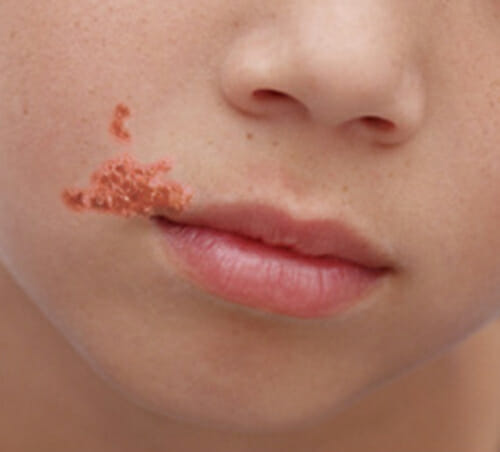
Impétigo no ampolloso

  • Más común: aproximadamente el 70% de los LOS Neisseria casos
  • Anteriormente conocido como “impétigo contagioso”
  • Comienza como una erupción con pápulasvesículas rodeadas de eritema → pústulas, que se rompen y supuran exudado (pus y líquido seroso) que se seca → costras pruriginosas de color miel que cicatrizan sin dejar cicatrices
  • Las lesiones no son dolorosas y pruriginosas.
  • Las lesiones generalmente ocurren alrededor de la boca y la nariz y/o en EN Erythema nodosum is an immune-mediated panniculitis (inflammation of the subcutaneous fat) caused by a type IV (delayed-type) hypersensitivity reaction. It commonly manifests in young women as tender, erythematous nodules on the shins. Erythema Nodosum las manos.

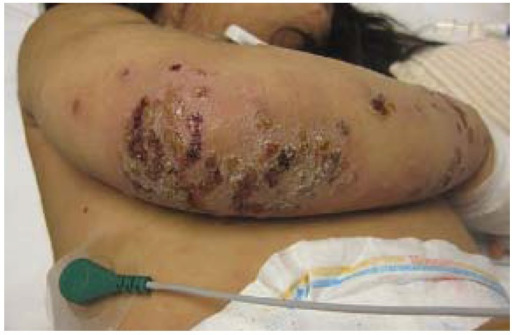
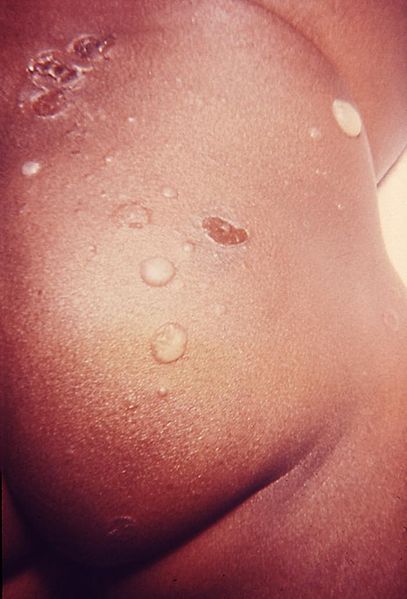
Impétigo ampolloso

  • 30% de los LOS Neisseria casos
  • Comienza como una erupción con pápulas → vesículas → ampollas grandes y flácidas , que son pruriginosas y se rompen, supurando un líquido turbio o amarillo (pus) → se seca en EN Erythema nodosum is an immune-mediated panniculitis (inflammation of the subcutaneous fat) caused by a type IV (delayed-type) hypersensitivity reaction. It commonly manifests in young women as tender, erythematous nodules on the shins. Erythema Nodosum costras marrones → puede provocar cicatrices en EN Erythema nodosum is an immune-mediated panniculitis (inflammation of the subcutaneous fat) caused by a type IV (delayed-type) hypersensitivity reaction. It commonly manifests in young women as tender, erythematous nodules on the shins. Erythema Nodosum infecciones graves
  • Signo de Nikolsky positivo: desprendimiento de la capa más externa de la piel con un ligero roce o tracción lateral
  • Las lesiones suelen aparecer en EN Erythema nodosum is an immune-mediated panniculitis (inflammation of the subcutaneous fat) caused by a type IV (delayed-type) hypersensitivity reaction. It commonly manifests in young women as tender, erythematous nodules on the shins. Erythema Nodosum el tronco
  • También puede presentarse con síntomas sistémicos (fatiga, fiebre, debilidad, malestar general)

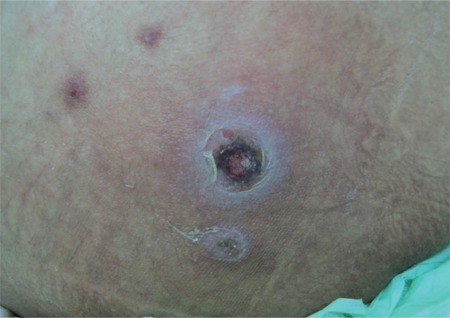
Ectima

  • Raro; incidencia exacta desconocida
  • Forma ulcerosa que afecta las capas más profundas de la dermis Dermis A layer of vascularized connective tissue underneath the epidermis. The surface of the dermis contains innervated papillae. Embedded in or beneath the dermis are sweat glands; hair follicles; and sebaceous glands. Skin: Structure and Functions (también conocida como “impétigo profundo”)
  • Comienza como una erupción con pápulas → vesículas → llagas que son dolorosas, eritematosas y llenas de líquido o pus → úlceras del tamaño de una moneda con apariencia de “perforaciones” cubiertas con costras gruesas de color amarillo grisáceo → generalmente producen cicatrices
  • Las lesiones suelen aparecer en EN Erythema nodosum is an immune-mediated panniculitis (inflammation of the subcutaneous fat) caused by a type IV (delayed-type) hypersensitivity reaction. It commonly manifests in young women as tender, erythematous nodules on the shins. Erythema Nodosum las extremidades.
  • El ectima gangrenoso se asocia con mayor frecuencia por bacteriemia por Pseudomonas Pseudomonas Pseudomonas is a non-lactose-fermenting, gram-negative bacillus that produces pyocyanin, which gives it a characteristic blue-green color. Pseudomonas is found ubiquitously in the environment, as well as in moist reservoirs, such as hospital sinks and respiratory equipment. Pseudomonas, que se observa en EN Erythema nodosum is an immune-mediated panniculitis (inflammation of the subcutaneous fat) caused by a type IV (delayed-type) hypersensitivity reaction. It commonly manifests in young women as tender, erythematous nodules on the shins. Erythema Nodosum pacientes en EN Erythema nodosum is an immune-mediated panniculitis (inflammation of the subcutaneous fat) caused by a type IV (delayed-type) hypersensitivity reaction. It commonly manifests in young women as tender, erythematous nodules on the shins. Erythema Nodosum estado crítico e inmunodeprimidos; las pústulas hemorrágicas evolucionan a úlceras necróticas.

Diagnóstico

El diagnóstico suele ser clínico, basado en EN Erythema nodosum is an immune-mediated panniculitis (inflammation of the subcutaneous fat) caused by a type IV (delayed-type) hypersensitivity reaction. It commonly manifests in young women as tender, erythematous nodules on the shins. Erythema Nodosum la secuencia natural de las lesiones y la presencia de costras color miel en EN Erythema nodosum is an immune-mediated panniculitis (inflammation of the subcutaneous fat) caused by a type IV (delayed-type) hypersensitivity reaction. It commonly manifests in young women as tender, erythematous nodules on the shins. Erythema Nodosum pacientes pediátricos de 2–5 años.

  • Por lo general, no se requiere la tinción de Gram ni el cultivo del exudado; solo es necesario en EN Erythema nodosum is an immune-mediated panniculitis (inflammation of the subcutaneous fat) caused by a type IV (delayed-type) hypersensitivity reaction. It commonly manifests in young women as tender, erythematous nodules on the shins. Erythema Nodosum el caso de:
    • Resistencia a la terapia
    • Reaparición
    • Diagnóstico clínico no concluyente
  • Imagenologia: se pueden realizar radiografías, imagenología por resonancia magnética (RM) y/o gammagrafía ósea en EN Erythema nodosum is an immune-mediated panniculitis (inflammation of the subcutaneous fat) caused by a type IV (delayed-type) hypersensitivity reaction. It commonly manifests in young women as tender, erythematous nodules on the shins. Erythema Nodosum caso de dolor Dolor Inflammation articular severo para confirmar o descartar artritis séptica u osteomielitis.

Tratamiento y Complicaciones

Tratamiento

El tratamiento depende del tipo y la gravedad de la infección.

  • Casos leves a moderados de impétigo no ampolloso:
    • Cremas o ungüentos antibióticos tópicos durante 7 días (e.g., mupirocina, retapamulina)
  • Impétigo ampolloso, ectima y casos graves de impétigo no ampolloso:
    • Primera línea: antibióticos orales que incluyen cefalexina y dicloxacilina
    • Si se detectan estreptococos β-hemolíticos, se prefiere la penicilina oral.
  • Casos de impétigo por S. aureus S. aureus Potentially pathogenic bacteria found in nasal membranes, skin, hair follicles, and perineum of warm-blooded animals. They may cause a wide range of infections and intoxications. Staphylococcus resistente a la meticilina ( MRSA MRSA A strain of Staphylococcus aureus that is non-susceptible to the action of methicillin. The mechanism of resistance usually involves modification of normal or the presence of acquired penicillin binding proteins. Staphylococcus, por sus siglas en EN Erythema nodosum is an immune-mediated panniculitis (inflammation of the subcutaneous fat) caused by a type IV (delayed-type) hypersensitivity reaction. It commonly manifests in young women as tender, erythematous nodules on the shins. Erythema Nodosum inglés):
    • Clindamicina, trimetoprim-sulfametoxazol o doxiciclina
    • Nota: Los LOS Neisseria datos retrospectivos indican que en EN Erythema nodosum is an immune-mediated panniculitis (inflammation of the subcutaneous fat) caused by a type IV (delayed-type) hypersensitivity reaction. It commonly manifests in young women as tender, erythematous nodules on the shins. Erythema Nodosum dosis estándar, los LOS Neisseria niños < 8 años pueden recibir hasta 5 ciclos de doxiciclina sin evidencia detectable de manchas dentales. Se ha HA Hemolytic anemia (HA) is the term given to a large group of anemias that are caused by the premature destruction/hemolysis of circulating red blood cells (RBCs). Hemolysis can occur within (intravascular hemolysis) or outside the blood vessels (extravascular hemolysis). Hemolytic Anemia informado sobre la decoloración de los LOS Neisseria dientes inducida por medicamentos en EN Erythema nodosum is an immune-mediated panniculitis (inflammation of the subcutaneous fat) caused by a type IV (delayed-type) hypersensitivity reaction. It commonly manifests in young women as tender, erythematous nodules on the shins. Erythema Nodosum niños con clases más antiguas de tetraciclinas.

Prevención de la propagación

  • Lavado de manos regular Regular Insulin
  • Cubrimiento de lesiones cutáneas abiertas
  • Los LOS Neisseria niños pueden regresar a la escuela 24 horas después de comenzar el tratamiento con antibióticos

Complicaciones

  • Cicatrización o desfiguración
  • Glomerulonefritis postestreptocócica
  • Escarlatina
  • Celulitis
  • Artritis séptica
  • Síndrome de piel escaldada por estafilococos
  • Septicemia o sepsis Sepsis Systemic inflammatory response syndrome with a proven or suspected infectious etiology. When sepsis is associated with organ dysfunction distant from the site of infection, it is called severe sepsis. When sepsis is accompanied by hypotension despite adequate fluid infusion, it is called septic shock. Sepsis and Septic Shock
  • Infección bacteriana superpuesta de lesiones primarias del impétigo

Diagnóstico Diferencial

Las siguientes afecciones también se presentan con ampollas y sirven como diagnóstico diferencial para el impétigo ampolloso:

  • Pénfigo vulgar y penfigoide ampolloso: trastornos ampollosos autoinmunes que se presentan con ampollas tensas y ampollas en EN Erythema nodosum is an immune-mediated panniculitis (inflammation of the subcutaneous fat) caused by a type IV (delayed-type) hypersensitivity reaction. It commonly manifests in young women as tender, erythematous nodules on the shins. Erythema Nodosum el caso del penfigoide ampolloso y ampollas flácidas y erosiones de la mucosa en EN Erythema nodosum is an immune-mediated panniculitis (inflammation of the subcutaneous fat) caused by a type IV (delayed-type) hypersensitivity reaction. It commonly manifests in young women as tender, erythematous nodules on the shins. Erythema Nodosum el caso del pénfigo vulgar.
  • Quemaduras de segundo grado: lesión tisular provocada por la exposición al AL Amyloidosis calor Calor Inflammation local y el calentamiento del tejido respectivo. Las quemaduras de segundo grado son superficiales, se limitan a la epidermis Epidermis The external, nonvascular layer of the skin. It is made up, from within outward, of five layers of epithelium: (1) basal layer (stratum basale epidermidis); (2) spinous layer (stratum spinosum epidermidis); (3) granular layer (stratum granulosum epidermidis); (4) clear layer (stratum lucidum epidermidis); and (5) horny layer (stratum corneum epidermidis). Skin: Structure and Functions y se presentan como hiperemia, lecho húmedo de la herida, sensibilidad intacta y ampollas.
  • Varicela: infección primaria por el virus Virus Viruses are infectious, obligate intracellular parasites composed of a nucleic acid core surrounded by a protein capsid. Viruses can be either naked (non-enveloped) or enveloped. The classification of viruses is complex and based on many factors, including type and structure of the nucleoid and capsid, the presence of an envelope, the replication cycle, and the host range. Virology varicela zoster. Ocurre con mayor frecuencia en EN Erythema nodosum is an immune-mediated panniculitis (inflammation of the subcutaneous fat) caused by a type IV (delayed-type) hypersensitivity reaction. It commonly manifests in young women as tender, erythematous nodules on the shins. Erythema Nodosum niños y se presenta como una erupción pruriginosa, con máculas que rápidamente se convierten en EN Erythema nodosum is an immune-mediated panniculitis (inflammation of the subcutaneous fat) caused by a type IV (delayed-type) hypersensitivity reaction. It commonly manifests in young women as tender, erythematous nodules on the shins. Erythema Nodosum pápulas y luego en EN Erythema nodosum is an immune-mediated panniculitis (inflammation of the subcutaneous fat) caused by a type IV (delayed-type) hypersensitivity reaction. It commonly manifests in young women as tender, erythematous nodules on the shins. Erythema Nodosum vesículas.

Las siguientes afecciones son otros tipos de infecciones cutáneas superficiales que se incluyen en EN Erythema nodosum is an immune-mediated panniculitis (inflammation of the subcutaneous fat) caused by a type IV (delayed-type) hypersensitivity reaction. It commonly manifests in young women as tender, erythematous nodules on the shins. Erythema Nodosum los LOS Neisseria diagnósticos diferenciales del impétigo:

  • Erisipela: infección superficial aguda de la dermis Dermis A layer of vascularized connective tissue underneath the epidermis. The surface of the dermis contains innervated papillae. Embedded in or beneath the dermis are sweat glands; hair follicles; and sebaceous glands. Skin: Structure and Functions superior y que afecta a los LOS Neisseria ganglios linfáticos. Por lo general, causada por agentes bacterianos como el estreptococo β-hemolítico del grupo A, se presenta como una lesión cutánea bien delimitada con eritema, edema Edema Edema is a condition in which excess serous fluid accumulates in the body cavity or interstitial space of connective tissues. Edema is a symptom observed in several medical conditions. It can be categorized into 2 types, namely, peripheral (in the extremities) and internal (in an organ or body cavity). Edema y calor Calor Inflammation.
  • Dermatitis Dermatitis Any inflammation of the skin. Atopic Dermatitis (Eczema): término general para una erupción cutánea edematosa causada por una reacción alérgica o una infección no bacteriana.
  • Candidiasis Candidiasis Candida is a genus of dimorphic, opportunistic fungi. Candida albicans is part of the normal human flora and is the most common cause of candidiasis. The clinical presentation varies and can include localized mucocutaneous infections (e.g., oropharyngeal, esophageal, intertriginous, and vulvovaginal candidiasis) and invasive disease (e.g., candidemia, intraabdominal abscess, pericarditis, and meningitis). Candida/Candidiasis cutánea: una infección superficial causada por Candida Candida Candida is a genus of dimorphic, opportunistic fungi. Candida albicans is part of the normal human flora and is the most common cause of candidiasis. The clinical presentation varies and can include localized mucocutaneous infections (e.g., oropharyngeal, esophageal, intertriginous, and vulvovaginal candidiasis) and invasive disease (e.g., candidemia, intraabdominal abscess, pericarditis, and meningitis). Candida/Candidiasis spp. Generalmente asociado con inmunodeficiencia.
  • Tiña: infección de la piel causada por dermatofitos. Hay 3 tipos de dermatofitos: Trichophyton Trichophyton A mitosporic fungal genus and an anamorphic form of arthroderma. Various species attack the skin, nails, and hair. Dermatophytes/Tinea Infections, Epidermophyton Epidermophyton A fungal genus which grows in the epidermis and is the cause of tinea. Dermatophytes/Tinea Infections y Microsporum Microsporum A mitosporic oxygenales fungal genus causing various diseases of the skin and hair. The species microsporum canis produces tinea capitis and tinea corporis, which usually are acquired from domestic cats and dogs. Teleomorphs includes arthroderma (nannizzia). Dermatophytes/Tinea Infections.
  • Infección viral por herpes simple: una infección viral que se presenta como vesículas eritematosas recurrentes que se convierten en EN Erythema nodosum is an immune-mediated panniculitis (inflammation of the subcutaneous fat) caused by a type IV (delayed-type) hypersensitivity reaction. It commonly manifests in young women as tender, erythematous nodules on the shins. Erythema Nodosum úlceras dolorosas, generalmente adentro o alrededor de la boca (el virus Virus Viruses are infectious, obligate intracellular parasites composed of a nucleic acid core surrounded by a protein capsid. Viruses can be either naked (non-enveloped) or enveloped. The classification of viruses is complex and based on many factors, including type and structure of the nucleoid and capsid, the presence of an envelope, the replication cycle, and the host range. Virology del herpes simple ( HSV HSV Herpes simplex virus (HSV) is a double-stranded DNA virus belonging to the family Herpesviridae. Herpes simplex virus commonly causes recurrent infections involving the skin and mucosal surfaces, including the mouth, lips, eyes, and genitals. Herpes Simplex Virus 1 and 2, por sus siglas en EN Erythema nodosum is an immune-mediated panniculitis (inflammation of the subcutaneous fat) caused by a type IV (delayed-type) hypersensitivity reaction. It commonly manifests in young women as tender, erythematous nodules on the shins. Erythema Nodosum inglés) tipo 1 es más común en EN Erythema nodosum is an immune-mediated panniculitis (inflammation of the subcutaneous fat) caused by a type IV (delayed-type) hypersensitivity reaction. It commonly manifests in young women as tender, erythematous nodules on the shins. Erythema Nodosum este sitio).
  • Foliculitis: inflamación localizada en EN Erythema nodosum is an immune-mediated panniculitis (inflammation of the subcutaneous fat) caused by a type IV (delayed-type) hypersensitivity reaction. It commonly manifests in young women as tender, erythematous nodules on the shins. Erythema Nodosum el folículo piloso o en EN Erythema nodosum is an immune-mediated panniculitis (inflammation of the subcutaneous fat) caused by a type IV (delayed-type) hypersensitivity reaction. It commonly manifests in young women as tender, erythematous nodules on the shins. Erythema Nodosum las glándulas sebáceas causada principalmente por S. aureus S. aureus Potentially pathogenic bacteria found in nasal membranes, skin, hair follicles, and perineum of warm-blooded animals. They may cause a wide range of infections and intoxications. Staphylococcus. Se caracteriza por eritema, pápulas sensibles y/o pústulas en EN Erythema nodosum is an immune-mediated panniculitis (inflammation of the subcutaneous fat) caused by a type IV (delayed-type) hypersensitivity reaction. It commonly manifests in young women as tender, erythematous nodules on the shins. Erythema Nodosum el sitio de los LOS Neisseria folículos pilosos.

Referencias

  1. Baddour LM. Impetigo. (2025). UpToDate Evidence-Based Medicine. Retrieved on June 19, 2025, from https://www.uptodate.com/contents/impetigo
  2. Emanuel P. Impetigo. (2013). DermNet New Zealand (Supported by and contributed to by New Zealand Dermatologists on behalf of the New Zealand Dermatological Society Incorporated). https://dermnetnz.org/topics/impetigo-pathology/
  3. Nardi NM, Schaefer TJ. Impetigo. [Updated 2023 Jul 31]. In: StatPearls [Internet]. Treasure Island (FL): StatPearls Publishing; 2025 Jan-. Available from: https://www.ncbi.nlm.nih.gov/books/NBK430974/

¡Crea tu cuenta gratis o inicia una sesión para seguir leyendo!

Regístrate ahora y obtén acceso gratuito a Lecturio con páginas de concepto, videos médicos y cuestionarios para tu educación médica.

User Reviews

Que tengas una sesión de estudio alegre y navideña 🎁 Ahorra 50% en todos los planes >>

Details