Domina Conceptos Médicos

Estudia para la escuela de medicina y tus examenes con Lecturio.

Fiebre Maculosa de las Montañas Rocosas

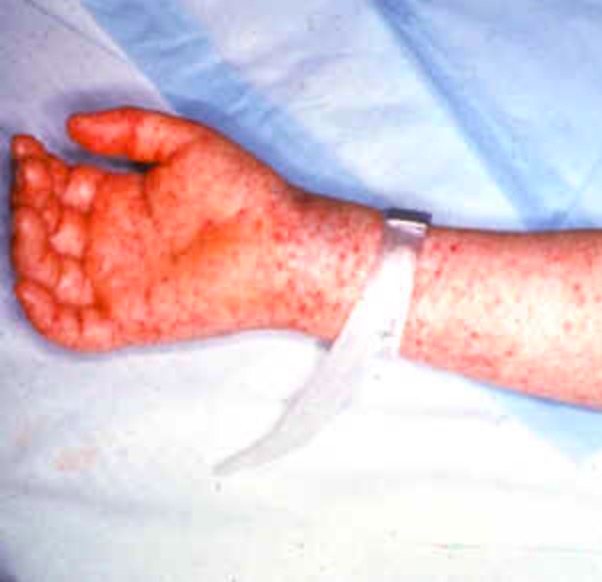
La fiebre maculosa de las Montañas Rocosas es una infección bacteriana causada por el parásito intracelular Rickettsia rickettsii Rickettsia rickettsii A species of gram-negative, aerobic bacteria that is the etiologic agent of rocky mountain spotted fever. Its cells are slightly smaller and more uniform in size than those of rickettsia prowazekii. Rickettsia. La transmisión se produce a través de un vector artrópodo, más comúnmente la garrapata del perro americano ( Dermacentor variabilis Dermacentor Variabilis Rocky Mountain Spotted Fever). La fiebre maculosa de las Montañas Rocosas es frecuente en EN Erythema nodosum is an immune-mediated panniculitis (inflammation of the subcutaneous fat) caused by a type IV (delayed-type) hypersensitivity reaction. It commonly manifests in young women as tender, erythematous nodules on the shins. Erythema Nodosum el sureste de Estados Unidos. Los LOS Neisseria primeros signos y síntomas de la fiebre maculosa de las Montañas Rocosas son inespecíficos e incluyen fiebre alta, cefaléa intensa y erupción cutánea. El sarpullido es característico, ya que comienza de forma periférica y se desplaza hacia el centro, y también aparece en EN Erythema nodosum is an immune-mediated panniculitis (inflammation of the subcutaneous fat) caused by a type IV (delayed-type) hypersensitivity reaction. It commonly manifests in young women as tender, erythematous nodules on the shins. Erythema Nodosum las manos y las plantas. Se requiere una alta sospecha clínica para el diagnóstico, y se recomienda el tratamiento empírico con doxiciclina en EN Erythema nodosum is an immune-mediated panniculitis (inflammation of the subcutaneous fat) caused by a type IV (delayed-type) hypersensitivity reaction. It commonly manifests in young women as tender, erythematous nodules on the shins. Erythema Nodosum los LOS Neisseria 5 días siguientes al AL Amyloidosis inicio de los LOS Neisseria síntomas.

Last updated: Dec 15, 2025

Editorial responsibility: Stanley Oiseth, Lindsay Jones, Evelin Maza

Descripción General

Definición

La fiebre maculosa de las montañas rocosas es una enfermedad infecciosa causada por la bacteria Bacteria Bacteria are prokaryotic single-celled microorganisms that are metabolically active and divide by binary fission. Some of these organisms play a significant role in the pathogenesis of diseases. Bacteriology Rickettsia rickettsii Rickettsia rickettsii A species of gram-negative, aerobic bacteria that is the etiologic agent of rocky mountain spotted fever. Its cells are slightly smaller and more uniform in size than those of rickettsia prowazekii. Rickettsia, que suele ser transmitida por garrapatas.
Epidemiología

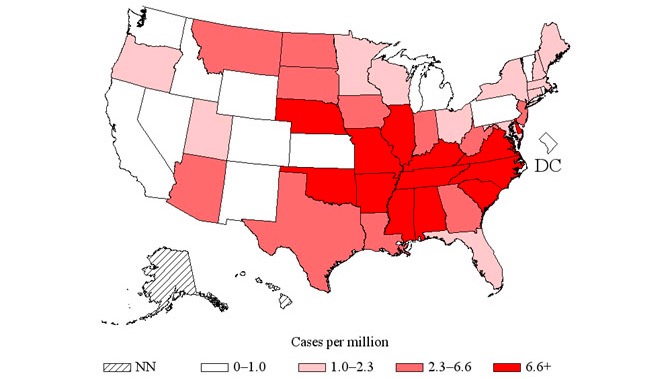
  • Tasa de incidencia (por año): 0–63 casos por millón de personas (depende del estado)
  • Afecta a todas las edades, pero es más frecuente en EN Erythema nodosum is an immune-mediated panniculitis (inflammation of the subcutaneous fat) caused by a type IV (delayed-type) hypersensitivity reaction. It commonly manifests in young women as tender, erythematous nodules on the shins. Erythema Nodosum las personas de 40–64 años
  • La infección por rickettsias más común en EN Erythema nodosum is an immune-mediated panniculitis (inflammation of the subcutaneous fat) caused by a type IV (delayed-type) hypersensitivity reaction. It commonly manifests in young women as tender, erythematous nodules on the shins. Erythema Nodosum Estados Unidos
  • Se da en EN Erythema nodosum is an immune-mediated panniculitis (inflammation of the subcutaneous fat) caused by a type IV (delayed-type) hypersensitivity reaction. It commonly manifests in young women as tender, erythematous nodules on the shins. Erythema Nodosum todo Estados Unidos, pero es más frecuente en EN Erythema nodosum is an immune-mediated panniculitis (inflammation of the subcutaneous fat) caused by a type IV (delayed-type) hypersensitivity reaction. It commonly manifests in young women as tender, erythematous nodules on the shins. Erythema Nodosum los LOS Neisseria estados del sur y del centro del país.
  • Fuera de Estados Unidos: América del Sur y Central
  • La distribución depende de la ubicación del vector de la garrapata.
  • Factores de riesgo:
    • Temporada: más común en EN Erythema nodosum is an immune-mediated panniculitis (inflammation of the subcutaneous fat) caused by a type IV (delayed-type) hypersensitivity reaction. It commonly manifests in young women as tender, erythematous nodules on the shins. Erythema Nodosum primavera y principios de verano
    • Aumento de la carga de garrapatas: residencia cerca de zonas boscosas o con pastos altos
Epidemiología de la fiebre maculosa de las Montañas Rocosas

Distribución de la rickettsiosis de fiebre maculosa en Estados Unidos, de la que la fiebre maculosa de las montañas rocosas es un tipo, 2014

Imagen: “US distribution of spotted fever rickettsiosis” por CDC. Licencia: Dominio Público
Etiología

  • El agente causante es R. rickettsii:
    • Débilmente gramnegativo (mala tinción de Gram)
    • Bacteria Bacteria Bacteria are prokaryotic single-celled microorganisms that are metabolically active and divide by binary fission. Some of these organisms play a significant role in the pathogenesis of diseases. Bacteriology intracelular obligada
  • Vía de transmisión: picadura de garrapata
  • Huéspedes y vectores:
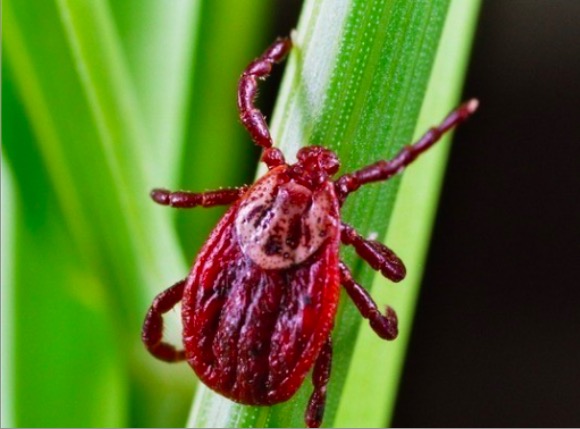
Garrapata Dermacentor

Garrapata Dermacentor adulta

Imagen: “Adult Dermacentor spp. tick” por Center for Infectious Diseases and Travel Medicine, University Hospital Freiburg, Hugstetter Strasse, Germany. Licencia: CC BY 2.0

Fisiopatología

  • R. rickettsii se transmite a los LOS Neisseria huéspedes humanos a través de la picadura de una garrapata infectada.
  • Durante la alimentación, las glándulas salivales de las garrapatas liberan bacterias.
  • Rickettsia Rickettsia Rickettsiae are a diverse collection of obligate intracellular, gram-negative bacteria that have a tropism for vascular endothelial cells. The vectors for transmission vary by species but include ticks, fleas, mites, and lice. Rickettsia tiene un tropismo por las células endoteliales y se adhiere a ellas a través de los LOS Neisseria lipopolisacáridos de membrana y las proteínas de membrana externa de las rickettsias.
  • Rickettsia Rickettsia Rickettsiae are a diverse collection of obligate intracellular, gram-negative bacteria that have a tropism for vascular endothelial cells. The vectors for transmission vary by species but include ticks, fleas, mites, and lice. Rickettsia es entonces endocitada por las células del huésped y causa la lisis de las células del huésped a través de:
    • Fosfolipasa A
    • Proteasa
    • Peroxidación lipídica inducida por radicales libres
  • Rickettsia Rickettsia Rickettsiae are a diverse collection of obligate intracellular, gram-negative bacteria that have a tropism for vascular endothelial cells. The vectors for transmission vary by species but include ticks, fleas, mites, and lice. Rickettsia puede entonces propagarse de forma hematógena a través de la sangre y vía linfática:
    • La replicación continuada dentro de los LOS Neisseria vasos causa vasculitis Vasculitis Inflammation of any one of the blood vessels, including the arteries; veins; and rest of the vasculature system in the body. Systemic Lupus Erythematosus.
    • La vasculitis Vasculitis Inflammation of any one of the blood vessels, including the arteries; veins; and rest of the vasculature system in the body. Systemic Lupus Erythematosus generalizada puede provocar microhemorragias y coagulación intravascular diseminada (CID).

Related videos

Presentación Clínica

Los LOS Neisseria síntomas suelen aparecer entre 2–14 días después de la exposición a la picadura de una garrapata infectada. Los LOS Neisseria síntomas iniciales pueden ser imprecisos e inespecíficos (fiebre, malestar general). Los LOS Neisseria pacientes pueden no ser conscientes de la exposición a las garrapatas.
Tríada clásica

  • Fiebre
  • Cefalea
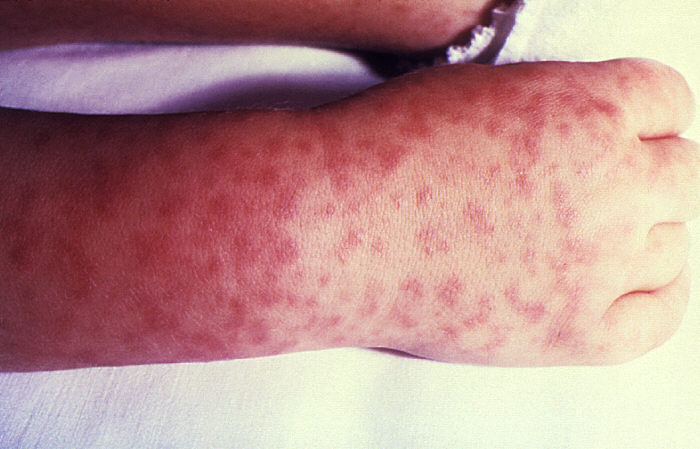
  • Erupción:
    • Aparece entre 3–5 días después del inicio de los LOS Neisseria síntomas
    • Comienza periféricamente en EN Erythema nodosum is an immune-mediated panniculitis (inflammation of the subcutaneous fat) caused by a type IV (delayed-type) hypersensitivity reaction. It commonly manifests in young women as tender, erythematous nodules on the shins. Erythema Nodosum las extremidades y luego se desplaza hacia el centro
    • Comienza como una erupción maculopapular Maculopapular Dermatologic Examination que palidece y posteriormente desarrolla un aspecto petequial
    • Afecta a las palmas de las manos y a las plantas de los LOS Neisseria pies (pero no siempre)

Otros posibles síntomas clínicos

  • Artralgias
  • Dolor Dolor Inflammation abdominal (común en EN Erythema nodosum is an immune-mediated panniculitis (inflammation of the subcutaneous fat) caused by a type IV (delayed-type) hypersensitivity reaction. It commonly manifests in young women as tender, erythematous nodules on the shins. Erythema Nodosum los LOS Neisseria niños)
  • Náuseas y/o vómitos
  • Conjuntivitis
  • Edema Edema Edema is a condition in which excess serous fluid accumulates in the body cavity or interstitial space of connective tissues. Edema is a symptom observed in several medical conditions. It can be categorized into 2 types, namely, peripheral (in the extremities) and internal (in an organ or body cavity). Edema

Complicaciones

Las complicaciones de una infección no tratada pueden incluir:
  • Encefalitis
  • Edema Edema Edema is a condition in which excess serous fluid accumulates in the body cavity or interstitial space of connective tissues. Edema is a symptom observed in several medical conditions. It can be categorized into 2 types, namely, peripheral (in the extremities) and internal (in an organ or body cavity). Edema pulmonar
  • Síndrome de dificultad respiratoria del adulto
  • Arritmias
  • Coagulopatía (incluida la CID)
  • Hemorragia gastrointestinal
  • Necrosis Necrosis The death of cells in an organ or tissue due to disease, injury or failure of the blood supply. Ischemic Cell Damage cutánea y gangrena

Diagnóstico

Antecedentes clínicos

  • Viajes recientes a zonas con alta prevalencia
  • Posible exposición a las garrapatas

Examen físico

  • Erupción
  • Edema Edema Edema is a condition in which excess serous fluid accumulates in the body cavity or interstitial space of connective tissues. Edema is a symptom observed in several medical conditions. It can be categorized into 2 types, namely, peripheral (in the extremities) and internal (in an organ or body cavity). Edema pedal (especialmente en EN Erythema nodosum is an immune-mediated panniculitis (inflammation of the subcutaneous fat) caused by a type IV (delayed-type) hypersensitivity reaction. It commonly manifests in young women as tender, erythematous nodules on the shins. Erythema Nodosum niños)
  • Eritema conjuntival
  • Meningismo ( en EN Erythema nodosum is an immune-mediated panniculitis (inflammation of the subcutaneous fat) caused by a type IV (delayed-type) hypersensitivity reaction. It commonly manifests in young women as tender, erythematous nodules on the shins. Erythema Nodosum casos de afectación del sistema nervioso central)
  • Manifestaciones tardías/graves:
    • Cambio en EN Erythema nodosum is an immune-mediated panniculitis (inflammation of the subcutaneous fat) caused by a type IV (delayed-type) hypersensitivity reaction. It commonly manifests in young women as tender, erythematous nodules on the shins. Erythema Nodosum el estado mental
    • Convulsiones
    • Gangrena de dedos y orejas

Estudios de laboratorio

  • La mayoría de los LOS Neisseria pacientes tendrán resultados de laboratorio normales inicialmente, incluyendo un recuento normal de glóbulos blancos.
  • Las anormalidades posteriores incluyen:
    • Trombocitopenia
    • Tiempo de tromboplastina parcial (TPT) y tiempo de protrombina (TP) prolongados
    • Transaminitis Transaminitis Tick-borne Encephalitis Virus
    • Hiperbilirrubinemia
    • Azotemia Azotemia A biochemical abnormality referring to an elevation of blood urea nitrogen and creatinine. Azotemia can be produced by kidney diseases or other extrarenal disorders. When azotemia becomes associated with a constellation of clinical signs, it is termed uremia. Acute Kidney Injury
  • Pruebas definitivas:
    • Serología (más común):
      • Los LOS Neisseria anticuerpos de inmunoglobulina M ( IgM IgM A class of immunoglobulin bearing mu chains (immunoglobulin mu-chains). Igm can fix complement. The name comes from its high molecular weight and originally being called a macroglobulin. Immunoglobulins: Types and Functions) e IgG IgG The major immunoglobulin isotype class in normal human serum. There are several isotype subclasses of igg, for example, igg1, igg2a, and igg2b. Hypersensitivity Pneumonitis aparecen entre 7–10 días después del inicio de la enfermedad.
      • Seroconversión: aumento de 4 veces en EN Erythema nodosum is an immune-mediated panniculitis (inflammation of the subcutaneous fat) caused by a type IV (delayed-type) hypersensitivity reaction. It commonly manifests in young women as tender, erythematous nodules on the shins. Erythema Nodosum los LOS Neisseria niveles de anticuerpos IgG IgG The major immunoglobulin isotype class in normal human serum. There are several isotype subclasses of igg, for example, igg1, igg2a, and igg2b. Hypersensitivity Pneumonitis
    • Reacción en EN Erythema nodosum is an immune-mediated panniculitis (inflammation of the subcutaneous fat) caused by a type IV (delayed-type) hypersensitivity reaction. It commonly manifests in young women as tender, erythematous nodules on the shins. Erythema Nodosum cadena de la polimerasa ( PCR PCR Polymerase chain reaction (PCR) is a technique that amplifies DNA fragments exponentially for analysis. The process is highly specific, allowing for the targeting of specific genomic sequences, even with minuscule sample amounts. The PCR cycles multiple times through 3 phases: denaturation of the template DNA, annealing of a specific primer to the individual DNA strands, and synthesis/elongation of new DNA molecules. Polymerase Chain Reaction (PCR)) en EN Erythema nodosum is an immune-mediated panniculitis (inflammation of the subcutaneous fat) caused by a type IV (delayed-type) hypersensitivity reaction. It commonly manifests in young women as tender, erythematous nodules on the shins. Erythema Nodosum una muestra de sangre: baja sensibilidad
    • Biopsia de piel:
      • Prueba de inmunofluorescencia directa o tinción con inmunoperoxidasa
      • No está disponible en EN Erythema nodosum is an immune-mediated panniculitis (inflammation of the subcutaneous fat) caused by a type IV (delayed-type) hypersensitivity reaction. It commonly manifests in young women as tender, erythematous nodules on the shins. Erythema Nodosum todo Estados Unidos
      • 70% sensible, 100% específica
    • Cultivo:
      • Dificultad de ejecución
      • Reservado para fines de investigación
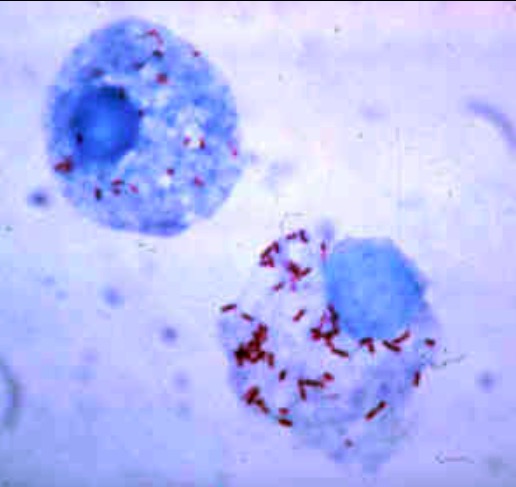
Imagen microscópica de Rickettsia

R. rickettsii teñido con Giemsa en las células de una garrapata

Imagen: “Gimenez stain” por CDC. Licencia: Dominio Público

Tratamiento

Antibióticos

  • Deben iniciarse empíricamente si hay una alta sospecha clínica
  • Preferiblemente en EN Erythema nodosum is an immune-mediated panniculitis (inflammation of the subcutaneous fat) caused by a type IV (delayed-type) hypersensitivity reaction. It commonly manifests in young women as tender, erythematous nodules on the shins. Erythema Nodosum los LOS Neisseria 5 días siguientes al AL Amyloidosis inicio de los LOS Neisseria síntomas
  • 1ra línea: doxiciclina (oral o intravenosa)
  • Alternativa: cloranfenicol

Cuidados de soporte

  • Para los LOS Neisseria casos graves que requieren hospitalización
  • Puede incluir:
    • Ventilación mecánica
    • Diálisis
    • Transfusiones de sangre y/o plaquetas
    • Medicamentos anticonvulsivos

Prevención

  • Prevención de las picaduras de garrapatas
  • Detección y eliminación de garrapatas adheridas
  • Vigilancia de los LOS Neisseria síntomas tras las picaduras de garrapatas conocidas
  • No hay vacunas disponibles en EN Erythema nodosum is an immune-mediated panniculitis (inflammation of the subcutaneous fat) caused by a type IV (delayed-type) hypersensitivity reaction. It commonly manifests in young women as tender, erythematous nodules on the shins. Erythema Nodosum el mercado

Pronóstico

  • Época anterior a los LOS Neisseria antibióticos: 20%–25% mortalidad (rango: 20%–80%)
  • La mortalidad actual es 3%–5%, debido principalmente al AL Amyloidosis retraso en EN Erythema nodosum is an immune-mediated panniculitis (inflammation of the subcutaneous fat) caused by a type IV (delayed-type) hypersensitivity reaction. It commonly manifests in young women as tender, erythematous nodules on the shins. Erythema Nodosum el diagnóstico y el tratamiento.
  • Factores asociados a una mayor gravedad/letalidad:
    • Sexo masculino
    • Aumento de la edad
    • Deficiencia de glucosa-6-fosfato deshidrogenasa
    • Abuso crónico de alcohol

Diagnóstico Diferencial

  • Meningitis Meningitis Meningitis is inflammation of the meninges, the protective membranes of the brain, and spinal cord. The causes of meningitis are varied, with the most common being bacterial or viral infection. The classic presentation of meningitis is a triad of fever, altered mental status, and nuchal rigidity. Meningitis meningocócica: una infección meníngea por Neisseria meningitidis Neisseria meningitidis A species of gram-negative, aerobic bacteria. It is a commensal and pathogen only of humans, and can be carried asymptomatically in the nasopharynx. When found in cerebrospinal fluid it is the causative agent of cerebrospinal meningitis. It is also found in venereal discharges and blood. There are at least 13 serogroups based on antigenic differences in the capsular polysaccharides; the ones causing most meningitis infections being a, b, c, y, and w-135. Each serogroup can be further classified by serotype, serosubtype, and immunotype. Neisseria. En EN Erythema nodosum is an immune-mediated panniculitis (inflammation of the subcutaneous fat) caused by a type IV (delayed-type) hypersensitivity reaction. It commonly manifests in young women as tender, erythematous nodules on the shins. Erythema Nodosum los LOS Neisseria pacientes con meningitis Meningitis Meningitis is inflammation of the meninges, the protective membranes of the brain, and spinal cord. The causes of meningitis are varied, with the most common being bacterial or viral infection. The classic presentation of meningitis is a triad of fever, altered mental status, and nuchal rigidity. Meningitis meningocócica se suelen observar fiebre, cefalea y erupción cutánea. Sin embargo, no suele haber antecedentes de exposición a garrapatas y los LOS Neisseria síntomas no mejoran con la doxiciclina. El diagnóstico se establece con la punción lumbar. El tratamiento suele ser con ceftriaxona o penicilina.
  • Mononucleosis Mononucleosis Infectious mononucleosis (IM), also known as “the kissing disease,” is a highly contagious viral infection caused by the Epstein-Barr virus. Its common name is derived from its main method of transmission: the spread of infected saliva via kissing. Clinical manifestations of IM include fever, tonsillar pharyngitis, and lymphadenopathy. Mononucleosis infecciosa: una infección viral causada por el virus Virus Viruses are infectious, obligate intracellular parasites composed of a nucleic acid core surrounded by a protein capsid. Viruses can be either naked (non-enveloped) or enveloped. The classification of viruses is complex and based on many factors, including type and structure of the nucleoid and capsid, the presence of an envelope, the replication cycle, and the host range. Virology de Epstein-Barr. Los LOS Neisseria síntomas clínicos iniciales de la fiebre maculosa de las Montañas Rocosas y la mononucleosis Mononucleosis Infectious mononucleosis (IM), also known as “the kissing disease,” is a highly contagious viral infection caused by the Epstein-Barr virus. Its common name is derived from its main method of transmission: the spread of infected saliva via kissing. Clinical manifestations of IM include fever, tonsillar pharyngitis, and lymphadenopathy. Mononucleosis infecciosa son muy similares a los LOS Neisseria de cualquier infección vírica, con malestar y fiebre baja. La mononucleosis Mononucleosis Infectious mononucleosis (IM), also known as “the kissing disease,” is a highly contagious viral infection caused by the Epstein-Barr virus. Its common name is derived from its main method of transmission: the spread of infected saliva via kissing. Clinical manifestations of IM include fever, tonsillar pharyngitis, and lymphadenopathy. Mononucleosis puede presentarse con una erupción cutánea, pero normalmente no afecta a las palmas de las manos ni a las plantas de los LOS Neisseria pies. Diagnosticado con una prueba de monospot. El tratamiento es principalmente de apoyo.
  • Púrpura trombocitopénica trombótica: una enfermedad potencialmente mortal causada por defectos del factor von Willebrand. Las complicaciones de la fiebre maculosa de las Montañas Rocosas incluyen la trombocitopenia y la coagulación intravascular diseminada (CID), que puede causar una erupción purpúrica y confundirse con la púrpura trombocitopénica trombótica. El diagnóstico se establece con un análisis de sangre. El tratamiento consiste en EN Erythema nodosum is an immune-mediated panniculitis (inflammation of the subcutaneous fat) caused by a type IV (delayed-type) hypersensitivity reaction. It commonly manifests in young women as tender, erythematous nodules on the shins. Erythema Nodosum plasmaféresis y esteroides.
  • Sarampión: una infección viral asociada con fiebre y erupción maculopapular Maculopapular Dermatologic Examination. El sarpullido suele comenzar en EN Erythema nodosum is an immune-mediated panniculitis (inflammation of the subcutaneous fat) caused by a type IV (delayed-type) hypersensitivity reaction. It commonly manifests in young women as tender, erythematous nodules on the shins. Erythema Nodosum la cara y luego progresa hacia el tronco y las extremidades, sin afectar a las palmas de las manos ni a las plantas de los LOS Neisseria pies. El diagnóstico se realiza clínicamente y se confirma mediante serología, y el tratamiento es en EN Erythema nodosum is an immune-mediated panniculitis (inflammation of the subcutaneous fat) caused by a type IV (delayed-type) hypersensitivity reaction. It commonly manifests in young women as tender, erythematous nodules on the shins. Erythema Nodosum gran medida de apoyo.

Referencias

  1. Riedel, S., Jawetz, E., Melnick, J. L., & Adelberg, E. A. (2019). Jawetz, Melnick & Adelberg’s Medical Microbiology (pp. 357–361). New York: McGraw-Hill Education.
  2. Sexton, D., McClain, M. (2020). Clinical manifestation and diagnosis of Rocky Mountain spotted fever. UpToDate. Retrieved November 18, 2025, from https://www.uptodate.com/contents/clinical-manifestations-and-diagnosis-of-rocky-mountain-spotted-fever
  3. McClain, M. T. (2024). Epidemiology, clinical manifestations, and diagnosis of Rocky Mountain spotted fever. UpToDate. Retrieved November 18, 2025, from https://www.uptodate.com/contents/epidemiology-clinical-manifestations-and-diagnosis-of-rocky-mountain-spotted-fever
  4. Sexton, D., McClain, M. (2024). Treatment of Rocky Mountain spotted fever. UpToDate. Retrieved November 18, 2025, from https://www.uptodate.com/contents/treatment-of-rocky-mountain-spotted-fever
  5. Sexton, D., McClain, M. (2024). Biology of Rickettsia rickettsii infection. UpToDate, Retrieved November 18, 2025, from https://www.uptodate.com/contents/biology-of-rickettsia-rickettsii-infection

¡Crea tu cuenta gratis o inicia una sesión para seguir leyendo!

Regístrate ahora y obtén acceso gratuito a Lecturio con páginas de concepto, videos médicos y cuestionarios para tu educación médica.

User Reviews

Que tengas una sesión de estudio alegre y navideña 🎁 Ahorra 50% en todos los planes >>

Details